

2017-2020 Highlander & Sienna 3.5L 2GR-FKS V6: Problems, Identification, and Used Replacement
Identify common 2GR-FKS engine failures, learn what kills the 3.5L V6, and discover when to swap in a used OEM replacement unit.
- Verify all safety recalls, especially for the low-pressure fuel pump (NHTSA 20V012000), have been completed on your vehicle before and after installation.
- Only use a 2GR-FKS engine from a 2017-2019 Highlander or 2017-2020 Sienna; engines from other models like the Tacoma or Lexus are incompatible.
- During installation, you must reuse the original engine wiring harness and transfer drivetrain-specific parts (oil pan, brackets) if swapping between FWD and AWD.
- Prevent future leaks by resealing the timing cover and replacing the plastic rear water bypass joint with an aluminum one while the engine is out of the vehicle.
- After installation, a professional scan tool is required to perform a Crankshaft Position (CKP) Sensor Relearn to prevent misfire codes and ensure smooth operation.
Vehicle Fitment and Identification

This article covers the 3.5-liter V6 engine, code 2GR-FKS, found in the 2017-2019 Toyota Highlander and 2017-2020 Toyota Sienna. This engine is a member of the Toyota GR family and features a 60-degree V6 design with dual overhead cams (DOHC), 24 valves, and D-4S, which combines both direct and port fuel injection. It was available in both front-wheel drive (FWD) and all-wheel drive (AWD) configurations for these vehicles.
How to Confirm This is Your Engine
Before purchasing a replacement, verify that your vehicle is equipped with this specific engine by checking the following:
- Vehicle Identification Number (VIN): Check the 5th digit of your vehicle's VIN. It should be the letter 'Z'. [8]
- Engine Stamping: Look for '2GR' stamped on the left side of the engine block, near where it connects to the transmission.
- System Exclusions: Confirm your vehicle is not a Hybrid model (which uses a different engine, the 2GR-FXS) and does not have the automatic engine stop-start system.
Warning: Not all 2GR-FKS engines are the same. Engines from the Toyota Tacoma, Camry, Avalon, or any Lexus model will not fit correctly. These versions have different oil pans, mounting brackets, wiring harnesses, and computer calibrations that make them incompatible with the Highlander and Sienna.
Common Failure Symptoms
While the 2GR-FKS is a durable engine, certain symptoms may indicate a severe problem that requires engine replacement. Look for:
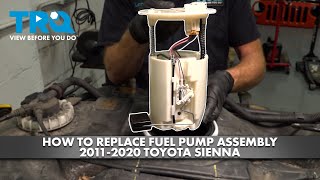
- Engine Stalling While Driving: A sudden engine stall, especially at higher speeds, can be caused by a failing low-pressure fuel pump, which was subject to a major safety recall. [6, 7] 🎬 Watch: How to replace the fuel pump assembly
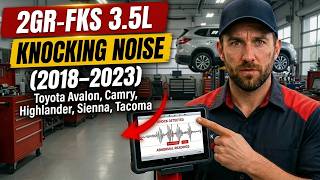
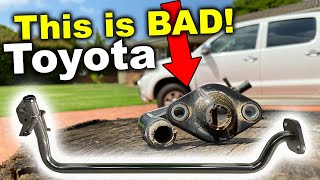
- Knocking or Ticking Noises: A persistent knocking sound from the engine at idle could be a failing vacuum pump. [3, 19] 🎬 Watch: Diagnose this common idle knocking noise A deeper, more rhythmic knocking from the main part of the engine often signals catastrophic internal damage to bearings or rods.
- Significant Oil Leaks: While minor seeping from the timing cover is common, major leaks that leave puddles on the ground can indicate a more serious sealing failure. [11] 🎬 See how to repair a timing cover leak
- Head Gasket Failure: Symptoms include engine overheating, white smoke from the exhaust, and a milky appearance in the engine oil. This can lead to complete engine failure if not addressed. [30]
- Loss of Power and Rough Running: If accompanied by warning lights, this can indicate issues from fuel delivery problems to internal mechanical failures. [14, 21]
Diagnostic Flowchart
Known Issues, Recalls, and Technical Service Bulletins (TSBs)

Before and after installation, be aware of these known issues. It is critical to verify with a Toyota dealer that all safety recalls have been performed.
Low-Pressure Fuel Pump Failure (Safety Recall)
- Document: NHTSA Campaign ID 20V012000 (Toyota Recall 20TA02). [6, 7]
- Affected Vehicles: 2017-2019 Toyota Highlander, 2017-2020 Toyota Sienna. [20, 22]
- Problem: The low-pressure fuel pump, located in the fuel tank, can fail. This may cause the engine to run rough, display warning lights, and ultimately stall while driving, increasing the risk of a crash. [21]
- Solution: Toyota dealers will replace the fuel pump assembly with an improved part at no charge. Verify this has been completed for both the donor engine's vehicle (if possible) and your own. [7]
Vacuum Pump Knocking Noise at Idle
- Document: Toyota TSB T-SB-0115-22. [3, 19]
- Affected Vehicles: 2017-2022 Toyota Highlander, 2017-2020 Toyota Sienna. [5, 28]
- Problem: Some vehicles may exhibit a knocking or clattering noise from the engine bay at idle. [17] This noise is often traced to the vacuum pump, which supplies vacuum to the brake booster. [17]
- Solution: The TSB provides a procedure for dealers to diagnose the issue and replace the vacuum pump assembly if necessary. [19]
Timing Chain Cover Oil Leak
- Document: Toyota TSB L-SB-0027-18 (Lexus document, but describes a common 2GR-FKS issue). [4]
- Affected Vehicles: Commonly reported on 2017-2019 models. [11]
- Problem: The engine may develop an oil leak or seepage from the timing chain cover area. [11]
- Solution: The recommended fix is to reseal the timing cover. This is best done while the replacement engine is out of the vehicle and on a stand.
Rear Water Bypass Joint Coolant Leak
- Document: Common community-reported issue.
- Affected Vehicles: 2017-2020 models.
- Problem: A small plastic pipe for the cooling system, located at the rear of the engine, can become brittle and crack, causing a coolant leak.
- Solution: It is highly recommended to replace this fragile plastic pipe with a new OEM part or an aftermarket aluminum version while the engine is out of the vehicle for easier access.
Used Engine Assembly Cost & Installation Estimates
The cost of replacing a 2GR-FKS engine depends on the type of replacement unit and local labor rates. These estimates reflect typical market pricing.
| Part or Service | Estimated Cost (USD) |
|---|---|
| Used OEM Assembly | $2,800 - $4,500 [1, 10] |
| Remanufactured Assembly | $4,000 - $6,200 [1, 10] |
| New OEM Assembly (Short Block) | ~$4,000+ (bottom end only) [26] |
| Professional Labor | $1,800 - $4,500 |
Installation: What to Know Before You Start
Proper installation is critical for the long-term reliability of a used engine. A used assembly typically includes the block, heads, and intake manifold, but not accessories like the alternator or A/C compressor. These must be transferred from the original engine.
Required Parts & Consumables
Always replace these items during an engine swap to prevent premature failure and ensure proper function:
| Item | Specification / Quantity |
|---|---|
| Engine Oil & Filter | 5.7 to 6.1 quarts of 0W-20 full synthetic oil and a new cartridge-style oil filter. |
| Coolant | 10 to 12 quarts of Toyota Super Long Life Coolant (SLLC - Pink). [36] |
| Spark Plugs | 6 new OEM Denso FK20HBR8 double-needle iridium spark plugs. |
| Gaskets & Seals | New upper and lower intake manifold plenum gaskets, exhaust manifold gaskets, thermostat gasket, and front and rear crankshaft main seals. |
| Wear Items | It is highly recommended to install a new water pump, thermostat, and serpentine belt. [16] |
Pro Tip: While the engine is on a stand, inspect and clean any carbon buildup from the intake valves. This is much easier to do before the engine is installed in the vehicle.
Critical Installation Steps & "Gotchas"
Warning: You must reuse the original engine wiring harness from your vehicle. The donor harness is likely incompatible and will cause electrical problems.
- Check Drivetrain Parts: If swapping between an AWD and FWD vehicle, you must transfer the lower oil pan, oil pickup tube, and intermediate shaft brackets from the original engine to the replacement.
Warning: The D-4S system uses very high fuel pressure. This system must be properly de-pressurized before disconnecting any fuel lines to prevent serious injury.
Programming and Calibration
After installation, the vehicle's computer requires a specific calibration procedure. A professional-grade scan tool or Toyota's Techstream software is required.
- Crankshaft Position (CKP) Sensor Relearn: This procedure calibrates the computer to the new sensor's signal to prevent false misfire codes and ensure smooth engine operation.
- Throttle Body Idle Relearn: This allows the computer to learn the new idle position of the throttle plate.
What Fails at Every Mileage Band
Pro Tip: The mileage bands below describe the typical condition of USED REPLACEMENT units at that mileage. The checklists provided are things to do WHILE INSTALLING the purchased engine on the stand, not general maintenance for your current engine.
Under 60,000 Miles
Early examples of the 2GR-FKS (pre-2018) could potentially experience issues, though this is rare for the Highlander and Sienna. Some owners report minor oil consumption during the initial break-in period (20,000-30,000 miles). Piston slap noise on cold start-up has been reported, which typically disappears after the engine warms up. The low-pressure fuel pump recall (NHTSA 20V012000) affects all model years in this range.
- ✓Do during install (required): Verify the low-pressure fuel pump safety recall has been completed on your vehicle.
- ✓Do during install (recommended): Use high-quality 0W-20 synthetic oil and a new OEM filter to ensure proper lubrication from the start.
- ✓Cheap insurance while the engine is out: Inspect the vacuum pump for any unusual noise or roughness when spun by hand to prevent the knocking issue covered by TSB T-SB-0115-22.
60,000 - 100,000 Miles
Oil leaks from the timing chain cover are a common issue for the 2GR engine family and may begin to appear in this mileage range. Valve cover gaskets may also begin to leak after 80,000 miles. The electric water pump can wear out around 100,000 miles. Some reports mention transmission whine around 93,000 miles, though this is related to the drivetrain, not the engine block itself.
- ✓Do during install (required): Replace the spark plugs. The service interval is every 60,000 miles, and accessing the rear plugs is labor-intensive once the engine is in the vehicle.
- ✓Do during install (recommended): Replace the water pump, thermostat, and install a new serpentine belt. Consider cleaning carbon buildup from the intake valves.
- ✓Cheap insurance while the engine is out: Reseal the timing cover with Toyota Black FIPG (Form-in-Place Gasket) as a preventative measure. Replace the plastic rear water bypass joint with an aftermarket aluminum part to prevent future coolant leaks.
100,000 - 150,000 Miles
Timing component wear becomes a more significant concern in this band. Oil consumption from worn piston rings or valve seals can become more noticeable after 100,000 miles. VVTi (Variable Valve Timing with intelligence) system actuators can wear, sometimes causing a startup rattle. Catalytic converters are robust but can fail after 150,000 miles.
- ✓Do during install (required): Perform all required and recommended items from the lower mileage bands.
- ✓Do during install (recommended): Replace all accessible gaskets and seals, including valve cover gaskets and front/rear main seals, as they are prone to leaking at this age. Replace the VVTi actuators if noise is present.
- ✓Cheap insurance while the engine is out: Strongly consider replacing the timing chain, tensioners, and guides if there is any startup rattle or if the engine's history is unknown.
150,000+ Miles
The risk of timing component failure increases significantly if not previously addressed. The 2GR-FKS engine is widely regarded as highly reliable and capable of lasting well over 200,000 miles with proper care, but rubber and plastic components will be heavily heat-cycled and brittle at this stage.
- ✓Do during install (required): A comprehensive replacement of all gaskets, seals, and wear items from lower mileage bands is essential.
- ✓Do during install (recommended): Replace ignition coils along with spark plugs, as their lifespan may be limited and they are difficult to access later.
- ✓Cheap insurance while the engine is out: A complete timing job (chain, guides, tensioners, phasers) is highly recommended as cheap insurance against catastrophic failure.
Real Owner Experiences
The following table highlights real-world experiences, quotes, and failures reported by owners of vehicles equipped with the 2GR-FKS engine.
| Source | Mileage | What Happened | Cost |
|---|---|---|---|
| SureCritic | 55,000 | A 2018 Highlander owner reported having no issues at this mileage. | N/A |
| RepairPal | Not Specified | A 2017 Sienna owner reported a head gasket or cracked head issue causing stalling, though this appears to be an isolated incident. | N/A |
| 88,000 | A 2018 Highlander owner reported the vehicle was still running well with no major issues. | N/A | |
| 93,000 | A Highlander owner experienced a transmission whine. | N/A | |
| SureCritic | ~130,000 | A 2018 Highlander required a new alternator and serpentine belt, which is considered normal wear. | Not specified |
| 130,000 | Owner of a 2018 Highlander reported it was still 'running like a champ' with only regular maintenance performed. | N/A | |
| 150,000 | A 2017 Highlander owner reported the vehicle 'still drives like the day we bought it'. | N/A | |
| 214,000 | A 2018 Highlander Limited Platinum owner reported having no issues. | N/A | |
| Tacoma World Forum | 158,000 | A Tacoma owner with a 2GR-FKS experienced engine failure, which was speculated to be related to timing components or potential oil flow issues. Note: This is on a different vehicle application. | Engine replacement |
| Reddit r/AskAMechanic | 94,449 | Dealer recommended engine replacement for misfires on cylinders 1 and 3, suspected head gasket failure. | $8,000 quoted |
| Reddit r/autorepair | Unknown | Dealer quoted for a used engine replacement due to a blown head gasket. Quote was $4900 for the used engine and $3600 for labor. | $9,400 quoted |
| Reddit r/Justrolledintotheshop | 48,000 | Dealer quoted for a used engine replacement due to low compression in cylinder 1, 8 months out of powertrain warranty. | $10,500+ quoted |
| Tacoma World Forums | 68,000 | Dealer quoted to reseal the timing cover oil leak. | $5,400 quoted |
| Reddit r/ToyotaTacoma | Unknown | Dealer quoted for timing cover leak repair during a routine oil change. | $6,000+ quoted |
Repair or Replace?
When facing a major engine issue, deciding whether to repair your current 2GR-FKS or replace it with a used assembly comes down to economics and the extent of the damage.
When Repair Makes Sense
- Timing Chain Cover Oil Leak: Typical repair costs range from $1,800 to $6,000+. Repair makes sense when the leak is significant and the engine is otherwise healthy. The cost is almost entirely labor, as the engine often needs to be removed to perform the reseal properly. Quotes vary dramatically by shop and location.
- Vacuum Pump Knocking Noise: Typical repair costs range from $400 to $900. This is a common issue and a relatively straightforward repair since the pump is external to the engine block. It is almost always more economical to replace the pump than the entire engine.
- Plastic Rear Water Bypass Joint Coolant Leak: Typical repair costs range from $800 to $1,500. Repair always makes sense over replacement. The part itself is inexpensive, but labor is high due to its location at the rear of the engine, requiring intake manifold removal.
When Replacement is Smarter
Replacement is the smarter choice in cases of catastrophic internal failure, such as rod knock, spun bearings, severe overheating causing warped heads, or significant piston and cylinder wall damage. It also becomes the logical choice when the cost of multiple smaller repairs (e.g., a timing cover leak plus a head gasket issue) approaches or exceeds the cost of a lower-mileage used engine.
For context, used 2GR-FKS replacement units typically run between $2,200 and $4,900. Remanufactured units range from $4,500 to $6,200, and brand new OEM short blocks start around $6,500 to $8,000+ before labor.
Questions to Ask Your Installer
Before handing over your vehicle, ask your mechanic these critical questions:
- Have you worked on the 2GR-FKS engine before?
- Will you be swapping my original engine wiring harness onto the replacement engine?
- What is your plan for the AWD/FWD-specific parts like the oil pan and brackets if the donor is different?
- Do you have the Toyota Techstream software or a compatible bi-directional scanner to perform the Crankshaft Position (CKP) Sensor Relearn after installation?
- While the engine is out, do you recommend and what would you charge to reseal the timing cover and replace the rear water bypass pipe?
- What specific gaskets, seals, and consumable parts are included in your quote (e.g., water pump, thermostat, spark plugs, main seals)?
- What is the source and mileage of the used engine, and what warranty is provided on both the part and your labor?
- How will you prime the oil system before the first start-up to ensure proper lubrication?
Freight & Delivery Reality

Buying a used engine online means dealing with heavy freight. A complete 2GR-FKS engine assembly weighs approximately 500 lbs and measures roughly 48" x 48" x 36" before crating. Because of this size and weight, it ships as Less-Than-Truckload (LTL) freight on a wooden pallet—it will NOT arrive via standard parcel services like UPS or FedEx Ground.
When scheduling delivery, a liftgate service is required unless you are shipping to a commercial facility with a dedicated loading dock or a forklift. It is an industry best practice to participate in a pre-purchase verification interview with the seller to confirm your VIN, drivetrain, and exact fitment needs. Finally, you must physically inspect the engine for transit damage before signing the driver's delivery receipt. Once you sign, you are legally accepting the freight in its current condition.
Compression and Leak-Down Expectations
Before you install your used engine, test its internal health. You can do this while the engine is still on the shipping pallet. Remove all six spark plugs and use a 12-volt battery and starter to spin the engine.
Compression Test: The 2GR-FKS engine has a high compression ratio. A healthy used engine should produce at least 156 psi (pounds per square inch) of pressure in every cylinder. Consistency is the most important factor. The pressure difference between the highest and lowest cylinders must never be more than 14 psi.
Leak-Down Test: A leak-down test pumps compressed air into a closed cylinder to measure how much air escapes. A quality used engine should show less than 10% to 15% air loss in each cylinder.
- If you hear air hissing from the exhaust or intake ports, the engine has bent or burnt valves.
- If you hear air hissing from the oil cap hole or dipstick tube, the piston rings are worn out.
Frequently Asked Questions (FAQ)
Do I need to program the computer after installing this engine?
Yes. At a minimum, a Crankshaft Position (CKP) Sensor Relearn procedure must be performed with a professional bi-directional scan tool or Toyota Techstream. Failure to do so can result in a check engine light with false misfire codes.
Can I use an engine from a Toyota Tacoma or Lexus RX 350?
No. While those vehicles also use a 2GR-FKS engine, key components like mounting brackets, oil pans, wiring, and accessories are different and will not work in a Highlander or Sienna without extensive modification.
What is the difference between the FWD and AWD engines?
The core long block is the same, but the lower oil pan, oil pickup tube, and certain brackets that support the AWD transfer case and intermediate shaft are different. If your donor engine has a different drivetrain configuration than your vehicle, you must swap these parts from your original engine.
What parts are included with a used 2GR-FKS engine assembly?
A standard used assembly (like a typical Grade A donor from a 122,730-mile vehicle) includes the cylinder block, cylinder heads, internal lubricated parts, pistons, rods, crankshaft, camshafts, valves, oil pan, valve covers, intake manifold, timing covers, timing chains and tensioners, fuel rails, fuel injectors, high-pressure mechanical fuel pump, throttle body, and harmonic balancer. It does NOT include the A/C compressor, starter motor, power steering pump, alternator, exhaust manifolds, oxygen sensors, ECU, belts, hoses, or fluids.
How many labor hours does it take to replace this engine, and what tools are required?
Professional shops estimate between 15 and 24 hours of labor for this swap. Because of the transverse mounting in the Highlander and Sienna, you will need an engine hoist or a subframe/drivetrain lift table. You will also need a fuel line disconnect tool set, a precision torque wrench, and a professional-grade bi-directional OBD2 scan tool (or Toyota Techstream) for the required post-install calibrations.
Helpful Videos
Technical Specifications
Engine Code: 2GR-FKS; Displacement: 3.5 Liters; Configuration: 60-degree V6; Valvetrain: DOHC, 24 valves; Fuel System: D-4S (Direct and Port Injection); Required Oil: 0W-20 Full Synthetic; Oil Capacity: 5.7 - 6.1 quarts; Coolant Type: Toyota Super Long Life Coolant (SLLC - Pink); Coolant Capacity: 10 - 12 quarts; Spark Plugs: Denso FK20HBR8
We Have This Part in Stock


The information in this article is provided for general reference and educational purposes only. Vehicle specifications, procedures, and part compatibility can vary by production date, trim level, and region. Always consult your vehicle's factory service manual and verify part numbers before purchasing or performing repairs. Safety-critical components such as airbags, seat belts, and braking systems should be installed by a qualified professional.
- Toyota Highlander:
- Toyota Sienna:
- 🎬 Helpful Videos
- 🛍️ Shop This Part
- Vehicle Fitment and Identification
- How to Confirm This is Your Engine
- Common Failure Symptoms
- Diagnostic Flowchart
- Known Issues, Recalls, and Technical Service Bulletins (TSBs)
- Low-Pressure Fuel Pump Failure (Safety Recall)
- Vacuum Pump Knocking Noise at Idle
- Timing Chain Cover Oil Leak
- Rear Water Bypass Joint Coolant Leak
- Used Engine Assembly Cost & Installation Estimates
- Installation: What to Know Before You Start
- Required Parts & Consumables
- Critical Installation Steps & "Gotchas"
- Programming and Calibration
- What Fails at Every Mileage Band
- Under 60,000 Miles
- 60,000 - 100,000 Miles
- 100,000 - 150,000 Miles
- 150,000+ Miles
- Real Owner Experiences
- Repair or Replace?
- When Repair Makes Sense
- When Replacement is Smarter
- Questions to Ask Your Installer
- Freight & Delivery Reality
- Compression and Leak-Down Expectations
- Frequently Asked Questions (FAQ)
- 🎟️ Get 5% Off