

2025-2026 Subaru Forester FB25D 2.5L Engine: Problems, Identification, and Used Replacement
Identify the exact FB25D variant for your Forester, learn what causes catastrophic failures, and discover when a used OEM replacement is the smartest fix.
- The 2025-2026 FB25D engine is NOT interchangeable with the 2019-2024 version due to the removal of the electronic Thermo Control Valve (TCV) and other significant differences.
- Before installing a used engine, always reseal the cam carriers to prevent future oil leaks and verify the old oil filter gasket is removed to prevent catastrophic oil loss.
- After installation, mandatory ECU relearn procedures for the Crankshaft Position (CKP) sensor, idle, and CVT are required using a professional-grade scan tool.
- Confirm the torque converter is fully seated with three distinct 'clicks' before mating the engine to the transmission to avoid destroying the CVT's oil pump.
- Due to the direct injection system, intake valve carbon cleaning (walnut blasting) is a recommended service every 80,000 to 100,000 miles to maintain performance.
Engine Identification: Confirming the FB25D for Your 2025-2026 Forester

The 2025-2026 Subaru Forester is equipped with a specific version of the 2.5-liter FB series engine, known by the code FB25D. This engine is a horizontally opposed 4-cylinder, also called a "Boxer" engine, where the pistons move toward and away from each other like a boxer's fists. It uses direct injection, a technology that sprays fuel directly into the combustion chamber for improved efficiency. This updated engine produces 180 horsepower and 178 lb-ft of torque.
Key Specifications
| Family Name | FB |
| Engine Code | FB25D (Specific casting: FB25DXZHFA) |
| Configuration | Horizontally opposed 4-cylinder (Boxer / Flat-4) |
| Displacement | 2.5 Liters |
| Aspiration | Naturally Aspirated (Non-Turbo) |
| Fuel System | Direct Injection |
| Drivetrain | All-Wheel Drive (AWD) |
How to Verify Fitment
To ensure you are purchasing the correct engine for your Forester, follow these verification steps:
- Check the VIN: The correct engine is specified for vehicles with the letter 'D' as the 6th digit of the Vehicle Identification Number (VIN).
- Confirm the Model Years: This specific engine variant is for the 2025 and 2026 Subaru Forester only.
Warning: This engine is NOT interchangeable with other Subaru models or even earlier Foresters. While the 2019–2024 Forester also used an FB25D engine, the 2025 version has significant differences. Most importantly, Subaru removed the electronic Thermo Control Valve (TCV) used on 2019–2024 models and returned to a traditional mechanical thermostat for 2025. This change, along with different mounting brackets, wiring harness pinouts, accessory drive layouts, oil pans, and ECU calibrations, makes the older engines completely incompatible with your 2025-2026 vehicle.
Common Failure Symptoms
A failing engine assembly will typically show severe symptoms that go beyond minor repairs. If you experience the following, a complete engine replacement may be necessary:
- Catastrophic Oil Loss: A sudden and massive loss of oil, often from a major seal failure, a blown oil filter gasket, or a cracked block.
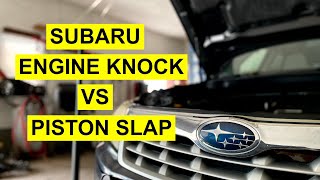
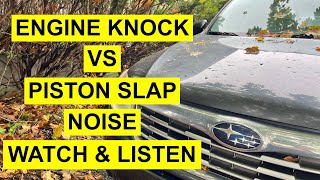
- Knocking or Banging Noises: Loud, deep knocking sounds from inside the engine (often called "rod knock") indicate failed connecting rod bearings 🎬 Watch: Listen to the difference between rod knock and piston slap, which is a critical internal failure.
- Metal Shavings in Oil: Finding significant amounts of metallic particles or flakes in the engine oil during an oil change is a sign of severe internal wear and impending failure.
- Seized Engine: If the engine refuses to turn over or is "locked up," it means internal components have welded together due to extreme heat or lack of lubrication.
- Low Compression: If a compression test reveals very low or zero compression in one or more cylinders, it can point to piston, ring, or valve damage that may not be economical to repair.
Diagnostic Flowchart

Known Problems, Recalls, and Technical Service Bulletins (TSBs)

While the FB25D is generally considered reliable with an expected service life of 150,000 to 200,000 miles, it has a few known issues buyers and owners should be aware of.
Connecting Rod Bearing Failure (2025 Hybrid)
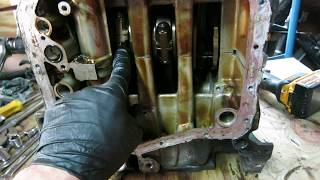
Early owner reports for the 2025 Forester Hybrid model have mentioned isolated incidents of connecting rod bearing failure, sometimes occurring as early as 1,700 miles. At this time, it appears to be a rare manufacturing defect rather than a widespread design flaw. The only remedy for this severe failure is a complete long block replacement.
TSB 02-191-22R: Oil Filter Gasket Sticking
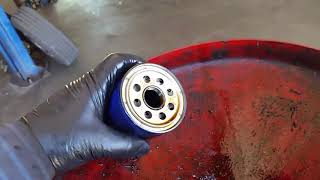
Subaru issued this Technical Service Bulletin due to supply chain issues that led to the use of an alternative oil filter (Part # SOA6351520815). The primary concern highlighted by this TSB is a common mistake called "double-gasketing." When removing the old oil filter, its rubber gasket frequently sticks to the engine block's mounting pad. If a new filter is installed over the old gasket, it will not seal properly. Under oil pressure, the seal will blow out, potentially pumping all the engine oil onto the ground in seconds and destroying the engine. Always ensure the old gasket is removed with the old filter.
Intake Valve Carbon Buildup
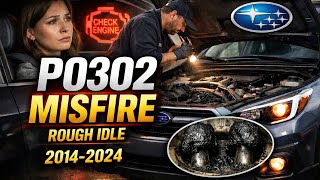
Like many direct-injection engines, the FB25D can suffer from carbon deposits building up on the intake valves over time. Because fuel is injected directly into the cylinder, it no longer washes over the intake valves, allowing oil vapor from the crankcase ventilation system to bake onto them. Symptoms include a rough idle, hesitation, or loss of power. The recommended fix is to have the intake valves professionally cleaned (a process called walnut blasting) every 80,000 to 100,000 miles.
Cam Carrier Oil Leaks
A common issue on Boxer engines is oil seeping from the cam carriers (also called cam cradles). These are sealed to the cylinder heads with liquid RTV sealant, which can degrade over time. This is a labor-intensive repair because the engine must be removed from the vehicle.
Pro Tip: Before installing a used engine, have your mechanic inspect the cam carrier seals. Resealing them with fresh RTV sealant while the engine is on a stand is a simple, preventative job that can save you from a frustrating and costly oil leak down the road.
Historical Context: TCV Failures and Recall 19V856
Warning: While shopping for parts, you may read about Thermo Control Valve (TCV) failures or Recall 19V856 (a PCV valve that could separate and cause power loss or fire). It is important to know that these issues affected the previous generation of the FB25D (2019-2024 models). Subaru completely removed the electronic TCV for the 2025 model year, returning to a reliable mechanical thermostat. This is exactly why you cannot use a 2019-2024 engine in your 2025 Forester.
What Fails at Every Mileage Band
Pro Tip: The mileage bands below describe the condition and expected wear of USED REPLACEMENT UNITS you might purchase. The checklists provided are things you must do WHILE INSTALLING the purchased engine on the stand, not routine maintenance for your current broken engine.
Under 60,000 Miles
Engines in this range are practically new. Failures here are almost always due to isolated manufacturing defects (like the rod bearing issue on early 2025 hybrids) or severe user error, such as the "double-gasketing" oil filter mistake outlined in TSB 02-191-22R. Cam carrier leaks are rare but have been reported as early as 44,000 miles.
- ✓Do during install (required): Verify the old oil filter gasket is not stuck to the engine block before installing the new filter to prevent catastrophic oil loss.
- ✓Do during install (required): Use only a new OEM Subaru oil filter (Part # SOA6351520815) and a new drain plug crush washer.
- ✓Do during install (required): Follow all baseline consumable replacements: new 0W-16 or 0W-20 synthetic oil (approx. 4.4 to 4.8 quarts), Subaru Super Coolant (blue), and all required gaskets for swapped components.
- ✓Cheap insurance while the engine is out: Inspect cam carriers for any signs of oil seepage. If any is present, it is far cheaper to reseal them now.
60,000 - 100,000 Miles
This is when direct-injection quirks begin to show. Carbon buildup on the intake valves becomes noticeable, causing hesitation and misfires. The likelihood of RTV sealant degrading and causing cam carrier oil leaks increases significantly in this band. Factory spark plugs are also due for replacement at 60,000 miles.
- ✓Do during install (required): Replace spark plugs with four new NGK Laser Iridium units. Access is dramatically easier with the engine out of the car.
- ✓Do during install (recommended): Perform an intake valve cleaning service (walnut blasting) to remove carbon deposits and restore performance.
- ✓Do during install (recommended): Replace the serpentine belt and check tensioners and idlers.
- ✓Cheap insurance while the engine is out: Inspect and reseal cam carriers as a preventative measure, even if not actively leaking. Consider replacing the water pump and thermostat, as they are easy to access now.
100,000 - 150,000 Miles
Engines reaching this mileage will show the results of their maintenance history. Oil leaks from the upper oil pan or cam carriers are highly likely if they haven't been resealed yet. The original long-life coolant is rated for 11 years or 137,500 miles, meaning cooling system components (hoses, water pump) are nearing the end of their service life.
- ✓Do during install (required): Assume all items from the 60-100k list are mandatory if not previously done (spark plugs, walnut blast, serpentine belt).
- ✓Do during install (recommended): Service the PCV system; a clean system is vital for preventing oil consumption and carbon deposits.
- ✓Cheap insurance while the engine is out: Strongly consider replacing the entire set of coolant hoses, water pump, and thermostat. Thoroughly inspect and likely replace all accessible seals and gaskets, such as front and rear main seals, as the rubber will have hardened with age.
Real Owner Experiences
To understand what real owners face with the FB25D engine family, here is a breakdown of reported issues, mileages, and costs.
| Source | Mileage | What Happened | Cost |
|---|---|---|---|
| 1,700 miles | 2025 Forester Hybrid suffered connecting rod and bearing failure on cylinder #4 with widespread metal debris. Required complete long block replacement. | $0 (under warranty) | |
| NHTSA Complaints | 30,000 miles | 2019 Forester hesitated and check engine light came on. Diagnosed with defective thermal control valve (TCV). | $223 for towing |
| 39,200 miles | 2020 Forester owner recommended proactive 'top engine cleaner' service to prevent carbon buildup. | N/A (preventative) | |
| 60,000 miles | 2019 Forester engine suddenly died. Dealer found oil in coolant and failed TCV. Labor for rebuild denied by manufacturer. | N/A | |
| 73,000 miles | 2019 Forester reported strong smell and significant blow-by from oil fill cap after oil change. | Pending diagnosis | |
| 79,000 miles | 2019 Forester owner expressed concern about upcoming expensive repairs. | N/A | |
| 80,000 miles | 2019 Forester seized due to oil sludge. Dealer quoted for used engine replacement. | $6,800 - $7,600 quoted | |
| 90,000 miles | 2013 Forester replaced with a junkyard FB motor. | $5,250 (parts and labor) | |
| YouTube Inspection | 100,000 miles | 2019 Forester inspection revealed worn suspension/brakes, but engine held up incredibly well. | N/A |
| 110,000 miles | 2021 Outback developed a cam carrier oil leak. | $4,100 (quoted) | |
| 122,000 miles | 2018 Crosstrek diagnosed with cam carrier leak during dealership visit. | Part of $7,000 quote | |
| 140,000 miles | 2019 Forester running well, owner uses 'Top Engine Cleaner' every 10,000 miles. | $30 for DIY kit | |
| 175,000 miles | 2015 Forester discussion noted new OE block replacement costs. | $10,000 - $15,000 quoted |
Repair or Replace?

Deciding whether to fix your current engine or swap in a used replacement comes down to the type of failure and the labor involved.
When Repair Makes Sense
If your engine is suffering from Intake Valve Carbon Buildup, repair is the obvious choice. This is a routine maintenance issue, not a catastrophic failure. Professional walnut blasting typically costs between $600 and $1,500.
If you have Cam Carrier Oil Leaks, repair makes sense if the rest of the engine is healthy. However, because the engine must be removed to reseal the carriers, the labor is massive (14+ hours). Typical repair costs range from $2,500 to $4,500. If your engine has high mileage, putting that money toward a lower-mileage used engine might be a better long-term investment.
When Replacement is Smarter
Replacement is the only viable option in cases of catastrophic internal failure, such as a seized engine or connecting rod bearing failure (rod knock). When bearings fail, metal debris contaminates the entire oiling system. A general rod knock repair or rebuild can cost between $5,000 and $7,000, and it carries a high risk of future failure if every metal shaving isn't removed. In these cases, buying a used, low-mileage OEM engine is a safer and more economical choice.
Replacement Cost Ranges
| Part or Service | Estimated Cost (USD) |
|---|---|
| New OEM Engine | $8,000 - $12,000+ |
| Remanufactured Engine | $4,000 - $6,500+ |
| Used OEM Engine | $2,800 - $4,500+ |
| Installation Labor (10-14 hours) | $1,200 - $2,500 |
Questions to Ask Your Installer
Before handing over the keys, ensure your mechanic is prepared for this specific Subaru swap by asking these questions:
- Have you confirmed the torque converter is fully seated with three distinct 'clicks' to prevent destroying the CVT oil pump?
- Did you inspect the replacement engine's crankshaft flange for any broken-off pins/studs from the old torque converter?
- Will you be transferring the complete intake manifold and engine wiring harness from my original engine to this replacement unit to ensure perfect compatibility?
- Can you verify that all alignment dowel pins between the engine and transmission are correctly in place and not doubled up?
- What is your procedure for the mandatory ECU relearn processes, specifically the Crankshaft Position (CKP) sensor, idle air volume, and CVT adaptive relearns?
- Do you have the Subaru Select Monitor (SSM5-R) or a compatible high-level bidirectional scan tool to perform the required programming and immobilizer re-marriage?
- Will you be using hand tools (and a 12-point 16mm box wrench) to tighten the flexplate-to-converter bolts through the access port?
- What specific brand and weight of oil (0W-16 or 0W-20) and coolant will you be using for the initial fill?
- Can you confirm the old oil filter gasket was removed with the old filter to prevent a 'double-gasket' blowout?
Freight & Delivery Reality

If you are purchasing a used engine online, it will not arrive in a cardboard box via standard mail. An FB25D engine assembly weighs approximately 410 pounds and measures roughly 36" x 40" x 32" before crating. It will ship as LTL (Less-Than-Truckload) freight strapped to a wooden pallet.
Because of its size and weight, the delivery truck will require a liftgate to lower the pallet to the ground if you are having it delivered to a residential address or a shop without a loading dock.
Warning: Crucially, you must inspect the engine before signing the delivery receipt. Check for any damage to the plastic valve covers, sensors, or oil pan that may have occurred during transit. Signing the receipt without noting damage releases the freight company from liability. A pre-purchase verification interview with the seller is an industry best practice to confirm exactly what accessories are left on the block before it ships.
Before the First Start: Priming and Fluids
Before you turn the key to start your replacement engine, you must prepare it. Used engines sit on warehouse shelves for months. The oil drains away from the moving parts inside. If you start the engine dry, the metal parts will scrape together and ruin the engine.
Mandatory Fresh Fluids
You must install a brand-new oil filter and fill the engine with fresh fluids before cranking.
- Engine Oil: The 2025-2026 Forester FB25D requires 0W-16 full synthetic oil.
- Engine Coolant: Fill the radiator and cooling system with Subaru Super Coolant (the blue fluid) or an exact equivalent. Do not mix different coolant colors, as this can turn into a gel and clog the system.
Oil Priming Procedure
You must prime the oil system. Priming means pumping oil through the engine before it actually runs. Follow these steps to build oil pressure safely:
- Disable the fuel system: Remove the fuel pump fuse from the fuse box. This stops fuel from reaching the engine so it will not start.
- Crank the engine: Turn the key (or press the start button) to crank the engine for 10 to 15 seconds.
- Let the starter rest: Stop and wait 30 seconds so the starter motor can cool down.
- Repeat until pressure builds: Repeat this cranking process until the red oil pressure warning light on the dashboard turns off. The light turning off proves oil is flowing to the top of the engine.
- Reconnect and start: Put the fuel pump fuse back in its place. Start the engine normally and let it idle. Check underneath the vehicle for any fluid leaks.
Frequently Asked Questions (FAQ)
Is this engine the same as the one in the 2019-2024 Forester?
No. Although they share the FB25D engine code, the version in the 2025-2026 Forester is not directly interchangeable with the 2019-2024 models. The newer engine uses a mechanical thermostat and does not have the electronic Thermo Control Valve (TCV) found on the earlier models, leading to significant electrical, mounting, and physical differences.
What comes with a used engine assembly?
A typical used engine assembly includes the core long block: the engine block, cylinder heads, and all internal rotating parts like the crankshaft and pistons. It also usually includes the oil pan, valve covers, timing covers/chain, high-pressure fuel pump, direct injectors, intake manifold, throttle body, and harmonic balancer. Accessories like the A/C compressor, alternator, starter, power steering pump, and engine wiring harness are generally excluded and must be transferred from your original engine.
Does this engine require programming after installation?
Yes. After installation, several electronic "relearn" procedures must be performed using a professional-grade bidirectional scan tool or the dealer's Subaru Select Monitor (SSM5-R) software. This includes a Crankshaft Position (CKP) Sensor relearn, an idle air volume relearn, and an adaptive relearn for the CVT transmission. An immobilizer re-marriage is also required to sync the replacement engine with your vehicle's security system.
What is the most critical step during installation?
Verifying the torque converter is fully seated in the transmission is the most critical step. When separating the engine and transmission, the torque converter can slide forward. Before mating the new engine, you must push and spin the converter until it drops into place three distinct times (three clicks). Failure to do this will cause the transmission's oil pump to be crushed when the bellhousing bolts are tightened, resulting in immediate and catastrophic transmission failure.
What special tools are required for this engine swap?
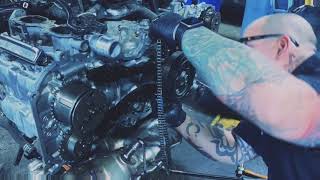
Because of the flat Boxer design, you will need an engine hoist with an adjustable load leveler to carefully angle the wide engine past the frame rails. You will also need a Subaru-specific engine stand adapter, a torque converter holding tool, a 12-point 16mm box wrench for the flexplate bolts, cam sprocket holding tools (like those from Company23), and a high-quality bidirectional scan tool for the required ECU relearns.
What oil should I use in the 2025 FB25D?
The engine requires fully synthetic oil, typically 0W-16 or 0W-20, and takes approximately 4.4 to 4.8 quarts. Because specifications can vary slightly by exact trim or climate, you should always verify the exact weight (0W-16 vs 0W-20) with your installer or owner's manual before the initial fill. Always use a new OEM Subaru oil filter (Part # SOA6351520815).
Helpful Videos


Technical Specifications
OEM Part Numbers: FB25DXZHFA SOA6351520815
Family Name: FB; Engine Code: FB25D (Specific casting: FB25DXZHFA); Configuration: Horizontally opposed 4-cylinder (Boxer / Flat-4); Displacement: 2.5 Liters; Aspiration: Naturally Aspirated (Non-Turbo); Fuel System: Direct Injection; Drivetrain: All-Wheel Drive (AWD); Horsepower: 180; Torque: 178 lb-ft
We Have This Part in Stock


The information in this article is provided for general reference and educational purposes only. Vehicle specifications, procedures, and part compatibility can vary by production date, trim level, and region. Always consult your vehicle's factory service manual and verify part numbers before purchasing or performing repairs. Safety-critical components such as airbags, seat belts, and braking systems should be installed by a qualified professional.
- Subaru Forester:
- 🎬 Helpful Videos
- 🛍️ Shop This Part
- Engine Identification: Confirming the FB25D for Your 2025-2026 Forester
- Key Specifications
- How to Verify Fitment
- Common Failure Symptoms
- Diagnostic Flowchart
- Known Problems, Recalls, and Technical Service Bulletins (TSBs)
- Connecting Rod Bearing Failure (2025 Hybrid)
- TSB 02-191-22R: Oil Filter Gasket Sticking
- Intake Valve Carbon Buildup
- Cam Carrier Oil Leaks
- Historical Context: TCV Failures and Recall 19V856
- What Fails at Every Mileage Band
- Under 60,000 Miles
- 60,000 - 100,000 Miles
- 100,000 - 150,000 Miles
- Real Owner Experiences
- Repair or Replace?
- When Repair Makes Sense
- When Replacement is Smarter
- Replacement Cost Ranges
- Questions to Ask Your Installer
- Freight & Delivery Reality
- Before the First Start: Priming and Fluids
- Mandatory Fresh Fluids
- Oil Priming Procedure
- Frequently Asked Questions (FAQ)
- 🎟️ Get 5% Off