

2014-2024 Ram 1500 5.7L Hemi EZH: Problems, Identification, and Used Replacement
The 5.7L Hemi "Eagle" V8 is known for MDS lifter failure and the infamous "Hemi Tick." Learn how to identify your engine, diagnose catastrophic failure, and successfully swap in a used OEM replacement.
- The most common catastrophic failure is the 'Hemi Tick,' caused by MDS lifter failure which destroys the camshaft; use only SAE 5W-20 Full Synthetic oil (MS-6395 spec) to mitigate this risk.
- Before purchasing a used engine, verify the 8th digit of the VIN is 'T' and the sales code is 'EZH' to ensure compatibility with 2014-2018 Ram 1500 and 2019-2024 Ram 1500 Classic models.
- When installing a replacement engine, it is critical to use the correct crankshaft pilot sleeve for your 6-speed or 8-speed transmission to avoid destroying the transmission's front pump.
- Proactively inspect for and repair broken exhaust manifold bolts and consider replacing the camshaft, lifters, and timing set on any used engine with over 100,000 miles to ensure longevity.
Engine Identification: Confirming the Correct 5.7L Hemi

This engine assembly fits the 2014-2018 Ram 1500 and the 2019-2024 Ram 1500 Classic. The Ram 1500 Classic is the fourth-generation body style, sold alongside the newer fifth-generation Ram truck. This engine is known as the 5.7L Hemi "Eagle," a third-generation Hemi V8 displacing 345 cubic inches. It uses a cast-iron block with aluminum cylinder heads.
To ensure this is the correct engine for your truck, follow these pre-purchase verification steps:
- Check the VIN: The 8th digit of your truck's Vehicle Identification Number (VIN) must be a 'T'.
- Engine Code: Look for the sales code 'EZH' on your vehicle's build sheet or service records.
- Transmission Type: Identify your transmission type. Look for a rotary dial on the dashboard (8-speed automatic) versus a traditional column or console shifter (6-speed automatic). This determines if you need to swap the crankshaft pilot sleeve during installation.
- Drivetrain: Confirm whether your truck is 2WD or 4WD to verify oil pan clearances and differential mounting brackets.
- Visual ID: A white rectangular sticker on the driver's side valve cover contains the engine serial number and build date, which can help verify if it's original to the truck.
Warning: Not all 5.7L Hemi engines are the same. This specific engine will NOT fit a Dodge Durango, Jeep Grand Cherokee, Dodge Charger, or Chrysler 300. Those vehicles use different oil pans, intake manifolds, and accessory mounts. It also will not work in heavy-duty Ram 2500/3500 trucks or any 2019+ Ram 1500 equipped with the eTorque mild-hybrid system.
Common Failure Symptoms

Engine failure in the 5.7L Hemi often begins with distinct warning signs. A complete engine replacement is necessary when internal damage is severe, especially when metal debris has contaminated the oiling system.
The 'Hemi Tick' (MDS Lifter Failure)
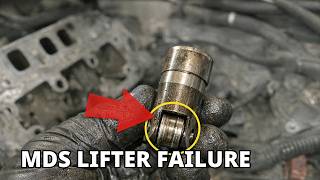
The most notorious symptom is a loud, rhythmic ticking or tapping noise that is most obvious after the engine has warmed up. This sound, often called the "Hemi Tick," is a definitive sign of a failing lifter for the Multi-Displacement System (MDS). The MDS deactivates four cylinders to save fuel, but the special lifters can fail. When a lifter's internal needle bearings seize, the roller stops spinning and grinds against the camshaft, causing catastrophic damage.
- Sound: A sharp, metallic tapping that increases in speed with engine RPM.
- When it Occurs: Most prominent when the engine is hot and the oil is thinner. This is the opposite of a benign exhaust leak tick, which is usually loudest on a cold start and quiets down as the engine warms up.
- Other Signs: A check engine light with misfire codes (like P0300), rough idling, engine shaking, and a noticeable loss of power are common.
Pro Tip: If you find metal shavings in the engine oil during an oil change, it's a critical sign that a lifter has failed and is destroying the camshaft. At this point, continuing to run the engine will cause irreversible damage.
Other Symptoms
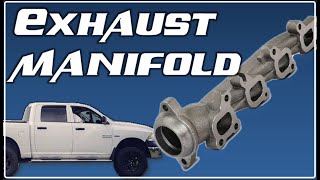
- Broken Exhaust Manifold Bolts: A ticking noise that is loudest when the engine is cold and may quiet down as it warms up often points to broken exhaust manifold bolts, particularly on the rear cylinders (7 and 8). 🎬 Watch: How to extract and replace broken exhaust manifold bolts
- Loss of Power and Misfires: Beyond the Hemi tick, general loss of acceleration, reduced towing power, and rough running can indicate significant internal wear or a failing valvetrain.
Diagnostic Flowchart
Known Problems, TSBs, and Recalls
Several Technical Service Bulletins (TSBs) have been issued for this engine family. A TSB is a document from the manufacturer that provides dealership technicians with information to diagnose and repair common issues.
| Issue | Document | Details |
|---|---|---|
| MDS Lifter Failure & Camshaft Wear | TSB S1709000010 Rev. B | Applies to 2009-2024 models. Addresses abnormal engine noise, rough idle, misfires, and lack of power due to excessive camshaft and lifter wear. The only remedy is to replace the camshaft and all lifters. |
| Broken Exhaust Manifold Bolts | TSB 11-002-11 | Applies to models built before August 14, 2009, but the issue is common across all years from 2009-2024. Addresses a ticking sound at startup caused by broken bolts on the rear cylinders. The fix involves extracting and replacing the bolts. |
| PCM Software Update for Driveability | TSB 18-012-14 Rev. A | Applies to 2013-2014 models with the EZH engine. Addresses a Malfunction Indicator Lamp (MIL) with DTCs P0300, P2008, and P1004. The fix is to reprogram the Powertrain Control Module (PCM). |
As of mid-2024, there are no widespread engine-specific safety recalls for catastrophic failure on these models, though some owners have pursued class-action complaints regarding the MDS lifter issue.
What Fails at Every Mileage Band
Pro Tip: The mileage bands below describe the typical condition of USED REPLACEMENT UNITS of that mileage. The checklists provided are things to do WHILE INSTALLING the purchased engine, not maintenance for your current broken engine.
Under 60,000 Miles
While more common at higher mileage, some owners report early MDS lifter tick and subsequent camshaft failure well under 60,000 miles. The notorious "Hemi tick" can also be caused by exhaust manifold bolts snapping due to heat cycles. Minor coolant leaks from the water pump or thermostat housing can also appear early on. On 2016 models with the 6-speed transmission, valve body failures have been reported around 60,000 miles.
- ✓Do during install (required): Inspect Exhaust Manifolds. Before installation, check the manifolds for flatness and the cylinder heads for broken bolts.
- ✓Do during install (required): Basic Consumables. Replace oil and filter with high-quality full synthetic 5W-20 (MS-6395 spec), coolant, and all 16 spark plugs.
- ✓Cheap insurance while the engine is out: Inspect Water Pump. Check the weep hole for any signs of leakage and replace the pump and thermostat if there is any doubt.
60,000 - 100,000 Miles
This is the primary mileage band where the "real" Hemi tick, indicating lifter and cam destruction, becomes a significant concern. It often starts as a faint tick when the engine is warm and progresses. Broken exhaust manifold bolts become very common in this range. Water pumps are also a frequent failure item. On 2014 models, the transmission valve body is a known failure point between 70k-90k miles.
- ✓Do during install (required): All items from the 'Under 60K' band.
- ✓Do during install (recommended): Upgrade Exhaust Manifolds & Bolts. Strongly consider replacing the stock manifolds with heavier-duty aftermarket versions and using upgraded studs or bolts to prevent future leaks.
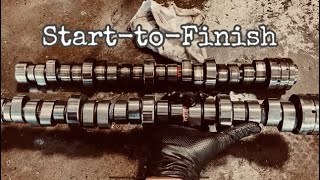
- ✓Do during install (recommended): Consider Lifter/Cam Replacement. If the budget allows and the engine's history is unknown, proactively replacing the camshaft and MDS lifters can prevent the engine's most catastrophic common failure.
- ✓Cheap insurance while the engine is out: Replace Water Pump and Thermostat. Given their failure rate, it is cheap insurance to replace the water pump, thermostat, and associated gaskets while the engine is out.
- ✓Cheap insurance while the engine is out: Replace Front and Rear Main Seals. It is highly recommended to replace these seals to prevent future oil leaks.
100,000 - 150,000 Miles
The risk of MDS lifter and camshaft failure continues to be high. If metal shavings are found in the oil or on the oil control valve screen, a full engine replacement is often recommended. Start-up rattle or cam/crank correlation codes can indicate a stretched timing chain or a tensioner that is bleeding down. The seals on the oil filter housing can degrade and cause significant oil leaks.
- ✓Do during install (required): All items from previous bands.
- ✓Do during install (recommended): MDS Lifter & Camshaft Replacement. This moves from 'consider' to 'highly recommended'. Installing a new camshaft and a full set of lifters is the most critical step to ensure another 100k+ miles of service.
- ✓Do during install (recommended): Replace Timing Set. Proactively replace the timing chain, guides, and tensioner to prevent issues from chain stretch.
- ✓Do during install (recommended): Replace Oil Cooler/Filter Housing Gaskets. Reseal or replace the entire oil filter housing assembly to prevent leaks.
- ✓Do during install (recommended): Replace All Major Gaskets. This includes intake manifold gaskets, valve cover gaskets, and the oil pan gasket for a fresh start.
Over 150,000 Miles
If not previously addressed, catastrophic lifter failure is the most likely major engine problem. At this mileage, a failure often results in a recommendation for a complete engine replacement due to metal contamination. Engines that reach this mileage without major failure are generally considered reliable, but other components like the fuel pump, transmission, or rear differential bearings may require service.
- ✓Do during install (required): Assume a full refresh is needed. At this mileage, a used engine should receive all services listed in the '100k-150k' band as mandatory.
- ✓Do during install (required): Full Cam/Lifter/Timing Overhaul. Do not install a 150k+ mile engine without replacing the camshaft, all 16 lifters, timing chain set, and oil pump.
- ✓Do during install (recommended): Inspect Cylinder Walls. If possible, use a borescope to inspect for cylinder wall scoring, as metal debris from a previous lifter failure could have caused damage.
Real Owner Experiences
The following table highlights real-world experiences from Ram 1500 owners dealing with 5.7L Hemi engine issues.
| Source | Mileage | What Happened | Cost |
|---|---|---|---|
| RamForum.com | ~9,000 miles | A 2018 Ram Rebel developed lifter noise. The dealer noted a TSB for the issue. | N/A (traded in) |
| ~50,000 miles | A 2020 Ram 1500 was diagnosed with bad lifters, leading to an engine replacement under warranty. | Warranty | |
| RamForum.com | 77,000 miles | A 2011 Ram 1500 experienced a #4 cam lobe failure, repaired under warranty. Owner noted a lot of idling history. | Warranty |
| ~80,000 miles | A 2012 Ram 2500 developed the 'Hemi tick' from a single failed lifter and damaged camshaft lobe despite meticulous maintenance every 3,000 miles. | DIY Parts | |
| YouTube | Starts around 80,000 miles | Lifter tick that leads to camshaft damage is a common problem that typically begins to manifest around 80,000 miles. | $2,000 - $7,000+ |
| 111,000 miles | A 2015 Ram 1500 required a new engine due to unspecified engine noise, covered by an extended warranty. | Warranty | |
| RamForum.com | 120,000 miles | Owner of a 2013 Ram was quoted $11,000 to replace the cam and lifters. | $11,000 (estimate) |
| Reddit r/Ram1500 | 138,000 miles | Received a quote from a dealer for a remanufactured 5.7L engine with a 3-year/100k mile warranty, installed. | $11,500 |
| 160,000 miles | A 2014 Ram had a lifter and roller break, requiring replacement of the lifters and camshaft. The truck continued to run well after the repair, reaching 215,000 miles. | N/A | |
| MotorBiscuit | 160,000 miles | A 2019 Ram 1500 used for heavy work had an oil analysis performed which came back with a 'perfect score,' indicating good internal health despite high mileage. | N/A |
| RamForum.com | 178,000 miles | Quoted $4,100 for cam/lifter repair. Decided to replace the engine with a remanufactured unit instead of repairing. | Not specified |
| 191,000 miles | After a fuel pump failure at 180k, the engine experienced a lifter failure at 191k miles. | N/A | |
| Fleet Vehicle Report | 260,000 miles | A neglected 2016 fleet truck with a persistent 'Hemi tick' required a complete engine replacement. | N/A |
| RamForum.com | 315,000 miles | Quoted $5,000-$10,000 for used/reman swap from independent shops. Replaced with a brand new Mopar engine at the dealership. | ~$13,000 |
| Reddit r/ram_trucks | Unknown | Dealer repair of camshaft and lifters. | $7,267 |
| RamForum.com | Unknown | Had lifters and cam replaced at a dealer. | $5,400 |
Repair or Replace?
Deciding whether to repair your existing 5.7L Hemi or replace it entirely depends on the extent of the damage and your budget.
- When Repair Makes Sense: If the MDS lifter failure is caught early—before catastrophic damage occurs and sends metal debris throughout the oiling system—a cam and lifter replacement is often more economical than a full engine swap. Typical repair costs for a cam and lifter job range from $2,500 to $7,300 depending on the shop. Broken exhaust manifold bolts are also a repairable issue, typically costing $500 to $1,000 per side.
- When Replacement is Smarter: Replacement is the preferred path when the engine has suffered catastrophic failure, such as a thrown rod, punctured block, or severe internal damage from oil starvation. It is also necessary when metal shavings from a failed camshaft and lifters have circulated through the engine. Cleaning the oil passages thoroughly is nearly impossible, and leftover debris will quickly destroy the replacement components.
If you choose to replace the engine, used units typically run $2,800 to $4,500, remanufactured units range from $3,800 to $6,300, and brand new OEM engines cost between $5,400 and $8,500. Professional installation labor generally adds $2,000 to $3,500 to the total cost.
Questions to Ask Your Installer
- Have you confirmed if my truck has the 6-speed or 8-speed transmission, and do you have the correct crankshaft pilot sleeve/bushing for the swap?
- Will you be inspecting the replacement engine for broken exhaust manifold bolts before installation?
- What is your process for priming the oil system before the first start?
- Does your quote include a crankshaft position sensor relearn procedure with a compatible scan tool?
- Are you swapping my original engine wiring harness and sensors onto the new engine?
- What brand and type of consumables (oil, coolant, gaskets, spark plugs) are you using, and are they OEM-spec?
- What is the warranty on the engine itself and on your labor, and what are the specific conditions that could void it?
- If using a remanufactured engine, have the common failure points like MDS lifters been addressed with upgraded components?
Replacement Cost Comparison
When replacing a failed 5.7L Hemi, you have several options with different costs and benefits. Prices below are estimates and can vary by location and supplier.
| Component | Estimated Cost (USD) | Notes |
|---|---|---|
| New OEM Long Block | $5,400 - $8,500 | A brand new engine directly from Mopar. Often requires a significant core charge. |
| Remanufactured OEM Engine | $3,800 - $6,300 | An engine rebuilt to OEM specifications, often with updates to address known flaws. Typically includes a multi-year warranty. |
| Used OEM Engine | $2,800 - $4,500 | A tested, running engine from a salvage vehicle. Price varies greatly with mileage. |
| Installation Labor | $1,500 - $3,500 | Professional installation typically takes between 10 and 15 shop hours. |
Installation Guide & Gotchas

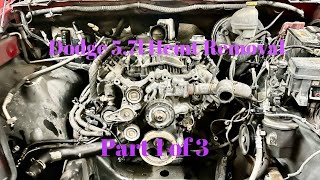
Swapping a 5.7L Hemi is an advanced DIY project. Professional shops typically quote 10 to 15 hours of labor, costing between $1,500 and $3,000. You will need special tools, including a heavy-duty engine hoist and load leveler, fuel line quick-disconnect tools, a Chrysler-specific harmonic balancer puller, a high-quality torque wrench set, a crankshaft pilot bearing puller/slide hammer, and a professional-grade diagnostic scan tool (like wiTECH, AlfaOBD, or Appcar DiagFCA).
Critical Installation Gotchas
Warning: The Crankshaft Pilot Sleeve Trap (6-Speed vs. 8-Speed). The rear flange of the crankshaft uses different pilot sleeves/bushings depending on whether the truck has a 6-speed (65RFE) or 8-speed (8HP70) automatic transmission. You must pull the existing pilot bushing and install the correct sleeve (Mopar Part #4736283AA for the 8-speed) to avoid destroying the transmission's front oil pump and torque converter.
- Pre-Install Bolt Extraction: Inspect the cylinder heads on an engine stand for broken exhaust manifold bolts before lowering the engine into the truck.
- Fragile MDS Solenoid Connectors: The wiring connectors for the four MDS solenoids under the intake manifold become extremely brittle from engine heat and snap easily.
- Sensor and Harness Swap: You must swap your original engine wiring harness and key sensors (knock sensors, oil temperature/pressure sensors, and emissions hoses) onto the replacement engine to ensure all electrical connectors match your truck's specific options.
- Ground Straps: Pay close attention to the location and condition of all engine and chassis ground straps to prevent electronic issues.
Pro Tip: Oil Priming is Critical. It is critical to prime the oiling system before the first start-up to ensure internal components are lubricated and prevent a dry start that can damage bearings.
Programming and Calibration
A Crankshaft Position (CKP) / Camshaft Position (CMP) Sensor Relearn is required. This allows the Powertrain Control Module (PCM) to learn the exact physical relationship between the new crankshaft tone ring and the camshaft sensor. While a dealer tool like wiTECH can perform this, many high-end professional aftermarket scan tools (such as AlfaOBD or Appcar DiagFCA) can also complete the procedure. No immobilizer or security re-marriage is typically required as long as you reuse your original PCM.
Required Consumables at Install
- 7.0 quarts of SAE 5W-20 Full Synthetic Oil (meeting Chrysler MS-6395)
- High-quality spin-on oil filter (Mopar or Wix recommended)
- Mopar-approved OAT (Organic Additive Technology) 50/50 Pre-Mixed Coolant
- 16 new OEM-spec Iridium spark plugs (gapped to 0.043 inches)
- New intake manifold gaskets
- Upgraded multi-layer steel (MLS) exhaust manifold gaskets
- Grade 8 exhaust manifold bolts or upgraded stainless steel studs
- New water pump gasket and thermostat housing gasket
- New OEM-spec thermostat
- Front and rear main seals (highly recommended)
Common Buyer Mistakes
Warning: Using the Wrong Oil Viscosity. Using oil thicker than SAE 5W-20 will cause the MDS solenoids to fail to operate, trigger a P1521 code, and starve the lifter needle bearings of oil, leading to premature failure.
- Reusing Warped Exhaust Manifolds: Bolting warped cast iron manifolds back onto the replacement engine will put massive shear stress on new bolts, causing them to snap again. Manifolds should be machined flat or replaced.
- Forcing the Bellhousing Bolts: Using the bellhousing bolts to pull the engine and transmission together when they do not slide flush easily will crack the transmission pump housing.
- Ignoring the 'Hemi Tick': Assuming a ticking noise is normal injector noise or a minor exhaust leak when it is actually the first warning sign of a failing lifter.
- Failing to Swap Key Sensors: Assuming all sensors on the donor engine are correct for your specific vehicle instead of swapping your original sensors over.
Freight & Delivery Reality

A complete 5.7L Hemi engine assembly is a massive piece of machinery. Verified shipping data shows this unit weighs approximately 665 lbs and measures roughly 43" x 41" x 40" before crating. Because of its size and weight, it ships as Less-Than-Truckload (LTL) freight on a pallet—it is NOT a standard parcel delivery.
When ordering a used engine, expect a pre-purchase verification interview from the supplier to confirm your VIN, transmission type, and drivetrain. Upon delivery, the freight carrier will require a liftgate or a forklift to unload the pallet. It is absolutely critical that you inspect the engine for any physical damage sustained during transit before signing the delivery receipt.
Arrival Inspection: Compression and Leak-Down Testing
Before installing your used 5.7L Hemi, test the engine's internal health. Do this while the engine is still on the shipping pallet. This saves you from installing a bad engine.
- Compression Test: Remove all spark plugs. Hook up a remote starter switch to spin the engine using a 12-volt battery. A healthy 5.7L Hemi should show between 150 and 170 PSI (pounds per square inch) on a compression gauge. The most important detail is consistency. The lowest cylinder reading must be within 15 percent of the highest cylinder reading.
- Leak-Down Test: This test pumps compressed air into each cylinder while the piston is at top dead center (the very top of its stroke). It measures how much air escapes. A good used Hemi should show less than 15 percent air leakage. If a cylinder leaks more than 20 percent, listen for where the air escapes. Air hissing from the exhaust or intake means the valves are not sealing. Air hissing from the oil cap means the piston rings are worn.
Frequently Asked Questions
What is the difference between a 'long block' and a 'complete assembly'?
A 'long block' typically includes the engine block, cylinder heads, and all internal rotating parts (crankshaft, pistons, camshafts, valvetrain). A 'complete assembly' or 'dressed engine' also includes the intake manifold, throttle body, valve covers, oil pan, fuel injectors, and sometimes accessories like the water pump. Most used engines are sold as complete assemblies, while remanufactured units are often sold as long blocks, requiring you to transfer your old parts over.
What is MDS and why does it cause problems?
MDS stands for Multi-Displacement System. It's a cylinder deactivation technology that shuts down four of the eight cylinders during light-load cruising to improve fuel economy. It uses special, complex hydraulic lifters that are prone to failure, especially with extended idling or incorrect oil viscosity. When they fail, they often destroy the camshaft, leading to a very expensive repair.
Can I use a 5.7L Hemi from a Ram 2500 or a Dodge Durango?
No. While the basic engine design is the same, the versions used in heavy-duty trucks and SUVs have significant differences. These include the oil pan (to clear the different front axle on 4WD models), timing cover, accessory brackets (for alternator, power steering), and intake manifold. You must use an engine specifically from a 2014-2018 Ram 1500 or a 2019-2024 Ram 1500 Classic for a direct fit.
What is included with a used engine assembly?
A standard used engine assembly typically includes the engine block, cylinder heads, all internally lubricated parts, oil pan, valve covers, intake manifold, throttle body, timing covers, harmonic balancer, fuel injectors, and fuel rails. It generally does NOT include the alternator, starter motor, A/C compressor, power steering pump, exhaust manifolds, engine control unit (ECU/PCM), or the main vehicle wiring harness.
Do I need to reprogram the computer (PCM) after installing a used 5.7L Hemi?
Yes. While you do not need to perform an immobilizer or security re-marriage if you reuse your original PCM, you must perform a Crankshaft Position (CKP) / Camshaft Position (CMP) Sensor Relearn. This requires a professional-grade diagnostic scan tool so the PCM can learn the exact physical relationship between the new engine's crankshaft and camshaft.
What oil should I use to prevent the Hemi tick?
The single most important factor for preventing MDS lifter failure is diligent oil maintenance. You must use 7.0 quarts of high-quality SAE 5W-20 Full Synthetic oil that meets the Chrysler MS-6395 specification. Using thicker oil can cause the MDS solenoids to fail to operate, trigger a P1521 code, and starve the lifter needle bearings of oil.
Helpful Videos
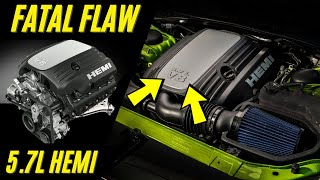
Technical Specifications
Engine Code: EZH; VIN Digit 8: T; Displacement: 5.7L (345 cubic inches); Configuration: V8; Block Material: Cast Iron; Head Material: Aluminum; Required Oil: 7.0 quarts SAE 5W-20 Full Synthetic (MS-6395); Spark Plug Gap: 0.043 inches
We Have This Part in Stock


The information in this article is provided for general reference and educational purposes only. Vehicle specifications, procedures, and part compatibility can vary by production date, trim level, and region. Always consult your vehicle's factory service manual and verify part numbers before purchasing or performing repairs. Safety-critical components such as airbags, seat belts, and braking systems should be installed by a qualified professional.
- Ram 1500:
- Ram 1500 Classic:
- 🎬 Helpful Videos
- 🛍️ Shop This Part
- Engine Identification: Confirming the Correct 5.7L Hemi
- Common Failure Symptoms
- The 'Hemi Tick' (MDS Lifter Failure)
- Other Symptoms
- Diagnostic Flowchart
- Known Problems, TSBs, and Recalls
- What Fails at Every Mileage Band
- Under 60,000 Miles
- 60,000 - 100,000 Miles
- 100,000 - 150,000 Miles
- Over 150,000 Miles
- Real Owner Experiences
- Repair or Replace?
- Questions to Ask Your Installer
- Replacement Cost Comparison
- Installation Guide & Gotchas
- Critical Installation Gotchas
- Programming and Calibration
- Required Consumables at Install
- Common Buyer Mistakes
- Freight & Delivery Reality
- Arrival Inspection: Compression and Leak-Down Testing
- Frequently Asked Questions
- 🎟️ Get 5% Off