

2013-2016 Porsche Panamera 4.8L V8 (M48.40): Problems, Identification, and Used Replacement
Identify the naturally-aspirated 4.8L V8, learn what causes catastrophic failure, and know exactly what to look for when buying a used replacement engine.
- Before installing a used engine, you must verify the camshaft adjuster bolt recall (Porsche Campaign AH08) has been performed to prevent catastrophic failure.
- Confirm the engine is the correct version for your drivetrain; RWD (S) and AWD (4S, GTS) engines are not interchangeable without major modifications.
- Proactively 'pin' or weld the glued-in coolant pipes on any used engine before installation to prevent sudden, massive coolant leaks.
- For catastrophic failures like severe bore scoring or internal metal debris, replacing the engine with a quality used unit is often more economical than a rebuild.
- Budget for 'while you're in there' parts like the water pump, thermostat, seals, and vacuum lines during the swap to ensure long-term reliability.
Identification: Is This the Right Engine for Your Panamera?


This article covers the naturally-aspirated 4.8L V8 engine used in the 2013-2016 Porsche Panamera S, 4S, and GTS models. This engine belongs to the Porsche M48 family and is a 90-degree, direct-injection V8. The primary engine codes for this specific variant are M48.40 (also written as M4840) and CXPA (typically for later GTS models), as well as MCX.PA.
Key Identification Checks
Before purchasing a used engine, it's critical to verify it's the correct one for your vehicle. Here’s how to confirm compatibility:
| Verification Method | Details |
|---|---|
| Check the VIN | The 5th digit of your Panamera's Vehicle Identification Number (VIN) identifies the original engine. For this family, 'B' corresponds to the 4.8L S/4S, 'F' corresponds to the 4.8L GTS, and 'C' corresponds to the 4.8L Turbo. |
| Locate the Engine Code | The engine code is stamped on the lower left side (driver's side in the US) of the engine block, near the oil pan sealing surface. It should read M48.40 or CXPA. |
| Check Part Numbers | The original engine block part number matches 94810100140, or the long block assembly part number 94810094062. |
Warning: The most common and costly interchange mistake is mixing up Rear-Wheel Drive (RWD) and All-Wheel Drive (AWD) engines. The Panamera S is RWD, while the 4S and GTS are AWD. On AWD models, the front axle shaft passes through a tube cast into the upper oil pan and engine block. A RWD engine block and oil pan are physically different and cannot be installed in an AWD car without extensive, expert-level modifications.
While the S, 4S, and GTS share the same basic 4.8L block design, the GTS model features performance-oriented differences, including modified camshafts, a unique air intake system, and specific Engine Control Unit (ECU) software to produce more horsepower. Additionally, wiring harness routing, vacuum line configurations, and accessory brackets differ between pre-facelift (2010–2013) and facelift (2014–2016) models.
Common Failure Symptoms
Engine failure can manifest in several ways. If you experience any of the following, a complete engine replacement may be necessary:
- Catastrophic Noise: A loud knocking, banging, or grinding sound that changes with engine RPM often indicates severe internal damage, such as a failed connecting rod bearing or camshaft adjuster failure.
- Excessive Oil Consumption and Smoke: Burning more than one quart of oil every 600-1,000 miles, along with visible blue or gray smoke from the exhaust, often points to cylinder bore scoring or failed piston rings. 🎬 Watch: Severe cylinder scuffing and bore scoring teardown
- Metal Debris in Oil: Finding significant amounts of metallic shavings (especially aluminum) in the engine oil or filter during an oil change is a definitive sign of severe internal wear.
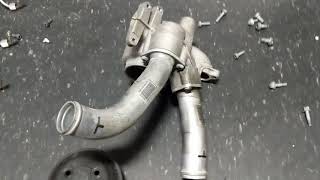
- Sudden Coolant Loss and Overheating: A rapid loss of coolant, potentially creating a large puddle under the car, can be caused by failed coolant pipe adhesive. 🎬 Watch: Finding and fixing a Panamera coolant leak This can lead to severe overheating and warped cylinder heads.
- Low or No Compression: If an engine has lost compression in one or more cylinders due to a warped head, failed head gasket, or damaged pistons, it will run poorly, misfire, and lack power.
Diagnostic Flowchart
Major Known Problems and Recalls

The 4.8L V8 is a strong performer, but it has several well-documented weak points. When buying a used engine, it is critical to verify that these issues have been addressed.
Camshaft Controller Fastener Failure
This is the most critical issue for earlier models. The aluminum bolts used to fasten the camshaft adjusters can shear off, causing the engine timing to fail. This can lead to catastrophic engine damage or cause the engine to stall while driving.
| Item | Identifier |
|---|---|
| NHTSA Recall | 17V368000 |
| Porsche Campaign | AH08 |
| Affected Years | 2010–2012 Panamera S, 4S, and Turbo models (and some early-build 2013 vehicles). |
| Remedy | Porsche dealers replace the original aluminum fastening screws with updated steel bolts featuring a distinct center pin. |
Warning: Never install a used engine from an affected year without definitive proof that the AH08 recall has been performed. You can verify this with a Porsche dealer using the donor vehicle's VIN.
Coolant Pipe Adhesive Separation
The engine utilizes several critical coolant pipes and fittings that are glued into the thermostat housing and rear coolant bridge. Over time, heat cycles cause this adhesive to fail, allowing the pipes to back out and cause a sudden, massive coolant leak.
- Affected Years: 2010–2016
- Remedy: The preferred solution is to permanently secure the pipes while the engine is out of the vehicle. This is done by "pinning" (drilling, tapping, and inserting set screws to mechanically lock the pipes) or welding them in place. Porsche also released an updated bolt-on replacement part for the rear coolant bridge.
Pro Tip: This is a "while you're in there" job. It is highly recommended to proactively pin or weld the coolant pipes on any used 4.8L engine before installation to prevent future failure.
Cylinder Bore Scoring
Bore scoring is the formation of scratches or grooves on the cylinder walls, leading to increased oil consumption, loss of compression, and a characteristic ticking or "piston slap" noise when the engine is cold. This issue is caused by a combination of factors, including friction, lubrication breakdown, and running rich fuel mixtures. While it can affect all years, it is more common in colder climates and on vehicles used for frequent short trips.
High-Pressure Fuel Pump (HPFP) Failure
The direct-injection system relies on a camshaft-driven High-Pressure Fuel Pump (HPFP). Failure of this pump is common and will result in a check engine light (often triggering P0087 low fuel pressure codes), rough running, and a loss of power.
Replacement Cost Estimates
The cost to replace a Panamera 4.8L V8 engine is significant. Prices vary based on mileage, condition, and the source of the part. The following are estimates and do not include taxes or shipping.
| Part or Service | Estimated Cost (USD) | Notes |
|---|---|---|
| Used OEM Engine | $4,000 - $13,500 | From a professional auto recycler. Price depends heavily on mileage, exact variant (GTS vs S), and included accessories. |
| Remanufactured Engine | $6,800 - $15,000+ | Rebuilt by a specialist with updated components. Often comes with a warranty. |
| New OEM Crate Engine | $20,000+ | A brand new engine directly from Porsche. (For context, a new 4.0T V8 was quoted at over $56,000). |
| Installation Labor | $3,500 - $5,500 | Represents 18 to 25 hours of labor at an independent specialist shop. Dealer rates will be higher. |
What Fails at Every Mileage Band
Pro Tip: The mileage bands below describe the typical condition of USED REPLACEMENT UNITS at that mileage. The checklists provided are things to do WHILE INSTALLING the purchased engine, not maintenance for your current engine.
Under 60,000 Miles
Even low-mileage engines have age-related vulnerabilities. Coolant leaks from the thermostat housing and water pump can appear as early as 30,000 to 50,000 miles. The camshaft adjuster bolts on 2010-2012 models (and some early 2013s) are a critical failure point, with some failing between 30,000 and 60,000 miles. Engine control unit (ECU) and electronic module malfunctions can surface around 40,000 miles. Excessive oil consumption (adding oil every 600-1,000 miles) and scored cylinders have also led to complete engine failure on low-mileage vehicles.
- ✓Do during install (required): Proactively address the glued-in coolant pipes by "pinning" them or replacing the housing with the updated bolted design.
- ✓Do during install (required): Verify the camshaft adjuster bolt recall (AH08) was performed. If not, replace the aluminum bolts with the updated steel versions immediately.
- ✓Cheap insurance while the engine is out: Replace the water pump and thermostat with new OEM parts, as they have a high failure rate.
- ✓Cheap insurance while the engine is out: Install 8 new OEM Bosch or NGK spark plugs.
- ✓Cheap insurance while the engine is out: Replace front and rear main seals, valve cover gaskets, and intake manifold gaskets.
60,000 - 100,000 Miles
In this range, High-Pressure Fuel Pump (HPFP) failures become more common, leading to long crank times and reduced engine power warnings. Carbon buildup on intake valves typically becomes noticeable between 60,000 and 80,000 miles, causing rough idling. Oil leaks from the timing cover and valve cover gaskets are frequently reported, and failures of the PCV/breather system can lead to high oil consumption.
- ✓Do during install (required): All required items from the Under 60k band.
- ✓Do during install (recommended): Strongly consider replacing the HPFP, as failures are common in this range.
- ✓Cheap insurance while the engine is out: Replace all eight ignition coils to prevent misfires caused by age and heat degradation.
- ✓Cheap insurance while the engine is out: Inspect and likely replace the drive belt and tensioners.
- ✓Cheap insurance while the engine is out: Perform a walnut shell blast or chemical cleaning to remove carbon deposits from the intake valves while the engine is accessible.
100,000 - 150,000+ Miles
A well-maintained Porsche Panamera 4.8L V8 engine can last around 150,000 miles or more, provided it receives 10,000-mile/1-year oil changes with Porsche-approved A40 oil (0W-40 or 5W-40) and PDK transmission fluid changes every 40,000 miles. However, past 100,000 miles, cylinder bore scoring remains a risk. Fuel injectors can fail after 100,000 kilometers (approx. 62,000 miles). Timing chain guides and tensioners may wear, and general wear on sensors, engine mounts, and vacuum lines accelerates.
- ✓Do during install (required): All required items from the previous bands.
- ✓Do during install (required): Replace all brittle plastic vacuum lines, as they are almost guaranteed to crack during the swap.
- ✓Do during install (recommended): Strongly consider replacing the timing chain, guides, and tensioner as a preventative measure.
- ✓Do during install (recommended): Inspect and consider replacing the fuel injectors, especially if their history is unknown.
- ✓Cheap insurance while the engine is out: Replace the engine mounts, as they will likely be collapsed or worn.
Real Owner Experiences
| Source | Mileage | What Happened | Cost |
|---|---|---|---|
| Rennlist | 20,000 miles | A 2012 Panamera experienced complete engine failure due to scored cylinders, which started as excessive oil consumption. The dealer replaced the entire engine under warranty. | N/A (Warranty) |
| AUTODOC BLOG | 30,000-50,000 km | Cooling system weaknesses, particularly with the thermostat and water pump, are noted to appear in this range, leading to overheating and coolant loss. | Repair costs for a water pump can range from $1,200-$1,800, and a thermostat housing can be $800-$1,200. |
| Automotive Faults | 30,000-60,000 miles | Failure of the aluminum camshaft adjuster bolts is a high-severity issue, potentially leading to catastrophic engine failure. | If the bolts fail, a new engine may be required, costing upwards of $15,000. |
| Rennlist | 70,000 miles | A 2013 Panamera GTS required replacement of the valve cover gaskets. | Undisclosed |
| Rennlist | 72,000 miles | Owner of a 2014 Turbo reported needing a new power steering pump, front upper and lower control arms, thermostat, thermostat housing, water pump, and motor mounts around this mileage. | $17,000+ in repairs over one year. |
| PcarWise | 60,000-80,000 miles | Carbon buildup on DFI engines becomes a typical issue, requiring professional cleaning (e.g., walnut shell blasting) to restore performance. | Undisclosed, but one owner paid $1500 for a coolant pipe repair that included walnut shell blasting. |
| YouTube/Porschify | 160,000 km (approx. 100,000 miles) | A vehicle reviewed showed remarkable interior durability but highlighted the risk of catastrophic engine issues like camshaft drive gears. | A single service bill on a similar car was noted as $15,000. |
| Rennlist | Over 100,000 miles | Forum discussions for high-mileage cars emphasize that while the core engine can be reliable, age-related items like suspension and electronics become the main concern. | Varies, but owners recommend having a substantial budget for repairs or an extended warranty. |
| Rennlist | Not specified | Owner of a 2015 Turbo S was advised to rebuild the engine after lack of oil pressure caused metal filings throughout the system. The forum poll overwhelmingly recommended replacing the engine with a used unit due to the high cost of rebuilding. | Not specified |
| Not specified | The owner of a 2014 Panamera 4S had a blown engine due to a failed fuel injector. Commenters suggested finding a used long block for around $5,000 and having an independent shop perform the swap. | $48,000 from a dealer, $30,000 from an independent shop for engine replacement. | |
| Rennlist | Not specified | Owner's 2010 Panamera Turbo engine was destroyed due to running with no oil. They were exploring using a less expensive Cayenne Turbo engine ($5k-$8k) as a replacement for the Panamera Turbo engine ($8.5k-$12k). | Not specified |
Repair or Replace?

Deciding whether to repair your existing 4.8L V8 or replace it entirely depends on the specific failure mode.
- Camshaft Controller Fastener Failure: The AH08 recall work is done free of charge by dealers. If the failure has already occurred and caused damage, the cost can be significant. Preventative replacement of the bolts is highly recommended. If the bolts have already failed without causing catastrophic damage, a repair is feasible but requires careful inspection to ensure all bolt fragments are recovered.
- Coolant Pipe Adhesive Separation: It ALWAYS makes sense to proactively repair this. A proactive fix at an independent shop can cost around $1,500, and a DIY pinning kit costs about $50 in parts. If done as part of a larger engine-out service, the incremental labor is minimal. However, some forum users report quotes from $9,000 to $13,000 to address both coolant pipes and cam pinning if the engine must be removed solely for this purpose.
- High-Pressure Fuel Pump (HPFP) Failure: This is a bolt-on part replacement. While labor-intensive, it does not require full engine disassembly and is a clear case for repair.
Pro Tip: For coolant pipe adhesive separation, a proactive fix is always the best course of action. A DIY pinning kit costs about $50, and an independent shop may charge around $1,500, which is far cheaper than addressing the issue after it causes an overheating event.
When Replacement is Smarter: Replacement is the smarter option in cases of catastrophic failure, such as severe cylinder bore scoring or when the camshaft adjuster bolts have failed and circulated metal debris throughout the engine. A full engine rebuild for bore scoring can start at $15,000 to $20,000 and go up significantly. Given the high cost of Porsche parts and specialized labor, a quality used engine (typically ranging from $4,000 to $13,500 plus labor) is often a much more economical choice.
Questions to Ask Your Installer
- Have you verified this used engine is the correct version for my vehicle's drivetrain (AWD vs. RWD)?
- Can you verify if the AH08 camshaft bolt recall has been performed on this donor engine? If not, will you be replacing the bolts with the updated steel versions before installation?
- Will you be proactively 'pinning' or welding the coolant pipes on the thermostat housing and coolant bridge before installing the engine?
- What is your procedure for replacing brittle plastic vacuum lines and other 'while you're in there' items like the water pump, thermostat, and main seals?
- Do you have the Porsche PIWIS tool required for the post-installation programming, including the crankshaft position sensor relearn and PDK calibration?
- Will you be using a vacuum tool to refill the cooling system to prevent air pockets?
- What is the source and documented mileage of the used engine, and what warranty is provided?
Freight & Delivery Reality

Purchasing a used Porsche 4.8L V8 engine means dealing with heavy freight. This assembly weighs approximately 550 lbs and measures roughly 48" x 40" x 36" before crating. It ships as LTL (Less-Than-Truckload) freight on a pallet—it is NOT a parcel shipment.
Because of its size and weight, delivery requires a truck equipped with a liftgate if you are shipping to a residential address or a shop without a loading dock. Industry best practice dictates a pre-purchase verification interview to confirm exact fitment (especially AWD vs RWD) before the engine is shipped.
Warning: When the engine arrives, you must inspect the pallet and the engine for any transit damage before signing the delivery receipt. Failure to note damage at the time of delivery can make it impossible to file a successful freight claim.
Frequently Asked Questions
Can I use an AWD engine in my RWD Panamera?
No, this is not a direct swap. The All-Wheel Drive (AWD) engine block and upper oil pan are physically different from the Rear-Wheel Drive (RWD) versions to accommodate the front axle shaft. Attempting this swap would require significant and costly modifications.
What is "pinning the coolant pipes"?
Pinning is a permanent fix for the glued-in coolant pipes that are prone to failing. A technician drills a small hole through the housing and the pipe, taps threads into the hole, and inserts a small screw with thread locker. This mechanically locks the pipe in place, preventing it from backing out even if the original adhesive fails.
Does this engine require programming after installation?
Yes. A Porsche-specific PIWIS diagnostic tool (or a very high-end equivalent) is required. After installation, a technician must perform several calibration procedures, including a crankshaft position sensor relearn, clearing all engine adaptation values, and running the PDK transmission clutch calibration routine to ensure proper operation. The tool is also needed to electronically open cooling system valves to properly bleed the coolant.
What parts should I always replace during an engine swap?
To ensure reliability and prevent future leaks, it is essential to replace several key items while the engine is out. This includes the water pump and thermostat, all coolant and vacuum lines (which become brittle with age), the front and rear main seals, intake manifold gaskets, valve cover gaskets, and spark plugs. It is also wise to install new ignition coils, as the old ones are prone to cracking.
What comes included with a used engine assembly?
A standard used engine assembly typically includes the engine block, cylinder heads, internally lubricated parts, oil pan, valve covers, timing covers, harmonic balancer, intake manifold, fuel injectors, high-pressure fuel pump (HPFP), and throttle body. It generally does NOT include the A/C compressor, starter motor, alternator, power steering pump, exhaust manifolds, or wiring harness.
What special tools are required for this engine swap?
Due to the complexity of the Panamera, several specialized tools are required. These include the Porsche PIWIS diagnostic scan tool, a Camshaft Alignment/Timing Tool Kit (Porsche OEM #9678), a Vacuum Coolant Refilling Tool (like the UView Airlift), a Triple-Square (XZN) Socket Set, a Torx socket set, an engine hoist with a heavy-duty load leveler, and a subframe drop table or lift.
Are the bolts on this engine reusable?
Many are not. The aluminum bolts used on the timing cover, oil pan, and accessory brackets are Torque-to-Yield (TTY) and are one-time use only. Reusing them can lead to stripped threads or snapped bolt heads.
Helpful Videos
Technical Specifications
OEM Part Numbers: 94810100140 94810094062
Engine Family: Porsche M48; Displacement: 4.8L; Configuration: 90-degree V8; Induction: Naturally-Aspirated; Fuel System: Direct Injection; Engine Codes: M48.40, M4840, CXPA, MCX.PA; Affected Models: 2013-2016 Panamera S, 4S, GTS; Weight: Approx. 550 lbs
We Have This Part in Stock


The information in this article is provided for general reference and educational purposes only. Vehicle specifications, procedures, and part compatibility can vary by production date, trim level, and region. Always consult your vehicle's factory service manual and verify part numbers before purchasing or performing repairs. Safety-critical components such as airbags, seat belts, and braking systems should be installed by a qualified professional.
- Porsche Panamera:
- 🎬 Helpful Videos
- 🛍️ Shop This Part
- Identification: Is This the Right Engine for Your Panamera?
- Key Identification Checks
- Common Failure Symptoms
- Diagnostic Flowchart
- Major Known Problems and Recalls
- Camshaft Controller Fastener Failure
- Coolant Pipe Adhesive Separation
- Cylinder Bore Scoring
- High-Pressure Fuel Pump (HPFP) Failure
- Replacement Cost Estimates
- What Fails at Every Mileage Band
- Under 60,000 Miles
- 60,000 - 100,000 Miles
- 100,000 - 150,000+ Miles
- Real Owner Experiences
- Repair or Replace?
- Questions to Ask Your Installer
- Freight & Delivery Reality
- Frequently Asked Questions
- 🎟️ Get 5% Off