

2024-2025 Nissan Rogue 1.5L VC-Turbo (KR15DDT): Problems, Identification, and Used Replacement
Identify the KR15DDT engine, understand the bearing seizure and throttle recalls that kill it, and learn when to swap in a used OEM replacement.
- Before purchasing, you must verify the engine is for a US-built Rogue by checking that the vehicle's VIN starts with '1', '4', or '5' and has 'B' as the 4th digit.
- When installing a used engine, it is mandatory to flush or replace the turbocharger's oil lines to prevent metal debris from the old engine from destroying the replacement unit.
- Installation is not plug-and-play; it requires a Nissan-specific scan tool to perform ECM software updates and relearn procedures for the throttle and crankshaft position sensor.
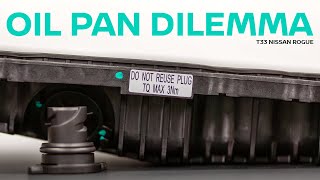
- To prevent catastrophic damage, never tighten the plastic oil pan's drain plug beyond 25 ft-lbs and always use a torque wrench.
- Check with a Nissan dealer to ensure critical recalls for engine bearing seizure (NHTSA 26V080) and the electronic throttle chamber (NHTSA 26V081) have been performed.
Identifying the Correct 1.5L VC-Turbo Engine


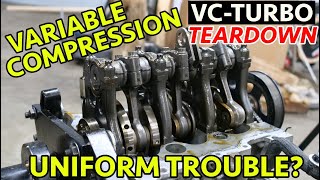
The engine used in 2024–2025 Nissan Rogue models is a 1.5-liter, inline 3-cylinder turbocharged engine known as the KR15DDT (also identified by codes MR15DDT or HRA2DDT). It features Nissan's VC-Turbo technology, which stands for Variable Compression Turbo. This direct-injection system continuously adjusts the engine's compression ratio to optimize for either power or efficiency, depending on driving conditions.
VIN Check: The Only Way to Be Sure
Before purchasing a replacement engine, you must verify it is compatible with your specific vehicle. A critical distinction exists between Rogues built in the United States and those built in Japan. This used engine assembly is strictly for US-built models only.
- Check the 1st Digit of your VIN: Your vehicle must be US-built. Look for a VIN starting with '1', '4', or '5'. The VIN is visible at the base of the windshield on the driver's side or on the safety certification label in the driver's door jamb.
- Check the 4th Digit of your VIN: For this engine, the fourth character of your 17-digit VIN should be 'B'.
- Confirm your Drivetrain: Verify whether your vehicle is Front-Wheel Drive (FWD) or All-Wheel Drive (AWD) so you can transfer the correct brackets and transfer case components.
Warning: Do not install this engine in a Japan-built Rogue (VIN starting with 'J'). Japan-built models use different wiring harness routing, accessory mounting brackets, and Engine Control Unit (ECU) software calibrations. The swap is not physically or electronically compatible.
What's Included in a Used Engine Assembly?
A used engine is typically sold as a "long block." Based on standard auto recycling industry practices, you should expect the following parts to be included:
- Cylinder block and all internal rotating parts (crankshaft, pistons, rods)
- Cylinder head(s) and valvetrain components
- Oil pan and valve cover(s)
- Timing covers
- Intake manifold and fuel injection system
- Throttle body and harmonic balancer
Key components are generally not included and must be transferred from your old engine or purchased separately. These include the A/C compressor, starter, alternator, power steering pump, exhaust manifold, and the main engine wiring harness. Crucially, the turbocharger is not included with this assembly.
Common Failure Symptoms and Diagnosis

Failures in the KR15DDT engine are often linked to significant internal problems or issues with its control systems, as highlighted by major recalls.
Symptoms of Major Internal Failure
The most severe issue is engine bearing seizure. Symptoms leading up to this failure can include:
- Loud knocking or banging sounds from the engine that increase with RPM.
- Sudden loss of power while driving.
- Engine stalling and being unable to restart.
- Visible metal shavings in the engine oil, often discovered during an oil change.
In extreme cases, a bearing failure can puncture the engine block, causing a severe oil leak and increasing the risk of a fire.
Symptoms Related to Engine Systems
A separate recall addresses the electronic throttle chamber, which can cause different symptoms:
- Reduced engine power or erratic throttle response.
- Vehicle stalling when stationary.
- Check engine light illumination.
Pro Tip: To confirm an internal engine failure, a mechanic should inspect the oil pan for metallic debris. This is a key diagnostic step outlined by Nissan in its recall procedures and is the most reliable way to verify a seized bearing.
Diagnostic Flowchart
Known Problems, Recalls, and Technical Service Bulletins (TSBs)
The 2024-2025 Rogue's KR15DDT engine is subject to several important factory notices. Always check with a Nissan dealer to see if a specific vehicle has had these recall remedies performed.
Severe Recall: Engine Bearing Seizure
Documents: NHTSA Recalls 26V080 and 25V-437; Nissan Recalls R25E2, R25E3.
Affected Years: 2023–2025 Nissan Rogue.
Problem: High engine oil temperatures can degrade the oil's lubricating properties, leading to main and link engine bearing seizure. This can result in catastrophic engine damage and a loss of power.
Remedy: Dealers will reprogram the Engine Control Module (ECM) software. They will also inspect the oil pan for metal debris and, if found, replace the entire engine assembly free of charge.
Severe Recall: Electronic Throttle Chamber Gear Fracture
Documents: NHTSA Recall 26V081; Nissan Recalls R25E3, R25E4.
Affected Years: 2024–2025 Nissan Rogue.
Problem: The plastic gear inside the electronic throttle chamber can fracture due to stress from faulty ECM software. A broken gear fragment can jam the throttle valve, potentially leading to a loss of power.
Remedy: The dealer will reprogram the ECM and inspect the throttle chamber, replacing it if necessary at no cost.
Moderate Issue: Plastic Oil Pan Thread Damage
Document: Nissan TSB NTB22-003.
Affected Years: 2022–2025 Nissan Rogue.
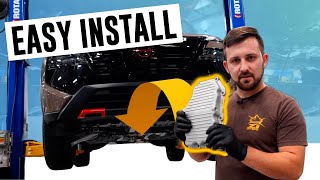
Problem: The engine's lower oil pan is made of plastic with a metal threaded insert for the drain plug. Over-tightening the drain plug can cause the insert to spin out or strip, leading to a major oil leak.
Remedy: Never tighten the drain plug beyond 25 ft-lbs (33.5 N·m). If the pan is damaged, it must be completely replaced.
What Fails at Every Mileage Band
Pro Tip: The mileage bands below describe what typically fails on these engines at various stages of life. If you are buying a used replacement engine, find its mileage band to see what components you should inspect or replace before dropping it into your vehicle. The checklists provided are things to do WHILE INSTALLING the purchased engine, not maintenance for your current broken engine.
Under 60,000 Miles
Engines in this early stage are highly susceptible to the factory defects that triggered major recalls. The most prominent failures include major internal engine failure due to main and link bearing seizure (NHTSA 26V080 and 25V-437), electronic throttle chamber gear fractures (NHTSA 26V081), and premature head gasket failures, with some reports occurring at less than 20,000 miles. Owners also report crankcase ventilation (PCV) system faults causing rough idle and oil smells, as well as glitching start-stop systems.
- ✓Do during install (required): Verify all recall remedies (ECM flashes for bearing seizure and throttle body) have been performed on the donor vehicle or are performed on the recipient vehicle immediately after install.
- ✓Do during install (required): Perform a thorough flush of all turbocharger oil lines and coolers before transferring the turbo to the replacement engine.
- ✓Do during install (required): Use a new intake manifold gasket and throttle body gasket upon reassembly.
- ✓Do during install (recommended): Install new OE-spec iridium spark plugs.
- ✓Cheap insurance while the engine is out: Replace the PCV valve, as it is inexpensive and difficult to access once the engine is installed.
60,000 - 100,000 Miles
As the engine approaches the 100,000-mile mark, carbon buildup on the intake valves becomes a significant concern due to the direct-injection-only design, leading to reduced power. Because the engine lacks hydraulic valve lifters, valve adjustments may be required every 60,000 miles (100,000 km). Timing chain stretch and wear on the plastic chain guides also begin to surface as potential issues.
- ✓Do during install (required): All required items from the Under 60K band.
- ✓Do during install (recommended): Strongly consider a preventative walnut blast cleaning of the intake valves to remove carbon deposits while the engine is out and accessible.
- ✓Do during install (recommended): Replace all accessible rubber components like coolant hoses and serpentine belts.
- ✓Cheap insurance while the engine is out: Replace the timing chain, tensioners, and guides as a preventative measure, as labor is the primary cost of this job. Replace the water pump if it is driven by the timing assembly.
100,000 - 150,000+ Miles
Sources suggest the KR15DDT engine was engineered for a lifespan of approximately 150,000 to 160,000 miles (250,000 km). However, achieving this requires strict adherence to 5,000-7,500 mile oil change intervals using SAE 0W-20 full synthetic oil. At this high mileage, the complex variable compression system (multi-link mechanism and actuator motor) presents a higher risk of failure, which can be prohibitively expensive to repair. The turbocharger itself becomes a wear item, and the Jatco CVT transmission paired with this engine is a known weak point.
- ✓Do during install (required): Assume the turbocharger has significant wear. A thorough inspection is required, and replacement should be budgeted for.
- ✓Do during install (required): Mandatory replacement of the timing chain, guides, and tensioner.
- ✓Do during install (recommended): Replace front and rear main seals.
- ✓Cheap insurance while the engine is out: Replace all gaskets, including the oil pan gasket, valve cover gaskets, and exhaust manifold gaskets.
Real Owner Experiences
The following table highlights real-world failures and costs reported by Nissan Rogue owners dealing with the 1.5L VC-Turbo engine.
| Source | Mileage | What Happened | Cost |
|---|---|---|---|
| NHTSA Complaint | approx. 60,000 | Vehicle stalled while driving at 30 MPH with multiple warning lights. The engine mounts were replaced, but the failure recurred. This was related to the engine bearing recall. | Not specified, likely warranty/recall. |
| 18,000 & 23,000 | A 2022 Rogue required a new engine and turbo at 18,000 miles after excessive vibrations were reported and metal was found in the oil. The replacement engine then failed again at 23,000 miles. | Not specified, warranty. | |
| NHTSA Complaint | Not specified | Engine suddenly shut off without warning and would not restart. The dealer confirmed it was related to an active recall but had no remedy available at the time. | Not specified, recall. |
| 26,000 (42,000 km) | A 2023 Rogue experienced a catastrophic engine failure. | Not specified, likely warranty. | |
| NHTSA Complaint | approx. 60,000 | Owner reported an abnormal clicking sound, followed by the vehicle stalling with multiple warning lights illuminated. This was linked to the engine bearing recall. | Not specified, recall. |
| General Forum Discussion | General consensus | Due to the newness of the engine (introduced in 2021/2022), there are very few public reports of KR15DDT engines reaching this mileage. Reliability past 100,000 miles is largely speculative but based on the complexity and early issues, caution is advised. | N/A |
| 46,000 | Engine was replaced under warranty after experiencing a sudden loss of power. | $0 (Warranty) | |
| 48,243 | Dealer recommended a new engine for a blown head gasket. Nissan Consumer Affairs denied assistance. | Quoted $10,500 | |
| 64,000 | Engine failed, extended warranty provider demanded a teardown for proof. Dealer was attempting to get it covered under a recall. | Quoted $2,000 out of pocket for teardown | |
| Torque News | Not specified | Owner had to have the car towed to a dealer for a stripped plastic oil pan drain plug. The part was on national backorder. | Over $500 |
| Not specified | Replaced the plastic oil pan for the second time due to the drain plug breaking away during an oil change. | Over $1,000 |
Repair or Replace?
Deciding whether to repair your existing engine or replace it entirely depends on the nature of the failure.
- When to Repair: If you are dealing with a damaged plastic oil pan (stripped drain plug), repair is mandatory. While parts can be on backorder and costs range from $483 to over $1,000, it is significantly cheaper than an engine swap. Similarly, electronic throttle chamber failures (Recall 26V081) should always be repaired, as the remedy is an ECM reprogram and potential throttle chamber replacement at $0 cost to the owner under the recall.
- When to Replace: Replacement is the only viable option for severe internal engine damage, such as the bearing seizure addressed by NHTSA Recall 26V080. If an inspection reveals metal debris in the oil pan, Nissan will replace the engine at no cost under warranty/recall. If you are out of warranty and suffer a major failure like a blown head gasket or seized bearings, a used replacement engine (typically running $2,500 - $4,000) is more economically viable than a complex internal rebuild, especially given the 12-15 hours of labor required.
Questions to Ask Your Installer
- Have you confirmed this used engine is from a US-built Rogue (VIN starting with 1, 4, or 5)?
- Will you be performing the required ECM calibrations, throttle relearn, and crankshaft position sensor relearn with a Nissan-specific scan tool?
- How will you be flushing the turbocharger oil lines to prevent contamination of the replacement engine?
- What is your procedure for torquing the plastic oil pan's drain plug to avoid stripping it (should be 25 ft-lbs)?
- Can you verify if the recalls (NHTSA 26V080 and 26V081) have been performed on my vehicle or the donor vehicle, and will you install the latest ECM software?
- If my vehicle is AWD, are you familiar with the specific procedure for aligning the transfer case?
Replacement Cost Comparison
| Component / Service | Estimated Cost Range (USD) | Notes |
|---|---|---|
| New OEM Engine | $10,000 - $16,500+ | Sourced directly from Nissan. Price is for the part only and can be very high, as reported by some owners. |
| Remanufactured Engine | $1,082 - $3,404 | Rebuilt by a specialized company to meet or exceed original specifications and typically includes a warranty. |
| Used OEM Engine | $2,500 - $4,000 | A salvaged unit from a donor vehicle. Mileage and condition vary. A donor engine for this guide came from a 2025 Rogue with approximately 31,150 miles. |
| Installation Labor | $1,800 - $3,000 | Represents an estimated 12-15 hours of shop time. Labor rates typically range from $125 to $250 per hour at dealerships. |
Installation: Critical Steps and Common Mistakes
Installing this engine is an "Expert" level DIY job or requires a professional shop. Simple errors can lead to immediate failure of the replacement unit.
Required Tools and Consumables
Before beginning the 12-15 hour installation, ensure you have the following:
- Nissan Multi-Purpose Tool Set (OEM Part # 99501-6FV0A or 99501-6RR0A)
- High-end OBD2 diagnostic scanner capable of performing Nissan-specific electronic throttle relearns and ECM calibrations
- Precision torque wrench
- Engine Oil: 5.0 quarts of SAE 0W-20 full synthetic motor oil
- Genuine Nissan oil filter (Part # 15208-65F1B or 15208-65F1A)
- Genuine Nissan Blue Long Life Antifreeze/Coolant
- New intake manifold gasket, exhaust manifold gasket, and turbocharger mounting gaskets/washers
- New OE-spec iridium spark plugs and a new oil drain plug crush washer/gasket
Required Programming and Calibration
This is not a simple plug-and-play swap. The vehicle will not run correctly without performing several electronic relearn procedures using a Nissan CONSULT-III Plus or an equivalent high-end scanner.
- Engine Control Module (ECM) Calibration: The ECM must be updated with the latest software from Nissan, especially to incorporate fixes from recent recalls.
- Throttle Valve and Idle Relearns: The system must be calibrated to recognize the new throttle body's closed position and to establish a stable idle.
- Crankshaft Position (CKP) Sensor Relearn: This procedure synchronizes the sensor with the ECM to ensure accurate ignition and fuel timing.
Installation Traps to Avoid
- Reusing Contaminated Turbo Oil Lines: The original engine likely failed and sent metal debris through the oil system. You MUST flush or replace the turbocharger's oil feed and return lines. Reusing contaminated lines will feed metal debris directly into your new engine, instantly voiding your warranty.
- Over-torquing the Oil Drain Plug: The plastic oil pan is notoriously fragile. Tighten the drain plug to 25 ft-lbs (33.5 N·m) and no more. Always use a new crush washer. Never use an impact gun.
- Variable Compression Actuator Sensitivity: The VC-Turbo system relies on an external actuator motor that controls the multi-link mechanism inside the block. Do not drop, bang, or manually force this actuator.
- Ignoring the AWD Transfer Case: On All-Wheel Drive models, the Power Take-Off (PTU) unit must be carefully removed and reinstalled. Ensure the splines are clean, properly lubricated with OE-spec grease, and that all seals are replaced to prevent leaks.
- Ordering for a Japan-Built Rogue: Buying this US-built engine for a Japan-built vehicle (VIN starting with 'J') is a costly mistake. The wiring harness must match the US-built configuration.
Freight & Delivery Reality

When ordering a used 1.5L VC-Turbo engine, it will not arrive in a standard cardboard box via regular mail. This assembly weighs approximately 360 lbs and measures roughly 34" x 30" x 34" before crating. It ships as LTL (Less Than Truckload) freight on a wooden pallet.
Because of the size and weight, delivery requires a freight truck equipped with a liftgate if you are delivering to a residential address or a shop without a loading dock. Industry best practice dictates a pre-purchase verification interview to confirm your VIN and shipping details. When the engine arrives, you must thoroughly inspect the pallet and the engine for any physical damage caused during transit before signing the delivery receipt.
Arrival Inspection: Compression and Turbo Checks
When your used engine arrives, inspect it before installation. Perform a leak-down test or a compression test. A healthy engine should show consistent pressure across all three cylinders. The readings should be within 10 to 15 percent of each other. If one cylinder is much lower than the rest, the engine has internal damage.
Because the KR15DDT is a turbocharged engine, you must check the turbocharger for shaft play. Reach into the turbo and gently wiggle the impeller (the small metal fan blade). A tiny amount of side-to-side movement is normal when the engine has no oil pressure. However, the blades must never touch the metal housing. If you feel any in-and-out movement (pushing and pulling the shaft), the turbocharger is failing and must be replaced.
Before the First Start: Priming and Fluids
You must install fresh fluids and prime the oil system before starting a used engine. If you skip this step, the engine will run dry for a few seconds. This dry running causes instant, permanent damage to the internal bearings and the turbocharger.
- Fresh Oil and Filter: Install a new oil filter and fill the engine with fresh oil. The 1.5L VC-Turbo requires API SP or ILSAC GF-6A certified oil to prevent low-speed pre-ignition (LSPI). Use 0W-20 full synthetic oil.
- Fresh Coolant: Fill the cooling system with Nissan Blue Long Life Antifreeze/Coolant. You can also use an equivalent 50/50 premixed blue coolant designed for Asian vehicles. Bleed all air pockets from the cooling system so the engine does not overheat.
To prime the engine, disable the fuel and spark systems. You can do this by removing the fuel pump fuse from the fuse box. Next, crank the engine with the starter for 10 to 15 seconds. Wait one minute to let the starter cool down, then crank it again for another 10 to 15 seconds. This process pumps fresh oil through the engine block and into the turbocharger. Once the oil pressure warning light turns off on your dashboard, reinstall the fuel pump fuse and start the engine normally.
Frequently Asked Questions (FAQ)
Will this engine fit my Japan-built Rogue (VIN starts with 'J')?
No. This engine is only for US-built Rogues (VIN starting with 1, 4, or 5). The wiring, brackets, and computer calibration are different, making it incompatible.
Do I need to buy a new turbocharger?
Not necessarily. Used engines do not include the turbocharger. You must transfer the one from your original engine. Before doing so, have it professionally inspected for damage or contamination from the previous engine failure. Critically, you must replace or thoroughly flush the oil feed and return lines to prevent debris from damaging the replacement engine.
Can my local mechanic install this engine?
Only if they have advanced, professional-grade diagnostic tools capable of performing Nissan-specific programming. Without the ability to perform the ECM calibration and relearn procedures for the throttle body and crankshaft sensor, the vehicle will not run correctly after installation.
What happens if I overtighten the oil drain plug?
You will likely strip the metal insert out of the plastic oil pan, requiring a complete replacement of the oil pan. This is a common and costly mistake. Always use a torque wrench set to exactly 25 ft-lbs (33.5 N·m).
What is the expected lifespan of the KR15DDT engine?
Sources suggest the engine was engineered for a lifespan of 150,000 to 160,000 miles (250,000 km). However, reaching this milestone requires strict adherence to maintenance, specifically using SAE 0W-20 full synthetic oil and changing it every 5,000 to 7,500 miles to protect the turbo and variable compression components.
Why did my engine bearings fail in the first place?
According to NHTSA Recall 26V080, high engine oil temperatures can degrade the oil's lubricating properties over time. This breakdown in lubrication leads directly to main and link engine bearing seizure, which causes catastrophic internal damage.
Helpful Videos

Technical Specifications
Engine Code: KR15DDT (also MR15DDT, HRA2DDT); Displacement: 1.5 Liters; Cylinders: Inline 3-Cylinder; Aspiration: Turbocharged; Technology: VC-Turbo (Variable Compression Turbo); Fuel System: Direct Injection; Oil Type: SAE 0W-20 Full Synthetic; Oil Capacity: 5.0 quarts; Oil Drain Plug Torque: 25 ft-lbs (33.5 N·m); Engineered Lifespan: 150,000 - 160,000 miles (250,000 km); Shipping Weight: approx. 360 lbs; Shipping Dimensions: approx. 34" x 30" x 34"
We Have This Part in Stock


The information in this article is provided for general reference and educational purposes only. Vehicle specifications, procedures, and part compatibility can vary by production date, trim level, and region. Always consult your vehicle's factory service manual and verify part numbers before purchasing or performing repairs. Safety-critical components such as airbags, seat belts, and braking systems should be installed by a qualified professional.
- Nissan Rogue:
- 🎬 Helpful Videos
- 🛍️ Shop This Part
- Identifying the Correct 1.5L VC-Turbo Engine
- VIN Check: The Only Way to Be Sure
- What's Included in a Used Engine Assembly?
- Common Failure Symptoms and Diagnosis
- Symptoms of Major Internal Failure
- Symptoms Related to Engine Systems
- Diagnostic Flowchart
- Known Problems, Recalls, and Technical Service Bulletins (TSBs)
- Moderate Issue: Plastic Oil Pan Thread Damage
- What Fails at Every Mileage Band
- Under 60,000 Miles
- 60,000 - 100,000 Miles
- 100,000 - 150,000+ Miles
- Real Owner Experiences
- Repair or Replace?
- Questions to Ask Your Installer
- Replacement Cost Comparison
- Installation: Critical Steps and Common Mistakes
- Required Tools and Consumables
- Required Programming and Calibration
- Installation Traps to Avoid
- Freight & Delivery Reality
- Arrival Inspection: Compression and Turbo Checks
- Before the First Start: Priming and Fluids
- Frequently Asked Questions (FAQ)
- 🎟️ Get 5% Off