

2021-2023 Nissan Rogue 1.5L VC-Turbo: Problems, Identification, and Used Replacement
Identify the KR15DDT engine, understand the catastrophic bearing failures that kill it, and learn when to swap in a used OEM unit.
- The primary failure is catastrophic bearing seizure; any replacement engine MUST have its ECM flashed with the latest recall software (NHTSA 25V437/26V080) to prevent a repeat failure.
- If the original engine failed due to bearings, the turbocharger and oil cooler are contaminated with metal debris and must be replaced or professionally flushed to protect the new engine.
- Verify fitment using the VIN (1st digit 'J', 4th digit 'B') and engine code ('KR15DDT') before purchasing a used unit to avoid costly interchangeability issues.
- Installation is for experts only and requires a Nissan-specific scan tool (Consult III+) for mandatory VCR Actuator and CKP sensor relearn procedures.
- Always check if your vehicle is covered by an open recall on the NHTSA website, as Nissan may replace the engine for free.
Engine Identification: Is This The Right Part For Your Rogue?

This assembly is the 1.5-liter, inline 3-cylinder, direct-injected and turbocharged KR15DDT engine, also known as the VC-Turbo. It was used in Nissan Rogue models from 2021 to 2023. This engine features a Variable Compression (VC) ratio, a complex technology that adjusts the piston's reach to switch between power and efficiency modes.
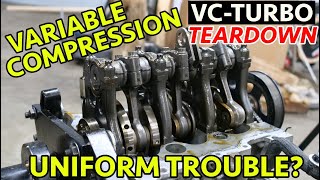
🎬 See: Why Nissan's complex VC-Turbo technology is failingCorrectly identifying this engine before purchase is critical. Ordering the wrong part is a common and costly mistake. Use the following checks on your own vehicle to confirm fitment:
- Check the VIN: The Vehicle Identification Number is the most reliable check. Look at the plate on the driver's side of the dashboard or the sticker in the driver's door jamb.
| VIN Digit | Required Value | Meaning |
|---|---|---|
| 1st Digit | 'J' | Indicates the vehicle was built in Japan. |
| 4th Digit | 'B' | Designates the 1.5L KR15DDT engine. |
- Visual Confirmation: Look under the hood. You should see a 3-cylinder engine with a turbocharger. This will look distinctly different from the larger, non-turbo 2.5L 4-cylinder engine found in other Rogue models.
- Drivetrain Check: Verify if your Rogue is Front-Wheel Drive (FWD) or All-Wheel Drive (AWD). You may need to transfer original AWD-specific brackets, the oil pan, or intermediate shaft mounts to the replacement engine.
- Engine Code: Verify the engine code 'KR15DDT' is stamped directly on your original engine block.
Warning: This engine will NOT interchange with several other Rogue engines. Do not order it if your vehicle has:
- A VIN starting with '1', '4', or '5' (these are US-built and have different wiring harnesses, sensor plugs, and brackets).
- The 2.5L PR25DD 4-cylinder engine.
- The 2.0L VC-Turbo (KR20DDET) found in other Nissan/Infiniti models.
- The Mitsubishi Outlander 1.5L engine (this is a different four-cylinder mild-hybrid unit and does not fit).
Common Failure Symptoms

The KR15DDT engine is known for significant reliability issues, primarily related to internal bearings. If your engine is failing, you will likely notice one or more of the following symptoms:
- Engine Knocking or Rattling: A loud, rhythmic knocking sound that increases with engine speed is a classic sign of bearing failure.
- Sudden Loss of Power: The vehicle may feel sluggish, struggle to accelerate, or enter a "limp home" mode with reduced power.
- Check Engine Light: A flashing or steady check engine light will almost always accompany these serious issues.
- Metal Shavings in Oil: This is the definitive sign of a catastrophic internal failure. When changing the oil or inspecting the oil pan, any visible metal flakes confirm the engine's bearings have disintegrated.
- Engine Seizure: In the most severe cases, the engine may lock up completely and will not restart.
Diagnostic Flowchart
Known Problems, Recalls, and TSBs

This engine is subject to several major safety recalls and technical service bulletins (TSBs) related to its design. It is crucial that any replacement engine, new or used, has these recall procedures performed to prevent repeat failure.
Engine Bearing Failure & Seizure (Major Recalls)
Documents: NHTSA Recalls 25V437 & 26V080; Nissan Recalls R25D1, R25E2, R25E3
Affected Years: 2021-2024 and 2023-2025 Rogue models
This is the most severe and widespread issue. A manufacturing defect in the engine's main bearings, combined with high oil temperatures that degrade lubrication, can cause the bearings to fail and seize. This leads to catastrophic engine failure, often resulting in a complete loss of power while driving. Nissan's remedy involves reprogramming the Engine Control Module (ECM) to better manage temperatures, inspecting the oil pan for metal debris, and, if debris is found, replacing the entire engine free of charge.
Warning: Any used KR15DDT engine installed in a vehicle MUST have the ECM updated with this recall software immediately after installation. Failure to do so will likely cause the replacement engine to fail in the exact same way as the original due to oil overheating.
Plastic Oil Pan Failures
Document: Nissan TSB NTB22-003
Affected Years: 2021-2023 Rogue models
The engine uses a composite plastic oil pan with a metal insert for the drain plug threads. This design is notoriously fragile. Over-torquing the drain plug—a common occurrence at non-specialist oil change shops—can loosen or crack the insert, causing a major oil leak.
Warning: The correct torque for the plastic oil pan drain plug is exactly 25 ft-lbs (33.5 N-m). Do not use standard metal oil pan torque specs, and never use the plastic pan as a lift point.
Driver-Side Engine Mount Failure
Document: Nissan TSB NTB24-014
Affected Years: Vehicles with the 1.5L engine
This TSB provides instructions for replacing the left-hand (driver's side) engine mount, which can fail and cause excessive engine vibration and noise. It is highly recommended to inspect this mount during an engine swap and replace it if it shows signs of tearing or sagging.
Other Noteworthy Issues
- Throttle Body Gear Fracture (NHTSA 26V081): Affects 2024-2025 models, where faulty software can stress and break a plastic gear in the throttle body, leading to a loss of power. The fix is an ECM reprogram and inspection/replacement of the throttle chamber.
- Fuel Odor (TSB NTB23-055A): A fuel smell may be present on 2021-2023 models. The fix is to replace a PCV hose with an updated part.
- Carbon Buildup: As a direct-injection-only engine, fuel doesn't wash over the intake valves. This can lead to carbon deposit buildup over time, which may require periodic professional cleaning to maintain performance.
What Fails at Every Mileage Band
Pro Tip: The mileage bands below describe what typically fails on USED replacement engines with these miles. The checklists provided are critical steps to perform WHILE INSTALLING the purchased engine, not general maintenance for your current vehicle.
Under 60K Miles
Even at low mileage, this engine is highly susceptible to catastrophic bearing failure due to manufacturing defects and oil degradation. Other early failures include blown head gaskets, faulty Mass Airflow (MAF) sensors causing hesitation, glitching start-stop systems, and driver-side engine mount failures.
- ✓Do during install (required): Flash the ECM with the latest software for recalls 25V437 and 26V080 to prevent bearing failure. Replace the turbocharger and oil cooler if the original engine failed due to bearings. Perform VCR actuator relearn and CKP sensor relearn with a Nissan-specific scan tool. Install a new OEM-spec oil filter and fill with 5.0 to 5.4 quarts of 0W-20 SP (or SN) certified synthetic oil. Use a vacuum refiller to fill the cooling system with 8.6 quarts of Nissan L255N blue coolant.
- ✓Do during install (recommended): Replace spark plugs with OEM NGK ILMAR8G8GS laser-iridium plugs. Replace the driver-side engine mount (per TSB NTB24-014). Replace the PCV hose with the updated part (per TSB NTB23-055A). Perform a full intake valve cleaning to remove early-stage carbon buildup.
- ✓Cheap insurance while the engine is out: Replace the engine air filter and cabin air filter.
60K-100K Miles
Engines in this range face a continued risk of bearing failure if recall software was never applied. Carbon buildup on intake valves becomes severe enough to reduce power. The valvetrain lacks hydraulic lash adjusters, meaning a manual valve adjustment may be required. Associated Jatco CVT transmission issues also begin to surface around the 100,000-mile mark.
- ✓Do during install (required): All required items from the Under 60K band.
- ✓Do during install (recommended): Perform a valve clearance adjustment. Perform a thorough intake valve cleaning service. Replace all essential gaskets and seals (turbocharger-to-manifold gasket, turbo oil feed/return copper crush washers, intake manifold gasket, valve cover gaskets, and crankshaft seals).
- ✓Cheap insurance while the engine is out: Inspect and consider replacing the water pump. Inspect the condition of the CVT fluid and perform a fluid change.
100K-150K Miles
At this stage, there is an increased likelihood of failure within the complex Variable Compression (VC) multi-link system. Timing chain wear becomes a factor, and the probability of a CVT transmission failure is very high if it hasn't been replaced already.
- ✓Do during install (required): All required items from previous bands.
- ✓Do during install (recommended): Replace the MAF sensor if it is original.
- ✓Cheap insurance while the engine is out: Replace the timing chain, tensioners, and guides. Replace the water pump and thermostat. Replace all accessible coolant hoses.
Over 150K Miles
The designed service life of this engine is estimated at 150,000 miles. Beyond this, repairs to the VC-Turbo actuator system, timing chain, and internal wear become too expensive. Buying a used engine with this mileage is a significant risk.
- ✓Do during install (required): All required items from previous bands.
- ✓Do during install (recommended): A complete rebuild or sourcing a much lower-mileage unit is strongly advised over installing an engine with 150K+ miles.
- ✓Cheap insurance while the engine is out: Budget for a near-term CVT transmission replacement.
Real Owner Experiences
The following table highlights real-world failures reported by Nissan Rogue owners, demonstrating how early and suddenly the KR15DDT engine can fail.
| Source | Mileage | What Happened | Cost |
|---|---|---|---|
| Class Action Lawsuit Filing | 157 miles | A 2023 Rogue's engine completely failed, forcing the driver to coast to a stop. | N/A (New Vehicle) |
| Reddit User Report | 6,000 miles | A Nissan mechanic reported seeing numerous KR15DDT engine replacements, some with as few as 6,000 miles. | Warranty |
| Lemberg Law Complaint | 9,000 miles | Engine blew and stalled while driving with no warning signs. | Warranty |
| Reddit User Report | 18,000 miles | A 2023 model with the 1.5L engine required a complete engine replacement. | Warranty |
| Reddit User Report | ~26,000 miles (42,000 km) | Report of catastrophic engine failure on a 2023 Rogue. Engine and turbo were fully replaced by the dealership. | $0 (covered by extended warranty) |
| Reddit User Report | 46,000 miles | Vehicle lost power with no warning; dealer diagnosed failed exhaust parts and then determined the entire engine needed replacement. | Warranty |
| Reddit User Report | 48,000 miles | While driving, the vehicle lost power with lots of smoke. Dealer diagnosed a failed head gasket and replaced the entire engine. Owner notes they are on their third engine. | $0 (covered by warranty) |
| NHTSA Complaint | 57,000 miles | Vehicle started shaking and lost power at 65 MPH. The dealer found metal shavings in the oil pan and replaced the engine. | Warranty |
| NHTSA Complaint | 60,000 miles | Vehicle stalled with multiple warning lights illuminated. The engine mounts were replaced, but the failure recurred. | N/A |
| Reddit User Report | 71,000 miles | Replaced engine and turbo under an extended warranty. Quoted $5,500 for engine + $2,000 for turbo. | $0 (covered by warranty) |
| Reddit User Report | 89,000 miles | A 2022 model owner reports the car is still running and will hit 100k miles before the end of the year. | N/A |
| Cars.com User Review | 100,000 miles | During a spark plug change, a radiator leak was discovered. The owner notes the vehicle was otherwise reliable to this point. | Not specified |
| MotorReviewer.com | 150,000+ miles | The engine's designed lifespan is estimated around 150,000 miles, after which repairs become too expensive. | End of Life |
Repair or Replace?
When facing engine trouble with the KR15DDT, deciding whether to repair the existing engine or replace it entirely depends on the failure mode.
- When Repair Makes Sense: External component failures (like a bad throttle body or a broken engine mount) typically cost between $300 and $1,000 and should always be repaired. A head gasket failure (typically $2,600 to $3,700) might be cost-effective to repair, provided the engine never overheated enough to warp the block and no coolant mixed with the oil to damage the bearings.
- When Replacement is Smarter: Replacement is the only recommended path for catastrophic internal bearing failure. If you hear engine knock, lose power suddenly, or find metal shavings in the oil, the engine is beyond economical repair. A full rebuild is incredibly complex and risky. Because a new dealer-installed engine can cost between $10,000 and $17,500, sourcing a low-mileage used unit (typically $2,500 to $4,200) and having an independent shop install it is usually the most financially sound choice.
Questions to Ask Your Installer
Before handing over your vehicle, ensure your mechanic is prepared for this specific engine:
- Have you worked on the Nissan KR15DDT VC-Turbo engine before?
- How will you handle the potential contamination of the oil cooler and turbocharger from the failed engine to protect the replacement unit?
- Do you have a Nissan Consult III+ or an equivalent high-end scan tool with an active Nissan subscription to perform the mandatory VCR Actuator relearn, CKP sensor relearn, and ECM software updates?
- Are you aware of the critical recalls (NHTSA 25V437 / 26V080) and will you ensure the latest software is flashed to the ECM post-installation?
- What is your procedure for evacuating and refilling the cooling system to prevent air pockets?
- Are you aware of the low torque specification (25 ft-lbs) for the plastic oil pan's drain plug?
- Will you be transferring the original engine wiring harness to the replacement engine to ensure full system compatibility?
- Does your quote include all necessary new gaskets, seals, fluids (0W-20 oil, Nissan L255N blue coolant), and torque-to-yield bolts as per the manufacturer's procedure?
Replacement Cost Estimates
The cost to replace a KR15DDT engine varies based on the type of replacement part and local labor rates. The provided labor estimate for this job is between 10 and 20 hours.
| Item | Estimated Cost (USD) | Notes |
|---|---|---|
| Used OEM Engine Assembly | $2,500 - $4,200 | Price varies by mileage and included components. |
| Remanufactured OEM Engine | $4,500 - $6,000+ | General industry pricing suggests a range, but specific KR15DDT remanufactured units are not widely available. |
| New OEM Engine (Dealer) | $10,000 - $17,500 | Estimated cost for a new part installed by a Nissan dealer. |
| Shop Labor | $1,680 - $3,300 | Based on an estimated 10-20 hours at standard shop rates. |
| Total Estimated Job (Used) | $4,180 - $7,500+ | Combines the cost of a used engine and labor. Does not include fluids, gaskets, or mandatory programming. |
Pro Tip: If your original engine failed due to the bearing issue and is covered by recall 25V437 or 26V080, a Nissan dealer will replace the engine for free. Always check your VIN for open recalls on the NHTSA website before paying for a replacement.
Freight & Delivery Reality

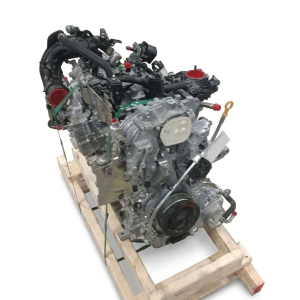
When ordering a used KR15DDT engine, understand that it will not arrive in a standard cardboard box. This assembly weighs approximately 325 lbs and measures roughly 36" x 30" x 30" before crating. It ships as Less-Than-Truckload (LTL) freight on a wooden pallet.
If you are having the engine delivered to a residential address or a shop without a loading dock or forklift, you must request a truck with a liftgate service to lower the pallet to the ground. Always perform a pre-purchase verification interview with the seller to confirm the VIN and engine codes match your needs. Finally, when the freight truck arrives, inspect the engine thoroughly for any shipping damage (such as cracked plastic oil pans or broken sensors) before signing the delivery receipt.
Installation Gotchas & Post-Install Programming

Installing this engine is a job for expert technicians. Several unique steps are required to prevent immediate damage to the replacement unit.
Key Installation Steps & Warnings
Warning: Turbocharger Contamination. If the original engine failed from bad bearings, its turbocharger is now a trap filled with metal shavings. Reusing the old turbo, oil cooler, and oil lines without professional, high-pressure flushing will send this debris directly into the new engine's bearings, destroying it instantly. Replacement of the turbo is the safest path.
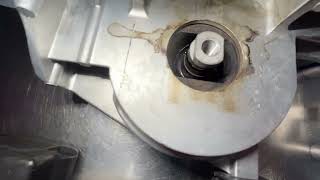
- VCR Actuator Alignment: Do not manually rotate or tamper with the Variable Compression Ratio actuator motor arm on the side of the block before installation. It MUST be relearned to the vehicle's computer using a Nissan Consult III+ scan tool (or equivalent) after installation. Skipping this step will cause the vehicle to enter limp mode.
- Mandatory ECM Flashing: The vehicle's computer MUST be updated with the latest software from the bearing failure recalls (25V437/26V080). This is not optional. This update changes how the engine manages oil temperature to prevent the very issue that causes failure.
- Use a Vacuum Coolant Refiller: This engine's cooling system is difficult to bleed and easily traps air pockets. Trapped air will cause localized overheating, which can warp the cylinder head. A vacuum-fill tool is required to ensure no air is present.
- VVT Solenoids: The three Variable Valve Timing (VVT) solenoids can be difficult to access, and the bolts are extremely tight from the factory. Handle them carefully during the swap.
- Wiring Harness: The engine harness should be transferred from the original engine to ensure full compatibility with the vehicle's specific options and systems.
- Post-Install Flush: Do not skip the post-install oil flush after the first 50 to 100 miles of operation to remove any residual debris. Afterward, strictly adhere to a 3,750 to 4,000-mile oil change interval.
Arrival Inspection: Testing Your Used Engine
When your used engine arrives, test it before dropping it into your Rogue. It is much easier to find problems while the engine is sitting on a pallet.
- Compression and Leak-Down Tests: A compression test measures the pressure inside each cylinder. A leak-down test pumps air into the cylinder to see if it holds pressure. Because this is a Variable Compression engine, exact pressure numbers can change based on the internal linkage position. However, all three cylinders must have readings within 10 to 15 percent of each other. If one cylinder is much lower than the rest, the engine has internal damage.
- Turbocharger Shaft Play: The KR15DDT is a turbocharged engine. You must check the turbocharger before installation. Reach into the turbo and gently wiggle the impeller wheel (the small metal fan). A tiny amount of side-to-side movement is normal because the turbo needs room for oil. However, the wheel must never scrape the metal housing. If you feel any in-and-out movement (pushing the wheel toward the engine and pulling it back), the turbo bearings are bad.
Before the First Start: Priming and Fluids
A used engine has likely been sitting dry on a warehouse shelf. If you start it dry, the metal parts will scrape together and destroy the engine in seconds. You must prime the oil system (pump oil through the engine before it runs) and use the correct fluids.
- Add Fresh Oil and a New Filter: Drain any old shipping oil. Install a brand-new oil filter. Fill the engine with fresh 0W-20 weight motor oil that meets the API SP or ILSAC GF-6A standard. This thin oil is required for the complex Variable Compression parts to work correctly.
- Add Correct Coolant: Fill the cooling system with Nissan Blue Long Life Antifreeze/Coolant (or a high-quality aftermarket equivalent made for Asian vehicles). Do not mix green and blue coolants.
- Disable Fuel and Spark: Before turning the key, you must stop the engine from actually starting. Remove the fuel pump fuse from the fuse box, or unplug the ignition coils and fuel injectors.
- Crank to Prime: Turn the key and crank the engine for 10 to 15 seconds. This spins the oil pump and pushes fresh oil to the bearings and the turbocharger. Stop and let the starter motor cool down for one minute.
- Verify Oil Pressure: Repeat the cranking step two or three times until the low oil pressure light on the dashboard turns off while cranking. This proves oil is flowing.
- Start the Engine: Reinstall the fuel pump fuse or plug the coils and injectors back in. Start the engine normally and let it idle. Check underneath for any oil or coolant leaks.
Frequently Asked Questions
What parts are typically included with a used engine?
A standard used engine assembly, often called a "long block," includes the core components: the cylinder block and head, with all their internal moving parts (crankshaft, pistons, valves, camshafts). It also typically includes the oil pan, valve cover, timing covers, timing chain, intake manifold, throttle body, direct fuel injectors, high-pressure fuel pump, harmonic balancer, and the VCR actuator motor. However, it does NOT include the turbocharger, alternator, A/C compressor, starter, exhaust manifold, or power steering pump. You must transfer these from your original engine.
Why is the ECU/ECM reprogram so important?
The reprogram is critical for two reasons. First, it performs a calibration or "relearning" process for components like the VCR actuator and crankshaft position sensor so they can communicate with the car's computer. Second, and most importantly, it installs the software fix from Nissan's major safety recalls (25V437 and 26V080). This new software actively prevents the oil overheating condition that leads to the catastrophic bearing failures this engine is known for. Installing a new engine without this software update is setting it up for the same fate as the old one.
Can I reuse the turbo from my old engine?
Only with extreme caution, and it is generally not recommended if the prior engine had a bearing failure. When bearings fail, they send metal particles throughout the entire oiling system. These particles become embedded in the turbocharger's small oil passages. Simply draining the oil is not enough to remove them. If you reinstall a contaminated turbo, it will immediately send that metal debris into your new engine's bearings, causing it to fail very quickly. The safest option is to replace the turbocharger along with the engine.
What type of oil and coolant does the KR15DDT require?
This engine requires 5.0 to 5.4 quarts (4.7 to 5.1 liters) of 0W-20 SP or SN certified full synthetic motor oil. For coolant, you must use Nissan Genuine Engine Coolant L255N (blue pre-diluted coolant), and the system holds approximately 8.6 quarts (8.15 liters).
What is the Variable Compression Ratio (VCR) actuator?
The VCR actuator is an electric motor mounted on the side of the engine block. It physically moves a multi-link system inside the engine to change how high the pistons travel in the cylinders. This allows the engine to switch between a high compression ratio for better fuel economy and a low compression ratio for more turbocharged power. It is a highly sensitive component that must be electronically calibrated to the vehicle's computer after an engine swap.
Helpful Videos



Technical Specifications
Engine Code: KR15DDT; Displacement: 1.5-liter; Cylinders: 3 (inline); Induction: Turbocharged; Fuel System: Direct Injection; Special Feature: Variable Compression (VC) Ratio; Model Years: 2021-2023; Vehicle: Nissan Rogue; Oil Type: 0W-20 SP (or SN) certified synthetic; Oil Capacity: 5.0 to 5.4 quarts; Coolant Type: Nissan L255N blue coolant; Coolant Capacity: 8.6 quarts; Oil Pan Drain Plug Torque: 25 ft-lbs (33.5 N-m); Weight: ~325 lbs; Crated Dimensions: ~36" x 30" x 30"
We Have This Part in Stock

The information in this article is provided for general reference and educational purposes only. Vehicle specifications, procedures, and part compatibility can vary by production date, trim level, and region. Always consult your vehicle's factory service manual and verify part numbers before purchasing or performing repairs. Safety-critical components such as airbags, seat belts, and braking systems should be installed by a qualified professional.
- Nissan Rogue:
- 🎬 Helpful Videos
- 🛍️ Shop This Part
- Engine Identification: Is This The Right Part For Your Rogue?
- Common Failure Symptoms
- Diagnostic Flowchart
- Known Problems, Recalls, and TSBs
- Engine Bearing Failure & Seizure (Major Recalls)
- Plastic Oil Pan Failures
- Driver-Side Engine Mount Failure
- Other Noteworthy Issues
- What Fails at Every Mileage Band
- Under 60K Miles
- 60K-100K Miles
- 100K-150K Miles
- Over 150K Miles
- Real Owner Experiences
- Repair or Replace?
- Questions to Ask Your Installer
- Replacement Cost Estimates
- Freight & Delivery Reality
- Installation Gotchas & Post-Install Programming
- Key Installation Steps & Warnings
- Arrival Inspection: Testing Your Used Engine
- Before the First Start: Priming and Fluids
- Frequently Asked Questions
- 🎟️ Get 5% Off