

2016-2023 Nissan Maxima 3.5L VQ35DE V6: Problems, Identification, and Used Replacement
Identify the exact VQ35DE variant for your Maxima, learn what causes timing chain or oil seal failures, and know when replacing with a used OEM engine is the smartest financial move.
- Verify the 4th digit of the VIN is 'A' before purchase; engines from other Nissan models like the Altima or Murano are incompatible and will not fit.
- Engine replacement is a complex job requiring the front subframe to be lowered and a dealer-level scan tool to reprogram the immobilizer (NATS) and perform an Idle Air Volume Relearn.
- During installation of a used engine, it is critical to replace wear items like the rear main seal, valve cover gaskets, and all intake/exhaust gaskets to prevent future leaks.
- For any used engine over 150,000 miles, the complete timing chain kit (chains, guides, tensioners) should be replaced as a preventative measure against catastrophic failure.
Identification: Is This the Right Engine for Your Maxima?

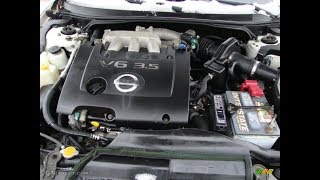
The engine used in the 2016-2023 Nissan Maxima is the VQ35DE, a 3.5-liter, naturally-aspirated V6. This engine is part of Nissan's long-running and well-regarded VQ engine family, producing approximately 300 horsepower in this application. It is known for smooth, reliable performance when properly maintained.
To ensure you are purchasing the correct engine for your vehicle, the most critical step is to check the Vehicle Identification Number (VIN). The 4th digit of your Maxima's VIN must be 'A'. This engine is specifically for the front-wheel drive (FWD) Maxima equipped with the Xtronic CVT (Continuously Variable Transmission).
Warning: Not all VQ35DE engines are the same. Other Nissan and Infiniti models like the Pathfinder, Murano, Altima, Quest, and QX60 use different versions of this engine. Those versions have incompatible mounting points, oil pans, wiring harnesses, and computer (ECU) calibrations and will not fit or function correctly in a Maxima.
Common Failure Symptoms

While generally durable, the VQ35DE can experience issues, especially at higher mileage. Here are symptoms that may indicate a need for engine replacement:
- Engine Knocking or Ticking: Deep knocking sounds from the bottom of the engine often point to worn rod bearings, a serious internal failure. Ticking or rattling noises on startup that persist can indicate worn timing chain guides. 🎬 Listen: What a VQ35 timing chain rattle sounds like
- Excessive Oil Consumption: Burning more than one quart of oil between changes can be a sign of worn piston rings or valve seals, leading to blue smoke from the exhaust.
- Coolant in Oil: A milky, frothy appearance on the oil cap or dipstick suggests a failed head gasket or, in rare cases, a cracked block or cylinder head.
- Low Oil Pressure: A flickering or constantly illuminated oil pressure light after confirming the oil level is correct can signal a failing oil pump or worn internal bearings.
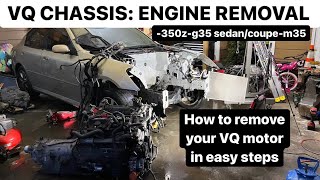
- Catastrophic Failure: In severe cases, such as a timing chain failure or loss of oil pressure, the engine may seize or suffer damage that is not practical to repair. 🎬 See this step-by-step VQ engine removal walkthrough
Diagnostic Flowchart
Known Issues, Service Bulletins, and Recalls

Several known issues and factory communications apply to this generation of Maxima. Always have a dealer check your VIN for any open recalls or campaigns.
CVT Judder (DTC P17F0, P17F1)
While not a direct engine failure, issues with the CVT are common and can be mistaken for an engine problem. Owners may experience a shake, shudder, or vibration. Nissan issued Technical Service Bulletins NTB17-039L and NTB15-044B, which apply to the 2016-2023 Maxima. The procedure involves inspecting the CVT chain and potentially replacing the valve body or the entire CVT unit. A fresh fluid exchange is highly recommended during engine replacement.
EVAP System Leak (DTC P0456)
A common cause for a check engine light with a P0456 "very small leak" code is a failing O-ring on the EVAP canister vent control valve. This is a minor issue detailed in TSB NTB17-082b. The fix involves replacing the inexpensive O-ring.
Mass Air Flow Sensor Calibration (DTC P0101)
If your Maxima throws a P0101 code, it may be related to the Mass Air Flow (MAF) sensor. TSBs NTB12-051 and NTB15-049 outline that the fix is often cleaning the sensor or updating the ECU software.
Timing Chain Wear
At high mileage (typically over 150,000 miles, though sometimes starting closer to 100,000), the timing chain guides and tensioners can wear out, causing a rattling noise on startup. If ignored, the chain can stretch or break, leading to catastrophic engine damage. Regular oil changes with the correct synthetic oil are critical to prolonging the life of these components.
ABS Actuator Fire Risk Recall & Brake Calipers
Nissan issued a major recall for multiple model years, including the 2016-2018 Maxima, because the anti-lock brake (ABS) actuator pump could leak brake fluid onto an internal circuit board, creating a fire risk. Owners should ensure this recall work (NHTSA Campaign 18V-601 and subsequent expansions) has been completed. Additionally, some 2016 models had a recall for improperly tightened front brake caliper bolts.
What Fails at Every Mileage Band
Pro Tip: The mileage bands below describe the typical condition of USED REPLACEMENT engines at that mileage. The checklists provided are things you should do WHILE INSTALLING the purchased engine on the stand, not maintenance for your current broken engine.
Under 60,000 Miles
Engines in this bracket are generally in excellent condition. The most prevalent issues at this mileage are not with the engine itself, but with the associated CVT transmission, which can exhibit juddering, shaking, or vibration (addressed by TSB NTB17-039L). Minor EVAP leaks (P0456) may also appear.
- ✓Do during install (required): Verify all recall campaigns, especially related to the ABS actuator (18V-601) and brake caliper bolts, have been performed on the vehicle. Use new OEM intake and exhaust manifold gaskets.
- ✓Do during install (recommended): Inspect the paired CVT transmission thoroughly and perform a fluid exchange as a preventative measure. Replace the thermostat and thermostat housing gasket.
- ✓Cheap insurance while the engine is out: Install 6 new double-tipped iridium spark plugs while the engine is out for easy access.
60,000 - 100,000 Miles
This mileage range is when out-of-warranty CVT issues become a more significant financial concern if they were not addressed earlier. Some owner discussions suggest that the 90k-100k range is a potential turning point where issues may begin to surface. Nissan recommends valve clearance adjustments every 60,000 miles, although this is often overlooked.
- ✓Do during install (required): All required items from the 'Under 60K' band.
- ✓Do during install (recommended): Strongly consider replacing the water pump. Install a new serpentine belt and tensioner. Replace all accessible coolant hoses.
- ✓Cheap insurance while the engine is out: Replace valve cover gaskets to prevent future oil leaks.
100,000 - 150,000 Miles
Oil leaks from the valve covers and rear main seal become much more common after 120,000 miles. Timing chain rattle may begin to appear, often due to wearing tensioners and guides. Some owners also report noticeable oil consumption, which can be exacerbated by existing oil leaks.
- ✓Do during install (required): Replace the rear main seal. This is a cheap part that is extremely labor-intensive to access once the engine is installed because it requires removing the transmission.
- ✓Do during install (recommended): Replace valve cover gaskets and spark plug tube seals. Carefully inspect the timing chain, tensioners, and guides. If there is any doubt, replace them.
- ✓Cheap insurance while the engine is out: Replace camshaft and crankshaft position sensors as a preventative measure against future stalling or no-start conditions.
Over 150,000 Miles
The timing chain system is a primary concern at this mileage. The chains themselves are durable, but the plastic guides and tensioners are considered wear items and are prone to failure, which can cause rattling noises or catastrophic engine damage if ignored.
- ✓Do during install (required): Replace the complete timing chain kit (chains, guides, tensioners) regardless of visual inspection.
- ✓Do during install (recommended): Replace oil gallery gaskets, which are a known failure point on other VQ engines and are accessible during a timing job. Thoroughly clean the intake manifold and throttle body.
- ✓Cheap insurance while the engine is out: Replace all engine sensors (cam, crank, knock) as cheap insurance.
Real Owner Experiences
Here is what real owners and technicians have reported regarding the VQ35DE in this generation of vehicles:
| Source | Mileage | What Happened | Cost |
|---|---|---|---|
| maxima.org | 22,000 | Owner of a 2017 Maxima reported no significant engine or CVT problems, but noted squeaky brakes and a rattle from under the car at highway speeds. | N/A (Under warranty/not investigated) |
| Samarins.com | Under 60,000 | General complaints logged with the NHTSA mention powertrain issues where the vehicle would not accelerate or would stall. | Varies (Potentially warranty) |
| maxima.org | 90,000 | A potential buyer was cautioned that at this mileage, even with good maintenance, components like the CVT, struts, and shocks could be nearing the end of their life. | N/A (Pre-purchase advice) |
| Reddit r/Nissan | 120,000+ | A Nissan technician noted that rear main seals and valve cover gaskets tend to leak past this mileage. Valve cover replacement is manageable, but the rear main seal is a multi-thousand dollar repair as it requires removing the transmission. | Varies; ~$2,000+ for rear main seal. |
| Reddit r/Nissan | 152,000 | Owner of a 2002 Maxima with a VQ35DE noted an oil leak from the pan gasket and consumption of about half a quart of oil between changes. | N/A |
| Nissan Forum | 194,000 | Owner of a 2003 G35 with a VQ35DE reported the engine still 'works and sounds great' despite high mileage and being driven hard, highlighting the engine's potential durability with consistent maintenance. | N/A |
| Maxima Forums | N/A | Advised by forum members to get second opinions, stating a used motor installed should be under $2,000. | N/A |
Repair or Replace?
When facing major engine trouble, deciding whether to repair your current engine or replace it with a used OEM unit comes down to math and the extent of the damage.
| Problem | Typical Repair Cost | Recommendation |
|---|---|---|
| Timing Chain Noise/Wear | $1,200 - $3,000 | Repair makes sense when the rest of the engine is in good health and the noise (rattle on startup) is the primary symptom. Acting before the chain stretches severely prevents catastrophic engine failure. |
| Minor Oil Leaks (Valve Covers, Seals) | $300 - $800 | Repair makes sense if the engine is otherwise running well and not consuming excessive oil internally. These are common maintenance items on higher-mileage engines. |
| Failed Cam/Crank Sensors | $200 - $500 | This is a common, relatively inexpensive repair that resolves no-start or stalling issues and does not indicate a need for engine replacement. |
When Replacement is Smarter: Replacement is the better option when the engine has suffered catastrophic internal damage, such as a cracked block, bent valves from a skipped timing chain, or severe oil consumption indicating piston ring failure. If repair costs approach or exceed the cost of a quality used engine (which typically run $350 - $2,800 for the part alone), replacement offers more long-term value. It also makes sense if the vehicle is otherwise in good condition and a replacement can extend its life for significantly less than buying a new car.
Questions to Ask Your Installer
- Have you worked on a VQ35DE in a FWD Maxima before?
- Are you comfortable lowering the front subframe for engine removal?
- Do you have the Nissan-compatible scan tool needed for the NATS immobilizer reprogram and Idle Air Volume Relearn?
- Does your quote include replacing key consumables like the rear main seal, intake gaskets, and thermostat while the engine is out?
- How will you handle bleeding the cooling system to prevent air pockets?
- Will you be transferring my original wiring harness and sensors to the new engine?
- What warranty do you offer on your labor?
Replacement Cost Comparison
Engine replacement costs vary based on the type of engine and labor rates. The VQ35DE is a complex V6, and labor typically takes between 12 and 18 hours.
| Component/Service | Estimated Cost (USD) | Notes |
|---|---|---|
| New OEM Engine | $4,500 - $6,500+ | Engine only, from a Nissan dealer. Offers the best longevity but at the highest cost. |
| Remanufactured Engine | $2,700 - $5,000 | Rebuilt to factory specifications, often includes a warranty. A good balance of cost and reliability. |
| Used OEM Engine | $350 - $2,800 | A tested, low-mileage unit from a recycled vehicle. The most cost-effective option. Prices vary with mileage and condition. |
| Installation Labor | $1,200 - $3,000 | Varies by shop rate and region. Dealerships are typically on the higher end. |
Installation Essentials and Common Mistakes

Proper installation is critical for the long-term health of a replacement engine. Below are key points for installers and vehicle owners to be aware of.
Required Parts and Fluids at Install
Always replace these items to prevent leaks and ensure proper function. Do not reuse old gaskets or seals.
- Upper and lower intake manifold gaskets
- Exhaust manifold gaskets
- Thermostat and thermostat housing gasket
- Valve cover gaskets and spark plug tube seals
- Rear main seal
- 5.1 quarts of 0W-20 or 5W-30 full synthetic engine oil
- New premium oil filter
- Nissan Blue Long Life Antifreeze/Coolant
- 6 new double-tipped iridium spark plugs
Pro Tip: The rear three spark plugs (Bank 1) are located under the upper intake manifold plenum. It is far easier to replace all six plugs while the engine is out of the car on a stand.
Installation Gotchas
- Special Tools Required: You will need an engine hoist, a load leveler, a subframe support fixture, and a Nissan-compatible diagnostic scan tool.
- ECU & Immobilizer: The engine will not start until the Nissan Anti-Theft System (NATS) is reprogrammed to recognize the replacement engine's components. This requires a dealer-level tool.
- Idle Air Volume Relearn: After installation, the engine will likely have a high or surging idle. This is normal and must be corrected by performing the Idle Air Volume Learning and Throttle Valve Closed Position Learning procedures with a scan tool. Do not mistake this for a faulty engine.
- Wiring Harness: You must transfer the complete wiring harness from your original engine to the replacement unit. Connectors and sensors can differ slightly, and using the original harness guarantees electrical compatibility.
- Ground Straps: Ensure all engine-to-chassis ground straps are clean and securely reconnected to prevent a host of hard-to-diagnose electrical issues.
- A/C Compressor and Alternator Clearance: The alternator is tight against the block; you must unbolt the A/C compressor to service it.
- CVT Cooler Lines: Be careful not to damage the lines running to the CVT transmission cooler during removal and installation.
- Sensor Connectors: Plastic connectors can become brittle and break easily. Handle with care.
Warning: The engine and transmission are typically removed from below by lowering the front subframe, steering rack, and suspension. Attempting to pull the engine from the top is extremely difficult and not recommended.
Common Buyer Mistakes
- Reusing Old Intake Manifold Gaskets: Causes vacuum leaks, rough idle, and lean codes.
- Assuming a Surging Idle Means a Bad Engine: High or surging idle is a classic symptom of a pending Idle Air Volume Relearn.
- Attempting to Swap into a Non-Maxima Vehicle: The physical block casting, mounting brackets, and wiring harness routing are unique to the Maxima.
- Over-Torquing the Plastic Valve Covers: Composite plastic covers can easily crack if over-tightened.
- Ignoring Immobilizer Programming: Assuming the engine is plug-and-play without budgeting for security relearn procedures will leave you stranded.
- Coolant System Bleeding: Improper bleeding of the VQ engine can cause persistent overheating; always use a vacuum-lift refiller.
Freight & Delivery Reality

When ordering a used replacement engine, it is important to understand how it will arrive. A complete VQ35DE engine assembly for a Maxima weighs approximately 416 pounds and measures roughly 41" x 39" x 37" before being crated. Because of this size and weight, it ships as LTL (Less-Than-Truckload) freight on a wooden pallet, not as a standard parcel.
Delivery to a residential address will require a truck with a liftgate to lower the pallet to the ground. Always inspect the engine thoroughly for any shipping damage (such as cracked plastic valve covers or broken sensors) before signing the driver's delivery receipt. A reputable supplier will also conduct a pre-purchase verification interview to confirm your vehicle is a FWD Maxima with an Xtronic CVT and that the 4th digit of your VIN is 'A' before shipping the unit.
Before the First Start: Priming and Fluids
You must prepare the replacement engine with the correct fluids and pump oil through the system before letting it run.
Mandatory Fresh Fluids
- Engine Oil and Filter: Install a brand-new oil filter. Fill the engine with fresh 0W-20 full synthetic oil. Look for oil that meets the API SN or API SP class standards on the back of the bottle.
- Engine Coolant: Fill the cooling system with fresh Nissan Blue Long Life Antifreeze/Coolant (or an equivalent blue coolant made specifically for Asian vehicles). Do not use standard green or orange universal coolants. The wrong coolant chemical will ruin the water pump and rubber seals.
Oil Priming Procedure
Priming means pumping oil through the engine before it actually starts and runs. Follow these steps to prime your VQ35DE safely:
- Disable the fuel system: Open the fuse box and remove the fuel pump fuse. This stops fuel from reaching the engine, ensuring it will only spin but not start.
- Crank the engine: Turn the key (or press the start button) to crank the engine for 10 to 15 seconds.
- Let the starter rest: Stop and wait 30 seconds. This prevents the starter motor from overheating and burning out.
- Watch the oil light: Repeat the 10 to 15-second cranking process until the red low oil pressure light on the dashboard turns off. When the light goes out, oil has successfully reached the top of the engine.
- Start the engine: Reinstall the fuel pump fuse. You can now safely start the engine and let it idle. Check under the vehicle for any fluid leaks while it warms up.
Frequently Asked Questions (FAQ)
What comes with a typical used engine assembly?
A used engine is typically sold as a "long block." Per ARA standards, this includes the engine block, cylinder heads, all internally lubricated parts, oil pan, valve covers, timing covers, intake manifold, fuel injectors, fuel rail, throttle body, and harmonic balancer. You must reuse external accessories from your old engine, such as the A/C compressor, starter motor, power steering pump, alternator, exhaust manifolds, engine wiring harness, and ECU.
Do I have to get the computer reprogrammed?
Yes. At a minimum, three procedures are required: an Idle Air Volume Learning to stabilize the idle speed, a Throttle Valve Closed Position Learning, and a NATS immobilizer re-marriage to allow the car to start. Failure to perform the NATS relearn will result in a "crank-no-start" condition. A dealer-level scan tool is required.
Is the VQ35DE a reliable engine?
Yes, the VQ35DE is generally considered a strong and reliable engine. With consistent maintenance, it can easily exceed 200,000 to 250,000 miles. Its most common issues are related to high-mileage wear on timing components and oil seals, which can be managed with regular maintenance, keeping the oil level full, and using quality synthetic oil. Regular CVT fluid changes (every 30k-60k miles) are also crucial for the longevity of the transmission paired with this engine.
How much does it weigh for shipping?
A used VQ35DE engine assembly for a Maxima weighs approximately 416 pounds before being crated for shipment. It measures roughly 41" x 39" x 37" and must be shipped via LTL freight on a pallet.
Can I use a 3.5L engine from an Altima, Pathfinder, or Murano?
No. While they are all part of the VQ35DE family, the versions used in other Nissan and Infiniti models have incompatible mounting brackets, different oil pans, unique wiring harness routing, and different ECU calibrations. You must use an engine specifically sourced for a FWD Maxima.
Helpful Videos
Technical Specifications
Engine Code: VQ35DE; Displacement: 3.5 Liters; Configuration: V6; Aspiration: Naturally-Aspirated; Horsepower: Approx. 300; Drivetrain: Front-Wheel Drive (FWD); Transmission: Xtronic CVT; VIN Identifier: 4th digit 'A'; Oil Type: 0W-20 or 5W-30 Full Synthetic; Oil Capacity: 5.1 quarts; Weight: Approx. 416 lbs; Dimensions: Approx. 41" x 39" x 37"
We Have This Part in Stock


The information in this article is provided for general reference and educational purposes only. Vehicle specifications, procedures, and part compatibility can vary by production date, trim level, and region. Always consult your vehicle's factory service manual and verify part numbers before purchasing or performing repairs. Safety-critical components such as airbags, seat belts, and braking systems should be installed by a qualified professional.
- Nissan Maxima:
- 🎬 Helpful Videos
- 🛍️ Shop This Part
- Identification: Is This the Right Engine for Your Maxima?
- Common Failure Symptoms
- Diagnostic Flowchart
- Known Issues, Service Bulletins, and Recalls
- CVT Judder (DTC P17F0, P17F1)
- EVAP System Leak (DTC P0456)
- Mass Air Flow Sensor Calibration (DTC P0101)
- Timing Chain Wear
- ABS Actuator Fire Risk Recall & Brake Calipers
- What Fails at Every Mileage Band
- Under 60,000 Miles
- 60,000 - 100,000 Miles
- 100,000 - 150,000 Miles
- Over 150,000 Miles
- Real Owner Experiences
- Repair or Replace?
- Questions to Ask Your Installer
- Replacement Cost Comparison
- Installation Essentials and Common Mistakes
- Required Parts and Fluids at Install
- Installation Gotchas
- Common Buyer Mistakes
- Freight & Delivery Reality
- Before the First Start: Priming and Fluids
- Mandatory Fresh Fluids
- Oil Priming Procedure
- Frequently Asked Questions (FAQ)
- 🎟️ Get 5% Off