

2015-2017 Nissan Juke 1.6L Turbo MR16DDT: Problems, Identification, and Used Replacement
Identify the V2 MR16DDT engine, understand what causes timing chain and turbo failures, and learn when to replace it with a used OEM unit.
- Before installing any used MR16DDT engine, you MUST replace the timing chain kit and the turbocharger oil feed line to prevent the two most common causes of catastrophic failure.
- Verify you have the correct 'V2' engine for a 2015-2017 non-RS Juke (VIN 4th digit 'A'); it is NOT interchangeable with 2011-2014 'V1' or Nismo RS engines.
- Professional installation is required due to the need for a Nissan-specific scan tool (Consult-III Plus or equivalent) to reprogram the anti-theft system (NATS) and perform critical relearn procedures.
- Strict 5,000-mile oil change intervals using full-synthetic 5W-30 oil are the most critical maintenance practice for protecting the timing chain and turbocharger.
Is This the Right Engine for Your Juke?

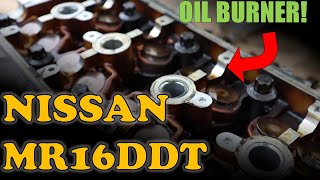
This engine assembly is for the 2015–2017 Nissan Juke models S, SL, SV, and non-RS Nismo trims. It belongs to the Nissan MR engine family and is specifically known by the code MR16DDT (and sometimes referenced by the M5Mt identifier). This is a 1.6-liter, inline 4-cylinder engine featuring a turbocharger, dual overhead camshafts (DOHC), and direct injection—a technology 🎬 Watch: Complete teardown of the Nissan MR16DDT engine that sprays fuel directly into the combustion chamber for improved efficiency.
To confirm this is the correct engine for your vehicle, check the 4th digit of your Vehicle Identification Number (VIN); it should be an 'A'. [16] This engine was used in Jukes with both front-wheel drive (FWD) and all-wheel drive (AWD) configurations, paired with an automatic Continuously Variable Transmission (CVT).
Warning: This engine, often called the "V2" MR16DDT, is NOT interchangeable with engines from 2011-2014 Jukes (V1) or the high-performance 2015-2017 Juke Nismo RS. [1] The V2 engine has a higher compression ratio (10.5:1 vs 9.5:1), a different turbo and manifold design, an EGR system, and different electronic controls. [1] Attempting to swap them will lead to significant fitment and electronic compatibility issues.
Key Identification Checks:
| Model Years | 2015, 2016, 2017 |
| Trim Levels | S, SV, SL, Nismo (non-RS) |
| VIN (4th Digit) | 'A' [16] |
| Engine Code | MR16DDT (M5Mt) |
| Visual Check | Check the engine ID stamping on the front-right side of the cylinder block near the transmission bellhousing to confirm it reads 'MR16'. |
| Incompatible Models | 2011-2014 Juke (all trims), 2015-2017 Juke Nismo RS, Sentra SR Turbo, or Pulsar. [1] |
Common Failure Points and Symptoms

If you are experiencing severe engine trouble, it's important to confirm the engine assembly itself is the problem. Here are common symptoms pointing to a major failure in the MR16DDT.
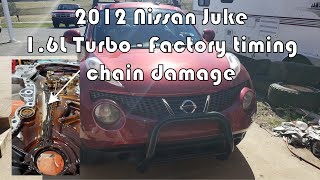
- Engine Rattle on Startup: A distinct rattling or chattering noise from the passenger side of the engine, especially when warm or at low RPMs (1400-2300rpm), often indicates a stretched timing chain or failing chain guides. [14] This is a critical warning sign. 🎬 Listen: Real-world Nissan Juke timing chain noise
- Loss of Power and Whining Noise: A sudden drop in performance accompanied by a high-pitched whining sound from the engine bay can signal turbocharger failure. [2] This is often caused by a separate, but related, issue with a clogged turbo oil line.
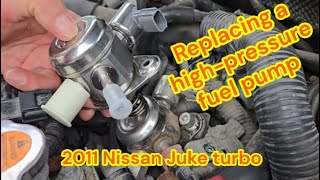
- Engine Misfires and Rough Idle: While many issues can cause this, severe carbon buildup on the intake valves—a known issue with direct injection engines—can lead to poor running conditions. [20, 22] A failing high-pressure fuel pump (HPFP) can also cause misfires and long crank times.
- Catastrophic Failure: In severe cases, the timing chain can break, causing the pistons and valves to collide. This results in catastrophic, non-repairable engine damage.
Diagnostic Flowchart

Known Issues, Recalls, and Service Bulletins
The 2015-2017 MR16DDT engine has several well-documented issues. Addressing these proactively during a replacement is crucial for long-term reliability.
Timing Chain Stretch and Guide Wear
Document: Nissan Voluntary Service Campaign P4213 / TSB #NTB-14-030-B [3, 29]
Severity: Severe
Affected Years: While the official campaign targeted 2011-2013 models, the underlying issue of timing chain stretch and noise is known to affect all MR16DDT engines up to 2017. [3, 10, 22] The campaign was launched in 2014 and expired in late 2015. [37, 38] Symptoms include a rattling noise from the engine. [29] If ignored, the chain can break, leading to complete engine failure. [29]
Pro Tip: It is strongly recommended to replace the timing chain, tensioner, and guides on any used MR16DDT engine before installation, regardless of mileage. This is a preventative measure against catastrophic failure.
Turbocharger Oil Feed Line Clogging
Document: TSB #NTB16-035a [9]
Severity: High
Affected Years: 2011-2017 Juke (all MR16DDT engines) [9]
The oil feed line to the turbocharger runs close to the hot exhaust, which can cook the oil inside, causing the line to clog or collapse internally. [42, 44] This starves the turbo of lubrication, leading to rapid and certain failure. Nissan issued a technical service bulletin stating that this oil feed tube MUST be replaced any time the turbocharger is replaced. [9]
Warning: Never reuse the old turbocharger oil feed line when installing a replacement engine. Failure to replace this part (Nissan Part # 14411-1KC1A or 15192-BV80A for 2015-2017 non-RS models) will cause oil starvation and destroy the turbocharger. [9]
Carbon Buildup on Intake Valves
Severity: Moderate
Affected Years: All direct injection (GDI) engines, including all MR16DDTs. [20, 22]
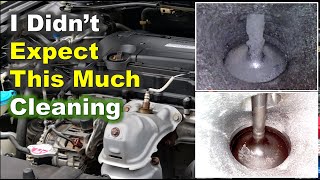
Because fuel is injected directly into the cylinder, it no longer washes over the intake valves. This allows oil vapor and combustion byproducts to bake onto the valves, forming hard carbon deposits. Over time, this buildup restricts airflow, causing a rough idle, misfires, and reduced power. [20] Before installing a used engine, it is wise to perform an intake valve cleaning service.
High-Pressure Fuel Pump (HPFP) Failure
Severity: Moderate
Affected Years: All production years.
The HPFP is prone to failure, leading to long crank times, misfires, and poor performance. If the donor engine exhibits these symptoms after installation, the HPFP may need replacement.
Crankcase Ventilation Freezing in Cold Climates
Severity: Moderate
Affected Years: All production years.
In extreme cold, the PCV (Positive Crankcase Ventilation) system can freeze. This causes pressure to build up inside the engine, often resulting in oil blowing out of the dipstick tube. Keep the PCV system clear and monitor for leaks in winter months.
Official Recalls
There have been no major recalls issued by the National Highway Traffic Safety Administration (NHTSA) for the engine assembly itself on 2015-2017 Juke models. [19] A recall (NHTSA 18V086000) was issued for a faulty brake master cylinder on 2015-2017 Juke Nismo RS models only, which does not apply to the standard engine assembly covered here. [15, 31, 32]
Expected Service Life & Maintenance
The service life of the MR16DDT engine varies significantly based on maintenance. Industry data suggests an average lifespan of 143,000 to 158,000 miles before major repairs are expected. However, with proper care, many engines surpass 150,000 to 200,000 miles.
The single most critical factor for longevity is diligent oil changes using high-quality full-synthetic 5W-30 oil every 5,000 miles or less. This directly impacts the two most common failure points: the timing chain (which relies on clean oil for the tensioner and guides) and the turbocharger (preventing clogs in the oil feed line). Other crucial practices include using premium (91+ octane) fuel, allowing the engine to warm up and cool down properly to protect the turbo, and performing intake valve carbon cleaning every 60,000 miles. Proactively replacing the timing chain kit around 80,000 to 100,000 miles is the most effective way to prevent catastrophic engine failure.
What Fails at Every Mileage Band
Pro Tip: The mileage bands below describe what typically fails on USED REPLACEMENT UNITS at these mileages. The checklists provided are things you must do WHILE INSTALLING the purchased engine to ensure it survives, not general maintenance for your current broken engine.
Under 60,000 Miles
While less common, premature timing chain issues can occur, sometimes as early as 32,000 to 50,000 miles, manifesting as a startup rattle. Turbocharger failures have also been reported at low mileages (sometimes under 30,000 miles), often linked to oil starvation or aggressive driving. Some transmission issues with the CVT, such as shuddering or hesitation, have been noted well before 50,000 miles.
- ✓Do during install (required): Replace the turbocharger oil feed line to prevent oil starvation to the turbo.
- ✓Do during install (recommended): Proactively replace the timing chain, tensioner, and guides, regardless of mileage. It is the engine's primary weak point. Perform intake valve cleaning to remove any early-stage carbon deposits, which is an inherent issue with direct injection engines.
- ✓Cheap insurance while the engine is out: Replace all essential gaskets and seals (valve cover, intake manifold, front/rear main seals) and consumables like spark plugs (NGK DILKAR7C9H), engine oil, and coolant.
60,000 - 100,000 Miles
This is the primary window for timing chain stretch and guide failure. A rattling noise on startup is the key symptom. Turbocharger failure becomes more common, often due to clogged oil feed lines or carbon buildup. Oil leaks from the valve cover gasket or turbo seals may begin to appear around 80,000 miles. Carbon buildup on intake valves can become significant enough to require cleaning (walnut blasting) to restore performance.
- ✓Do during install (required): Replace the timing chain kit (chain, guides, tensioner). If you are buying a used engine in this mileage band, assume the timing components are near the end of their life. Replace the turbocharger oil feed line. Perform a thorough intake valve cleaning (walnut blasting recommended) to remove significant carbon deposits.
- ✓Do during install (recommended): Replace all standard gaskets, seals, spark plugs, oil, and coolant.
- ✓Cheap insurance while the engine is out: Inspect and consider replacing the water pump and thermostat while access is easy.
100,000 - 150,000 Miles
If not already replaced, the timing chain is at high risk of failure in this range. High-pressure fuel pump (HPFP) failures can occur, typically around 120,000 miles. Piston ring and cylinder bore wear can become more pronounced, especially on poorly maintained engines, leading to oil consumption and loss of compression. Turbocharger failure remains a significant risk.
- ✓Do during install (required): All required items from the lower mileage bands (timing chain kit, turbo oil feed line, intake valve cleaning) are mandatory if there is no proof they have been done.
- ✓Do during install (recommended): A compression and leak-down test before installation to verify the health of pistons, rings, and valves. Inspect and consider replacing the high-pressure fuel pump (HPFP) if any symptoms like long crank times were present.
- ✓Cheap insurance while the engine is out: At this mileage, replacing the water pump, thermostat, and all accessible seals (front/rear main) is cheap insurance against future failures.
Real Owner Experiences
| Source | Mileage | What Happened | Cost |
|---|---|---|---|
| CarComplaints.com / In The Garage with CarParts.com | Average of 8,500 miles (for 2014 models) | Reports of engine failure on 2014 models occurred at very low mileage, often preceded by unusual noises. | Not specified, but engine failure is a high-cost repair. |
| 40,000 miles | An owner reported a noisy chatter from the timing chain area that would appear when the engine was warm. The noise disappeared when the exhaust timing control solenoid was unplugged. | Dealer replaced timing chain under warranty, but the noise returned, indicating a potential issue with camshaft phasers. | |
| Reddit - r/AskMechanics | under 50,000 | Owner was quoted for a full engine replacement by a Nissan dealership after the car would not start and a knock was heard. The dipstick was reportedly 'bone dry' despite a recent oil change. | Quoted $16,500 |
| In The Garage with CarParts.com | Starting around 59,700 miles | Severe transmission issues, including failure requiring replacement, were reported. One owner had to replace the timing chain, turbo, and transmission within five months. | At least $4,000 for transmission replacement. |
| In The Garage with CarParts.com | Average of 70,000 miles (for 2011 models) | Engine failure was reported, often caused by a broken timing chain that damaged the engine. | Not specified, but engine failure implies replacement. |
| 82,000 miles | Owner reported that their timing chain and/or guides went bad. | Not specified, but implies replacement of the full timing kit. | |
| 120,000 miles | Owner's timing chain failed. | Not specified. | |
| YouTube Teardown | 176,000 miles | Engine teardown showed significant wear on piston skirts, sludge buildup in the oil pump, and a tired cylinder bore, indicating a lack of maintenance. One cylinder had no compression. | Engine required a full rebuild with at least new pistons. |
| Reddit - r/nissanjuke | Not specified | Owner was quoted by a dealer to replace the high-pressure fuel pump for a second time in 18 months. | Quoted $1,200 |
| Back Room Forum - honestjohn.co.uk | Not specified (2016 '16 Plate') | A friend of the poster had a burnt exhaust valve diagnosed. The repair involved skimming the head and replacing valve guides. | Quoted £2,000, Paid just under £3,500 |
Repair or Replace?
When facing a major engine bill, you must decide whether to repair your current engine or replace it entirely with a used OEM unit.
- High-Pressure Fuel Pump (HPFP) Failure: Typical repair cost is $1,200 - $1,800. This repair is almost always more economical than engine replacement. The new part itself is a major portion of the cost.
- Timing Chain Stretch & Guide Wear: Typical repair cost is $1,500 - $2,700+. If the issue is caught early (e.g., rattling noise) before the chain fails and causes further internal damage, repairing it makes sense. Given the high labor cost, it makes sense to perform this repair on an otherwise healthy engine, or proactively when installing a used engine.
- Carbon Buildup on Intake Valves: Typical repair cost is $500 - $1,000. This is a maintenance issue inherent to GDI engines. If the only symptom is gradual loss of performance or rough idle, a valve cleaning service is a standard repair and far cheaper than replacement.
Pro Tip: Replacement with a used engine is the smarter economic choice when a failure results in catastrophic internal damage. This includes situations where the timing chain has snapped, causing piston-to-valve contact (bent valves, damaged pistons/head), or when severe oil starvation has led to spun rod bearings, a 'knock,' and scored cylinder walls. A repair bill for this level of damage, like rebuilding the cylinder head (£3,500), can easily exceed the cost of a low-mileage used engine and labor.
Questions to Ask Your Installer
- Have you confirmed this is a V2 (2015-2017) engine and not a V1 or Nismo RS model?
- Will you be proactively replacing the timing chain, guides, and tensioner on the used engine before installation?
- Are you replacing the turbocharger oil feed line with a new OEM part to prevent oil starvation?
- If my vehicle is AWD, are you prepared to transfer my original upper and lower oil pans?
- Do you have a Nissan Consult-III Plus or equivalent scan tool to perform the necessary immobilizer (NATS) reset and idle/throttle relearn procedures?
- What is your parts and labor warranty for the engine swap?
- Does your quote include all necessary new gaskets, seals, fluids, and spark plugs as recommended?
Replacement Cost Comparison
Engine replacement costs vary based on the type of engine and local labor rates. The following estimates do not include taxes or shop supply fees.
| Part Type | Estimated Cost (Part Only) |
|---|---|
| New OEM | $4,000 - $10,000+ |
| Remanufactured | $3,500 - $5,000 |
| Used OEM | $700 - $2,500 |
| Installation Labor | $1,100 - $3,000 (10-20 hours) |
Freight & Delivery Reality

When ordering a used MR16DDT engine assembly (for example, a verified unit from a 2017 Nissan JUKE with 77,777 miles, ARA condition grade A), it will not arrive in a cardboard box via standard parcel delivery. These assemblies weigh approximately 350 lbs and measure roughly 32" x 32" x 33" before crating. They ship as LTL (Less Than Truckload) freight strapped to a wooden pallet.
Because of the size and weight, delivery requires a truck equipped with a liftgate if you are shipping to a residential address or a shop without a loading dock. Always perform a pre-purchase verification interview with the seller to confirm the exact VIN and mileage of the donor vehicle. When the freight carrier arrives, you must inspect the engine for any transit damage (like cracked sensors or crushed oil pans) before signing the delivery receipt.
Installation Essentials: What to Know Before You Start

Replacing this engine is a complex job rated for expert-level technicians. It requires special tools and electronic programming that are not available to most DIY mechanics. Shop labor is estimated at 10-20 hours.
Required Parts and Consumables
To ensure a successful installation, the following parts should always be replaced:
- Turbocharger Oil Feed Line: Absolutely mandatory to prevent turbo failure. [9]
- Timing Chain Kit: Includes the chain, guides, and tensioner. A critical preventative repair.
- Gaskets & Seals: Intake and exhaust manifold gaskets, turbocharger gasket kit (including oil/coolant line copper crush washers), valve cover gasket, and front and rear crankshaft seals.
- Hardware: Torque-to-Yield (TTY) head bolts must be replaced if the cylinder head is removed.
- Spark Plugs: Use only the specified NGK DILKAR7C9H plugs. Using cheap, non-OEM spec spark plugs can cause misfires and potential engine damage.
- Fluids & Filters: 4.5 liters of 5W-30 synthetic oil, Nissan Blue Long Life Antifreeze, and a new oil filter.
Special Tools and Programming
A successful swap requires access to professional equipment:
- Nissan Consult-III Plus Scan Tool: This dealer-level tool (or an equivalent high-end scanner) is required to re-initialize the vehicle's anti-theft system (NATS). The engine will not start or run correctly without this step. You must also perform the Throttle Valve Closed Position Learn, Accelerator Pedal Released Position Learn, Idle Air Volume Learn, and program Injector Calibration Codes if transferring injectors.
- Torque Wrenches: An angle torque wrench or protractor (Nissan SST: KV10112100) is needed for single-use, torque-to-yield (TTY) bolts like those on the cylinder head, which require a multi-step torque-plus-angle sequence.
- Injector Seal Tools: A specific fuel injector seal installer/remover tool is needed to properly size and install the new Teflon seals on the direct injectors to prevent high-pressure leaks.
- Heavy Equipment: An engine hoist and stand are mandatory.
Pro Tip: If you have an All-Wheel Drive (AWD) model, you must transfer the upper and lower oil pans and intermediate shaft brackets from your original engine to the replacement unit. These parts are shaped differently to provide clearance for the AWD transfer case (PTU).
Warning: You must use the wiring harness matching your vehicle's model year and trim. V2 engines have different sensor connectors (electronic wastegate, dual MAP sensors, EGR) compared to V1 engines.
Before the First Start: Priming and Fluids
Used engines often sit on warehouse shelves for months. During this time, the oil drains away from the moving parts. You must add fresh fluids and "prime" the engine before starting it. Priming means pumping oil through the engine before it actually runs. This protects the turbocharger and metal bearings from dry friction.
Mandatory Fluids
- Engine Oil and Filter: Always install a brand-new oil filter and fresh engine oil. Use 5W-30 synthetic oil that meets the API SN standard or newer.
- Engine Coolant: Fill the cooling system with fresh Nissan Blue Long Life Antifreeze/Coolant. This is a special fluid made for Nissan aluminum engines. Do not mix it with older green coolants.
Oil Priming Procedure
- Fill the engine with the correct amount of fresh 5W-30 oil.
- Stop the engine from starting. The easiest way to do this is to remove the fuel pump fuse from the fuse box.
- Turn the key to crank the engine for 10 to 15 seconds. The engine will spin but will not start.
- Look at the dashboard. Watch for the red oil pressure warning light to turn off. This tells you oil has reached the top of the engine.
- If the light stays on, wait one minute to let the starter motor cool down. Then, crank the engine for another 10 seconds.
- Once the oil pressure light turns off, put the fuel pump fuse back in. You can now safely start the engine.
Frequently Asked Questions (FAQ)
Can I use an engine from a 2014 Juke in my 2016 Juke?
No. The 2011-2014 (V1) and 2015-2017 (V2) engines have different compression ratios, turbochargers, wiring, and emissions components that make them incompatible. [1]
Do I really need to replace the turbo oil feed line?
Yes. This is the single most important step to prevent immediate failure of your turbocharger. The old line becomes clogged with baked-on oil deposits, restricting flow to the new unit. [9, 44]
Will the engine work right after I install it?
No. The engine will not start or run properly until the Nissan Anti-Theft System (NATS) is re-initialized using a compatible, professional-grade scan tool. Several other electronic "re-learn" procedures for the throttle and idle are also required.
Is the turbocharger included with a used engine?
Typically, no. Standard used engines (long blocks) do not include the turbocharger, alternator, A/C compressor, power steering pump, exhaust manifold, or starter. You will need to transfer these parts from your old engine.
What parts ARE included with a used MR16DDT engine assembly?
Per standard auto recycler guidelines, a complete used engine assembly includes the cylinder block, cylinder head, oil pan, valve covers, intake manifold, timing covers, fuel injectors, high-pressure fuel pump (HPFP), throttle body, harmonic balancer, and all internal moving parts.
Do I need special tools to install this engine?
Yes. Beyond standard mechanic tools, you will need an angle torque wrench or protractor (Nissan SST: KV10112100) for the torque-to-yield head bolts, a fuel injector seal installer/remover tool for the Teflon seals, a Nissan Consult-III Plus scan tool (or equivalent) for programming, and an engine hoist and stand.
How do I verify my Juke has the correct engine before buying?
First, confirm the 4th digit of your VIN is 'A'. Second, verify your vehicle is a 2015, 2016, or 2017 model year, has an Automatic (CVT) transmission, and is NOT a Nismo RS trim. Finally, check the engine ID stamping on the front-right side of the cylinder block near the transmission bellhousing to confirm it reads 'MR16'.
Helpful Videos
Technical Specifications
Engine Code: MR16DDT (M5Mt); Displacement: 1.6 Liters; Cylinders: Inline 4-Cylinder; Aspiration: Turbocharged; Valvetrain: Dual Overhead Camshafts (DOHC); Fuel System: Direct Injection; Compression Ratio: 10.5:1; VIN Identifier (4th Digit): 'A'; Model Years: 2015-2017; Applicable Trims: S, SL, SV, Nismo (non-RS); Required Oil: 5W-30 Full-Synthetic; Oil Capacity: 4.5 liters; Required Fuel: 91+ Octane (Premium); Spark Plugs: NGK DILKAR7C9H
We Have This Part in Stock


The information in this article is provided for general reference and educational purposes only. Vehicle specifications, procedures, and part compatibility can vary by production date, trim level, and region. Always consult your vehicle's factory service manual and verify part numbers before purchasing or performing repairs. Safety-critical components such as airbags, seat belts, and braking systems should be installed by a qualified professional.
- Nissan Juke:
- 🎬 Helpful Videos
- 🛍️ Shop This Part
- Is This the Right Engine for Your Juke?
- Key Identification Checks:
- Common Failure Points and Symptoms
- Diagnostic Flowchart
- Known Issues, Recalls, and Service Bulletins
- Timing Chain Stretch and Guide Wear
- Turbocharger Oil Feed Line Clogging
- Carbon Buildup on Intake Valves
- High-Pressure Fuel Pump (HPFP) Failure
- Crankcase Ventilation Freezing in Cold Climates
- Official Recalls
- Expected Service Life & Maintenance
- What Fails at Every Mileage Band
- Under 60,000 Miles
- 60,000 - 100,000 Miles
- 100,000 - 150,000 Miles
- Real Owner Experiences
- Repair or Replace?
- Questions to Ask Your Installer
- Replacement Cost Comparison
- Freight & Delivery Reality
- Installation Essentials: What to Know Before You Start
- Required Parts and Consumables
- Special Tools and Programming
- Before the First Start: Priming and Fluids
- Mandatory Fluids
- Oil Priming Procedure
- Frequently Asked Questions (FAQ)
- 🎟️ Get 5% Off