

2019 Nissan Frontier 4.0L VQ40DE: Problems, Identification, and Used Replacement
Identify the VQ40DE engine, learn what causes catastrophic oil pressure loss, and know exactly what to look for when buying a used OEM replacement.
- The most critical preventative measure is to replace the failure-prone paper oil gallery gaskets with updated steel-reinforced versions whenever the engine is out of the truck to prevent catastrophic oil pressure loss.
- You must use a used engine specifically from a 2019 Nissan Frontier; engines from other Nissan models like the Pathfinder or Xterra are not direct-fit replacements.
- During installation, always replace common wear items like the rear main seal, water pump, thermostat, and valve cover gaskets to prevent future labor-intensive repairs.
- If installing a used engine into a manual transmission truck, the automatic pilot converter sleeve must be removed from the crankshaft to avoid destroying the transmission's input shaft.
- To avoid persistent electronic issues, reuse your original OEM Nissan or Hitachi camshaft and crankshaft position sensors instead of using aftermarket alternatives.
Is This the Right Engine for Your Truck?

The 2019 Nissan Frontier uses a 4.0-liter V6 engine known as the VQ40DE. This is a durable, non-turbocharged engine with a dual overhead camshaft (DOHC) design, meaning it has two camshafts per cylinder head to operate its four valves per cylinder. To confirm this engine is original to your truck, check the fourth character of your vehicle's VIN (Vehicle Identification Number); it should be the letter 'A'. The VIN is located on the public VIN plate on the driver's side dashboard, visible through the windshield, or on the driver's door jamb.
Key specifications for this engine include:
| Engine Family | Nissan VQ40DE |
| Configuration | 60-degree V6 with an aluminum block and heads |
| Displacement | 4.0 Liters (3954cc) |
| Fuel System | Multi-port fuel injection (not direct injection) |
| Drivetrain Options | Available for both 2WD and 4WD models |
What It Does and Does Not Fit
This specific used engine assembly is configured only for the 2019 Nissan Frontier. While the basic VQ40DE engine was used in other Nissan models like the Pathfinder, Xterra, and NV vans, those versions are not direct drop-in replacements. Differences in engine mounts, wiring harnesses, accessory placement, and computer calibrations prevent them from being interchanged without significant modifications.
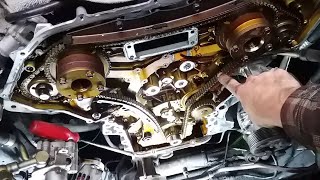
🎬 Watch: VQ40DE engine removal and swap walkthroughWarning: Do not purchase an engine from a Nissan Pathfinder, Xterra, or NV van expecting it to fit your 2019 Frontier. You must use an engine specifically from a 2019 Frontier to ensure proper fitment and function.
Before purchasing a replacement, you must also confirm your drivetrain and transmission. If you are swapping an engine between a 2WD and 4WD truck, you must transfer your original oil pan, front differential mounting brackets, and intermediate shaft brackets. If your truck has a manual transmission, you must remove the automatic transmission pilot converter sleeve from the rear of the replacement engine's crankshaft and install a manual pilot bushing.
Common Problems and Signs of Failure

A failing engine often gives clear warning signs. Look for symptoms like a deep knocking sound from inside the engine, very low oil pressure readings, engine overheating, or visible metal shavings in the engine oil, which can look like metallic glitter.
Major Known Issues
The VQ40DE is a reliable engine, but it has a few well-documented weak points. Addressing these during an engine swap can prevent future failures.
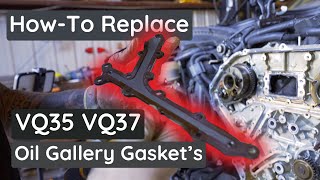
Critical Issue: Oil Gallery Gasket Failure. The most severe known issue is the failure of paper-thin gaskets located behind the rear timing cover. When these gaskets fail, pressurized oil leaks internally, causing a sudden and significant drop in oil pressure. This starves the engine of oil and can lead to catastrophic failure. The fix is to replace the original paper gaskets with updated, steel-reinforced versions while the engine is out of the truck.
🎬 Watch: Step-by-step oil gallery gasket replacement guide- Camshaft & Crankshaft Position Sensor Failure: These sensors can fail over time, causing the engine to stall, crank but not start, or run poorly. It is highly recommended to use original OEM Nissan or Hitachi-brand sensors for replacement, as many aftermarket sensors have voltage tolerance issues that can cause persistent problems.
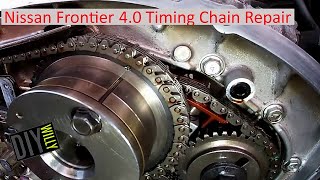
- Secondary Timing Chain Tensioner Wear: Earlier VQ40DE engines (pre-2011) were known for premature wear on the plastic tensioner "shoes." This issue was largely resolved with updated parts by 2019, but it is still wise to inspect them. If wear is found, replace with updated parts per TSB NTB10-048.
- Oxygen Sensor Slow Response (TSB #NTB13-108A): Some 2012 and newer models could trigger a Check Engine Light with codes P0139 or P0159. This is typically resolved with an ECM (Engine Control Module) software update performed by a dealer or qualified shop.
- EVAP Vent Control Valve (TSB #NTB15-079e): Dust and debris can clog the EVAP canister vent control valve between 2005 and 2019, causing a Check Engine Light. The fix involves cleaning or replacing the valve.
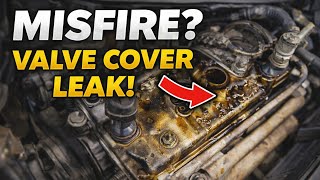
- Valve Cover and Spark Plug Tube Seal Leaks: Over time, the rubber seals harden and leak oil into the spark plug tubes. The remedy is to replace the entire valve cover, as the tube seals are integrated into the cover. 🎬 See: How a valve cover leak causes misfires
- Cracked Exhaust Manifolds: The factory exhaust manifolds can develop cracks over time, leading to an exhaust leak and a ticking noise, especially when the engine is cold. Inspect and replace factory manifolds if cracked.
Diagnostic Flowchart
What Fails at Every Mileage Band
Pro Tip: The mileage bands below describe what to expect from USED REPLACEMENT units of that mileage. The checklists provided are things you must do WHILE INSTALLING the purchased engine, not maintenance for your current broken engine.
Under 60,000 Miles
While major mechanical failures are uncommon at this mileage, some issues can appear. The secondary timing chain tensioner guides, made of a plastic material, could potentially wear prematurely on pre-2012 models, causing a distinct rattling or chain slap noise on startup. While this was largely resolved by the 2019 model year, it is a known issue for the engine family. Early failure of the paper oil gallery gaskets behind the timing cover is also possible, leading to a loss of oil pressure. This is considered a critical but not mileage-dependent failure. Additionally, a faulty fuel level sensor can cause the gas gauge to read empty at all times.
- ✓Do during install (required): Replace the original paper oil gallery gaskets with the updated steel-reinforced versions. This is the single most important preventative measure while the engine is out.
- ✓Do during install (recommended): Install a new water pump and thermostat. Replace the rear main crankshaft seal.
- ✓Cheap insurance while the engine is out: Install new spark plugs, intake plenum gaskets, and valve cover gaskets. Use only OEM Nissan or Hitachi camshaft and crankshaft position sensors; transfer from the original engine if they are known good. Inspect and consider replacing the stock radiator, as failures on earlier models could lead to coolant mixing with transmission fluid.
60,000 - 100,000 Miles
This is the mileage range where age- and heat-related failures begin to appear more frequently. Oil leaks from hardened valve cover gaskets and spark plug tube seals are common. This can lead to oil filling the spark plug wells and causing misfires. Failure of the paper oil gallery gaskets becomes a more prominent risk, leading to low oil pressure symptoms, especially at idle. Camshaft and crankshaft position sensor failures are common across all mileage ranges but are frequently reported here. The EVAP canister vent valve can also fail due to dust intrusion, triggering a check engine light.
- ✓Do during install (required): Replace valve cover gaskets, which include integrated spark plug tube seals, to prevent future oil leaks. Replace the paper oil gallery gaskets with upgraded metal ones if not already done.
- ✓Do during install (recommended): Strongly consider replacing the entire timing set (chains, guides, and tensioners) as a preventative measure, as the service life of the chains is estimated around 150,000 miles. A valve clearance adjustment is recommended by Nissan every 60,000 miles.
- ✓Cheap insurance while the engine is out: Replace all rubber coolant hoses and the serpentine belt.
100,000 - 150,000 Miles
Wear-and-tear items are the primary concern in this range. Valve cover gasket leaks are very likely if not already replaced. The risk of oil gallery gasket failure continues to be a major concern for engines with original paper gaskets. Cracked exhaust manifolds can occur. Increased oil consumption may begin, potentially caused by worn piston rings or valve seals. This can be accelerated by failing catalytic converters which release ceramic dust back into the cylinders. Fuel injectors may also become clogged or fail, leading to misfires and rough idling.
- ✓Do during install (required): A complete timing service, including chains, guides, tensioners, and water pump, is essential for reliability. Replace the oil gallery gaskets with upgraded versions.
- ✓Do during install (recommended): Replace the valve covers (with integrated gaskets) and all major seals like the rear main. Clean or replace fuel injectors.
- ✓Cheap insurance while the engine is out: Inspect original exhaust manifolds for cracks and replace gaskets. Inspect catalytic converters on the vehicle for signs of failure to prevent damage to the replacement engine.
Over 150,000 Miles
At this mileage, the engine is nearing the end of its typical service life without a major overhaul, and component failures are more likely. Timing chains and guides are considered a primary wear item and are likely to cause noise or issues if not already replaced. Significant oil consumption is a higher possibility due to wear on piston rings and cylinder walls. The oil pump itself can be a point of failure, contributing to low oil pressure. General cooling system component failures (radiator, fan clutch, hoses) are more common.
- ✓Do during install (required): At minimum, a full timing job, new water pump, new oil pump, all new seals and gaskets (including valve covers and oil gallery gaskets), and new sensors (cam/crank) should be performed.
- ✓Do during install (recommended): A complete engine rebuild kit, including pistons, rings, bearings, gaskets, timing set, and oil pump, should be considered for a high-mileage core.
- ✓Cheap insurance while the engine is out: Assume a full rebuild or refresh is necessary for long-term reliability.
Real Owner Experiences
| Source | Mileage | What Happened | Cost |
|---|---|---|---|
| Reddit r/nissanfrontier | 50,000 miles | A user noted that on older models, premature wear of plastic timing chain guides was a concern, with most reports occurring under 50,000 miles. | Not specified. |
| Reddit r/G37 | 65,000 miles | An owner of a related Nissan vehicle with a VQ engine reported diagnostic codes (P0300, P0021) pointing to oil gallery gasket failure at relatively low mileage. | Not specified, but this is a labor-intensive repair often quoted in the thousands. |
| Reddit r/nissanfrontier | 114,000 miles | A 2017 Frontier owner reported the truck was 'going strong' but had a slight oil leak. | Not specified. |
| Reddit r/G37 | 130,000+ miles | Owners discuss the oil gallery gasket as a significant potential issue in this mileage range. One owner who waited until 178k miles found the gasket had already blown out upon inspection. | Repair quotes for the gallery gasket job range from $1,650 to over $3,500 at dealerships, with DIY taking 16-22 hours. |
| Reddit r/nissanfrontier | 182,000 miles | An owner of a 2006 model experienced a whining noise that developed into a loud ticking, suspected to be timing chain tensioner failure. | The owner planned a 2-day DIY job to replace the timing components. |
| Reddit r/nissanfrontier | 200,000 miles | A 2011 Frontier owner reported the engine runs well with only an idler/tensioner pulley set and spark plugs replaced. They perform frequent fluid changes. Their main concern is the original timing chains. | Minimal preventative maintenance costs. |
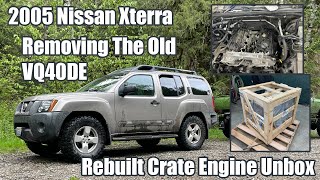
| YouTube | 233,000 miles | A 2005 Xterra ran low on oil and developed engine noise, prompting the owner to order a rebuilt engine. | Cost of a rebuilt engine and installation. |
| Reddit AskMechanics | <50,000 miles | Dealer quoted for a new engine replacement due to a 'catastrophic heating event' and claimed the dipstick was 'bone dry'. | $16,500 - $17,500 quoted. |
| Reddit r/nissanfrontier | Not specified | Owner's engine failed with a severe knock. They estimated a used engine would cost around $2,000 and decided to sell the truck as-is. | Sold the non-running truck for $800. |
| Reddit r/nissanfrontier | 145,000 miles | Owner was experiencing startup rattle and low oil pressure, considering an engine swap. Researched prices, finding remanufactured units around $3,400 and used JDM units around $2,100. | N/A - planning stage. |
Repair or Replace?
Deciding whether to fix your broken engine or buy a replacement comes down to the type of failure and how long the engine was run while damaged.
- Rear Timing Cover Oil Gallery Gasket Leak: Typical repair cost is $1,500 - $2,500+. Repair makes sense when the engine has NOT been run for an extended period with low oil pressure. If the failure is caught early (e.g., oil pressure light flickers at idle, but no knocking or bottom-end noise has developed), simply replacing the gaskets is far more economical. The gasket kit itself is inexpensive, but the labor to access the rear timing cover is extensive.
- Timing Chain & Tensioner Wear: Typical repair cost is $1,000 - $2,000+. Repair makes sense if the only symptom is a startup rattle that goes away quickly and there is no evidence of low oil pressure or engine damage. If the chain guides have broken and pieces have fallen into the oil pan, the cost and complexity increase significantly, pushing the decision closer to replacement.
- Blown Head Gasket: Typical repair cost is $2,853 - $3,775. Repair makes sense if the engine has not been severely overheated to the point of warping the heads or block. However, this cost is very close to the price of a good used engine, making replacement a strong consideration.
When Replacement is Smarter: Replacing the engine is the better choice if the engine has developed a persistent knocking noise (rod knock), has been run for any significant time with very low or no oil pressure, or has suffered catastrophic overheating. In these cases, the internal damage is likely too widespread and expensive to fix reliably, making a complete used or remanufactured engine a more logical and often more cost-effective solution.
Replacement Cost
The cost to replace a 2019 Frontier engine varies based on the type of replacement unit you choose. Labor costs for the swap are also a significant factor.
| Part Type | Estimated Cost (USD) | Notes |
|---|---|---|
| Used OEM | $2,800 - $4,000 | Price depends on mileage and condition. Sourced from a recycled vehicle. |
| Remanufactured | $3,400 - $5,300 | A professionally rebuilt engine with new internal wear parts. Often comes with a warranty. |
| New OEM (Crate Engine) | $4,600+ | A brand new engine from Nissan. |
| Installation Labor | $1,800 - $3,000 | Shop estimates range from 12 to 20 hours for the swap. |
What's Included in a Used Engine Assembly?
Understanding what parts come with a used engine helps you plan your project and budget. A standard used engine assembly is a "long block," which includes the core internal components but not the accessories needed to make it run.
| What's Usually Included | What's NOT Included (Transfer from old engine) |
|---|---|
|
|
Key Steps for a Successful Installation

A successful engine swap requires careful attention to detail. Certain steps are critical to ensure the new engine runs properly and lasts for a long time. This is an Advanced/Expert level DIY job requiring special tools, including an engine hoist, heavy-duty load leveler, a Crankshaft pulley ring gear stopper (Kent-Moore J-44716 / KV10117700), a Pilot bushing puller (Kent-Moore J-23907 / ST16610001) if swapping to manual, and an Angle torque wrench (Kent-Moore BT-8653-A / KV10112100).
Before You Begin: The "Must-Do" Parts Replacement
Pro Tip: While the engine is out of the vehicle, it's the perfect time to replace hard-to-reach seals and gaskets. This can save you from having to do a much bigger job later.
Always install the following new parts on the replacement engine before it goes into the truck:
- Upgraded steel-reinforced rear oil gallery gaskets
- Rear main crankshaft seal
- Valve cover gaskets
- Intake and exhaust manifold gaskets
- Thermostat and water pump O-rings / replacement water pump
- Six brand-new platinum or iridium spark plugs (gap: 0.043 in / 1.1 mm)
- 5.1 to 5.4 quarts of 5W-30 engine oil and a premium spin-on oil filter
- Nissan Blue Long Life 50/50 Pre-Diluted Antifreeze/Coolant
- Full engine gasket set (part # 10101-EA225 or equivalent)
Critical Installation "Gotchas"
Wiring Harness: You MUST reuse your truck's original engine wiring harness. The harness from the donor vehicle may have different wiring and will likely cause issues.
2WD vs. 4WD Swap: If you are swapping an engine between a 2WD and 4WD truck, you must transfer your original oil pan and any related front differential mounting brackets.
Heater Core Inlet Pipe: The plastic heater hose pipe on the firewall is known to become extremely brittle. Be very careful when connecting the heater hoses, or consider replacing it with a more durable aftermarket aluminum version.
Accessory and Manifold Transfer: Transfer original intake and exhaust manifolds to ensure emissions equipment and vacuum lines match.
Warning: If your Frontier has a manual transmission, you must remove the automatic transmission pilot converter sleeve from the back of the crankshaft on the replacement engine using a pilot bushing puller. Failure to do this will damage the transmission input shaft and thrust bearing.
Pro Tip: Reuse original working OEM Nissan/Hitachi sensors to avoid voltage tolerance issues common with cheap aftermarket sensors.
Questions to Ask Your Installer
If you are hiring a shop to perform the swap, ask these questions to ensure they do the job right:
- Have you worked on a Nissan VQ40DE before and are you familiar with its specific issues?
- While the engine is out, will you be replacing the rear main seal, water pump, and thermostat?
- Will you be inspecting and replacing the failure-prone paper oil gallery gaskets with the updated steel-reinforced versions as a preventative measure?
- Do you have the tools and procedure to remove the automatic pilot converter sleeve if we are swapping into my manual transmission truck?
- Will you be transferring my original, known-good OEM/Hitachi camshaft and crankshaft sensors over to the replacement engine?
- How will you handle the fragile plastic heater core inlet pipe on the firewall?
- Does your quote include all necessary fluids, new gaskets for the intake and exhaust manifolds, and any required relearn procedures for the ECU?
- What warranty do you offer on your labor, and how does that work with the warranty provided by the engine seller?
Freight & Delivery Reality

A complete VQ40DE engine assembly is a massive piece of machinery. Before crating, the engine weighs approximately 360 lbs and measures roughly 45" x 37" x 37". Because of this size and weight, it cannot be shipped as a standard parcel. It will arrive via LTL (Less-Than-Truckload) freight, strapped securely to a wooden pallet.
Warning: When the freight carrier arrives, it is absolutely critical that you inspect the engine thoroughly before signing the delivery receipt. Look for any damage to the oil pan, valve covers, or sensors that may have occurred during transit. Once you sign the paperwork, you are accepting the engine in its current condition.
Arrival Inspection: Compression and Leak-Down Testing
When your used engine arrives, test the cylinders before installing it. A compression test measures the pressure inside each cylinder. For the 4.0L VQ40DE, healthy compression is typically around 185 psi (pounds per square inch). The lowest acceptable reading is 142 psi. More importantly, all six cylinders should read within 14 psi of each other.
A leak-down test is also highly recommended. This test pumps compressed air into the cylinder to see how much escapes. A healthy used engine should have less than 15 percent air leakage per cylinder.
Before the First Start: Fluids and Priming
You must add fresh fluids and prime the oil system before starting a used engine. Starting a dry engine will cause instant, severe damage to the metal parts inside.
First, install a new oil filter. Fill the engine with fresh 5W-30 engine oil that meets API SN or newer standards. For the cooling system, use Nissan Long Life Antifreeze/Coolant (Blue) or an equivalent 50/50 mix designed for Asian vehicles.
Before you turn the key to start the truck, you must prime the oil pump. This means pumping oil through the engine while it is off. Follow these steps:
- Disable the fuel and spark systems. You can do this by removing the fuel pump fuse and disconnecting the ignition coils.
- Crank the engine with the starter for 10 to 15 seconds. Do not let it start.
- Wait one minute to let the starter motor cool down.
- Repeat this cranking process two or three times until the dashboard oil pressure light turns off, or your oil pressure gauge shows normal pressure.
- Reconnect the fuel pump fuse and ignition coils. The engine is now safe to start.
Frequently Asked Questions (FAQ)
Do I need to reprogram the truck's computer (ECU)?
Yes, some procedures are required. After installation, you will need to perform a Throttle Body Relearn and an Idle Air Volume Relearn. These can often be done with a manual pedal-dance sequence or an app like CVTz50. You may also need to have the NATS (Nissan Anti-Theft System) immobilizer re-synced with the engine's ECU, which often requires a professional scan tool or dealer CONSULT tool.
What is the difference between a 2WD and 4WD engine?
The core engine (long block) is the same. The primary difference is the oil pan. The 4WD version has a different shape and includes provisions for the front differential. If you are swapping between drivetrain types, you must use the oil pan from your original engine.
How much does a 2019 Frontier engine weigh?
A used VQ40DE engine assembly weighs approximately 360 lbs before being secured to a shipping pallet. It is shipped as LTL freight and cannot be sent via standard parcel services.
What is the expected service life of the VQ40DE engine?
The Nissan VQ40DE engine is widely regarded as durable, with a general life expectancy of over 200,000 miles when properly maintained. Many owners report reaching 250,000 to 350,000 miles with diligent maintenance and timely repairs.
What maintenance is most critical for this engine?
Frequent oil changes using high-quality SAE 5W-30 oil (every 3,000-7,500 miles) are critical to prevent sludge and protect timing components. Proactively replacing the failure-prone paper oil gallery gaskets with upgraded metal versions during any major service is the single most important action to prevent catastrophic oil pressure loss.
Can I use an engine from a Pathfinder or Xterra?
No. While they share the VQ40DE family name, engines from the Pathfinder, Xterra, NV Vans, and Equator differ in mounting, wiring, and accessory placement. You must use an engine configured specifically for the 2019 Frontier.
Helpful Videos
Technical Specifications
OEM Part Numbers: 10101-EA225
Engine Family: Nissan VQ40DE; Configuration: 60-degree V6 with an aluminum block and heads; Displacement: 4.0 Liters (3954cc); Fuel System: Multi-port fuel injection (not direct injection); Drivetrain Options: Available for both 2WD and 4WD models
We Have This Part in Stock


The information in this article is provided for general reference and educational purposes only. Vehicle specifications, procedures, and part compatibility can vary by production date, trim level, and region. Always consult your vehicle's factory service manual and verify part numbers before purchasing or performing repairs. Safety-critical components such as airbags, seat belts, and braking systems should be installed by a qualified professional.
- Nissan Frontier:
- 🎬 Helpful Videos
- 🛍️ Shop This Part
- Is This the Right Engine for Your Truck?
- What It Does and Does Not Fit
- Common Problems and Signs of Failure
- Major Known Issues
- Diagnostic Flowchart
- What Fails at Every Mileage Band
- Under 60,000 Miles
- 60,000 - 100,000 Miles
- 100,000 - 150,000 Miles
- Over 150,000 Miles
- Real Owner Experiences
- Repair or Replace?
- Replacement Cost
- What's Included in a Used Engine Assembly?
- Key Steps for a Successful Installation
- Before You Begin: The "Must-Do" Parts Replacement
- Critical Installation "Gotchas"
- Questions to Ask Your Installer
- Freight & Delivery Reality
- Arrival Inspection: Compression and Leak-Down Testing
- Before the First Start: Fluids and Priming
- Frequently Asked Questions (FAQ)
- 🎟️ Get 5% Off