

2016-2017 Nissan Altima 2.5L QR25DE: Problems, Identification, and Used Replacement
Identify the 2.5L QR25DE engine, learn what causes timing chain or oil consumption failures, and discover when replacing it with a used OEM unit is the smartest choice.
- Always diagnose the CVT before condemning the engine, as symptoms like hesitation, stalling, and shuddering are commonly caused by the transmission.
- Confirm fitment by checking the 4th character of the VIN for the letter 'A'; engines from other Nissan models or years are not compatible.
- After installation, performing the Crankshaft Position Sensor Relearn and Idle Air Volume Learn procedures is mandatory to prevent high idle and false codes.
- Use a special flat-ground E20 Torx socket for the flexplate bolts to avoid stripping their shallow heads.
- Transfer original camshaft and crankshaft sensors to the replacement engine and ensure the torque converter is fully seated before mating the engine and transmission.
Identification: Is This the Right Engine for Your Altima?

This engine assembly is for the 2016-2017 Nissan Altima equipped with the 2.5-liter, 4-cylinder QR25DE engine. The most reliable way to confirm fitment is to check your vehicle's identification number (VIN).
Look for the 4th character of your VIN. If it is the letter 'A', this engine is the correct fit for your car. The engine is an inline 4-cylinder, naturally aspirated (not turbocharged), and uses port fuel injection, not direct injection.
Pro Tip: You can find the VIN on a metal plate on the driver's side of the dashboard (visible through the windshield) or on the safety certification label inside the driver's door jamb. Checking this is a mandatory part of the pre-purchase verification process.
What Will NOT Fit?
The QR25DE engine family was produced from 2013-2018 and used in many other Nissan vehicles, but they are not interchangeable with this specific unit. This specific unit is configured and calibrated exclusively for the 2016-2017 Altima. Do not attempt to use an engine from the following vehicles, as they have different engine mounts, wiring harness pinouts, accessory positioning, oil pan designs, and computer calibrations:
- Nissan Rogue
- Nissan Sentra
- Nissan Frontier
- Older (pre-2016) or newer (2018+) Nissan Altima models
- Any Altima with the 3.5L V6 engine
Freight Shipping and Delivery Reality

When ordering a complete used engine assembly, it is important to understand how it arrives. This is a heavy industrial part, not a standard parcel.
| Characteristic | Detail |
|---|---|
| Size and Weight | Approximately 197 lbs and measures roughly 29" x 22" x 41" before crating. |
| Shipping Method | Less-Than-Truckload (LTL) freight on a wooden pallet. |
| Delivery Requirements | Requires a forklift or a truck equipped with a liftgate to lower the pallet to the ground. |
| Inspection | Always inspect for shipping damage (crushed oil pan, broken sensors) before signing delivery paperwork. |
Common Failure Symptoms

Symptoms of a failing QR25DE engine can include a deep knocking sound from the bottom of the engine, excessive smoke from the exhaust, or visible metal shavings in the engine oil. However, many drivability issues in these cars are incorrectly blamed on the engine.
Warning: Hesitation, stalling, shuddering, or a sudden loss of power are widely reported symptoms of a failing Continuously Variable Transmission (CVT), not the engine. The CVT is the most common major failure point on this generation of Altima. Always have the CVT's health professionally diagnosed before condemning the engine.
🎬 Watch: Learn about common Altima transmission and engine issuesDiagnostic Flowchart
Known Issues, Bulletins, and Recalls
While the QR25DE is generally considered a reliable engine, several official service bulletins have been issued. No major safety recalls have been issued for the engine itself in these specific model years, though other vehicle recalls may exist.
TSB #NTB16-117a / NTB16-117b: Check Engine Light with A/F Sensor Codes
For 2016-2017 Altimas with the 2.5L engine, a check engine light with codes like P014C, P014D, P015A, or P015B is a known issue of moderate severity. The official fix involves reprogramming the Engine Control Module (ECM), replacing the Air/Fuel Ratio Sensor 1, inspecting the PCV valve, and modifying the grille shutter.
TSB #PC514: Voluntary Emissions Service Campaign
Nissan issued this campaign for approximately 311,675 specific 2016-2017 Altimas with the 2.5L engine. An improperly calibrated ECM could cause the check engine light to come on due to an issue with the active grille shutter opening logic. The fix is a free ECM reprogram at a dealership.
TSB #NTB16-031: Check Engine Light with Coolant Temp Sensor Code P0116
This minor bulletin applies to 2013-2016 Altimas with the 2.5L engine. If the check engine light is on with code P0116 and there are no other driving issues, the recommended fix is to reprogram the ECM.
Common Maintenance-Related Issues
- Valve Cover Gasket Leaks: Over time, the valve cover gasket and spark plug tube seals can become brittle, allowing oil to leak onto the exhaust or into the spark plug wells, which can cause a misfire.
- Timing Chain Rattle: While the timing chain is meant to last the life of the engine, poor oil change history can lead to wear in the chain or tensioners. This may cause a rattling sound, especially on cold starts.
- Excessive Oil Consumption: Some QR25DE engines have been known to consume oil. Owners should check their oil level regularly between changes.
What Fails at Every Mileage Band
Pro Tip: The mileage bands below describe the condition of used replacement units you might purchase. The checklists provided are things to do WHILE INSTALLING the purchased engine, not maintenance for your current engine.
Under 60,000 Miles
While major engine failure is uncommon at this mileage, some issues can appear. Valve cover gaskets may begin to leak, which can sometimes be caused by a faulty PCV valve creating excess pressure. Some owners report a sudden loss of power steering assist, which may be related to the electric power steering system rather than the engine itself. Many symptoms like hesitation or stalling are frequently misdiagnosed as engine problems but are often caused by the CVT transmission.
- ✓Do during install (required): Perform a complete oil change with 4.9 to 5.1 quarts of 0W-20 synthetic oil and a new spin-on engine oil filter. Replace the thermostat and water outlet gaskets.
- ✓Do during install (recommended): Replace valve cover gasket and spark plug tube seals as a preventative measure. Install a new serpentine drive belt.
- ✓Cheap insurance while the engine is out: Change the engine air filter and cabin air filter.
60,000 - 100,000 Miles
A brief (1-3 second) timing chain rattle on cold starts may begin to appear between 60,000 and 80,000 miles. This is often due to the hydraulic tensioner bleeding down. Excessive oil consumption (1 quart per 1,000-1,500 miles) can become noticeable, often linked to piston ring wear. Valve cover gaskets are more likely to fail in this range, leading to oil leaks. While primarily a transmission issue, CVT problems become more prevalent and are often misdiagnosed as engine trouble.
- ✓Do during install (required): All items from the 'Under 60K' band. Install 4 new NGK Laser Iridium spark plugs (Part #DILKAR7B11, pre-gapped to 0.044"). Replace the PCV valve to prevent pressure buildup that can cause oil leaks.
- ✓Do during install (recommended): Replace the water pump as a critical 'while you're in there' item.
- ✓Cheap insurance while the engine is out: Strongly consider replacing the timing chain, tensioner, and guides, especially if any startup rattle was present.
100,000 - 150,000 Miles
Timing chain rattle may become more persistent or last longer, indicating significant wear on the tensioner and chain, increasing the risk of failure. Oil consumption issues may worsen. Rattling noises may also be caused by a failing drive belt tensioner. Heat shields for the catalytic converter can rust or break, causing a rattling noise often mistaken for a more serious engine issue.
- ✓Do during install (required): Mandatory replacement of the timing chain, tensioner, and guides. Replace the water pump and thermostat.
- ✓Do during install (recommended): Clean the throttle body and intake manifold thoroughly.
- ✓Cheap insurance while the engine is out: Replace all accessible seals and O-rings (e.g., oil pump housing).
Over 150,000 Miles
The risk of significant timing chain stretch or failure increases substantially if not already replaced. Engine failure due to complications from long-term oil consumption becomes more likely. General wear on internal components can lead to a loss of compression or other age-related failures.
- ✓Do during install (required): Mandatory replacement of timing chain kit, water pump, oil pump, and all gaskets and seals. A thorough cleaning of the oil pan to remove any potential sludge is critical.
- ✓Do during install (recommended): Replace the drive belt tensioner and idler pulleys.
- ✓Cheap insurance while the engine is out: Consider having the fuel injectors professionally cleaned and tested. Assume all 'wear-and-tear' components need replacement.
Real Owner Experiences
| Source | Mileage | What Happened | Cost |
|---|---|---|---|
| under 50,000 | Owner was quoted by a Nissan dealer for a full engine replacement due to a reported knock and 'bone dry' oil level. The owner was questioning the quote's validity as it exceeded the car's value. | $16,500 | |
| 56,000 | Owner reported no issues with their 2017 2.5L model. | N/A | |
| CarComplaints.com | Relatively low mileage | Owners report sudden loss of power and stalling, which is often tied back to the CVT transmission rather than the engine. | Up to $4,300 for transmission-related repairs. |
| NHTSA / CarComplaints.com | Average 87,000 | Catastrophic CVT failures are widely reported around this mileage, with symptoms including shuddering, hesitation, and complete loss of power. | $4,800 - $5,500 for CVT replacement. |
| 89,000 | A 2017 Altima owner reported the transmission was fine but had the fluid changed twice since acquiring the car at 70k miles as preventative maintenance. | N/A | |
| 130,000 | Owner was seeking repair estimates after a front-end collision. The engine seemed fine, but the owner noted the transmission was 'practically brand new', highlighting the common CVT issues in these vehicles. | N/A | |
| 140,000+ | An owner reported their 2017 Altima was still running fine but was due for a transmission fluid drain and fill. | N/A | |
| RepairPal | 153,089 | A driver reported needing to replace the engine after a no-start issue related to the oil system (pump or sending switch). | N/A |
| BobIsTheOilGuy Forum | 190,000 | A 2017 Altima using Mobil 1 Extended Performance 5w30 with 6,000-8,000 mile oil change intervals was reported to not be using any significant amount of oil. | N/A |
| CarBuzz | 700,000 | On a different vehicle with the same QR25DE engine family (a Nissan Frontier), the timing chain was replaced as preventative maintenance at this mileage. | N/A |
| N/A | A user in the thread mentioned that a $10,000 quote for a new engine including labor is not 'eyebrow raising' in the current market. | $10,000 |
Repair or Replace?
Deciding whether to repair your current engine or replace it with a used unit comes down to the severity of the failure and the economics of the repair.
When Repair Makes Sense
- Valve Cover Gasket & Spark Plug Tube Seal Leaks: This is a common maintenance item with a typical repair cost of $211 - $290. Repair always makes sense unless the engine has other major internal damage. Ignoring it can lead to oil on spark plugs, causing misfires.
- Timing Chain Rattle (Cold Start): If the rattle is brief (under 3-5 seconds) and only occurs on cold starts, repair is a preventative measure. The typical repair cost is $1,200 - $2,552.
Warning: If the timing chain rattle persists when warm or is accompanied by check engine lights (P0016, P0017), immediate repair is critical to prevent the chain from skipping and causing catastrophic engine damage.
When Replacement is Smarter
Replacement is the better option when the engine has suffered catastrophic internal failure, such as a skipped timing chain that caused valve and piston damage, severe oil starvation leading to a spun rod bearing or seized components, or a cracked block. If the cost of repairing the head and block exceeds the price of a quality used engine (which typically runs $300 - $1,400), replacement is more economical.
Questions to Ask Your Installer
- Have you worked on this specific QR25DE engine before?
- Do you have the required flat-ground E20 Torx socket for the flexplate bolts?
- Will you be swapping my original camshaft and crankshaft sensors onto the new engine?
- How will you verify the torque converter is fully seated before mating the engine and transmission?
- Does your quote include performing the Crankshaft Position Sensor Relearn and Idle Air Volume Learn procedures after installation?
- Does the quoted price include all necessary new consumables like gaskets, seals, oil, and coolant?
- What is the source and mileage of the used engine you are providing, and what is the warranty?
- Can you inspect the health of my catalytic converter (part of the exhaust manifold) during the swap?
Expected Service Life and Maintenance
With consistent maintenance, particularly routine oil changes and proactive CVT fluid services, the QR25DE engine in the 2016-2017 Altima can reliably exceed 200,000 miles, with some owners reaching 250,000 to 300,000 miles. The engine's mechanical longevity often outlasts the vehicle's CVT transmission, which is the most common point of major failure. Service history is more critical than mileage alone when determining the engine's potential lifespan.
The single most critical factor for engine longevity is strict adherence to oil change intervals. Using the specified 0W-20 synthetic oil at 5,000-mile intervals helps mitigate timing chain tensioner issues and potential oil consumption problems. While not directly an engine component, regular CVT fluid changes every 25,000-50,000 miles are crucial, as a transmission failure is the most likely reason for the vehicle to be taken out of service, often leading to the engine being scrapped along with it.
Replacement Cost Estimates
The cost to replace an engine varies by location and the type of replacement unit you choose. Labor for this job is significant, typically estimated between 12 and 16.5 hours. This is an Advanced / Expert level DIY job.
| Part or Service | Estimated Cost (USD) |
|---|---|
| Used OEM Assembly | $300 - $1,400 |
| Remanufactured Assembly | $2,750 - $4,500 |
| New OEM Crate Engine | $4,000 - $6,000+ |
| Shop Labor | $1,440 - $2,880 |
What's Included in a Used Engine Assembly?

A used engine assembly, often called a "long block," includes the core components but requires you to transfer parts from your old engine.
What It Typically Includes:
- Engine block and cylinder head
- All internally lubricated parts (pistons, crankshaft, camshafts, valves)
- Oil pan and valve cover
- Timing chain and timing covers
- Intake manifold
- Fuel injectors and fuel rail
- Throttle body
- Harmonic balancer (crankshaft pulley)
- Integral engine sensors (camshaft and crankshaft position sensors)
What You Must Transfer or Replace:
- Air conditioning (A/C) compressor
- Alternator
- Starter motor
- Power steering pump
- Exhaust manifold (contains integrated catalytic converter)
- Engine wiring harness
- Engine Control Unit (ECU/PCM)
Installation: Critical Steps and Common Mistakes

Installing this engine is an advanced task. Several steps are critical for success and to avoid damaging the replacement engine or the transmission.
Special Tools and Procedures
Beyond a standard mechanic's toolset, this job requires an engine hoist/crane with a heavy-duty load leveler, a subframe adapter or support jack, a harmonic balancer puller, a torque wrench, and a torque angle gauge. A professional bi-directional scan tool or Nissan CONSULT tool is also highly recommended for the final steps.
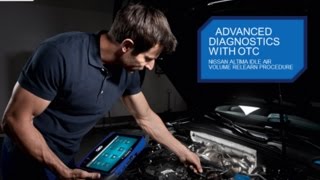
Post-Installation Relearns: After the engine is installed, several computer procedures are mandatory to ensure it runs correctly. These include a Crankshaft Position (CKP) Sensor Variation Relearn, an Idle Air Volume Learning, and a Throttle Valve Closed Position Learn. Skipping these steps will result in a high or surging idle and may set false misfire codes.
Warning: The bolts connecting the engine's flexplate to the transmission's torque converter have very shallow heads. Using a standard E20 Torx socket will strip them. You must use a Flat-ground E20 External Torx Socket that has been ground flat on its face to get a proper grip.
Installation Gotchas & Common Mistakes
Pro Tip: Always transfer the original, known-good camshaft and crankshaft position sensors from your old engine to the replacement unit. Leaving used, unverified sensors on the replacement engine is a common cause of no-start failures or immediate trouble codes.
- Cracking the CVT Pump: Before bolting the engine and transmission together, you must ensure the torque converter is fully seated in the transmission's fluid pump. Forcing them together will crack the pump and destroy the transmission.
- Sensor Mismatches: Always transfer the original, known-good camshaft and crankshaft position sensors from your old engine to the replacement unit. Leaving used, unverified sensors on the replacement engine is a common cause of start failures or immediate trouble codes.
- Fragile Catalytic Converter: The exhaust manifold and catalytic converter are a single, expensive unit. The ceramic material inside is brittle. Handle it with extreme care. Internal ceramic damage can cause debris to be sucked back into the engine, causing catastrophic failure.
- Fragile Oil Pan: The thin stamped steel or aluminum oil pan is easily damaged during removal and installation.
- Torque-to-Yield (TTY) Bolts: Cylinder head bolts are TTY and must be replaced if the head is removed.
- Wiring Harness: You must retain and reuse your original engine wiring harness. The harness included on used engines may have cut wires or different pinouts depending on regional emissions packages.
- Reusing Old Parts: Always install new gaskets (intake, exhaust, valve cover), seals, spark plugs, a new thermostat, a new oil drain plug crush washer, and fresh fluids (Nissan Blue Long Life 50/50 Pre-Mixed Coolant). Reusing old, worn consumables is a leading cause of leaks and performance issues after a swap.
Before the First Start: Priming and Fluids
Before you turn the key to start your replacement engine, you must add the correct fluids and prime the oil system. Priming means pumping oil through the engine before it actually runs. This prevents dry metal parts from rubbing together and causing instant damage.
Mandatory New Fluids
Used engines are shipped drained of all fluids. You must install fresh fluids that meet Nissan's exact requirements:
- Engine Oil: Use 0W-20 full synthetic motor oil. Always install a brand new oil filter.
- Engine Coolant: Use Nissan Blue Long Life Antifreeze/Coolant (or an equivalent P-OAT blue coolant). Never mix this blue coolant with older green or universal coolants, as it can cause sludge to form.
Oil Priming Procedure
Follow these steps to safely build oil pressure before the engine fires up:
- Fill the engine with the correct amount of 0W-20 oil and install the new oil filter.
- Fill the cooling system with a 50/50 mix of blue coolant and distilled water.
- Stop the engine from starting. The easiest way to do this is to remove the fuel pump fuse from the fuse box. This stops fuel from reaching the engine.
- Turn the key to crank the engine (just like you are trying to start it) for 10 to 15 seconds.
- Stop and wait 30 seconds so the starter motor can cool down.
- Repeat this cranking step two or three times. Watch the dashboard. Stop when the red oil pressure warning light turns off, which means oil has reached the top of the engine.
- Put the fuel pump fuse back in its place. You can now safely start the engine.
Frequently Asked Questions (FAQ)
Do I need to reprogram the car's computer (ECU)?
No, you will reuse your original ECU and no remarriage or reprogramming is needed. However, you MUST perform the Crankshaft Position (CKP) Sensor Variation Relearn, Idle Air Volume Learning, and Throttle Valve Closed Position Learn procedures after installation for the engine to run correctly.
Can I use a cheaper QR25DE engine from a Nissan Rogue?
No. While the base engine is similar, the versions used in the Rogue, Sentra, Frontier, or other Altima years have different mounting points, wiring harnesses, oil pan designs, and accessories that make them incompatible without major modification.
My Altima hesitates and sometimes stalls. Is the engine bad?
It is more likely that your Continuously Variable Transmission (CVT) is failing. These symptoms are classic signs of the well-documented CVT issues in this generation of Altima. Have the transmission diagnosed by a qualified technician before replacing the engine.
What kind of oil and how much does the 2.5L engine take?
This engine requires approximately 4.9 to 5.1 quarts of 0W-20 full synthetic motor oil with a new spin-on oil filter.
What is the "Flexplate Bolt Trap" during installation?
The flexplate bolts on this engine have very shallow heads. If you use a standard chamfered E20 Torx socket or an impact wrench, you will strip the heads. You must grind the face of the socket completely flat to prevent stripping.
Why is my engine idling high after installation?
Assuming a high idle after installation means a bad engine is a common buyer mistake. A high or surging idle simply means you have not yet performed the required Idle Air Volume Learning and Throttle Valve Closed Position Learn procedures. A professional bi-directional scan tool is highly recommended to complete these steps.
Helpful Videos

Technical Specifications
Engine Code: QR25DE; Years: 2016-2017; Vehicle: Nissan Altima; Displacement: 2.5 Liters; Cylinders: Inline 4-cylinder; Aspiration: Naturally Aspirated; Fuel System: Port Fuel Injection; VIN Identifier (4th Character): A; Oil Type: 0W-20 Synthetic; Oil Capacity: 4.9 - 5.1 quarts; Spark Plugs: NGK DILKAR7B11; Spark Plug Gap: 0.044 inches; Weight (uncrated): ~197 lbs; Dimensions (uncrated): 29" x 22" x 41"
We Have This Part in Stock


The information in this article is provided for general reference and educational purposes only. Vehicle specifications, procedures, and part compatibility can vary by production date, trim level, and region. Always consult your vehicle's factory service manual and verify part numbers before purchasing or performing repairs. Safety-critical components such as airbags, seat belts, and braking systems should be installed by a qualified professional.
- Nissan Altima:
- 🎬 Helpful Videos
- 🛍️ Shop This Part
- Identification: Is This the Right Engine for Your Altima?
- What Will NOT Fit?
- Freight Shipping and Delivery Reality
- Common Failure Symptoms
- Diagnostic Flowchart
- Known Issues, Bulletins, and Recalls
- TSB #NTB16-117a / NTB16-117b: Check Engine Light with A/F Sensor Codes
- TSB #PC514: Voluntary Emissions Service Campaign
- TSB #NTB16-031: Check Engine Light with Coolant Temp Sensor Code P0116
- Common Maintenance-Related Issues
- What Fails at Every Mileage Band
- Under 60,000 Miles
- 60,000 - 100,000 Miles
- 100,000 - 150,000 Miles
- Over 150,000 Miles
- Real Owner Experiences
- Repair or Replace?
- When Repair Makes Sense
- When Replacement is Smarter
- Questions to Ask Your Installer
- Expected Service Life and Maintenance
- Replacement Cost Estimates
- What's Included in a Used Engine Assembly?
- What It Typically Includes:
- What You Must Transfer or Replace:
- Installation: Critical Steps and Common Mistakes
- Special Tools and Procedures
- Installation Gotchas & Common Mistakes
- Before the First Start: Priming and Fluids
- Mandatory New Fluids
- Oil Priming Procedure
- Frequently Asked Questions (FAQ)
- 🎟️ Get 5% Off