

2021-2022 Mitsubishi Outlander 2.4L 4B12 PHEV Engine: Problems, Identification, and Used Replacement
Identify the 4B12 hybrid engine, understand what causes it to fail, and learn when replacing it with a used OEM unit is the smartest choice.
- Verify you have the correct 2.4L 4B12 PHEV engine by checking that the 8th VIN digit is '7'; the standard 2022 Outlander's 2.5L Nissan engine will not fit.
- Before condemning the engine, investigate common, repairable issues like the fuel pump recall (SR-22-001) for stalling or ignition coil failure (TSB-22-16-001REV) for misfires.
- Engine replacement is an expert-level job due to lethal high-voltage systems requiring specific safety gear and procedures, plus a specialized scan tool (like MUT-III SE) for post-install programming.
- When installing a used engine, it is critical to perform preventative maintenance such as replacing the timing chain components and adjusting the solid lifter valve clearances.
- The vehicle has two separate cooling systems (engine and inverter) that must be bled correctly; the inverter loop requires a scan tool to activate its electric water pump.
Engine Identification: Is This the Right Part for Your Outlander?

This engine is the 2.4-liter inline 4-cylinder, engine code 4B12, used exclusively in the 2021–2022 Mitsubishi Outlander PHEV (Plug-in Hybrid Electric Vehicle). It is part of the Mitsubishi 4B1 World Engine family. This engine acts as both a generator to charge the high-voltage battery and a direct power source for the wheels in certain driving modes.
Warning: Do not confuse this with the engine for the standard gasoline-only 2022 Outlander. The 2022 gas-powered Outlander uses a completely different 2.5L engine sourced from Nissan. This 2.4L 4B12 engine will not fit.
To confirm this is the correct engine for your vehicle, follow these steps:
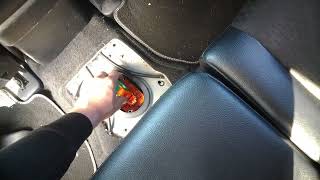
- Check Your Model: Ensure your vehicle is a PHEV model. It will have a 🎬 See how to find and remove the PHEV service plug charging port door on the passenger-side rear fender and PHEV badges on the fenders and liftgate.
- Verify the VIN: The 8th digit of your Vehicle Identification Number (VIN) must be 7.
- Locate the Engine Code: The code "4B12" is physically stamped on the front-facing side of the engine block, near where the engine and transmission connect.
Common Symptoms of a Failing 2.4L PHEV Engine
While the PHEV system has its own set of potential issues, symptoms of an internal gasoline engine failure are distinct. Look for signs that point specifically to the mechanical engine assembly itself:
- Severe knocking or tapping sounds from the engine block.
- A significant and permanent loss of power when the gasoline engine is running.
- Blue or white smoke from the exhaust, indicating oil or coolant is being burned.
- Metal shavings found in the engine oil during an oil change, which points to catastrophic internal wear.
- Engine misfire codes (like P0300-P0304) that persist after replacing spark plugs and ignition coils.
Diagnostic Flowchart
Known Problems, Recalls, and Technical Service Bulletins (TSBs)

Before replacing an engine, check if a less severe issue is the root cause. These are the most documented problems for the 2021-2022 Outlander PHEV's engine and related systems.
Severe: Fuel Pump Failure
A recall was issued for certain 2022 Outlander models because the internal fuel pump could fail. Incorrectly fused components inside the fuel pump can cause it to wear out and stop working, which can make the engine stall while driving or fail to start.
| Document IDs | NHTSA Recall 22V027000, 22V053000; Mitsubishi Campaign SR-22-001. |
| Affected Vehicles | Approximately 16,616 model-year 2022 Outlander vehicles built between February 8, 2021, and October 12, 2021. |
| Remedy | Authorized Mitsubishi dealers will replace the fuel pump assembly with an updated part, free of charge. |
Moderate: Ignition Coil Failure
A known issue can cause a poor connection at the ignition coil terminal, leading to engine misfires (DTC P030X), rough idling, and the engine entering a low-power "fail-safe" mode.
| Document ID | TSB-22-16-001REV. |
| Affected Vehicles | 2021-2022 Outlander models with the 4B12 engine. |
| Remedy | If diagnosed with this specific problem, all four ignition coils should be replaced with updated countermeasure parts. |
Moderate: High-Mileage Concerns
As these engines accumulate miles (typically over 90,000), some owners report two main issues:
- Timing Chain Stretch: The timing chain can stretch over time, causing a rattling noise, especially on cold starts. If not addressed, it can lead to poor engine performance or failure. Regular inspection of the tensioner is recommended.
- Oil Consumption: Some high-mileage 4B12 engines may consume oil. This is often due to low-tension oil control rings on the pistons getting stuck. Using a high-quality 0W-20 full synthetic oil can help prevent this.
What Fails at Every Mileage Band
Pro Tip: The mileage bands below describe what typically fails on USED replacement engines at these mileages. The checklists provided are critical steps to perform WHILE INSTALLING the purchased engine, not general maintenance for your current vehicle.
Under 60,000 Miles
Engines in this range are generally very healthy, but early-life component failures or software issues can occur.
- Fuel Pump Failure: The factory recall (SR-22-001) affects many of these units.
- Ignition Coil Terminal Contact Failure: Poor contact causes misfires and fail-safe mode (TSB-22-16-001REV).
- Hybrid System Hesitation: Rough transitions between electric and gas power, often fixed by dealer software updates.
- Do during install (required): Verify the fuel pump recall (SR-22-001) was completed on the donor vehicle.
- Do during install (required): Replace standard consumables: spark plugs, all fluids (oil, coolant), filters, and essential gaskets (valve cover, intake/exhaust manifolds).
- Cheap insurance while the engine is out: Install new, updated ignition coils (per TSB-22-16-001REV) as cheap insurance against future failure.
- Do during install (recommended): Inspect the accessory drive belt and tensioner. A related recall for cracking tensioners affected earlier 4B12 engines.
60,000 - 100,000 Miles
Wear and tear begin to show, particularly if the previous owner neglected maintenance.
- Timing Chain Stretch: Neglect can cause premature stretching, leading to camshaft/crankshaft correlation codes.
- Oil Consumption: Low-tension piston rings can start allowing oil to burn. Frequent short trips in PHEVs can cause fuel dilution, degrading oil faster.
- Valve Clearance Adjustment: The 4B12 uses solid lifters. Skipping the 60,000-mile adjustment interval leads to noise and power loss.
- Do during install (recommended): Replace the timing chain, tensioner, and guides. It is significantly easier and cheaper while the engine is out.
- Do during install (required): Perform a valve clearance adjustment (intake: 0.20mm, exhaust: 0.30mm cold).
- Do during install (recommended): Replace the water pump, thermostat, and all coolant hoses.
- Cheap insurance while the engine is out: Replace the PCV valve to help mitigate oil consumption issues.
- Do during install (required): Install new spark plugs and all new gaskets and seals (rear main, oil pan, valve cover, etc.).
100,000 - 150,000+ Miles
At this stage, preventative maintenance is mandatory to ensure the replacement engine lasts.
- Significant Oil Consumption: Rates can reach 1 quart every 1,000-2,000 miles due to carboned-up piston rings.
- Timing Chain Failure: The risk of a stretched chain jumping a tooth increases, which bends valves and destroys the engine.
- Do during install (required): Replace the timing chain, sprockets, guides, and tensioner.
- Do during install (required): Replace all seals and gaskets, including the rear main seal, oil pan sealant, valve cover gasket, and manifold gaskets.
- Do during install (required): Perform a valve clearance adjustment.
- Cheap insurance while the engine is out: Consider a preventative replacement of the oil pump and water pump.
- Do during install (recommended): Replace the PCV valve, spark plugs, thermostat, and all belts and hoses.
Real Owner Experiences
| Source | Mileage | What Happened | Cost |
|---|---|---|---|
| NHTSA via autoevolution | N/A (2022 models built Feb-Oct 2021) | Mitsubishi received 21 field reports of stalled engines that would not restart, which prompted the fuel pump recall. | $0 (Recall) |
| Mitsubishi Outlander PHEV Forum | 30,000-60,000 | Owners report jerky movement and delayed power when the system switches from EV to gas power, impacting driveability. | Not specified; dealer software updates sometimes resolve the issue. |
| r/MitsubishiOutlander on Reddit | 93,000 | Owner of an Outlander Sport with a 4B-family engine was 'disgusted' to need a timing chain, tensioner, and water pump replacement. | Parts alone were quoted over $987 ($387 for chain/gasket kit + $600 for one sprocket). |
| Mitsubishi Outlander PHEV Forum | 95,000 | Owner performed preventative maintenance, replacing spark plugs at 60k miles. Required warranty replacement of a CV axle and a rear drive mount gasket. Also replaced front suspension under extended warranty. | Varies (Warranty/DIY) |
| Mitsubishi Outlander PHEV Forum | 220,000 km (~136,000 miles) | Owner of a 2014 model reports zero engine problems, just regular fluid changes. The engine does not burn oil between changes. | N/A (Good maintenance) |
| Mitsubishi Outlander PHEV Forum | 189,000 km (~117,000 miles) | Owner reports 'zero mechanical problems' with the engine. | N/A |
Expected Service Life & Maintenance
The 4B12 engine is widely regarded as durable and capable of reaching high mileage with proper maintenance. Many owners report service lives of 200,000 to 350,000 km (~124,000 to ~217,000 miles) and beyond. Some forum users have reported mileages over 400,000 km (~248,000 miles) with the engine still running well, though it may burn some oil.
The most critical factor for longevity is diligent oil maintenance. Using high-quality 0W-20 synthetic oil and adhering to regular change intervals (or even shortening them, especially for PHEV short-trip usage) is crucial to prevent timing chain stretch and mitigate oil consumption from stuck piston rings. Additionally, performing the scheduled valve clearance adjustment every ~60,000 miles is essential as the engine lacks hydraulic lifters.
Repair or Replace?
Deciding whether to fix your current engine or buy a used replacement depends on the severity of the failure and the overall cost.
When Repair Makes Sense
- Ignition Coil Terminal Contact Failure: Typical cost is $250 - $550. Always repair this. The TSB calls for replacing all four ignition coils with updated parts. Individual coils cost between $40 and $100, and labor is minimal.
- Fuel Pump Failure: Typical cost is $0. Always repair this. The dealer will replace the fuel pump assembly free of charge under Recall SR-22-001.
- Timing Chain Stretch / Guide Failure: Typical cost is $1,500 - $3,000+. Repair makes sense if the engine has low to moderate mileage and has no other signs of damage (e.g., no bottom-end noise, good compression). This is a very labor-intensive job. If the cost approaches the price of a low-mileage used engine, replacement may be more economical.
- Blown Head Gasket: Typical cost is $1,800 - $3,500+. Repair makes sense when the engine has not been severely overheated and there is no additional damage to the block or cylinder head.
When Replacement is Smarter
Replacement is the smarter choice when the engine has suffered catastrophic internal failure such as a spun bearing, thrown rod, or severe damage from overheating (e.g., warped block/head). Also, consider replacement if a high-mileage engine requires multiple major repairs simultaneously (like a timing chain and piston rings for oil consumption), as the combined cost could easily exceed the price of a lower-mileage used unit.
Replacement Cost
| Part or Service | Estimated Cost (USD) |
|---|---|
| New OEM Short Block (Part # 10103W150P) | $4,409.49+ |
| Remanufactured Engine | Not Available |
| Used OEM Engine | $2,500 - $4,500 |
| Shop Labor | $1,000 - $4,000 (10-20 hours) |
What's Included in a Used Engine Assembly?

A used engine assembly, often called a "long block," includes the core mechanical components but not the accessories. You or your mechanic will need to transfer parts from your original engine to the replacement.
- Typically Included: Cylinder block and head, pistons, crankshaft, camshafts, valves, oil pan, valve cover, intake manifold, throttle body, timing chain, gears, timing covers, fuel injectors, fuel rail, and harmonic balancer (crankshaft pulley).
- Typically Not Included: Exhaust manifold, A/C compressor, starter motor, alternator, power steering pump, ignition coils, spark plugs, engine wiring harness, ECU, and hybrid-specific components (electric motors, generator).
Pro Tip: You must reuse your original engine wiring harness. The PHEV harness is specific to the model and contains shielded wiring for the high-voltage systems that a standard harness lacks.
Freight, Delivery, and Pre-Purchase Verification

Buying a used engine means dealing with heavy freight. A complete 2.4L 4B12 engine assembly weighs approximately 465 lbs and measures roughly 40" x 36" x 38" before crating. Because of this size and weight, it ships as LTL (Less Than Truckload) freight on a wooden pallet, not as a standard parcel.
When having the engine delivered, you must have a forklift or request a truck with a liftgate to lower the pallet to the ground. Always inspect the engine thoroughly for physical damage (like cracked sensors or broken plastic manifolds) before signing the delivery driver's Bill of Lading.
Before you buy, conduct a pre-purchase verification interview with the seller. Confirm that the donor vehicle was a PHEV model and verify that the 8th digit of the donor vehicle's VIN is 7. This ensures you are getting the correct 4B12 hybrid engine and not the standard 2.5L Nissan engine.
Critical Installation and Programming Notes

Replacing the engine in a PHEV is an expert-level job that carries unique risks and requirements beyond a standard engine swap. The estimated shop labor is 10 to 20 hours.
High-Voltage System Safety
Warning: The PHEV system operates at lethal high voltages. Failure to properly de-energize the system before work can result in severe injury or death. This procedure requires Class 0 High-Voltage Insulated Safety Gloves (rated for 1,000V AC / 1,500V DC) and a CAT III/IV Digital Multimeter (rated for 1,000V).
- Turn the ignition off.
- Locate and remove the high-voltage service plug (usually under the rear seat).
- Wait at least 10 minutes for the system's capacitors to discharge.
- Using a high-voltage multimeter, verify there is 0V at the inverter terminals before touching any high-voltage components.
Installation Best Practices
- Dual Cooling Systems: This vehicle has two separate cooling loops: one for the gasoline engine and another for the hybrid inverter. Both must be refilled and properly bled using Mitsubishi Super Long Life Coolant (SLLC) Blue. The inverter loop requires a scan tool to command the electric water pump to run and purge all air, preventing overheating.
- Valve Clearance Check: The 4B12 engine uses solid bucket lifters. Check and adjust valve clearances (intake: 0.20mm, exhaust: 0.30mm cold) while the engine is out.
- Torque Converter: Ensure the torque converter is fully seated in the transmission pump before bolting the engine and transmission together to avoid destroying the pump.
- Crankshaft Position Sensor Damage: Remove the sensor before mating the engine and transmission to prevent crushing it, then reinstall it afterward.
Required Consumables
You will need Engine Oil (0W-20 fully synthetic, approx. 4.5 to 4.8 quarts), an OE-spec oil filter, Mitsubishi SLLC Blue coolant, NGK Laser Iridium spark plugs (gap: 1.1mm / 0.044"), intake/exhaust/thermostat gaskets, RTV silicone sealant for the oil pan, an accessory drive belt, and Torque-to-Yield (TTY) flywheel/flexplate bolts.
Required Programming
After installation, the vehicle will not run correctly without electronic calibration. A professional-grade, bi-directional scan tool like the factory Mitsubishi MUT-III SE is required.
- ECU Synchronization: The engine control module (ECM) must be synchronized with the PHEV control unit.
- CKP Sensor Relearn: A Crankshaft Position (CKP) sensor relearn procedure must be performed so the ECM can accurately read the engine's timing.
- DTC Clearing: All diagnostic trouble codes must be cleared and the system initialized.
Questions to Ask Your Installer
- Are you certified or experienced in working on high-voltage hybrid systems? What specific safety procedures will you follow?
- Do you have a Mitsubishi MUT-III SE or an equivalent bi-directional scan tool to perform the necessary ECU synchronization and sensor relearns?
- How will you bleed the two separate cooling loops (engine and hybrid inverter)? Do you have the tool to command the electric water pump for the inverter loop?
- Will you be checking and adjusting the solid lifter valve clearances while the engine is out?
- What is your procedure for ensuring the torque converter is fully seated before mating the engine and transmission?
- What specific parts from my original engine will you be transferring over (e.g., wiring harness, sensors, etc.)?
- Does your quote include all required consumables like 0W-20 synthetic oil, Mitsubishi SLLC blue coolant, new gaskets, and TTY bolts?
Arrival Inspection: Testing Your Used Engine
When your used engine arrives, test it before you install it. This saves time and money if the part has internal damage.
- Perform a Leak-Down Test: A leak-down test pumps compressed air into each cylinder to see how well it holds pressure. A healthy used 4B12 engine should have less than 15% air leakage per cylinder.
- Check Compression: If you cannot do a leak-down test, do a standard compression test. All four cylinders should have similar pressure readings. A difference of more than 15% between the highest and lowest cylinder means the engine has worn piston rings or bad valves.
Before the First Start: Fluids and Priming
Used engines sit on shelves for months. All the oil drains into the bottom oil pan, leaving the top moving parts dry. You must prime the engine (pump oil through it) before letting it run on its own.
- Add Fresh Oil and a New Filter: Fill the engine with fresh 0W-20 full synthetic motor oil. Install a brand-new oil filter. Never reuse the oil or filter that came with the used engine.
- Fill the Coolant: Use the correct factory-spec coolant. For this Mitsubishi, use Mitsubishi Super Long Life Coolant Premium (which is blue) or an equivalent non-silicate, non-amine, phosphate-based coolant.
- Disable Fuel and Spark: Unplug the fuel injectors and the ignition coils. This stops the engine from actually starting and running.
- Crank to Prime: Turn the key or press the start button to spin the engine for 10 to 15 seconds. Wait one minute to let the starter system cool down. Repeat this step two or three times until the oil pressure warning light turns off on the dashboard.
- Reconnect and Start: Plug the fuel injectors and ignition coils back in. Start the engine normally and check for any fluid leaks.
Frequently Asked Questions (FAQ)
Can I use an engine from an Outlander Sport or a non-hybrid Outlander?
No. The Outlander Sport uses different engines (4B11 or 4B12 in different configurations), and the 2022 non-hybrid Outlander uses a 2.5L Nissan engine. Only a 4B12 from a 2021-2022 Outlander PHEV with the correct VIN code (8th digit is 7) will fit and function.
Is this a DIY-friendly job?
No. Due to the high-voltage electrical systems, the need for an engine hoist and load leveler, and the requirement for specialized scan tools for programming and bleeding the cooling system, this job should only be performed by a professional mechanic with certified experience in hybrid vehicles.
Do I have to replace the recalled fuel pump if I buy a used engine?
The fuel pump is part of the vehicle's fuel tank assembly, not the engine itself. However, if your vehicle falls under the recall, you should have the free replacement performed at a Mitsubishi dealer regardless of whether you are replacing the engine.
What kind of oil does the 2021-2022 Outlander PHEV 2.4L take?
The 4B12 engine requires 0W-20 fully synthetic engine oil. A complete oil change with a filter takes approximately 4.5 to 4.8 quarts.
Why do I need a scan tool just to bleed the coolant?
The Outlander PHEV has a secondary cooling loop specifically for the high-voltage hybrid inverter. This loop uses an electric water pump, not a mechanical one driven by the engine belt. A bi-directional scan tool is required to command this electric pump to turn on so it can push the air bubbles out of the system.
Helpful Videos
Technical Specifications
OEM Part Numbers: 10103W150P
Engine Code: 4B12; Displacement: 2.4L; Configuration: Inline 4-cylinder; Family: Mitsubishi 4B1 World Engine; Application: 2021–2022 Mitsubishi Outlander PHEV; VIN Identifier (8th digit): 7; Oil Type: 0W-20 Full Synthetic; Oil Capacity: 4.5 to 4.8 quarts; Coolant Type: Mitsubishi Super Long Life Coolant (SLLC) Blue; Spark Plugs: NGK Laser Iridium; Spark Plug Gap: 1.1mm / 0.044"; Valve Clearance (Intake, cold): 0.20mm; Valve Clearance (Exhaust, cold): 0.30mm; Weight (approx.): 465 lbs; Dimensions (approx.): 40" x 36" x 38"
We Have This Part in Stock


The information in this article is provided for general reference and educational purposes only. Vehicle specifications, procedures, and part compatibility can vary by production date, trim level, and region. Always consult your vehicle's factory service manual and verify part numbers before purchasing or performing repairs. Safety-critical components such as airbags, seat belts, and braking systems should be installed by a qualified professional.
- Mitsubishi Outlander:
- 🎬 Helpful Videos
- 🛍️ Shop This Part
- Engine Identification: Is This the Right Part for Your Outlander?
- Common Symptoms of a Failing 2.4L PHEV Engine
- Diagnostic Flowchart
- Known Problems, Recalls, and Technical Service Bulletins (TSBs)
- Severe: Fuel Pump Failure
- Moderate: Ignition Coil Failure
- Moderate: High-Mileage Concerns
- What Fails at Every Mileage Band
- Under 60,000 Miles
- 60,000 - 100,000 Miles
- 100,000 - 150,000+ Miles
- Real Owner Experiences
- Expected Service Life & Maintenance
- Repair or Replace?
- When Repair Makes Sense
- When Replacement is Smarter
- Replacement Cost
- What's Included in a Used Engine Assembly?
- Freight, Delivery, and Pre-Purchase Verification
- Critical Installation and Programming Notes
- High-Voltage System Safety
- Installation Best Practices
- Required Consumables
- Required Programming
- Questions to Ask Your Installer
- Arrival Inspection: Testing Your Used Engine
- Before the First Start: Fluids and Priming
- Frequently Asked Questions (FAQ)
- 🎟️ Get 5% Off