

2017-2020 Mitsubishi Outlander 2.4L 4J12/4B12: Problems, Identification, and Used Replacement
Identify the 2.4L MIVEC engine, learn what causes VVL or relay failures, and discover when swapping in a used OEM unit is the smartest fix.
- Before installing any used 4J12 engine, inspect the Variable Valve Lift (VVL) rocker assembly pins under the valve cover to ensure they have not backed out, as this is a known cause of catastrophic failure.
- Confirm fitment by checking that the 8th digit of the VIN is '3' and understand this engine is not interchangeable with the Outlander PHEV hybrid model.
- If swapping an engine from a different drivetrain (FWD to AWD or vice-versa), you must transfer the oil pan and specific mounting brackets from your original engine to the replacement.
- Strictly use 0W-20 full synthetic oil to protect the MIVEC system and timing chain, and check for the outstanding recall on 2015-2017 models for defective power relays (NHTSA 17V-609) that can cause stalling.
- A Crankshaft Position (CKP) Sensor Relearn procedure is highly recommended after installation to ensure smooth operation with the CVT transmission.
Engine Identification & Verification

The standard engine in the 2017-2020 Mitsubishi Outlander is a 2.4-liter, four-cylinder gasoline engine belonging to the 4J1 / 4B1 family. This engine uses Mitsubishi's Innovative Valve timing Electronic Control (MIVEC) system to adjust when the engine's valves open and close, which helps balance power and fuel efficiency. It is identified by the engine codes 4J12 or 4B12.
Properly identifying this engine is critical before purchasing a used replacement. Follow these steps to confirm fitment:
- Check the VIN: The easiest confirmation is to check the 8th digit of your vehicle's Vehicle Identification Number (VIN). If the 8th digit is a '3', this is the correct engine for your vehicle.
- Engine Code Stamp: You can find the engine code stamped on a flat, machined surface on the front of the engine block, near where the engine and transmission meet (around the starter/bell housing area). Look for a "4J12" or "4B12" marking.
- Verify the Drivetrain: Determine if your vehicle is Front-Wheel Drive (FWD) or All-Wheel Drive (AWD) to prepare for potential parts transfers.
Warning: This engine will NOT fit the Outlander PHEV (Plug-in Hybrid) model. The PHEV uses a different 2.0L or 2.4L Atkinson-cycle engine as part of its hybrid drivetrain and is not interchangeable.
Pro Tip: While the core engine block and cylinder head are identical, some external parts differ between Front-Wheel Drive (FWD) and All-Wheel Drive (AWD) models. If you are swapping an engine from a vehicle with a different drivetrain configuration, you must transfer the oil pan, intermediate shaft brackets, and other accessory mounting brackets from your original engine to the replacement unit.
Common Failure Symptoms
An engine may need to be replaced for several reasons. Severe internal failure is often indicated by symptoms such as:
- Engine Stalling: The engine may stall while driving or at idle due to defective electrical relays.
- Loud Knocking or Ticking Noises: These sounds often point to serious internal problems, such as bearing failure or issues with the valve system.
- Reduced Engine Power: A significant loss of power can occur if the engine's variable valve timing system fails or if it enters a "fail-safe" mode due to a sensor or relay malfunction.
- Excessive Oil Consumption: Burning a large amount of oil can be a sign of worn piston rings or valve seals, leading to low oil levels and potential engine damage.
- Check Engine Light: While many issues can trigger a check engine light, codes related to engine timing, misfires, or internal sensor failures can indicate a critical problem.
Diagnostic Flowchart

Known Problems, Recalls, and Technical Service Bulletins (TSBs)
Several known issues and service campaigns affect the 2017-2020 Mitsubishi Outlander's 2.4L engine. Before replacing an engine, check if a less costly repair is available.
| Problem / Reference | Affected Models | Symptoms & Details | Official Remedy |
|---|---|---|---|
| Defective Relays NHTSA: 17V-609 Mitsubishi: SR-17-005 |
2015-2017 Outlander (built Dec. 2014 - Aug. 2016) | Improperly manufactured power relays can fail, cutting power to the ECU or fuel pump. This can cause the engine to stall while driving, overheat, enter limp mode, or fail to restart. | Dealers will replace the defective relays with updated parts at no charge under the recall. |
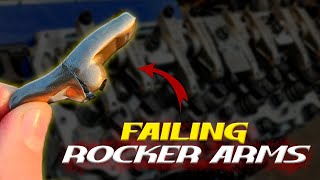
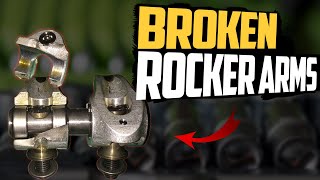
| VVL Rocker Pin Failure | All years with 4J11/4J12 engine | Pins in the Variable Valve Lift rocker arm assembly can back out, leading to a sudden loss of compression, severe noise, misfires, and catastrophic engine failure. | Inspect the VVL rocker assembly under the valve cover. Ensure all pins are fully seated before installing a used engine. |
| MIVEC Solenoid Malfunction TSB-ENG-13-009 |
All years | Using non-spec oil can clog the solenoid screen, causing rough idling, poor acceleration, or timing-related check engine light codes (P0010, P0011). | Replace with the updated solenoid assembly (Part No. MD392015) and ensure strict use of 0W-20 synthetic oil. |
| CVT Transmission Shudder TSB-20-23-001REV |
2016-2020 Outlander with 2.4L engine | Often mistaken for an engine problem, a shudder, surge, or shaking during acceleration may be caused by an issue in the CVT's hydraulic pressure circuit. | Requires dealer diagnosis, which may involve a software update or other repairs based on stored trouble codes. |
| False "System Too Lean" CEL TSB-16-13-002 |
2014-2016 Outlander | Software calibration can incorrectly trigger a P0171 code, especially when idling in hot weather. This is not a true engine fault. | A Mitsubishi dealer can reprogram the Engine Control Module (ECM) with updated software. |
| Timing Chain Stretch | High-mileage units (typically >90,000 miles) | The timing chain can stretch, especially with neglected oil changes, causing a rattling noise on cold starts and timing correlation check engine light codes. | Inspect the chain and tensioners for wear; replace the complete kit if stretched. |
What Fails at Every Mileage Band
Pro Tip: The mileage bands below describe what typically fails on USED REPLACEMENT engines with these miles. The checklists provided are critical steps to perform WHILE INSTALLING the purchased engine, not general maintenance advice for your current vehicle.
Under 60,000 Miles
Engines in this range are generally very healthy, but early-life failures can still occur, particularly related to electrical components or factory defects.
- Known Failures: Defective power relays may cause engine stalling, reduced power, or overheating (NHTSA ID: 17V-609). Variable Valve Lift (VVL) rocker arm pin failure can occur even at low mileage, causing a sudden loss of compression. MIVEC solenoid failure can occur, especially in vehicles using non-spec oil.
- ✓Do during install (required): Inspect the VVL rocker assembly pins under the valve cover to ensure they are fully seated.
- ✓Do during install (required): Replace the main power relays in the under-hood fuse box with the updated parts, especially if the vehicle is a 2017 model year and the recall work has not been confirmed.
- ✓Do during install (required): Use only genuine Mitsubishi DiaQueen CVTF-J4 fluid if the transmission is serviced.
- ✓Do during install (required): Replace engine oil with 4.8 - 4.9 quarts of 0W-20 full synthetic oil and a high-quality filter (Genuine Mitsubishi MZ690111, WIX 57356, or Ryco Z386) to protect the MIVEC system.
60,000 to 100,000 Miles
Wear and tear begin to show on moving parts and sensors. Maintenance history becomes the biggest factor in engine health.
- Known Failures: Timing chain stretch can begin to occur, often signaled by a rattling noise on cold starts. MIVEC solenoid malfunction becomes more common, leading to rough idle and check engine lights. CVT transmission issues like hesitation or shuddering may appear, often linked to overdue fluid changes.
- ✓Do during install (recommended): Strongly consider replacing the timing chain, tensioner, and guides as a preventative measure.
- ✓Do during install (recommended): Replace the MIVEC solenoid(s) if any related trouble codes (e.g., P0010, P0011) are present or as a precaution.
- ✓Do during install (recommended): Perform a drain and fill of the CVT transmission with genuine CVTF-J4 fluid.
- ✓Cheap insurance while the engine is out: Replace spark plugs (Denso IXUH20I or VXUH20I iridium spark plugs recommended).
- ✓Cheap insurance while the engine is out: Replace all accessible seals and gaskets, including front and rear crankshaft seals, valve cover gasket, and intake manifold gasket.
100,000 to 150,000 Miles
At this stage, components that require periodic adjustment or replacement will need attention to keep the engine running smoothly.
- Known Failures: Increased oil consumption may begin due to wear on piston rings or valve stem seals. Timing chain and guide wear becomes a higher probability. Valve clearance adjustment is required, as these engines use solid tappets that need periodic adjustment; neglect can lead to noise and performance loss.
- ✓Do during install (required): Check and adjust valve clearances.
- ✓Do during install (recommended): Replace the timing chain kit (chain, guides, tensioner) if not done previously.
- ✓Do during install (recommended): Replace the water pump and thermostat while the engine is out for easy access.
- ✓Do during install (recommended): Clean the throttle body and intake manifold passages.
- ✓Cheap insurance while the engine is out: Replace the PCV valve to help manage oil consumption.
- ✓Cheap insurance while the engine is out: Replace all critical seals, including valve stem seals if oil consumption is a known issue with the donor engine.
Over 150,000 Miles
High-mileage engines can still be reliable if well-maintained, but the risk of internal wear increases significantly.
- Known Failures: Significant oil consumption is more likely. Wear on internal components like piston rings and bearings becomes more probable, dependent on maintenance history. Catalytic converter and oxygen sensor degradation can occur.
- ✓Do during install (required): Assume all 'Do During Install' items from previous bands are mandatory if there is no proof of recent service.
- ✓Do during install (recommended): Replace the water pump, thermostat, and all coolant hoses.
- ✓Do during install (recommended): Clean or replace fuel injectors.
- ✓Cheap insurance while the engine is out: Replace the alternator and starter motor if they are original, as their service life is limited.
- ✓Cheap insurance while the engine is out: Replace all engine and transmission mounts.
Expected Service Life & Maintenance
With consistent maintenance, particularly regular oil changes with high-quality 0W-20 synthetic oil, the 4J12/4B12 engine is widely regarded as very reliable and capable of exceeding 200,000 miles. Some owner reports show these engines reaching over 250,000 miles and, in exceptional cases, well beyond 400,000 miles with original internal components. The most critical factors for longevity are strict adherence to oil change intervals to protect the MIVEC solenoids and timing chain, performing periodic valve clearance adjustments (every 80,000-100,000 miles), and using only genuine Mitsubishi CVTF-J4 fluid (changed every 60,000 km) for the health of the CVT transmission.
Real Owner Experiences
The table below highlights real-world experiences from Mitsubishi Outlander owners regarding engine failures, longevity, and repair costs.
| Source | Mileage | What Happened | Cost |
|---|---|---|---|
| Southside Cylinder Heads | 37,282 miles (60,000 km) | A 2017 Outlander with a 4J12 engine experienced sudden zero compression on cylinder two while cruising at a steady speed. The cause was a failed pin in the VVL rocker assembly. The report noted that pins on other cylinders were also working their way out. | Not specified, but involved replacing the complete VVL unit and camshaft. |
| NHTSA Recall 17V-609 | Varies, affects 2015-2017 models | Defective power relays for the ECU and fuel system can lose electrical contact, causing the engine to stall suddenly while driving or fail to start. This can lead to a loss of power steering and brakes. | Free repair at an authorized dealership under the safety recall. |
| Mitsubishi Forum | Approx. 54,000 miles (87,000 km) | A vehicle with a similar timing chain design developed a stretched chain, causing it to hit the valve cover. The issue was attributed to potential tensioner failure. | Not specified, but required timing chain kit replacement. |
| RepairPal | Varies, common in 60k-100k range | Premature automatic transmission failure has been reported across several model years, with symptoms including whining sounds that increase with acceleration or sudden deceleration. | Not specified, implies significant repair or replacement cost. |
| Reddit Forum | 240,000 miles | An owner of a 2018 Outlander reported reaching 240,000 miles with no major issues, just regular maintenance. | N/A |
| Reddit Forum | Over 186,000 miles (300,000 km) | An owner reported oil consumption starting after 300,000 km. | N/A |
| ArabWheels | Over 62,000 miles (100,000 km) | General report notes that after 100,000 km, the 2.4L engine remains exceptionally reliable with minimal oil consumption if maintained. Minor issues include vibrations from aging engine mounts or spark plugs. | Inexpensive for mounts/plugs. |
| Reddit Forum | 248,500 miles (400,000 km) | An owner reported their 4B12 engine was still running great but did burn oil. They had only changed spark plugs once. | N/A |
| Reddit Forum | 466,000 miles (750,000 km) | A user mentioned a friend's 4B12 engine reached 750,000 km before developing oil consumption of ~1L per 5,000 km, demonstrating the engine's potential for extreme longevity with proper care. | N/A |
| Reddit Forum | 170,000 miles | An owner reported their Mitsubishi had no issues at 170k miles, while their Honda experienced problems after 140k. | N/A |
| Mitsubishi Forum | Unknown (2016 model) | Replaced a 2.0L 4J11 engine with a used 2.4L 4J12 engine (52,000 km) themselves. | ~$1300 (including $800 for the used engine). Quoted $5000 by shop. |
| 112,000 miles (2016 model) | Attempted to have a private mechanic replace the cylinder head for a compression issue, but after a year of delays, they are now considering a full used engine swap. | Not resolved. Debating between a $2000 and $5000 repair/replace. Dealership quoted new engine as too expensive to be worth it. | |
| Mitsubishi Outlander PHEV Owners Forum | Unknown (2015 PHEV model) | The owner was quoted more than the value of the car for a new engine and was exploring engine rebuilding as a cheaper alternative. | Exploring a £3,000-£4,000 engine rebuild. Quoted £15,000 for new engine from dealer. |
Repair or Replace?

When facing major engine trouble, deciding whether to repair your current engine or replace it with a used OEM unit comes down to the type of failure and the overall cost.
When Repair Makes Sense
- MIVEC Solenoid Malfunction: This is a common, relatively low-cost repair (typically $629 - $795). It involves replacing an external engine component and makes sense unless the engine has other major underlying issues.
- Timing Chain Stretch / Tensioner Failure: If the engine is otherwise healthy (good compression, no bottom-end noise), replacing the timing chain and related components is cost-effective (typically $880 - $2,029). Labor is a significant part of the cost, so it makes sense on a lower-mileage engine that is expected to last.
- VVL Rocker Pin Failure: If the failure is caught early before it causes catastrophic damage to the cylinder head or valves, a repair can be viable (typically $500 - $1,500+). However, labor is extensive.
When Replacement is Smarter
Replacement is the smarter choice when there is severe internal engine damage, such as a loss of compression in a cylinder, a cracked block, or a damaged cylinder head resulting from a VVL failure. If the cost of diagnosing and repairing multiple issues (e.g., timing chain, oil consumption, and VVL system) exceeds the price of a warrantied used engine (which typically run $800 - $2,000), a swap offers better value and peace of mind. For high-mileage vehicles (over 120,000 miles), putting money towards a lower-mileage used engine is often a better long-term investment than repairing a tired one.
Questions to Ask Your Installer
Before authorizing an engine swap, ask your mechanic these critical questions:
- Have you inspected the VVL rocker assembly pins on the donor engine before installation?
- Will you be transferring the original oil pan and brackets if the donor engine is from a different drivetrain configuration (FWD/AWD)?
- Does your quote include the cost of a Crankshaft Position (CKP) sensor relearn procedure?
- What warranty do you offer on your labor, and what is the warranty on the used engine itself?
- What new gaskets and seals are included in your quote (e.g., intake, exhaust, valve cover, crank seals)?
- Can you confirm you will use 0W-20 full synthetic oil and Mitsubishi-spec blue coolant upon refill?
- How will you ensure the torque converter is properly seated before mating the engine and transmission?
Replacement Cost Estimates
The cost of replacing a 2.4L engine in a 2017-2020 Outlander can vary widely based on the type of replacement unit and local labor rates. The estimates below are for the engine assembly itself and the cost of installation.
| Part / Service | Estimated Cost (USD) | Notes |
|---|---|---|
| Used OEM Engine | $800 - $2,000 | Price depends on mileage, condition, and included accessories. Represents the most cost-effective solution. |
| Remanufactured Engine | $3,000 - $5,049 | A professionally rebuilt engine, often with a warranty. |
| New OEM Engine | $4,500 - $6,000+ | Typically the most expensive option, sourced directly from Mitsubishi as a dealer-only special order. |
| Installation Labor | $1,200 - $2,500 | Represents an estimated 10-14 hours of shop time. Costs vary by region and shop. |
Freight & Delivery Reality

If you are purchasing a used engine online, it is important to understand how it will be shipped. An engine assembly is NOT a parcel. It ships as Less-Than-Truckload (LTL) freight on a wooden pallet.
- Size and Weight: The 2.4L 4J12/4B12 engine assembly weighs approximately 425 lbs and measures roughly 36" x 30" x 34" before crating.
- Delivery Requirements: Because of its size and weight, the delivery truck will require a liftgate to lower the pallet to the ground, or a forklift if delivering to a commercial shop.
- Pre-Purchase Verification: Reputable sellers will conduct a pre-purchase verification interview to confirm your VIN, drivetrain (FWD/AWD), and ensure you are not buying this for a PHEV model.
- Inspect Before Signing: Always inspect the engine for physical damage (such as broken sensors, cracked valve covers, or damaged oil pans) before signing the driver's delivery receipt. Once you sign, you are accepting the freight in its current condition.
Arrival Inspection: Compression and Leak-Down
When your used engine arrives, test the cylinders before installing it in the vehicle. A compression test measures the pressure your engine creates while cranking. A leak-down test pumps compressed air into the cylinder to see if it holds pressure.
- Compression Expectations: All four cylinders should have similar pressure readings. The readings should be within 10 to 15 percent of each other. If one cylinder is much lower than the rest, the engine has internal damage.
- Leak-Down Expectations: A healthy used engine should have less than 15 percent air leakage per cylinder. High leakage means air is escaping past the piston rings or valves.
Before the First Start: Fluids and Priming
You must prepare the engine properly before turning the key for the first time. Starting a dry engine will cause instant, permanent damage to the metal bearings.
- Fresh Oil and Filter: Always install a brand-new oil filter and fill the engine with fresh oil. The 2.4L 4J12 and 4B12 engines require 0W-20 full synthetic motor oil.
- Correct Coolant: Fill the cooling system with the correct antifreeze. Use a high-quality Phosphated HOAT (Hybrid Organic Acid Technology) coolant designed for Asian vehicles. This is usually blue or green. Do not use standard universal green or orange coolants, as they can damage the water pump and seals.
Follow this pre-lube procedure to prime the engine:
- Disable the Fuel and Spark: Remove the fuel pump fuse and unplug the ignition coils. This stops the engine from actually starting.
- Crank the Engine: Turn the key and crank the starter for 10 to 15 seconds.
- Wait and Repeat: Let the starter rest for one minute so it does not overheat. Crank the engine again for another 10 to 15 seconds.
- Check for Pressure: Repeat this process until the red low oil pressure light on your dashboard turns off. This tells you oil has reached the top of the engine.
- Start the Engine: Reinstall the fuel pump fuse and plug the ignition coils back in. You can now safely start the engine.
Frequently Asked Questions (FAQ)
Is the Mitsubishi 2.4L 4J12 an interference engine?
Yes. This is an interference engine, which means that if the timing chain breaks or stretches significantly, the pistons can strike the valves, causing severe and often irreparable engine damage.
Will this engine fit my Outlander Sport?
No. While the Outlander and Outlander Sport are similarly named and may offer 2.4L engines, they are different vehicles with different engine interchanges. This engine is specified for the larger Outlander model only.
Do I need to reprogram the computer (ECU) after installing a used engine?
While the engine will physically run on the original ECU without a full re-marriage, a Crankshaft Position (CKP) Sensor Relearn and adaptive learning reset are highly recommended using a bi-directional scan tool (such as MUT-III). This helps the engine and transmission work together smoothly and can prevent shift shudder or hesitation with the JATCO CVT8 transmission.
What parts should I always replace during an engine swap?
For maximum reliability, you should always install new consumables. This includes 4.8 - 4.9 quarts of fresh 0W-20 full synthetic engine oil, a new oil filter, Mitsubishi Super Long Life Coolant (blue), spark plugs, and all relevant gaskets and seals, such as the intake manifold gasket, exhaust manifold gasket, thermostat housing gasket, throttle body gasket, valve cover gasket, and front/rear crankshaft seals.
What special tools are required for this engine swap?
Professional installation requires several specific tools, including an engine hanger plate/support fixture (MB992853 or MZ203827), a magnetic base plate (MB992854) for manual valve clearance adjustment, a bi-directional OBD-II scan tool (MUT-III or equivalent) for the CKP relearn, and a drive plate holder (MB991883).
What parts are included with a used engine assembly?
According to standard Automotive Recyclers Association (ARA) guidelines, a complete used engine assembly typically includes the engine block, cylinder head, oil pan, valve cover, intake manifold, timing covers, fuel injectors, throttle body, harmonic balancer, and engine wiring harness. It generally does NOT include the A/C compressor, starter motor, power steering pump, alternator, or exhaust manifold.
Helpful Videos
Technical Specifications
OEM Part Numbers: MD392015 MZ690111 IXUH20I VXUH20I MB992853 MZ203827 MB992854 MB991883
Engine Type: 2.4L 4-Cylinder Gasoline; Engine Codes: 4J12, 4B12; Valvetrain: SOHC with MIVEC; VIN Identifier: 8th digit is '3'; Oil Type: 0W-20 Full Synthetic; Oil Capacity: 4.8 - 4.9 quarts; Drivetrain Compatibility: Front-Wheel Drive (FWD) or All-Wheel Drive (AWD); Coolant Type: Mitsubishi Super Long Life Coolant (blue); CVT Fluid: Mitsubishi DiaQueen CVTF-J4; Weight (approx.): 425 lbs; Shipping Dimensions (approx.): 36" x 30" x 34"
We Have This Part in Stock


The information in this article is provided for general reference and educational purposes only. Vehicle specifications, procedures, and part compatibility can vary by production date, trim level, and region. Always consult your vehicle's factory service manual and verify part numbers before purchasing or performing repairs. Safety-critical components such as airbags, seat belts, and braking systems should be installed by a qualified professional.
- Mitsubishi Outlander:
- 🎬 Helpful Videos
- 🛍️ Shop This Part
- Engine Identification & Verification
- Common Failure Symptoms
- Diagnostic Flowchart
- Known Problems, Recalls, and Technical Service Bulletins (TSBs)
- What Fails at Every Mileage Band
- Under 60,000 Miles
- 60,000 to 100,000 Miles
- 100,000 to 150,000 Miles
- Over 150,000 Miles
- Expected Service Life & Maintenance
- Real Owner Experiences
- Repair or Replace?
- When Repair Makes Sense
- When Replacement is Smarter
- Questions to Ask Your Installer
- Replacement Cost Estimates
- Freight & Delivery Reality
- Arrival Inspection: Compression and Leak-Down
- Before the First Start: Fluids and Priming
- Frequently Asked Questions (FAQ)
- 🎟️ Get 5% Off