

2015-2016 E-Class & CLS-Class M276 3.0L V6: Problems, Identification, and Used Replacement
Identify the exact M276.820 twin-turbo engine variant, learn what causes catastrophic timing or ECU failures, and know when to replace it with a used OEM unit.
- Verify you are buying the correct engine: it must be code 276.820 from a 2015-2016 E400 or CLS400 with a 4MATIC AWD oil pan, as other M276 3.0L variants are not compatible.
- During installation, proactively address common failure points by performing the timing chain tensioner TSB (LI05.10-P-056435) and installing sacrificial pigtails (A271150015605) on all camshaft sensors to prevent oil from destroying the ECU.
- Spark plug indexing is critical; they must be torqued to exactly 23 Nm to orient the electrode correctly, preventing misfires and potential piston damage.
- Replacement is often smarter than repair if multiple major issues exist, as repair costs for timing systems ($4,000-$12,000+) and oil-damaged harnesses ($4,600-$7,000+) can exceed the cost of a used engine.
- Always transfer your original turbochargers and prime them with fresh oil before the first start to prevent catastrophic damage from dry running.
Identifying Your M276 3.0L Twin-Turbo Engine


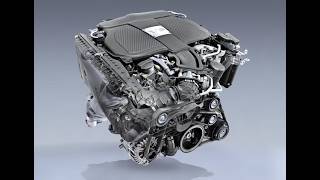
The engine used in the 2015-2016 Mercedes-Benz E400 and CLS400 is a specific variant of the M276 V6 family, known as the M276 DE30LA (or M276 DELA 30). This 3.0-liter, twin-turbocharged, direct-injection engine was engineered for a balance of smooth power and efficiency. When sourcing a used replacement, it is critical to ensure you are getting the correct version for your vehicle.
Follow these steps to confirm you have the right engine:
- Check Your VIN: The simplest check is to look at your Vehicle Identification Number (VIN). The 6th and 7th digits should be '6H'.
- Verify the Engine Code: The specific engine code for this application is 276.820. This number is typically stamped on the engine block near the transmission bell housing. You may need a flashlight and mirror to see it clearly.
- Confirm the Drivetrain: These models primarily use the 4MATIC All-Wheel Drive (AWD) system. The AWD oil pan has a distinct tube cast into it for the front axle shaft to pass through. A Rear-Wheel Drive (RWD) engine will have a different oil pan and will not fit.
What Does NOT Interchange?
Mercedes used the M276 3.0L twin-turbo engine in many other models between 2013 and 2021, but they are not direct replacements. Do not attempt to use an engine from the models listed below. These versions have significant differences, including:
| Incompatible Model |
|---|
| C400 |
| C450 |
| C43 AMG |
| GLE400 |
| S450 |
- Different turbochargers and ECU tuning for higher horsepower.
- Unique engine mounting brackets.
- Different oil pan designs (RWD vs. AWD, or different subframe clearances).
- Varying wiring harness connectors and pinouts.
Warning: Buying an engine from a different model, even if it looks similar, will lead to installation problems, electronic incompatibilities, and potentially a no-start condition. Always search for an engine specifically from a 2015-2016 E400 or CLS400.
Common Failure Symptoms

While some issues can be repaired, certain symptoms often point to catastrophic internal damage that makes a complete used engine replacement the most cost-effective solution.
- Catastrophic Failure: A loud knocking sound from the bottom of the engine (rod knock), visible metal shavings in the engine oil, or a seized engine that will not turn over are clear signs the engine is beyond repair.
- Timing System Failure: A persistent, loud rattling or chain-slapping noise that does not go away after the engine warms up can indicate failed timing chain tensioners or stretched chains. If left unaddressed, this can lead to valves hitting pistons, destroying the engine.
- Low Oil Pressure: A recurring low oil pressure warning light after verifying the oil level can signal a failing oil pump or excessive wear in the main bearings, requiring a full engine teardown.
Diagnostic Flowchart
Known Problems, Recalls, and Technical Service Bulletins (TSBs)
Timing Chain Tensioner & Check Valve Cold Start Rattle (TSB LI05.10-P-056435)
Severity: Severe
Early production M276 engines can develop a loud rattling noise for a few seconds on a cold start. This is caused by oil draining out of the secondary timing chain tensioners, leaving slack in the chains until oil pressure builds. While Mercedes notes that no consequential damage is to be expected immediately, the noise is a known issue. The official fix involves installing non-return check valves (Part No. A2780503300) in the cylinder heads and replacing the tensioners with updated ratcheting designs.
Pro Tip: If you are purchasing a used engine, it is wise to perform this TSB service while the engine is out of the car and on a stand. This is far easier than doing it once the engine is installed.
Oil Leaking into the Wiring Harness
Severity: Severe
A common and serious issue across many Mercedes engines is oil leaking from the camshaft position sensors and magnets. The oil wicks through the sensor's internal wiring, travels down the engine wiring harness, and can eventually reach and destroy the main engine computer (ECU). The fix is to install new sensors and add short, sacrificial "pigtail" harnesses (Part No. A271150015605) that plug in between the sensor and the main harness to stop the oil's migration.
Front Upper Timing Cover Oil Leaks
Severity: Moderate
The sealant on the front upper timing covers can degrade over time, causing persistent oil leaks at the front of the engine. The only correct repair is to carefully remove the covers, clean the surfaces, and reseal them using a high-quality, specified sealant like Loctite 5900 or the Mercedes-Benz equivalent.
Engine Bay Bulkhead Rubber Seal Fire Hazard (NHTSA Recall #15V423000)
Severity: Severe
This recall affects certain 2015 CLS400 and 2016 E400 models. The rubber seal on the engine bay's rear bulkhead can be dislodged during service. If it contacts hot engine components, it can increase the risk of a fire. Dealers will replace this seal free of charge.
What Fails at Every Mileage Band
Pro Tip: The mileage bands below describe the typical condition of used replacement units at that mileage. The checklists provided are things you must do WHILE INSTALLING the purchased engine, not maintenance for your current broken engine.
Under 60,000 Miles
Even low-mileage engines can suffer from early-life flaws. The most prominent issues are the timing chain rattle on cold starts (caused by secondary chain tensioners losing oil pressure) and oil weeping from the camshaft position sensors into the wiring harness. Front upper timing cover oil leaks and intermittent ignition coil failures are also reported. Some owners also note 7G-Tronic transmission issues, though that is separate from the engine block.
- Do during install (required): Install non-return check valves (Part No. A2780503300) and updated secondary timing chain tensioners per TSB LI05.10-P-056435 to permanently fix the cold start rattle.
- Do during install (required): Replace all four camshaft position sensors and the four camshaft adjuster magnets (solenoids). Install sacrificial pigtail harnesses (Part No. A271150015605) on all eight components to prevent oil from ever reaching the main engine harness and ECU.
- Do during install (required): Reseal the front upper timing covers using the specified Mercedes sealant or Loctite 5900 to prevent common oil leaks onto the alternator.
- Do during install (required): Replace all single-use gaskets and seals removed during the swap, such as intake manifold gaskets and turbocharger gaskets.
- Do during install (recommended): Replace spark plugs (indexed correctly to 23 Nm) and consider replacing all six ignition coils as a preventative measure, using only OEM or high-quality Bosch parts.
60,000 - 100,000 Miles
In this band, wear-and-tear items begin to fail. A startup rattle that persists during warm starts can indicate failing camshaft adjusters (phasers), which can damage the camshaft if ignored. Cooling system leaks from the water pump and plastic thermostat housing often start around 80,000 miles. Drive belt components show wear, the PCV crankcase ventilation valve can fail, and intake valves may accumulate carbon buildup due to the direct-injection design.
- Do during install (required): Perform all required recommendations from the 'Under 60k' mileage band.
- Cheap insurance while the engine is out: Replace the water pump, plastic thermostat housing, and any brittle-looking plastic coolant hoses.
- Cheap insurance while the engine is out: Replace the serpentine belt, belt tensioner, and all idler pulleys.
- Do during install (recommended): Perform a walnut blast cleaning of the intake valves. With the engine out and intake manifold off, this is the ideal time to remove performance-robbing carbon buildup.
- Do during install (recommended): Replace the PCV crankcase vent valve assembly.
100,000 - 150,000 Miles
High-mileage engines face more significant risks. The High-Pressure Fuel Pump (HPFP) becomes a major failure point, causing long crank times and power loss. Advanced camshaft adjuster and timing chain wear can lead to fault codes. Hydraulic engine mounts are typically worn out, and turbocharger oil lines can clog or bearings can wear.
- Do during install (required): Perform all required recommendations from previous mileage bands.
- Do during install (required): Replace the High-Pressure Fuel Pump (HPFP) and its associated roller tappet. It is a known high-mileage failure point.
- Do during install (required): Thoroughly inspect the turbochargers. Check for wastegate rattle and turbine shaft play. Replace the turbo oil feed and return lines and all associated O-rings and gaskets.
- Cheap insurance while the engine is out: Replace the hydraulic engine mounts while the engine is out.
Over 150,000 Miles
Engines in this range are at risk of catastrophic timing system failure if chain rattle or adjuster noise was neglected, potentially causing the chain to jump a tooth. General wear of all rotating accessories is guaranteed, and internal engine wear (like cylinder scoring or loss of compression) is possible if oil changes were deferred. The expected service life is 160,000 to 180,000 miles, though 200,000+ is achievable with aggressive 5,000 to 7,000-mile oil changes using MB 229.5 synthetic oil.
- Do during install (required): Assume all items from previous bands must be replaced if their history is unknown.
- Do during install (recommended): A full engine reseal (all gaskets, O-rings, front and rear main seals) is highly advisable.
- Do during install (recommended): Consider replacing the primary timing chain and all guides as a precautionary measure, in addition to the tensioners and adjusters.
Real Owner Experiences
| Source | Mileage | What Happened | Cost |
|---|---|---|---|
| MBWorld.org Forums | 56,000 | An owner of a C43 (with a variant of the M276) spotted an oil leak from the timing cover on both sides of the engine. | N/A |
| MBWorld.org Forums | Pre-60,000 (undisclosed) | A dealership performed the TSB for the timing chain rattle on a 2013 M276 engine at no cost to the owner several years prior to the post. | $0 (under warranty/TSB) |
| Reddit r/mercedes_benz | ~70,000 | A 2013 C350 owner reported hearing a rattle during warm startups, a symptom often linked to failing camshaft adjusters rather than just the cold-start tensioner issue. | Quoted repairs for cam adjusters can range from $6,000-$10,000 at shops, though DIY is possible for experts. |
| MBWorld.org Forums | 150,000 | A dealer preemptively recommended replacing the High-Pressure Fuel Pump (HPFP) during a routine service, stating it was 'near the end of its life'. | Dealer quote was high, but independent shop cost is estimated around $1,500 for parts and labor. |
| MBWorld.org Forums | 120,000 | An owner planned to proactively replace the HPFP and PCV system together, as the HPFP must be removed to access the PCV valve. | N/A (preventative) |
| PeachParts Mercedes-Benz Forum | 253,000 | An owner reported a significant rattle and fault codes related to camshaft position deviation, indicating severe wear in the cam adjusters or timing system. | N/A (DIY repair attempted) |
| YouTube (Mechanic's Report) | 226,000 | A Mercedes specialist shop reported having a loaner car with an M276 engine at this mileage. It had its cam adjusters replaced but was still on its original timing chain, demonstrating the potential for longevity with proper care. | N/A |
| MBWorld.org Forums | ~52,000 | Considering options between engine replacement and rebuilding the current one for a blown head gasket. | Roughly $20,000 to buy a used engine with low miles and pay for the labor to swap it. |
| MBWorld.org Forums | 206,000 | Owner was seeking opinions on the high quote for timing chain replacement at a specialty shop. | $12,000 |
| MBWorld.org Forums | 78,000 | Received a 'Goodwill Offer' from Mercedes for 10% off the repair for timing chain, adjusters, and four camshaft adjusters. | $9,800 at a dealership |
| MBWorld.org Forums | 67,000 | Owner was weighing the expensive preventative repair against the risk of future ECU failure to replace the wiring harness and sensors due to oil contamination. | $4,600 and $5,300 from two independent shops |
Repair or Replace?
Deciding whether to repair your current M276 or replace it entirely depends on the severity of the failure and the cost of parts and labor.
- Oil Leaking into Wiring Harness: If caught early, installing preventative sacrificial pigtails costs $25 to $100. However, if the main harness and ECU need replacement, costs can skyrocket to $4,600 - $7,000+.
- Timing Chain Rattle / Tensioner Failure: If the engine is otherwise healthy and only the tensioners and check valves need replacement (per TSB LI05.10-P-056435), repair makes sense. But a full timing job with chains, guides, and cam adjusters can cost $4,000 to $12,000+. If the cam tone wheels have slipped, requiring camshaft replacement, costs escalate significantly.
- Front Upper Timing Cover Oil Leaks: This is a common leak costing roughly $1,800 to reseal. It does not warrant an engine replacement on its own.
When Replacement is Smarter: Replacement becomes the smarter option when multiple major internal issues are present simultaneously, such as a combination of slipped camshaft tone wheels, significant timing chain stretch, and a main wiring harness saturated with oil that has damaged the ECU. If estimated repair costs approach or exceed the price of a quality used engine ($3,400 - $8,200) plus labor ($2,500 - $5,625), replacement offers a fresh start. One owner was quoted roughly $20,000 for a used engine swap at a dealership, highlighting the high end of potential costs.
Questions to Ask Your Installer
- Have you worked on the M276 twin-turbo engine before, specifically in an E-Class or CLS-Class?
- Will you be dropping the front subframe with the engine and transmission, or pulling the engine from the top?
- Can you inspect for and install the updated timing chain tensioner check valves (TSB LI05.10-P-056435) before the engine goes in?
- Will you be transferring my original turbochargers? If so, will you inspect them and prime them with oil before the first start?
- How will you handle the AWD intermediate axle shaft that passes through the oil pan? Will you inspect the support bearing?
- Do you have the specific tools for indexing the spark plugs correctly?
- What is your procedure for inspecting the engine wiring harness for oil contamination, and do you recommend installing new cam sensors and sacrificial pigtails?
- If we reuse my original ECU, are you confident no SCN coding will be required? If it is, do you have access to a Mercedes XENTRY system?
Replacement Cost Comparison
Engine replacement costs vary based on the type of engine and local labor rates. The job is complex, with estimates ranging from 15 to 25 hours of shop time.
| Part / Service | Estimated Cost (USD) |
|---|---|
| New OEM Engine | $12,000 - $16,000+ (up to $20,000) |
| Remanufactured Engine | $4,500 - $9,000+ |
| Used OEM Engine | $3,400 - $8,200 |
| Installation Labor | $2,500 - $5,625 |
Freight & Delivery Reality

A used M276 3.0L engine assembly is a massive piece of machinery. Verified shipping data shows this unit weighs approximately 474 lbs and measures roughly 36" x 32" x 32" before crating. It ships as LTL (Less Than Truckload) freight on a pallet—it is NOT a parcel delivery.
Because of its size and weight, delivery requires a truck equipped with a liftgate if you are shipping to a residential address or a shop without a loading dock. Always inspect the engine carefully while it is still on the pallet before signing the delivery receipt. Look for any damage to the oil pan, valve covers, or sensor connectors that may have occurred during transit.
Pro Tip: Before the engine even ships, a reputable supplier will conduct a pre-purchase verification interview. They will ask you to confirm that the 6th and 7th digits of your VIN are 6H, verify if your drivetrain is AWD or RWD, and check that your original engine block code reads 276.820. This ensures you receive the exact engine variant required for your vehicle.
Installation Gotchas & Pro Tips

Warning: Spark Plug Indexing is Critical. The spark plugs on this direct-injection engine must be tightened to a precise torque (23 Nm) so that the ground electrode faces the fuel injector. Failure to do this can cause poor combustion, misfires, and even piston damage.
- AWD Axle Pass-Through: On 4MATIC models, the front left intermediate axle shaft passes directly through a tube cast into the engine's upper oil pan. You must carefully slide the intermediate shaft out of the oil pan bearing and inspect/replace the bearing (Part No. A2229800015) if rough.
- Transfer and Prime Turbos: Used engines typically do not include turbochargers. You must transfer your old ones. Before starting the new engine, it is absolutely essential to pour fresh oil into the turbo oil feed ports to prevent them from running dry on initial startup.
- Drop the Subframe: Most technicians find it easier to remove the engine and transmission together as one assembly by dropping the entire front subframe with a heavy-duty subframe support or lift table.
- Handle Plastic with Care: After years of heat cycles, plastic coolant pipes, vacuum lines, and sensor connectors become extremely brittle. Handle them gently and budget for replacing any that break.
- ECU Programming: If you are reusing your original Engine Control Unit (ECU), programming may not be required. However, if you are swapping the ECU, it must be programmed to the car's immobilizer system using a dealer-level tool like Mercedes XENTRY for SCN (Software Calibration Number) coding and a Crankshaft Position Sensor Relearn.
- Torque-to-Yield (TTY) Bolts: Never reuse stretch bolts for critical components like cylinder heads, timing components, or engine mounts. Always use new TTY bolts and a new aluminum oil pan drain plug washer.
Long Block vs. Complete Assembly
When buying a used M276 3.0L engine, you will see two main options: a long block or a complete assembly. A long block is just the core engine. It includes the engine block, cylinder heads, and internal moving parts. A complete assembly includes the core engine plus bolt-on parts like the twin turbochargers, intake manifold, and fuel system parts.
The M276 twin-turbo engine has expensive bolt-on parts. The high-pressure fuel pumps and direct fuel injectors often wear out. The turbochargers can also fail. If you buy a long block, you must move these old parts from your broken engine to the replacement. If your old turbos or fuel pumps are failing, buying a complete assembly might save you money and time.
Frequently Asked Questions (FAQ)
What parts are typically included with a used engine assembly?
A used engine assembly generally includes the engine block, cylinder heads, all internal components (pistons, crankshaft, camshafts, valves), oil pan, valve covers, intake manifold, throttle body, timing covers, timing chain assembly, fuel rails, direct injectors, high-pressure fuel pump, and harmonic balancer. Accessories like the A/C compressor, alternator, starter, power steering pump, exhaust manifolds, and wiring harnesses are typically not included and must be transferred from your old engine.
Are the turbochargers included?
No, turbochargers are almost never included with a used engine. You will need to carefully transfer the turbos from your original engine to the replacement unit. Always use new gaskets and O-rings and prime the turbos with oil before the first start.
What engine oil is required after installation?
You must use a premium synthetic engine oil that meets the Mercedes-Benz MB 229.5 specification. The system holds approximately 7.4 quarts (7.0 liters). Always use a new, high-quality OEM oil filter, such as the Mann-Filter HU 7025 z.
Do I have to get the car's computer reprogrammed?
It depends. If you reuse your car's original Engine Control Unit (ECU) with the replacement engine, you often do not need to perform any programming. However, if the ECU is also being replaced, it will require special SCN (Software Calibration Number) coding with a Mercedes-specific diagnostic tool (XENTRY/DAS) to sync it with the vehicle's security system and perform a Crankshaft Position Sensor Relearn.
What is the expected service life of the M276 3.0L twin-turbo?
The typical service life is 160,000 to 180,000 miles. However, numerous owner and technician reports confirm that with diligent maintenance—specifically, aggressive oil changes every 5,000 to 7,000 miles using approved MB 229.5 synthetic oil—lifespans of 200,000 miles and beyond are achievable.
What special tools are required for the installation?
This is an expert-level DIY job. You will need a Mercedes Camshaft Alignment/Holding Tool Kit (OEM equivalent: 278589002300), an engine hoist, a heavy-duty subframe support or lift table, and a Mercedes-compatible diagnostic scanner (XENTRY/DAS).
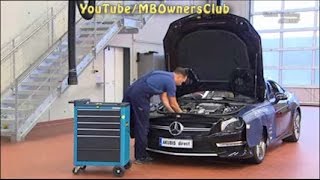
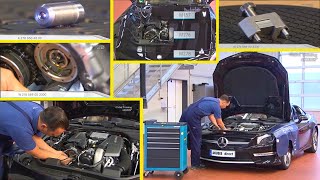
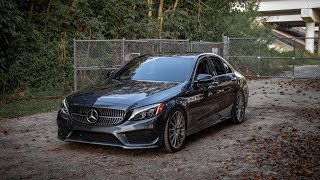
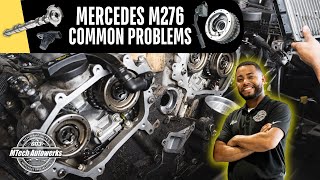
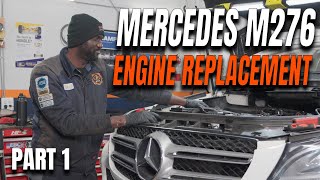
Helpful Videos
Technical Specifications
OEM Part Numbers: A2780503300 A271150015605 A2229800015 278589002300 HU 7025 z
Engine Code: 276.820; Variant: M276 DE30LA / M276 DELA 30; Displacement: 3.0 Liters; Aspiration: Twin-Turbocharged; Fuel System: Direct Injection; Drivetrain: 4MATIC All-Wheel Drive; VIN Digits (6th & 7th): 6H; Oil Specification: MB 229.5; Oil Capacity: 7.4 quarts (7.0 liters); Spark Plug Torque: 23 Nm; Weight: ~474 lbs; Dimensions: ~36" x 32" x 32"
We Have This Part in Stock


The information in this article is provided for general reference and educational purposes only. Vehicle specifications, procedures, and part compatibility can vary by production date, trim level, and region. Always consult your vehicle's factory service manual and verify part numbers before purchasing or performing repairs. Safety-critical components such as airbags, seat belts, and braking systems should be installed by a qualified professional.
- Mercedes-Benz E-Class:
- Mercedes-Benz CLS-Class:
- 🎬 Helpful Videos
- 🛍️ Shop This Part
- Identifying Your M276 3.0L Twin-Turbo Engine
- What Does NOT Interchange?
- Common Failure Symptoms
- Diagnostic Flowchart
- Known Problems, Recalls, and Technical Service Bulletins (TSBs)
- Timing Chain Tensioner & Check Valve Cold Start Rattle (TSB LI05.10-P-056435)
- Oil Leaking into the Wiring Harness
- Front Upper Timing Cover Oil Leaks
- Engine Bay Bulkhead Rubber Seal Fire Hazard (NHTSA Recall #15V423000)
- What Fails at Every Mileage Band
- Under 60,000 Miles
- 60,000 - 100,000 Miles
- 100,000 - 150,000 Miles
- Over 150,000 Miles
- Real Owner Experiences
- Repair or Replace?
- Questions to Ask Your Installer
- Replacement Cost Comparison
- Freight & Delivery Reality
- Installation Gotchas & Pro Tips
- Long Block vs. Complete Assembly
- Frequently Asked Questions (FAQ)
- 🎟️ Get 5% Off