

2023-2024 Mazda 3 2.5L SkyActiv-G: Problems, Identification, and Used Replacement
Identify the VIN 'M' cylinder deactivation engine, understand common failures like the coolant control valve, and learn when to swap in a used OEM replacement.
- Verify the 8th VIN digit is 'M' before purchase; VIN 'L' engines have no cylinder deactivation and are not interchangeable.
- Post-installation programming with a dealer-level scan tool is mandatory for the crankshaft sensor, fuel injectors, and immobilizer.
- The Coolant Control Valve (CCV) causing code P0126 is a common, repairable issue covered by Mazda's extended warranty (SSPD8) for 15 years/150,000 miles.
- For AWD models, the original oil pan, axle brackets, and structural braces must be transferred from the old engine to the replacement unit.
- Proactively perform intake valve cleaning (walnut blasting) on any used engine over 60,000 miles while it is out of the vehicle.
Engine Identification: Is This Your Engine?

This article covers the specific 2.5-liter, naturally aspirated (non-turbo) SkyActiv-G PY-VPS engine found in the 2023-2024 Mazda 3. This is an inline 4-cylinder engine with direct injection and, crucially, Cylinder Deactivation. This technology allows the engine to shut down two of its four cylinders under light load to improve fuel economy.
The Critical VIN 'M' Check
Before purchasing a used engine, you must verify that it's the correct version for your car. The most important check is the 8th digit of your vehicle's 17-digit Vehicle Identification Number (VIN). You can find the VIN on your driver's side dashboard (visible through the windshield) or on the sticker in the driver's side door jamb.
- If the 8th VIN digit is 'M', your car has the 2.5L engine with cylinder deactivation, and this is the correct guide for you.
- If the 8th VIN digit is 'L', your car has the 2.5L engine without cylinder deactivation, and this engine is not a direct replacement.
Warning: An engine for a VIN 'L' vehicle will not work correctly in a VIN 'M' vehicle, and vice-versa. The wiring harnesses are different, and the vehicle's main computer (PCM) will not be able to control the engine, leading to check engine lights and the car entering a reduced-power "limp mode."
Visual Confirmation
To be certain, you can also visually inspect the engine. The key difference is the presence of the cylinder deactivation hardware. Look on the passenger side of the cylinder head (the top part of the engine) for a block of electronic solenoids and associated oil lines. These components are absent on the non-deactivation (VIN 'L') engine.
Common Failure Symptoms
While the SkyActiv-G is generally reliable, certain symptoms can indicate a severe internal problem that may require engine replacement. These are different from issues with bolt-on accessories like the alternator or A/C compressor.
- Catastrophic Oil or Coolant Leaks: Puddles of oil or coolant under the car can point to a cracked block or head.
- Engine Knocking: A deep, rhythmic knocking sound from inside the engine often means failed rod bearings, a serious internal failure.
- Metal Shavings in Oil: Finding metallic particles or glitter in the engine oil during an oil change is a definitive sign of severe internal wear and impending failure.
- Loss of Compression: If the engine turns over but won't start, or runs very poorly and misfires, it could have a loss of compression from bad pistons, rings, or valve issues.
- Excessive Smoke from Exhaust: Blue-tinged smoke indicates oil is burning in the cylinders, while heavy white smoke can mean coolant is leaking into the cylinders, often from a failed head gasket.
Diagnostic Flowchart
Known Problems, Recalls, and Technical Service Bulletins (TSBs)

Even reliable engines have common issues. Here are the most documented problems for this 2.5L SkyActiv-G engine. Always have a professional mechanic diagnose the issue before ordering parts.
Coolant Control Valve (CCV) / Thermostat Failure
Document: TSB 01-005/24c (supersedes 01-005/23) & SSPD8
Affected Vehicles: 2019-2024 Mazda 3 (and other models with the 2.0L/2.5L non-turbo engine)
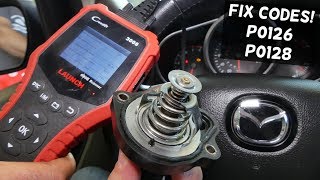
Symptoms: The most common symptom is a check engine light with diagnostic trouble code (DTC) P0126:00, which indicates the thermostat is stuck open. You may also notice the engine taking much longer than usual to warm up or the temperature gauge fluctuating.
Remedy: Originally, the entire CCV assembly was replaced. Mazda has since issued a thermostat replacement kit (Part No. PYY2-15-SA1) that allows a technician to replace just the failed internal thermostat, which is a less intensive repair. Mazda extended the warranty for this specific part to 15 years or 150,000 miles under SSPD8.
Intake Valve Carbon Buildup
Affected Vehicles: All years with Gasoline Direct Injection (GDI), including this one.
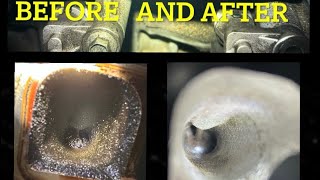
Symptoms: Over time, GDI engines can develop hard carbon deposits on the back of the intake valves. This can cause a rough idle, hesitation during acceleration, and a gradual loss of power and fuel economy.
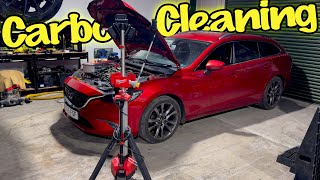
Remedy: The most effective solution is a manual cleaning process, such as walnut shell blasting, which uses crushed walnut shells to safely scrub the valves clean. This is best performed when the engine is already out of the vehicle for replacement.
Cylinder Deactivation Lifter Tap
Affected Vehicles: 2018-present models with cylinder deactivation.
Symptoms: A light, rhythmic "tapping" or "ticking" noise from the top of the engine, especially when it's cold. This can be caused by the special hydraulic lifters used for the cylinder deactivation system.
Remedy: This is often considered a normal characteristic of the engine. However, using the correct, high-quality OEM-specification 0W-20 full synthetic oil is critical to ensure the hydraulic system functions properly. Using heavier oil can worsen the noise and affect system performance.
Chirp Noise from Automatic Transaxle
Document: TSB 05-005/23
Affected Vehicles: 2019-2024 Mazda 3 (with cylinder deactivation and automatic transmission)
Symptoms: A distinct "chirp" sound may be heard when the transmission shifts from 3rd to 4th gear. This is not an engine issue, but it is often misdiagnosed. The TSB states this is caused by contamination of the transmission fluid from excessive wear of the torque converter's lock-up clutch.
Remedy: The official repair involves replacing the torque converter and flushing the automatic transmission fluid.
What Fails at Every Mileage Band
Pro Tip: The mileage bands below describe used replacement units of that mileage. The checklists are things to do WHILE INSTALLING the purchased engine, not maintenance for your current engine.
Under 60,000 Miles
Engines in this range are generally very healthy, but the Coolant Control Valve (CCV) failure is highly prevalent, often triggering a P0126 code. Owners also frequently report vibrations or a lurching feeling when the cylinder deactivation system engages. While rare, premature water pump failures have been documented at very low mileages, sometimes under 10,000 or even 2,500 miles.
- ✓Do during install (required): Verify the updated Coolant Control Valve (CCV) is installed. If not, replace it as a critical preventative measure, even if it hasn't failed yet.
- ✓Do during install (required): Perform a basic service including OE-spec 0W-20 synthetic oil and a new oil filter.
- ✓Do during install (recommended): Inspect serpentine drive belts and tensioner for any signs of premature wear or leaking.
60,000 - 100,000 Miles
As a direct-injection engine, carbon deposits on the intake valves become a significant concern in this mileage range, leading to rough idling and poor fuel economy. The serpentine drive belt and its tensioner are recommended for replacement around 75,000 miles (120,000 km), as the tensioner is known to leak and fail. Some reports also indicate fuel injectors can become clogged with carbon and fail in this window.
- ✓Do during install (required): Perform an intake valve cleaning (walnut blasting). This is the most critical service at this mileage while the engine is out and easily accessible.
- ✓Do during install (required): Replace spark plugs (due at 75,000 miles).
- ✓Do during install (required): Replace the serpentine drive belt and the belt tensioner.
- ✓Do during install (required): Flush and replace the engine coolant with Mazda FL22.
- ✓Do during install (required): Change oil and filter with OE-spec 0W-20 full synthetic.
- ✓Cheap insurance while the engine is out: Consider replacing the water pump, as they typically last 60,000-100,000 miles and are accessible during the swap.
100,000 - 150,000 Miles
Higher-mileage SkyActiv-G engines may begin to consume more oil past 150,000 km (approx. 93,000 miles) due to the design of the oil scraper rings. Water pump failure becomes much more common in this bracket, which can lead to severe overheating. There are also isolated reports of the high-pressure fuel pump (HPFP) failing, with one owner noting a failure at 145,000 miles.
- ✓Do during install (required): Perform all services from the 60-100k band if there is no proof they were completed. This includes intake valve cleaning, spark plugs, belt/tensioner, and all fluids.
- ✓Do during install (required): Replace the water pump. If not done previously, replacement is highly recommended at this mileage.
- ✓Do during install (required): Replace the first round of coolant (due at 120,000 miles or 10 years).
- ✓Do during install (recommended): Inspect the timing chain and guides for any abnormal noise or slack, though it is designed to be a 'lifetime' part.
- ✓Do during install (recommended): Replace all accessible seals and gaskets, such as the valve cover gasket and front main seal, as they are prone to hardening with age.
Real Owner Experiences
| Source | Mileage | What Happened | Cost Paid |
|---|---|---|---|
| Mazda Forum | 28,000 miles | Owner experienced all symptoms of a failing Coolant Control Valve (slow warm-up, temp gauge in blue) but the dealer would not replace it under the extended warranty without a stored P0126 code. | N/A |
| Reddit r/mazda | Under 10,000 miles | A 2022 CX-5 (same engine family) experienced a complete water pump failure, which was replaced under warranty. Commenters noted this is a somewhat common issue on SkyActiv engines, with one technician seeing a failure at just 2,500 miles. | N/A |
| Reddit r/mazda3 | 12,000 miles | Owner of a 2023 Mazda 3 reported a noticeable jerk and vibration throughout the car when cylinder deactivation kicks on at highway speeds, making the car feel like it's momentarily stalling. | N/A |
| Reddit r/mazda | 75,000-100,000 miles | A technician on a forum noted that fuel injectors on the 2.5L NA engine are a common failure point in this range due to carbon clogging, which can lead to leaks, no-starts, and even catalytic converter damage if severe. | N/A |
| Reddit r/mazda | 145,000 miles | An owner of a 2017 2.5L NA engine had to replace the high-pressure fuel pump. | N/A |
| Reddit r/mazda | 130,000 miles | An owner reported no major issues with their 2016 Mazda 6, having only performed routine maintenance like oil changes, brakes, and tires. | N/A |
| Reddit r/CX5 | 44,000 miles | Replaced coolant control valve and thermostat housing at an independent shop. | $1,300 |
| Reddit r/mazda | 42,000 miles | Paid for a multi-day manual intake valve carbon cleaning at a Mazda dealership to resolve a misfire code. | $1,700 |
| Reddit r/mazda3 | 122,000 miles | Replaced a seized engine with a used unit (110k miles) including labor. | $3,500 |
| Reddit r/mazda | 150,000 miles | Received a quote to replace an engine with rod knock. The high cost led the owner to consider cutting their losses on the car. | $7,600 |
Repair or Replace?
Deciding whether to repair your current engine or replace it entirely depends on the severity of the failure. Many common issues on the 2.5L SkyActiv-G are repairable and do not require a full engine swap.
- Coolant Control Valve (P0126): Always repair this. Mazda extended the warranty for this part to 15 years or 150,000 miles (SSPD8), making it a free repair at a dealership. If paying out of pocket at an independent shop, expect to pay $800 to $1,300. The part itself (Part No. PYY2-15-SA1) costs around $393.
- Intake Valve Carbon Buildup: Repair this when symptoms appear. A manual walnut blasting typically costs $900 to $1,700 (one owner was quoted $1,200, another paid $1,700 at a dealer). Do not fall for cheaper chemical cleanings (around $400), as they are ineffective against baked-on GDI carbon.
- Cylinder Deactivation Lifter Tap: This is usually resolved with a simple $50 to $120 oil change using the correct 0W-20 synthetic oil to restore hydraulic pressure.
When Replacement is Smarter: Replacement becomes the logical choice in cases of catastrophic internal failure, such as rod knock, a seized engine from oil starvation, severe overheating that has warped the cylinder head or block, or significant timing failure causing piston-to-valve contact. Used replacement units typically run between $850 and $2,200, while remanufactured units cost $3,900 to $4,500, and brand new OEM engines range from $3,300 to $4,900. With installation labor adding $1,200 to $2,800 (an 8 to 15-hour job), a complete used engine swap generally totals $3,000 to $4,500. If the estimated cost of repairing internal damage approaches or exceeds this total, replacing the engine is the more financially sound option.
Replacement Cost Estimates
| Part or Service | Estimated Cost (USD) | Notes |
|---|---|---|
| New OEM Engine | $3,300 - $4,900+ | Highest cost, brand new from Mazda. |
| Remanufactured Engine | $3,900 - $4,500 | Rebuilt to factory specs, often with a warranty. |
| Used OEM Engine | $850 - $2,200 | Varies widely based on mileage and condition. |
| Installation Labor | $1,200 - $2,800 | Shop rates and job complexity affect the final price. The book time is estimated between 8 and 15 hours. |
Freight & Delivery Reality

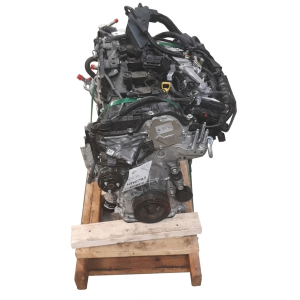
If you are ordering a used 2.5L SkyActiv-G engine online, it will not arrive in a standard cardboard box. A fully dressed PY-VPS engine weighs approximately 385 lbs and measures roughly 40" x 32" x 34" before crating. Because of this size and weight, it must ship as LTL (Less Than Truckload) freight on a wooden pallet.
Freight delivery requires a delivery truck equipped with a liftgate to lower the pallet to the ground if you do not have a loading dock or forklift. It is critical that you perform a pre-purchase verification interview with the seller to confirm the VIN 'M' status and mileage. When the engine arrives, you must thoroughly inspect the unit for any shipping damage—such as cracked plastic manifolds or broken sensors—before signing the driver's delivery receipt.
Installation & Programming: What to Know

Replacing this engine is a complex job best left to professional technicians with Mazda-specific experience. It is not a simple "plug and play" swap.
Warning: This engine requires special electronic programming after installation. A dealer-level scan tool (like the Mazda M-MDS / MDARS) or a high-end professional equivalent is necessary to perform a Crankshaft Position (CKP) sensor relearn, code the new fuel injector calibration values to the ECU, and re-marry the immobilizer/security system. The engine will not run correctly without these steps.
Critical Installation Steps & "Gotchas"
- Keyless Crankshaft Pulley: The main pulley on the crankshaft does not have a keyway to lock it in place. The crankshaft bolt is a one-time-use, torque-to-yield bolt. If this bolt is loosened without the proper Mazda/Ford Timing Tool Kit installed to lock the camshafts and crankshaft, the engine's timing will be lost instantly, potentially causing severe damage.
- High-Pressure Fuel System: The direct injection fuel system operates at extremely high pressures (over 3,000 PSI). It must be properly depressurized using a High-Pressure Fuel Line Disconnect Tool before any lines are disconnected. Seals on the injectors are typically one-time use and should be replaced if the injectors are removed.
- AWD vs. FWD Parts: If installing this engine into an All-Wheel Drive (AWD) model, you must transfer the original oil pan, structural braces between the engine and transmission, and the passenger-side intermediate axle shaft brackets from the old engine. The oil pan on a FWD engine will not fit an AWD car.
- Fragile Solenoid Connectors: The wiring harness connectors for the cylinder deactivation solenoids on the cylinder head are fragile and easily cracked during installation.
- Grounding Straps: Ensure all engine-to-chassis ground straps are clean and securely reconnected to their original locations. Poor grounds can cause a host of bizarre and hard-to-diagnose electronic issues.
Questions to Ask Your Installer
Before handing over your vehicle and replacement engine, ask your mechanic these specific questions to ensure they are prepared for the job:
- Have you worked on the Mazda PY-VPS SkyActiv-G engine before?
- Do you have the specific Mazda/Ford timing tool kit required to lock the cams and crank, as this engine has a keyless crankshaft pulley?
- Are you aware that this is a VIN 'M' engine with cylinder deactivation and that it is not directly interchangeable with a VIN 'L' engine?
- How will you handle the post-install electronic programming, specifically the Crankshaft Position (CKP) sensor relearn, injector calibration, and immobilizer re-marriage?
- Do you have a professional, dealer-level scan tool like Mazda M-MDS/MDARS or an equivalent high-end bidirectional tool to perform these procedures?
- Will you be replacing the torque-to-yield (TTY) crankshaft balancer bolt with a new OEM bolt?
- What other 'while you're in there' parts do you recommend replacing, such as gaskets, seals, and the serpentine belt?
- If my car is AWD, are you prepared to transfer my original oil pan, axle bracket, and structural braces to the donor engine?
Arrival Inspection: Testing Engine Health
When your used engine arrives, test its internal health before installing it. Perform a compression test or a leak-down test. A compression test measures the pressure each cylinder makes. A leak-down test pumps air into the cylinder to see how much escapes.
Because the SkyActiv-G engine has a very high compression ratio, healthy compression numbers are usually between 180 and 200 PSI (pounds per square inch). The lowest acceptable reading is around 170 PSI. The most important rule is that all four cylinders must be within 15% of each other. A leak-down test result should show less than 10% air loss per cylinder. If a cylinder fails these tests, the engine has internal damage.
Before the First Start: Fluids and Priming
A used engine has been sitting dry. You must prepare it properly before turning the key to prevent instant damage.
Fresh Fluids and Filters
Never reuse the oil or coolant that came with the used engine. You must install a brand-new oil filter and fill the engine with fresh fluids that meet Mazda's exact rules.
- Engine Oil: Use 0W-20 full synthetic oil that meets the API SP or ILSAC GF-6A standard.
- Engine Coolant: Use only Mazda FL-22 coolant. This is a special pre-mixed green coolant designed to protect the aluminum engine parts.
The Oil Priming Procedure
You must prime the oil system. Priming means pumping oil through the engine before it actually starts running. This coats the dry metal moving parts with oil.
- Fill the engine with the correct amount of fresh 0W-20 oil.
- Prevent the engine from starting. You can do this by removing the fuel pump relay (a switch in the fuse box) or unplugging the ignition coils (the parts that send spark to the spark plugs).
- Turn the key and crank the engine for 10 to 15 seconds.
- Wait one minute to let the starter motor cool down.
- Repeat this cranking step two or three times until the low oil pressure warning light turns off on the dashboard.
- Plug the fuel pump relay or ignition coils back in. The engine is now safe to start.
Long Block vs. Complete Assembly
When shopping for a used 2.5L SkyActiv-G engine, you will see two main options: a long block or a complete assembly.
- Long Block: This is just the core engine. It includes the engine block, the cylinder head, and all the internal moving parts like pistons and camshafts. Because the cylinder deactivation solenoids are built into the cylinder head, a correct VIN 'M' long block will always include them. However, you must move your old intake manifold, exhaust manifold, high-pressure fuel pump, and fuel injectors over to the new engine.
- Complete Assembly: This includes the long block plus attached accessories. A complete used assembly usually comes with the high-pressure fuel pump, direct fuel injectors, coil packs, and intake manifold already bolted on. This saves time during installation, but you still need to check that these attached parts match your original engine exactly.
Frequently Asked Questions (FAQ)
What is the difference between the VIN 'M' and VIN 'L' engines?
The VIN 'M' engine has Cylinder Deactivation, while the VIN 'L' engine does not. They have different cylinder heads, wiring harnesses, and require different programming in the vehicle's computer. They are not interchangeable.
Do I have to get the replacement engine programmed by a dealer?
Yes, programming is required. A professional shop with a dealer-level, bi-directional scan tool (like the Mazda VCM-II / M-MDS / MDARS) can perform the necessary procedures, which include a crankshaft position sensor relearn, fuel injector coding, and immobilizer security synchronization. Without this, the engine may not start or will run poorly in a limp mode.
Can I reuse my old gaskets and spark plugs?
No. It is critical to use new consumables during an engine swap to prevent leaks and ensure proper performance. This includes a new intake manifold gasket, exhaust manifold gasket, throttle body gasket, high-pressure fuel pump O-ring, a new torque-to-yield crankshaft bolt, 4.8 quarts of fresh 0W-20 synthetic oil, Mazda FL22 coolant, and new NGK or Denso Iridium spark plugs.
Is the 2.5L Turbo engine a direct swap for this one?
No. The 2.5L Turbo is a completely different engine with different engine mounts, electronics, cooling systems, and transmission requirements. It is not a direct replacement for the naturally aspirated 2.5L engine.
What parts are included with a used engine assembly?
A standard used engine assembly typically includes the engine block, cylinder head, oil pan, valve cover, intake manifold, timing cover, fuel injectors, fuel rail, high-pressure fuel pump, throttle body, harmonic balancer, and water pump. It usually excludes bolt-on accessories like the starter, alternator, A/C compressor, exhaust manifold, catalytic converter, and power steering pump.
How long does the 2.5L SkyActiv-G engine last?
With consistent maintenance, the 2.5L SkyActiv-G engine is highly reliable and capable of lasting well over 200,000 miles, with some owners reaching 250,000 to 300,000 miles. Longevity depends heavily on strict adherence to oil change intervals using 0W-20 synthetic oil, using Mazda FL22 coolant, and proactively performing intake valve cleanings every 60,000 to 80,000 miles.
Helpful Videos




Technical Specifications
OEM Part Numbers: PYY2-15-SA1
Engine Name: 2.5L SkyActiv-G PY-VPS; Years: 2023-2024; Vehicle: Mazda 3; Displacement: 2.5-liter; Aspiration: Naturally Aspirated; Cylinders: Inline 4-cylinder; Fuel System: Direct Injection; Key Technology: Cylinder Deactivation; VIN Identifier: 8th digit 'M'; Oil Specification: 0W-20 full synthetic; Oil Capacity: 4.8 quarts; Coolant Specification: Mazda FL22; Weight: Approx. 385 lbs; Dimensions: Approx. 40" x 32" x 34"
We Have This Part in Stock

The information in this article is provided for general reference and educational purposes only. Vehicle specifications, procedures, and part compatibility can vary by production date, trim level, and region. Always consult your vehicle's factory service manual and verify part numbers before purchasing or performing repairs. Safety-critical components such as airbags, seat belts, and braking systems should be installed by a qualified professional.
- Mazda MAZDA 3:
- 🎬 Helpful Videos
- 🛍️ Shop This Part
- Engine Identification: Is This Your Engine?
- The Critical VIN 'M' Check
- Visual Confirmation
- Common Failure Symptoms
- Diagnostic Flowchart
- Known Problems, Recalls, and Technical Service Bulletins (TSBs)
- Coolant Control Valve (CCV) / Thermostat Failure
- Intake Valve Carbon Buildup
- Cylinder Deactivation Lifter Tap
- Chirp Noise from Automatic Transaxle
- What Fails at Every Mileage Band
- Under 60,000 Miles
- 60,000 - 100,000 Miles
- 100,000 - 150,000 Miles
- Real Owner Experiences
- Repair or Replace?
- Replacement Cost Estimates
- Freight & Delivery Reality
- Installation & Programming: What to Know
- Critical Installation Steps & "Gotchas"
- Questions to Ask Your Installer
- Arrival Inspection: Testing Engine Health
- Before the First Start: Fluids and Priming
- Fresh Fluids and Filters
- The Oil Priming Procedure
- Long Block vs. Complete Assembly
- Frequently Asked Questions (FAQ)
- 🎟️ Get 5% Off