

2019-2022 Mazda3 & CX-30 2.0L Skyactiv-G: Problems, Identification, and Used Replacement
Identify the PE-VPS engine, learn what causes it to fail, and discover when replacing it with a used OEM unit is the smartest choice.
- Verify the engine is correct for your 2019-2022 vehicle by checking that the 8th VIN digit is '7'; engines from older (2014-2018) models are not compatible.
- After installation, the vehicle will not start until the immobilizer is reprogrammed by a dealer or qualified shop using Mazda-specific tools (IDS/MDARS).
- When installing a used engine, proactively clean the intake valves and inspect or replace the plastic Coolant Control Valve to prevent common future failures.
- Always use new gaskets, seals (especially the rear main seal), single-use stretch-fit belts, and the specified fluids (0W-20 synthetic oil, FL22 coolant) during the swap.
- If you experience a low oil pressure warning (P0524/P055F), stop driving immediately to prevent catastrophic engine damage.
Identification: Is This Your Engine?

This article covers the naturally aspirated 2.0L Skyactiv-G engine, also known by its engineering code PE-VPS or simply "PE". It is an inline 4-cylinder, direct-injection gasoline engine used in the 2019-2022 Mazda3 and the 2020-2022 Mazda CX-30. This specific engine is known for its efficiency but has several key points for identification and a few known issues to be aware of.
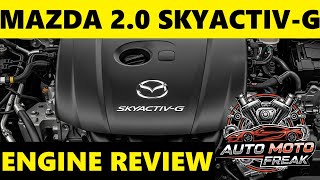
🎬 Watch: Complete Skyactiv-G reliability and common problems reviewHow to Confirm Your Vehicle's Engine
Before purchasing a replacement, you must verify that your vehicle is equipped with this exact engine. There are two primary ways to do this:
- Check the VIN: The 8th digit of your vehicle's 17-digit Vehicle Identification Number (VIN) must be a '7'. The VIN is located on a plate on the driver's side of the dashboard, visible through the windshield, and on the driver's side doorjamb sticker.
- Find the Engine Code: The engine family code "PE" is stamped on the engine block itself. You can typically find it near the area where the engine bolts to the transmission bell housing.
Warning: Not all 2.0L Mazda engines are the same. Engines from older 2014-2018 Mazda 3 models, or from other models like the CX-3 and MX-5 Miata, will not interchange with this unit. They have significant differences in engine mounts, wiring harnesses, oil pan design, accessory positioning, and the computer calibrations required to run them.
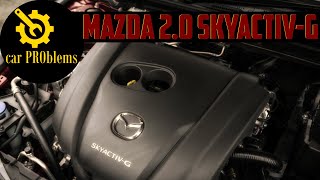
🎬 Watch: Deep dive into Skyactiv-G specs and reliabilityCommon Problems & Failure Symptoms

While generally reliable, the 2.0L PE-VPS engine has several well-documented issues that can lead to a check engine light or, in severe cases, engine failure. If you experience symptoms like engine knocking, excessive smoke from the exhaust, or find metal shavings in the engine oil, a major internal failure has likely occurred.
Coolant Control Valve (CCV) Failure (DTC P0126:00)
A common issue is the failure of the integrated coolant control valve, which contains the thermostat. This can cause the thermostat to stick open. Symptoms include the engine taking a very long time to warm up, the temperature gauge fluctuating, poor heater performance, and the blue low-coolant-temperature light staying on.
- Affected Years: 2019–2022 Mazda3, 2020–2022 Mazda CX-30.
- The Fix: Mazda addressed this with Technical Service Bulletins (TSB) 01-011/21 and 01-012/22. The repair involves replacing the entire coolant control valve assembly with a modified part or a dummy plug.
Engine Oil Solenoid Valve Sticking (DTC P0524:00 / P055F:00)
Some models may experience a sticking oil solenoid valve, leading to a low oil pressure warning. This is a severe issue that should be addressed immediately to prevent engine damage. The fix, outlined in TSB 01-003-24 (NHTSA ID 11000355), requires replacing the faulty solenoid, performing a complete oil and filter change, and updating the vehicle's Powertrain Control Module (PCM) software.
- Affected Years: 2019–2021 Mazda 3, 2020–2021 CX-30.
Engine Stall During Hard Acceleration
Some naturally aspirated models can experience an engine stall when accelerating hard. This is a software calibration issue rather than a mechanical failure.
- Affected Years: 2019–2022 Mazda 3, 2020–2022 CX-30.
- The Fix: Mazda issued TSB 01-001/23 (NHTSA ID 10228457), which requires reprogramming the PCM with updated torque reduction calibration software.
Intake Valve Carbon Buildup
Like all direct-injection engines, the intake valves are not cleaned by fuel spray. Over time (typically after 60,000 miles), carbon deposits can build up on the intake valves, leading to reduced performance, cold start hesitation, and rough idling. The only effective remedy is a manual or walnut-shell media blasting cleaning of the valves.
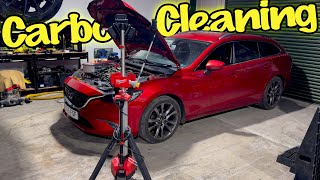
🎬 Watch: Chemical cleaning vs. walnut blasting comparedPro Tip: If you are purchasing a used engine, it is highly recommended to have the intake valves cleaned while the engine is out of the vehicle. This is much easier and cheaper than doing it later.
Diagnostic Flowchart
What Fails at Every Mileage Band
Pro Tip: The mileage bands below describe used replacement units of that mileage. The checklists are things to do WHILE INSTALLING the purchased engine, not maintenance for your current engine.
Under 60,000 Miles
Engines in this band are generally very healthy, though early TSB-identified issues (like the Coolant Control Valve failure or Oil Solenoid Valve sticking) can still occur. Premature battery failure, faulty wing mirror motors, and leaky shock absorbers are commonly reported non-engine issues on the vehicle itself.
- ✓Do during install (required): Inspect the plastic Coolant Control Valve (CCV) for any signs of leaks or damage, as it is fragile and a known failure point.
- ✓Do during install (recommended): Check the oil solenoid valve for any TSB updates or signs of malfunction.
- ✓Cheap insurance while the engine is out: Perform a basic inspection of all seals and gaskets for integrity before installation.
60,000 - 100,000 Miles
Intake valve carbon buildup begins to cause minor symptoms like rough idle or cold start hesitation in this range, especially with heavy city driving. The water pump and serpentine/stretch belts are recommended for replacement as a preventative measure. Some reports mention a contaminated Mass Airflow (MAF) sensor triggering fault codes around 60,000 miles.
- ✓Do during install (required): Replace the water pump, the main serpentine belt (Gates K060378 or equivalent), and the single-use water pump stretch-fit belt (Mazda Part # PEDD-15-908 or Gates K030309SF).
- ✓Do during install (recommended): Perform a walnut shell blasting or manual cleaning of the intake valves to remove carbon deposits. Replace all four spark plugs (Mazda Genuine iridium, Part # PE5R-18-110 or PE5S-18-110).
- ✓Cheap insurance while the engine is out: Replace the PCV valve to help mitigate future carbon buildup. Inspect and consider replacing the belt tensioner if it shows signs of oil seepage or wear.
100,000 - 150,000 Miles
Carbon buildup on intake valves becomes more prevalent and noticeable if not previously addressed. Wear items like wheel bearings and suspension components on the donor vehicle may have required replacement. Isolated reports of oil consumption due to piston ring issues can occur, leading to misfires from fouled spark plugs.
- ✓Do during install (required): Replace the front and rear crankshaft main seals as they are now accessible and prone to leaking at higher mileage. Replace the water pump and all accessory belts if their age is unknown.
- ✓Do during install (recommended): Perform intake valve cleaning (walnut blasting) if there is no record of it being done previously. Flush and replace all fluids, using approximately 4.4 quarts of premium 0W-20 full synthetic oil and Mazda Genuine FL22 pre-diluted coolant.
- ✓Cheap insurance while the engine is out: Replace all intake, exhaust, and coolant gaskets and O-rings, specifically the coolant control valve O-rings and water outlet gaskets (Part # PYFD-15-16Z and PYFB-15-169). Replace the PCV valve.
Over 150,000 Miles
The PE-VPS engine is highly reliable and capable of reaching 200,000 to 250,000+ miles with consistent maintenance. Failures at this stage are typically related to the cumulative effect of wear and tear or neglected maintenance, such as severe carbon buildup, seal failure, or issues stemming from oil consumption. Misfires on cold starts can be a strong indicator of significant carbon buildup.
- ✓Do during install (required): A thorough intake valve cleaning is mandatory.
- ✓Do during install (recommended): Assume all "cheap insurance" parts must be replaced. This includes all seals (front/rear main), gaskets (intake, exhaust, valve cover), the water pump, all belts and tensioners, spark plugs, and the PCV valve.
- ✓Cheap insurance while the engine is out: It is wise to inspect and potentially replace the rubber engine mounts.
Real Owner Experiences
| Source | Mileage | What Happened | Cost |
|---|---|---|---|
| Reddit r/mazda3 | approx. 60,000 km | Fuel pump required replacement. | Not specified, likely warranty. |
| Reddit r/MazdaCX30 | Under 50,000 miles | A 2020 CX-30 Skyactiv-X model experienced leaky shock absorbers, a failed high-pressure fuel pump, and a dead OEM battery within the first year. | All items were fixed under warranty. |
| Reddit r/mazda3 | 90,000 miles | Owner experienced intermittent P0300 (random misfire) codes on cold startups, suspected by Mazda technicians to be from carbon buildup on intake valves. | Not specified. |
| Reddit r/mazda3 | 102,000 miles | A check engine light for a misfire on cylinder #4 was caused by a failed fuel injector, which was replaced. | Not specified. |
| Reddit r/mazda3 | 132,000 miles | After a prior fuel injector failure at 102k miles, the same cylinder began misfiring again. A dealership scope showed oil leaking past the piston rings, fouling the spark plug. The dealer recommended an engine replacement. | Quoted for engine replacement. |
| Mazdas247 Forum | 140,000 miles | Owner of a 2013 2.0L model replaced all rubber engine and transmission mounts as preventative maintenance. | Not specified. |
| Reddit r/mazda3 | 129,000 miles | A 2014 model experienced a failed ignition coil. | $50. |
| Reddit r/mazda | 450,000 miles | A 2014 Mazda 3 with a 2.0L engine was reported to have reached this mileage on its original engine and transmission with regular maintenance. | Standard maintenance costs. |
| Reddit r/mazda3 | 371,000 miles | A 2013 Skyactiv model reached this mileage with all DIY service. | DIY service costs. |
| Reddit r/mazda | 206,000 miles (332k km) | A 2017 Mazda 3 2.0L is reported to run like new with only regular maintenance, other than a clutch replacement at 177k miles. | Regular maintenance. |
| Mazdas247 Forum | 250,000 miles | A 2013 Mazda 3 2.0L used for rideshare and delivery services required transmission fluid replacement (120k), new mounts (140k), and front suspension (160k), but had no other issues. | Wear item replacement costs. |
| 71,000 miles | Replaced the Coolant Control Valve at the dealership to fix P0126 code. | $1100.00 | |
| 42,000 miles | Dealer performed a multi-day manual cleaning for heavy intake valve carbon buildup causing a misfire. | $1700.00 | |
| Not Stated | Owner, an auto shop manager, replaced the cylinder head due to a crack, then chased a persistent P0524 code by replacing the OCV, oil pressure sensor, and oil pump. | Not Stated (DIY/Shop Cost) |
Repair or Replace?
When facing engine trouble, it is crucial to determine if the engine can be repaired or if a full replacement is necessary. Many common issues on the 2.0L Skyactiv-G are repairable without pulling the engine.
- Coolant Control Valve (CCV) Failure (DTC P0126:00): Typical repair costs range from $500 to $1,100. Repair always makes sense here. This is a common, manageable repair. A Mazda Special Service Program (SSP) may cover the cost for up to 15 years/150,000 miles, so check with a dealer first. Out of warranty, it is far cheaper to replace the valve assembly than the entire engine.
- Engine Oil Solenoid Valve Sticking (DTC P0524:00 / P055F:00): Typical repair costs range from $400 to $900. Repair always makes sense. The TSB for this issue involves replacing the solenoid valve, an oil flush, and a PCM update. This is a component-level repair and does not justify an engine replacement unless the engine was starved of oil and sustained internal damage.
- Intake Valve Carbon Buildup: Typical repair costs range from $400 to $1,700. Repair makes sense when experiencing symptoms like rough idle, misfires, or reduced MPG. A chemical cleaning can cost a few hundred dollars, while a more intensive manual or walnut-shell blasting service can be over $1,000. This is a maintenance issue, not a cause for engine replacement.
When Replacement is Smarter: Replacement becomes the logical choice when the engine has suffered catastrophic internal failure, such as a cracked block, severe bearing damage from oil starvation, or piston/cylinder wall damage. If the estimated cost of repairing the block or cylinder head approaches or exceeds the price of a quality used engine (which typically run $550 to $3,000), replacement is the more economical and reliable path.
Questions to Ask Your Installer
- Have you worked on 4th-generation Mazda Skyactiv engines before?
- Are you equipped to perform the mandatory PCM/immobilizer reprogramming with Mazda IDS or a compatible tool?
- Does your quote include transferring my original engine wiring harness and all necessary accessories?
- Will you be replacing critical consumables like the rear main seal, stretch-fit belts, and all required gaskets and fluids?
- How do you handle the high-pressure direct injection fuel system during the swap?
- What is your strategy for installing the stretch-fit water pump belt without damaging the pump?
- What warranty do you offer on your labor and the installation?
Replacement Cost & Installation Details

Replacing the 2.0L Skyactiv-G engine is a significant repair. Labor is a major part of the total cost, as the job is complex and requires special procedures.
Estimated Replacement Costs
| Part Type | Estimated Cost (Part Only) |
|---|---|
| New OEM | $3,200 - $10,000+ |
| Remanufactured | $2,500 - $5,500 |
| Used OEM | $550 - $3,000 |
| Labor | $1,200 - $2,500 |
Installation: Key Considerations
- DIY Difficulty: Expert. This is not a job for a beginner. It requires an engine hoist, a load leveler, a 17mm serpentine belt tensioner tool, a stretch-fit belt installation tool, high-pressure fuel line disconnect tools, and advanced diagnostic equipment (FORScan, Mazda IDS, or MDARS).
- Labor Hours: A professional shop will typically quote between 10 and 20 hours for an engine swap.
- Harness Transfer: You must transfer the original wiring harness from your old engine to the replacement unit. This ensures all sensors, pinouts, and vehicle electronics connect and function correctly.
- Timing Marks: The crankshaft pulley is keyed, but timing chain alignment marks must align perfectly with colored links on the chain during assembly.
- Stretch Belt Trick: The water pump uses a stretch-fit belt without a tensioner. Use a heavy-duty zip-tie on the water pump pulley and rotate the crankshaft clockwise to walk the belt on safely. Using cheap aftermarket belts (like Dayco 3PK794EE) that are too short will damage the water pump bearings.
Warning: High-Pressure Fuel System: The direct-injection system operates at up to 2,900+ psi. You must relieve fuel system pressure before disconnecting lines and replace high-pressure fuel pipe joints and injector O-rings.
Warning: Mandatory Programming: The vehicle will not start after the engine is installed until the immobilizer system is reprogrammed. This procedure, often called a "re-marriage," requires a Mazda-specific diagnostic tool (like the Mazda IDS or MDARS). This is not optional and must be performed by a qualified dealer or independent shop. Additionally, Keep Alive Memory (KAM) & Fuel Trim Resets, PCM Software Updates, and Transmission Initial Learning are required.
Freight & Delivery Reality

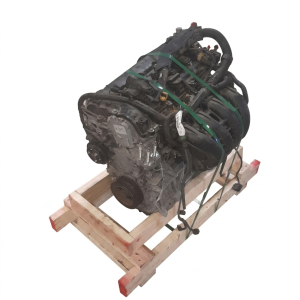
When ordering a used engine assembly, understand that it will not arrive via standard parcel delivery. A complete 2.0L Skyactiv-G engine assembly weighs approximately 285 lbs and measures roughly 34" x 28" x 32" before crating. It ships as Less-Than-Truckload (LTL) freight on a wooden pallet.
Because of its size and weight, the delivery truck will require a liftgate to lower the pallet to the ground if you do not have a loading dock or forklift. Always perform a thorough visual inspection of the engine before signing the delivery receipt. Check for any damage to the fragile plastic Coolant Control Valve housing, the oil pan, and the timing covers that may have occurred during transit.
Buyer's Checklist for a Used Engine

Avoid common and costly mistakes by verifying fitment and understanding what is included with a used engine assembly.
Before You Buy
- Confirm Your VIN: Double-check that the 8th digit of your car's VIN is '7'.
- Check Drivetrain: Know if your car is Front-Wheel Drive (FWD) or All-Wheel Drive (AWD). Some brackets or the oil pan may need to be transferred from your original engine.
- Visual Inspection: Perform a visual inspection of the intake manifold design and sensor locations on your current engine to match against photos of the replacement.
What's Included?
A standard used engine assembly includes the engine block, cylinder head, oil pan, valve cover, intake manifold, timing covers, harmonic balancer, internally lubricated components, direct-injection fuel rail, fuel injectors, high-pressure fuel pump (HPFP), vacuum pump, and throttle body. It does not typically include the alternator, A/C compressor, power steering pump, starter motor, exhaust manifold, or external emissions piping. Assume you will need to transfer these parts from your old engine.
Common Mistakes to Avoid
- Buying the Wrong Year: Do not purchase an engine from a 3rd-generation Mazda 3 (2014-2018) or CX-3. The wiring, sensors, and ECU calibrations are different and will not work.
- Skipping Programming: Failing to have the immobilizer professionally reset will result in a no-start condition or immediate trouble codes.
- Reusing Consumables: Always install new gaskets, seals, spark plugs, belts, and fluids. Never reuse the rear main seal.
Arrival Inspection: Compression and Leak-Down
When your used engine arrives, test the cylinder health before installing it. A compression test measures the pressure your engine makes while cranking. Because the Skyactiv-G engine has a very high compression ratio, healthy cylinders should read high, typically above 170 PSI. The most important rule is that all four cylinders must be within 10 to 15 percent of each other.
You should also perform a leak-down test. This test pumps compressed air into the cylinder to see how much air escapes. A healthy used engine should have less than 10 percent air loss per cylinder. If you hear air leaking from the intake, exhaust, or oil cap, the engine has bad valves or worn piston rings.
Before the First Start: Fluids and Priming
Never start a used engine dry. Sitting on a warehouse shelf drains the oil from the moving parts. You must prime the oil system, which means pumping oil through the engine before it actually starts and runs.
- Add Fresh Fluids: Install a new oil filter. Fill the engine with fresh 0W-20 full synthetic motor oil that meets API SN or SP standards. Fill the cooling system with Mazda FL22 coolant. Do not mix FL22 with standard green or orange coolants.
- Disable the Fuel System: Remove the fuel pump fuse or relay. This stops fuel from entering the engine so it will not start.
- Crank the Engine: Turn the key and crank the engine for 10 to 15 seconds. This spins the oil pump and pushes fresh oil to the top of the engine.
- Wait and Repeat: Let the starter motor cool down for one minute. Crank the engine again for another 10 to 15 seconds. Watch for the low oil pressure light on your dashboard to turn off.
- Start the Engine: Reinstall the fuel pump fuse or relay. Start the engine normally and let it idle. Check for any fluid leaks.
Long Block vs. Complete Assembly
When buying a used 2.0L Skyactiv-G engine, you will see two main options: a long block or a complete assembly.
- Long Block: This is just the core engine. It includes the engine block, the cylinder head, and the internal moving parts like pistons and valves. If you buy a long block, you must move your old outside parts over to the new engine.
- Complete Assembly: This includes the core engine plus many outside bolt-on parts. For this direct-injection engine, a complete assembly usually comes with the intake manifold, fuel injectors, and the high-pressure fuel pump.
Frequently Asked Questions (FAQ)
What comes on a used 2.0L Skyactiv-G engine?
A typical used assembly includes the engine block and cylinder head, intake manifold, valve cover, oil pan, fuel injectors, high-pressure fuel pump, vacuum pump, and throttle body. Accessories like the alternator, starter, and A/C compressor are almost never included and must be swapped from your original engine.
Will a 2.0L engine from a 2018 Mazda3 fit my 2020 Mazda3?
No. The fourth-generation Mazda3 (2019+) uses a completely updated engine architecture and electronic system. An engine from an older model is not compatible due to differences in mounting brackets, wiring harnesses, oil pan designs, and ECU calibrations.
Why won't my car start after installing a used engine?
The most common reason is the immobilizer system. The car's computer (PCM) is electronically tied to the original engine. It must be reprogrammed by a dealer or a properly equipped independent shop using Mazda IDS or MDARS to recognize the replacement engine before the vehicle will start.
What kind of coolant does the 2.0L Skyactiv-G use?
This engine requires Mazda's specific long-life FL22 coolant, which is a pre-diluted, ethylene-glycol-based formula. Do not add water or use conventional green or orange coolants.
How long does the 2.0L Skyactiv-G engine last?
With consistent maintenance, specifically strict adherence to oil change intervals using high-quality 0W-20 full synthetic oil, the PE-VPS engine is widely reported to be capable of exceeding 200,000 to 250,000 miles. Periodic intake valve cleaning (walnut blasting every 60k-100k miles) significantly impacts long-term performance and reliability.
Helpful Videos
Technical Specifications
OEM Part Numbers: PEDD-15-908 PE5R-18-110 PE5S-18-110 PYFD-15-16Z PYFB-15-169
Engine Code: PE-VPS (PE); Displacement: 2.0L; Configuration: Inline 4-Cylinder; Induction: Naturally Aspirated; Fuel System: Direct Injection; Required Oil: 0W-20 Full Synthetic; Oil Capacity: 4.4 quarts; Required Coolant: Mazda Genuine FL22 Pre-diluted; Weight: ~285 lbs
We Have This Part in Stock

The information in this article is provided for general reference and educational purposes only. Vehicle specifications, procedures, and part compatibility can vary by production date, trim level, and region. Always consult your vehicle's factory service manual and verify part numbers before purchasing or performing repairs. Safety-critical components such as airbags, seat belts, and braking systems should be installed by a qualified professional.
- Mazda CX-30:
- Mazda MAZDA3:
- 🎬 Helpful Videos
- 🛍️ Shop This Part
- Identification: Is This Your Engine?
- How to Confirm Your Vehicle's Engine
- Common Problems & Failure Symptoms
- Coolant Control Valve (CCV) Failure (DTC P0126:00)
- Engine Oil Solenoid Valve Sticking (DTC P0524:00 / P055F:00)
- Engine Stall During Hard Acceleration
- Intake Valve Carbon Buildup
- Diagnostic Flowchart
- What Fails at Every Mileage Band
- Under 60,000 Miles
- 60,000 - 100,000 Miles
- 100,000 - 150,000 Miles
- Over 150,000 Miles
- Real Owner Experiences
- Repair or Replace?
- Questions to Ask Your Installer
- Replacement Cost & Installation Details
- Estimated Replacement Costs
- Installation: Key Considerations
- Freight & Delivery Reality
- Buyer's Checklist for a Used Engine
- Before You Buy
- What's Included?
- Common Mistakes to Avoid
- Arrival Inspection: Compression and Leak-Down
- Before the First Start: Fluids and Priming
- Long Block vs. Complete Assembly
- Frequently Asked Questions (FAQ)
- 🎟️ Get 5% Off