

2021-2024 Mazda CX-30 & CX-50 2.5L SkyActiv-G: Problems, Identification, and Used Replacement
Identify the VIN M cylinder deactivation engine, understand what causes catastrophic failure, and learn when to replace it with a used OEM unit.
- Verify the 8th digit of the VIN is 'M' to ensure you have the correct naturally aspirated engine with cylinder deactivation; other versions are not compatible.
- If DTC P3400 appears, immediately stop driving and inspect the engine oil for metal shavings to prevent catastrophic engine damage from a failed cylinder deactivation solenoid.
- The common P0126:00 code is for a failed thermostat (CCV), which may be covered under Mazda's 15-year/150,000-mile extended warranty (SPD8).
- After installation, a Crankshaft Position (CKP) sensor relearn using a Mazda-specific scan tool is mandatory for the engine to start and run correctly.
- When swapping engines between AWD and FWD models, the original oil pan and oil pickup tube must be transferred to the replacement engine for proper fitment.
Identifying the Correct Engine: The VIN 'M' SkyActiv-G 2.5L

This engine assembly fits the 2021 Mazda CX-30 and 2023-2024 Mazda CX-50. It is a 2.5-liter, naturally aspirated (non-turbo) inline 4-cylinder engine known as the SkyActiv-G, with the engine family code PY-VPS. The most critical feature of this specific variant is its cylinder deactivation system.
To confirm this is the correct engine for your vehicle, you must check the 8th digit of your Vehicle Identification Number (VIN). The 8th digit must be 'M'. This 'M' code signifies the naturally aspirated 2.5L engine with cylinder deactivation.
| Identifier | Value | Notes |
|---|---|---|
| Correct VIN (8th digit) | M | Signifies 2.5L with Cylinder Deactivation |
| Engine Family Code | PY | Often stamped on the rear flange of the engine block |
| Incompatible VINs (8th digit) | L, A, Y, or 3 | Represent turbocharged or non-cylinder-deactivation models |
Warning: Do not purchase this engine for other Mazda models like the CX-5, Mazda3, or Mazda6, even if they use a 2.5L engine. Those vehicles use different versions of the PY engine family that are not compatible.
Symptoms of a Failing Engine

A failing PY-VPS engine may show several signs. Recognizing them early can help you decide if a replacement is necessary.
- Check Engine Light: A common indicator, often with Diagnostic Trouble Code (DTC) P3400, which points to a malfunction in the cylinder deactivation system. Another common code is P0126:00, indicating a thermostat issue.
- Engine Noise: A tapping or rattling from the top of the engine, especially when cold, could indicate issues with the hydraulic lash adjusters. 🎬 Watch: Listen to normal vs abnormal Skyactiv engine sounds
- Metal Shavings in Oil: Finding metallic debris in the engine oil or filter during an oil change is a sign of severe internal wear, often linked to cylinder deactivation solenoid failure.
- Overheating or Fluctuating Temperature: This can be caused by a failing Coolant Control Valve (CCV), which acts as the thermostat.
- Rough Idle and Poor Performance: A failing cylinder deactivation system or a loss of compression in a cylinder can cause the engine to run rough and lose power.
Diagnostic Flowchart
Known Issues, Recalls, and Technical Service Bulletins (TSBs)

This engine has several well-documented issues. Understanding them is key to a reliable repair.
Cylinder Deactivation Solenoid Failure (Severe)
Warning: A critical issue involves the failure of the cylinder deactivation solenoids on 2023-2025 models. When they fail, they can send metal shavings through the engine, leading to catastrophic damage. The check engine light with code P3400 is a primary symptom. If you see this code, immediately check the engine oil and filter for metal.
These components control oil flow to shut down cylinders 1 and 4 for better fuel economy. Mazda issued Service Alert SA-015/19 for related models, advising technicians to inspect the oil control valves for debris.
Coolant Control Valve (CCV) / Thermostat Failure (Moderate)
Pro Tip: Many SkyActiv-G 2.5L engines suffer from a faulty CCV. Mazda has extended the warranty (SPD8) for this component on many vehicles to 15 years or 150,000 miles and released TSB 01-005/24 to address the repair. Check with a dealer to see if your vehicle is covered before paying for a repair.
A failure can cause the thermostat to stick open, leading to a check engine light with code P0126:00, slow engine warm-up, and poor heater performance. The fix involves replacing the thermostat inside the CCV with a Mazda replacement kit.
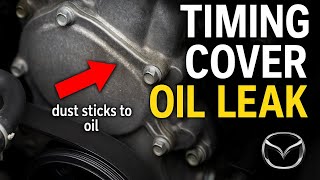
Oil Seepage from Front Timing Cover (Moderate)
Models from 2020-2023 frequently experience oil seepage from the front timing cover. Repairing this requires removing the oil pan and front cover to re-apply sealant. This is a labor-intensive job, taking roughly 8 to 9 hours, with dealer quotes ranging from $1,500 to over $4,200.
Automatic Transaxle Chirp Noise (Moderate)
Vehicles with this engine may develop a "chirp" or "whistle" noise from the automatic transmission when shifting between 3rd and 4th gear. According to TSB 01-003/24 and TSB 05-005/23, this is caused by iron powder contaminating the transmission fluid due to torque converter wear. The cylinder deactivation models use a specialized, heavy torque converter, making this issue highly relevant.
Valve Train Tapping/Rattling Noise (Minor)
A tapping noise from the cylinder head, particularly after a cold start, is a known issue addressed in Service Alert SA-012/19. This is often caused by air in the hydraulic lash adjusters (HLAs). The recommended procedure is to bleed the HLAs by running the engine at 2,500 to 3,000 RPM for two minutes without a load.
Official Recalls
There are no major engine-specific recalls for the 2021 CX-30 and 2023-2024 CX-50. Recalls found for these vehicles are typically for other components, such as tire valve stems (NHTSA 21V-101) or power liftgates (NHTSA 21V-086) on the CX-30, and accessory trailer hitches on the CX-50 (NHTSA 25V167000).
What Fails at Every Mileage Band
Pro Tip: The mileage bands below describe what typically fails on USED replacement engines at these mileages. The checklists provided are things you should do WHILE INSTALLING the purchased engine, not maintenance for your current broken engine.
Under 60,000 Miles
Engines in this range are generally healthy, but early failures do happen. The most significant issue is the failure of the Coolant Control Valve (CCV), triggering a P0126 code. The severe issue of Cylinder Deactivation Solenoid failure (DTC P3400) is a known risk from new. Some owners have also reported transmission issues at 39,000 miles, and a low-compression issue in cylinder 3 requiring a full engine replacement was reported on a 2023 CX-50 at just 31,500 miles.
- ✓Do during install (required): Replace the thermostat inside the Coolant Control Valve (CCV) with the latest Mazda replacement kit. This is cheap insurance against the most common failure.
- ✓Do during install (required): Use new OEM-spec 0W-20 full synthetic oil (approx. 4.8 quarts) and a Genuine Mazda SkyActiv oil filter.
- ✓Do during install (recommended): Replace spark plugs with new OEM-spec NGK Iridium plugs (NGK ILKAR7L11).
- ✓Do during install (recommended): Replace the serpentine/drive belt and inspect the plastic tensioner pulley for cracks.
- ✓Do during install (recommended): Replace all relevant gaskets removed during the swap, such as intake and exhaust manifold gaskets.
60,000 - 100,000 Miles
At this stage, carbon buildup on the intake valves (inherent to Gasoline Direct Injection engines) may start to cause rough idling or reduced power. Cleaning is typically recommended between 50,000 and 70,000 miles. Some SkyActiv engines may also begin to exhibit oil consumption around 60,000 miles due to piston rings or valve seals. The timing chain should be inspected, especially if oil changes were neglected.
- ✓Do during install (required): All required items from the 'Under 60k' band apply.
- ✓Do during install (recommended): Perform a manual (walnut blasting) intake valve cleaning service to remove carbon deposits while the engine is out and accessible.
- ✓Do during install (recommended): Replace the PCV valve to help mitigate potential oil consumption and carbon buildup.
- ✓Cheap insurance while the engine is out: Replace the water pump as a preventative measure.
- ✓Cheap insurance while the engine is out: Replace the front crank seal and rear main seal.
100,000 - 150,000 Miles
Oil consumption can become more pronounced in this band. Carbon buildup is highly likely to be a significant issue if not previously addressed. Timing chain and tensioner wear becomes a higher probability, especially with poor maintenance history. A rattling noise on startup is a key symptom of chain stretch.
- ✓Do during install (required): Plan for intake valve carbon cleaning if there is no record of it being done.
- ✓Do during install (recommended): Inspect the timing chain and tensioners for stretch and wear. Consider replacing the timing chain kit (chain, guides, tensioner) as a preventative measure, as labor is the main cost.
- ✓Cheap insurance while the engine is out: Service or replace fuel injectors if they can be easily accessed.
Real Owner Experiences
| Source | Mileage | What Happened | Cost |
|---|---|---|---|
| Reddit r/CX50 | 31,500 | A misfire and low compression in cylinder 3 led to a full engine replacement under warranty. | $0 (Warranty) |
| Reddit r/MazdaCX30 | 39,000 | The automatic transmission failed and required replacement. | Not specified (Warranty claim issues reported) |
| Mazda Forum | 42,000 | Owner reports cylinder deactivation is working fine with no issues. | N/A |
| Mazdas247 Forum | 28,000 | Check engine light for P0126 (Coolant Control Valve) appeared. | Covered under 15yr/150k mile warranty extension. |
| YouTube Commenter | 100,000+ | Owner of a 2021 Mazda3 Turbo (similar engine family) reports the engine is known to handle significant power, with head studs and pistons being the eventual weak points above 350hp. | N/A |
| Reddit r/MazdaCX30 | 147,000 | On a 2018 Mazda3 (same engine family), the owner only replaced the battery and tires, indicating high reliability. | Minimal (consumables only) |
| Mazdas247 Forum | 126,000 | A 2014 CX-5 (earlier Skyactiv 2.5L) ran to this mileage with only a minor, unrelated sensor issue. | Minimal |
| Reddit r/CX50 | 21,000 | Dealer replaced the engine under warranty after initial denial and customer escalation. | $0 (Warranty) |
| Reddit r/CX50 | 40,000 | Owner discovered the engine was replaced by the dealer prior to their purchase due to the previous owner putting diesel in the tank. The user was considering buying the car. | Not Applicable |
| Mazdas247 Forum | Not Stated | Dealer quoted for timing cover seal leak repair. | $1500 |
| Mazdas247 Forum | <60,000 | Dealer quoted for timing cover seal repair ($3,400) and belts/tensioner ($800). Mazda corporate denied assistance as the vehicle was out of the 5-year warranty period. | Not Stated |
Repair or Replace?
Deciding whether to fix your current engine or buy a replacement comes down to the specific failure mode and the resulting internal damage.
- Coolant Control Valve (CCV) Failure: Always repair. This is a common issue with a known fix. The OEM part costs around $393, and independent shops charge between $650 and $1,100 (dealers up to $1,500). Check if you are covered by the SPD8 15-year/150,000-mile warranty extension.
- Oil Seepage from Front Timing Cover: Repair if the leak is significant (dripping). This is an 8-9 hour job costing $1,500 to $4,200 at a shop. DIY parts are only about $100, but it requires expert skill. If it is just minor wetness, monitor it.
- Cylinder Deactivation Solenoid Failure (P3400): Repair immediately if caught early. Replacing the solenoid costs $200 to $600. However, if this failure has produced metal shavings in the oil, the engine is likely beyond simple repair and requires replacement.
- Carbon Buildup on Intake Valves: Repair. This is routine maintenance for GDI engines, costing $400 to $800 for a cleaning service. It does not warrant engine replacement.
When Replacement is Smarter: Replacement is the only viable option when the Cylinder Deactivation Solenoid Failure has been ignored, leading to metal shavings circulating throughout the engine. This causes catastrophic internal damage to bearings, camshafts, and cylinder walls that is not economically feasible to repair. Similarly, any failure causing a loss of compression in a cylinder (like damaged pistons or valves) will typically necessitate a full engine replacement, as dealers often quote over $8,000 for internal rebuilds.
Replacement Cost Comparison
The cost to replace the engine can vary widely based on the type of replacement unit you choose.
| Replacement Option | Estimated Part Cost (USD) | Notes |
|---|---|---|
| New OEM | $8,000 - $12,000+ | Highest cost, brand new from the manufacturer. |
| Remanufactured OEM | $4,300 - $8,000 | Rebuilt to factory specifications, often with a warranty. |
| Used OEM | $3,900 - $4,900 | Varies by mileage and condition. Sourced from a recycled vehicle. |
| Installation Labor | $1,650 - $3,200 | Based on an estimated 11-16 shop hours. |
Installation: Key Considerations

Installing this engine is a complex job best left to expert technicians. Several critical steps must be followed to ensure success.
Programming and Calibration
Warning: After installation, the vehicle's computer requires programming. A Crankshaft Position (CKP) sensor relearn is mandatory. This procedure synchronizes the new engine with the vehicle's computer and can be done with a Mazda-compatible scan tool like FORScan or the dealer's IDS/MDARS system. You must also perform a throttle body idle air volume learning procedure and clear adaptive transmission values. Failure to perform these steps will result in a no-start condition or poor performance.
You must reuse your vehicle's original Engine Control Unit (ECU) or Powertrain Control Module (PCM). Using the donor vehicle's computer will activate the immobilizer system and prevent the car from starting. An immobilizer/security system re-sync using MDARS may also be required.
AWD vs. FWD Component Swap
Pro Tip: If you are swapping an engine between an All-Wheel Drive (AWD) and a Front-Wheel Drive (FWD) vehicle, you must transfer the original oil pan and the internal oil pump pickup tube to the replacement engine. The AWD oil pan has a different shape to provide clearance for the transfer case.
Required Parts, Tools, and Consumables
Always use new gaskets, seals, and fluids during installation to prevent leaks and ensure longevity. Key items include:
- Engine Oil: Approximately 4.8 quarts of 0W-20 full synthetic oil.
- Coolant: Mazda FL-22 long-life pre-diluted engine coolant.
- Gaskets: New intake and exhaust manifold gaskets, and new O-rings for the thermostat and CCV.
- Spark Plugs: Install new OEM-spec NGK Iridium spark plugs (NGK ILKAR7L11).
- Hardware: Replace single-use items like the oil pan drain plug crush washer and the torque-to-yield (TTY) crankshaft pulley bolt if it was removed. High-pressure fuel lines use single-use crush seals and must be replaced if disconnected.
- Sealant: High-quality grey RTV silicone sealant for the timing cover and oil pan.
- Special Tools: An engine hoist/crane with a load leveler, an engine lift table with specialized attachments (like Mazda tool PLA-15), a high-precision digital torque wrench, and fuel line disconnect tools. Never place a floor jack directly under the aluminum oil pan. The factory procedure requires removing the engine and transaxle together from underneath the vehicle.
Freight & Delivery Reality

When ordering a used engine assembly, understand that it will not arrive via standard parcel delivery. This engine weighs approximately 430 lbs and measures roughly 36" x 36" x 32" before crating. It ships as Less-Than-Truckload (LTL) freight strapped to a pallet.
Because of its size and weight, delivery requires a truck equipped with a liftgate if you do not have a loading dock or forklift at your delivery location. It is an industry best practice to conduct a pre-purchase verification interview with the seller to confirm fitment. Upon delivery, you must thoroughly inspect the engine for any shipping damage before signing the driver's delivery receipt. Signing without noting damage can void your ability to file a freight claim.
Questions to Ask Your Installer
- Have you confirmed this is the correct 'VIN M' engine for my vehicle?
- My vehicle is [FWD/AWD]. Will you need to swap the oil pan and oil pickup tube from my original engine? Are you comfortable with that procedure?
- Will you inspect the cylinder deactivation solenoids and oil control valves for any debris before installing the replacement engine?
- Do you have the proper tools, like FORScan or Mazda IDS/MDARS, to perform the mandatory Crankshaft Position (CKP) sensor relearn after installation?
- Are you aware that the original ECU/PCM and wiring harness must be reused to avoid immobilizer and compatibility issues?
- Will you be replacing all required single-use items like the torque-to-yield crankshaft bolt (if removed), high-pressure fuel line seals, and all necessary gaskets and fluids with OEM-spec parts?
- What warranty do you provide on your labor, and what warranty comes with the used engine itself?
Before the First Start: Priming and Fluids
You must install a new oil filter and fresh fluids before starting your used replacement engine. Using the wrong fluids can damage the engine's internal parts.
- Engine Oil: Use 0W-20 full synthetic motor oil. Look for the API SP or ILSAC GF-6A rating on the back of the bottle.
- Engine Coolant: You must use Mazda FL22 specification coolant. FL22 is a special long-life antifreeze designed to protect Mazda's aluminum engine blocks and water pump seals. Do not mix it with universal green or orange coolants.
Follow this oil priming (pre-lube) procedure to build oil pressure before the engine actually runs:
- Fill the engine with the correct amount of fresh 0W-20 oil and FL22 coolant.
- Stop the engine from starting by removing the fuel pump fuse from the main fuse box. This cuts off the fuel supply.
- Crank the engine (turn the key or press the start button) for 10 to 15 seconds. The engine will spin but will not start. This action pumps fresh oil through the engine block and up to the cylinder head.
- Wait one full minute to let the starter motor cool down.
- Crank the engine for another 10 to 15 seconds. Watch the dashboard. Stop cranking when the red low oil pressure warning light turns off, which means the engine has safe oil pressure.
- Check the engine oil dipstick. Add more oil if the level has dropped.
- Reinstall the fuel pump fuse.
- Start the engine normally. Let it idle and check carefully for any fluid leaks.
Frequently Asked Questions
Is this engine the same as the 2.5L Turbo?
No. This is the naturally aspirated (non-turbo) engine, identified by the 8th VIN digit 'M'. The turbocharged version (VIN 'Y', 'L', 'A', or '3') is a completely different engine and is not interchangeable.
Do I need to replace the wiring harness?
No, you must reuse your vehicle's original engine wiring harness. This guarantees that all sensors and connectors will match your vehicle's specific trim and features, ensuring plug-and-play compatibility.
What is cylinder deactivation?
Cylinder deactivation is a fuel-saving technology that temporarily shuts down two of the four engine cylinders (cylinders 1 and 4) under light load conditions, such as cruising on the highway. The system uses special oil control solenoids and hydraulic lash adjusters to disengage the valves on those cylinders.
What parts are typically included with a used engine assembly?
A standard used assembly includes the cylinder block, cylinder heads, all internally lubricated parts, oil pan, valve cover, timing chain, gears, timing covers, intake manifold, throttle body, fuel injection system (high-pressure fuel pump, fuel rail, injectors), and the harmonic balancer. Accessories like the A/C compressor, starter, alternator, and power steering pump are usually excluded.
Why is it important to check ground straps during installation?
Modern engines rely heavily on precise electrical signals. Failing to properly connect all engine and chassis ground straps during installation can lead to erratic sensor readings, transmission shifting issues, and a host of electronic gremlins that are difficult to diagnose.
Helpful Videos
Technical Specifications
Engine Type: 2.5L SkyActiv-G Inline 4-Cylinder; Engine Family Code: PY-VPS; Aspiration: Naturally Aspirated; Key Feature: Cylinder Deactivation; VIN Identifier (8th Digit): M; Applicable Models: 2021 Mazda CX-30, 2023-2024 Mazda CX-50; Oil Type: 0W-20 Full Synthetic; Oil Capacity: Approx. 4.8 quarts; Spark Plugs: NGK ILKAR7L11; Coolant: Mazda FL-22
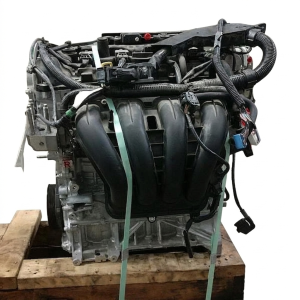
We Have This Part in Stock

The information in this article is provided for general reference and educational purposes only. Vehicle specifications, procedures, and part compatibility can vary by production date, trim level, and region. Always consult your vehicle's factory service manual and verify part numbers before purchasing or performing repairs. Safety-critical components such as airbags, seat belts, and braking systems should be installed by a qualified professional.
- Mazda CX-30:
- Mazda CX-50:
- 🎬 Helpful Videos
- 🛍️ Shop This Part
- Identifying the Correct Engine: The VIN 'M' SkyActiv-G 2.5L
- Symptoms of a Failing Engine
- Diagnostic Flowchart
- Known Issues, Recalls, and Technical Service Bulletins (TSBs)
- Cylinder Deactivation Solenoid Failure (Severe)
- Coolant Control Valve (CCV) / Thermostat Failure (Moderate)
- Oil Seepage from Front Timing Cover (Moderate)
- Automatic Transaxle Chirp Noise (Moderate)
- Valve Train Tapping/Rattling Noise (Minor)
- Official Recalls
- What Fails at Every Mileage Band
- Under 60,000 Miles
- 60,000 - 100,000 Miles
- 100,000 - 150,000 Miles
- Real Owner Experiences
- Repair or Replace?
- Replacement Cost Comparison
- Installation: Key Considerations
- Programming and Calibration
- AWD vs. FWD Component Swap
- Required Parts, Tools, and Consumables
- Freight & Delivery Reality
- Questions to Ask Your Installer
- Before the First Start: Priming and Fluids
- Frequently Asked Questions
- 🎟️ Get 5% Off