

2023-2024 Mazda CX-30 2.5L Skyactiv-G: Problems, Identification, and Used Replacement
Identify the exact VIN 'M' cylinder deactivation engine, learn what causes catastrophic failures, and discover what to look for when buying a used replacement unit.
- Verify your engine by checking the 8th digit of the VIN; 'M' is correct for this engine with cylinder deactivation, while 'L' is not compatible.
- Be aware of the common Coolant Control Valve failure (P0126), which causes the engine to warm up slowly and is covered by Mazda's 15-year/150,000-mile warranty extension (SSPD8).
- When installing a used engine, proactively replace common wear items like the water pump, serpentine belt, tensioner, and critical seals while the engine is on a stand to prevent future failures.
- Professional installation is mandatory due to the need for special tools and multiple post-installation computer reprogramming steps, without which the vehicle will not start or run correctly.
Is This the Right Engine for Your Mazda?


This guide covers the naturally aspirated 2.5L Skyactiv-G engine, identified by engine codes starting with 'PY' (such as PYZV, PY-VPS, or PYZV-02-300C), found in the 2023-2024 Mazda CX-30. The key feature of this specific engine variant is Cylinder Deactivation (CDA), a fuel-saving technology that shuts off two of the four cylinders under light load conditions. For 2023 models, this engine produces 191 horsepower. It is critical to verify that this is the exact engine your vehicle requires, as several similar-looking Mazda engines will not fit or function correctly.
The Critical VIN Check
The most important step in identifying your engine is to check the 8th digit of your vehicle's 17-digit Vehicle Identification Number (VIN), which is visible on the driver's side dashboard or door jamb sticker.
- If the 8th digit is 'M', your vehicle is equipped with the 2.5L engine with cylinder deactivation, and this is the correct engine family for your car.
- If the 8th digit is 'L', your vehicle has a 2.5L engine without cylinder deactivation. This engine is NOT compatible.
Warning: An engine designed for a VIN 'M' vehicle cannot be used in a VIN 'L' vehicle (or vice-versa) without extensive modifications to the wiring, computer systems, and cylinder head. Ordering the wrong one is a common and costly mistake.
Engine Code Location
To physically confirm the engine family, you can locate the code stamped into the engine block. The engine family code 'PY' is stamped directly into the metal block on the rear side near the transmission mating surface.
Why Other Mazda 2.5L Engines Don't Fit
While Mazda uses 2.5L Skyactiv-G engines in other popular models like the Mazda3, CX-5, and CX-50, those units are not direct replacements for this CX-30 engine. They have significant differences in:
- Engine mounting brackets
- Oil pan design (especially for All-Wheel Drive models)
- Wiring harnesses
- Engine Control Unit (ECU) software and calibrations
Attempting to use an engine from a different model will lead to installation and compatibility problems.
Common Problems and Failure Symptoms
A complete engine replacement is a major repair. It's typically only recommended for catastrophic failures. Symptoms that may point to a terminal engine problem include:
- Severe Knocking or Tapping Noises: Loud, metallic sounds from deep within the engine that increase with RPM often indicate failed bearings or piston-related damage.
- Catastrophic Oil Loss: A sudden and major loss of oil, often from a hole in the engine block, is a clear sign of internal failure.
- Metal Shavings in Engine Oil: Finding significant amounts of glittery metal particles in the oil and filter during an oil change points to severe internal wear and impending failure.
- Low or No Compression: If one or more cylinders have very low compression, it can indicate a cracked cylinder head, failed valves, or damaged pistons.
Diagnostic Flowchart
Known Issues, Service Bulletins, and Warranty Alerts

Mazda has issued several Technical Service Bulletins (TSBs) and warranty extensions for known issues with this engine family. A TSB is a document provided to dealers with instructions for diagnosing and repairing a known problem. It is not a recall.
- Cylinder Head Cracking & Valve Tapping (Severe): Early production 2.5L engines with cylinder deactivation (pre-2023) can suffer from cylinder head issues. Mazda acknowledged this with Service Alert SA-073-24a (and TSB MC-10200939-0001), establishing a newly redesigned service cylinder head assembly (including pre-installed valves, springs, and lifters) to address these failures. Symptoms can include coolant leaks, oil leaks, misfires, and engine noise. While largely resolved for 2023-2024, it remains a known historical issue for the PY-VPS family.
- Thermostat Stuck Open / Coolant Control Valve Failure (Moderate): A common issue from 2018-present is the failure of the failsafe thermostat within the Coolant Control Valve (CCV), which triggers a check engine light with code P0126:00. Symptoms include the engine taking too long to warm up, a fluctuating temperature gauge, and poor heater performance. Mazda issued TSB 01-005/24 with a repair procedure and a special warranty extension (SSPD8) to cover this repair for up to 15 years or 150,000 miles. The fix involves replacing a thermostat kit (Part # PYY2-15-SA1) rather than the entire expensive CCV assembly.
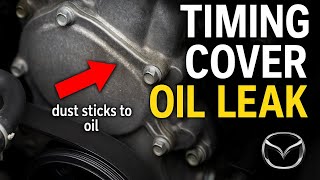
- Timing Cover Oil Seepage (Minor): Some 2.5L engines with cylinder deactivation may develop a minor oil leak from the front timing cover. This often appears as an oily film that attracts dust and dirt on the passenger side of the engine. TSB 01-006-23 (and MC-10235413-0001) provides the official procedure for removing, cleaning, and resealing the cover using fresh high-temp silicone sealant. This repair is typically covered under the vehicle's 5-year/60,000-mile powertrain warranty.
- Torque Converter Wear / Transmission Chirp (Moderate): Some vehicles may develop a chirp noise when the transmission shifts from 3rd to 4th gear. According to TSB MC-10246127-0001, vibrations produced when transitioning between 2-cylinder and 4-cylinder modes can cause premature wear on the torque converter's lock-up clutch. This requires transmission fluid inspection and potential torque converter replacement.
Engine Replacement Cost Estimates
The cost of replacing a Mazda CX-30 engine varies widely based on the type of replacement unit and local labor rates. The following estimates are for the engine assembly itself and the labor to install it.
| Part or Service | Estimated Cost (USD) | Notes |
|---|---|---|
| New OEM Engine | $3,400 - $5,700 | A brand new engine directly from Mazda (Part # PYZV-02-300C). Prices vary by dealer, with some online parts departments listing them between $3,454 and $4,396. |
| Remanufactured Engine | $1,400 - $5,500 | A professionally rebuilt engine. Remanufactured short blocks (bottom end only) run $1,400-$1,600, while complete long blocks can reach $4,300-$5,500. Quality can vary, so choose a reputable supplier. |
| Used OEM Engine | $2,299 - $4,200 | A salvaged engine from a donor vehicle. Price depends heavily on mileage and condition. |
| Installation Labor | $1,200 - $2,500 | Represents an estimated 10-15 hours of shop time. This does not include fluids or other required consumables. |
What Fails at Every Mileage Band
Pro Tip: The mileage bands below describe what typically fails on these engines at various stages of their life. If you are buying a USED replacement engine, use these bands to understand what maintenance you should perform BEFORE dropping the replacement engine into your vehicle. The checklists provided are critical steps to take while the purchased engine is on the stand, not general maintenance for your current broken engine.
Under 60,000 Miles
Engines in this bracket are generally very healthy. The most prevalent issue is the failure of the failsafe thermostat within the Coolant Control Valve (CCV), leading to a P0126 trouble code, slow engine warm-up, and poor heater performance. Mazda has addressed this with a 15-year/150,000-mile warranty extension (SSPD8). Early production 2.5L engines with cylinder deactivation had a known risk of cylinder head cracking, but these problems are considered resolved for the 2023-2024 model year.
- ✓Do during install (required): Strictly adhere to the required list of new consumables, especially one-time-use torque-to-yield (TTY) bolts and seals.
- ✓Do during install (required): Use only the specified fluids: API-certified 0W-20 full synthetic oil and Mazda FL-22 pre-diluted long-life coolant.
- ✓Do during install (required): Ensure all post-install computer relearn procedures (CKP, immobilizer, etc.) are performed by a qualified shop with a dealer-level scan tool.
- ✓Do during install (recommended): Given the prevalence of the issue, inspect the Coolant Control Valve (CCV) for any signs of leaks or damage. If purchasing a used engine, assume the thermostat may be faulty and consider proactively performing the TSB 01-005/24 repair.
60,000 - 100,000 Miles
As a direct-injection engine, carbon buildup on the intake valves can begin to cause symptoms like rough idling or misfires, particularly in vehicles used frequently for short trips. The serpentine/drive belt and its tensioner are key maintenance items. The official spark plug replacement interval is 75,000 miles. Minor oil seepage from the valve cover gasket may become apparent toward the upper end of this mileage range.
- ✓Do during install (required): Replace spark plugs (if not recently done), the serpentine/drive belt, and the belt tensioner. A leaking tensioner is a common failure point and replacing it while the engine is out is trivial.
- ✓Do during install (recommended): Perform a manual intake valve cleaning (walnut blasting) to remove carbon deposits. This restores performance and efficiency and is much easier with the engine on a stand.
- ✓Cheap insurance while the engine is out: Replace the PCV valve. It is an inexpensive part that is critical for crankcase pressure regulation, and failure can contribute to oil consumption and seal leaks.
100,000 - 150,000 Miles
Oil consumption may become more noticeable as piston rings and valve seals wear. The original water pump may be nearing the end of its service life. While generally durable, failure becomes a higher risk in this mileage band. The first major coolant service is scheduled for 120,000 miles or 10 years.
- ✓Do during install (required): Replace the water pump and any accessible, brittle-looking coolant hoses. This is critical preventative maintenance to avoid a major failure after installation.
- ✓Do during install (recommended): Replace the front crankshaft seal and the rear main seal. These are primary leak points on high-mileage engines, and replacement is labor-intensive once the engine is installed.
Over 150,000 Miles
The timing chain and its guides/tensioners, while designed for the life of the engine, may stretch or wear, potentially causing rattling noises or timing-related fault codes at very high mileage (200k+). General degradation of all rubber seals and gaskets increases the likelihood of oil and coolant leaks.
- ✓Do during install (required): Assume all seals and gaskets are nearing the end of their life. A full reseal (front/rear main seals, valve cover, oil pan) is strongly advised.
- ✓Do during install (recommended): Thoroughly inspect the timing chain for stretch and the tensioner for wear. If there is any doubt, replace the entire timing set (chain, guides, tensioner).
- ✓Cheap insurance while the engine is out: At this mileage, consider replacing the entire Coolant Control Valve (CCV) assembly, not just the thermostat, to prevent future issues with the electronic valve body.
Real Owner Experiences
The following table highlights real-world experiences from Mazda owners dealing with engine and powertrain issues.
| Source | Mileage | What Happened | Cost |
|---|---|---|---|
| Mazda Forum | 28,000 | Owner experienced all symptoms of a stuck-open thermostat (car not reaching operating temperature, blue temp light staying on) but had difficulty getting the P0126 check engine light code to trigger for the dealer. This is a common scenario for this issue. | $0 (if P0126 code is present, covered under SSPD8 warranty extension). Out-of-pocket costs are estimated between $300-$600. |
| Reddit r/CX5 | 36,000 | Owner reported the engine would not warm up properly for 1-2 years, with coolant temps staying around 120-130°F. The dealer performed the latest TSB repair, which involves removing the internal failsafe thermostat, installing a plug, and reprogramming the PCM, which resolved the issue. | $0 (Covered under SSPD8 warranty extension) |
| Mazdas247 Forum | 102,000 | Owner of a CX-5 was advised by the dealer that the accessory belt had visible cracks and required replacement 'in the near future'. They also noted minor weeping from the valve cover gasket. | Dealer quote was ~$160 for the accessory belt and ~$130 for the valve cover gasket. |
| Reddit r/CX5 | 120,000 | An owner of a 2021 model with the naturally aspirated engine and cylinder deactivation reported the car 'hasn't skipped a beat' and has had no issues. | N/A (No failure) |
| Reddit r/mazda | 223,000 | Owner of a 2018 2.5L (with CDA) reported still getting the same gas mileage as when the car was new, with no major issues reported. | N/A |
| Reddit r/mazda | ~210,000 (338,000 km) | An owner of a Skyactiv 2.5 (non-CDA) retired the vehicle with no major engine failures, adhering to a strict synthetic oil change schedule. | N/A |
| Reddit r/MazdaCX30 | over 36,000 | Dealer quoted for replacement of a recurring faulty coolant control valve on a 2021 CX-30. | $890 quoted. Not specified what was paid, but Mazda later issued a warranty extension (SSPD8) that would cover this repair. |
| Mazdas247 Forum | 71,000 | Dealer quoted for resealing a leaking timing cover on a 2019 CX-5. The TSB for this repair specifies 3.4 labor hours. | $1,500 quoted. Cost paid not specified. |
| Mazdas247 Forum | 57,000 | Dealer quoted ~$3,400 to reseal the timing cover and another $800 for belts and a tensioner on a 2018 CX-5. | ~$4,200 quoted. Cost paid not specified, user was seeking advice on the quote. |
| Mazda Forum | not specified | Owner experienced a coolant leak leading to engine failure on a 2017 CX-9. Mazda approved a goodwill replacement. | $500 (deductible/co-pay) |
Repair or Replace?
Deciding whether to repair your current engine or replace it entirely depends on the specific failure mode and the overall cost.
- Thermostat Stuck Open / Coolant Control Valve Failure: This repair almost always makes sense. The typical repair cost is $650 - $1,500 out-of-warranty, depending on dealer vs. independent shop and if the full assembly or just the thermostat kit is used. The part itself costs between $390 and $500. However, Mazda has an extended warranty (SSPD8) for this issue for up to 15 years/150,000 miles, meaning it is often free.
- Timing Cover Oil Seepage: Typical repair costs range from $1,500 - $4,200. The repair is labor-intensive, with quotes varying widely. One TSB suggests a labor time of 3.4 hours, making lower-end quotes more realistic. If the leak is minor (a 'seep'), many owners monitor it without immediate repair. If the leak is substantial, repair is necessary. Given the high cost, it makes sense to repair if the rest of the engine is in good health. It does not warrant a full engine replacement on its own.
- Torque Converter Wear / Transmission Chirp: Typical repair costs are $600 - $1,000+. A used OEM torque converter can be found for around $425. The job takes approximately 4-5 hours. This is a transmission-related repair, not an engine repair. It should be addressed to prevent further transmission damage but does not require engine replacement.
When Replacement is Smarter: Engine replacement becomes the smarter economic choice in cases of catastrophic internal failure (e.g., thrown rod, severe oil starvation, major bottom-end damage) or when a high-cost repair like a cracked cylinder head (per Service Alert SA-073-24a) is combined with other issues like high mileage or multiple oil leaks. If the total cost of individual repairs approaches or exceeds the price of a low-mileage used engine plus labor ($5,000 - $7,000 total), replacement is the more logical path.
Freight & Delivery Reality

If you are purchasing a used engine online, it is crucial to understand how it will be shipped. An engine assembly is not a parcel; it ships as Less-Than-Truckload (LTL) freight.
- Size and Weight: The 2.5L Skyactiv-G engine assembly weighs approximately 480 lbs and measures roughly 40" x 32" x 36" before crating. It will arrive strapped to a wooden pallet.
- Delivery Requirements: Because of its size and weight, the delivery truck will require a liftgate to lower the pallet to the ground, or you must have a forklift on-site. Residential deliveries often incur extra fees.
- Inspect Before Signing: Never sign the delivery receipt until you have fully inspected the engine for shipping damage. Check fragile components like the plastic Coolant Control Valve and the cylinder deactivation solenoids on top of the cylinder head. If you sign for it as "undamaged" and find broken parts later, the freight company will deny your claim.
- Pre-Purchase Verification: Before ordering, have a verification interview with the seller. Confirm your VIN's 8th digit is 'M', verify if your vehicle is AWD or FWD, confirm it is naturally aspirated (non-turbo), and ensure the engine code stamped on the block starts with 'PY'.
Installation: What to Know Before You Start
Replacing this engine is a complex job recommended for professional technicians with the correct tools and experience.
Professional Installation is Recommended
This is an advanced-level DIY project. The factory procedure involves removing the engine and transaxle assembly together from underneath the vehicle, which requires a vehicle lift and a proper powertrain support table. Special tools are required, including an engine hoist/crane with a heavy-duty load leveler, a flywheel/drive plate locking tool, high-pressure fuel system disconnect tools, and a professional-grade diagnostic scan tool (Mazda M-MDS or bi-directional equivalent).
Warning: This engine requires multiple computer reprogramming steps after installation. A dealer-level scan tool (like Mazda M-MDS) or a high-end professional equivalent is mandatory. The car will not start or run correctly without performing the Crankshaft Position (CKP) Sensor Relearn, Throttle Body Idle Air Volume Learn, Coolant Control Valve (CCV) Initialization, and immobilizer/security key remarriage procedures.
Critical "Gotchas" and Common Mistakes
To ensure a successful installation, avoid these common errors:
- AWD vs. FWD Parts: If swapping an engine into an All-Wheel Drive (AWD) vehicle, you MUST transfer the oil pan and specific rear engine mounting brackets from the original engine. The AWD oil pan has necessary clearance cutouts and mounting bosses for the Power Take-off Unit (PTU/transfer case).
- Fragile Sensors: The plastic connectors for the cylinder deactivation solenoids on top of the engine and the Coolant Control Valve (CCV) on the side are extremely fragile. Never use them as handholds or leverage points when lifting or positioning the engine.
- Reusing Old Parts: Always use new, one-time-use seals and gaskets, especially the torque-to-yield (stretch) crankshaft pulley (harmonic balancer) bolt and the crush washers/seals for the high-pressure direct injection fuel system. Reusing old seals will cause leaks.
- Improper Coolant Bleeding: The cooling system must be bled using a vacuum-assisted coolant refiller to prevent air pockets, which can cause immediate overheating and damage to the new engine. Use only Mazda's specified FL-22 long-life pre-diluted coolant.
- High-Pressure Fuel System Safety: The direct injection fuel system operates under extremely high pressure. You must safely bleed the fuel pressure before opening any lines.
Arrival Inspection: Compression and Leak-Down
When your used engine arrives, test the cylinders before installing it. A compression test measures the pressure inside each cylinder. A leak-down test pumps air into the cylinder to see if it holds pressure. Because the Skyactiv-G engine has a very high compression ratio, you should expect strong test results.
- Compression: Look for readings that are close to each other. All four cylinders should be within 10 to 15 percent of the highest reading.
- Leak-Down: A healthy used engine should have less than 15 percent air loss in each cylinder.
If a cylinder has low pressure, it might have stuck piston rings from sitting in storage. Adding a small amount of engine oil to the cylinder (a wet test) can help seal the rings and show if they are the problem.
Before the First Start: Fluids and Priming
Never start a used engine dry. Engines lose their internal oil coating while sitting in storage. You must build oil pressure before letting the engine run on its own.
Mandatory Fluids
Before priming, fill the engine with the correct, brand-new fluids. Do not reuse old fluids.
- Engine Oil: Use fresh 0W-20 weight oil that meets the API SP or ILSAC GF-6A standard. Install a brand-new oil filter.
- Engine Coolant: Use only Mazda FL22 specification coolant. This is a special long-life, pre-mixed green coolant designed to protect the aluminum engine block.
The Oil Priming Procedure
Priming pumps oil through the engine to protect the metal parts during the first start. Follow these steps:
- Disable the fuel system: Remove the fuel pump fuse from the fuse box. This stops the engine from getting gas.
- Disable the spark: Unplug the ignition coils so the engine cannot fire.
- Crank the engine: Turn the key or press the start button to crank the engine for 10 to 15 seconds.
- Wait and repeat: Let the starter motor cool down for one minute. Crank the engine again for 10 to 15 seconds. Repeat this until the low oil pressure warning light turns off on the dashboard.
- Start the engine: Reinstall the fuel pump fuse and plug in the ignition coils. Start the engine normally and listen for any unusual noises.
Frequently Asked Questions (FAQ)
How do I know for sure if my CX-30 has cylinder deactivation?
Check the 8th character of your VIN. If it is an 'M', your engine has cylinder deactivation. If it is an 'L', it does not.
Can I use a cheaper engine from a Mazda3 or CX-5?
No. While they are also 2.5L Skyactiv engines, they have different oil pans, mounting points, wiring, and computer tuning. They are not a direct fit for the CX-30 and will not work without major modifications.
What happens if I don't do the computer reprogramming?
The vehicle's immobilizer (security system) will prevent the engine from starting. Even if it did start, it would run poorly and set numerous error codes because the car's computer would not recognize the new engine's sensors.
Is the thermostat problem that causes the P0126 code covered by a recall?
It is not a recall, but Mazda has issued a special warranty extension (SSPD8) that covers the repair for up to 15 years or 150,000 miles from the vehicle's original sale date.
What is included with a used engine assembly?
A standard used engine assembly typically includes the engine block, cylinder head, all internally lubricated parts, oil pan, valve cover, intake manifold, throttle body, timing cover, timing chain, fuel injection system (rail, injectors, high-pressure fuel pump), harmonic balancer, and integral wiring harness. It generally excludes the A/C compressor, starter motor, alternator, exhaust manifold, and power steering pump.
What special tools are needed for installation?
You will need an engine hoist/crane with a heavy-duty load leveler, a flywheel/drive plate locking tool, high-pressure fuel system disconnect tools, a powertrain support table or vehicle lift, and a professional-grade diagnostic scan tool (like Mazda M-MDS) for computer relearns.
What fluids does this engine take?
This engine requires approximately 4.8 quarts of API-certified 0W-20 full synthetic oil and fresh Mazda FL-22 long-life pre-diluted coolant. Using generic green or orange coolants or incorrect oil weights can cause severe damage.
Helpful Videos


Technical Specifications
OEM Part Numbers: PYZV-02-300C PYY2-15-SA1
Engine Type: 2.5L Skyactiv-G (Naturally Aspirated); Engine Code Family: PY; Key Technology: Cylinder Deactivation (CDA); Horsepower (2023): 191; VIN Identifier (8th Digit): M; Required Oil: 0W-20 Full Synthetic (API Certified); Oil Capacity: ~4.8 quarts; Required Coolant: Mazda FL-22 Long-Life (Pre-diluted)
We Have This Part in Stock


The information in this article is provided for general reference and educational purposes only. Vehicle specifications, procedures, and part compatibility can vary by production date, trim level, and region. Always consult your vehicle's factory service manual and verify part numbers before purchasing or performing repairs. Safety-critical components such as airbags, seat belts, and braking systems should be installed by a qualified professional.
- Mazda CX-30:
- 🎬 Helpful Videos
- 🛍️ Shop This Part
- Is This the Right Engine for Your Mazda?
- The Critical VIN Check
- Engine Code Location
- Why Other Mazda 2.5L Engines Don't Fit
- Common Problems and Failure Symptoms
- Diagnostic Flowchart
- Known Issues, Service Bulletins, and Warranty Alerts
- Engine Replacement Cost Estimates
- What Fails at Every Mileage Band
- Under 60,000 Miles
- 60,000 - 100,000 Miles
- 100,000 - 150,000 Miles
- Over 150,000 Miles
- Real Owner Experiences
- Repair or Replace?
- Freight & Delivery Reality
- Installation: What to Know Before You Start
- Professional Installation is Recommended
- Critical "Gotchas" and Common Mistakes
- Arrival Inspection: Compression and Leak-Down
- Before the First Start: Fluids and Priming
- Mandatory Fluids
- The Oil Priming Procedure
- Frequently Asked Questions (FAQ)
- 🎟️ Get 5% Off