

2016-2018 Mazda CX-3 2.0L Skyactiv-G: Problems, Identification, and Used Replacement
Identify the exact PE-VPS engine, understand common failures, and learn how to successfully swap a used OEM replacement unit.
- Before buying, verify your engine is the correct PE-VPS type by checking for a '7' as the 8th VIN digit and a 'PE' stamp on the engine block.
- Only use a replacement engine from a 2016-2018 Mazda CX-3, as engines from other Mazda models like the Mazda3 or CX-5 are not compatible due to different mounts, wiring, and components.
- Preventatively service the replacement engine before installation by performing an intake valve cleaning (walnut blasting) and ensuring the low-pressure fuel pump recall (NHTSA 21V875000) has been addressed.
- Always use a new torque-to-yield (TTY) crankshaft pulley bolt if the original is removed; reusing the old bolt can lead to catastrophic engine failure.
- If swapping between AWD and FWD models, you must transfer the original oil pan and related mounting brackets to the replacement engine.
Identifying Your Engine: The 2.0L Skyactiv-G (PE-VPS)

The 2016-2018 Mazda CX-3 is powered by a specific version of the 2.0-liter Skyactiv-G engine, an inline 4-cylinder (I4) power plant. This engine uses direct injection, a technology where fuel is sprayed directly into the combustion chamber to improve efficiency and power. It is naturally aspirated, meaning it does not use a turbocharger. For the U.S. market, this engine has a high 13.0:1 compression ratio, producing around 146-155 horsepower. The engine's family code is PE-VPS, often shortened to just "PE".
Pro Tip: There are two simple ways to confirm your vehicle has this exact engine. First, check the 8th digit of your vehicle's Vehicle Identification Number (VIN); it must be a "7". Second, you can locate the engine code "PE" stamped on the rear of the engine block, near where it connects to the transmission.
Pre-Purchase Verification
Before buying a replacement engine, you must verify exactly what is in your vehicle. This is an industry best practice to avoid costly return shipping on freight items:
- Check the VIN: Verify your VIN's 8th digit is a "7".
- Confirm Drivetrain: Note whether your CX-3 is Front-Wheel Drive (FWD) or All-Wheel Drive (AWD). This determines if an oil pan swap is required.
- Locate the Engine Code: Find the "PE" family code stamped on the rear of the engine block near the transmission mating surface.
What Will Not Interchange?
While other Mazda models like the Mazda3, Mazda6, CX-5, and MX-5 Miata also use 2.0L Skyactiv-G engines, they are not direct replacements for the CX-3. There are significant differences in components that prevent an easy swap. These include:
| Component | Reason for Incompatibility |
|---|---|
| Engine mounting brackets | Different fitment for the CX-3 chassis. |
| Wiring harness | Connectors and routing are specific to the CX-3. |
| Oil pan design | Unique design, especially between FWD and AWD models. |
| Accessory Positioning | Alternator and A/C compressor are located differently. |
| Engine Control Unit (ECU) | Software and calibration are specific to the CX-3. |
Warning: Attempting to use a 2.0L engine from a different Mazda model will lead to installation and compatibility issues. You must source a replacement from a 2016-2018 Mazda CX-3 to ensure proper fitment.
🎬 Watch this complete engine swap walkthrough on a CX-3Common Symptoms of a Failing Engine
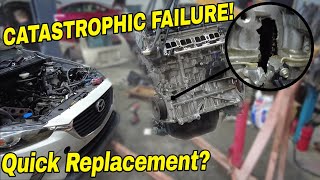
A severely failing engine often gives clear warning signs. Catastrophic failure can present as a loud knocking or banging noise from the engine, followed by a sudden loss of power. In some cases, a connecting rod can break and puncture the engine block, which will cause a massive and immediate oil leak and a non-running vehicle. Other symptoms that may point to serious engine problems include:
- Rough Idling: The engine may shake or sound uneven when the vehicle is stopped.
- Engine Hesitation: A noticeable delay or lack of power when you press the accelerator.
- Check Engine Light: Often triggered by misfires or other internal engine faults.
- Excessive Oil Consumption: Needing to add oil between regular changes can indicate worn internal parts.
- Smoke from Exhaust: Blue or grey smoke can be a sign that oil is burning inside the engine.
Diagnostic Flowchart
Known Problems, Recalls, and Technical Service Bulletins (TSBs)

This engine family is generally reliable, but some specific issues have been documented by Mazda and the National Highway Traffic Safety Administration (NHTSA).
Low-Pressure Fuel Pump Failure (Severe)
NHTSA Recall 21V875000: This is a critical safety recall affecting certain 2018 and 2019 CX-3 models. The recall was for a faulty low-pressure fuel pump impeller that could crack and deform, causing the fuel pump to fail. This can lead to the engine stalling while driving, increasing the risk of a crash. Symptoms include a check engine light, rough engine operation, or a no-start condition. The remedy is a replacement of the fuel pump with an improved part, performed by a dealer, or transferring an updated fuel pump assembly to your replacement engine.
Intake Valve Carbon Buildup (Moderate)
Like many direct-injection engines, the 2.0L Skyactiv-G can be prone to carbon deposits accumulating on the intake valves over time, typically after 80,000 to 100,000 miles. Because fuel is injected directly into the cylinder, it doesn't wash over the valves to keep them clean. Symptoms include a rough idle, engine hesitation, and reduced fuel economy. The most effective solution is a manual cleaning of the valves, often called "walnut blasting," which is best performed while the replacement engine is out of the vehicle.
Electronic Coolant Control Valve (CCV) Failure (Moderate)
Mazda Special Service Programme SSPD8: Some Skyactiv-G engines may experience a failure of the electronic coolant control valve. This can cause the check engine light to illuminate (DTC P0126:00), make the engine take longer to warm up, and lead to poor heater performance. In response, Mazda extended the warranty on this component to 15 years or 150,000 miles for affected vehicles in many markets.
Other Documented Issues
- Engine Front Cover Oil Seepage (TSB 01-005/17): Affects some early 2.0L engines, where oil can seep from the joint between the cylinder block and head. The fix involves resealing the engine front cover.
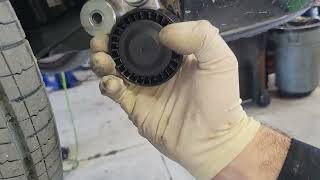
- Hydraulic Drive Belt Auto Tensioner Leak (TSB 01-008/26): The belt tensioner may leak oil, showing as oily residue and dirt buildup. The remedy is to replace the hydraulic auto tensioner (part number PE03-15-980C).
- Rough Idle in Cold Weather (TSB 01-002/17): Caused by frozen water accumulating in the main silencer (muffler). The fix is to replace the main silencer with an updated part.
- Oil Seepage from Drain Plug (TSB 01-001/15): Inspect and replace the drain plug gasket during oil changes to prevent minor leaks.
- Oil Pump Pressure Relief Valve (TSB 01-009-14): Early production models (2012-2014) had a rare issue where debris could cause the oil pump pressure relief valve to stick, leading to a loss of oil pressure.
What Fails at Every Mileage Band
Pro Tip: The mileage bands below describe what to expect from used replacement units of that mileage. The checklists provided are things to do WHILE INSTALLING the purchased engine, not maintenance for your current engine.
Under 60,000 Miles
Engines in this range are generally in excellent condition. However, the low-pressure fuel pump recall (NHTSA 21V875000) can manifest at any mileage and cause stalling. The hydraulic drive belt auto tensioner can begin to leak (TSB 01-008/26), sometimes starting around 37,000 miles (60,000 km). Some owner reports also mention issues with the mass airflow (MAF) sensor or minor electrical glitches.
- ✓Do during install (required): Replace all single-use items like the torque-to-yield crankshaft bolt if removed. Replace standard consumables: 0W-20 full synthetic oil, Mazda FL-22 coolant, oil filter, and spark plugs. Install new gaskets for the intake manifold, exhaust manifold, and valve cover. Replace the main accessory drive belt and the water pump stretch belt.
- ✓Do during install (recommended): Inspect the drive belt tensioner for any signs of hydraulic fluid leakage and replace if any is found.
- ✓Cheap insurance while the engine is out: Carefully inspect and clean all sensor connections.
60,000 to 100,000 Miles
Intake valve carbon buildup becomes more prevalent in this band, with symptoms like rough idle, hesitation, or misfire codes (P0300) appearing, sometimes as early as 75,000 miles. The electronic coolant control valve (CCV) may fail, causing slow engine warmup. Drive belt tensioner leaks become more common, and increased oil consumption may begin to appear in some engines.
- ✓Do during install (required): Perform all required services from the 'Under 60K' band.
- ✓Do during install (recommended): Perform a preventative intake valve cleaning (walnut blasting) while the engine is out of the vehicle. This is the most significant service for this mileage. Replace the PCV valve to help slow future carbon buildup.
- ✓Cheap insurance while the engine is out: Inspect the electronic coolant control valve; replace if there is any doubt, as access is much easier with the engine out. Consider a transmission fluid drain and fill if not recently performed.
100,000 to 150,000 Miles
Intake valve carbon buildup is a very common maintenance item in this mileage range, with symptoms becoming highly noticeable. Oil consumption can become more apparent past 120,000 miles as engine seals wear. Timing chain tensioners or guides may require attention at very high mileages, though the chain itself is considered a lifetime part.
- ✓Do during install (required): Perform all required services from the 'Under 60K' band. Perform intake valve cleaning (walnut blasting).
- ✓Do during install (recommended): Replace the front cover seal (related to TSB 01-005/17) and valve cover gasket. A transmission fluid service is highly recommended at this stage.
- ✓Cheap insurance while the engine is out: It is wise to replace the timing chain tensioner and guides as a preventative measure, given the mileage and ease of access.
Replacement Cost Comparison
The cost of replacing a Mazda CX-3 engine can vary greatly depending on the type of replacement unit chosen. Labor costs for this job are also significant.
| Item | Estimated Cost (USD) | Notes |
|---|---|---|
| New OEM Engine | $3,500 - $8,000+ | Price for the part only, from a Mazda dealer. |
| Remanufactured Engine | $3,000 - $4,500 | A professionally rebuilt engine, often with a warranty. |
| Used OEM Engine | $890 - $2,300 | Sourced from a recycled vehicle; price varies with mileage and condition. |
| Shop Labor | $1,200 - $2,400 | Estimated at 10-15 hours of labor. Rates vary by shop and location. |
Real Owner Experiences
| Source | Mileage | What Happened | Cost |
|---|---|---|---|
| Reddit r/mazda | 45,000 miles | Owner reported a P0300 multiple misfire code on startup, which Mazda technicians attributed to early carbon buildup on intake valves. | N/A |
| AUTODOC UK | 12,500-25,000 miles | Reports of jerky automatic transmission behavior at low speeds, which can sometimes be addressed with a software update or fluid change. | Varies (software update vs. fluid service) |
| Car Checker | 37,000 miles | Drive belt tensioner can start to show signs of oil seepage. | €150-350 |
| Reddit r/mazda | 75,000 miles | Owner experienced a P0300 code during startup. Multiple Mazda technicians diagnosed it as carbon buildup on the intake valves. | ~$400 CAD for walnut blasting. |
| Reddit r/mazda | 80,000 miles | Owner replaced the water pump belt and drive belt due to shuddering and vibration at low RPMs. | N/A |
| Automotive-faults.com | 80,000-100,000 miles | Reports on the diesel variant (which shares some architecture) indicate potential high-pressure fuel pump and injector issues, often linked to carbon buildup. | N/A |
| BobIsTheOilGuy Forums | 106,000 miles | Owner of a 2015 CX-5 with the 2.5L Skyactiv reported the engine and transmission performed fine with no major issues. | N/A |
| Reddit r/mazda | 220,000 miles | Long-term owner of a 2012 Mazda 3 2.0L reported a leaking timing cover gasket needed to be addressed. Also replaced motor mount, belts, tensioner, and suspension components as part of long-term maintenance. | N/A |
| Reddit r/AskMechanics | Not Stated | Needed engine replacement after radiator replacement, possibly due to a blown head gasket. | Not Stated. One user estimated $7k-9k total, another suggested a used engine could be $1k-2k plus overhaul costs. |
| Mazda Forum | Not Stated | Owner received a 'goodwill' engine replacement from Mazda due to a coolant leak issue. | $500 (deductible/co-pay) |
| Mazdas247 Forum | 77,000 km | Owner was proactively asking about future potential costs. A moderator estimated $5k-7k at a dealer for a new engine, or $2k-4k at an independent shop with a used engine. | N/A |
Repair or Replace?
When facing engine trouble, deciding whether to repair your current engine or replace it with a used unit comes down to economics. Used replacement engines for the 2016-2018 CX-3 typically run between $890 and $2,300. Here is how common repairs stack up against that replacement cost:
| Repair Item | Estimated Cost | Recommendation |
|---|---|---|
| Intake Valve Carbon Buildup | $400 - $800 | Repair is always the correct path; this is a maintenance item. |
| Hydraulic Drive Belt Auto Tensioner Leak | $250 - $450 | A simple and cost-effective repair if the engine is otherwise healthy. |
| Engine Front Cover Oil Seepage | $800 - $1,500 | Makes sense to repair if the engine has no other major issues. |
| Blown Head Gasket | $2,000 - $3,500+ | Replacement is often a more reliable option as repair costs are high. |
Replacement is the smarter option when the vehicle suffers from catastrophic internal failure (like a cracked block, spun bearings, or severe head warpage from overheating), when the current engine has very high mileage, or when the cost of a specific repair combined with other needed maintenance exceeds the price of a reliable used engine.
Questions to Ask Your Installer
- Have you worked on Mazda Skyactiv engines before? Are you familiar with their specific needs?
- Will you be performing the Crankshaft Position, Throttle Body, and Immobilizer relearn procedures after installation?
- What is your source for the used engine? Does it come with a warranty and a VIN to verify its history?
- Does your quote include all necessary new consumables like FL-22 coolant, 0W-20 synthetic oil, gaskets, and the torque-to-yield crankshaft bolt?
- If my car is AWD, have you factored in the labor to swap the oil pan and related components from my old engine?
- Can you perform an intake valve cleaning (walnut blasting) on the replacement engine before you install it, and what would be the additional cost?
- How will you handle and transfer the original engine wiring harness to prevent damage?
Critical Information for Installation

What's Included in a Used Assembly?
A used engine assembly from a recycler typically includes the core long block components. According to standard automotive recycling guidelines, you can expect the following to be included:
- Cylinder block and cylinder head(s)
- All internally lubricated parts (pistons, crankshaft, camshafts, valves)
- Oil pan and valve cover
- Intake manifold
- Timing chain and timing covers
- Fuel injection system (including high-pressure fuel pump and fuel injectors)
- Throttle body
- Harmonic balancer
- Camshaft-driven vacuum pump
However, external accessories are almost never included. You must reuse the following from your original engine:
- A/C Compressor
- Alternator
- Starter Motor
- Exhaust Manifold
- Power steering pump
- Engine Wiring Harness
- Engine Computer (ECU)
Required Parts and Fluids for the Job
To ensure a successful installation, it is essential to use new consumables and gaskets. Do not reuse old parts in these critical areas.
| Item | Specification / Part Number |
|---|---|
| Engine Oil | Approx. 4.4 US quarts (4.2 liters) of 0W-20 full synthetic |
| Coolant | Mazda FL-22 specification long-life coolant |
| Spark Plugs | Genuine Mazda iridium (PE5R-18-110 or PE5S-18-110) |
| Gaskets | Valve cover, intake manifold, exhaust manifold (always replace) |
| Belts | New main accessory drive belt and water pump stretch belt |
| Oil Filter | New, high-quality oil filter |
Special Tools Required
This is an Advanced to Expert level DIY job. In addition to standard mechanic tools, you will need:
- Fuel Pump Lock Ring Tool (SST 49 F042 001)
- 27mm Deep-Well Socket
- Engine Hoist and Load Leveler
- Water Pump Stretch Belt Tool
Installation Gotchas and Common Mistakes
Warning: The crankshaft pulley bolt is a torque-to-yield (TTY) fastener. This means it is designed to stretch when tightened and cannot be reused. You must use a new bolt if the old one is removed. Reusing the crankshaft pulley bolt is a common buyer mistake.
- AWD vs. FWD Parts: If installing an engine from an AWD donor into a FWD vehicle (or vice-versa), you must swap the oil pan and the intermediate shaft/PTU mounting brackets. Failing to swap the oil pan on AWD models is a frequent error.
- Stretch Belt: The water pump is driven by a small, dedicated stretch belt that does not use a mechanical tensioner. It requires a specialized stretch belt tool to install.
- Fragile High-Pressure Fuel Lines: These lines are highly sensitive to twisting. Always use a backup wrench on the fuel rail fittings.
- Sensor Fragility: Numerous critical sensors (ion sensors in ignition coils, MAF, etc.) must be handled with extreme care.
- Wiring Harness: You must reuse your vehicle's original engine wiring harness. Ensure all ground connections are clean and tightly secured, particularly the ground near the high-pressure fuel pump. Damaging the wiring harness during transfer is a common mistake.
- Programming: Programming is model-dependent. While a full ECU replacement is not needed, several relearn procedures are required: Crankshaft Position (CKP) Sensor Relearn, Throttle Body Idle Relearn, and Immobilizer (PATS) Security Relearn. A dealer tool is not strictly required, but a capable scan tool is. Ignoring the ECU/Immobilizer Security Relearn will prevent the vehicle from running properly.
Freight & Delivery Reality

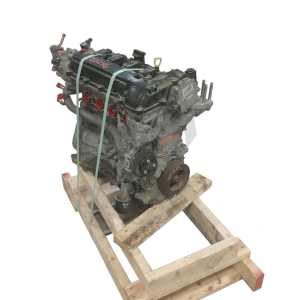
A complete 2.0L Skyactiv-G engine assembly is a heavy piece of machinery. Verified shipping data shows this unit weighs approximately 330 lbs and measures roughly 32" x 30" x 32" before crating. Because of this size and weight, it ships as Less-Than-Truckload (LTL) freight on a wooden pallet—NOT as a standard parcel.
When ordering a used engine, ensure your delivery location can accommodate a freight truck. If you are having it delivered to a residential address or a shop without a loading dock, you must request a liftgate service. Always inspect the engine thoroughly while it is still on the pallet and before signing the delivery receipt. Check for any damage to the oil pan, valve cover, or fragile sensors that may have occurred during transit.
Arrival Inspection: Compression and Leak-Down
When your used engine arrives, test the cylinders before you install it. This proves the internal parts are healthy.
- Compression Test: This engine has a high compression ratio. This means healthy cylinder pressures are usually high, often above 180 psi. The most important rule is that all four cylinders must be within 10% to 15% of each other.
- Leak-Down Test: This test pumps compressed air into the cylinder to see if it holds pressure. A healthy used engine should have less than 10% air loss (leakage) in each cylinder.
Before the First Start: Fluids and Priming
You must prepare the engine before you turn the key for the first time. Starting a dry engine will cause instant damage.
Mandatory New Fluids
Never reuse old fluids. Fill the engine with the correct, fresh fluids:
- Engine Oil: Use 0W-20 full synthetic oil. You must also install a brand-new oil filter.
- Engine Coolant: Use Mazda FL22 specification coolant. This is a special long-life coolant designed to protect the aluminum engine parts.
Oil Priming Procedure
You must prime the oil system. Priming means pumping oil through the engine before it actually starts and runs. This coats the moving parts with oil.
- Stop the engine from starting: Remove the fuel pump relay or the fuel injector fuses from the fuse box. This stops fuel from entering the engine.
- Crank the engine: Turn the key to the "Start" position and let the engine spin for 10 to 15 seconds.
- Wait and repeat: Let the starter motor cool down for one minute. Then, crank the engine again for another 10 to 15 seconds.
- Watch for pressure: Repeat this process until the red low oil pressure warning light on the dashboard turns off.
- Finish up: Put the relay or fuses back into the fuse box. The engine is now safe to start normally.
Frequently Asked Questions (FAQ)
Do I need to have the computer reprogrammed?
You do not need to replace your vehicle's original Engine Control Unit (ECU). However, after the new engine is installed, several electronic "relearn" procedures must be performed for the crankshaft position sensor, throttle body, and immobilizer system. A professional shop with the right scan tools can complete this process.
Is the engine from an AWD CX-3 different from a FWD model?
The core engine long block is the same. However, the oil pan and some mounting brackets for the Power Takeoff Unit (PTU) on AWD models are different. If you are swapping an engine between FWD and AWD vehicles, you must transfer the original oil pan and associated hardware to the replacement engine.
Can I use an engine from a Mazda3 or CX-5?
No. Although they are also 2.0L Skyactiv-G engines, they have different mounting points, oil pans, wiring, and accessory layouts that make them incompatible with the CX-3 without major modifications.
What is the expected lifespan of the 2.0L Skyactiv-G?
The Mazda 2.0L Skyactiv-G engine is widely regarded as highly reliable and durable. With consistent maintenance, such as using high-quality 0W-20 full synthetic oil every 5,000-10,000 miles and Mazda FL-22 coolant, many owners report trouble-free operation well beyond 200,000 miles (320,000 km). Some sources suggest a typical lifespan of 200,000 to 300,000 miles is achievable. One analysis based on scrapped vehicles estimated a lower lifespan of around 125,000-135,000 miles, but this data can be skewed by accidents.
Why is the crankshaft pulley bolt a one-time use part?
The crankshaft pulley bolt is a torque-to-yield (TTY) fastener. This means it is engineered to stretch permanently when tightened to its final specification. Once removed, it loses its structural integrity and cannot hold the proper tension again. Reusing it can lead to catastrophic engine failure.
How do I know if my CX-3 has the low-pressure fuel pump recall?
You can check if your vehicle is affected by NHTSA Recall 21V875000 by entering your VIN on the NHTSA website or contacting a Mazda dealer. If you are installing a used engine, it is critical to ensure the replacement unit has an updated fuel pump assembly to prevent future stalling issues.
Helpful Videos
Technical Specifications
OEM Part Numbers: PE03-15-980C PE5R-18-110 PE5S-18-110
Engine Family: PE-VPS (PE); Displacement: 2.0L; Configuration: Inline 4-cylinder (I4); Aspiration: Naturally Aspirated; Fuel System: Direct Injection; Compression Ratio: 13.0:1; Horsepower: 146-155 hp; Required Oil: 0W-20 Full Synthetic; Required Coolant: Mazda FL-22; VIN 8th Digit: 7
We Have This Part in Stock

The information in this article is provided for general reference and educational purposes only. Vehicle specifications, procedures, and part compatibility can vary by production date, trim level, and region. Always consult your vehicle's factory service manual and verify part numbers before purchasing or performing repairs. Safety-critical components such as airbags, seat belts, and braking systems should be installed by a qualified professional.
- Mazda CX-3:
- 🎬 Helpful Videos
- 🛍️ Shop This Part
- Identifying Your Engine: The 2.0L Skyactiv-G (PE-VPS)
- Pre-Purchase Verification
- What Will Not Interchange?
- Common Symptoms of a Failing Engine
- Diagnostic Flowchart
- Known Problems, Recalls, and Technical Service Bulletins (TSBs)
- Low-Pressure Fuel Pump Failure (Severe)
- Intake Valve Carbon Buildup (Moderate)
- Electronic Coolant Control Valve (CCV) Failure (Moderate)
- Other Documented Issues
- What Fails at Every Mileage Band
- Under 60,000 Miles
- 60,000 to 100,000 Miles
- 100,000 to 150,000 Miles
- Replacement Cost Comparison
- Real Owner Experiences
- Repair or Replace?
- Questions to Ask Your Installer
- Critical Information for Installation
- What's Included in a Used Assembly?
- Required Parts and Fluids for the Job
- Special Tools Required
- Installation Gotchas and Common Mistakes
- Freight & Delivery Reality
- Arrival Inspection: Compression and Leak-Down
- Before the First Start: Fluids and Priming
- Mandatory New Fluids
- Oil Priming Procedure
- Frequently Asked Questions (FAQ)
- 🎟️ Get 5% Off