

2014-2018 Mazda 3, CX-5 & 6 2.5L Skyactiv-G: Problems, Identification, and Used Replacement
Identify the naturally aspirated 2.5L PY-VPS engine, learn what causes catastrophic failure, and discover when replacing it with a used OEM unit is the smartest choice.
- Verify fitment using the 8th VIN digit (3 for Mazda 3, 5/6 for Mazda 6, L/Y for CX-5), as 2018+ engines with cylinder deactivation are not compatible.
- If the donor engine is from a vehicle with a different drivetrain (AWD vs. FWD), you must swap the oil pan and intermediate shaft brackets from your old engine.
- After installation, a dealer-level scan tool is required to perform an immobilizer relearn and sensor calibrations for the engine to start and run correctly.
- Before installing a used engine, inspect and consider replacing common wear items like the belt tensioner, water pump, and front/rear main seals to save on future labor costs.
- Use only the specified fluids: 0W-20 full synthetic oil and Mazda FL-22 long-life coolant to prevent damage.
Engine Identification: Is This Your Engine?

This guide covers the naturally aspirated 2.5L Skyactiv-G four-cylinder engine, identified by the engine codes PY-VPS, PYY3, PYY8, and PY-VPR. It was used extensively across Mazda's lineup. This engine is known for its high compression ratio and direct injection, a technology that sprays fuel directly into the cylinder for better efficiency.
A used engine assembly from this family will typically weigh around 359 lbs and measure about 36" x 36" x 36" before being placed on a shipping pallet. It ships as LTL freight on a pallet, not as a standard parcel.
Vehicle Fitment
| Model | Model Years | Engine Specifics |
|---|---|---|
| Mazda 3 | 2014–2018 | 2.5L Models Only |
| Mazda 6 | 2014–2017 | 2.5L Models Only |
| Mazda CX-5 | 2014–2017 | 2.5L Models Only |
How to Confirm Fitment on Your Vehicle
The most reliable way to confirm this is the correct engine for your car is by checking the 8th digit of your Vehicle Identification Number (VIN), which is found on your dashboard or driver's side door jamb. [14]
| Model | Model Years | 8th VIN Digit |
|---|---|---|
| Mazda 3 | 2014-2018 | 3 [42] |
| Mazda 6 | 2014-2017 | 5 or 6 |
| Mazda CX-5 | 2014-2017 | L or Y |
You can also look for the engine code "PY" or "PY-VPS" stamped on the intake side of the engine block near the transmission bell housing.
Warning: Newer engines that seem similar are NOT compatible. The 2018+ Mazda 6 and CX-5, and 2019+ Mazda 3, introduced a revised 2.5L engine with Cylinder Deactivation, which is not interchangeable. [37] Additionally, the 2.5L Turbo (2.5T) engine is a completely different design and will not work as a replacement. Confirm the engine is Naturally Aspirated (no 'TURBO' on the engine cover).
Common Symptoms of Engine Failure

If you are trying to determine if your engine needs to be replaced, look for these major symptoms. A severe issue often shows more than one of these signs.
- Loud Knocking or Banging Noises: This often points to failed rod bearings, a serious internal problem. 🎬 Watch: Complete teardown of a failed Skyactiv 2.5L engine
- Metal Shavings in Engine Oil: Draining the oil and finding shiny metal particles is a definitive sign of catastrophic internal engine wear.
- Excessive Oil Consumption with Blue Exhaust Smoke: While some oil use can be normal (Mazda states up to 0.8L per 1,000 km is normal), a sudden increase accompanied by blue smoke from the tailpipe suggests failing piston rings or valve seals. [17]
- Low Engine Compression: If a compression test shows one or more cylinders are significantly lower than the others, it could mean damaged valves, pistons, or a failed head gasket.
- Flashing Check Engine Light: A flashing, not solid, check engine light indicates a severe engine misfire that can quickly damage other components like the catalytic converter. [23]
Diagnostic Flowchart
Known Problems, Service Bulletins, and Recalls
This 2.5L Skyactiv-G engine is generally reliable, but some common issues are well-documented in Mazda's Technical Service Bulletins (TSBs). If you are inspecting a used engine or troubleshooting your own, be aware of these items.
Timing Cover Oil Seepage (TSB 01-018/18 & 01-005/17)
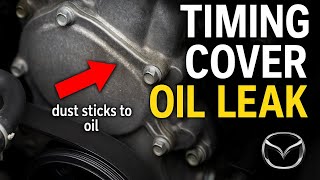
Some 2014-2017 vehicles may develop a slow oil seep from the sealant used on the engine's front timing cover. [4] TSB 01-018/18 (which supersedes 01-005/17) addresses this. This becomes noticeable when dust and grime stick to the oily area. [10] The fix involves removing the cover, cleaning the surfaces, and applying new sealant, a moderately labor-intensive job.
Drive Belt Auto Tensioner Leak & Rattle (TSB 01-019/19)
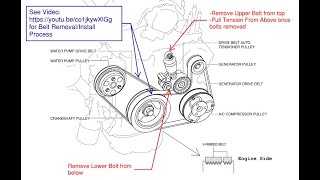
A common issue across many 2013-2019 Skyactiv models is a hydraulic fluid leak from the drive belt tensioner. [1, 2] This can cause a rattling noise from the engine bay. [7, 11] If the tensioner fails, the belt can come off, causing a loss of power steering and alternator function. Mazda released an updated tensioner part to resolve this. [12]
Pro Tip: Always inspect the belt tensioner on a replacement engine before installation. If it looks wet or oily, replace it while the engine is out of the car to save significant future labor.
Misfire Codes (DTC P0300–P0304) from Ignition Coils (TSB 01-014/16)
On some 2013-2016 models, a Check Engine Light with misfire codes may be caused by faulty ignition coils from a specific supplier. [8] The issue was more common in areas with large temperature swings. The TSB provides a procedure to identify the faulty coils (marked with a 4-digit lot number) and replace them with the updated, more reliable Mitsubishi-made parts. [8]
Cold Weather Rough Idle / Misfire (TSB 01-006/18 & 01-002/17)
In regions with freezing temperatures, some vehicles can experience a rough idle and misfire codes only on a cold start. [30] This can be caused by water from the exhaust condensing and freezing inside the main muffler, creating a restriction. This can be misdiagnosed as a major engine problem when it is actually an exhaust issue. [30]
Carbon Buildup on Intake Valves
Like nearly all direct-injection engines, the Skyactiv-G can suffer from carbon buildup on the intake valves over time, typically at higher mileage (150,000+ miles). [17, 22] This happens because fuel is no longer sprayed over the valves to clean them. Symptoms include a gradual loss of power, rough idle, and reduced fuel economy. The only effective remedy is a manual cleaning, often done via walnut shell blasting.
Alternator Belt Slip Recall
A recall was issued for some 2014 Mazda 3 and 2014-2015 Mazda 6 models where driving in heavy rain could cause the alternator belt to slip, leading to a loss of charging. [6, 24]
What Fails at Every Mileage Band
Pro Tip: The mileage bands below describe what typically fails on used replacement units at that specific mileage. The checklists provided are things to do WHILE INSTALLING the purchased engine, not general maintenance for your current engine.
Under 60,000 Miles
The naturally aspirated 2.5L Skyactiv-G is generally considered highly reliable in its early life. Most issues are minor, such as the aforementioned alternator belt slip recall, a leaking drive belt tensioner causing a rattle, or a faulty mass airflow (MAF) sensor causing stalling. Infrequent oil changes can lead to ticking noises from the valve lash adjusters.
- ✓Do during install (required): Inspect the drive belt auto tensioner for any signs of hydraulic fluid leakage and replace if any is found (per TSB 01-019/19).
- ✓Do during install (recommended): Replace the serpentine belt as a low-cost preventative measure. Perform an oil and filter change with 0W-20 full synthetic oil and a high-quality filter.
- ✓Cheap insurance while the engine is out: Replace the rear main seal and front crankshaft seal. These are inexpensive seals that are much harder to replace once the engine is installed.
60,000 - 100,000 Miles
At this stage, preventative maintenance items come due. The drive belt tensioner and the belt itself are recommended for replacement around 75,000 miles. Spark plugs are also scheduled for replacement at 75,000 miles. Some reports mention failing ignition coils (TSB 01-014/16) and contaminated MAF sensors triggering fault codes.
- ✓Do during install (required): Replace spark plugs with OEM-spec Mazda Genuine Laser Iridium spark plugs (NGK ILKAR7L11 / 94124 or Denso ZC20HPR11).
- ✓Do during install (recommended): Replace the drive belt and tensioner assembly if not done previously.
- ✓Cheap insurance while the engine is out: Consider replacing the water pump. While generally durable, it's accessible during an engine swap. Replace all ignition coils with updated parts to prevent future misfire issues.
100,000 - 150,000 Miles
Carbon buildup on intake valves may start to become noticeable, potentially causing rough idle or reduced performance. Some oil consumption may become noticeable past 120,000 miles as engine seals wear. The first major coolant service is due at 120,000 miles or 10 years. Abnormal ticking noises can be caused by hydraulic valve lash adjusters if oil changes were neglected.
- ✓Do during install (required): Perform a full coolant flush and fill with Mazda FL-22 long-life coolant.
- ✓Do during install (recommended): Strongly consider a preventative intake valve cleaning (walnut blasting) to remove carbon deposits while the engine is out and accessible.
- ✓Cheap insurance while the engine is out: Replace the PCV valve and hose to ensure proper crankcase ventilation. Replace the valve cover gasket and spark plug tube seals.
Over 150,000 Miles
Failures at this mileage are typically related to long-term wear and tear. Carbon buildup can become more significant, potentially leading to misfires. Oil consumption due to worn seals or piston rings is more likely. While the timing chain is designed to last the engine's life, wear can become a factor on very high-mileage examples.
- ✓Do during install (required): A thorough intake valve cleaning is highly recommended.
- ✓Do during install (recommended): Inspect the timing chain and guides for any signs of stretching or wear, though replacement is not typically required.
- ✓Cheap insurance while the engine is out: Replace all accessible seals and gaskets, including the oil pan gasket (especially if swapping for AWD/FWD), valve cover gasket, and front/rear main seals.
Real Owner Experiences
| Source | Mileage | What Happened | Cost |
|---|---|---|---|
| RepairPal | ~51,600 | Some 2014 Mazda 6 owners experienced whining noises during acceleration, which was diagnosed as a transmission issue, not a direct engine failure. | Varies (transmission replacement) |
| Reddit r/CX5 | ~57,000 | 2018 CX-5 needed a cylinder head replacement. Paid for the repair with goodwill assistance from Mazda. | $2,818 (after Mazda assistance, originally quoted $10,633) |
| BobIsTheOilGuy Forums | 60,000 | Reviewer noted that after 60,000 miles of hard driving, the engine was sold and continued to be trouble-free to over 100,000 miles. | N/A |
| Reddit r/mazda | ~70,000 | A CX-5 owner reported needing to replace a belt tensioner around this mileage. | $250-$380 |
| Reddit r/CX5 | 78,000 (125,000 km) | 2014 CX-5 blown engine. Quoted CAD $15k+ new dealer, CAD $8-10k used dealer, CAD $5.5k used independent shop. Opted for repair at a private auto body shop. | Not specified |
| BobIsTheOilGuy Forums | 105,000 | An engine that was driven hard for its first 60k miles continued to run like new with no trouble at 105k miles, with regular 7,500-mile oil changes. | N/A |
| BobIsTheOilGuy Forums | 115,000 | An owner with a meticulous maintenance history reported a recurring hard-starting issue when the engine is warm, suspecting a leaking fuel injector. | Not specified |
| Reddit r/CX5 | ~120,000 | 2015 CX-5 needed a new engine. Quoted $9,000 for a used engine (part only), $10,000 for a new engine (part only). | N/A |
| Mazdas247 Forums | 125,000 | A 2015 model owner reported the car has been flawless, with only routine maintenance (brakes, tires, battery) performed. | N/A |
| Reddit r/mazda6 | 130,000 | Catastrophic engine failure. Quoted $7,500 for a replacement engine at the dealer. Decided to sell the car to the dealer rather than repair it. | N/A |
| Reddit r/mazda | 145,000 | A 2017 2.5L owner reported needing to replace the high-pressure fuel pump. | Not specified |
| Reddit r/mazda | 195,000 | Owner of a 2014 model reported replacing a leaky water pump and valve cover gasket at 175k, and ignition coils at 195k. Intake carbon buildup was present but not 'awful'. | Not specified |
| YouTube (DariusBuildz) | 200,000 | A Blackstone oil analysis on a 2014 Mazda 6 showed wear metals were low and the engine 'couldn't look any better,' indicating excellent health with consistent oil changes. | N/A (Oil Analysis) |
| Reddit r/mazda3 | 202,000 | A 2014 model's engine was still running well before the vehicle was totaled in an accident. | N/A |
| Reddit r/mazda6 | Not specified | 2018 Mazda 6 Signature (2.5T Turbo). Quoted $9,000 for parts and labor ($6,000 for the engine itself) at a dealership for a cracked engine header. | N/A |
Repair or Replace?
Deciding whether to repair your current engine or replace it entirely depends on the severity of the failure and the overall value of your vehicle.
When Repair Makes Sense
The following issues are typically repairable without replacing the entire engine.
| Issue | Typical Repair Cost | Notes |
|---|---|---|
| Timing Cover Oil Seepage | $500 - $1,500 | DIY under $150. Dealer quotes can exceed $3,000. |
| Drive Belt Auto Tensioner | $300 - $750 | Dealer quotes range from $450-$755. |
| Misfire Codes (Ignition Coils) | $150 - $400 per cylinder | A standard tune-up repair. |
| Carbon Buildup Cleaning | $600 - $1,700 | Independent shops typically charge $855 to $1,200. |
When Replacement is Smarter
Replacement becomes the smarter option in cases of catastrophic internal engine failure, such as a cracked cylinder head, a thrown rod, severe overheating leading to a warped block, or significant internal coolant and oil mixing. If the estimated cost of repairs approaches or exceeds 50-70% of the vehicle's market value, a used engine replacement is typically more economical. For example, if your car is worth $10,000, spending $7,500 on a repair is not a sound investment.
Replacement Cost Guide
Engine replacement costs vary widely based on part type, location, and shop labor rates. The labor for this job is typically estimated between 10 and 14 hours. [5]
| Item | Estimated Cost (USD) | Notes |
|---|---|---|
| Used OEM Engine | $1,800 - $3,200 | Price depends heavily on mileage and included warranty. Sourced from a recycled vehicle. [3, 15] |
| Remanufactured Engine | $3,200 - $4,400 | A used engine that has been rebuilt to factory specifications with new wear parts. [18] |
| New OEM Engine | $6,000 - $10,000+ | A brand-new engine from Mazda. Prices can be high and availability limited. [9] |
| Installation Labor | $1,200 - $2,500 | Based on 10-14 hours at an independent shop rate of $120-$180/hr. Dealer rates may be higher. [36] |
Freight & Delivery Reality

When ordering a used engine assembly, understand that it will not arrive via standard parcel delivery. A 2.5L Skyactiv-G engine weighs approximately 359 lbs and measures roughly 36" x 36" x 36". It will ship as Less-Than-Truckload (LTL) freight strapped to a wooden pallet. If you are having it delivered to a residential address or a shop without a loading dock or forklift, you must request a truck with a liftgate. Always inspect the engine thoroughly for shipping damage before signing the delivery receipt. A pre-purchase verification interview with the seller is an industry best practice to confirm your VIN, drivetrain, and engine specifications match the unit being shipped.
Installation: Key Considerations

Swapping this engine is a job for an advanced DIYer or a professional shop. Several key steps are required for a successful installation.
Special Tools Required
You will need an engine hoist/crane and a load leveler, an 8mm internal hex (Allen) socket for the drain plug, a 14mm thin-wall 12-point spark plug socket, a precision torque wrench, fuel line disconnect tools, a Mazda-compatible diagnostic scan tool, and an engine timing tool set.
AWD vs. FWD Component Swaps
Pro Tip: If your replacement engine comes from a vehicle with a different drivetrain (e.g., a CX-5 AWD engine going into a FWD Mazda 3), you must swap the oil pan and intermediate shaft mounting brackets from your old engine to the replacement unit. Failure to do so will result in fitment issues.
Required Programming and Resets
You cannot simply drop this engine in and start the car. The vehicle's computer systems must be properly configured using a dealer-level scan tool.
- Immobilizer Relearn: The car's anti-theft system (immobilizer) is tied to the engine control unit (ECU). When a new engine is installed, a security/immobilizer re-marriage procedure is required to allow the car to start.
- Sensor Relearns: Procedures for the crankshaft and camshaft position sensors must be performed to ensure the engine runs smoothly. An Engine Oil Data Reset is also required.
- Harness Transfer: You must reuse your vehicle's original engine wiring harness. Carefully transfer it from the old engine to the new one to ensure all sensor pinouts and connectors match your car's ECU perfectly.
Installation Gotchas
- Valve Cover Torque Sequence: Tighten the fragile plastic valve cover bolts in a spiral sequence from the center outward to only 40 to 61 in-lbs. Overtightening beyond 50 in-lbs can easily strip them.
- High-Pressure Fuel System Safety: Relieve fuel pressure before disconnecting lines and replace sealing O-rings and backup rings.
- 8mm Hex Drain Plug: Use the correct 8mm internal hex socket and torque to 23 to 30 ft-lbs to avoid stripping.
Warning: Mixing generic coolant with Mazda FL-22 can cause gel formation and clogging. Use only FL-22.
Warning: Do not reuse Torque-to-Yield (TTY) bolts, especially the cylinder head bolts. These bolts are designed to stretch when tightened and are for single use only. Reusing them can lead to improper clamping force and catastrophic head gasket failure.
Questions to Ask Your Installer
- Have you worked on Mazda Skyactiv engines before, and are you familiar with the AWD/FWD oil pan and bracket swap procedure?
- Does your parts and labor warranty cover the engine assembly? For how long and for how many miles?
- Will you be inspecting and recommending the replacement of common failure items like the belt tensioner and front/rear seals before installation?
- Is the quoted price inclusive of all necessary fluids, gaskets, and seals (e.g., Mazda FL-22 coolant, 0W-20 synthetic oil, manifold gaskets)?
- Do you have the appropriate Mazda-compatible diagnostic tools to perform the necessary security/immobilizer relearn and sensor calibrations after installation?
- Will you be transferring my original, known-good wiring harness to the new engine, or does the replacement unit come with one that needs to be verified?
- Can you provide photos and documentation (like VIN and mileage) from the donor vehicle for the used engine you are sourcing?
- What is your policy if the used engine arrives and has issues or is not the correct specification?
Before the First Start: Priming and Fluids
You must use new fluids and filters when installing a used engine. Used engines sit on warehouse shelves for months. The oil drains away from the moving parts. If you start the engine dry, the metal parts will scrape together and cause instant damage. You must prime (pre-lube) the oil system before the first real start.
Mandatory Fluids
- Engine Oil: Use 0W-20 full synthetic motor oil and install a brand-new oil filter.
- Engine Coolant: You must use Mazda FL22 coolant. This is a special extended-life fluid designed specifically for Mazda aluminum engines. Using the wrong antifreeze can ruin the water pump and cause the engine to overheat.
Oil Priming Procedure
Follow these steps to pump oil through the engine before letting it run:
- Fill the engine with the correct amount of fresh 0W-20 oil.
- Fill the radiator and cooling system with Mazda FL22 coolant.
- Stop the engine from starting. The easiest way is to remove the fuel pump fuse or relay from the main fuse box.
- Turn the key (or press the start button) to crank the engine for 10 to 15 seconds. The engine will spin but will not start.
- Stop and wait 30 seconds. This gives the starter motor time to cool down so it does not overheat.
- Repeat this cranking step until the red oil pressure warning light on the dashboard turns off. This tells you oil has safely reached the top of the engine.
- Put the fuel pump fuse back into the fuse box. You can now safely start the engine.
Frequently Asked Questions (FAQ)
Q: Will an engine from an All-Wheel Drive (AWD) CX-5 fit in my Front-Wheel Drive (FWD) Mazda 3?
A: Yes, the core long block is the same. However, you must swap the oil pan and intermediate shaft mounting brackets from your original FWD engine onto the AWD replacement engine before installation.
Q: Do I have to get the car's computer reprogrammed?
A: Yes, programming is highly likely to be required. At a minimum, a security/immobilizer re-marriage procedure, crank/cam position sensor relearn, and Engine Oil Data Reset will be necessary using a dealer scan tool for the car to recognize the 'new' engine and allow it to start.
Q: Is this the same as the 2.5 Turbo engine?
A: No. This is the naturally aspirated (non-turbo) 2.5L Skyactiv-G. The 2.5T is a completely different engine with specific components for the turbocharger system, oil/coolant lines, exhaust manifold, and ECU programming, and is not interchangeable. [16]
Q: Why can't I use an engine from a 2018 Mazda 6?
A: Starting in 2018 for the Mazda 6 and CX-5, Mazda added Cylinder Deactivation technology to the 2.5L engine. This system is electronically and mechanically different and is not compatible with the earlier vehicles covered in this guide. [37]
Q: What parts are included with a used engine assembly?
A: A standard used engine assembly typically includes the engine block, cylinder head, oil pan, valve cover, internally lubricated parts (crankshaft, pistons, rods, camshafts, valves, oil pump), timing chain, timing covers, intake manifold, throttle body, fuel injectors, high-pressure fuel pump, and harmonic balancer. It does NOT include the A/C compressor, starter motor, alternator, power steering pump, coil packs, engine wiring harness, ECU, or exhaust manifold.
Q: What specific oil and coolant does this engine need?
A: This engine requires 4.8 US quarts (4.5 liters) of 0W-20 Full Synthetic Oil and a high-quality OEM-equivalent spin-on oil filter. For coolant, you must use Mazda FL-22 long-life coolant to prevent gel formation and clogging.
Helpful Videos
Technical Specifications
Engine Codes: PY-VPS, PYY3, PYY8, PY-VPR; Displacement: 2.5L; Cylinders: 4; Aspiration: Naturally Aspirated; Technology: Skyactiv-G, Direct Injection; Shipping Weight: ~359 lbs; Shipping Dimensions: ~36" x 36" x 36"; Oil Type: 0W-20 Full Synthetic; Oil Capacity: 4.8 US quarts (4.5 liters); Coolant Type: Mazda FL-22; Spark Plugs: NGK ILKAR7L11 / 94124 or Denso ZC20HPR11
We Have This Part in Stock


The information in this article is provided for general reference and educational purposes only. Vehicle specifications, procedures, and part compatibility can vary by production date, trim level, and region. Always consult your vehicle's factory service manual and verify part numbers before purchasing or performing repairs. Safety-critical components such as airbags, seat belts, and braking systems should be installed by a qualified professional.
- Mazda 3:
- Mazda CX-5:
- Mazda 6:
- 🎬 Helpful Videos
- 🛍️ Shop This Part
- Engine Identification: Is This Your Engine?
- Vehicle Fitment
- How to Confirm Fitment on Your Vehicle
- Common Symptoms of Engine Failure
- Diagnostic Flowchart
- Known Problems, Service Bulletins, and Recalls
- Timing Cover Oil Seepage (TSB 01-018/18 & 01-005/17)
- Drive Belt Auto Tensioner Leak & Rattle (TSB 01-019/19)
- Misfire Codes (DTC P0300–P0304) from Ignition Coils (TSB 01-014/16)
- Cold Weather Rough Idle / Misfire (TSB 01-006/18 & 01-002/17)
- Carbon Buildup on Intake Valves
- Alternator Belt Slip Recall
- What Fails at Every Mileage Band
- Under 60,000 Miles
- 60,000 - 100,000 Miles
- 100,000 - 150,000 Miles
- Over 150,000 Miles
- Real Owner Experiences
- Repair or Replace?
- When Repair Makes Sense
- When Replacement is Smarter
- Replacement Cost Guide
- Freight & Delivery Reality
- Installation: Key Considerations
- Special Tools Required
- AWD vs. FWD Component Swaps
- Required Programming and Resets
- Installation Gotchas
- Questions to Ask Your Installer
- Before the First Start: Priming and Fluids
- Mandatory Fluids
- Oil Priming Procedure
- Frequently Asked Questions (FAQ)
- 🎟️ Get 5% Off