

2020-2025 Kia Telluride 3.8L V6 (G6DN): Problems, Identification, and Used Replacement
Identify the G6DN engine, understand what causes catastrophic oil consumption, and learn what to check before buying a used replacement unit.
- The most critical issue is excessive oil consumption; you must manually check the oil level with the dipstick at every fuel fill-up to prevent catastrophic failure.
- When replacing the engine, always upgrade the failure-prone plastic oil filter housing to a more durable aftermarket aluminum unit to prevent future leaks.
- Not all G6DN engines are direct swaps; FWD engines require transferring the oil pan and pickup tube for AWD models, and Hyundai Palisade engines are incompatible.
- After installation, a professional scan tool is required to perform a crankshaft position sensor (CKP) relearn and reset adaptive values to prevent running issues.
- Before installing a used engine, replace spark plugs and intake gaskets, as they are nearly inaccessible once the engine is in the vehicle.
Identifying the Correct 3.8L G6DN Engine

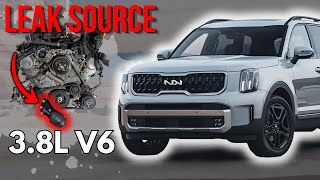
The engine used in the 2020-2025 Kia Telluride is a 3.8-liter V6 gasoline direct injection (GDI) unit, part of the Hyundai-Kia Lambda II engine family. This specific engine is identified by the code G6DN. It is a single-engine option for the Telluride in the North American market. To ensure you are purchasing the correct replacement for your vehicle, you must verify a few key details.
VIN and Engine Code Verification
Before purchasing a used engine, always check your vehicle's identification information:
- Check the VIN: The 8th digit of your vehicle's 17-digit Vehicle Identification Number (VIN) must be 'C'.
- Locate the Engine Code: The engine code 'G6DN' is physically stamped on the front of the engine block, near where the engine connects to the transmission (the bellhousing).
What is Included and Excluded
When buying a used replacement engine from a professional auto recycler, it is important to know what typically comes with the assembly. Based on standard Automotive Recyclers Association (ARA) guidelines, you can expect the following:
| Component Type | Details |
|---|---|
| Included | Cylinder block, cylinder heads, internally lubricated parts (crankshaft, pistons, camshafts, valves), oil pan, valve covers, intake manifold, timing covers, fuel injectors, high-pressure fuel pump, throttle body, harmonic balancer, and the engine wiring harness (where possible). |
| Excluded | A/C compressor, starter motor, alternator, exhaust manifolds, Engine Control Unit (ECU), and power steering pump. You will need to transfer these from your old engine. |
Critical Interchange Information
Warning: Not all 3.8L G6DN engines are a direct swap. Pay close attention to the drivetrain configuration.
- FWD vs. AWD: This specific engine assembly is configured for Front-Wheel Drive (FWD) models. While All-Wheel Drive (AWD) models use the same core engine block, key components like the oil pan, oil pickup tube, and the bracket for the intermediate shaft are different. If you are installing a FWD engine into an AWD Telluride, you must transfer these parts from your original AWD engine.
- Hyundai Palisade Incompatibility: Do not use an engine from a Hyundai Palisade. Although it is the same base G6DN engine, the mounting brackets, wiring harness routing, and the Engine Control Unit (ECU) calibration are different, which will prevent a proper installation. 🎬 Watch this step-by-step Palisade AWD engine swap walkthrough
Common Failure Symptoms

An engine may be nearing the end of its life if you observe one or more of the following symptoms:
- Excessive Oil Consumption: The most widely reported issue is the engine consuming a significant amount of oil between changes, sometimes as much as a quart every 1,000 miles. This can lead to the oil level dropping dangerously low without warning, as the low oil light may not illuminate until it's too late.
- Engine Knocking or Ticking: Strange noises from the engine, often described as ticking or knocking, can occur when the oil level is low. These noises may go away after adding oil, but often indicate that internal damage has already begun.
- Engine Stalling: The vehicle may stall unexpectedly, particularly after it has warmed up or when coming to a stop. This is often a direct result of critically low oil levels.
- Check Engine Light: A persistent check engine light, especially with misfire codes (P0300-P0306), can signal serious engine problems.
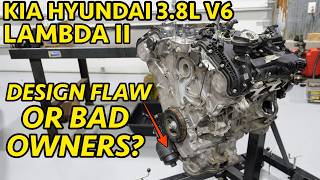
- Metal Shavings in Oil: Finding metallic particles in the engine oil during an oil change is a definitive sign of catastrophic internal engine wear. 🎬 See a teardown of a failed 3.8L engine
Diagnostic Flowchart
Known Issues, Recalls, and Technical Service Bulletins (TSBs)
The 3.8L G6DN engine and the Telluride platform have several documented issues that owners and technicians should be aware of.
Excessive Oil Consumption (Severe)
Affected Years: 2020-2025
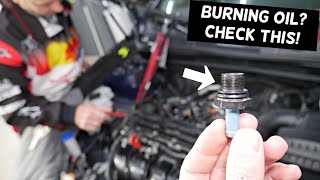
Many owners report high oil consumption, with dealers sometimes stating that burning one quart per 1,000 miles is within specification. The suspected cause is carbon buildup on the piston rings, which are responsible for controlling how much oil enters the combustion chamber. This can lead to low oil levels, engine noise, and eventual engine failure. There is no official recall for this issue, but Kia has conducted oil consumption tests for affected owners.
Pro Tip: Manually check the engine oil level with the dipstick at every fuel fill-up. Do not rely solely on the oil pressure warning light, as it may not activate until the oil level is critically low.
Driveshaft / Intermediate Shaft Rollaway Recall (Severe)
Affected Years: 2020-2024
This major safety recall (NHTSA ID: 24V211000 / 24V214000 / Kia Recall: SC303) involves an intermediate shaft and right front driveshaft that may not have been fully engaged during assembly. Over time, this can damage the splines on the shaft, potentially causing the vehicle to roll away even when in Park if the parking brake is not engaged. Warning signs can include grinding noises or a loss of power. The remedy involves a software update to the Electronic Parking Brake (EPB) and, if damage is found, replacement of the intermediate shaft.
Oil Filter Housing Gasket Leaks (Moderate)
Affected Years: 2020-2025
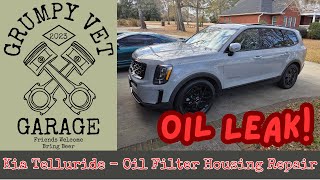
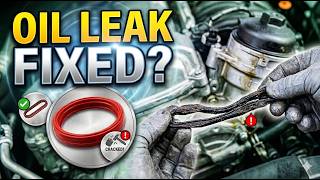
The factory-installed oil filter housing is made of plastic and can become brittle, crack, or warp over time, leading to oil leaks. These leaks are often more noticeable in cold weather. While Kia has offered a warranty extension for this part (up to 15 years / 180,000 miles), many owners and shops recommend upgrading to a more durable aftermarket aluminum housing as a permanent solution.
Camshaft Actuator Dowel Pin Failure (Severe)
Affected Years: Early 2020 models
Some early 2020 models have experienced a failure where the camshaft actuator dowel pin shears off. This sends metal shavings throughout the engine, requiring a complete engine replacement. Always inspect timing components and actuators to ensure they are clean and intact before installation.
Cold Start Misfire (Minor)
Affected Years: 2020MY
A Technical Service Bulletin (TSB ENG228 / NHTSA ID #10187821) was issued for early-production 2020 models that could exhibit a rough idle and misfire codes (P0300-P0306) on a cold start. The official fix is a simple ECM software update performed by a dealer to improve the engine's logic.
ECU Emissions Software Logic Upgrade (Minor)
Affected Years: 2020-2025MY
Kia issued TSB SC357 to perform an ECU software update to address emissions logic. Ensure your vehicle's software is up to date after an engine swap.
What Fails at Every Mileage Band
Pro Tip: The mileage bands below describe the typical condition of the used replacement unit you are purchasing. The checklists provided are critical steps to perform while installing the purchased engine, not maintenance for your current broken engine.
Under 60,000 Miles
Even low-mileage engines can have hidden issues. Excessive oil consumption can manifest as early as 12,000-30,000 miles due to carbon buildup on oil control rings. Camshaft actuator dowel pin failures have been reported around 50,000 miles. The plastic oil filter housing is prone to cracking and leaking even at low mileage, especially in cold weather. Driveshaft and AWD system issues (NHTSA #24V214000) can also occur due to insufficient spline lubrication.
- ✓Do during install (required): Upgrade to an aftermarket aluminum oil filter housing to prevent future leaks. Replace spark plugs and all intake manifold gaskets (as the manifold must be removed for access). Use 7.1 quarts of 5W-30 full synthetic oil (API SN Plus/SP) and an OEM filter. Inspect AWD/driveshaft splines for rust or wear and ensure proper lubrication.
- ✓Do during install (recommended): Perform a GDI intake valve cleaning service (e.g., walnut blasting) to remove carbon deposits. Change the PCV valve. Inspect all timing components, especially camshaft actuators, for any signs of abnormal wear.
60,000 - 100,000 Miles
This is the danger zone for the 3.8L G6DN. Catastrophic engine failures due to unchecked oil consumption are frequently reported between 60,000 and 95,000 miles, often with no low-oil warning light before the event. Carbon fouling of spark plugs and valves is common (reported at 69,100 miles). Transmission issues, including leaks and shuddering, can occur around 73,000 miles.
- ✓Do during install (required): ALL items from the 'Under 60K' band are critical here. Replace all 6 spark plugs with OEM-spec NGK Laser Iridium plugs.
- ✓Do during install (recommended): Replace the serpentine belt and tensioner. Thoroughly inspect and clean the throttle body and intake runners. Perform a complete transmission fluid exchange.
- ✓Cheap insurance while the engine is out: Strongly consider replacing the water pump and thermostat as preventative maintenance.
100,000 - 150,000 Miles
Engines in this range have survived the initial oil consumption hurdles but face long-term wear. Multiple owners report catastrophic engine failure just outside the 100,000-mile powertrain warranty. Transmission replacements have been reported at 108,000 miles. Timing chain wear (rattling) and oil leaks from various gaskets become more common.
- ✓Do during install (required): ALL items from the previous bands are mandatory. Replace all accessible coolant hoses.
- ✓Do during install (recommended): Replace the high-pressure fuel pump as a precautionary measure. Inspect and consider replacing engine and transmission mounts.
- ✓Cheap insurance while the engine is out: Assume the timing chain and guides have wear. It is highly advisable to replace the timing chains, guides, and tensioners while the engine is out.
Real Owner Experiences
The following table highlights real-world failures and costs reported by Kia Telluride owners.
| Source | Mileage | What Happened | Cost |
|---|---|---|---|
| ~12,000 miles | A 2020 model developed excessive oil consumption and required a new engine after stalling at stoplights. The oil consumption test confirmed the need for replacement. | Warranty | |
| YouTube Mechanic Report | 50,000 miles | A 2020 Telluride needed a complete engine replacement because the camshaft actuator dowel pin sheared off, contaminating the engine with metal shavings. | Not Stated (Warranty Implied) |
| 58,000 miles | Owner reported a hard knock under acceleration since 30k miles and noticeable oil consumption by 50k. An oil consumption test showed it burned over a quart in 1,000 miles. | Pending Warranty Claim | |
| 60,000 miles | A 2021 Telluride's engine was replaced under warranty after an oil consumption test showed it burned 1.7 quarts per 1,000 miles. | Warranty | |
| 67,000 miles | Engine seized with no prior warning lights. The engine had burned through approximately 7 quarts of oil in 3 months. The owner was seeking a warranty replacement. | Pending Warranty Claim | |
| 82,000 miles | Sudden catastrophic engine failure due to no oil. Mechanic quoted for a replacement. | $15,000 | |
| CarComplaints.com | 93,200 miles | Catastrophic engine failure due to excessive oil consumption. The owner noted there were no dashboard warning lights before the sudden loss of power. | Not Stated (Owner sold vehicle) |
| CarComplaints.com | 94,000 miles | Internal engine failure. Teardown revealed a stuck oil control ring on cylinder 6 with excessive carbon buildup and scoring on cylinder walls. | Not Stated |
| 97,000 miles | An owner who noticed oil consumption starting at 75,000 miles reported it had progressed to 1 quart every 900 miles. They were told this was 'normal' and a warranty claim would be denied due to non-dealership oil changes. | No repair performed; driving until engine fails. | |
| CarComplaints.com | <100,000 miles | Engine began burning oil and had to be replaced. | $4,000+ |
| 102,000 miles | Catastrophic engine failure just outside of warranty. The owner paid ~$14,000 for a new engine, only to have the transmission begin to fail shortly after. | ~$14,000 (Engine) + ~$4,300 (Transmission) | |
| 109,800 miles | Engine replacement required due to excessive oil consumption found during a dealer test. The quote was for refurbished parts and labor. | ~$10,000 | |
| 115,000 miles | Diagnosed with rod knock failure. Kia dealership refused to assist as it was out of warranty. Owner was seeking advice on using an independent shop with a salvage engine. | $12,000 | |
| 120,000 miles | Owner of a 2020 model reports oil consumption at a rate of approximately 1 quart per 1,000 miles but notes the vehicle still drives well. | Ongoing cost of adding oil. | |
| 130,000 miles | Owner of a 2020 model reports a leaking coolant hose. They previously had the transmission fluid changed at 80k miles and perform 5k mile oil changes. | Cost of hose replacement. | |
| N/A | Engine began knocking and shaking, diagnosed as needing a full replacement. The new engine came with a 12-month/12k-mile warranty. | $11,000 + tax |
Repair or Replace?
Deciding whether to repair your current engine or replace it with a used unit depends heavily on the specific failure mode.
- Leaking Oil Filter Housing Gasket (Typical Cost: $200 - $500): This is a common and relatively minor issue. Repairing it by replacing the plastic housing (or upgrading to aluminum) is always the correct first step before considering engine replacement.
- Cold Start Misfire (2020MY) (Typical Cost: $100 - $250): This is a known issue addressed by TSB ENG228 involving an ECU software update. This is a simple software fix and does not require mechanical engine work.
- Minor Oil Consumption (Typical Cost: $1000 - $2500+): If oil consumption is caught early and is minor (e.g., 1 quart per 1,000-1,500 miles), some owners have had success with procedures like a piston soak or fuel injector cleaning to free up clogged oil rings. This is a gamble but may be worth trying before a full replacement if the engine has not yet suffered damage from low oil levels.
- Blown Head Gasket (Typical Cost: $3,178 - $4,129): If the engine has not overheated severely and the block and heads are not warped, replacing the head gaskets can be viable. However, this is labor-intensive. If the vehicle has very high mileage, the cost of this repair approaches the cost of a lower-mileage used engine, making replacement a more attractive option.
When Replacement is Smarter: Replacement is the recommended path when catastrophic failure has occurred, such as rod knock, a thrown rod, crankshaft bearing failure, or severe internal damage from running with low oil. In these cases, the cost and complexity of a full internal rebuild almost always exceed the cost of swapping in a quality used or remanufactured engine.
Installation Gotchas & Pro Tips
Replacing the 3.8L G6DN is an expert-level DIY job, typically requiring 10-20 shop labor hours. You will need specialized tools, including an engine hoist/crane and heavy-duty load leveler, an engine support fixture (OEM equivalent: 09200-1P100 or 09200-2S100), fuel line disconnect tools, high-quality torque wrenches (1/4" and 3/8" drives), and a Kia Diagnostic System (KDS) or advanced bi-directional scan tool.
- The Plastic Oil Filter Housing Trap: The factory plastic housing is a known failure point. It is highly recommended to upgrade to an aftermarket aluminum oil filter housing assembly while the replacement engine is out of the vehicle and easy to access.
- Pre-Installation Maintenance: The engine is mounted sideways (transversely) in the Telluride. This makes accessing the rear three spark plugs (Cylinders 1, 3, 5) extremely difficult once the engine is installed, as it requires removing the intake manifold. Always install new spark plugs, intake manifold gaskets, and inspect timing components before dropping the engine into the vehicle.
- AWD Parts Transfer: If installing a FWD engine into an AWD Telluride, you must swap the oil pan, oil pickup tube, and intermediate shaft support brackets from your original engine.
- Wiring Harness Compatibility: You must reuse your vehicle's original engine wiring harness to ensure all sensor connectors and pinouts match your specific model year and trim level, even if the replacement engine comes with one.
- Check Your Grounds: Carefully note the location and condition of all engine-to-chassis ground straps. Reconnecting them securely is critical to prevent a host of frustrating electrical problems.
- Driveshaft Engagement: When reconnecting the driveshafts, ensure the intermediate shaft and right front driveshaft are fully seated and engaged as specified in recall SC303 to prevent the dangerous rollaway condition.
Required Consumables at Install
Do not reuse old fluids or gaskets. You will need:
| Item | Specification / Quantity |
|---|---|
| Motor Oil | 7.1 quarts of 5W-30 full synthetic (API SN Plus / SP, ILSAC GF-6 spec) |
| Oil Filter | OEM Kia filter and new drain plug crush washer |
| Coolant | Fresh 50/50 mix of phosphate-organic acid technology (P-OAT) green/blue |
| Gaskets | Intake manifold (upper and lower), exhaust manifold, oil filter housing |
| Spark Plugs | 6 new OEM-spec NGK Laser Iridium |
| Sealant | High-temp RTV silicone |
| Recommended Parts | Main coolant hoses and serpentine belt |
Common Buyer Mistakes
- Ordering FWD for an AWD Vehicle Without Planning: Assuming FWD and AWD engines are identical. AWD requires swapping the oil pan and accessory brackets.
- Reusing the Old Plastic Oil Filter Housing: Reusing the original plastic housing or gaskets to save money, leading to immediate leaks.
- Neglecting to Reset Adaptive Values: Skipping the ECU adaptive reset and crankshaft relearn, causing poor shifting, rough idle, or misfire codes.
- Failing to Inspect the Splines: Forgetting to inspect the right-front intermediate shaft splines, which may be worn or damaged.
- Ignoring Oil Consumption: Failing to manually check the engine oil level regularly via the dipstick after installation.
- Lack of Maintenance Records: Failing to keep meticulous maintenance logs from day one of installation, which can lead to warranty denial.
Freight, Shipping, and Delivery Reality

A used 3.8L G6DN engine is a massive piece of machinery. It weighs approximately 475 lbs and measures roughly 48" x 40" x 38" before crating. Because of this size and weight, it ships as LTL (Less Than Truckload) freight on a pallet—NOT as a standard parcel. If you are having the engine delivered to a residential address or a shop without a loading dock or forklift, you must request a liftgate service. Always thoroughly inspect the engine for any shipping damage before signing the delivery receipt.
Replacement Cost Estimates
Engine replacement costs can vary significantly based on your location, the shop's labor rate, and the type of engine you choose. Shop labor typically runs between $1,500 and $3,000 for the 10-20 hours required.
| Part or Service | Estimated Cost (USD) |
|---|---|
| New OEM Engine | $5,000 - $14,000+ |
| Remanufactured Engine | $5,800 - $7,500 |
| Used OEM Engine | $3,200 - $7,000 |
| Installation Labor | $1,500 - $4,000 |
Arrival Inspection: Compression and Leak-Down
When your used engine arrives, inspect it before installation. A quality used engine should have good internal pressure. You or your installer should perform a compression test or a cylinder leak-down test (a test that pumps air into the cylinder to check for leaks). For the 3.8L G6DN, compression readings should be consistent across all six cylinders. A healthy engine will typically show less than a 10% to 15% difference between the highest and lowest cylinders. If a cylinder has low pressure, contact your seller immediately before installing the engine.
Before the First Start: Fluids and Priming
Never start a used engine dry. Sitting in storage drains the oil from moving parts. You must prime the oil system (build up oil pressure before the engine actually runs) to prevent instant damage.
Always install a brand-new oil filter and fill the engine with fresh oil. The 2020-2025 Kia Telluride 3.8L V6 requires 5W-30 full synthetic motor oil that meets the API SN PLUS or SP standards. The engine holds about 6.9 quarts of oil.
You must also use the correct fresh engine coolant (antifreeze). Use a high-quality, phosphate-based HOAT (Hybrid Organic Acid Technology) coolant designed for Asian vehicles. Do not mix different coolant types, as this can clog the cooling system and cause the engine to overheat.
Frequently Asked Questions (FAQ)
Do I need to program the computer after installing a used engine?
Yes, it is highly recommended. At a minimum, a professional bi-directional scan tool should be used to perform a Crankshaft Position (CKP) Sensor relearn procedure and reset the engine's adaptive learning values. Skipping this step can lead to a rough idle, poor performance, or persistent misfire codes.
Can I use an engine from an All-Wheel Drive (AWD) Telluride in my Front-Wheel Drive (FWD) model?
While not ideal, it is possible. However, you would need to swap your original FWD-specific oil pan and related components onto the replacement AWD engine. It is much simpler to source a direct-fit FWD unit.
What is the most important thing to do after installing a used Telluride engine?
Manually check the oil level with the dipstick frequently. Due to the known oil consumption issues with the 3.8L G6DN engine, you should check the oil at every other fuel fill-up for the first few thousand miles to understand its consumption rate and prevent oil starvation.
What is the expected service life of this engine?
Reports on service life vary significantly and are heavily dependent on maintenance. Some sources suggest a potential of 200,000 to 250,000 miles with proper care. However, many real-world owner reports show catastrophic failures occurring between 60,000 and 100,000 miles, primarily due to unchecked oil consumption. A more realistic expectation for an engine that has not had meticulous oil level monitoring and frequent changes might be 150,000 to 180,000 miles. The single most critical factor for engine longevity is aggressive monitoring and management of oil levels and quality.
What questions should I ask my installer before the swap?
Always ask: Have you worked on a Kia Telluride/Hyundai Palisade 3.8L GDI engine before? Will you be performing a crankshaft position (CKP) sensor relearn and resetting the adaptive values with a scan tool? Can we upgrade the plastic oil filter housing to an aftermarket aluminum one during the swap? Will you inspect the intermediate shaft splines for wear or damage as noted in recall SC303? If this is an FWD engine going into my AWD vehicle, are you comfortable swapping over my original oil pan, pickup tube, and brackets?
Helpful Videos
Technical Specifications
Engine Code: G6DN; Displacement: 3.8 Liters; Configuration: V6; Family: Hyundai-Kia Lambda II; Induction: Gasoline Direct Injection (GDI); VIN Digit 8: C; Oil Type: 5W-30 Full Synthetic (API SN Plus/SP); Oil Capacity: 7.1 quarts; Weight: ~475 lbs
We Have This Part in Stock


The information in this article is provided for general reference and educational purposes only. Vehicle specifications, procedures, and part compatibility can vary by production date, trim level, and region. Always consult your vehicle's factory service manual and verify part numbers before purchasing or performing repairs. Safety-critical components such as airbags, seat belts, and braking systems should be installed by a qualified professional.
- Kia Telluride:
- 🎬 Helpful Videos
- 🛍️ Shop This Part
- Identifying the Correct 3.8L G6DN Engine
- VIN and Engine Code Verification
- What is Included and Excluded
- Critical Interchange Information
- Common Failure Symptoms
- Diagnostic Flowchart
- Known Issues, Recalls, and Technical Service Bulletins (TSBs)
- Excessive Oil Consumption (Severe)
- Driveshaft / Intermediate Shaft Rollaway Recall (Severe)
- Oil Filter Housing Gasket Leaks (Moderate)
- Camshaft Actuator Dowel Pin Failure (Severe)
- Cold Start Misfire (Minor)
- ECU Emissions Software Logic Upgrade (Minor)
- What Fails at Every Mileage Band
- Under 60,000 Miles
- 60,000 - 100,000 Miles
- 100,000 - 150,000 Miles
- Real Owner Experiences
- Repair or Replace?
- Installation Gotchas & Pro Tips
- Required Consumables at Install
- Common Buyer Mistakes
- Freight, Shipping, and Delivery Reality
- Replacement Cost Estimates
- Arrival Inspection: Compression and Leak-Down
- Before the First Start: Fluids and Priming
- Frequently Asked Questions (FAQ)
- 🎟️ Get 5% Off