

2020-2024 Kia Forte 1.6L Turbo G4FJ: Problems, Identification, and Used Replacement
Identify the exact G4FJ engine for your Forte, learn what causes catastrophic failures, and discover what to look for when buying a used OEM replacement.
- You must use an engine specifically from a 2020-2024 Kia Forte with a DCT, as G4FJ engines from other models like the Soul or Veloster are not directly interchangeable.
- Before the first start of a replacement engine, the turbocharger must be manually primed with oil to prevent immediate and catastrophic failure from oil starvation.
- Use only full-synthetic oil meeting API SN Plus or SP specifications and precisely gapped spark plugs (0.026"–0.028") to prevent Low-Speed Pre-Ignition (LSPI) and misfires.
- After installation, an ECU and TCM 'Reset Adaptive Values' procedure is mandatory to prevent severe shifting issues and potential damage to the dual-clutch transmission.
- The high-pressure fuel line is a one-time-use part and must be replaced during the swap to prevent a high-pressure fuel leak and extreme fire hazard.
Engine Identification: Confirming the Correct Part

The 2020-2024 Kia Forte uses a specific version of the 1.6L Turbo "Gamma II" engine, also known by its engineering code, G4FJ. This is an inline 4-cylinder engine with dual overhead camshafts (DOHC), 16 valves, turbocharging, and gasoline direct injection (GDI). Before purchasing a replacement, you must verify that your vehicle is an exact match.
Follow these steps to confirm fitment:
| Verification Method | Specification | Location |
|---|---|---|
| VIN Check | The 8th digit must be 'C'. The 1st digit must be '3'. | Visible through the driver's side of the windshield or on the door jamb sticker. |
| Engine Code | The code 'G4FJ' is stamped on the block. | On the front-left side of the engine block, near the transmission mounting surface. |
| Visual Check | The plastic engine cover should say "Turbo" or "T-GDI". | Top of the engine. |
| Transmission | Must be equipped with the 7-speed Dual-Clutch Automatic Transmission (DCT). | Vehicle build specification. |
Interchangeability and Fitment
While the G4FJ engine design is used in other Hyundai and Kia vehicles like the Soul, Veloster, Elantra N-Line, Seltos, and Kona, this specific assembly is not directly interchangeable with them. Differences in engine mounting points, oil pan design (especially for All-Wheel Drive models), wiring harnesses, and computer (ECU) programming prevent a direct swap. You must source an engine specifically from a 2020-2024 Kia Forte to ensure compatibility.
Common Failure Symptoms
An engine may need to be replaced due to a variety of symptoms that indicate severe internal damage. Look for:
- Sudden, Major Oil Leaks: A known issue involves failures of the oil drain pan assembly, which can lead to rapid oil loss, engine seizure, and even fire.
- Knocking or Seizure: A deep knocking sound from the engine, especially one that gets worse with RPM, often means the bearings inside are worn out. This can quickly lead to the engine locking up, or seizing.
- Persistent Misfires: While often caused by spark plugs or ignition coils, persistent misfire codes (like P0128 or P0300-P0304) that don't resolve with basic repairs can point to deeper issues like loss of compression or carbon-fouled valves.
- Excessive Oil Consumption or Smoke: If the engine is burning a lot of oil, it may indicate worn piston rings or damaged cylinder walls, a problem that a factory technical service bulletin has addressed for some Kia engines.
Diagnostic Flowchart
Known Problems, Recalls, and Technical Service Bulletins (TSBs)

This engine has several documented issues. Always check with a Kia dealer to see if these service campaigns have been performed on your vehicle.
| Identifier | Issue | Description |
|---|---|---|
| NHTSA Investigation PE22009 | Oil Drain Pan Failures | A federal investigation was opened into failures of the oil drain pan assembly. The pan's flimsy construction or improper factory sealing can fail, leading to severe and sudden oil leaks, engine failure from oil starvation, or even engine fires. |
| TSB SA419 | ECU Logic Update for Misfire and Cooling Codes | Kia released a software update for the ECU to address false check engine lights with codes P0128 (cooling system) and P0300-P0304 (misfires). The fix is a simple software reflash performed by a dealer. |
| TSB SA413 | Cold Start Misfire | An ECU update was issued to address rough running, shaking, and misfire codes immediately after a cold start by changing the logic for idle speed and shifting. Verifying spark plug gaps is also part of the process. |
| Design Sensitivity | Low-Speed Pre-Ignition (LSPI) & Spark Plug Sensitivity | This engine is highly sensitive to spark plug gap and oil quality. Incorrect oil can cause LSPI, which destroys pistons. You must use fresh full-synthetic oil meeting API SN Plus or SP specifications and OEM or colder plugs gapped to 0.026" – 0.028". |
| GDI Engine Characteristic | Carbon Buildup on Intake Valves | Like all GDI engines, the G4FJ is prone to carbon buildup on intake valves. This restricts airflow, causing a rough idle, hesitation, and power loss. Periodic professional induction cleaning is required. |
Warning: When transferring parts from your old engine to the replacement, it is critical to clean the intake manifold thoroughly. Transferring a carbon-caked manifold can introduce debris into the new engine's cylinders.
What Fails at Every Mileage Band
Pro Tip: The mileage bands below describe the condition and expected wear of used replacement units at that mileage. The checklists provided are things to do WHILE INSTALLING the purchased engine, not maintenance for your current engine.
Under 60,000 Miles
Even low-mileage engines can have issues. Early production G4FJ engines (relevant to the family) had issues with piston cracking and spark plug disintegration at very low mileage (40,000-50,000 km). The associated 7-speed Dual-Clutch Transmission (DCT) can develop shuddering, hesitation, or slipping at low speeds. Some owners report noticeable oil consumption starting as early as 55,000 miles, requiring frequent top-offs. A TSB was issued for 2021 models for excessive oil consumption which could lead to power loss and engine damage.
- ✓Do during install (required): Replace Spark Plugs. Use high-quality OEM or equivalent plugs and gap them precisely to 0.026" – 0.028". Incorrectly gapped or poor-quality plugs are a known issue.
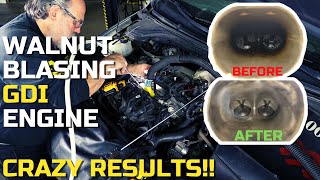
- ✓Do during install (recommended): Perform Walnut Blasting/Intake Valve Cleaning. Carbon buildup is inherent to GDI engines and can start causing issues early. Since the engine is out, this is the perfect time for a thorough cleaning.
- ✓Cheap insurance while the engine is out: PCV Valve Replacement. A faulty PCV valve can contribute to oil consumption; it's an inexpensive part to replace as preventative maintenance.
60,000 - 100,000 Miles
In this range, oil consumption can become more pronounced, with some owners reporting burning a quart every 1,000 miles past 90,000 miles. This can be caused by carbon-clogged piston rings or worn valve seals. Turbocharger failure becomes a risk, especially around 80,000 miles. Symptoms include whining noises or loss of boost, often caused by oil starvation or leaks from the oil feed line. The 7-speed DCT clutch pack may wear out, especially with city driving, with a typical life of 80,000-100,000 miles. Carbon buildup on intake valves becomes more severe.
- ✓Do during install (required): Inspect/Replace Turbocharger. Thoroughly inspect the turbo for shaft play and signs of oil leaks from seals or feed/return lines. If the donor engine's history is unknown or it failed from oil issues, replacing the turbo is cheap insurance.
- ✓Do during install (recommended): Water Pump and Thermostat. While not a widely reported failure point, these are critical wear items. Replacing them while the engine is out is significantly easier than doing it later.
- ✓Cheap insurance while the engine is out: Accessory/Serpentine Belt and Tensioner. Replace the belt and inspect the tensioner for smooth operation and proper tension.
100,000 - 150,000+ Miles
Timing chain stretch can occur, particularly past 100,000-120,000 miles, signaled by a rattle on startup. While designed to last the engine's life, neglect can cause it to stretch earlier. Cylinder wall deformation and wear become a higher risk, leading to severe oil consumption, loss of compression, and eventual engine failure. Complete engine failure is reported more frequently in this range, often just outside of the 100,000-mile powertrain warranty. High-pressure fuel pump failures can also occur.
- ✓Do during install (required): Timing Chain, Guides, and Tensioner. It is highly recommended to replace the entire timing set on any engine in or approaching this mileage band. A failure here is catastrophic.
- ✓Do during install (recommended): Inspect/Replace Oil Pump. Given the known oiling issues and the potential for sludge or debris from a previous failure, inspecting the oil pump and pickup tube is critical. Replacement is recommended for high-mileage units.
- ✓Cheap insurance while the engine is out: All Seals and Gaskets. Replace the valve cover gasket, front and rear main seals, and any other accessible seals to prevent future oil leaks.
Real Owner Experiences
| Source | Mileage | What Happened | Cost |
|---|---|---|---|
| Reddit r/ForteGT | 55,157 miles | Owner noticed being a quart low on oil after 3,000 miles. After an oil change, the level was down 3/4 of a quart after only 700 miles. Smells oil when accelerating but sees no leaks. | N/A (monitoring) |
| Reddit r/ForteGT | 41,000 miles | Transmission developed a "shudder" when creeping from a stop. Dealer identified it as a known issue with the DCT and ordered a replacement part under warranty. | $0 (Warranty) |
| CarComplaints.com | approx. 20,000-40,000 miles | Reports for 2017 models (same engine family) show issues like knocking, stalling, and shaking, sometimes leading to complete engine failure. | Varies, some required engine replacement. |
| Reddit r/ForteGT | 83,000 miles | Owner of a 2021 Forte GT reports the engine is "burning oil at a crazy rate" and is considering fighting with Kia for a new engine. | N/A (undecided) |
| Reddit r/kia | 76,000 miles | Engine blew on a 2021 GT Manual. Both Kia and the extended warranty provider denied the claim, leading to a quoted $14,000 repair. | $14,000 |
| Reddit r/kia | 82,000 miles | The 7-speed DCT was fully replaced under warranty on a 2021 Forte GT. The owner noted the 1.6T engine itself had been issue-free. | $0 (Warranty) |
| Reddit r/kia | 100,000 miles | A 2021 Forte with a history of on-time oil changes required a complete new engine. The dealership quoted $6,500 for the replacement. | $6,500 |
| Reddit r/ForteGT | 150,000 miles | Owner of a Kia K5 with the same engine family traded the car in at this mileage, implying the end of its reliable service life for them. | N/A (Vehicle Traded) |
| Globalnews.ca | ~146,000 km (90,000 miles) | Owner of a 2016 Forte (related engine) was told she needed a new engine and catalytic converter due to excessive oil consumption, but was past the warranty period. | $11,322 (Quoted) |
| 100,875 miles | 2020 Forte GT-Line engine locked up. Kia offered to pay for the engine but not the labor. The owner was left to pay approximately $3,000 for labor. | ~$3,000 | |
| 100,000 miles | 2021 Forte owner was just out of warranty and was exploring options, including seeking recourse from Kia corporate. A commenter noted their coworker had Kia pay for the engine but was responsible for $3,000 in labor. | Undetermined, facing a $6,500 bill. | |
| 58,000 miles | 2023 Forte GT owner noted another user in the thread with a 2022 Forte GT had their engine lock up due to oil consumption; a new 0-mile engine was ordered under warranty. | $0 (under warranty) | |
| 61,000 miles | 2021 Forte purchased used suffered sudden oil loss and engine knocking. The Kia dealership stated a new engine was required. The owner was working with Carmax and Kia corporate to find a solution as the second-owner warranty had just expired. | Pending, but facing a total loss on a car with a $15k loan. | |
| Unknown | Unknown Forte owner quoted $10,000 total ($3,000 for the engine, $7,000 for labor). The owner, who worked at an independent shop, felt the labor quote was excessively high. Commenters agreed, stating labor should be in the 8-15 hour range, costing closer to $2,000-$4,000. | Seeking a second opinion due to the high quote. |
Repair or Replace?

Deciding whether to repair your current engine or replace it entirely depends on the failure mode.
- When Repair Makes Sense: Issues like carbon buildup on intake valves are maintenance items. If symptoms like rough idle, misfires, and power loss are present, a cleaning service should be the first step. Walnut shell blasting is the most effective method, typically costing $350 - $800. An oil pan leak is also repairable if caught early, costing $400 - $1,500 depending on whether the subframe must be removed for access. Ignoring this leak is a direct path to catastrophic engine failure.
- When Replacement is Smarter: Replacement is the only viable option in cases of catastrophic failure, such as engine seizure from oil starvation (often linked to the oil pan issue or high consumption), jumped timing causing piston-to-valve contact, or severe internal bearing failure. Many owner reports indicate that by the time major symptoms appear, the engine is beyond economical repair.
Replacement Cost
The cost of replacing a G4FJ engine depends on the type of replacement unit you choose. Labor costs for the swap are significant and should be factored into the total price.
| Part Type | Estimated Cost (Part Only) | Notes |
|---|---|---|
| Used OEM | $2,300 – $3,900 | Sourced from a recycled vehicle. Mileage and condition vary. Prices can be lower but may reflect higher mileage. |
| Remanufactured | $3,500 – $4,500 | Disassembled, cleaned, inspected, and rebuilt with new or re-machined components. Often comes with a better warranty than used parts. |
| New OEM | $3,000 – $5,000+ | A brand new, zero-mile long block from Kia or a specialized importer. Prices can vary significantly based on the seller. |
| Labor | $1,200 – $3,000 | Shop estimates range from 8 to 15 hours. This can vary by shop rate and region. Some dealer quotes can push labor as high as $7,000. |
Installation and Programming
Required Tools
This is an Advanced / Expert level DIY job. You will need specialized tools, including:
- Engine hoist/cherry picker with a load leveler
- High-pressure fuel line disconnect tool
- Torque wrench with an angle gauge
- Bidirectional OBD-II scan tool (capable of resetting adaptive values / security relearn, such as Kia GDS)
Required Consumables
Do not reuse old fluids or one-time-use parts. You must have the following on hand:
- Engine Oil (Full synthetic meeting API SN Plus, SP, or ACEA C5/C6 specifications, typically 5W-30 or 0W-30/0W-20)
- OEM Kia Oil Filter
- Engine Coolant (Phosphate-organic acid technology [P-OAT] green or pink coolant)
- Spark Plugs (OEM or high-quality colder plugs gapped precisely to 0.026" – 0.028")
- High-Pressure Fuel Pipe (One-time-use crush-flare component)
- Intake Manifold Gasket
- Exhaust Manifold / Turbocharger Inlet Gasket
- Turbocharger oil feed and return line gaskets/washers
- High-pressure fuel pump O-ring
- Accessory/Serpentine Belt
Key Installation Steps & 'Gotchas'
Installing this engine is an advanced job. Several steps are critical for success and to avoid damaging the new engine or transmission.
Warning: This is the most critical step. Before starting the engine, you must pull the fuel pump fuse, fill the turbo's oil feed port with fresh oil, and crank the engine in 5-second intervals until the oil pressure light goes out. Failure to do this will destroy the turbocharger from oil starvation within seconds.
Warning: The metal fuel line that connects to the high-pressure fuel pump (HPFP) is a one-time-use part. It must be replaced with a new one. Reusing the old line will cause a fine, high-pressure fuel spray under the hood, presenting an extreme fire hazard.
- High-Pressure Fuel Pump (HPFP) Alignment: Rotate the engine to Top Dead Center (TDC) on the compression stroke so the camshaft drive lobe is at its lowest point. Tighten the pump's mounting bolts evenly in small increments to avoid bending the shaft or cracking the mounting boss.
- Torque-to-Yield (TTY) Bolts: Cylinder head bolts cannot be reused. New head bolts must be torqued to 42 Nm, followed by two sequential 90-degree turns.
- Spark Plugs: Do not use off-the-shelf plugs without checking the gap. Factory plugs are often gapped too wide (0.032" or wider) for the 1.6T engine under boost, leading to immediate random misfires (P0300) and hesitation.
- DCT Flexplate Alignment: Ensure the flexplate and dual-clutch splines are perfectly aligned. Never use the bellhousing bolts to force the engine and transmission together.
- Wiring Harness: You must reuse your vehicle's original engine wiring harness to guarantee complete compatibility with your vehicle's specific options and ECU pinouts.
- Sensor Fragility: Be careful not to damage the Crankshaft Position Sensor, Camshaft Position Sensors, or other plastic connectors during the swap.
- Ground Straps: Ensure all engine-to-chassis ground straps are clean and securely reconnected.
Pro Tip: Before installation, rotate the engine to Top Dead Center (TDC) on the compression stroke. This ensures the camshaft lobe for the high-pressure fuel pump is at its lowest point, preventing damage to the pump during installation.
Required Programming
After the engine is installed, specific computer programming is required. This is not optional and requires a professional-grade bidirectional scan tool.
A "Reset Adaptive Values" procedure must be performed for both the Engine Control Unit (ECU) and the Transmission Control Module (TCM). Because this engine is paired with a Dual-Clutch Transmission (DCT), failing to reset the TCM will cause it to use old clutch wear data, leading to severe shuddering, harsh shifting, and potential transmission damage. A Crankshaft Position Sensor (CKP) relearn is also highly recommended to ensure accurate timing and misfire detection. Additionally, an immobilizer re-marriage procedure may be required to sync the ECU with the vehicle's security system.
Questions to Ask Your Installer
- Have you confirmed this used engine is from a 2020-2024 Forte with a DCT and not from a Veloster, Soul, or other G4FJ application?
- Will you be priming the turbocharger with fresh oil before the first start?
- Are you replacing the high-pressure fuel line and its gaskets with new OEM parts?
- Will you be performing the mandatory ECU and TCM 'Reset Adaptive Values' procedure with a Kia-compatible scan tool?
- Do you recommend cleaning the intake valves on the intake manifold before transferring it to the new engine?
- What is the condition of the turbocharger on the donor engine, and should my original be inspected before transfer?
- Will you be replacing all required one-time-use gaskets and seals, such as the intake manifold gasket and turbo gaskets?
- What brand and gap will you be using for the new spark plugs?
- Can you confirm all ground straps will be cleaned and securely reconnected?
Freight & Delivery Reality

When ordering a used engine assembly, understand that it will not arrive in a standard cardboard box. A complete G4FJ engine assembly weighs approximately 350 lbs and measures roughly 36" x 36" x 32" before crating. Because of this size and weight, it ships as LTL (Less-Than-Truckload) freight on a wooden pallet.
Delivery requires a loading dock, a forklift, or a truck equipped with a liftgate. Always inspect the engine thoroughly while the delivery driver is present before signing the bill of lading. Look for any damage to plastic sensors, the oil pan, or the valve cover that may have occurred during transit. A pre-purchase verification interview with the seller is an industry best practice to ensure you are getting the exact VIN C, Mexico-built engine you need.
Frequently Asked Questions (FAQ)
What is included in a typical used engine assembly?
A used engine assembly, often called a "long block," typically includes the engine block and cylinder head with all their internal parts (crankshaft, pistons, camshafts, valves). It also usually includes the oil pan, valve covers, intake manifold, timing covers, timing chain assembly, fuel injection system (fuel rail, injectors, high-pressure fuel pump), and harmonic balancer. Accessories like the A/C compressor, alternator, starter, power steering pump, exhaust manifold, engine wiring harness, and turbocharger assembly are generally not included and must be transferred from your old engine.
Should I replace the turbocharger at the same time?
It depends on why the original engine failed. If the failure was due to oil starvation (like a failed oil pan or pump), you should assume the turbocharger was also damaged and replace it. Transferring a bad turbo to a good engine can cause the new engine to fail by sending metal debris into the oil system.
Can I use a cheaper oil to save money?
No. This is a turbocharged, direct-injection engine that is very hard on its oil. You must use a high-quality, full-synthetic oil that meets API SN Plus or SP specifications. Using conventional or low-quality oil can lead to turbo failure, oil consumption, and a severe issue known as Low-Speed Pre-Ignition (LSPI), which can destroy the pistons.
Do I need to reprogram the computer after installing the engine?
Yes. You must perform a "Reset Adaptive Values" procedure for both the Engine Control Unit (ECU) and the Transmission Control Module (TCM). A Crankshaft Position Sensor (CKP) relearn is also highly recommended, and an immobilizer re-marriage may be required. This requires a professional bidirectional scan tool.
Why is my high-pressure fuel line leaking after the swap?
The high-pressure fuel pipe is a one-time-use crush-flare component. If your installer reused the old line instead of installing a new one, it will almost always result in a fine, high-pressure fuel spray under the hood, presenting an extreme fire hazard.
What is the expected service life of the G4FJ engine?
With meticulous maintenance, the G4FJ engine can last between 150,000 and 200,000 miles. However, this is highly dependent on proactive maintenance, specifically strict adherence to oil change intervals with high-quality full-synthetic oil and periodic intake valve cleaning every 30,000-50,000 miles.
Helpful Videos

Technical Specifications
Engine Code: G4FJ; Engine Family: Gamma II; Displacement: 1.6L; Configuration: Inline 4-Cylinder; Valvetrain: Dual Overhead Camshafts (DOHC), 16-Valves; Induction: Turbocharged; Fuel System: Gasoline Direct Injection (GDI); VIN Identifier (8th Digit): C; VIN Identifier (1st Digit): 3 (Mexico built); Paired Transmission: 7-speed Dual-Clutch Automatic Transmission (DCT); Spark Plug Gap: 0.026" – 0.028"; Oil Specification: API SN Plus or SP Full Synthetic; Weight (Approximate): 350 lbs; Dimensions (Approximate): 36" x 36" x 32"
We Have This Part in Stock


The information in this article is provided for general reference and educational purposes only. Vehicle specifications, procedures, and part compatibility can vary by production date, trim level, and region. Always consult your vehicle's factory service manual and verify part numbers before purchasing or performing repairs. Safety-critical components such as airbags, seat belts, and braking systems should be installed by a qualified professional.
- Kia Forte:
- 🎬 Helpful Videos
- 🛍️ Shop This Part
- Engine Identification: Confirming the Correct Part
- Interchangeability and Fitment
- Common Failure Symptoms
- Diagnostic Flowchart
- Known Problems, Recalls, and Technical Service Bulletins (TSBs)
- What Fails at Every Mileage Band
- Under 60,000 Miles
- 60,000 - 100,000 Miles
- 100,000 - 150,000+ Miles
- Real Owner Experiences
- Repair or Replace?
- Replacement Cost
- Installation and Programming
- Required Tools
- Required Consumables
- Key Installation Steps & 'Gotchas'
- Required Programming
- Questions to Ask Your Installer
- Freight & Delivery Reality
- Frequently Asked Questions (FAQ)
- 🎟️ Get 5% Off