

2014-2018 Jeep Wrangler 3.6L Pentastar V6: Problems, Identification, and Used Replacement
Identify the ERB engine, understand what kills it, and learn when to replace it with a used OEM unit.
- Before purchasing, verify fitment using the 8th VIN digit ('G') and, for 2018 models, the 6th VIN digit ('W') to confirm it is the correct JK-specific ERB engine.
- The most common failures are the plastic oil filter housing and rocker arm wear ('Pentastar Tick'); proactively replacing the housing with an aluminum unit during any major engine work is highly recommended.
- After installation, a Crankshaft Position (CKP) sensor relearn procedure is mandatory using a professional scan tool to prevent check engine lights, misfires, or a no-start condition.
- Always use the correct Mopar OAT coolant (MS-12106) and specified 5W-20 or 5W-30 oil (MS-6395) to prevent catastrophic cooling system or engine damage.
- The P06DD trouble code indicates a critical oil pump failure that can quickly destroy the engine; do not continue to drive the vehicle if this code is present.
Is This the Right Engine for Your Jeep?

The engine used in the 2014-2018 Jeep Wrangler is the 3.6L Pentastar V6, identified by the engine code ERB. This is a very common engine across the Chrysler, Dodge, and Jeep lineup, but the version used in the Wrangler JK is unique. It has a specific oil pan, timing cover, accessory mounts, and intake manifold that prevent direct interchange with Pentastar engines from other vehicles like the Grand Cherokee or Ram 1500.
How to Confirm Fitment
Before buying a replacement engine, check your vehicle's Vehicle Identification Number (VIN), which is a 17-digit code found on the driver's side dashboard and door jamb.
| VIN Digit | Required Code | Significance |
|---|---|---|
| 8th Digit | 'G' | Identifies the 3.6L Pentastar engine for this platform. |
| 6th Digit (2018 Models Only) | 'W' | Confirms you have the older 'JK' body style. |
| 6th Digit (2018 Models Only) | 'X' | Indicates the newer 'JL' body style, which uses a different, incompatible engine. |
Warning: 2018 was a split production year. This engine only fits the Wrangler JK, not the redesigned Wrangler JL that was also sold as a 2018 model. A quick visual check is the door handles: JK models have a push-button, while JL models have a pull-out grip.
You can also verify the current oil filter housing cap style. A smooth top indicates the correct 2014+ style, while a protruding hex nut indicates a potential older retrofit. Finally, the engine's serial number is stamped on the driver's side of the cylinder block, near the transmission flange. This can be used for final verification.
Common Problems and Failure Symptoms

Several known issues can lead to engine failure or require significant repairs. If you experience these symptoms, a complete used engine may be a cost-effective solution compared to complex internal repairs.
Rocker Arm / Lifter Failure ('Pentastar Tick')
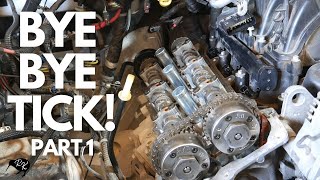
A ticking or tapping sound from the top of the engine that increases with RPM is a classic sign of this issue. It's caused by premature wear of the roller finger followers (rocker arms). If ignored, this can lead to damaged camshafts and catastrophic engine failure. A Technical Service Bulletin (TSB) for an earlier version of this engine, TSB 09-002-14, addressed misfires on the left cylinder head due to valve seat/guide wear, which was more common on 2011-2013 models. While the issue is less prevalent in 2014-2018 models, rocker arm wear remains a known problem affecting models up through 2020.
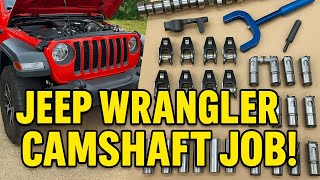
🎬 Watch: Step-by-step guide to replacing lifters and rocker armsOil Filter Housing / Cooler Assembly Leaks
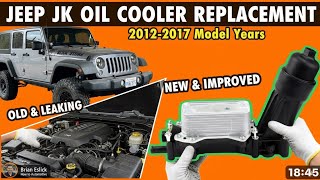
This is one of the most common failures. The original housing is made of plastic and sits in the 'V' of the engine between the cylinder heads. Over time, it can crack or warp from heat, causing significant oil and/or coolant leaks. Symptoms include:
- A puddle of oil on the ground.
- The smell of burning oil.
- Oil pooling in the engine valley, which can be checked by inserting a long dowel next to the housing.
- Oil mixing with coolant, creating a milky substance in the coolant reservoir.
Chrysler addressed this with STAR Case S1809000007 and TSB 9003694 for various models. Many owners and shops recommend replacing the plastic original with a more durable aluminum aftermarket unit during an engine swap.
🎬 See how to replace the oil filter housingOil Pump Failure (DTC P06DD)
The diagnostic trouble code P06DD indicates the dual-stage oil pump is stuck in low-pressure mode. This starves the engine of oil at higher RPMs (typically above 3,000-3,500 RPM), which can quickly lead to severe internal damage. The check engine light will illuminate, and the vehicle may enter a "limp mode," limiting engine speed. While sometimes caused by a low oil level or the wrong type of oil filter, it often requires replacing the entire oil pump assembly, as noted in TSB 9003694.
Front Engine Cover Oil Weep
Some 2017 models may experience an oil weep from the right-side front engine cover. This is addressed by inspecting and replacing the gasket under TSB 09-006-17 and RRT 17-098.
Recalls for 2017-2018 Models
Two significant recalls affect certain model years:
| Recall Number | Affected Models | Issue | Remedy |
|---|---|---|---|
| NHTSA 18V524000 (Chrysler U87) | Some 2017-2018 Wranglers | A faulty voltage regulator on the PCM circuit board could fail, causing the engine to stall or fail to start. | Free replacement and reprogramming of the PCM by a dealer. |
| NHTSA 16V849000 | Some 2017 models | A crack in the fuel tank control valve could cause a fuel leak during a rollover, increasing fire risk. | Free recall remedy performed by dealers. |
What to Expect When Buying a Used Engine
A used engine is typically sold as a "complete assembly." Based on standard auto recycling industry practices, this includes the core internal components but not the external accessories.
| Component Status | Included Parts |
|---|---|
| What's Included | The cylinder block and heads, crankshaft, pistons, connecting rods, camshafts, lifters, rocker arms, timing chains, timing tensioners, oil pan, valve covers, timing covers, intake manifold, throttle body, fuel rail, fuel injectors, and harmonic balancer. |
| What's Not Included | The A/C compressor, starter motor, alternator, power steering pump, exhaust manifolds, and engine wiring harness. You must transfer these parts from your old engine. |
Replacement Cost
The cost of replacing your Wrangler's engine varies based on the type of replacement unit and local labor rates.
| Part or Service | Estimated Cost (USD) |
|---|---|
| Used OEM Engine | $2,400 - $4,000 |
| Remanufactured Engine | $4,600 - $6,300 |
| New OEM Crate Engine | $8,000 - $11,500+ |
| Installation Labor (12 to 20 hours) | $1,440 - $4,000 |
Installation and Setup

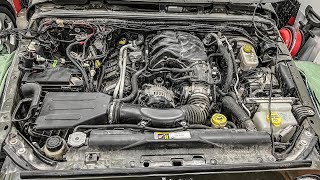
Swapping an engine is an advanced to expert-level job best left to experienced mechanics. 🎬 Watch: Complete Jeep Wrangler JK engine removal walkthrough It typically takes between 12 and 20 shop hours.
Key Considerations
- Special Tools: The job requires an engine hoist and load leveler, E-Torx socket set (E10, E12, E14, E16), fuel line disconnect tools, a torque wrench (low-inch-pound and high-foot-pound), and special camshaft phaser locking tools (Miller Tool 10200A, 10202, or 10322).
- Wiring Harness: You must reuse the original engine wiring harness from your vehicle. A harness from the donor engine may have minor pinout or connector differences depending on model year and transmission options.
- New Consumables: Always install a new rear main seal, 6 new iridium spark plugs (gap 0.043"), a thermostat housing gasket, a PCV valve, and all relevant gaskets (upper and lower intake manifold, exhaust, valve cover) when the engine is out.
Programming and Calibration
This engine is not a simple plug-and-play swap. After installation, the vehicle's computer requires a Crankshaft Position (CKP) sensor relearn procedure, also known as a Cam-Crank Correlation Relearn. Some models may also require a Security Key Re-marriage. This synchronizes the engine's sensors with the PCM. Failure to perform this step can result in a flashing check engine light, misfire codes, or a no-start condition. This procedure requires a dealer-level scan tool (like wiTECH) or a high-end professional bidirectional scanner.
Warning: Several installation mistakes are common with this engine. Always use a torque wrench, especially on the plastic oil filter housing (strictly 106 in-lbs / 12 N-m) and intake manifold bolts (106 in-lbs / 12 N-m). Use the correct 2014+ style cartridge oil filter with the bottom nipple (Mopar 68191349AC) and the specified Mopar OAT coolant to avoid catastrophic damage.
Diagnostic Flowchart
What Fails at Every Mileage Band
Pro Tip: The mileage bands below describe what to expect from used replacement units of that mileage. The checklists provided are things you should do WHILE INSTALLING the purchased engine, not general maintenance for your current vehicle.
Under 60,000 Miles
Even at low mileages, the "Pentastar Tick" resulting from rocker arm and lifter failure can occur, sometimes requiring camshaft replacement if not addressed promptly. The plastic oil filter housing/cooler assembly can also crack or its seals can fail, leading to significant oil or coolant leaks. This is sometimes caused by improper service, such as over-tightening the oil filter cap. Early production year (pre-2014) models were known for a specific cylinder head failure, though this is less common in the 2014-2018 range.
- ✓Do during install (required): Replace the entire oil filter housing/cooler assembly with a new high-quality OEM or reputable all-aluminum aftermarket unit (e.g., Dorman). This is the most common failure point and is much easier to access with the engine out. Use fresh, correct-spec Mopar OAT coolant, 6 quarts of engine oil (5W-20 or 5W-30 meeting MS-6395 spec), and a new oil filter.
- ✓Do during install (recommended): Replace the PCV valve. Install new, high-quality Iridium spark plugs. Replace all required gaskets (intake manifold, valve covers, etc.) as they are already being removed.
- ✓Cheap insurance while the engine is out: Inspect the rocker arms and camshaft lobes for any early signs of scoring or wear.
60,000 to 100,000 Miles
Rocker arm and lifter failure remains a primary concern, often appearing in this mileage range. Oil filter housing/cooler assembly leaks are very common, with many failures reported between 70,000 and 120,000 miles. Symptoms include oil in the engine valley, dripping down the bellhousing, and a burning oil smell. Oil pump failures can occur, sometimes triggering a P06DD diagnostic trouble code. Cooling system components like the water pump and thermostat can also fail.
- ✓Do during install (required): If not already done, replace the oil filter housing/cooler assembly with a new OEM or quality aluminum aftermarket unit.
- ✓Do during install (recommended): Replace all 24 rocker arms and lifters as a preventative measure, as this is the prime mileage for failure. Consider replacing the water pump and thermostat while access is easy.
- ✓Cheap insurance while the engine is out: Replace the serpentine belt and tensioner. Ensure all engine and chassis ground straps are clean, secure, and correctly reinstalled.
100,000 to 150,000+ Miles
With proper and proactive maintenance, the 3.6L Pentastar engine can reliably last between 200,000 and 250,000 miles. However, rocker arm/lifter failure is highly probable if not already addressed. Oil filter housing/cooler leaks are almost an expected maintenance item by this point. Oil pump failure becomes a more significant risk. Timing components may show wear, although the timing chains themselves are generally robust. Fuel injectors may begin to fail, causing misfires.
- ✓Do during install (required): Replace the oil cooler, rocker arms, lifters, water pump, and thermostat. Assume these are mandatory replacements.
- ✓Do during install (recommended): Replace all 6 fuel injectors. Replace the rear main seal. For manual transmissions, install a new pilot bearing in the crankshaft.
- ✓Cheap insurance while the engine is out: Inspect and consider replacing engine sensors like camshaft and crankshaft position sensors. Replace the serpentine belt, tensioner, and idler pulleys.
Real Owner Experiences
The following table highlights real-world failures and repair costs reported by Jeep owners with the 3.6L Pentastar engine.
| Source | Mileage | What Happened | Cost |
|---|---|---|---|
| Reddit r/Jeep | 34,000 miles | Rocker arms failed, damaging the intake cam. | Not specified. |
| Reddit r/Jeep | 28,000 and 34,000 miles | Needed rocker arm replacement twice on a Jeep Gladiator (JT) with the same engine family. | Not specified. |
| Jeep Wrangler Forums | 12,500 miles | Heard valves ticking, shop found worn rocker arms had grooved the intake cam lobes. Both sides of the engine required repairs. | $2,000 |
| JK-Forum.com | 49,000 miles | Oil found dripping down the engine, diagnosed as a leaking oil cooler housing. | Not specified. |
| YouTube Comment | 79,000 miles | Developed a bad ticking sound, requiring replacement of all 24 rocker arms and lifters. | DIY repair, parts cost not specified. |
| Reddit r/Jeep | 80,000 miles | The plastic oil filter housing cracked and was replaced with an aluminum version. | Not specified. |
| Reddit r/Jeep | 89,000 miles | Engine started misfiring and consuming large amounts of oil after developing a tick around 60,000 miles. A cylinder was found full of oil and the oil pan contained metal shavings. | Not specified, engine still running with issues. |
| Reddit r/Jeep | 95,000 miles | Oil cooler housing was replaced. No engine ticking reported yet. | Not specified. |
| Reddit r/Jeep | 106,000 miles | Needle bearings in a rocker arm failed, damaging a camshaft. Repair cost was significant. | $3,400 |
| BobIsTheOilGuy Forums | 117,000 miles | Original oil cooler assembly failed, leaking oil everywhere. Owner replaced it along with spark plugs and valve cover gaskets. | $300 for OEM part (self-installed). |
| Reddit r/Jeep | 125,000 miles | One rocker arm went bad on the passenger side; owner replaced all on that side. | DIY repair. |
| Expedition Portal | 234,000 miles | Owner of a 2014 JK reported replacing the oil cooler twice (upgrading to metal the second time) and two thermostats, but the engine still runs strong. | Not specified. |
| 120,000 miles | Did not proceed with repair due to high cost. | Quoted $10,000 - $11,000+ | |
| unknown | Owner reported spending $11,500 for a brand new engine and labor. | $11,500 | |
| Jeep Wrangler JK Forum | 122,000 miles | Owner was deciding between a remanufactured engine and a used one after discovering a bad camshaft during a rocker arm repair. | Quoted $5,746 (Jasper reman) + $1,800-$2,500 (labor) |
| 65,000 miles | Dealer quoted for rocker arm and lifter failure. | Quoted $4,453 | |
| JLwranglerforums.com | 115,000 miles | Dealer was replacing passenger-side cam and rockers, with potential for more if the driver's side was also damaged. | $2,600+ |
| unknown | Owner reported a $1,600 repair for a dual-stage oil pump replacement to fix a P06DD code. | $1,600 | |
| 130,000 miles | Dealer replaced the oil filter housing and spark plugs. | $1,100 |
Repair or Replace?
Deciding whether to repair your current engine or replace it entirely depends on the extent of the damage and the cost of labor.
When Repair Makes Sense
| Repair Scenario | Estimated Cost | Notes |
|---|---|---|
| Rocker Arm / Lifter Failure | $950 - $4,500 | Cost-effective if caught early before camshafts are damaged. Costs increase significantly if camshafts also need replacement ($300+ per cam). |
| Oil Filter Housing / Cooler Leaks | $900 - $1,300 | A common and expected repair. Many owners upgrade to a more durable aluminum aftermarket housing. |
| Oil Pump Relief Valve Failure | $972 - $1,600 | Standard repair unless there is widespread engine damage from oil starvation. |
When Replacement is Smarter
Engine replacement becomes the smarter option when multiple major failures occur simultaneously, or when a primary failure (like a failed oil pump or severe rocker arm wear) has been ignored, leading to widespread internal damage like scored camshafts, bearing failure, or a seized engine. If the estimated cost of repairs approaches or exceeds the price of a quality used or remanufactured engine ($3,000 - $6,000), replacement offers better long-term value and often comes with a warranty.
Questions to Ask Your Installer
Pro Tip: Print these questions and take them with you when you talk to your mechanic to ensure you get clear, comprehensive answers about your repair options.
- Have you confirmed the extent of the internal damage? (e.g., are the camshafts scored? Is there metal in the oil pan?)
- What is the total 'all-in' cost for the repair, including all parts, fluids, and labor?
- If I choose a replacement engine, what is the source, mileage, and warranty on the unit you are quoting?
- Does your quote for a replacement include swapping over my original accessories and performing the necessary computer relearn procedures?
- While the engine is out, what other 'while you're in there' parts do you recommend replacing, such as the rear main seal, water pump, or the oil filter housing assembly?
- Can you provide a detailed breakdown of the costs comparing the repair of my current engine versus installing a used or remanufactured unit?
- What is the warranty on your labor and the parts you are installing?
Freight and Delivery Reality

If you decide to purchase a used replacement engine, it is important to understand how it will arrive. This engine assembly weighs approximately 473 lbs and measures roughly 34" x 32" x 34" before crating. Because of its size and weight, it ships as LTL (Less Than Truckload) freight on a wooden pallet. It will NOT arrive via standard parcel services like UPS or FedEx.
Warning: Delivery requires a loading dock, a forklift, or a truck equipped with a liftgate to safely lower the pallet to the ground. Always inspect the engine thoroughly for any shipping damage before signing the delivery receipt.
Additionally, a reputable supplier will conduct a pre-purchase verification interview to ensure you are getting the exact ERB engine for your JK Wrangler, confirming details like your VIN and door handle style.
Arrival Inspection: Compression and Leak-Down
When your used engine arrives, test the cylinders before installing it. A compression test measures the pressure inside each cylinder. For the 3.6L Pentastar, a healthy engine should show between 150 and 170 PSI (pounds per square inch) in all six cylinders. The most important rule is consistency. No single cylinder should be more than 10 to 15 percent lower than the highest one.
You should also perform a leak-down test. This pushes compressed air into the cylinder to see how much escapes. A good used engine should have less than 10 to 15 percent air loss. If air leaks heavily out of the exhaust or intake, the engine has bad valves. If air pushes out of the oil cap, the piston rings are worn.
Before the First Start: Fluids and Priming
Never start a used engine dry. Sitting on a warehouse shelf drains the oil away from moving parts. You must prime the oil system (pump oil through the engine before it runs) to prevent instant damage.
- Add Fresh Fluids: Install a new oil filter and fill the engine with fresh oil. The 2014-2018 3.6L Pentastar requires 5W-20 motor oil that meets Chrysler material standard MS-6395. You must also use the correct coolant. Use only OAT (Organic Additive Technology) coolant meeting Chrysler standard MS-90032. This is usually purple. Mixing it with older coolants will turn it into a thick sludge that ruins the engine.
- Disable the Fuel System: Remove the fuel pump relay from the fuse box. This stops fuel from spraying into the engine so it will not start.
- Crank the Engine: Turn the key and let the starter motor spin the engine for 10 to 15 seconds. Wait one minute to let the starter cool down. Repeat this process three or four times. This spins the oil pump and pushes fresh oil to the top of the engine.
- Check Oil Pressure: Watch your dashboard gauge or warning light. Stop cranking once you see oil pressure build up.
- Start the Engine: Reinstall the fuel pump relay, start the Jeep, and let it idle. Listen for any loud knocking and check for leaks.
Long Block vs. Complete Assembly
When shopping for a used 3.6L Pentastar engine, you will usually see two options: a long block or a complete assembly. Knowing the difference helps you understand exactly what parts you are getting.
- Long Block: This is the core engine. It includes the main engine block, the cylinder heads, and all the internal moving parts like pistons and valves. It does not include bolt-on parts. If you buy a long block, you must move your original intake manifold, exhaust manifolds, fuel injectors, and accessories (like the alternator and power steering pump) from your old engine to the new one.
- Complete Assembly: This is often called a drop-in engine. It includes the long block plus the intake manifold, fuel injectors, throttle body, and sometimes the engine wiring harness and accessories.
Frequently Asked Questions
Does this engine fit a 2018 Wrangler JL?
No. The 2018 Wrangler JL uses an upgraded 3.6L Pentastar (engine code ERC) with features like cooled EGR and Variable Valve Lift (VVL). This JK engine is not compatible with the JL body style.
What is the 'Pentastar tick'?
It is a distinct ticking noise caused by worn rocker arms (roller finger followers) in the cylinder head. If left unaddressed, it can lead to severe engine damage.
Do I need to program the computer after installing this engine?
Yes. A Crankshaft Position (CKP) sensor relearn, also called a cam/crank correlation relearn, is required. This must be done with a professional-grade bidirectional scan tool like wiTECH.
What kind of oil and coolant should I use?
Use 6 quarts of 5W-20 or 5W-30 engine oil meeting Chrysler MS-6395 spec. For coolant, use only Mopar OAT (Organic Additive Technology) 50/50 pre-mixed coolant meeting the MS-12106 specification. Do not mix it with older HOAT (orange) coolant, as this will cause it to gel and clog the cooling system.
What does the P06DD code mean?
This code indicates that the dual-stage oil pump is stuck in low-pressure mode. This is a serious issue that can starve the engine of oil at higher RPMs and often requires replacing the oil pump assembly.
What is the torque spec for the oil filter housing?
The plastic oil filter housing is notorious for cracking if over-torqued. The torque spec is strictly 106 in-lbs (12 N-m). Always use a torque wrench.
Helpful Videos

Technical Specifications
Engine Code: ERB; Displacement: 3.6L; VIN Digit (8th): G; 2018 JK VIN Digit (6th): W; Oil Type: 5W-20 or 5W-30 (MS-6395 spec); Oil Capacity: 6 quarts; Coolant Type: Mopar OAT (MS-12106 spec); Spark Plug Gap: 0.043"; Oil Filter Housing Torque: 106 in-lbs / 12 N-m; Intake Manifold Torque: 106 in-lbs / 12 N-m; Weight: ~473 lbs; Dimensions: ~34" x 32" x 34"
We Have This Part in Stock


The information in this article is provided for general reference and educational purposes only. Vehicle specifications, procedures, and part compatibility can vary by production date, trim level, and region. Always consult your vehicle's factory service manual and verify part numbers before purchasing or performing repairs. Safety-critical components such as airbags, seat belts, and braking systems should be installed by a qualified professional.
- Jeep Wrangler:
- 🎬 Helpful Videos
- 🛍️ Shop This Part
- Is This the Right Engine for Your Jeep?
- How to Confirm Fitment
- Common Problems and Failure Symptoms
- Rocker Arm / Lifter Failure ('Pentastar Tick')
- Oil Filter Housing / Cooler Assembly Leaks
- Oil Pump Failure (DTC P06DD)
- Front Engine Cover Oil Weep
- Recalls for 2017-2018 Models
- What to Expect When Buying a Used Engine
- Replacement Cost
- Installation and Setup
- Key Considerations
- Programming and Calibration
- Diagnostic Flowchart
- What Fails at Every Mileage Band
- Under 60,000 Miles
- 60,000 to 100,000 Miles
- 100,000 to 150,000+ Miles
- Real Owner Experiences
- Repair or Replace?
- When Repair Makes Sense
- When Replacement is Smarter
- Questions to Ask Your Installer
- Freight and Delivery Reality
- Arrival Inspection: Compression and Leak-Down
- Before the First Start: Fluids and Priming
- Long Block vs. Complete Assembly
- Frequently Asked Questions
- 🎟️ Get 5% Off