

2016-2019 Grand Cherokee 3.0L EcoDiesel: Problems, Identification, and Used Replacement
Identify the VM Motori L630 engine, understand what kills it, and learn when to replace it with a used OEM unit.
- Always use 5W-40 full synthetic oil meeting FCA spec MS-12991, as the original 5W-30 spec was linked to main bearing failures (TSB 18-078-16).
- Verify fitment using the 8th VIN character ('M') and ensure the replacement engine is not from a Ram 1500, as it is incompatible.
- Be aware of major recalls for the High-Pressure Fuel Pump (NHTSA 22V426000), EGR Cooler (NHTSA 19V757000), and Tone Wheel (NHTSA 20V-475) and verify their completion.
- When installing a used engine, prevent future failure by proactively replacing the oil cooler and EGR cooler, and always use new fluids, filters, and torque-to-yield bolts.
Is This the Right Engine for Your Grand Cherokee?


This article covers the 3.0L V6 EcoDiesel engine used in the 2016, 2017, 2018, and 2019 Jeep Grand Cherokee. This engine, manufactured by VM Motori, is known by the engine codes EXF and L630. It features a strong compacted graphite iron (CGI) block, aluminum dual-overhead-cam (DOHC) cylinder heads, and a common-rail direct injection fuel system.
How to Confirm Fitment
Before purchasing a replacement engine, you must confirm it is the correct one for your vehicle. Here are the best ways to verify:
- Check the VIN: The 8th character of your vehicle's VIN (Vehicle Identification Number) should be 'M'. You can find the VIN on a plate on the driver's side of the dashboard or on the driver's door jamb sticker.
- Engine Serial Number: The serial number is stamped directly into the metal block on the right-hand (passenger) side of the cylinder block near the rear, just ahead of the transmission bellhousing.
- Drivetrain Layout: Confirm whether your Jeep is 4WD/AWD or RWD, as this can affect oil pan and accessory configurations.
Warning: The Ram 1500 pickup also uses a 3.0L EcoDiesel engine from VM Motori, but it is NOT the same. The Ram version has different engine mounting points, wiring harnesses, accessory locations, and engine tuning calibrations. An engine from a Ram 1500 will not fit or run correctly in a Jeep Grand Cherokee. Do not order a Ram 1500 engine for your Jeep.
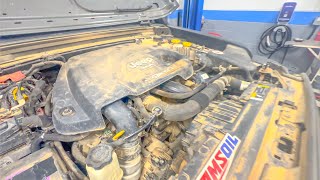
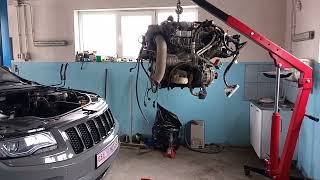
🎬 See how to remove the Grand Cherokee EcoDiesel engineCommon Failure Symptoms

A major engine problem can show itself in several ways. If you experience any of the following, your engine may need significant repairs or replacement:
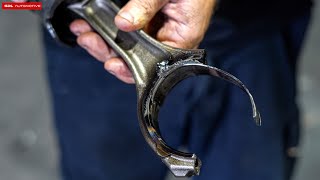
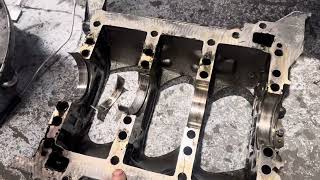
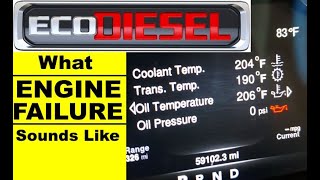
- Engine Knocking: A deep, rhythmic knocking sound from the engine 🎬 Listen to what a failing main bearing sounds like, often caused by failed main or rod bearings.
- Loss of Power: A sudden or gradual inability for the engine to produce power, which could be a symptom of fuel starvation or internal damage.
- Metal Shavings in Oil: Finding metallic particles in the engine oil or filter during an oil change is a sign of severe internal wear.
- Oil and Coolant Mixing: If your coolant reservoir has a milky, sludgy appearance, it often means the oil cooler has failed and oil is mixing with the coolant. Check your reservoir immediately if you suspect an issue.
- Abnormal Noise or Fuel Leaks: These can be early warnings of a failing high-pressure fuel pump.
Diagnostic Flowchart
Major Known Issues, Recalls, and Service Bulletins
The 3.0L EcoDiesel has several well-documented issues that have led to official recalls and Technical Service Bulletins (TSBs). Always check with a dealer or on the NHTSA website to see if a recall applies to your vehicle and has been completed.
High-Pressure Fuel Pump (HPFP) Failure
| Affected Years | 2014-2020 |
| The Problem | The Bosch CP4.2 high-pressure fuel pump is a notorious failure point, sometimes failing at extremely low mileages (under 10,000 miles). When it fails, it sends metal debris throughout the entire fuel system. This contaminates the fuel lines, injectors, and more, leading to fuel starvation and engine stalling. |
| The Fix | FCA issued a recall to replace the HPFP. If the pump has already failed, the remedy includes replacing all contaminated fuel system components. |
| Official Documents | NHTSA Recall 22V426000 (also referenced as 22V-406, Z46, Y78). |
EGR Cooler Failure
| Affected Years | 2014-2019 |
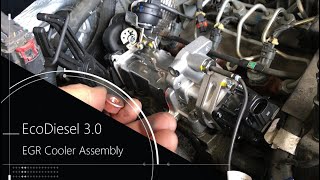
| The Problem | The Exhaust Gas Recirculation (EGR) cooler is prone to internal cracking due to thermal fatigue. This allows coolant to leak into the intake manifold, which can lead to combustion in the intake and, in severe cases, a vehicle fire. Failures are reported anywhere from 20,000 to 80,000 miles. |
| The Fix | Dealers will replace the EGR cooler with an updated part. They will also inspect the intake manifold for damage and replace it if necessary. |
| Official Documents | NHTSA Recall 19V757000 (also referenced as 20V-699, W79, VB1). |
Crankshaft Position Sensor / Tone Wheel Failure
| Affected Years | 2014-2018 (specifically 2014-2016 for Grand Cherokee) |
| The Problem | The magnetic material on the crankshaft's tone wheel can separate or delaminate, causing a loss of signal to the crankshaft position sensor. The engine loses its ability to time fuel injection and can stall without warning. |
| The Fix | The primary remedy is a software update for the Powertrain Control Module (PCM) that allows the engine to use the camshaft position signal as a backup to prevent stalling. In some cases, the tone wheel itself is replaced. |
| Official Documents | NHTSA Recalls 20V-475 (W58), 23V-411. |
Main Bearing Failure and Oil Specification Update
Pro Tip: Always use 5W-40 full synthetic oil meeting FCA spec MS-12991. Using the older, incorrect 5W-30 specification has been linked to premature main bearing failure and catastrophic engine damage.
| Affected Years | Primarily early Gen 2 models (pre-2016) |
| The Problem | Some early-production engines experienced main bearing failures and even snapped crankshafts, which destroy the engine. This was linked to the original factory-specified engine oil viscosity. |
| The Fix | FCA retroactively issued a TSB to change the required oil from 5W-30 to a more robust 5W-40 full synthetic oil to provide better protection. Dealers were instructed to perform an oil change and apply a new sticker to the oil cap. |
| Official Document | TSB 18-078-16. |
Camshaft Gear Slipping
| Affected Years | Early Gen 2 |
| The Problem | The timing sprocket can slip on the camshaft, causing the engine to lose mechanical timing. This leads to piston-to-valve contact and catastrophic engine failure. |
| The Fix | Ensure the timing gear is completely secure during any internal engine service. |
Replacement Cost Comparison
Engine replacement costs vary based on location, the type of engine, and the shop's labor rate. The following are rough estimates for the North American market.
| Part / Service | Estimated Cost (USD) | Notes |
|---|---|---|
| New OEM | $16,000 - $18,000+ | Brand new from the manufacturer. Most expensive option, may have limited availability. |
| Remanufactured | $9,000 - $12,000 | Rebuilt to OEM specifications, often with updates to address known flaws. Typically requires a core deposit. |
| Used OEM | $3,900 - $11,000 | A recycled engine from a donor vehicle. Price varies widely with mileage and condition. |
| Installation Labor | $2,500 - $4,300 | Estimated at 18 to 24 labor hours. Rates vary by shop. |
What Fails at Every Mileage Band
Pro Tip: The mileage bands below describe the condition and expected wear of USED REPLACEMENT engines. The checklists provided are critical steps you must take WHILE INSTALLING the purchased engine to ensure it survives, not general maintenance for your current vehicle.
Under 60,000 Miles
Even low-mileage engines are not immune to the EcoDiesel's known flaws. The Bosch CP4.2 HPFP can fail under 10,000 miles, and oil coolers have been known to fail between 12,000 and 26,000 miles. EGR coolers can crack from thermal fatigue between 20,000 and 40,000 miles. Early-life main bearing failures (under 20,000 miles) also occur, often linked to the original incorrect oil viscosity.
- ✓Do during install (required): Verify all recalls (HPFP, EGR Cooler, Tone Wheel) have been completed on the donor engine and the recipient vehicle.
- ✓Do during install (required): Use only 5W-40 full synthetic oil meeting FCA spec MS-12991. Do not use the older 5W-30 spec.
- ✓Do during install (required): Replace all fluids, including Mopar OAT coolant, and all filters (oil, fuel, air).
- ✓Do during install (recommended): Strongly consider replacing the oil cooler with a new OEM or improved aftermarket unit as a critical preventative measure, regardless of mileage.
60,000 - 100,000 Miles
In this range, EGR cooler failure remains a primary concern, with the average lifespan cited around 80,000 miles. Oil cooler leaks and radiator leaks (around 70,000 miles) become more frequent. Diesel Exhaust Fluid (DEF) system issues, including sensors and heaters, start popping up. Complete bottom-end engine failures are still reported, often just outside the typical 100,000-mile powertrain warranty.
- ✓Do during install (required): Mandatory replacement of the oil cooler and EGR cooler with new, preferably updated aftermarket, parts.
- ✓Do during install (required): Thoroughly clean the intake manifold and EGR passages of carbon buildup.
- ✓Do during install (required): Change fuel and oil filters, and fill with the correct 5W-40 synthetic oil and Mopar OAT coolant.
- ✓Do during install (recommended): Replace the serpentine belt, tensioner, and idler pulleys.
- ✓Cheap insurance while the engine is out: Replace the water pump and thermostat while access is easy. Replace all essential gaskets and seals: rear main seal, valve cover gaskets, intake and exhaust manifold gaskets.
100,000 - 150,000 Miles
Main bearing and bottom-end failures are critical points here, especially if maintenance was poor or the wrong oil was used. The variable-geometry turbocharger (VGT) can suffer from sticking actuator vanes or bearing wear, leading to oil consumption. Timing chain and guide wear may cause rattling noises at startup. General drivetrain wear, like transfer case fluid degradation (service recommended at 120,000 miles), is also a factor.
- ✓Do during install (required): Assume all items from the 60-100k mile band need replacement (Oil cooler, EGR cooler, water pump, thermostat, belts, tensioners).
- ✓Do during install (required): Service the fuel system: replace all filters and consider having the injectors professionally cleaned and tested before installation.
- ✓Do during install (recommended): Strongly consider replacing the timing chain, guides, and tensioner.
- ✓Do during install (recommended): Inspect the turbocharger for shaft play and signs of oil leakage; replace oil and coolant lines to the turbo at a minimum.
- ✓Cheap insurance while the engine is out: Replace the harmonic balancer.
Over 150,000 Miles
At this mileage, the engine is approaching the end of its typical service life without major work. Internet consensus suggests a top-end rebuild may be needed between 150,000 and 200,000 miles. Catastrophic engine failures (like main bearings) and turbocharger failures are highly likely if original parts are still in use.
- ✓Do during install (required): A full rebuild is the most prudent approach rather than a simple 'install'. This should include everything from the lower mileage bands.
- ✓Do during install (required): At minimum, replace all coolers (oil, EGR), the entire timing set, water pump, thermostat, all seals and gaskets, and the harmonic balancer.
- ✓Do during install (required): The turbocharger should be considered a mandatory replacement item at this mileage.
- ✓Do during install (recommended): The high-pressure fuel pump (HPFP) should be inspected or replaced, as its lifespan is not infinite.
Real Owner Experiences
The service life of the 3.0L EcoDiesel is highly variable. While some owners reach 200,000 to 300,000 miles with strict maintenance, many experience catastrophic failures early on. Here is a look at real owner experiences across different mileages.
| Source | Mileage | What Happened | Cost |
|---|---|---|---|
| EcoDieselRam.com | 9,400 | The High-Pressure Fuel Pump (HPFP) failed. The dealer replaced the HPFP, fuel rails, and injectors under warranty. | Warranty |
| jeepgladiatorforum.com | 12,000 | The oil cooler failed, mixing oil and coolant. The damage was extensive enough that the dealer replaced the entire engine and all hoses under warranty. | Warranty |
| RamForum.com | 26,000 | The EGR cooler became clogged, requiring replacement. | Not Stated |
| 32,000 | A rear main bearing failure led to a complete engine failure. The owner noted that FCA later changed the required oil viscosity. | Warranty | |
| jeepgladiatorforum.com | 57,000 | Owner had traveled 57,000 miles without an HPFP failure but was concerned enough about the possibility to sell the vehicle. | N/A |
| EcoDieselRam.com | 65,000 | The EGR cooler failed and caught the intake manifold on fire. | Not Stated |
| 68,000 | Owner reported a P0128 code (Coolant temp below thermostat regulating temperature) and low coolant, possibly indicating an early-stage cooling system issue. | Ongoing Diagnosis | |
| EcoDieselRam.com Forum | 84,000 | Dealer quoted $4,100 to replace the EGR cooler or $1,100 to remove and clean it. Owner was seeking advice. | N/A |
| YouTube | 85,000 | Out-of-pocket HPFP failure repair quoted at $14,000. The repair was completed under an extended warranty. | $0 (under warranty) |
| 96,000 | An unspecified but common engine failure occurred, rendering the engine a 'dud'. Dealer quoted $33,000 for a complete engine swap. New Mopar engine alone was priced at $16k-$18k. Owner declined repair and trade-in offers of $3,500. | $16k+ for engine, $33k dealer quote for swap | |
| 100,000 | The only repair reported by the owner was a new turbo coolant line and manifold. | Not Stated | |
| YouTube | 130,000 | Owner rebuilt the engine himself after receiving a $16,000 quote for a new Mopar engine. | ~$3,500 in parts |
| 136,000 | Engine threw a rod bearing and 'grenaded' despite oil changes every 3,000 miles. The owner attributed the failure to EGR and emissions system issues. | Engine Replacement | |
| ~140,000 | Owner of a 2015 model had an engine failure. They received a trade-in offer of only $7,000 for the vehicle with a bad engine. | Total Loss / Low Trade-in | |
| EcoDieselRam.com | 169,000 | Owner of a 2014 model reported that the oil cooler failed early on, but the engine continued to run to high mileage, mostly on the highway. | Early repair cost not stated |
| 300,000 | A 2014 model was reported as 'still doing great' at this very high mileage, demonstrating the engine's potential longevity. | N/A | |
| BobIsTheOilGuy Forums | 341,000 | An owner who transports trailers and boats reported their engine has never been opened for major repairs at this mileage. | N/A |
| Not Stated | Dealer diagnosed a failing tone wheel and quoted for the repair, which requires dropping the transmission. | $2,500 |
Repair or Replace?
Deciding whether to repair your current engine or replace it entirely depends on the specific failure mode and the overall condition of the block.
When Repair Makes Sense
| Failure | Typical Cost | Recommendation |
|---|---|---|
| High-Pressure Fuel Pump (HPFP) Failure | $8,000 - $14,000+ | Repair makes sense if caught early and the rest of the engine is healthy. The cost is high because failure contaminates the entire fuel system. If covered by recall (NHTSA 22V-406) or warranty, repair is the obvious choice. |
| EGR Cooler Failure | $1,100 - $4,100 | Repair is almost always the correct choice. A dealer may quote over $4,000, but cleaning is cheaper (~$1,100). Upgraded aftermarket coolers are available for under $900. |
| Crankshaft Position Sensor / Tone Wheel Failure | ~$2,500 | Repair is the only logical option. The part is cheap ($35-$45), but labor is intensive as it requires removing the transmission. This is far more economical than engine replacement. |
When Replacement is Smarter
Full engine replacement becomes the smarter option when the engine has suffered a catastrophic internal failure. This includes main bearing failure, a snapped crankshaft, or a slipped camshaft gear that caused piston-to-valve contact. These failures send metal debris circulating throughout the oiling system, rendering the block, heads, and rotating assembly unsalvageable. If the cost of repairing a major failure approaches the price of a low-mileage used engine (typically $3,900 - $11,000) plus labor, replacement offers better value. One owner reported a dealer quote of $33,000 for a new engine swap, making a used replacement the only financially viable path.
Questions to Ask Your Installer
Before handing over your vehicle, ask your mechanic these specific questions:
- Have you worked on the VM Motori 3.0L EcoDiesel before, and do you have the special timing tools (VM.10338, VM.10339, VM.10389, VM.10226)?
- Will you be using the updated 5W-40 full synthetic oil (FCA MS-12991) and Mopar OAT coolant?
- How will you clean the intake manifold and EGR passages of carbon buildup before installing the replacement engine?
- Do you have the scan tool capability to program the new injector IMA codes and perform the crankshaft position sensor relearn?
- If my old engine suffered an HPFP failure, what is your process for ensuring the vehicle's entire fuel system is decontaminated before connecting it to the new engine?
- What is your procedure for transferring the turbocharger and ensuring the oil and coolant lines are clean?
- Will you be using a vacuum tool to refill the cooling system to prevent air pockets?
- Are you replacing all torque-to-yield (TTY) bolts, especially the injector hold-down bolts, with new ones?
- What is the source and mileage of the used engine, and what kind of warranty does it come with?
- Can you provide a detailed, itemized quote that separates parts, labor, fluids, and any additional shop fees?
Installation Essentials & Gotchas

Replacing this engine is a complex job best left to experienced professionals. A simple mistake can lead to catastrophic failure of the replacement unit. The job typically requires 18 to 24 hours of labor.
Required Parts and Fluids
- Engine Oil: 8.1 quarts of 5W-40 full synthetic oil meeting FCA specification MS-10902 or MS-12991.
- Coolant: Mopar OAT (Organic Additive Technology) 10-Year/150,000 Mile Purple Coolant.
- Filters: New premium cartridge-type oil filter, fuel filter, and air filter.
- Gaskets & Seals: New intake and exhaust manifold gaskets, oil cooler seals, injector copper crush washers and O-rings, and a rear main seal are highly recommended.
- Hardware: New torque-to-yield (TTY) injector hold-down bolts and a new serpentine belt and tensioner.
Pro Tip: The 30-Minute Oil Fill Rule: After filling the engine with fresh oil, wait at least 30 minutes before starting it for the first time. This allows the oil to fully drain into the oil pan and ensures the oil pump is properly primed, preventing bearing starvation and damage from a dry start.
Common Mistakes to Avoid
Warning: The high-pressure fuel pump must be primed using a scan tool before starting the engine. Failure to do so will destroy the Bosch CP4.2 pump instantly.
Warning: Never mix the specified purple OAT coolant with other types like HOAT (orange/pink) or generic green coolant. This will cause the coolant to turn into a thick gel and clog the cooling system.
- CP4 High-Pressure Pump Timing: The gear-driven pump must be timed to the engine during installation.
- Oil Cooler Debris Contamination: Prevent dirt from falling into open oil ports during transfer to avoid immediate bearing failure.
- Vacuum Coolant Filling: Use a vacuum coolant refilling tool to prevent trapped air pockets.
- Turbocharger Transfer: Ensure all oil and coolant lines are clean and free of debris when transferring the turbo.
- Reusing Injector Hold-Down Bolts: This leads to injector blow-by. Always use new TTY bolts.
- Using Outdated Oil Specs: Do not use the older 5W-30 specification. Use only 5W-40 full synthetic oil to prevent premature engine wear.
- Ignoring Fuel System Contamination: If your old engine had an HPFP failure, failing to clean the fuel system will destroy the new engine's fuel system.
- Ignoring Programming: This engine is not plug-and-play. The fuel injector IMA codes must be programmed into the vehicle's computer, and a crankshaft position sensor relearn procedure is required.
- Harness Compatibility: Keep your original vehicle wiring harness. Do not use a harness from a different model year or platform. Inspect for damage during removal.
Freight & Delivery Reality

Shipping a 3.0L EcoDiesel is not like receiving a standard parcel. This engine assembly weighs approximately 620 lbs and measures roughly 40" x 38" x 42" before crating. It ships as LTL (Less-Than-Truckload) freight on a sturdy wooden pallet.
Because of its size and weight, delivery requires a truck equipped with a liftgate if you do not have a loading dock or forklift. It is an industry best practice for the seller to conduct a pre-purchase verification interview with you to confirm your VIN, drivetrain layout (4WD vs RWD), and exact needs before shipping such a massive item. When the engine arrives, you must inspect it thoroughly for any transit damage—especially to fragile plastic covers or sensors—before signing the delivery receipt.
Before the First Start: Priming and Fluids
A used engine sits on a warehouse shelf for months. During this time, the oil drains away from the moving parts. If you start the engine dry, the metal parts will scrape together and cause instant damage. You must prime the oil system (pump oil through the engine before it runs) and use the exact fluids required by Jeep.
Mandatory Fluids
- Engine Oil: You must use 5W-40 full synthetic oil that meets Jeep specification MS-10902. Jeep updated this rule to stop engine bearing failures. Do not use the older 5W-30 oil. Always install a brand-new oil filter.
- Engine Coolant: Use only Mopar 10-Year/150,000 Mile OAT (Organic Additive Technology) coolant. This coolant meets specification MS-12106 and is usually purple. Do not mix it with older coolants, or it will turn into a thick gel and ruin the engine.
Oil Priming Procedure
Follow these steps to build oil pressure before the engine actually fires up:
- Fill the engine with the correct 5W-40 oil.
- Disable the fuel system so the engine cannot start. You can do this by removing the fuel pump fuse or relay from the main fuse box.
- Turn the key and crank the engine with the starter for 10 to 15 seconds.
- Stop and wait 30 seconds. This gives the starter motor time to cool down so it does not burn out.
- Repeat this cranking process until you see oil pressure on the dashboard gauge, or until the red low-oil warning light turns off.
- Put the fuel pump fuse or relay back in place.
- Start the engine normally and immediately check underneath for leaks.
Long Block vs. Complete Assembly
When shopping for a used 3.0L EcoDiesel engine, you will find two main options: a long block or a complete assembly. Knowing the difference helps you buy exactly what you need.
- Long Block: This includes the core engine parts. It comes with the engine block, crankshaft, pistons, and cylinder heads. It does not include the turbocharger, fuel injectors, or the high-pressure fuel pump (HPFP). You must move these bolt-on parts from your old engine to the new one.
- Complete Assembly: This is a fully dressed engine. It includes the long block plus the turbocharger, fuel injectors, HPFP, and intake manifold. It takes less time to install because the major accessories are already attached.
Frequently Asked Questions (FAQ)
Do I need to reprogram the vehicle's computer (PCM)?
Yes. If you are using the injectors that came with the used engine, their unique 7-character IMA codes must be programmed into the PCM. This ensures the computer delivers the correct amount of fuel for each injector. A crankshaft position sensor relearn and a PCM software flash are also mandatory.
Is the turbocharger included with a used engine?
Typically, no. A standard used engine assembly includes the block, heads, oil pan, valve covers, intake manifold, timing covers, fuel injectors, HPFP, fuel lines, throttle body, harmonic balancer, and internal parts. Bolt-on accessories like the turbocharger, alternator, A/C compressor, power steering pump, external emissions components (EGR cooler/valve), and starter are usually not included and must be transferred from your old engine. Always confirm what is included with the seller before purchasing.
What is the correct oil for the 2016-2019 EcoDiesel?
The correct oil is a 5W-40 full synthetic that meets FCA material specification MS-10902 or MS-12991. Earlier models were originally specified with 5W-30, but this was updated via TSB 18-078-16 to the heavier 5W-40 oil to improve engine durability and prevent main bearing failures.
Can I use an EcoDiesel engine from a Ram 1500?
No. While the basic design is the same, the engine used in the Ram 1500 has different mounting, wiring, accessory layouts, and calibration that make it incompatible with the Jeep Grand Cherokee. Do not order this engine for a Ram 1500, and do not put a Ram 1500 engine in your Jeep.
What is the 30-Minute Oil Fill Rule?
When installing the engine and filling it with fresh oil, you must wait at least 30 minutes before starting the engine. This allows the thick 5W-40 oil to fully drain down into the oil pan and ensures the oil pump is properly primed. Failing to wait can cause a dry start, leading to immediate bearing starvation and engine damage.
How do I know if my High-Pressure Fuel Pump (HPFP) failed?
Symptoms of a failing Bosch CP4.2 HPFP include abnormal engine noise, fuel leaks, sudden loss of power, and engine stalling. If the pump fails completely, it will send metal shavings throughout the entire fuel system. You can often check for this by inspecting the fuel filter housing or fuel lines for metallic debris.
Helpful Videos
Technical Specifications
Engine Codes: EXF, L630; Displacement: 3.0L; Configuration: V6; Block Material: Compacted Graphite Iron (CGI); Head Material: Aluminum; Valvetrain: Dual-Overhead-Cam (DOHC); Fuel System: Common-Rail Direct Injection; Manufacturer: VM Motori; Required Oil: 5W-40 Full Synthetic; Oil Specification: FCA MS-10902 or MS-12991; Oil Capacity: 8.1 quarts; Required Coolant: Mopar OAT (Purple); Weight: Approx. 620 lbs
We Have This Part in Stock


The information in this article is provided for general reference and educational purposes only. Vehicle specifications, procedures, and part compatibility can vary by production date, trim level, and region. Always consult your vehicle's factory service manual and verify part numbers before purchasing or performing repairs. Safety-critical components such as airbags, seat belts, and braking systems should be installed by a qualified professional.
- Jeep Grand Cherokee:
- 🎬 Helpful Videos
- 🛍️ Shop This Part
- Is This the Right Engine for Your Grand Cherokee?
- How to Confirm Fitment
- Common Failure Symptoms
- Diagnostic Flowchart
- Major Known Issues, Recalls, and Service Bulletins
- High-Pressure Fuel Pump (HPFP) Failure
- EGR Cooler Failure
- Crankshaft Position Sensor / Tone Wheel Failure
- Main Bearing Failure and Oil Specification Update
- Camshaft Gear Slipping
- Replacement Cost Comparison
- What Fails at Every Mileage Band
- Under 60,000 Miles
- 60,000 - 100,000 Miles
- 100,000 - 150,000 Miles
- Over 150,000 Miles
- Real Owner Experiences
- Repair or Replace?
- When Repair Makes Sense
- When Replacement is Smarter
- Questions to Ask Your Installer
- Installation Essentials & Gotchas
- Required Parts and Fluids
- Common Mistakes to Avoid
- Freight & Delivery Reality
- Before the First Start: Priming and Fluids
- Mandatory Fluids
- Oil Priming Procedure
- Long Block vs. Complete Assembly
- Frequently Asked Questions (FAQ)
- 🎟️ Get 5% Off