

2014-2015 Tucson & Soul 2.0L Nu GDI: Problems, Identification, and Used Replacement
Identify the G4NC engine, understand the catastrophic rod bearing recalls, and learn what to check before buying a used replacement unit.
- Before installation, you must verify the vehicle's ECU has the critical Knock Sensor Detection System (KSDS) software update from recalls SC200 or 196 to protect against future bearing failure.
- If the original engine failed from a spun bearing, it is mandatory to thoroughly flush or replace the engine oil cooler and lines to prevent metal debris from destroying the replacement engine.
- Use only a genuine Hyundai/Kia OEM oil filter and full synthetic 5W-30 oil; aftermarket filters and thinner 5W-20 oil can lead to inadequate protection for the failure-prone rod bearings.
- After installation, a professional scan tool is required to perform the mandatory Crankshaft Position (CKP) Sensor Relearn procedure to prevent a P0315 code and other running issues.
- Only a G4NC engine from a 2014-2015 Tucson (VIN 8th digit 'F') or 2014-2015 Soul (VIN 8th digit '5', no ISG) is a direct fit; engines from other models are not compatible.
Identifying the Correct 2.0L Nu GDI Engine

The engine used in the 2014-2015 Hyundai Tucson and 2014-2015 Kia Soul is a specific version of the 2.0-liter Nu engine family, identified by the engine code G4NC. This is a naturally aspirated (non-turbo) inline four-cylinder engine that uses Gasoline Direct Injection (GDI), a technology that sprays fuel directly into the combustion chamber for improved efficiency.
VIN and Fitment Checks
To ensure you are purchasing the correct engine, you must verify your vehicle's specific details. Mismatched engines can have different wiring, mounting points, or internal components that make them incompatible.
| Vehicle | VIN (8th Digit) | Required Condition |
|---|---|---|
| 2014-2015 Hyundai Tucson | F | N/A |
| 2014-2015 Kia Soul | 5 | Must not have the automatic engine stop-start system (Idle Stop & Go / ISG). |
Warning: Engines from other Hyundai or Kia models, such as the Elantra or Forte, will not fit correctly. Even Nu 2.0L engines from different years may have critical differences in their oil pans, wiring harnesses, and the software they need to run, making them incompatible replacements.
Locating the Engine Code
You can confirm the engine code by finding the physical stamping on the engine block, typically located on the front-left side near where the engine and transmission meet. There may also be a barcode sticker on the timing chain cover that reads "G4NC".
Common Problems and Failure Symptoms

A failing G4NC engine can present several warning signs. The most common symptoms include a rhythmic metallic knocking or tapping sound that gets faster with engine speed, 🎬 Watch: How to diagnose this notorious engine knock a sudden loss of power, excessive oil consumption between oil changes, or blue-gray smoke from the exhaust. A flashing check engine light is a critical warning that indicates the computer has detected a severe problem.
Major Recalls and Technical Service Bulletins (TSBs)
This engine family is subject to significant recalls related to engine failure and fire risk. It is crucial that any replacement engine is installed in a vehicle that has had these recall services performed by a dealer.
- Connecting Rod Bearing Failure (NHTSA Campaign 20V750000): This is the most severe issue affecting the 2014-2015 Kia Soul and Hyundai Tucson with the 2.0L Nu GDI engine. Premature wear of the connecting rod bearings can lead to a knocking sound, engine seizure, and in some cases, a broken connecting rod that punctures the engine block, creating an oil leak and fire risk. The remedy involves a dealer inspection and the installation of a software update called the Knock Sensor Detection System (KSDS). This system is designed to detect the specific vibrations of a failing bearing, alert the driver, and put the engine into a reduced-power "limp mode" to prevent catastrophic failure. Depending on the findings, Kia or Hyundai may replace the engine. The Kia recall number is SC200, and the related Hyundai recall is 196.
- Catalytic Converter Damage and Piston Failure (NHTSA Campaign 19V120000): This recall, known as Kia's SC176, applies to some 2012-2016 Kia Soul models. High temperatures in the exhaust can damage the catalytic converter. When this happens, debris from the converter can enter the engine, causing piston damage, engine knocking, and eventual failure. The fix includes a software update to prevent converter overheating and, if necessary, replacement of the catalytic converter and potentially the engine.
- Oil Pan Leaks (NHTSA Recall 19V063 / Hyundai Campaign 181): While primarily noted for slightly older models, oil pan seal failure is a known issue that requires inspecting and replacing the oil pan seals to prevent oil starvation.
Other Known Issues
- Excessive Oil Consumption: Many owners report high oil consumption. This is often attributed to carbon-clogged low-tension piston rings, which prevents them from sealing properly. Using a high-quality 5W-30 full synthetic oil (instead of 5W-20) and performing frequent oil changes can help manage this issue.
- Piston Slap & Cylinder Scuffing: In colder climates, some engines may develop a knocking or tapping noise on cold starts that lessens as the engine warms up. This can be a sign of piston slap, which can lead to cylinder wall scuffing and increased oil consumption over time.
- Intake Valve Carbon Buildup: As a GDI engine, fuel is sprayed directly into the cylinder, so it does not wash over the intake valves. Over time, oil vapor from the crankcase ventilation system can bake onto the valves, restricting airflow and causing poor performance. This requires periodic professional cleaning, such as walnut blasting.
Diagnostic Flowchart
What Fails at Every Mileage Band
Pro Tip: The mileage bands below describe the typical condition of USED REPLACEMENT UNITS you might purchase. The checklists provided are critical steps to perform WHILE INSTALLING the purchased engine, not maintenance advice for your current broken engine.
Under 60,000 Miles
Even low-mileage units are susceptible to premature connecting rod bearing wear due to manufacturing debris or improperly machined surfaces. Engine knocking on cold starts and excessive shaking at idle have been reported on very low-mileage vehicles.
- ✓Do during install (required): Verify the vehicle's ECU has the critical Knock Sensor Detection System (KSDS) software update from the dealer. Use only a genuine Hyundai/Kia OEM oil filter and 5W-30 full synthetic oil. Thoroughly flush the engine oil cooler and lines if the original engine failed from a bearing issue to remove metal debris.
- ✓Cheap insurance while the engine is out: Replace the PCV valve; it is an inexpensive part that can cause oil consumption if it fails.
60,000 - 100,000 Miles
Catastrophic engine failure due to connecting rod bearing wear becomes much more common in this range. You will also see a significant increase in oil consumption due to carbon-clogged piston rings, and potential failure of the catalytic converter.
- ✓Do during install (required): All items from the 'Under 60K' band apply. Replace spark plugs with new NGK or Denso OEM-spec iridium plugs.
- ✓Do during install (recommended): Strongly consider performing an intake valve cleaning (walnut blasting) to remove carbon buildup.
- ✓Cheap insurance while the engine is out: Replace the valve cover gasket and rear main seal. Inspect and consider replacing the water pump, thermostat, and all drive belts and tensioners.
100,000 - 150,000 Miles
Engine failure remains a high risk. Severe oil consumption (e.g., a quart every 300-1000 miles) is a very common complaint, leading to piston ring failure, loss of compression, and excessive blow-by.
- ✓Do during install (required): All items from the previous bands are critical. Replace all accessible seals and gaskets: valve cover, oil pan, front and rear main seals. Replace the entire timing chain assembly (chain, guides, tensioners) if there is any doubt about the engine's history.
- ✓Do during install (recommended): Perform a 'piston soak' with a quality solvent (like Berryman's B12) before installation to help free up carbon-stuck piston rings.
- ✓Cheap insurance while the engine is out: Replace all cooling system hoses and the thermostat.
Over 150,000 Miles
Complete engine failure due to either rod bearings or oil ring failure is the most likely outcome for engines that reach this mileage without proactive care. Buying a used engine with this mileage is a significant gamble.
- ✓Do during install (required): Assume a full rebuild or replacement of all wear items is necessary. It is absolutely essential to replace the timing chain, guides, tensioner, water pump, oil pump, and all seals and gaskets before installation.
- ✓Do during install (recommended): Carefully inspect all accessories (alternator, A/C compressor, power steering pump) that will be transferred from the old engine, as they are also at the end of their service life.
Real Owner Experiences
| Source | Mileage | What Happened | Cost |
|---|---|---|---|
| ~40,000 | A 2018 Elantra with the 2.0L Nu engine started knocking on cold starts despite frequent oil changes with OEM filters. | N/A (Warranty claim) | |
| CarComplaints.com | ~500 | A 2015 Tucson exhibited violent shuddering at idle from the time it was first driven. A fuel system cleaning at each oil change reportedly helped. | N/A |
| CarComplaints.com | 93,000 | A 2014 Tucson experienced total engine failure due to metal shavings found throughout the engine. | Quoted $7,800 - $9,000 for engine replacement. |
| Cars.com | 92,000 | Owner of a meticulously maintained 2014 Soul experienced sudden engine failure while driving at 35 mph. | N/A (Engine replacement) |
| 77,000 | A 2013 Soul developed loud rocker arm noise, leading to an upper engine failure that required months at the dealership to resolve. | N/A (Warranty) | |
| Hyundai Forums | 80,000 | A 2017 Tucson started rattling and burning oil rapidly. A mechanic diagnosed it as needing an engine replacement. | N/A |
| Cars.com | 118,000 | A 2014 Soul's engine threw a rod, cracked the block, and caught fire on the side of the road despite being impeccably maintained. | Total loss of vehicle. |
| Hyundai Forums | 145,000 | A 2012 Tucson required a complete motor replacement due to rod bearing failure. | N/A (Engine replacement) |
| CarComplaints.com | 103,526 | A 2014 Tucson was burning oil every 3 days. The engine eventually self-destructed. The owner only found out about the recall online, not from the dealer. | Engine was eventually replaced under the extended warranty/recall. |
| 158,000 | A 2014 2.0 GDI Nu engine ran well until it suddenly lost compression in one cylinder due to failed piston rings, causing massive oil burning. | Traded in as-is. | |
| Cars.com | 192,000 | After having the original engine blow at 92k and the transmission at 180k, the replacement engine was already failing again at 192k. | N/A |
| 200,000 | A 2019 Kia Soul engine was 'done' and also had a bad catalytic converter. | Owner sourcing a refurbished engine for replacement. | |
| 81,000 | Considering options, including finding a cheaper repair for a 2015 Kia Soul. | Used engine: $5,500; New engine: $6,000 | |
| Under 100k | Dealer denied warranty claim due to alleged missed oil changes on a 2016 Tucson. | $6,000 for sub-motor replacement at dealer due to crank bearing failure. | |
| Not specified | Kia Soul engine died, seeking advice on inflated quote. | $6,000 at a Kia dealership. | |
| 81,000 | Engine was replaced due to connecting rod bearing failure on a 2017 Tucson. | Engine replaced under warranty, but dealer requested $1,000 for an 'E-kit' of hoses and seals. | |
| 57,000 | Seeking advice on whether to replace or sell as-is for a 2014 Hyundai Tucson. | $4,700 to replace a leaking engine with a cracked block/head. |
Repair or Replace?
Deciding whether to repair your existing engine or replace it entirely depends on the specific failure mode.
- When Repair Makes Sense: If your engine is suffering from carbon buildup on the intake valves (causing hesitation or rough idle), a professional cleaning typically costs $400-$800. If you have oil pan leaks, resealing the pan costs $300-$600. These are maintenance procedures and do not indicate internal destruction.
- When Replacement is Smarter: Replacement is the only viable option for connecting rod bearing wear and piston damage. Once a rod bearing fails, it sends metallic debris throughout the entire oiling system, contaminating the crankshaft, oil pump, oil cooler, and cylinder heads. Attempting to repair or rebuild the engine without replacing all affected components is extremely risky and likely to result in a repeat failure. Dealership quotes for a rod bearing repair can hit $6,000. A complete engine swap is more economical and reliable.
Questions to Ask Your Installer
- If my original engine failed from a spun bearing, will you be replacing or thoroughly flushing the engine oil cooler and lines to prevent debris from contaminating the replacement engine?
- Will you be performing the mandatory Crankshaft Position (CKP) Sensor Relearn procedure with a bi-directional scan tool after installation to prevent a P0315 code?
- Are you using a genuine Hyundai/Kia OEM oil filter?
- My vehicle is AWD. Are you aware that you need to transfer the original oil pan, oil pickup tube, and intermediate shaft bracket to the new engine?
- Will you be reusing my original engine wiring harness?
- Are you replacing all torque-to-yield (TTY) fasteners, specifically the crankshaft pulley bolt and flexplate bolts, with new ones?
- Can you confirm that my vehicle's ECU has the latest Knock Sensor Detection System (KSDS) software update from the dealer?
Replacement Cost Estimates
| Part or Service | Estimated Cost (USD) |
|---|---|
| Used OEM Engine | $2,100 - $5,500 |
| Remanufactured Engine | $3,900 - $5,300 |
| New OEM Crate Engine | $2,300 - $4,000 |
| Professional Installation Labor (10-14 hours) | $1,200 - $2,500 |
What's Included in a Used Engine Assembly
A used engine is typically sold as a "long block." This means it includes the core internal components but not the accessories needed to make it run. You or your mechanic will need to transfer these parts from your old engine.
- What's Usually Included: Cylinder block, cylinder head, oil pan, valve cover, intake manifold, timing cover, fuel injectors, fuel rail, high-pressure fuel pump, throttle body, harmonic balancer, and all internally lubricated parts (crankshaft, pistons, camshafts, valves).
- What You Must Transfer: A/C compressor, starter, power steering pump, alternator, exhaust manifold, engine wiring harness, and ECU.
Warning: You must reuse your vehicle's original engine wiring harness. The harness from the donor vehicle may have small but critical differences in its connections that can cause running issues or prevent the car from starting.
Freight and Delivery Reality

When ordering a replacement G4NC engine, understand that it will not arrive via standard parcel delivery. This is a heavy industrial component.
- Shipping Method: The engine ships as Less-Than-Truckload (LTL) freight strapped to a wooden pallet.
- Weight and Dimensions: The bare assembly weighs approximately 373 lbs and measures roughly 48" x 40" x 36" before crating.
- Receiving Requirements: Delivery requires a forklift or a truck equipped with a liftgate to lower the pallet to the ground.
- Inspect Before Signing: You must inspect the engine before signing the delivery receipt. Check for damage to the plastic intake manifold, sensors, and the oil pan, which can easily be crushed by careless forklift operators.
Critical Installation and Setup Procedures

Proper installation is key to the longevity of a replacement engine. This is an Advanced to Expert level job requiring specialized tools, including an engine hoist/crane, a load leveler, a high-pressure fuel line disconnect tool, a torque wrench, and an OBD-II scan tool with live data and reset capabilities.
Required Parts and Fluids
Always use new gaskets and fluids during an engine swap to prevent leaks and ensure proper function.
- Engine Oil: 5W-30 full synthetic oil is recommended over the thinner 5W-20 to provide better protection for the engine bearings and combat fuel dilution.
- Oil Filter: Use a genuine Hyundai/Kia OEM oil filter. Aftermarket filters have been known to cause valve train noise and dry startup knock due to improper oil pressure regulation.
- Coolant: Use a phosphate-organic acid technology (P-OAT) coolant, typically green or blue, mixed 50/50 with distilled water.
- Gaskets and Seals: Always replace the intake and exhaust manifold gaskets, water pump gasket, high-pressure fuel pump O-ring, rear main seal, and valve cover gasket.
- Hardware: Per TSB-GEN085R1 (NHTSA ID 10109812), you must replace all torque-to-yield (TTY) bolts, such as the crankshaft pulley bolt and flexplate/flywheel bolts. They are designed for one-time use only and will snap or back out if reused.
Key Installation Steps & "Gotchas"
Warning: If the original engine failed from a spun bearing, metal particles are now in the engine's oil cooler. You must flush the cooler and lines thoroughly, or that debris will circulate into your new engine and destroy its bearings immediately.
- Flush Oil Cooler Lines: If the original engine failed from a spun bearing, metal particles are now in the engine's oil cooler. You must flush the cooler and lines thoroughly, or that debris will circulate into your new engine and destroy its bearings immediately.
- Transfer AWD Parts: If you are installing the engine into an All-Wheel Drive (AWD) Hyundai Tucson, you must transfer the oil pan, oil pickup tube, and a specific passenger-side intermediate shaft bracket from your original engine.
- De-pressurize Fuel System: The GDI fuel system operates at extremely high pressure (over 2,000 PSI). Before disconnecting any fuel lines, pull the fuel pump fuse and run the engine until it stalls to relieve this pressure.
- Install the High-Pressure Fuel Pump (HPFP) Carefully: To avoid cracking the cylinder head mounting ears, rotate the crankshaft until the camshaft lobe pressing on the pump is at its lowest point (base circle). Tighten the pump bolts in tiny, alternating 0.5-turn increments.
- Dowel Pins: Ensure alignment dowel pins are correctly seated when mating the engine to the transmission. Do not use bellhousing bolts to force them together.
Pro Tip: Before mating the engine and transmission, make sure the torque converter is fully seated in the transmission. You should be able to spin it by hand. Forcing them together with the bellhousing bolts will destroy the transmission pump.
Post-Installation Programming
After the physical installation, the vehicle's computer requires specific programming to recognize the new engine. This step is mandatory and requires a professional bi-directional scan tool (such as Kia's GDS or an advanced aftermarket tool).
- Crankshaft Position Sensor (CKP) Relearn: This procedure calibrates the computer to the exact position of the new engine's crankshaft. Skipping it will result in a rough idle, random misfires, and a check engine light with code P0315. You must also perform a Throttle Position Relearn and clear stored adaptive values.
- KSDS Verification: Ensure the vehicle's computer has the latest Knock Sensor Detection System (KSDS) software update from the recalls. This is your primary protection against future bearing failure.
Arrival Inspection: Testing Cylinder Health
When your used engine arrives, you must test its internal health before installing it. Perform a compression test or a leak-down test while the engine is still on the shipping pallet or engine stand.
- Compression Test: This measures the pressure built up inside each cylinder. A healthy 2.0L Nu GDI engine should show consistent readings across all four cylinders, typically between 150 and 170 PSI (pounds per square inch). A difference of more than 10% between the highest and lowest cylinders indicates internal wear.
- Leak-Down Test: This pumps compressed air into the cylinder to see how much escapes. A good used engine should have less than 10% to 15% air leakage per cylinder.
Before the First Start: Fluids and Priming
A used engine has likely been sitting dry on a shelf for months. Starting it dry will cause immediate, severe damage to the metal bearings inside. You must prepare the engine properly before turning the key.
1. Add Fresh Fluids
Never reuse old fluids. You must install a new oil filter and fill the engine with fresh oil and coolant that meet Hyundai and Kia factory standards.
- Engine Oil: Use 5W-20 or 5W-30 weight motor oil that meets the API SN or ILSAC GF-5 standard. The engine holds about 4.2 quarts.
- Engine Coolant: Use a high-quality ethylene-glycol based coolant designed for aluminum engines. Most auto parts stores sell this as "Asian Vehicle" coolant (often colored green or pink).
2. Prime the Oil System
You must build oil pressure before the engine actually fires up and runs. This process is called priming.
- Disconnect the ignition coils or remove the fuel pump fuse. This stops the engine from starting.
- Turn the key and crank the engine for 10 to 15 seconds.
- Wait one minute to let the starter motor cool down.
- Repeat this cranking process two or three times. Watch the dashboard for the red oil pressure warning light to turn off, which means oil has reached the top of the engine.
- Reconnect the ignition coils or replace the fuel pump fuse.
Frequently Asked Questions (FAQ)
Do I have to replace my engine if it's part of a recall?
Not always. For recalls SC200 and 196, the first step is for a dealer to install the KSDS software update. They will then inspect the engine. An engine replacement is only performed if damage is found.
Can I use an engine from a Hyundai Elantra or a newer Kia Soul?
No. While they may seem similar, engines from other models or even different year ranges of the same model often have incompatible mounts, sensors, oil pans, and computer software. You must use an engine with the G4NC code from a 2014-2015 Tucson (VIN F) or Soul (VIN 5, without ISG).
What oil should I use in my replacement G4NC engine?
Using a full synthetic 5W-30 engine oil is highly recommended. It provides better protection against heat and wear compared to the 5W-20 oil some manuals may list, which is especially important for protecting the rod bearings in this engine.
Is this an engine I can replace myself?
This is an advanced to expert-level job. It requires specialized tools like an engine hoist, high-pressure fuel line tools, and professional-grade scan tools for the mandatory post-installation programming. For most people, this is a job best left to a qualified repair shop.
Why do I need to flush the oil cooler during installation?
If your original engine failed due to a spun connecting rod bearing, it sent microscopic metal shavings through the oiling system. These shavings get trapped in the oil cooler. If you do not flush the cooler, the new engine will pump that metal directly into its own bearings, destroying the replacement engine almost immediately.
What is the KSDS update and why is it important?
The Knock Sensor Detection System (KSDS) is a software update provided by Hyundai and Kia dealers. It reprograms the engine computer to listen for the specific vibrations caused by a failing connecting rod bearing. If it detects this vibration, it puts the car into a low-power "limp mode" to prevent the engine from seizing or throwing a rod through the block, which can cause a fire.
Helpful Videos
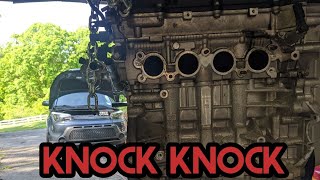
Technical Specifications
Engine Code: G4NC; Displacement: 2.0 Liters; Cylinders: Inline 4-Cylinder; Aspiration: Naturally Aspirated; Fuel System: Gasoline Direct Injection (GDI); Weight (Bare): Approx. 373 lbs; Shipping Dimensions: Approx. 48" x 40" x 36"; Recommended Oil: 5W-30 Full Synthetic; Coolant Type: P-OAT (Phosphate-Organic Acid Technology)

The information in this article is provided for general reference and educational purposes only. Vehicle specifications, procedures, and part compatibility can vary by production date, trim level, and region. Always consult your vehicle's factory service manual and verify part numbers before purchasing or performing repairs. Safety-critical components such as airbags, seat belts, and braking systems should be installed by a qualified professional.
- Hyundai Tucson:
- Kia Soul:
- 🎬 Helpful Videos
- Identifying the Correct 2.0L Nu GDI Engine
- VIN and Fitment Checks
- Locating the Engine Code
- Common Problems and Failure Symptoms
- Major Recalls and Technical Service Bulletins (TSBs)
- Other Known Issues
- Diagnostic Flowchart
- What Fails at Every Mileage Band
- Under 60,000 Miles
- 60,000 - 100,000 Miles
- 100,000 - 150,000 Miles
- Over 150,000 Miles
- Real Owner Experiences
- Repair or Replace?
- Questions to Ask Your Installer
- Replacement Cost Estimates
- What's Included in a Used Engine Assembly
- Freight and Delivery Reality
- Critical Installation and Setup Procedures
- Required Parts and Fluids
- Key Installation Steps & "Gotchas"
- Post-Installation Programming
- Arrival Inspection: Testing Cylinder Health
- Before the First Start: Fluids and Priming
- 1. Add Fresh Fluids
- 2. Prime the Oil System
- Frequently Asked Questions (FAQ)
- 🎟️ Get 5% Off