

2023 Hyundai Sonata 2.5L Smartstream GDi: Problems, Identification, and Used Replacement
Identify the G4KN engine, understand what causes it to fail, and learn what to look for when buying a used OEM replacement unit.
- The high-pressure fuel pipe (Part # 35305-2S000QQH) is a one-time-use part and must be replaced during installation to prevent a dangerous, high-pressure fuel leak.
- The engine's cooling system requires a bi-directional scan tool to perform an electronic bleeding procedure; attempting to bleed it manually will cause air pockets, leading to rapid overheating and severe engine damage.
- Before purchasing a used engine, you must verify it is the correct G4KN unit for a FWD Sonata by checking that the 8th digit of the VIN is 'A' and confirming the code stamped on the engine block.
- Consider preventatively replacing the Integrated Thermal Management Module (ITM) during the swap, as it has a high failure rate even at low mileage (under 50,000 miles) and is much easier to access when the engine is out.
- Ensure your installer can perform required electronic procedures, including the CKP sensor relearn and immobilizer re-marriage, to avoid no-start conditions after installation.
Identifying the 2.5L Smartstream GDi Engine

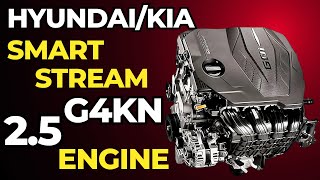
The 2023 Hyundai Sonata uses a specific naturally aspirated 2.5-liter engine from the Smartstream G2.5 GDi family, also known as the Theta III. 🎬 Watch: Complete breakdown of G4KN specs and reliability issues This engine is an inline 4-cylinder that features both gasoline direct injection (GDI) and multi-port injection (MPI) to improve efficiency and reduce carbon buildup. The specific engine code for this unit is G4KN.
Before purchasing a used engine, you must verify it is the correct one for your vehicle. Follow these steps to confirm compatibility:
- Check the VIN: The 8th digit of your vehicle's Vehicle Identification Number (VIN) must be 'A'.
- Verify the Engine Code: The code 'G4KN' is physically stamped on the engine block.
- Confirm Drivetrain: This specific engine assembly is configured for a Front-Wheel Drive (FWD) vehicle.
- Check the Engine Cover: Confirm the engine cover is marked as a 2.5L engine.
Pro Tip: You can find the VIN on a plate at the base of the driver's side of the windshield or on the sticker in the driver's door jamb. The G4KN engine code is typically stamped on the block near where the transmission attaches or close to the oil filter housing.
What It Does NOT Fit
While other Hyundai and Kia models like the Santa Fe, Tucson, Santa Cruz, Sportage, and Sorento use versions of the 2.5L Smartstream engine, this specific assembly from a 2023 Sonata is not a direct swap. Those other vehicles have different oil pan designs, engine mounting brackets, wiring harness layouts, accessory positioning, and computer calibrations. Attempting to install this Sonata engine into another model will lead to significant fitment and operational issues. It is also not interchangeable with the 2.5L Turbo engine, which has a different VIN code ('C') and completely different components.
Is Your Engine Failing? Common Symptoms
A complete engine failure is often preceded by clear warning signs. If you experience the following, it may be time to consider a replacement:
- Engine Knocking: A persistent metallic tapping or knocking sound that may increase with engine speed, often indicating severe internal wear.
- Excessive Oil Consumption: Needing to add oil frequently between changes. Some owners of the 2.5L Smartstream engine have reported early-stage oil consumption, particularly in early production runs (2021-2022).
- Misfires and Rough Idling: The engine may run unevenly, shake, or hesitate, sometimes accompanied by a flashing check engine light. This can be a symptom of leaking fuel injectors.
- Loss of Power or Stalling: The vehicle may feel sluggish, hesitate on acceleration, or shut off unexpectedly while driving.
- Blue or Gray Exhaust Smoke: This indicates that oil is burning in the combustion chambers.
- Metal Shavings in Oil: Finding metallic particles in the engine oil during an oil change is a sign of catastrophic internal engine failure.
Diagnostic Flowchart

Known Issues and Technical Service Bulletins (TSBs)
Several Technical Service Bulletins (TSBs) have been issued for this engine, addressing common concerns. A TSB is a document from the manufacturer that provides repair instructions for known issues that are not full safety recalls.
| Issue / Severity | Affected Years | Symptoms & Details | TSB / Fix |
|---|---|---|---|
| GDI Fuel Injector Internal Leaks Severity: Severe |
2021–2023 Hyundai Sonata | Engine misfires (DTCs P0300-P0304), rough running, fuel odor. An internal filter can break, causing leaks. A class action lawsuit has been filed. | TSB 26-FL-001H, 23-FL-002H, and 23-FL-002H-1 call for diagnosing and replacing leaking injectors with updated versions. |
| Integrated Thermal Management Module (ITM) Failure Severity: Moderate |
2021–2023 models with the 2.5L GDI engine | Check engine light (DTC P2181), slow to reach operating temp, radiator fans run excessively. The electronic thermostat assembly can fail. | TSBs 26-EM-005H, 26-EM-004H, and 23-EM-006H call for replacing the ITM and updating software to prevent overheating. |
| Poor Pin Tension at Joint Connector JE202 Severity: Moderate |
2020–2023 Hyundai Sonata | Intermittent sensor signals, multiple DTCs, and engine may enter reduced-power "limp mode." | TSB 23-EE-006H provides a procedure to address pin tension at the electrical joint connector. |
| Idle Stop and Go (ISG) System Update Severity: Minor |
2023 model year | Engine may not restart automatically after the ISG (start-stop) system engages, requiring a manual restart. | TSB 24-FL-002H involves updating the Engine Control Module (ECM) software to improve system logic. |
| Check Engine Light for Evap System Severity: Minor |
2023 model year | Check engine light illumination, potentially with a P0451 diagnostic code related to the fuel vapor/evap system. | TSB 25 requires diagnosing the potential P0451 code. |
What Fails at Every Mileage Band
Pro Tip: The mileage bands below describe the typical condition of USED REPLACEMENT engines at that mileage. The checklists provided are critical steps to perform WHILE INSTALLING the purchased engine, not general maintenance advice for your current vehicle.
Under 60,000 Miles
Engines in this range are generally in good condition but are still susceptible to early-life component failures. The Integrated Thermal Management Module (ITM) is known to fail in as little as 38,000 to 50,000 miles, triggering a P2181 code and overheating warnings. Early-stage oil consumption can also begin in the first few thousand miles, often attributed to piston ring design. GDI fuel injectors may also fail, causing rough idle and misfires.
- ✓Do during install (required): Replace all one-time-use seals and gaskets, including the high-pressure fuel pipe (Part # 35305-2S000QQH).
- ✓Do during install (required): Perform an engine oil and filter change with 5.9 quarts of SAE 0W-20 full synthetic oil and a new OEM Hyundai oil filter.
- ✓Do during install (recommended): Inspect and replace the water pump, all belts, and hoses.
- ✓Cheap insurance while the engine is out: Replace the Integrated Thermal Management Module (ITM) with the latest part number (25600-2S650QQH or 25600-2S600QQH). Given its high failure rate under 50k miles, it is much easier to replace while the engine is out.
60,000 - 100,000 Miles
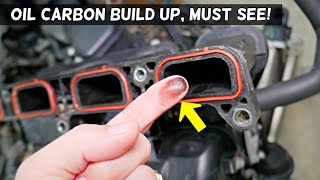
As the engine approaches this mileage, carbon buildup on the intake valves can become noticeable, causing rough idling and reduced power, despite the dual-injection system. The High-Pressure Fuel Pump (HPFP) may also fail around 80,000 to 90,000 miles. Oil consumption issues often worsen in this range, potentially burning over a quart per 1,000 miles.
- ✓Do during install (required): All required items from the Under 60k band.
- ✓Do during install (recommended): Replace spark plugs with new OE-spec iridium spark plugs (due at 96,000 miles).
- ✓Do during install (recommended): Inspect the timing chain and tensioners for any noise or stretching. Inspect drive belts.
- ✓Cheap insurance while the engine is out: Replace all fuel injectors (GDI and MPI) as a preventative measure, as they are typically rated for 50k-100k miles.
100,000 - 150,000 Miles
At higher mileages, timing chain stretch and tensioner wear become significant concerns, often presenting as rattling noises on startup. The catalytic converter is also at risk of failure; if the original engine failed internally, debris from the converter could be ingested back into the new engine, causing immediate scoring and failure.
- ✓Do during install (required): All required items from previous mileage bands.
- ✓Do during install (required): Thoroughly inspect the original catalytic converter for damage or debris.
- ✓Do during install (recommended): Replace the water pump, all belts, hoses, and spark plugs if their history is unknown.
- ✓Cheap insurance while the engine is out: Replace the timing chain, guides, and tensioner. This is a critical preventative job at this mileage. Consider replacing accessible sensors like the camshaft and crankshaft position sensors.
Real Owner Experiences
| Source | Mileage | What Happened | Cost |
|---|---|---|---|
| ~38,000 miles | A 2022 Sonata N-Line experienced overheating warnings when accelerating hard. Diagnosed as a faulty ITM module. | Covered under warranty. | |
| ~45,000 miles | A Sonata reportedly had coolant leak into the engine and a failed water pump. | Not specified. | |
| Engine-specs.net | Under 50,000 miles | The ITM module is cited as a component that rarely lasts more than 50,000 miles. | ~$1,000 each replacement. |
| ~87,000 miles | A 2020 Sonata broke down with no prior check engine light. | Not specified. | |
| YouTube Comment/Forum Reports | ~75,000 miles | Minor oil consumption begins to be noticed by some owners. | Ongoing cost of adding oil. |
| Not Stated | Replaced ITM module three times on a 2020 Sonata. | About $1,000 each time. | |
| CarComplaints.com | Not Stated | Replaced fuel injectors on a 2021-2023 Sonata. | Over $800. |
| 90,000 miles | Dealer denied goodwill repair for oil consumption on a 2019 Sonata. Facing unaffordable engine replacement. | Quoted $8,000 or more. |
Repair or Replace?
Deciding whether to repair your current engine or replace it with a used unit depends on the severity of the failure and the overall cost.
When Repair Makes Sense
- GDI Fuel Injector Internal Leaks: Typical repair costs range from $800 to $1,500. This makes sense when the engine has no other major symptoms (no knocking, no significant oil consumption) and the issue is isolated to the injectors.
- Integrated Thermal Management (ITM) Module Failure: Typical repair costs range from $700 to $1,200. If the check engine light is on with code P2181 and the only symptom is related to cooling system performance, replacing the module (which costs around $550) and performing an electronic coolant bleed is the right path.
- Minor Oil Consumption: Typical repair costs range from $100 to $300 for diagnostics and minor fixes like a PCV valve replacement. This makes sense for early-stage, manageable oil consumption.
When Replacement is Smarter
Engine replacement becomes the logical choice when the engine has suffered catastrophic internal failure (e.g., rod bearing failure, seized components), exhibits severe oil consumption (more than a quart per 1,000 miles), or has multiple concurrent issues where the combined cost of individual repairs approaches or exceeds the cost of a used engine. Given the relatively low mileage of available used engines, replacement can be a durable and economical option compared to a major overhaul.
Questions to Ask Your Installer
- Have you worked on this specific Smartstream G4KN engine before?
- Will you be replacing the one-time-use high-pressure fuel pipe with a new OEM part (Part # 35305-2S000QQH)?
- Do you have a bi-directional scan tool to perform the electronic coolant bleeding procedure for the Integrated Thermal Management (ITM) module?
- Are you equipped to perform the Crankshaft Position (CKP) sensor relearn and the immobilizer re-marriage to the ECU?
- What is your process for inspecting the catalytic converter for debris from the old engine?
- Does your quote include all necessary new gaskets, seals, spark plugs, oil, and coolant?
- If we are transferring the old fuel injectors, will you be replacing the Teflon combustion chamber seals (Part # 35312-04AA0) and do you have the special resizing tool?
- What warranty do you offer on your labor and the supplied engine?
Key Considerations for Installation

Installing a used engine is an advanced job, requiring 10 to 18 hours of shop labor. Several critical steps are unique to the G4KN engine and must be followed to prevent immediate damage to the replacement unit.
Warning: The high-pressure fuel pipe that connects the fuel pump to the fuel rail is a one-time-use part. It is designed to crush and seal once. Reusing the old pipe will result in a dangerous, high-pressure gasoline leak over a hot engine. Always install a new OEM pipe (Part # 35305-2S000QQH).
Warning: This engine's cooling system cannot be bled of air manually. The Integrated Thermal Management Module (ITM) controls coolant flow electronically. A bi-directional scan tool is required to command the ITM's internal valves to open, allowing coolant to circulate and push out trapped air. Failure to perform this electronic bleeding procedure will cause air pockets, leading to rapid overheating and severe engine damage.
Special Tools and Programming
Beyond a standard mechanic's toolset, this job requires specialized equipment:
- Bi-directional Scan Tool: Necessary for the ITM coolant bleeding procedure, CKP sensor relearn, and other programming.
- ECU/Immobilizer Programming: The vehicle's Engine Control Module (ECM) must be programmed to the replacement engine. This includes a Crankshaft Position (CKP) sensor variation relearn, an ECM software calibration update, and marrying the immobilizer system to the new engine's electronics to prevent a no-start condition. This typically requires a dealer-level tool like Hyundai GDS.
- GDI-Specific Tools: If you are transferring fuel injectors from the old engine, you will need a special tool to pull the injectors and another to resize the new Teflon combustion seals (Part # 35312-04AA0).
- Wiring Harness: The wiring harness must be specific to the naturally aspirated 2.5L G4KN engine. Harnesses from 1.6T, 2.0L, or 2.5T (turbo) models will not plug in or calibrate correctly. It is common practice to inspect and swap the original harness onto the replacement engine.
Required Parts and Fluids at Install
Always use new gaskets, seals, and fluids during an engine swap. For this engine, you will need:
- Engine Oil: Approximately 5.9 quarts of SAE 0W-20 full synthetic oil.
- Coolant: Hyundai-approved Pink Antifreeze/Coolant (ethylene glycol-based, phosphate-organic acid technology).
- High-Pressure Fuel Pipe: Part # 35305-2S000QQH (Mandatory replacement).
- Gaskets and Seals: New intake manifold gasket, exhaust manifold gasket, new ITM O-rings, and new Teflon combustion chamber seals for any transferred GDI injectors.
- Spark Plugs: New OE-specification iridium spark plugs.
Estimated Replacement Costs
| Item | Estimated Cost (USD) |
|---|---|
| Used OEM Engine | $1,200 - $4,100 |
| Remanufactured OEM Engine | $4,100 - $6,100 |
| Shop Labor | $1,500 - $3,000 (10-18 hours) |
Freight & Delivery Reality

When ordering a used engine assembly, it is crucial to understand how it will arrive. A complete 2.5L Smartstream GDi engine weighs approximately 410 lbs and measures roughly 40" x 32" x 36" before crating. Because of this size and weight, it ships as Less-Than-Truckload (LTL) freight on a wooden pallet, not as a standard parcel.
Delivery requires a freight truck, often equipped with a liftgate if delivering to a residential address or a shop without a loading dock. Always perform a pre-purchase verification interview with the seller to confirm the VIN, engine code, and mileage. Upon delivery, you must thoroughly inspect the engine for any shipping damage before signing the driver's delivery receipt.
Arrival Inspection: Compression and Leak-Down Testing
When your used engine arrives, test its internal health before installing it. A compression test measures the pressure your engine builds in each cylinder. A leak-down test pumps air into the cylinder to see how much escapes.
- Compression Expectations: All four cylinders should show similar pressure readings. Look for less than a 10 to 15 percent difference between the highest and lowest cylinders.
- Leak-Down Expectations: A healthy used engine should have less than 15 percent air leakage per cylinder. If you hear air escaping from the oil cap, exhaust, or intake, the internal seals are worn.
Before the First Start: Fluids and Priming
Never start a used engine dry. Sitting in storage drains oil away from moving parts. You must prime the oil system (build up oil pressure before the engine fires) to prevent instant damage.
- Install Fresh Fluids: Add a brand-new oil filter and fill the engine with fresh oil. The 2.5L Smartstream engine requires 0W-20 weight oil that meets the API SP or ILSAC GF-6A standard.
- Add Correct Coolant: Fill the cooling system with a high-quality P-HOAT (Phosphated Hybrid Organic Acid Technology) coolant. This is the specific formula required for modern Hyundai aluminum engines to prevent rust and corrosion.
- Disable the Fuel or Spark: Unplug the fuel pump fuse or the ignition coils. This stops the engine from actually starting.
- Crank to Prime: Turn the key and crank the engine for 10 to 15 seconds. Wait one minute to let the starter motor cool down. Repeat this process two or three times until the dashboard oil pressure light turns off.
- Reconnect and Start: Plug the fuel pump fuse or ignition coils back in. Start the engine normally and check for leaks.
Frequently Asked Questions (FAQ)
Can I use an engine from a Santa Fe or Tucson?
No. While those vehicles also use a 2.5L Smartstream engine, the mounting points, oil pan, accessory positioning, and wiring are different. This used engine is only a direct fit for the 2023 FWD Sonata.
Do I really need to replace the high-pressure fuel pipe?
Yes, it is mandatory. The pipe is a single-use, crush-to-fit design. Reusing it will cause a severe fuel leak, creating a fire hazard. The part number is 35305-2S000QQH.
Why can't I just bleed the cooling system the old-fashioned way?
The cooling system is controlled by an electronic module (the ITM). Without a diagnostic scan tool to command its valves to open, you cannot force coolant through all the passages to remove air pockets. Trapped air will cause the engine to overheat almost immediately upon startup.
Is this engine known for oil consumption?
Some owners of the Smartstream 2.5L engine have reported oil consumption issues, which may be related to piston ring design or the GDI fuel system. It is wise to check the oil level on a replacement engine frequently, such as at every fuel fill-up.
What is the expected service life of this engine?
With proper maintenance, the Hyundai Smartstream G2.5 GDi engine is capable of reaching 180,000 to 200,000+ miles. However, some analyses suggest the average lifespan may be closer to 140,000 miles before the cost of repairs for various systems (timing, fuel, cooling) becomes prohibitive. Diligent oil level monitoring and frequent oil changes (every 3,000-5,000 miles) are critical for longevity.
Helpful Videos
Technical Specifications
OEM Part Numbers: 35305-2S000QQH 25600-2S650QQH 25600-2S600QQH 35312-04AA0
Engine Family: Smartstream G2.5 GDi (Theta III); Engine Code: G4KN; Displacement: 2.5 Liters; Cylinders: Inline 4-cylinder; Induction: Naturally Aspirated; Fuel System: Gasoline Direct Injection (GDI) and Multi-port Injection (MPI); Drivetrain Configuration: Front-Wheel Drive (FWD); VIN Identifier (8th Digit): A; Required Oil: 5.9 quarts of SAE 0W-20 full synthetic; Weight: ~410 lbs; Shipping Dimensions: ~40" x 32" x 36"
We Have This Part in Stock


The information in this article is provided for general reference and educational purposes only. Vehicle specifications, procedures, and part compatibility can vary by production date, trim level, and region. Always consult your vehicle's factory service manual and verify part numbers before purchasing or performing repairs. Safety-critical components such as airbags, seat belts, and braking systems should be installed by a qualified professional.
- Hyundai Sonata:
- 🎬 Helpful Videos
- 🛍️ Shop This Part
- Identifying the 2.5L Smartstream GDi Engine
- What It Does NOT Fit
- Is Your Engine Failing? Common Symptoms
- Diagnostic Flowchart
- Known Issues and Technical Service Bulletins (TSBs)
- What Fails at Every Mileage Band
- Under 60,000 Miles
- 60,000 - 100,000 Miles
- 100,000 - 150,000 Miles
- Real Owner Experiences
- Repair or Replace?
- When Repair Makes Sense
- When Replacement is Smarter
- Questions to Ask Your Installer
- Key Considerations for Installation
- Special Tools and Programming
- Required Parts and Fluids at Install
- Estimated Replacement Costs
- Freight & Delivery Reality
- Arrival Inspection: Compression and Leak-Down Testing
- Before the First Start: Fluids and Priming
- Frequently Asked Questions (FAQ)
- 🎟️ Get 5% Off