

2018-2019 Hyundai Sonata 1.6L Gamma II T-GDI: Problems, Identification, and Used Replacement
Identify the G4FJ engine, understand its common bearing and oil consumption failures, and learn when to swap in a used OEM replacement.
- Before purchasing, verify the engine is a G4FJ for a 2018-2019 Sonata by checking the 8th VIN digit is 'A' and confirming it's for a FWD model with a 7-speed DCT.
- The most critical failure is connecting rod bearing wear, often indicated by a knocking sound and a flashing check engine light with code P1326.
- Strictly adhere to a 3,000 to 5,000-mile oil change interval using full synthetic 5W-30 or 5W-40 oil and an OEM filter to prolong engine life.
- During installation of a used engine, always perform an intake valve carbon cleaning, replace the turbo oil feed line, and use new TTY bolts and a new high-pressure fuel line.
Engine Identification: Is This the Right Part for Your Sonata?

The engine used in the 2018-2019 Hyundai Sonata with the 1.6L turbo option is part of the Gamma II T-GDI family, carrying the specific engine code G4FJ. This is an inline 4-cylinder engine that uses both a turbocharger for power and gasoline direct injection (GDI) for fuel delivery. GDI systems spray a precise amount of fuel directly into the engine's cylinders, which improves efficiency but can also lead to certain issues like carbon buildup.
Key Verification Steps
Before purchasing a replacement engine, it is critical to confirm it is the correct one for your vehicle. Mismatched engines can lead to installation headaches and electrical problems.
| Check the VIN | The 8th digit of your vehicle's Vehicle Identification Number (VIN) must be 'A'. You can find the VIN on the driver's side of the dashboard (viewable through the windshield) or on the sticker in the driver's doorjamb. |
| Find the Engine Code | Look for a stamp on the front of the engine block that reads 'G4FJ'. This directly confirms the engine family. |
| Confirm Drivetrain | This specific engine assembly is for Front-Wheel Drive (FWD) models equipped with the 7-speed Dual-Clutch automatic transmission. |
Warning: Other Hyundai and Kia models, such as the Tucson, Kona, Elantra, Optima, and Soul, use different versions of the G4FJ 1.6L turbo engine. While they appear similar, their mounting brackets, wiring harnesses, accessory positioning, and engine control calibrations are different. This specific unit is only a direct replacement for the 2018-2019 Hyundai Sonata.
Common Failure Symptoms

When this engine begins to fail, it can present several distinct symptoms. Paying attention to these signs can help you diagnose the problem before it leads to a complete breakdown.
- Engine Knocking: A rhythmic, metallic tapping or knocking sound that gets faster as engine RPMs increase is a classic sign of connecting rod bearing wear.
- Flashing Check Engine Light (P1326): Hyundai implemented a Knock Sensor Detection System (KSDS) to monitor for vibrations associated with bearing failure. If it detects a problem, it will trigger a flashing check engine light and store the diagnostic trouble code P1326. 🎬 Watch: How to diagnose P1326 and replace the knock sensor The vehicle will often enter a reduced-power "limp mode" to prevent further damage.
- Excessive Oil Consumption: Needing to add oil frequently between changes is a common complaint. This can be caused by worn piston rings, cylinder liner deformation, or carbon buildup, and may be accompanied by blue-tinted smoke from the exhaust.
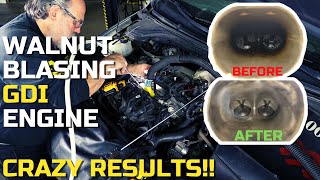
- Stalling or Rough Idle: The engine may stall, run poorly at idle, or hesitate during acceleration. This can be caused by severe internal wear, fuel system problems, or heavy carbon buildup on the intake valves. 🎬 See how walnut blasting removes heavy GDI carbon buildup
Diagnostic Flowchart
Known Problems, Recalls, and Technical Service Bulletins (TSBs)

The G4FJ engine and related Hyundai models have been subject to several recalls and service campaigns to address known weaknesses. The expected service life of the G4FJ engine is heavily debated. Some sources suggest a life of 125,000 to 150,000 miles (200,000 to 250,000 km). However, many owners report catastrophic failures well before this, sometimes under 100,000 miles. Strict adherence to a severe service maintenance schedule—including 3,000 to 5,000-mile oil changes—is critical.
Connecting Rod Bearing Wear & Engine Seizure
This is the most severe issue. Manufacturing defects can cause the connecting rod bearings—small metal shells that cushion the connecting rods as they rotate on the crankshaft—to wear out prematurely. This can lead to catastrophic engine failure, stalling, and even a risk of fire if a broken rod punctures the engine block.
- Remedy: Hyundai issued recalls and extended warranties. The primary fix was a software update for the Engine Control Module (ECM) called the Knock Sensor Detection System (KSDS). This system listens for the specific vibrations of a failing bearing and puts the car into limp mode (DTC P1326) to alert the driver. Dealers will then inspect the engine and replace it if bearing damage is confirmed.
- Applicable Documents: NHTSA Recalls 20V746000 / 21V727000; Service Campaigns 966 / 982 / 198.
Excessive Oil Consumption & Carbon Buildup
Like many GDI engines, the intake valves are not cleaned by fuel spray, allowing oil vapor and combustion byproducts to bake onto them, forming hard carbon deposits. This can restrict airflow, and issues with piston oil rings can lead to high oil consumption.
- Remedy: Technicians can perform an oil consumption test to verify the rate of oil loss. If excessive, the first step is often a chemical cleaning of the combustion chambers and pistons. For heavy carbon on intake valves, a more intensive process called walnut blasting is required every 100,000 to 120,000 miles. Owners should check their oil level constantly to prevent oil starvation.
- Applicable Documents: TSB 21-EM-003H, TSB 23-EM-007H, and TSB 23-EM-008H provide guidelines for oil consumption testing and cleaning procedures. TSB ENG222 also covers procedures for multiple Hyundai engines exhibiting this symptom.
High-Pressure Fuel Pump (HPFP) Fuel Dilution
The GDI system uses a camshaft-driven high-pressure fuel pump. The internal seals on this pump can fail, allowing raw gasoline to leak into the engine crankcase. This dilutes the engine oil, severely reducing its ability to lubricate and leading to rapid engine wear.
- Remedy: If oil smells strongly of gasoline, the HPFP is a likely culprit and must be replaced.
- Applicable Documents: TSB ENG222.
Purge Control Valve (PCV) Issues
A worn purge control system check valve can cause running issues and emissions problems.
- Remedy: Replace the worn purge control system check valve.
- Applicable Documents: NHTSA ID: 25V796, Hyundai Recall 286 / Service Campaign 9B1.
What Fails at Every Mileage Band
Pro Tip: The mileage bands below describe what to expect from used replacement units based on their mileage. The checklists provided are critical steps to perform WHILE INSTALLING the purchased engine on an engine stand, not general maintenance for your current vehicle.
Under 60,000 Miles
Even low-mileage G4FJ engines carry risks. Early production units reportedly had issues with spark plug failure (where fragments could damage cylinder walls) and piston cracking due to detonation around 40,000 to 50,000 km. Connecting rod bearing wear (triggering the P1326 code) and turbocharger oil leaks are also noted issues in this band.
- ✓Do during install (required): Perform an intake valve carbon cleaning (walnut blasting) as GDI engines begin to accumulate deposits from new.
- ✓Do during install (required): Replace the turbocharger oil feed line, as it is a frequent leak point.
- ✓Do during install (recommended): Install a new thermostat, serpentine belt, and NGK Iridium spark plugs (pre-gapped to 0.028"-0.030"). Use only high-quality full synthetic 5W-30 or 5W-40 oil and an OEM Hyundai/Kia oil filter.
- ✓Cheap insurance while the engine is out: Replace common gaskets like the valve cover gasket, intake manifold gasket, exhaust manifold gasket, and rear main seal.
60,000 - 100,000 Miles
In this range, carbon buildup on intake valves becomes significant, leading to rough idle and hesitation. The timing chain and its tensioners can begin to wear and stretch, especially with poor oil maintenance, leading to rattling noises on cold starts. Oil leaks from the valve cover gasket become more common, and connecting rod bearing failure remains a primary concern.
- ✓Do during install (required): Perform a thorough intake valve cleaning (walnut blasting) as heavy carbon buildup is expected.
- ✓Do during install (recommended): Replace the timing chain, tensioners, and guides. While sometimes called a "lifetime" part, mechanics see them stretch in this mileage range.
- ✓Do during install (recommended): Replace the high-pressure fuel pump (HPFP) as a preventative measure to avoid oil dilution.
- ✓Do during install (recommended): Manually check and adjust valve clearance. These engines lack hydraulic lifters and require this service every 60,000 to 90,000 miles.
- ✓Cheap insurance while the engine is out: Replace the high-pressure fuel injector seals/O-rings.
100,000 - 150,000 Miles
Engines in this band are at high risk. Cylinder liner deformation can begin around 100,000 km (62,000 miles), leading to an oval shape, increased oil consumption, and loss of compression. Timing chain stretch becomes a much higher probability, and catalytic converter failure can occur. This is the last practical mileage band for a used engine swap.
- ✓Do during install (required): Replace the timing chain kit. The risk of failure is too high to ignore at this mileage.
- ✓Do during install (recommended): Assume the turbocharger has significant wear. A thorough inspection is required, and replacement should be strongly considered.
- ✓Cheap insurance while the engine is out: Replace all accessible gaskets, seals, and hoses.
Real Owner Experiences
The following table highlights real-world failures and costs reported by owners of vehicles equipped with the G4FJ engine.
| Source | Mileage | What Happened | Cost |
|---|---|---|---|
| YouTube Comment | 40,000-50,000 km | Early production models experienced spark plug disintegration and piston cracking. | Implies major engine damage |
| under 80k miles | Engine failed on a 2017 Sonata SE. | Described as a 'worst financial decision' | |
| 83,000 | A prospective buyer was warned about the complexity, oil consumption, and transmission issues for a 2018 Sonata 1.6T that was formerly a fleet car. | N/A (Pre-purchase advice) | |
| YouTube | 89,000 | A mechanic demonstrated a stretched timing chain on a different engine, recommending replacement between 60k-100k miles as a general practice for chain-driven engines. | Varies, but preventative replacement is cheaper than engine failure. |
| 113,000 | Engine in a 2018 Hyundai Tucson blew up. The owner had all servicing done at the dealer. | Dealer quoted $14,000 to install a used engine with 90,000 miles. | |
| 114,000 | A 2013 Sonata (different engine, but indicative of brand issues) seized due to excessive oil burning. It was replaced under warranty. | Free (under warranty) | |
| YouTube Comment | around 100,000 km | Cylinder liners may deform, leading to oil consumption and loss of compression. | Implies engine rebuild or replacement. |
| 91,000 | 2018 Hyundai Sonata engine failed. Dealer initially denied warranty, demanding $3,000 for a teardown to find the root cause before considering coverage. | $9,000 for out-of-pocket engine replacement; $3,000 for engine teardown diagnostic. | |
| Jalopnik | Not specified | After a two-year process involving multiple dealer visits and escalating to Hyundai corporate for excessive oil consumption, the engine was replaced. | $0 (covered by Hyundai) |
| 172,000 km | Engine failed and was replaced by Hyundai for free under warranty. | $0 | |
| Not specified | Engine was replaced under the Certified Pre-Owned (CPO) warranty. | $0 | |
| Not specified | After getting a warranty engine replacement approved for the P1326 code, the dealership recommended a ~$1,300 "Engine Completion Kit" for items like hoses and belts not included with the new engine block. | ~$1,300 |
Repair or Replace?
When facing a major failure with the G4FJ engine, deciding whether to repair the existing unit or replace it entirely is a critical financial decision.
- When Repair Makes Sense: If your vehicle throws a P1326 code but diagnostics confirm the rod bearings are fine, you may just have a faulty knock sensor. The part cost for a Sonata is roughly $200 to $248, making this a simple and inexpensive fix. Repairing connecting rod bearing wear (pre-catastrophic failure) typically costs $2,000 to $5,000. This only makes sense if caught extremely early and inspection confirms no damage to the crankshaft journals or engine block.
- When Replacement is Smarter: If the engine has seized, is knocking loudly, or if metal shavings are found in the oil, the crankshaft and block are likely damaged beyond economical repair. A dealer quote for a new engine can reach $9,000. In these cases, a used assembly (typically running $3,000 to $4,500) or a remanufactured long block is a much better financial decision for an out-of-warranty vehicle.
Questions to Ask Your Installer
- Have you confirmed my vehicle's 8th VIN digit is 'A' and this G4FJ engine is the correct fit?
- If my old engine failed from bearing wear, what is your process for cleaning or replacing the turbocharger, oil cooler, and oil lines to prevent contamination of the new engine?
- Will you be using a new, one-time-use high-pressure fuel line to prevent fire risk?
- What specific brand and type of oil (5W-30/5W-40 full synthetic), oil filter (OEM recommended), and coolant will you be using?
- Do you have a bi-directional scan tool to perform the Crankshaft Position (CKP) sensor relearn and reset the ECM's adaptive values after installation?
- What is your policy on replacing 'while-you're-in-there' items like the rear main seal, valve cover gasket, and serpentine belt?
- Does your quote include a pre-startup oil system priming procedure to ensure the engine has pressure before it fires for the first time?
- Will you inspect and clean the intake valves for carbon buildup before installing the engine?
Replacement Cost Estimates

The cost to replace a 2018-2019 Sonata 1.6L engine varies significantly based on the type of replacement unit. The estimates below do not include taxes or shop supply fees. Shop labor for this job typically takes 12 to 16 hours.
| Part or Service | Estimated Cost (USD) |
|---|---|
| New OEM Engine | $3,200 - $4,000+ (often for long block only) |
| Remanufactured Engine | $3,000 - $4,500 |
| Used OEM Engine | $3,000 - $4,500 |
| Installation Labor | $1,500 - $2,800 |
Freight & Delivery Reality

When ordering a used replacement engine, it is important to understand how it will arrive. This engine assembly weighs approximately 287 lbs and measures roughly 24" x 19" x 33" before crating. Because of its size and weight, it ships as LTL (Less Than Truckload) freight on a pallet—NOT as a standard parcel. Delivery will require a truck equipped with a liftgate if you do not have a loading dock or forklift. Always inspect the engine thoroughly for transit damage before signing the delivery receipt. Reputable suppliers will conduct a pre-purchase verification interview to ensure the engine perfectly matches your vehicle before shipping.
Arrival Inspection: What to Check Before Installation
When your used engine arrives, you must test its health before putting it in the car. Perform a compression test or a leak-down test. A compression test measures how much pressure the engine makes, while a leak-down test checks if air escapes from the cylinders. On a healthy 1.6L Gamma II engine, the pressure readings should be very close across all four cylinders. A difference of more than 10 to 15 percent between the highest and lowest cylinder means the engine has internal wear.
Because the G4FJ is a turbocharged engine, you must also check the turbocharger for shaft play. Reach into the turbo and gently wiggle the center metal shaft. A very small amount of up-and-down movement is normal when the engine has no oil in it. However, there should be zero in-and-out movement. Spin the shaft by hand to make sure the fan blades do not scrape against the metal housing.
Before the First Start: Priming and Fluids
A used engine sits dry on a shelf for months. You must prepare it properly before turning the key.
First, install a brand-new oil filter and fill the engine with fresh oil. Use a high-quality 5W-30 or 5W-40 full synthetic oil that meets API SN or SP standards. You must also fill the system with fresh engine coolant. Use an OEM-approved Asian vehicle coolant (phosphated HOAT) to prevent rust and protect the water pump.
Next, you must prime the oil system. Priming means pumping fresh oil through the dry engine parts before the engine actually fires up and runs.
- Disable the fuel and spark systems. You can do this by removing the fuel pump fuse and unplugging the ignition coils.
- Turn the key and crank the engine for 10 to 15 seconds.
- Stop and wait one minute so the starter motor does not overheat.
- Repeat this cranking process until the red oil pressure warning light on your dashboard turns off. This tells you oil has reached the top of the engine.
- Plug the ignition coils back in and replace the fuel pump fuse. You can now start the engine normally.
Frequently Asked Questions (FAQ)
If my old engine failed from bearing wear, do I need to replace the turbocharger?
Warning: Yes, it is highly recommended. When bearings fail, they send tiny metal particles throughout the oiling system. These particles will contaminate the turbocharger's oil supply lines and destroy the new turbo. At a minimum, the turbo, oil cooler, and all associated lines must be professionally cleaned and flushed, but replacement is the safest option.
Can I reuse the high-pressure fuel line?
Warning: No. The high-pressure fuel line uses single-use, crush-style fittings. Once it has been installed and torqued, it deforms to create a seal. Reusing it will almost certainly cause a high-pressure fuel leak, creating a serious fire hazard. Always install a brand-new line.
Is any computer programming needed after installing the replacement engine?
It is highly recommended. While the ECU does not need to be "remarried" to the vehicle, a technician must use a bi-directional scan tool to perform a Crankshaft Position (CKP) Sensor relearn procedure and reset the Engine Control Module's (ECM) adaptive learning values. Failing to do this can cause the ECM to run the new, healthy engine using the incorrect fuel and timing adjustments it learned from the old, failing engine, which can lead to misfires and starting issues.
What parts are typically included with a used engine assembly?
Per standard automotive recycling guidelines, a used engine assembly includes the engine block, cylinder head, all internally lubricated parts (crankshaft, pistons, connecting rods, camshafts), oil pan, valve cover, intake manifold, throttle body, timing chain, tensioners, timing covers, fuel injectors, high-pressure fuel rail, and harmonic balancer. It generally does NOT include the A/C compressor, starter motor, alternator, power steering pump, exhaust manifold, or turbocharger.
What special tools are required to install this engine?
Installation requires an engine hoist/crane, a load leveler, a torque wrench, fuel line disconnect tools, a bi-directional scan tool, and specific Hyundai engine support fixtures (part numbers 09200-L1100-01 and 09200-L1200-01).
Are there any specific bolts I must replace during installation?
Warning: Yes. The cylinder head bolts and the harmonic balancer bolt are Torque-to-Yield (TTY) fasteners. This means they stretch when tightened to their final specification. They cannot be reused and must be replaced with brand-new OEM bolts if they are loosened or removed.
Can I use an aftermarket oil filter on this engine?
Warning: It is strongly advised against. Cheap aftermarket oil filters often lack the proper bypass valve stiffness required by Hyundai engines. This can cause dry cold starts, timing chain rattle, and premature bearing wear. Always use an OEM Hyundai/Kia oil filter.
Helpful Videos

Technical Specifications
Engine Code: G4FJ; Family: Gamma II T-GDI; Displacement: 1.6L; Configuration: Inline 4-Cylinder; Induction: Turbocharged; Fuel System: Gasoline Direct Injection (GDI); Drivetrain: Front-Wheel Drive (FWD); Transmission: 7-speed Dual-Clutch automatic; Weight: ~287 lbs; Dimensions: ~24" x 19" x 33"
We Have This Part in Stock


The information in this article is provided for general reference and educational purposes only. Vehicle specifications, procedures, and part compatibility can vary by production date, trim level, and region. Always consult your vehicle's factory service manual and verify part numbers before purchasing or performing repairs. Safety-critical components such as airbags, seat belts, and braking systems should be installed by a qualified professional.
- Hyundai Sonata:
- 🎬 Helpful Videos
- 🛍️ Shop This Part
- Engine Identification: Is This the Right Part for Your Sonata?
- Key Verification Steps
- Common Failure Symptoms
- Diagnostic Flowchart
- Known Problems, Recalls, and Technical Service Bulletins (TSBs)
- Connecting Rod Bearing Wear & Engine Seizure
- Excessive Oil Consumption & Carbon Buildup
- High-Pressure Fuel Pump (HPFP) Fuel Dilution
- Purge Control Valve (PCV) Issues
- What Fails at Every Mileage Band
- Under 60,000 Miles
- 60,000 - 100,000 Miles
- 100,000 - 150,000 Miles
- Real Owner Experiences
- Repair or Replace?
- Questions to Ask Your Installer
- Replacement Cost Estimates
- Freight & Delivery Reality
- Arrival Inspection: What to Check Before Installation
- Before the First Start: Priming and Fluids
- Frequently Asked Questions (FAQ)
- 🎟️ Get 5% Off