

2020-2025 Hyundai Palisade 3.8L Lambda II GDI: Problems, Identification, and Used Replacement
Identify the G6DN AWD engine, understand the oil consumption and carbon buildup issues that kill it, and learn when to swap in a used OEM unit.
- Verify you are purchasing the correct AWD-specific G6DN engine by checking that your VIN's 8th digit is 'E' and confirming your vehicle is All-Wheel Drive.
- The most critical failure is excessive oil consumption, which can lead to catastrophic engine damage; check the oil level at every fuel fill-up.
- When installing a replacement engine, a walnut blast service to clean intake valve carbon is essential, and the single-use high-pressure fuel pipe must be replaced to prevent a fire hazard.
- After installation, mandatory computer relearn procedures, such as the Crankshaft Position (CKP) Sensor Relearn, must be performed with a dealership-level scan tool to ensure proper engine operation.
Identification: Is This the Right Engine for Your Palisade?

The 2020-2025 Hyundai Palisade uses a 3.8-liter, naturally aspirated V6 engine from the Lambda II family, which features Gasoline Direct Injection (GDI). The specific engine code for this unit is G6DN. This engine is known for its Atkinson cycle operation, which helps with fuel economy. However, before purchasing a replacement, it is critical to verify it is the correct version for your exact vehicle.
Confirm Your Vehicle's Build
Follow these steps to ensure you are ordering the correct engine:
- Check Your VIN: The 8th digit of your Vehicle Identification Number (VIN) must be 'E'. The VIN is located on a tag at the driver's side base of the windshield and on the driver's side door jamb sticker.
- Verify Your Drivetrain: This specific engine assembly is for All-Wheel Drive (AWD) models only. You can confirm your vehicle is AWD by looking for a rear differential and driveshaft or an "HTRAC" badge.
- Check the Engine Code: The code 'G6DN' is stamped on the engine block, typically near the rear surface where the engine and transmission meet.
Warning: This AWD engine is not interchangeable with Front-Wheel Drive (FWD) models. The engine block and oil pan are physically different to provide clearance and mounting points for the AWD transfer case (also called a Power Transfer Unit or PTU).
🎬 Watch: Step-by-step 3.8L AWD engine swap walkthroughWhat Will Not Fit
Do not attempt to use this engine in the following vehicles:
- Front-Wheel Drive (FWD) Hyundai Palisade: The mounting points and oil pan are incorrect.
- Kia Telluride: While the Telluride uses the same G6DN engine, there are critical differences in the engine wiring harness, mounting brackets, and computer software. Swapping between the two models is not a direct fit.
Common Failure Symptoms

An engine may need replacement if you observe the following symptoms:
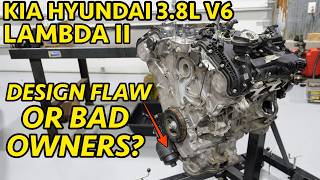
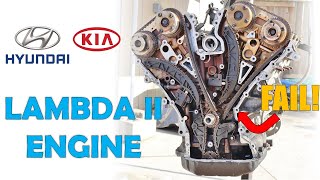
- Excessive Oil Consumption: A well-documented issue with this engine family is high oil consumption, sometimes as much as one quart per 500 to 600 miles. This is often caused by carbon buildup clogging the piston rings. Failure to keep the oil level topped off can lead to oil starvation and catastrophic engine damage. 🎬 See: Lambda II V6 teardown and reliability analysis
- Engine Knocking or Ticking: A deep knocking sound from the engine, especially after it has warmed up, can indicate severe internal wear, such as on the connecting rod bearings.
- Loss of Power and Rough Idling: These symptoms can be caused by several issues, including severe carbon buildup on intake valves—a common side effect of GDI technology—or a failing valve spring.
- Blue or White Smoke from Exhaust: This often points to oil burning in the combustion chambers due to worn piston rings or valve seals.
- Check Engine Light: A flashing or solid check engine light can signal numerous problems. Codes related to misfires (P0300) or the torque converter clutch (P074100) could point to issues stemming from the engine or related components.
Diagnostic Flowchart
Known Problems, Recalls, and Technical Service Bulletins (TSBs)

NHTSA Recall 24V-106 (Hyundai Recall 255): Engine Valve Springs
A serious recall was issued for a specific batch of 2024 Palisade models. Defective valve springs could fracture during operation, potentially causing a sudden loss of power. In rare cases, a broken valve could fall into the cylinder, puncturing the piston and engine block, which increases the risk of a fire.
| Affected Vehicles | Certain 2024 Hyundai Palisade models built between August 21, 2023, and October 12, 2023. |
| Remedy | Hyundai dealers will replace the engine sub-assembly at no cost to owners. |
TSB 23-EM-003H: Radiator Coolant Leaks
This Technical Service Bulletin addresses instances of coolant leaks from the radiator assembly. Owners may notice a low coolant level or find puddles of coolant under the vehicle.
| Affected Vehicles | 2020-2022 Hyundai Palisade models built between April 11, 2019, and May 9, 2022. |
| Remedy | Dealers will inspect the radiator and replace it if a leak is confirmed. |
Service Campaign T7U (TSB 22-01-011H): Drive Plate Noise
This service campaign was initiated to fix a metallic noise that could occur when shifting between Drive and Reverse. The noise was traced to the drive plate.
| Affected Vehicles | Certain 2022 Hyundai Palisade models produced from September 16, 2021, to October 7, 2021. |
| Remedy | Dealers inspect and, if necessary, replace the drive plate with an improved part. |
TSB 22-EM-010H: Intake System Inspection
This bulletin requires technicians to inspect, clean, or replace components of the engine intake system during an engine replacement. This ensures no leftover metal debris from a failed engine is ingested into the new unit.
AWD Coupling Noises
Some models experience noises from the All-Wheel Drive coupling system. Hyundai issued a TSB to update the AWD Engine Control Unit (ECU) software to resolve this issue.
Intake Valve Carbon Buildup
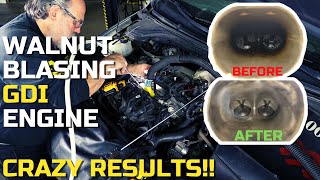
As a Gasoline Direct Injection (GDI) engine, the 3.8L V6 is prone to carbon deposits forming on the back of the intake valves. Because fuel is injected directly into the cylinder, it never washes over the valves to clean them. Over time, this buildup can restrict airflow, causing rough idling, hesitation, and reduced performance.
| Affected Vehicles | All model years (2020-2025). |
| Remedy | This is considered a maintenance issue. The most effective cleaning method is a "walnut blasting" service, where crushed walnut shells are used to abrasively clean the valves and intake ports without damaging the metal. |
What Fails at Every Mileage Band
Pro Tip: The mileage bands below describe used replacement units of that mileage. The checklists provided are things to do WHILE INSTALLING the purchased engine, not maintenance for your current engine.
Under 60,000 Miles
Even at low mileage, the G6DN engine can experience significant issues. Excessive oil consumption is frequently reported, with some owners needing to add 1 quart of oil every 500 to 600 miles. This rapid oil loss can lead to engine stalling and catastrophic failure. Additionally, certain 2024 models in this range are affected by NHTSA Recall 24V-106 (Hyundai Recall 255) for defective valve springs. You may also encounter radiator coolant leaks (TSB 23-EM-003H) on 2020-2022 models and drive plate noise (TSB 22-01-011H) on 2022 models.
- ✓Do during install (required): Perform a walnut blast service on the intake valves to remove early carbon buildup. Replace spark plugs, the thermostat, and all associated gaskets (intake, exhaust, valve cover). Fill with 6.5 quarts of high-quality full synthetic 5W-30 oil (meeting ACEA A5/B5) and an OEM Hyundai oil filter.
- ✓Do during install (recommended): Inspect the radiator for leaks, especially if the donor vehicle was a 2020-2022 model, per TSB 23-EM-003H.
- ✓Cheap insurance while the engine is out: Replace the front crankshaft seal and rear main seal.
60,000 - 100,000 Miles
Oil consumption issues often become severe in this range. Engine failure due to oil starvation from consumption and carbon buildup becomes a major risk. A teardown of a G6DN engine that failed at 92,000 miles showed significant wear on the connecting rod bearings, which is consistent with insufficient lubrication. Intake valve carbon buildup is also significant by this mileage, leading to rough idling, hesitation, and reduced performance. Some owners also report transmission hesitation or rough shifts.
- ✓Do during install (required): Perform a thorough walnut blasting of the intake valves and ports. Replace all seals (front crank, rear main), gaskets (intake, exhaust, valve cover, oil pan), spark plugs, and the water pump/thermostat assembly.
- ✓Do during install (recommended): Replace the timing chain and tensioners as a preventative measure, even though they are generally robust.
- ✓Cheap insurance while the engine is out: Consider replacing the motor mounts, which typically wear out between 100,000 and 150,000 miles.
100,000 - 150,000+ Miles
The risk of engine failure due to long-term oil consumption and carbon buildup is highest in this mileage band. Wear-and-tear items like the water pump, suspension bushings, and motor mounts are highly likely to require replacement. Carbon buildup on the intake valves will cause significant performance degradation, including misfires and a rough idle, if it has not been previously addressed.
- ✓Do during install (required): Perform a comprehensive cleaning of the entire intake manifold to remove any potential debris from the previous engine's failure. Replace the timing chain, guides, and tensioners without question. Replace the water pump, thermostat, all coolant hoses, and drive belts.
- ✓Do during install (recommended): Strongly consider replacing high-wear sensors like the camshaft and crankshaft position sensors.
- ✓Cheap insurance while the engine is out: Replace all easily accessible suspension bushings and motor mounts.
Real Owner Experiences
| Source | Mileage | What Happened | Cost |
|---|---|---|---|
| CarComplaints.com | 5,200 miles | A 2020 Palisade began consuming 1 quart of oil every 600 miles. The engine stalled while driving and was found to be 4.5 quarts low on oil, leading the owner to trade in the vehicle. | N/A (traded vehicle) |
| 18,000 miles | A 2020 Palisade with oil consumption of 0.83 quarts per 1000 miles was initially deemed within spec by the dealer. The engine later died and was replaced under warranty. | $0 (Warranty) | |
| 45,000 miles | A 2022 Palisade started experiencing extreme oil consumption, leading to a common issue requiring engine replacement before 100,000 miles. | N/A (Covered under warranty) | |
| 60,000 miles | A 2020 Palisade started having oil consumption issues. After performing an oil consumption test and cleaning the combustion chambers, the issue persisted, and Hyundai approved an engine replacement. | $0 (Warranty) | |
| Torque News | Over 60,000 miles | A second owner took her vehicle in for an oil change and was told it needed a new engine. The warranty claim was denied because she was over the 60,000-mile warranty for a second owner and was allegedly late on an oil change. | Owner was facing the full replacement cost. |
| ~80,000 miles | Owner's vehicle required an engine replacement due to oil consumption issues confirmed by the dealer. They were waiting for warranty approval and a replacement engine. | $0 (Warranty) | |
| ~80,000 miles | Second owner experienced engine failure. The issue was reported multiple times while under the 60,000-mile second-owner warranty but was not resolved. After the warranty expired, the engine failed completely and the owner was requesting a goodwill repair from Hyundai. | Not stated, seeking goodwill. | |
| 80,xxx miles | A 2021 Palisade experienced intermittent check engine lights (P000A00) and a leaking oil pan gasket, which was replaced under warranty. The issue persisted and ultimately resulted in total engine failure just out of warranty. | N/A (Seeking goodwill repair) | |
| 131,171 km (~81,500 miles) | Owner was quoted for an engine repair/replacement at the dealership after a catastrophic failure despite regular dealer maintenance. They were seeking goodwill from Hyundai Canada. | $14,254 + HST (approx. $16,100 CAD / $11,750 USD) | |
| I Do Cars (YouTube Teardown) | 92,000 miles | A 2020 Palisade engine failed. A teardown revealed severe carbon buildup on intake valves and significant wear on rod bearings, indicating failure from oil starvation. | N/A (Engine was replaced) |
| Slightly over 100,000 miles | After persistent oil consumption issues that started at 60,000 miles, Hyundai approved an engine replacement just after the powertrain warranty expired. | $0 (Goodwill from Hyundai) |
Repair or Replace?
Deciding whether to repair your current engine or replace it with a used OEM unit depends on the type of failure and the overall cost.
When Repair Makes Sense
- Intake Valve Carbon Buildup: This is a preventative maintenance issue, not a catastrophic failure. A walnut blasting service typically costs between $800 and $1,200 due to the labor involved in removing the intake manifold. It makes sense to perform this service every 60,000 to 80,000 miles to restore performance.
- Minor Oil Consumption: If your engine is consuming less than 1 quart per 1,500 miles and has not suffered internal damage, repairs might cost $200 to $600+. This involves using chemical cleaners or performing a piston soak procedure to free up clogged piston rings. Note that if oil consumption fouls the spark plugs, labor costs can spike; one owner reported a $500 charge just to replace a single rear spark plug due to difficult access.
- NHTSA Recall 24V-106: If your 2024 Palisade is under this recall for valve springs, the repair is $0 and is performed by the dealer.
When Replacement is Smarter
Replacement is the necessary option in cases of catastrophic failure, such as oil starvation leading to spun rod bearings, a seized engine, or a thrown connecting rod. If the engine has internal metal contamination (metal shavings in the oil), a simple repair is not feasible because the debris has likely circulated and damaged multiple critical components. Given the high labor cost to access internal components, if the cost of a teardown and repair approaches or exceeds 50% to 60% of a quality used engine's price (which typically runs $3,100 to $5,500+), replacement is the more financially sound and reliable long-term solution.
With diligent maintenance—specifically checking the oil at every fuel fill-up, using full synthetic 5W-30 oil, and performing walnut blasting every 60,000 miles—the G6DN engine can achieve an expected service life of 200,000 to 250,000 miles.
Replacement Cost Estimates
The cost of replacing a Hyundai Palisade engine can vary widely based on the type of replacement unit, labor rates, and location. The original engine must be replaced with an AWD-specific unit.
| Part or Service | Estimated Cost (USD) | Notes |
|---|---|---|
| New OEM Engine | $7,000 - $14,000+ | A brand new engine from Hyundai. Price is for the part only. |
| Remanufactured Engine | $5,500 - $7,500+ | An engine rebuilt to OEM specifications, often with updates to correct original flaws. |
| Used OEM Engine | $3,100 - $5,500+ | A tested, functional engine from a salvage or recycled vehicle. Prices vary with mileage. |
| Labor to Install | $1,950 - $4,400 | Shop estimates range from 13 to 22 hours for the swap. |
Installation: Key Considerations

Replacing the G6DN engine is a complex job best left to experienced technicians. Several steps are critical for success.
Special Tools Required
Your installer will need specific tools to complete this job safely and correctly:
- Engine hoist/crane with a heavy-duty load leveler.
- Subframe/propulsion system lift (OTC HMA52200-A or equivalent).
- Outer tie-rod ball joint remover (09568-2J100).
- High-pressure fuel line disconnect tools.
- Bi-directional OBD2 scan tool (Hyundai GDS or equivalent).
Required Computer Programming
After the new engine is installed, several electronic relearn procedures are mandatory. Failure to perform these steps can cause a rough idle, misfire codes (like P0300), and poor performance. These procedures require a dealership-level scan tool.
- Crankshaft Position (CKP) Sensor Relearn
- Throttle Body Idle Air Volume Relearn
- Fuel Trim and Adaptive Value Reset
Pro Tip: Before installing the replacement engine, perform key maintenance services while it is easily accessible on a stand. This includes replacing the spark plugs, front and rear main seals, and performing a walnut blast service to clean carbon from the intake valves.
Critical Installation Gotchas
- High-Pressure Fuel Pipe Hazard: The fuel line connecting to the high-pressure fuel pump (HPFP) operates at over 2,000 PSI and is a single-use, crush-style pipe. It must be replaced with a new one during installation. Never reuse it, as it creates an immediate fire hazard.
- AWD Transfer Case (PTU) Alignment: The splines of the intermediate shaft must be aligned perfectly when mating the engine and transmission to the PTU. Forcing it can strip the splines or damage internal seals.
- Intake Manifold Debris Cleaning: If the original engine failed catastrophically, the plastic intake manifold must be removed and thoroughly washed. Metal debris from the old engine can hide inside and will be sucked into the replacement engine, causing immediate damage.
- Oil Pan and Pickup Tube Swap: Swap the oil pan and pickup tube from the original engine to the replacement engine to ensure subframe compatibility and cleanliness.
- Wiring Harness and Sensors: It is strongly recommended to reuse the wiring harness from the original vehicle. This ensures all connectors and sensor wiring match your Palisade's specific configuration. Handle plastic connectors with extreme care, as they become brittle with age and heat.
Required Consumables
Ensure you have the following items ready for the installation:
- Engine Coolant (Hyundai-spec P-OAT green/blue or pink long-life coolant).
- 6 new OEM-spec Iridium spark plugs.
- Upper and lower intake manifold gaskets, exhaust manifold gaskets, and thermostat gasket.
- High-pressure fuel pump O-ring and single-use high-pressure fuel pipe.
- Fresh gear oil for the AWD transfer case/PTU.
Freight & Delivery Reality

When ordering a used engine assembly, it is important to understand how it will arrive. This engine weighs approximately 475 lbs and measures roughly 40" x 40" x 38" before crating. Because of its size and weight, it ships as Less-Than-Truckload (LTL) freight on a wooden pallet—it is NOT a standard parcel delivery.
Delivery requires a forklift or a truck equipped with a liftgate to lower the pallet to the ground. Before signing the Bill of Lading (BOL) from the driver, you must thoroughly inspect the engine for any damage that may have occurred during transit. Signing the BOL without noting damage releases the freight company from liability. Finally, expect a pre-purchase verification interview from the seller to confirm your VIN has an 'E' in the 8th position, your vehicle is AWD, and your engine code is G6DN. This is an industry best practice to ensure you receive the correct part.
Arrival Inspection: Compression and Leak-Down
When your used engine arrives, test the cylinders before installing it. A compression test measures the pressure inside each cylinder. A leak-down test pumps air into the cylinder to see if it holds pressure.
- Compression Expectations: A healthy 3.8L Lambda II engine should show between 150 and 180 PSI (pounds per square inch) in each cylinder. The most important rule is consistency. The difference between the highest and lowest cylinder should not be more than 10 to 15 percent.
- Leak-Down Expectations: Air loss should be less than 15 percent per cylinder. If you hear air escaping from the intake, exhaust, or oil cap, the engine has bad valves or worn piston rings.
Before the First Start: Fluids and Priming
Used engines sit on shelves for months. All the oil drains down into the pan, leaving the moving parts dry. You must prime the oil system before letting the engine run. Priming means pumping oil through the engine without starting it.
1. Add Fresh Fluids
Never use the old fluids that came with the used engine. You must install a new oil filter and fill the engine with the correct fluids:
- Engine Oil: Use 0W-20 full synthetic oil that meets API SP or ILSAC GF-6 standards. The engine holds about 6.9 quarts with a new filter.
- Engine Coolant: Use a high-quality P-OAT (Phosphate Organic Acid Technology) coolant designed for Asian vehicles. Do not mix different coolant colors or types.
2. Prime the Oil System
Follow these steps to safely build oil pressure:
- Disable the Fuel System: Remove the fuel pump relay or fuse from the fuse box. This stops fuel from spraying into the engine.
- Disable the Ignition System: Unplug the ignition coils so the spark plugs cannot fire.
- Crank the Engine: Turn the key and crank the starter for 10 to 15 seconds. Do not crank for longer than 15 seconds, or you might overheat the starter motor.
- Wait and Repeat: Wait one minute to let the starter cool down. Crank the engine again for 10 to 15 seconds. Repeat this process until the red low oil pressure light on the dashboard turns off.
- Start the Engine: Once you have oil pressure, plug the ignition coils back in and reinstall the fuel pump fuse. Start the engine and let it idle. Check underneath for any oil or coolant leaks.
Long Block vs. Complete Assembly
When shopping for a used 3.8L engine, sellers will list it as a "long block" or a "complete assembly." You must know the difference so you have all the parts needed for the swap.
- Long Block: This includes the main engine block, cylinder heads, and internal moving parts like pistons and valves. It does not include bolt-on parts. If you buy a long block, you must move your old intake manifold, exhaust manifolds, alternator, starter, and sensors over to the replacement engine.
- Complete Assembly: This includes the long block plus most of the outer accessories. For this Gasoline Direct Injection (GDI) engine, a complete assembly usually comes with the high-pressure fuel pump and fuel injectors already attached.
Frequently Asked Questions (FAQ)
Can I use this engine in my Front-Wheel Drive (FWD) Palisade?
No. This engine is specifically for All-Wheel Drive (AWD) models. It has unique mounting bosses on the block and a different oil pan shape to accommodate the AWD transfer case. It will not physically fit in a FWD vehicle.
Is the Palisade engine the same as the Kia Telluride engine?
While both vehicles use the G6DN 3.8L V6, they are not directly interchangeable as complete assemblies. There are differences in the wiring harnesses, mounting points, and ECU programming that prevent a simple swap.
What happens if I skip the computer relearn process after installation?
Skipping the crankshaft position sensor relearn and other calibrations will likely result in immediate running problems, such as a rough idle, engine misfires, and the vehicle entering a reduced-power "limp home" mode.
Do I need to buy a new computer (ECU) with the used engine?
No. You should reuse your vehicle's original Engine Control Unit (ECU). The replacement engine is designed to work with the existing computer, which will need to be reprogrammed with a bi-directional scan tool.
What parts are included with a used engine assembly?
A standard used engine assembly includes the engine block, cylinder heads, internally lubricated parts (crankshaft, pistons, connecting rods, camshafts, valves, bearings), oil pan, timing covers, valve covers, intake manifold, fuel injection system (injectors, fuel rail), high-pressure fuel pump (HPFP), throttle body, and harmonic balancer. It does NOT include the A/C compressor, starter motor, alternator, power steering pump, exhaust manifolds, engine mounts, or the ECU.
What questions should I ask my installer before the swap?
Before hiring a shop, ask them: Have you confirmed this is an AWD-specific G6DN engine? Will you perform the mandatory Crankshaft Position (CKP) Sensor Relearn procedure with a Hyundai-compatible scan tool? What is your process for cleaning the intake manifold to ensure no debris enters the replacement? Do you recommend performing a walnut blasting service on the intake valves before installation? Does your quote include replacing all required single-use items like the high-pressure fuel pipe? Will you be reusing my original engine wiring harness?
Helpful Videos
Technical Specifications
Engine Code: G6DN; Displacement: 3.8 Liters; Configuration: V6; Engine Family: Lambda II; Induction: Naturally Aspirated; Fuel System: Gasoline Direct Injection (GDI); Special Feature: Atkinson Cycle Operation; Drivetrain Compatibility: All-Wheel Drive (AWD) Only; VIN Identifier: 8th Digit 'E'; Oil Type: Full Synthetic 5W-30 (ACEA A5/B5); Oil Capacity: 6.5 quarts; Weight: ~475 lbs
We Have This Part in Stock


The information in this article is provided for general reference and educational purposes only. Vehicle specifications, procedures, and part compatibility can vary by production date, trim level, and region. Always consult your vehicle's factory service manual and verify part numbers before purchasing or performing repairs. Safety-critical components such as airbags, seat belts, and braking systems should be installed by a qualified professional.
- Hyundai Palisade:
- 🎬 Helpful Videos
- 🛍️ Shop This Part
- Identification: Is This the Right Engine for Your Palisade?
- Confirm Your Vehicle's Build
- What Will Not Fit
- Common Failure Symptoms
- Diagnostic Flowchart
- Known Problems, Recalls, and Technical Service Bulletins (TSBs)
- NHTSA Recall 24V-106 (Hyundai Recall 255): Engine Valve Springs
- TSB 23-EM-003H: Radiator Coolant Leaks
- Service Campaign T7U (TSB 22-01-011H): Drive Plate Noise
- TSB 22-EM-010H: Intake System Inspection
- AWD Coupling Noises
- Intake Valve Carbon Buildup
- What Fails at Every Mileage Band
- Under 60,000 Miles
- 60,000 - 100,000 Miles
- 100,000 - 150,000+ Miles
- Real Owner Experiences
- Repair or Replace?
- When Repair Makes Sense
- When Replacement is Smarter
- Replacement Cost Estimates
- Installation: Key Considerations
- Special Tools Required
- Required Computer Programming
- Critical Installation Gotchas
- Required Consumables
- Freight & Delivery Reality
- Arrival Inspection: Compression and Leak-Down
- Before the First Start: Fluids and Priming
- 1. Add Fresh Fluids
- 2. Prime the Oil System
- Long Block vs. Complete Assembly
- Frequently Asked Questions (FAQ)
- 🎟️ Get 5% Off