

2013-2017 Traverse, Acadia & Enclave 3.6L V6 (LLT): Problems, Identification, and Used Replacement
Identify the exact 3.6L LLT engine, understand what causes timing chain failures, and learn when to replace it with a quality used OEM unit.
- Before purchasing, confirm you have the correct LLT engine by checking for the 8th VIN digit 'D', as it is not interchangeable with other GM 3.6L V6 engines like the LFX.
- The most critical failure is stretched timing chains, indicated by a rattling noise on cold start and DTCs like P0008; this was addressed by GM Special Coverage #11340.
- When installing a used engine, it is mandatory to perform a Crankshaft Position (CKP) Sensor Variation Relearn and replace the one-time-use torque-to-yield harmonic balancer bolt.
- Proactively address common issues on a replacement engine by modifying the PCV orifice to prevent oil consumption and cleaning the intake valves to remove carbon buildup.
- If swapping an engine between FWD and AWD models, you must transfer the oil pan and intermediate axle shaft bracket from the original engine to the replacement.
Engine Identification: Is This Your Engine?


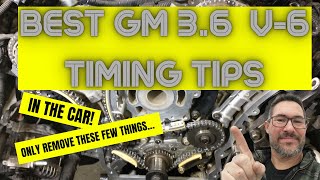
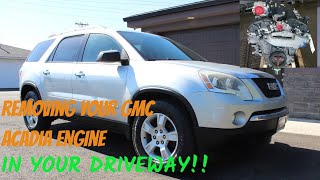
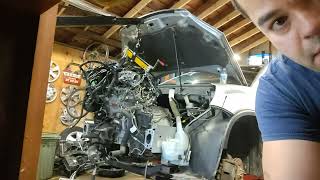
This article covers the 3.6L V6 engine, RPO code LLT, found in several popular General Motors SUVs. This specific engine is a direct-injection, dual overhead cam (DOHC) V6. Direct injection means fuel is sprayed directly into the combustion chamber, which improves power and efficiency but can lead to some specific maintenance needs. The most critical step before purchasing a replacement is to confirm 🎬 Watch: Step-by-step GM 3.6L SUV engine removal guide you have this exact engine.
This LLT engine assembly was installed in the following vehicles:
| Make | Model | Model Years |
|---|---|---|
| Buick | Enclave | 2013-2017 |
| Chevrolet | Traverse | 2013-2017 |
| GMC | Acadia | 2013-2016 |
| GMC | Acadia Limited | 2017 |
How to Confirm Fitment:
- Check the VIN: The easiest way is to check your vehicle's 17-digit Vehicle Identification Number (VIN). The 8th digit must be a 'D'. You can find the VIN on the driver's side of the dashboard (viewable through the windshield) or on the driver's door jamb sticker.
- Special Note for 2017 GMC Acadia: For the 2017 model year, this engine only fits the "Acadia Limited" model. The new-body 2017 Acadia uses a different engine. To confirm you have an Acadia Limited, check the 11th digit of your VIN. It must be 'J'.
- Visual Inspection: Inspect the cylinder heads. The LLT engine has three individual exhaust ports per cylinder head. If the exhaust manifold is integrated directly into the head with only one large exit port, you do not have an LLT.
Warning: Not all GM 3.6L V6 engines are the same. This LLT engine is often confused with the later LFX or LGX versions. The LFX engine has significant differences, including lighter-weight cylinder heads with integrated exhaust manifolds and a different intake manifold. The LLT and LFX engines are NOT directly interchangeable. Attempting to install an LFX in a vehicle designed for an LLT will lead to major compatibility issues with the exhaust, wiring, and fuel systems.
Common Failure Symptoms & Diagnosis

When this 3.6L LLT engine has a major problem, the symptoms are often distinct and point toward a few well-known issues.
Stretched Timing Chains
This is the most notorious problem with the General Motors High Feature V6 (HFV6) engine family. The timing chains are metal chains that synchronize the rotation of the engine's crankshaft and camshafts, ensuring the 24 valves open and close at the correct time. When they stretch, this precise timing is lost.
- Noise: The most common symptom is a rattling sound from the front of the engine, especially noticeable during a cold start.
- Check Engine Light: A stretched chain will almost always trigger the Check Engine Light with specific diagnostic trouble codes (DTCs). Common codes include P0008, P0009, P0016, P0017, P0018, and P0019. You may also see codes P0011, P0014, and P0021 related to cam phasing errors. These codes indicate a correlation error between the crankshaft and camshafts.
- Poor Performance: You may also experience rough idling, hesitation during acceleration, and reduced fuel economy as the engine's timing becomes more erratic.
Crankshaft Reluctor Ring Slippage
Another severe issue is the slippage of the crankshaft reluctor ring. This ring tells the engine computer the exact position of the crankshaft. If it slips, the engine loses its timing reference, leading to misfires, stalling, or a no-start condition. Diagnosis requires checking the alignment, and if it has slipped, the crankshaft itself must be replaced.
Excessive Oil Consumption & PCV Issues
Some owners experience higher-than-normal oil consumption. This is often linked to the Positive Crankcase Ventilation (PCV) system. The PCV system is designed to remove pressure from the engine's crankcase. A small, fixed orifice in the camshaft cover can become clogged, leading to increased pressure and forcing oil past seals and into the combustion chamber.
Carbon Buildup on Intake Valves
Because this is a direct-injection engine, fuel is sprayed directly into the cylinder, not over the back of the intake valves. This means the natural cleaning effect of gasoline detergents doesn't happen. Over time, oil vapor from the PCV system can bake onto the hot intake valves, forming hard carbon deposits. Symptoms include a rough idle, engine misfires, and general poor performance.
Diagnostic Flowchart
Known Issues, Recalls, and Service Bulletins
GM has issued several documents related to the common failures on the 3.6L LLT engine.
Timing Chain Stretch (TSB #PIP3423, #12-06-01-009, #12-06-01-009G)
This is the most critical issue. GM acknowledged that premature timing chain wear could occur. The primary cause is often linked to extended oil change intervals, which allows the oil to break down and provide inadequate lubrication. The official fix involves replacing the primary and secondary timing chains, tensioners, and guides. Under Special Coverage Adjustment #11340 and #11340C, GM extended the warranty for this specific issue to 10 years or 120,000 miles for affected vehicles. As part of the procedure, dealers were also instructed to reprogram the Engine Control Module (ECM) to shorten the oil life monitor intervals to encourage more frequent oil changes.
Crankshaft Reluctor Ring Slippage (TSB #PIP4526)
GM issued this bulletin to help technicians diagnose a slipped reluctor ring, which mimics timing chain stretch symptoms but requires a much more invasive repair (crankshaft replacement).
Clogged PCV Orifice (TSB #15-06-01-003)
To address oil consumption, GM issued a bulletin related to the PCV orifice in the camshaft cover. The fix involves cleaning the orifice. Many mechanics recommend proactively drilling out the tiny orifice to a slightly larger size (typically 5/64" or 3/32") on a used engine before installation to prevent future clogs.
Intake Valve Carbon Buildup (TSB #11-06-01-007)
This bulletin addresses the rough idle and misfires caused by carbon buildup. The recommended remedy is performing a professional chemical induction cleaning or manual walnut blasting of the intake valves.
Water Pump Leaks (Special Coverage #13079)
Earlier models were prone to leaks from the water pump shaft seal. GM issued a special coverage program to replace failing water pumps. When replacing the engine, it is highly recommended to install a new water pump and thermostat as a preventative measure.
What Fails at Every Mileage Band
Pro Tip: The mileage bands below describe what typically fails on used replacement units at these mileages. The checklists provided are things to do WHILE INSTALLING the purchased engine, not maintenance for your current engine.
Under 60,000 Miles
Even low-mileage units can have issues if maintenance was neglected. Premature timing chain stretch has been reported at mileages as low as 26,000 and 41,000 miles, especially on earlier model years that did not receive the ECM reflash to shorten oil change intervals. Water pump failures can also occur early, leading to coolant leaks. Outdated Powertrain Control Module (PCM) software can trigger cam phasing codes (P0011, P0014, P0021) that are sometimes mistaken for timing chain issues.
- ✓Do during install (required): Verify the ECM has been reprogrammed for the shorter oil life interval per GM TSB #11340. Replace engine oil (6.0 quarts of full synthetic 5W-30 meeting GM dexos1 Gen 2/3 spec), oil filter, engine coolant (GM-approved Dex-Cool 50/50 pre-diluted), 6 new OE-spec Iridium spark plugs, intake manifold gaskets (upper and lower), and exhaust manifold gaskets.
- ✓Cheap insurance while the engine is out: Replace the water pump, thermostat, and rear main seal.
60,000 - 100,000 Miles
This is the prime mileage window for timing chain stretch and wear, often caused by following the overly optimistic factory oil change intervals. Symptoms include rattling on startup and codes P0008 and P0017. The likelihood of water pump failure increases significantly around the 80,000-mile mark. Excessive oil consumption linked to a clogged PCV orifice becomes more noticeable, which can accelerate timing chain wear if the oil level drops. Carbon buildup on the intake valves also begins to cause rough idling and hesitation.
- ✓Do during install (required): Perform the PCV orifice modification (drilling out the tiny holes to 5/64" or 3/32") to prevent future oil consumption issues. Replace all gaskets, seals, and spark plugs.
- ✓Do during install (recommended): Clean intake valves via professional chemical induction cleaning or manual walnut blasting if significant carbon buildup is present.
- ✓Cheap insurance while the engine is out: If the service history is unknown, assume the timing chains are worn. It is highly recommended to replace the timing chains, guides, and tensioners during the swap. Replace the water pump and thermostat.
100,000 - 150,000 Miles
If the timing chains have not been replaced by this point, failure is highly probable. Many replacements occur between 80,000 and 120,000 miles. Piston ring wear can contribute to oil consumption, and valve cover or timing cover gaskets may begin to leak. Camshaft position sensor failures can cause starting issues and unstable idle. Carbon buildup becomes severe, often requiring professional cleaning around 150,000 km (approx. 93,000 miles) to restore power.
- ✓Do during install (required): A full timing service (chains, guides, tensioners, and phasers if needed) is MANDATORY if not verifiably done recently. Replace all seals (rear main, front crank), all gaskets (oil pan, valve covers, intake, exhaust), water pump, thermostat, and spark plugs. Thoroughly clean the intake valves and perform the PCV orifice modification.
- ✓Cheap insurance while the engine is out: Consider replacing the oil pump as a preventative measure while access is easy.
Over 150,000 Miles
At this mileage, general engine wear is the main concern. The primary determinant of longevity is the engine's maintenance history, particularly frequent oil changes. Increased oil consumption is common due to a combination of PCV issues and normal piston ring wear. Component fatigue of sensors, ignition coils, and cooling system parts is expected. With diligent maintenance, the service life is estimated to be between 150,000 and 250,000 miles, with some well-maintained units exceeding 300,000 km (approx. 186,000 miles).
- ✓Do during install (required): Assume all wear items need replacement. A complete timing job, new oil pump, new water pump, all gaskets and seals, spark plugs, and cleaning of intake valves should be considered standard procedure for installing an engine with this mileage.
Real Owner Experiences
| Source | Mileage | What Happened | Cost |
|---|---|---|---|
| Traverse Forum | 26,000 | Owner of a 2009 Saturn Outlook (same platform/engine) had the timing chain replaced under warranty. | Not specified (Warranty) |
| BobIsTheOilGuy Forum | 41,000 | Owner of a 2008 Cadillac CTS with the 3.6L DI engine required timing chain replacement despite following the oil life monitor. | Not specified (Covered by special warranty) |
| Reddit r/Justrolledintotheshop | 60,000 | Vehicle came into a shop in limp mode, requiring timing chain replacement due to stretching. | Not specified |
| Traverse Forum | <70,000 | Paid a different technician to replace the engine with a used one after being quoted $10,000 at one shop. | $5,000 |
| BobIsTheOilGuy Forum | 72,000 | Owner who performed 5,000-6,000 mile oil changes began getting intermittent check engine lights for timing chain codes. | Not specified (Covered by 10yr/120k mile special coverage) |
| CoPilot | ~75,000 | Reports of significant transmission problems on 2008 models, requiring replacement for over $4,000. | $4,000+ |
| Car Forums at Edmunds.com | Fairly low mileage | Owner was quoted $3,500 for a water pump and timing chain repair at a dealership. | $3,500 (Dealer Quote) |
| CarComplaints.com via SlashGear | Average 100,000 | Engine replacement due to various failures (bearings, timing chains, thrown rods). | $5,200 - $6,300 |
| Traverse Forum | 113,000 | Timing chain broke and put a hole in the engine, requiring a new engine. | $9,000+ |
| AR15.com Forum | 125,000 | Owner reported the engine began burning both oil and coolant with no external leaks, suggesting internal issues like head gaskets. | Not specified |
| Reddit r/AskAMechanic | 130,000 | A user noted that even with excellent care, timing chains should be expected to be replaced around 130,000 miles. | Not specified (DIY or Shop) |
| YouTube Comment | 170,000 | Owner's vehicle is developing a slight hesitation at idle, indicative of early-stage cam/crank correlation issues (timing chain stretch). | Not yet repaired |
| Reddit r/askcarguys | 170,000-230,000 | A user observed several Acadia and Enclave models for sale in this high-mileage range that were still running well, suggesting a long life is possible. | N/A |
| Quora | >200,000 | Inquired about the reasonableness of a $7,200 quote for a used engine installation. | N/A |
Repair or Replace?
Deciding whether to repair your current 3.6L LLT or replace it with a used assembly comes down to the severity of the failure and the overall health of your engine.
| Failure Type | Typical Repair Cost | Repair vs. Replace Guidance |
|---|---|---|
| Timing Chain Stretch & Wear (P0008, P0017) | $2,000 - $4,500 | Repair makes sense when the rest of the engine is in good health (good compression, no bottom-end noise) and the cost is significantly less than a full replacement. |
| Intake Valve Carbon Buildup | $500 - $900 | This is a maintenance issue, not a cause for engine replacement. It addresses symptoms like rough idle and loss of power. |
| Clogged PCV Orifice / Oil Consumption | $100 - $400 | This is a minor repair or modification that should be performed long before engine damage occurs. |
When Replacement is Smarter: Replacement is the smarter option when there is evidence of catastrophic failure. This includes a hole in the engine block from a broken timing chain, significant metal shavings in the oil indicating bearing failure, a spun crankshaft reluctor ring, or a cracked block. It also makes sense when the cost of a major repair (like timing chains) approaches or exceeds 70% of the total cost of installing a lower-mileage used engine, or when the vehicle has multiple high-cost failures simultaneously.
Replacement Cost Comparison
Engine replacement is a major repair. The total cost is a combination of the engine assembly itself and the 12 to 24 hours of labor required for the job. Labor costs can range from $1,800 to $4,800, depending on the shop's hourly rate.
| Part/Service | Estimated Cost (USD) | Notes |
|---|---|---|
| New OEM | N/A | New OEM units are generally not available; remanufactured is the typical 'new' option. |
| Remanufactured | $4,000 - $5,600 | A fully rebuilt engine with new internal wear parts like pistons, rings, and bearings. Often comes with a warranty. |
| Used OEM | $1,200 - $3,700 | A salvaged engine from a donor vehicle. Mileage and condition vary widely. |
| Installation Labor | $1,800 - $4,800 | Labor rates vary by region and shop. The job is complex and typically takes 12-24 hours. |
Freight & Delivery Reality

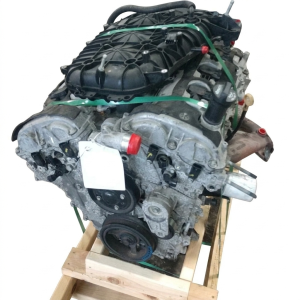
When ordering a used 3.6L LLT engine, you are not receiving a standard parcel package. This engine assembly weighs approximately 360 lbs and measures roughly 35" x 24" x 32" before crating. It ships as LTL (Less Than Truckload) freight on a wooden pallet. If you are having it delivered to a residential address or a shop without a loading dock or forklift, you must request liftgate service. Always inspect the engine thoroughly for shipping damage before signing the delivery receipt. A pre-purchase verification interview with the seller is an industry best practice to confirm exact fitment and condition before the freight ships.
Installation Essentials: What to Know Before You Start

Warning: This is an expert-level job. The most efficient and common procedure involves dropping the entire front subframe with the engine and transmission attached. It is not recommended for DIY mechanics without significant experience and specialized tools.
What is Included and Excluded
A standard used engine assembly typically includes the engine block and cylinder heads, all internally lubricated parts, oil pan, valve covers, timing covers and timing chain assembly, intake manifold, direct fuel injectors, fuel rails, high-pressure fuel pump, throttle body, harmonic balancer, and water pump. You will need to transfer or replace the A/C compressor, starter motor, power steering pump, alternator, exhaust manifolds, ignition coils, spark plugs, engine wiring harness, and Engine Control Unit (ECU/PCM).
Special Tools Required
This engine requires specific GM specialty tools for proper service, especially if you are doing timing work or replacing seals. These include:
- EN-48383 Camshaft Retaining/Holding Tool Kit
- EN-46106 Flywheel/Flexplate Holding Tool
- EN-46111 Crankshaft Rotation Tool
- EN-48245 High-Pressure Fuel Injector Remover
- EN-48246 Telemeter/Seal Installer
- A professional bi-directional scan tool
Required Programming
After the new engine is installed, you must perform a "Crankshaft Position (CKP) Sensor Variation Relearn" procedure using a professional-grade, bi-directional scan tool. Failure to do this will result in a persistent Check Engine Light, false misfire detection, and DTC P0315 (Crankshaft Position System Variation Not Learned). A Security/Immobilizer Relearn is also required if the ECM is swapped or needs synchronization.
Installation Gotchas
- FWD vs. AWD Oil Pan & Intermediate Shaft Bracket: If you are swapping an engine between a Front-Wheel Drive (FWD) and All-Wheel Drive (AWD) vehicle, you MUST swap the oil pan and the passenger-side intermediate axle shaft mounting bracket from your original engine onto the replacement unit.
- Torque-to-Yield (TTY) Bolts: The crankshaft harmonic balancer bolt is a one-time-use TTY bolt. It must be replaced and torqued to 74 lb-ft plus 150 degrees. Reusing the old bolt is a common buyer mistake that leads to failure.
- Timing Chain Alignment: If servicing the timing chains, it requires a strict two-stage alignment process to prevent bending the valves. Improper installation without cam locks is a frequent error.
- Fragile Knock Sensors: The knock sensors and their wiring harness located deep in the engine 'V' are extremely brittle. Handle them with extreme care during the swap.
- Wiring Harness: You must reuse your original engine wiring harness to ensure full compatibility with the vehicle's body systems.
Questions to Ask Your Installer
- Will you be performing the mandatory Crankshaft Position (CKP) Sensor Variation Relearn procedure after installation to prevent codes like P0315?
- My vehicle is [FWD/AWD]. The donor engine is from a [FWD/AWD]. Are you prepared to swap the oil pan and intermediate shaft bracket from my original engine?
- Will you be replacing the torque-to-yield (TTY) harmonic balancer bolt with a new one and torquing it to the proper spec (angle-torque method)?
- What specific brand and type of consumables will you use, such as oil (GM dexos1 spec), coolant (Dex-Cool), and spark plugs (Iridium)?
- While the engine is out, what 'while-you're-in-there' parts do you recommend replacing, such as the rear main seal, thermostat, or engine mounts?
- Does your quote include flushing the cooling system and A/C evacuation/recharge?
- How do you handle the brittle knock sensors and harness deep in the engine 'V' to prevent damage during installation?
- Will you be reusing my original engine wiring harness to ensure compatibility with my vehicle's electronics?
Arrival Inspection: Compression and Leak-Down
When your used engine arrives, check the cylinder health before you install it. A good used engine should have strong, even compression across all six cylinders. Perform a compression test or a leak-down test (a test that pumps pressurized air into the cylinder to see if it holds that pressure). The pressure readings should be within 10 to 15 percent of each other across all cylinders. If one cylinder has very low pressure, the engine has internal damage.
Before the First Start: Fluids and Priming
Never start a used engine dry. You must build oil pressure first to protect the internal moving parts.
1. Add Fresh Fluids
Always install a brand-new oil filter and fill the engine with fresh oil. The 3.6L LLT requires 5W-30 motor oil that meets the GM dexos1 specification. For the cooling system, you must use fresh Dex-Cool antifreeze (the orange coolant). Do not mix Dex-Cool with green or yellow coolants, or it will turn into a thick sludge that blocks the radiator.
2. Prime the Oil System
You must pump oil through the engine before it actually fires up and runs. Follow these steps to prime the system:
- Disable the fuel and ignition: Remove the fuel pump relay and the ignition fuses from the main fuse box. This stops the engine from starting.
- Crank the engine: Turn the key to the start position and let the starter motor spin the engine for 10 to 15 seconds.
- Wait and repeat: Let the starter cool down for one minute. Repeat the 15-second cranking process two or three more times. Watch the oil pressure gauge or warning light on the dashboard. Stop when you see the oil pressure rise or the low-pressure warning light turn off.
- Reconnect and start: Put the fuel pump relay and ignition fuses back in their correct spots. You can now safely start the engine.
Frequently Asked Questions
Do I have to program the computer after installing a used engine?
Yes. A Crankshaft Position (CKP) Sensor Variation Relearn is mandatory. This procedure calibrates the sensor to the specific tolerances of the reluctor ring on the replacement engine's crankshaft. Without it, the computer cannot accurately detect misfires and will set trouble code P0315.
Can I use an engine from a FWD Acadia in my AWD Traverse?
Yes, the core long block is the same. However, you must transfer the oil pan and the intermediate axle shaft bracket from your original AWD engine to the replacement FWD engine to accommodate the AWD system's front axle.
What is the most common installation mistake?
Two mistakes are very common: 1) Reusing the old harmonic balancer bolt, which is a one-time-use, torque-to-yield bolt that can back out or break if reused. 2) Skipping the mandatory CKP relearn procedure, which guarantees a comeback with a check engine light.
Is the 3.6L from a Camaro or Cadillac the same?
No. While they are in the same HFV6 engine family, other GM vehicles often use different versions like the LFX or LGX. These have different cylinder heads, manifolds, and fuel systems, making them incompatible without extensive modification. Always match the 8th VIN digit 'D'.
Does a used engine come with the alternator and starter?
Typically, no. Standard used engine assemblies include the block, heads, and internal components, along with the intake manifold and fuel injectors. Bolt-on accessories like the A/C compressor, starter motor, power steering pump, and alternator are excluded and must be transferred from your original engine.
Helpful Videos
Technical Specifications
Engine Size: 3.6L; Cylinders: V6; RPO Code: LLT; Valvetrain: Dual Overhead Cam (DOHC), 24 valves; Fuel System: Direct Injection; VIN Identifier (8th Digit): D; Oil Type: Full synthetic 5W-30 meeting GM dexos1 Gen 2/3 spec; Oil Capacity: 6.0 quarts; Coolant Type: GM-approved Dex-Cool 50/50 pre-diluted; Weight: Approx. 360 lbs; Dimensions (uncrated): Approx. 35" x 24" x 32"
We Have This Part in Stock

The information in this article is provided for general reference and educational purposes only. Vehicle specifications, procedures, and part compatibility can vary by production date, trim level, and region. Always consult your vehicle's factory service manual and verify part numbers before purchasing or performing repairs. Safety-critical components such as airbags, seat belts, and braking systems should be installed by a qualified professional.
- GMC Acadia:
- Chevrolet Traverse:
- Buick Enclave:
- GMC Acadia Limited:
- 🎬 Helpful Videos
- 🛍️ Shop This Part
- Engine Identification: Is This Your Engine?
- Common Failure Symptoms & Diagnosis
- Stretched Timing Chains
- Crankshaft Reluctor Ring Slippage
- Excessive Oil Consumption & PCV Issues
- Carbon Buildup on Intake Valves
- Diagnostic Flowchart
- Known Issues, Recalls, and Service Bulletins
- Timing Chain Stretch (TSB #PIP3423, #12-06-01-009, #12-06-01-009G)
- Crankshaft Reluctor Ring Slippage (TSB #PIP4526)
- Clogged PCV Orifice (TSB #15-06-01-003)
- Intake Valve Carbon Buildup (TSB #11-06-01-007)
- Water Pump Leaks (Special Coverage #13079)
- What Fails at Every Mileage Band
- Under 60,000 Miles
- 60,000 - 100,000 Miles
- 100,000 - 150,000 Miles
- Over 150,000 Miles
- Real Owner Experiences
- Repair or Replace?
- Replacement Cost Comparison
- Freight & Delivery Reality
- Installation Essentials: What to Know Before You Start
- What is Included and Excluded
- Special Tools Required
- Required Programming
- Installation Gotchas
- Questions to Ask Your Installer
- Arrival Inspection: Compression and Leak-Down
- Before the First Start: Fluids and Priming
- 1. Add Fresh Fluids
- 2. Prime the Oil System
- Frequently Asked Questions
- 🎟️ Get 5% Off