

2011-2014 Ford Mustang 3.7L Cyclone V6: Problems, Identification, and Used Replacement
Identify common failures on the 3.7L Duratec 37 and learn when to replace it with a verified used OEM engine.
- Verify you have the correct RWD Mustang engine by checking for the 'M' in the 8th VIN digit and the 'BR3E' block casting prefix; engines from F-150s or FWD/AWD vehicles are not compatible.
- The internal water pump is a critical failure point (TSB 16-0074); it is highly recommended to replace the water pump and thermostat on any used engine before installation to prevent catastrophic failure.
- Always replace the one-time-use, torque-to-yield crankshaft pulley bolt during installation, as reusing it can lead to harmonic balancer failure and crankshaft damage.
- To prevent electrical issues, always transfer the original engine wiring harness from your old engine to the replacement unit.
- If installing an engine from an automatic donor into a manual car, you must install a new pilot bearing in the crankshaft.
Confirming the Correct 3.7L Mustang Engine


The 3.7L Cyclone V6, also known as the Duratec 37, is a powerful and reliable engine found in 2011-2014 Ford Mustangs. However, not all Ford 3.7L engines are the same. Ensuring you have the correct version for your Mustang is critical for a successful replacement.
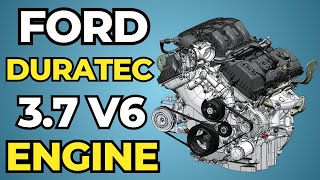
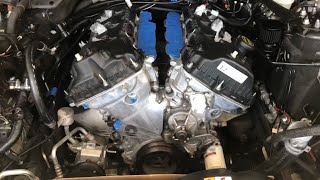
🎬 Watch: Complete 3.7L Duratec V6 engine review and common problemsVehicle and VIN Check
The first step is to confirm your vehicle's details. This specific engine assembly fits 2011-2014 Ford Mustang models. To verify the engine, check the 8th digit of your vehicle's Vehicle Identification Number (VIN). It must be the letter 'M'.
Engine Codes and Markings
For a more direct confirmation, look for the engine block's casting number. The correct engine for this Mustang application will have a prefix of BR3E. This code identifies the block as being designed for a rear-wheel-drive (RWD) layout.
Warning: Only 3.7L engines from a 2011-2014 Mustang will fit. Engines from other Ford, Lincoln, or Mazda models like the F-150, Edge, Explorer, Transit, MKX, or CX-9 are NOT compatible. These other versions have different block castings, mounting points, and water pump configurations (internal vs. external) that make them physically incompatible with the Mustang's RWD chassis.
Is Your 3.7L Mustang Engine Failing?

Severe engine problems often show clear symptoms. If you experience any of the following, a complete engine replacement may be necessary:
- Catastrophic Coolant Leak: A failed internal water pump can leak coolant directly into the engine oil. This creates a milky, frothy substance in the oil pan and is a leading cause of total engine failure for this model.
- Knocking or Banging Noises: Loud, rhythmic knocking from deep within the engine often indicates failed rod bearings, a sign of severe internal damage.
- Metal Shavings in Oil: Finding significant metallic particles in the engine oil or filter during an oil change points to excessive wear and imminent failure of internal components.
- Loss of Compression: If the engine has lost compression in one or more cylinders, it may struggle to start, run roughly, and have a major loss of power. This can be caused by damaged pistons, rings, or valves.
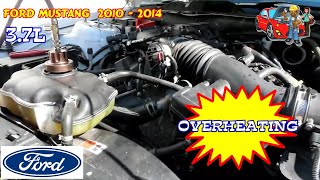
- Overheating and Head Gasket Failure: Persistent overheating can lead to a blown head gasket, which allows coolant and oil to mix, causing white smoke from the exhaust and engine damage. 🎬 See this video on diagnosing 3.7L Mustang overheating issues
Diagnostic Flowchart
Known Issues and Technical Service Bulletins (TSBs)
Ford has issued several documents addressing common issues with this engine. Knowing these can help in diagnosis and prevention.
Internal Water Pump Leak (TSB 16-0074)
This is the most critical issue for this engine. Some 2011-2014 Mustang 3.7L engines may experience coolant pump leakage. The internal, timing-chain-driven water pump can fail, leaking coolant directly into the crankcase and mixing with the engine oil. This contaminates the oil, leading to catastrophic bearing failure. The fix involves replacing the coolant pump and installing an updated degas bottle hose that includes a one-way check valve to prevent air from entering the system.
Pro Tip: It is highly recommended to replace the water pump and thermostat on any used engine before installation. The engine is already out of the car, making this preventative maintenance much easier and cheaper than addressing it later.
Electronic Throttle Body Contamination (CSP 16B23)
For 2011-2012 Mustang models, Ford initiated a Customer Satisfaction Program for faulty electronic throttle bodies (ETBs). Contamination inside the ETB could cause the vehicle to unexpectedly enter "limp home mode," where engine power and vehicle speed are drastically reduced. The wrench light or malfunction indicator lamp will illuminate when this occurs. The program involved replacing the ETB at no charge, though it had a limited time frame that has since expired.
Crank/No Start or Stalling (TSB 12-11-12)
Affecting 2011-2013 models, this issue can cause a crank-but-no-start condition or stalling. It is often related to a blown Fuse 13 in the battery junction box and is associated with diagnostic trouble code (DTC) P0627.
Cold Start Ticking/Tapping Noise (TSB 12-1-17)
Some 2011-2012 models may exhibit a light ticking or tapping noise from the left-side valve cover area on a cold start. The TSB advises inspecting the valve followers in that area.
Deceleration Vibration (TSB SSM 47614)
On 2011-2014 models, you may notice a vibration when slowing down. Ford has stated this is a normal operating characteristic of the drivetrain harmonics. No repair action is required.
Torque Converter Pilot Hub Noise (TSB SSM 47976)
Affecting 2011-2014 automatic models, a noise can develop from the torque converter area. To prevent this, apply Motorcraft Multi-Purpose Grease Spray (XL-5-A) to the torque converter pilot hub during installation.
Timing Chain Stretch and Accessory Belt Squeal
At high mileage (175,000+ miles), the timing chain can stretch. If diagnostic trouble codes (DTCs) P0344 or P0365 are present, you must replace the timing chain and tensioners. Additionally, accessory belt squeal is common on 2011-2014 models. Replace the accessory belts, particularly the stretch-fit A/C compressor belt, to fix this.
Estimated Replacement Costs
The cost of replacing a 3.7L Mustang engine varies based on the type of replacement unit and local labor rates. The prices below are estimates based on aggregated market data.
| Part or Service | Estimated Cost (USD) |
|---|---|
| New OEM | $6,000+ (Not commonly available or cost-effective) |
| Remanufactured Engine | $4,100 - $5,600 |
| Used OEM (Recycled) Engine | $1,100 - $2,500 (depending on mileage) |
| Shop Labor for Installation (10-16 hours) | $1,200 - $2,400 |
What Fails at Every Mileage Band
Pro Tip: The mileage bands below describe used replacement units of that specific mileage. The checklists provided are things to do WHILE INSTALLING the purchased engine, not maintenance for your current engine.
Under 60,000 Miles
The most frequently cited failure in this mileage range is the water pump. While the Mustang's 3.7L engine features an external water pump (unlike the problematic internal design in transverse applications), it is still a known weak point. Some owners report failures well before 50,000 miles. The issue is sometimes attributed to a design flaw related to a degas hose that allows air into the system. Electronic Throttle Body (ETB) contamination or failure was common enough on earlier 2011-2012 models to warrant a Customer Satisfaction Program (CSP 16B23). A small number of owners have reported more severe issues like cylinder head replacement at very low mileage (e.g., 18k miles), but these appear to be rare manufacturing defects.
- ✓Do during install (required): The crankshaft pulley bolt is a one-time-use, torque-to-yield fastener and MUST be replaced.
- ✓Do during install (recommended): Use fresh 5W-20 synthetic blend or full synthetic oil, a new oil filter, and fresh coolant.
- ✓Cheap insurance while the engine is out: Given the known failure rate, it is highly recommended to replace the water pump and thermostat with new, updated parts. Replace all primary gaskets such as intake, exhaust, valve cover, and the rear main seal. Install a new serpentine belt and A/C stretch belt. Inspect the tensioners for wear.
60,000 - 100,000 Miles
Water pump failures continue to be the most common issue reported in this range. Many owners who experience the failure do so between 60k and 80k miles. Spark plugs are typically due for replacement around 60,000-100,000 miles, depending on driving habits. Worn plugs can cause hesitation under acceleration. Accessory belt and tensioner wear can become apparent, leading to squealing noises. Some owners report minor issues like a faulty purge valve, which is an easy and inexpensive fix.
- ✓Do during install (required): Replace the one-time-use crank bolt.
- ✓Do during install (recommended): Replace spark plugs if their history is unknown. Closely inspect all cooling system hoses, accessory belt tensioners, and pulleys.
- ✓Cheap insurance while the engine is out: It is critical to replace the water pump, thermostat, and all accessible gaskets/seals.
100,000 - 150,000 Miles
This mileage range is where the risk of timing chain noise or stretch may begin to appear, although it is not considered a widespread, premature failure. Most timing chains are designed to last the life of the engine with proper maintenance. General wear-and-tear items become more prominent. This includes alternator failure, suspension components, and potentially the clutch on manual transmission models. Water pump failure remains a possibility if it has not been previously replaced with an updated part. Some owners report running well past this mileage with no major engine repairs.
- ✓Do during install (required): Replace the one-time-use crank bolt.
- ✓Do during install (recommended): Consider replacing the belt tensioners and idler pulleys.
- ✓Cheap insurance while the engine is out: At this mileage, it is wise to consider replacing the timing chain, guides, and tensioners as a preventative measure, especially since accessing them is labor-intensive once the engine is in the car. Replace the water pump and thermostat.
150,000+ Miles
The 3.7L Cyclone is widely regarded as a very durable engine, with many examples exceeding 200,000 miles with proper care. Failures at this mileage are often due to deferred maintenance or the eventual failure of wear items. Timing chain stretch or guide failure becomes a more realistic concern, especially if oil changes have been neglected. Engine failure due to neglect (e.g., not performing oil changes) has been reported. Some owners have achieved extremely high mileage (200k, 227k, even 450k) on the original engine and transmission with just routine maintenance.
- ✓Do during install (required): It is strongly advised to replace the timing chain, guides, and tensioners. Replace the one-time-use crank bolt.
- ✓Do during install (recommended): Strongly consider replacing the VCT solenoids/phasers, oil pump, and alternator while access is easy.
- ✓Cheap insurance while the engine is out: A thorough refresh is the best practice. This includes the water pump, thermostat, all gaskets and seals, spark plugs, belts, and tensioners.
Real Owner Experiences
To give you a clear picture of what to expect, here are real reports from owners regarding their 3.7L Cyclone engines.
| Source | Mileage | What Happened | Cost |
|---|---|---|---|
| Mustang6G.com Forum | 18,000 | Owner reported needing the passenger side cylinder head replaced. | Not specified, likely warranty. |
| Reddit r/Mustang | ~60,000 | Owner experienced a water pump defect, which was fixed by swapping in an updated part and flushing the coolant. | $500 (paid a mechanic) |
| YouTube Ownership Review | ~60,000 | Water pump went out, noticed by a slow fluid leak. | $500 (paid a mechanic) |
| Reddit r/Mustang | ~65,000 | Water pump failed. | Not specified. |
| The Mustang Source Forum | 80,000 | Owner replaced rotors and pads; no engine issues mentioned. | N/A |
| Mustang6G.com Forum | 88,000 | Owner reports no engine or transmission issues, only a failed brake booster at 40k miles. | N/A (no engine failure) |
| 115,000 | Replaced the engine with a remanufactured unit from Jasper. Quoted $9,500 for a used engine with 90k miles, installed. | $11,000 (parts and labor) | |
| Mustang6G.com Forum | 135,000 | Owner traded in the car; it needed no service or repairs beyond routine oil changes and ran as strong as new. | N/A |
| Reddit r/Mustang | 144,000 | Owner reports the engine has not had a single problem. | N/A |
| 150,000 | Considering options between selling the car, a partial repair, or a more comprehensive repair. Quoted $1,800 to replace the water pump, or $2,400 to replace the water pump, timing chain, and related components. | Not Stated | |
| Ford F150 Forum | 152,000 | Truck with the same 3.7L engine runs as good as the day it was bought. Owner changed spark plugs twice and performed regular maintenance. | N/A |
| Reddit r/f150 | 190,000 | Owner of an F-150 with the 3.7L only ever replaced the water pump and spark plugs. | Not specified. |
| Reddit r/Mustang | 215,000 | Owner reports the car rides and sounds great with routine maintenance; only non-engine repair was a blower motor. | N/A |
| BobIsTheOilGuy.com Forum | 235,000 | Replaced the internal water pump at a Ford dealership. | $1,600 |
| Reddit r/f150 | 450,000 | An F-150 with the 3.7L reached this mileage on its original engine and transmission, having been bought new. | N/A |
| Mustang6G.com Forum | Not Stated | Purchased a new engine from Ford and had a mechanic install it and transfer modifications. Quoted $14,000 - $17,000 for a rebuilt engine with stronger internals. | $9,811.55 (parts and labor for new engine install) |
Repair or Replace?
Deciding whether to repair your current engine or replace it with a used OEM unit comes down to the severity of the failure and the cost of labor.
- Internal Water Pump Leak: Typical repair costs range from $1,500 to $3,000. Repair makes sense when the failure is caught early before coolant has significantly contaminated the engine oil, leading to bearing damage. It is highly recommended to replace the timing chain, guides, and tensioners at the same time.
- Timing Chain Stretch / Rattle: Typical repair costs range from $2,000 to $3,000+. Repair makes sense if the engine has no other major issues (good compression, no bottom-end noise). The cost is high due to the labor-intensive nature of the job.
- Electronic Throttle Body (ETB) Failure: Typical repair costs range from $200 to $500. Always repair this. This is a relatively inexpensive and simple bolt-on part to replace and does not warrant an engine replacement.
When Replacement is Smarter: Replacement is the smarter option when the internal water pump has failed and coolant has extensively mixed with the engine oil, causing catastrophic damage to bearings and other internal components. It is also the preferred route for high-mileage engines where the cost of repairing a major issue (like timing components and water pump) approaches or exceeds the price of a lower-mileage used engine (which typically run $1,100 - $2,500).
Questions to Ask Your Installer
Before handing over your keys, ask your mechanic these critical questions:
- Have you worked on the Ford 3.7L Cyclone engine before and are you familiar with its specific issues, like the internal water pump?
- What is the source and mileage of the used engine, and what kind of warranty is provided on the part and the labor?
- Will you be replacing the one-time-use Torque-to-Yield crankshaft pulley bolt with a new one?
- Do you recommend replacing the water pump, thermostat, and timing components on the replacement engine before installation as a preventative measure?
- How will you handle the PATS security system? Do you have the Ford IDS or a compatible scan tool to perform a parameter reset or key relearn if needed?
- Will you be transferring my original engine wiring harness and sensors to the new engine to ensure compatibility?
- If my car has a manual transmission, will you be installing a new pilot bearing into the crankshaft of the donor engine?
- What is the estimated total cost, including all necessary fluids, gaskets, seals, and potential programming fees?
Freight and Delivery Reality

When ordering a used 3.7L Mustang engine, it will not arrive in a standard cardboard box. This assembly weighs approximately 425 pounds and measures roughly 44" x 36" x 36" before crating. It ships as LTL (Less Than Truckload) freight on a wooden pallet.
Because of its size and weight, a delivery truck with a liftgate is required to lower the pallet to the ground if you do not have a loading dock or forklift. Always perform a pre-purchase verification interview with the seller to confirm the VIN and casting numbers. When the engine arrives, you must inspect it thoroughly for any shipping damage before signing the delivery receipt. Once you sign, you are accepting the freight in its current condition.
Key Considerations for Installation

What's Included in a Used Assembly?
A standard used engine assembly typically includes the engine block, cylinder heads, oil pan, valve covers, upper and lower intake manifolds, timing covers, fuel rails, fuel injectors, throttle body, harmonic balancer, and all internally lubricated parts. It does not typically include bolt-on accessories like the A/C compressor, starter motor, alternator, power steering pump, exhaust manifolds, or the main engine wiring harness. Always plan to transfer these parts from your original engine.
Pro Tip: Always transfer your original engine wiring harness to the replacement engine. This ensures all electrical connectors and pinouts match your vehicle's computer (PCM) perfectly, preventing hard-to-diagnose electrical gremlins.
Mandatory Replacement Parts & Fluids
To ensure a long service life for your replacement engine, certain parts should always be replaced during the swap:
- Crankshaft Pulley Bolt: This is a one-time-use, torque-to-yield (TTY) bolt. Reusing it will lead to stretching and can cause the harmonic balancer to wobble and damage the crankshaft.
- Gaskets and Seals: Install new upper and lower intake manifold gaskets, exhaust manifold gaskets, and a thermostat housing gasket.
- Fluids and Filters: Use 6.0 quarts of 5W-20 motor oil (Full Synthetic WSS-M2C945-A or Synthetic Blend), a new Motorcraft FL-500S oil filter, and 12.4 quarts of Motorcraft Orange or Yellow Concentrated Antifreeze/Coolant (50/50 mix with distilled water).
- Spark Plugs: Install 6x Motorcraft SP-548 (or CYFS12F-5) spark plugs (gapped to 0.049-0.053 inches).
- Accessory Belts: Replace the serpentine accessory belts while access is easy.
Warning: If installing an engine from an automatic transmission donor into a manual transmission car, you must install a new pilot bearing into the rear of the crankshaft. Forgetting this step will prevent the transmission from mating correctly with the engine.
Arrival Inspection: Compression and Leak-Down
When your used engine arrives, test the cylinders before installing it. A compression test measures the pressure your engine makes while cranking. A leak-down test pumps air into the cylinder to see if it holds pressure.
- Check for consistency: All six cylinders should have similar compression numbers. A healthy 3.7L engine will have readings within 10 to 15 percent of each other.
- Listen for leaks: During a leak-down test, listen for air escaping from the exhaust, intake, or oil cap. This tells you if the engine valves or piston rings are worn out.
Before the First Start: Fluids and Priming
Used engines sit for months without running. The oil drains away from moving parts. You must prime the oil system before starting the engine to prevent dry metal-on-metal damage.
- Add fresh fluids: Install a new oil filter. Fill the engine with fresh 5W-20 motor oil that meets Ford specifications. Fill the cooling system with the correct Motorcraft Orange or Yellow coolant for your specific year.
- Stop the engine from starting: Remove the fuel pump fuse or relay. You can also press the gas pedal all the way to the floor. This puts the car in "clear flood mode" and stops fuel from spraying into the engine.
- Crank the engine: Turn the key and let the starter spin the engine for 10 to 15 seconds. Do not let it start.
- Check for pressure: Watch the oil pressure gauge or warning light on your dashboard. Once the gauge shows pressure or the light turns off, stop cranking.
- Start the engine: Put the fuel pump fuse back in, or take your foot off the gas pedal. You can now safely start the engine.
Long Block vs. Complete Assembly
Used 3.7L Mustang engines are sold in two main ways: as a long block or a complete assembly. Knowing the difference helps you understand what parts you need to keep from your old engine.
- Long Block: This is the core engine. It includes the engine block, cylinder heads, and all internal moving parts (like pistons and camshafts). It also includes the timing chain and front timing cover. It does not include the intake manifold, exhaust manifolds, or fuel system.
- Complete Assembly: This includes the long block plus external bolted-on parts. A complete assembly usually comes with the upper and lower intake manifolds, fuel injectors, throttle body, and exhaust manifolds.
Frequently Asked Questions
Do I need to reprogram the car's computer (PCM)?
Possibly. To avoid a no-start condition, the vehicle's Passive Anti-Theft System (PATS) may require a security parameter reset using a Ford-specific scan tool. This syncs the replacement engine's sensors with your car's security system. At a minimum, a Crankshaft Position (CKP) profile relearn procedure may be needed.
What does Ti-VCT mean?
Ti-VCT stands for Twin Independent Variable Camshaft Timing. It is a technology Ford uses to independently adjust the timing of both the intake and exhaust camshafts. This allows the engine's computer to optimize performance, improving power and torque while also increasing fuel efficiency and reducing emissions.
How much does the 3.7L engine weigh for shipping?
A used 3.7L Cyclone V6 engine assembly weighs approximately 425 pounds before being crated for shipment. It is shipped on a pallet via LTL freight, not as a standard parcel.
What special tools are required for installation?
You will need an engine hoist/crane, a heavy-duty load leveler, a fuel line quick-disconnect tool set, a Ford-specific harmonic balancer puller/installer, a calibrated torque wrench, and an engine lift plate (such as the Steck EngineOut).
Can I use a 3.7L engine from a Ford F-150 or Edge?
No. Attempting to install this RWD Mustang engine in FWD/AWD platforms like the Edge, Explorer, Taurus, or Lincoln MKX/MKT (or vice versa) is a common buyer mistake. They are NOT compatible due to different block castings, accessory drive layouts, water pump configurations (internal vs external), and mounting bosses.
Helpful Videos

Technical Specifications
Engine: 3.7L Cyclone V6 (Duratec 37); Vehicle Fitment: 2011-2014 Ford Mustang; VIN Digit (8th): M; Block Casting Prefix: BR3E; Drivetrain Layout: RWD; Weight: ~425 lbs; Shipping Dimensions: ~44" x 36" x 36"; Oil Type: 5W-20 Synthetic Blend or Full Synthetic; Oil Specification: WSS-M2C945-A; Oil Capacity: 6.0 quarts; Oil Filter: Motorcraft FL-500S; Coolant Type: Motorcraft Orange or Yellow Concentrated; Coolant Capacity: 12.4 quarts (50/50 mix); Spark Plugs: Motorcraft SP-548 (CYFS12F-5); Spark Plug Gap: 0.049-0.053 inches; Technology: Twin Independent Variable Camshaft Timing (Ti-VCT)
We Have This Part in Stock


The information in this article is provided for general reference and educational purposes only. Vehicle specifications, procedures, and part compatibility can vary by production date, trim level, and region. Always consult your vehicle's factory service manual and verify part numbers before purchasing or performing repairs. Safety-critical components such as airbags, seat belts, and braking systems should be installed by a qualified professional.
- Ford Mustang:
- 🎬 Helpful Videos
- 🛍️ Shop This Part
- Confirming the Correct 3.7L Mustang Engine
- Vehicle and VIN Check
- Engine Codes and Markings
- Is Your 3.7L Mustang Engine Failing?
- Diagnostic Flowchart
- Known Issues and Technical Service Bulletins (TSBs)
- Internal Water Pump Leak (TSB 16-0074)
- Electronic Throttle Body Contamination (CSP 16B23)
- Crank/No Start or Stalling (TSB 12-11-12)
- Cold Start Ticking/Tapping Noise (TSB 12-1-17)
- Deceleration Vibration (TSB SSM 47614)
- Torque Converter Pilot Hub Noise (TSB SSM 47976)
- Timing Chain Stretch and Accessory Belt Squeal
- Estimated Replacement Costs
- What Fails at Every Mileage Band
- Under 60,000 Miles
- 60,000 - 100,000 Miles
- 100,000 - 150,000 Miles
- 150,000+ Miles
- Real Owner Experiences
- Repair or Replace?
- Questions to Ask Your Installer
- Freight and Delivery Reality
- Key Considerations for Installation
- What's Included in a Used Assembly?
- Mandatory Replacement Parts & Fluids
- Arrival Inspection: Compression and Leak-Down
- Before the First Start: Fluids and Priming
- Long Block vs. Complete Assembly
- Frequently Asked Questions
- 🎟️ Get 5% Off