

2015-2016 Ford F-150 2.7L EcoBoost V6: Problems, Identification, and Used Replacement
Learn how to identify the first-generation 2.7L "Nano" engine, understand its common failures, and know when to swap it for a used OEM replacement.
- Verify the engine is from a 2015-2016 F-150 with the 8th VIN digit 'P'; engines from other Ford/Lincoln models like the Edge or Fusion are not compatible and will not fit.
- Before installing a used engine, proactively perform TSB updates by replacing the plastic oil pan with the gasketed version (JT4Z-6675-E), installing new valve covers, and updating the left-hand turbo oil feed line (FU7Z-9T516-A).
- Always use a new one-time-use crankshaft pulley bolt (FT4Z-6A340-A) and follow the strict 4-stage torque procedure to prevent catastrophic timing failure.
- A mandatory Crankshaft Position (CKP) Sensor Relearn procedure must be performed with a compatible scan tool after installation to prevent persistent false misfire codes.
- Plan to transfer the wiring harness from your original engine to the donor unit to avoid electrical compatibility issues with your truck's specific options.
Confirming Your F-150 Has the 2.7L 'Nano' V6 Engine

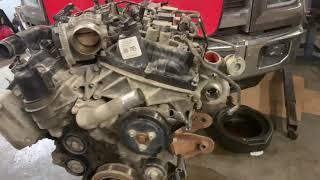
The 2015-2016 Ford F-150 was available with the first generation of the 2.7L EcoBoost V6, codenamed "Nano." This is a 60-degree V6, twin-turbocharged, direct-injected engine known for its power and complexity. 🎬 Watch: Mechanic reviews the top 5 common issues Before ordering a replacement, it is critical to verify that your truck has this exact engine, as parts from other Ford models are not compatible.
Follow these steps to confirm your engine type:
- Check the VIN: The most reliable method is to check the 8th digit of your truck's Vehicle Identification Number (VIN). If it is the letter 'P', your truck is equipped with the 2.7L EcoBoost.
- Underhood Sticker: Look for the white Vehicle Emission Control Information (VECI) sticker under the hood. It will clearly state the engine displacement as 2.7L.
- Visual Inspection: On the 2.7L engine, the oil filter is a cartridge-style filter with a black plastic cap. You can see this cap on the front passenger side of the engine, pointing upwards.
- Model Year: Ensure the truck is a 2015 or 2016 model. 2017 models have different wiring harnesses, and 2018+ models use the Generation 2 engine.
What Will Not Fit
Ford used the 2.7L EcoBoost engine in other vehicles like the Edge, Fusion, and various Lincoln models (like the Continental). However, these engines are not interchangeable with the F-150 version. They have different engine block castings, oil pans, wiring harnesses, accessory drives, and computer (ECU) programming. Only an engine from a 2015-2016 F-150 with the same VIN code 'P' will fit correctly.
Warning: Do not order an engine from a non-F-150 donor vehicle. It will not work in your truck without extensive, costly modifications.
Symptoms of a Failing 2.7L EcoBoost Engine
Engine failure can manifest in several ways. If you experience any of the following, it may be time to consider a replacement:
- Excessive Smoke on Startup: Puffs of white or blue smoke immediately after a cold start can point to a failing turbocharger oil supply line, a known issue covered by a Technical Service Bulletin (TSB).
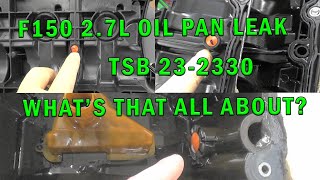
- Puddles of Oil: Significant oil leaks on the garage floor or driveway are often caused by the original plastic oil pan, which is prone to warping and seal failure. 🎬 See this update on the leaking plastic oil pan
- Severe Oil Consumption and Rough Idle: If your engine is consuming more than a quart of oil every 3,000 miles and runs rough, it could be due to premature wear of the cylinder head valve guides, a severe problem affecting some 2016-2017 models.
- Knocking or Rattling Noises: A distinct rattling sound from the engine on cold startups can be an early sign of failing camshaft phasers. A deeper, more persistent knock could indicate catastrophic internal damage.
- Check Engine Light (MIL): An illuminated check engine light with codes for misfires (P0300-P0306), low oil pressure (P0524), or evaporative emissions (P2450 or P1450) can all be related to underlying engine problems.
- Coolant Over Temperature Warning: An illuminated MIL or dashboard warning for engine coolant over temperature can point to wiring harness issues with the engine coolant temperature (ECT) sensor or knock sensor.
Diagnostic Flowchart
Known Issues, Recalls, and Service Bulletins

This engine has several well-documented issues. When replacing your engine, it is wise to perform the recommended updates on the donor unit before installation.
Pro Tip: Always perform the recommended TSB updates on the donor engine while it is out of the truck. This is significantly easier and cheaper than addressing them after installation.
| Issue / TSB | Description | Affected Years | Remedy |
|---|---|---|---|
| Leaking Oil Pan (TSB 23-2083 / 19-2205) |
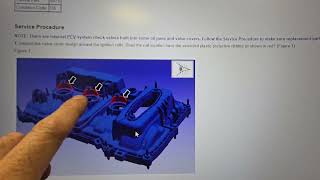
The original one-piece plastic oil pan with a sealant (RTV) gasket is prone to leaking due to warping and crankcase pressure issues. | 2015-2017 F-150 | Replace with a revised, stronger oil pan (Part # JT4Z-6675-E) that uses a traditional gasket, and replace both valve covers simultaneously to correct PCV issues. |
| Oil Consumption & Rough Idle (TSB 19-2384) |
Premature wear of the cylinder head valve guides causes excessive oil burning, misfires, and rough idle. | 2016-2017 F-150s built between April 1, 2016, and January 1, 2017. | Replace both cylinder heads. If DTCs P0524 and/or P06DD are present, the entire engine long block must be replaced. |
| White or Blue Smoke on Cold Start (TSB 19-2188) |
Oil seeps into the turbocharger when the engine is off, burning off as smoke upon the next startup. | 2015-2017 F-150 | Replace the left-hand turbocharger oil supply tube with an updated part (Part # FU7Z-9T516-A) that includes a check valve. |
| Illuminated MIL with DTC P2450 (TSB 18-2387) |
A faulty evaporative emission blocking valve triggers a check engine light. | 2015 F-150s built on or before October 5, 2015. | Replace the evaporative emission blocking valve. |
| Coolant Over Temperature Warning (SSM 48991) |
False overheating warnings or check engine lights caused by wiring issues with the engine coolant temperature (ECT) sensor or knock sensor. | 2015-2020 F-150 | Address issues with the specified wiring harnesses. |
| Engine Block Heater Fire Risk (Recall 20S08 / 18S45) |
Water and contaminants can enter the block heater cable's splice connector, causing corrosion and a potential fire hazard. | 2015-2019 F-150 | Dealers will inspect the block heater cable and replace it if necessary. |
| Camshaft Phaser Rattle (No TSB Listed) |
A rattling noise on cold startup is an early sign of a failing camshaft phaser. | 2015-2017 F-150 | Requires replacement of the camshaft phasers and often the timing chain components. |
2.7L EcoBoost Engine Replacement Cost
The cost to replace a 2.7L EcoBoost engine depends heavily on the type of replacement unit you choose. Labor costs for the swap typically range from $2,000 to $4,800, as the job takes an estimated 16 to 24 hours for a professional technician.
| Part Type | Estimated Cost (Part Only) | Typical Total Cost (with Labor) |
|---|---|---|
| Used OEM | $2,500 - $6,000 | $4,500 - $10,800 |
| Remanufactured OEM | $5,500 - $8,000 | $7,500 - $12,800 |
| New OEM (Dealer) | $8,000 - $11,000+ | $10,000 - $15,800+ |
Costs are estimates and can vary based on part availability, location, and shop labor rates.
What a Used Engine Assembly Includes

A used engine assembly, as defined by the Automotive Recyclers Association (ARA), is a "long block" with some additional bolt-on parts. Understanding what is and isn't included is key to a smooth installation.
What's Typically Included:
- Cylinder block and all internally lubricated parts
- Cylinder heads and all internal parts
- Oil pan and valve covers
- Intake manifold and throttle body
- Fuel injectors and engine wiring harness
- Timing covers and harmonic balancer
What's Not Included (Transfer from your old engine):
- Turbochargers (Verify with seller, but usually excluded)
- A/C compressor and alternator
- Power steering pump and starter
- Exhaust manifolds
Pro Tip: Always plan to transfer the wiring harness from your original engine to the donor unit. This avoids potential compatibility issues with your truck's specific features and model year. Plastic wiring harness connectors become brittle with age and heat cycles; handle them with extreme care.
Key Installation Steps and Required Parts

Proper installation is critical for the long-term health of the replacement engine. This is an expert-level job requiring special tools and procedures.
Special Tools Required
- Universal holding tool (e.g., OTC 4754) to hold the crankshaft pulley.
- Ford-specific scan tool (IDS, FDRS, or high-end bi-directional scanner like FORScan).
- Fuel injector remover/installer tool (e.g., OTC 310-250).
- Quick-disconnect tools for fuel lines and turbocharger lines.
- Timing tool kit (e.g., CTA 6680 or 9203 / Ford 303-1248, 303-1530).
Required Consumables at Install
- 6.0 quarts of SAE 5W-30 motor oil (meeting Ford WSS-M2C946-A / WSS-M2C961-A1 / WSS-M2C963-A1 specs).
- New Motorcraft FL-2062 / FL-2062-A oil filter.
- Motorcraft Yellow or Orange coolant.
- 6 new pre-gapped spark plugs (Motorcraft SP-542 or SP-594, gapped to 0.028-0.031 in).
- Intake manifold gaskets, throttle body gasket, exhaust manifold gaskets, and turbocharger mounting gaskets/seals.
- High-pressure fuel pump O-ring and fuel injector seal kits.
- Left and right valve cover gaskets.
- Front and rear main seals.
- One-time use Crankshaft Pulley Bolt (Part # FT4Z-6A340-A).
- One-time use Turbocharger mounting nuts/bolts.
Critical 'Gotchas' During Installation
Warning: The crankshaft pulley bolt is a one-time-use, torque-to-yield bolt. It MUST be replaced (Part # FT4Z-6A340-A) and tightened using a strict 4-stage torque procedure. Failure to do so will cause timing gear slippage and catastrophic engine damage.
- Oil Pan & Valve Covers: Before installing the engine, perform the fix for TSB 23-2083 by installing the new gasketed oil pan and both updated valve covers. It is much easier to do this while the engine is on the ground.
- Fuel System: This is a high-pressure direct injection system (over 2,000 PSI). It must be properly depressurized before service. The high-pressure lines and rails are one-time use and must be replaced if removed. Damaging direct injector tips or reusing old Teflon seals during transfer is a common mistake.
- Turbocharger Oil Feed Line: Install the updated left-hand turbocharger oil feed tube (Part # FU7Z-9T516-A) to prevent cold-start smoke.
- Oil System Priming: Before the first start, disable the fuel system and crank the engine in short bursts to build oil pressure. This prevents a "dry start" that can damage the engine and turbochargers.
Required Computer Programming
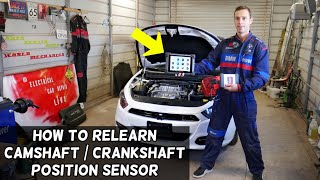
After installation, the powertrain computer requires a Crankshaft Position (CKP) Sensor Relearn (Misfire Monitor Profile Correction) procedure. This synchronizes the sensor with the new engine to ensure accurate misfire detection. Skipping this step will result in immediate and persistent false misfire codes. While a Ford dealer tool (IDS/FDRS) is best, this can also be done with high-end aftermarket scan tools or software like FORScan with a compatible OBDII adapter. No ECU remarriage is required.
What Fails at Every Mileage Band
Pro Tip: The mileage bands below describe the typical condition of USED REPLACEMENT UNITS at that mileage. The checklists provided are things you should do WHILE INSTALLING the purchased engine, not maintenance for your current broken engine.
Under 60,000 Miles
Engines in this range are generally healthy but are highly susceptible to the factory defects that triggered early TSBs. Known failures include the leaking plastic oil pan (TSB 23-2083), excessive white or blue smoke on cold start due to oil in the left-hand turbocharger (TSB 19-2188), a faulty evaporative emission purge valve causing rough idle and stalling (P1450), and minor coolant weeps from lines at the back of the block.
- ✓Do during install (required): Upgrade to the gasketed-style oil pan (Part # JT4Z-6675-E) and replace both valve covers (per TSB 23-2083) to prevent leaks.
- ✓Do during install (required): Replace the left-hand turbocharger oil supply tube with the revised part (Part # FU7Z-9T516-A) to prevent cold start smoke issues (per TSB 19-2188).
- ✓Do during install (required): Replace all vital fluids (oil, coolant).
- ✓Do during install (required): Inspect and replace all single-use gaskets and seals for components that were removed (intake, throttle body, etc.).
- ✓Do during install (recommended): Replace spark plugs and boots.
60,000 - 100,000 Miles
At this mileage, wear and tear begin to compound with factory defects. Known failures include catastrophic engine failure (such as a spun bearing), cylinder head issues related to valve guides causing oil consumption and smoke, persistent oil pan leaks if the TSB was not performed correctly, ignition coil and spark plug failures, and carbon buildup on intake valves (a common issue for direct-injection engines).
- ✓Do during install (required): All required items from the Under 60k band.
- ✓Do during install (recommended): Replace spark plugs and ignition coils as preventative maintenance.
- ✓Do during install (recommended): Consider performing a walnut blast cleaning of the intake valves to remove carbon deposits if the engine has a history of short trips.
- ✓Do during install (recommended): Thoroughly inspect all turbocharger lines and wastegate vacuum tubing for brittleness or leaks.
100,000 - 150,000 Miles
Engines crossing the 100k mark face significant mechanical wear. Known failures include complete timing system failure (chains, guides, phasers) potentially leading to catastrophic engine damage, turbocharger underboost conditions (P0299) which can be difficult to diagnose, head gasket failures, and transmission failures (6R80) particularly limp mode or hard shifting.
- ✓Do during install (required): All required items from previous bands.
- ✓Cheap insurance while the engine is out: Replace the entire timing set (chains, phasers, guides, and tensioners) as a preventative measure.
- ✓Do during install (recommended): Replace all four O2 sensors to ensure proper fuel economy and engine management.
- ✓Do during install (recommended): Replace the evaporative emission purge valve solenoid.
- ✓Do during install (recommended): Thoroughly inspect and consider replacing turbochargers if there is any shaft play or signs of wastegate issues.
Over 150,000 Miles
High-mileage units require comprehensive inspection. Known failures include ongoing issues like oil leaks if not properly addressed earlier in the engine's life, general wear and tear on accessories and sensors, and a higher likelihood of transmission replacement.
- ✓Do during install (required): All required items from previous bands, with a stronger emphasis on replacing wear items.
- ✓Cheap insurance while the engine is out: Assume the timing system and oil pump have significant wear and should be replaced.
- ✓Cheap insurance while the engine is out: Strongly consider replacing the water pump, all turbo coolant/oil lines, and vacuum hoses.
- ✓Do during install (recommended): A comprehensive inspection of the turbochargers is critical; replacement is a strong possibility.
Real Owner Experiences
The service life of the 2015-2016 2.7L EcoBoost can vary significantly. While many examples are known to exceed 200,000 miles with proper care, this generation is also prone to significant failures before 100,000 miles. Longevity is highly dependent on proactive maintenance, using the specified SAE 5W-30 synthetic oil, adhering to 5,000-7,500 mile oil change intervals, and addressing known TSBs.
| Source | Mileage | What Happened | Cost |
|---|---|---|---|
| Car Talk Community Forum | 36,686 | Owner reported their 2015 F-150 was on its fourth replacement oil pan, and it was leaking again. The issue was identified as being related to crankcase pressure, requiring valve cover replacement per a new TSB. | Quoted over $800 by the dealer for the valve cover replacement, as the truck was out of warranty. |
| Reddit r/f150 | 63,000 | Owner of a 2015 2.7L reported no engine issues, only a failed heated seat module and TPMS sensors. | Not stated |
| Reddit r/f150 | 82,000 | Owner reported a spun bearing, which resulted in needing a complete replacement engine. The repair was covered under an extended warranty. | Covered by warranty |
| Rokslide Forum | around 60,000 | Cylinder heads were replaced under warranty for a smoke-at-startup issue. The owner noted the issue persisted even after the repair. | Covered by warranty |
| Quora | 91,000 | Owner experienced a failed evap canister purge valve (P1450) causing rough running and stalling after coasting. The repair was simple and inexpensive. | Inexpensive |
| Reddit r/f150 | 111,000 | The owner had the entire timing system fail, costing $4,800 to repair. Three weeks later, the engine blew up, requiring a full replacement. The truck also had a lifelong, unresolvable oil pan leak. | $4,800 for timing, plus engine replacement |
| Ford F150 Forum | 130,000 | The truck repeatedly entered a 'reduced power' mode and set a P0299 Turbo Underboost code. The owner spent over $3,000 replacing both turbos, all associated lines, and multiple sensors, but the problem persisted. | Over $3,000 |
| Reddit r/f150 | 117,000 to 236,000 | Owner bought the truck with 117k miles and drove it to 236k miles, towing a 6,000 lb trailer almost daily. The transmission was replaced at 175k miles. The only other engine issues reported were a water pump and a boost leak. | Not stated |
| Rokslide Forum | 230,000 | An owner traded in their truck at 230k miles. It had cylinder heads replaced at 60k, two oil pan replacements, and a third pan that was still weeping oil. | Not stated |
| f150forum.com | 217,000 | Considering options between engine replacement and buying a new truck. | Quoted about $10,000 for a long block replacement. |
| f150forum.com | 90,000 | Opted for the used engine replacement paid for by insurance. | $10,000 for a used engine with 90k miles (parts and labor included) or $15,000 for a new engine. |
| reddit.com | 90,000 | Seeking quotes from multiple shops after engine blew up. | Quoted $9,500 for a 90k mile used engine and installation. |
| reddit.com | 115,000 | Replaced with a remanufactured engine from Jasper. | Paid $11,000 |
| reddit.com | 65,000 | Evaluating options for engine rebuild to address TSB 19-2384. | Quoted $14,000 |
Repair or Replace?
Deciding whether to repair your current 2.7L EcoBoost or replace it entirely depends on the specific failure and the overall mileage of the engine.
When Repair Makes Sense
- Leaking Oil Pan (TSB 23-2083): If the engine is still in the truck and this is the only issue, repair is the logical path. Typical repair costs range from $1,400 to $3,300, depending on whether it's done at a dealer vs. independent shop and if the valve covers also require replacement per the TSB. This repair should always be performed when a replacement engine is out of the vehicle.
- Single Turbocharger Failure: If only one turbo has failed and the rest of the engine is healthy (good compression, no major oil consumption), replacing the single faulty turbo is cost-effective. A dealer replacement for one side costs around $1,900 to $2,500.
When Replacement is Smarter
Replacement becomes the smarter financial choice when the engine suffers from severe internal damage, such as the conditions outlined in TSB 19-2384 (oil consumption due to valve guide wear). A dealer quote for this cylinder head repair can reach $8,500, which is close to the cost of a complete used engine replacement. For high-mileage engines (over 150,000 miles) facing any significant internal issue like coolant intrusion or loss of compression, the risk of other components failing soon makes a complete engine swap a more reliable long-term solution than a single, expensive repair.
Questions to Ask Your Installer
- Have you confirmed this donor engine is from a 2015-2016 F-150 and not an Edge, Fusion, or Lincoln?
- Will you be performing the TSB 23-2083 update with the new gasketed oil pan and required valve covers before installing the engine?
- Will you be installing the updated left-hand turbo oil feed line (Part # FU7Z-9T516-A) to prevent future smoke issues?
- Do you have the proper tools to perform the 4-stage torque sequence on the new, one-time-use crankshaft pulley bolt?
- How do you plan to prime the oiling system before the first start to protect the engine and turbochargers?
- Will you be transferring my original wiring harness to the donor engine to ensure compatibility?
- Are you equipped to perform the mandatory Crankshaft Position (CKP) sensor relearn procedure after installation?
- Does your quote include all necessary one-time-use bolts, gaskets, and seals for the turbos, fuel system, and manifolds?
Freight, Shipping, and Delivery Reality

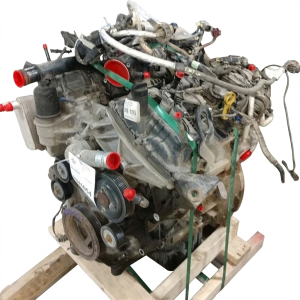
Ordering a replacement engine is not like ordering a standard auto part. A used 2.7L EcoBoost engine assembly weighs approximately 440 lbs and measures roughly 38" x 36" x 36" before crating. Because of its size and weight, it ships as LTL (Less-Than-Truckload) freight on a pallet—never as a standard parcel.
- Delivery Requirements: Freight carriers require a commercial address with a loading dock or a forklift for standard delivery. If delivering to a residential address or a shop without a forklift, you must request a truck with a liftgate.
- Inspect Before Signing: When the engine arrives, inspect the pallet and the engine thoroughly before signing the delivery receipt. Look for any damage to the oil pan, valve covers, or sensors that may have occurred during transit.
- Pre-Purchase Verification: Reputable sellers will conduct a pre-purchase verification interview to confirm your VIN (specifically the 8th digit 'P') and ensure you are ordering the correct engine for your exact truck.
Frequently Asked Questions
Can I use a 2.7L engine from a Ford Edge or Lincoln Continental?
No. While they share the same basic displacement, the F-150 version of the 2.7L engine has a different block, oil pan, wiring, and other components that make it incompatible with the versions used in cars and SUVs.
Do I have to replace the valve covers if I upgrade the oil pan?
Yes. According to Ford's service bulletin (TSB 23-2083), the updated oil pan must be installed along with new valve covers. The new parts work together to correct the crankcase ventilation system pressure that contributed to the original pan leaking.
Is it okay to reuse the old crankshaft pulley bolt?
No. This is a torque-to-yield (TTY) bolt designed to stretch when tightened. It is a one-time-use part (Part # FT4Z-6A340-A) and must be replaced. Reusing it is one of the most common and costly mistakes made during this engine swap, as it can lead to timing failure.
Do the turbochargers come with a used engine?
Typically, no. Most used engine assemblies do not include the turbochargers, exhaust manifolds, or front-end accessories like the alternator and A/C compressor. You should always confirm what is included with the seller before purchasing.
Why do I need to do a Crankshaft Position Sensor Relearn?
The powertrain computer needs to synchronize with the new engine's specific mechanical tolerances to accurately detect misfires. If you skip this step, the computer will likely trigger false misfire codes and illuminate the check engine light immediately after installation.
What kind of oil should I use in the 2.7L EcoBoost?
You must use 6.0 quarts of SAE 5W-30 motor oil that meets Ford specifications (WSS-M2C946-A, WSS-M2C961-A1, or WSS-M2C963-A1). Using the wrong viscosity or conventional oil instead of a synthetic blend or full synthetic can damage the turbochargers and timing components.
Helpful Videos
Technical Specifications
OEM Part Numbers: JT4Z-6675-E FU7Z-9T516-A FT4Z-6A340-A FL-2062 FL-2062-A SP-542 SP-594
Engine Code: Nano; Displacement: 2.7L; Configuration: 60-degree V6; Aspiration: Twin-Turbocharged; Fuel System: Direct Injection; VIN Identifier (8th digit): P; Oil Type: SAE 5W-30; Oil Capacity: 6.0 quarts; Spark Plug Gap: 0.028-0.031 in; Weight: Approx. 440 lbs
We Have This Part in Stock

The information in this article is provided for general reference and educational purposes only. Vehicle specifications, procedures, and part compatibility can vary by production date, trim level, and region. Always consult your vehicle's factory service manual and verify part numbers before purchasing or performing repairs. Safety-critical components such as airbags, seat belts, and braking systems should be installed by a qualified professional.
- Ford F-150:
- 🎬 Helpful Videos
- 🛍️ Shop This Part
- Confirming Your F-150 Has the 2.7L 'Nano' V6 Engine
- What Will Not Fit
- Symptoms of a Failing 2.7L EcoBoost Engine
- Diagnostic Flowchart
- Known Issues, Recalls, and Service Bulletins
- 2.7L EcoBoost Engine Replacement Cost
- What a Used Engine Assembly Includes
- What's Typically Included:
- What's Not Included (Transfer from your old engine):
- Key Installation Steps and Required Parts
- Special Tools Required
- Required Consumables at Install
- Critical 'Gotchas' During Installation
- Required Computer Programming
- What Fails at Every Mileage Band
- Under 60,000 Miles
- 60,000 - 100,000 Miles
- 100,000 - 150,000 Miles
- Over 150,000 Miles
- Real Owner Experiences
- Repair or Replace?
- When Repair Makes Sense
- When Replacement is Smarter
- Questions to Ask Your Installer
- Freight, Shipping, and Delivery Reality
- Frequently Asked Questions
- 🎟️ Get 5% Off