

2011-2012 Ford F-150 3.5L EcoBoost: Problems, Identification, and Used Replacement
Identify the exact VIN T engine, learn what kills the first-generation twin-turbo V6, and know when to replace it with a used OEM unit.
- Verify the 8th digit of the VIN is 'T' and only use a 2011-2012 F-150 engine for replacement, as later models and transverse-mounted engines are incompatible.
- Before installing a used engine, perform a full timing service (chain, phasers, guides, tensioners) and replace critical gaskets like the vacuum pump seal to prevent common, costly failures.
- Thoroughly flush the intercooler and charge pipes of all oil and metal debris from the previous engine failure to avoid destroying the replacement engine.
- Use only new Torque-to-Yield (TTY) bolts for the crankshaft balancer, cam phasers, and cylinder heads, as reusing them can lead to catastrophic failure.
- Ensure new spark plugs are Motorcraft brand and gapped strictly to 0.030" to prevent misfires and performance issues.
Part 1: Identifying the Correct Engine for Your F-150


The 2011-2012 Ford F-150 was the first to feature the powerful and efficient 3.5L EcoBoost V6 engine. This engine uses a 60-degree V6 block, Dual Overhead Cams (DOHC), 4 valves per cylinder (24 valves total), twin turbochargers, and direct fuel injection to produce V8-like power from a smaller package. When considering a replacement, it is critical to get the exact version your truck requires.
Confirming Your Vehicle's Engine Code
The easiest way to verify that your truck has this specific engine is to check the Vehicle Identification Number (VIN). The VIN is a 17-digit code found on your driver's side dashboard (visible through the windshield) and on the driver's door jamb sticker.
- Look at the 8th digit of your VIN. If it is the letter 'T', your truck is equipped with this 3.5L EcoBoost engine.
Visually, you can also check for an electric brake vacuum pump located behind the driver's side headlight and confirm the turbocharger wastegates (the actuators that control boost pressure) are vacuum-operated. These are key features of the 2011-2012 models.
Key Identification Numbers
When shopping for a used engine, you may see identifying numbers on the part itself. Look for a label on the driver's side valve cover or the front timing cover.
| Identifier | Number |
|---|---|
| Ford Part Number | BL3Z-6007-A |
| Engineering Code | 1S364AA |
Warning: The 2011-2012 engine is unique. Do not attempt to use an engine from a 2013 or newer F-150. Later models have different turbochargers, blow-off valves, vacuum pumps, camshaft sensors, and wiring harnesses that make them incompatible.
Critical Interchange Information: What Doesn't Fit
Fitment for this engine is very specific. To avoid costly mistakes, understand what will not work:
| Vehicle / Year Range | Reason for Incompatibility |
|---|---|
| 2013-2016 F-150s | These engines look similar but have significant differences in wiring, sensors, and turbo controls. |
| Transverse Applications | Do not use an engine from a Ford Taurus SHO, Flex, Explorer Sport, or Lincoln MKS/MKT. While they are also 3.5L EcoBoost engines, the engine block casting, water pump, and motor mount locations are completely different for front-wheel-drive and all-wheel-drive platforms. |
Part 2: Common Problems & Failure Symptoms

While a robust engine, the first-generation 3.5L EcoBoost has several well-documented issues. Some can be repaired, but others may signal the need for a complete engine replacement.
Symptoms of a Failing Engine
Major engine failure often presents with obvious, severe symptoms. If you experience any of the following, a replacement may be necessary:
- A loud, deep knocking or clanking sound from inside the engine (rod knock).
- Excessive blue or white smoke from the exhaust, indicating burning oil or coolant.
- Fine, metallic glitter in the engine oil, which looks like silver paint and points to bearing failure.
- Low or no oil pressure indicated on the dashboard gauge.
- Catastrophic failure, such as a hole in the engine block.
Known Issues, Recalls, and Technical Service Bulletins (TSBs)
Ford has issued several documents to address common problems. Understanding these is key to both diagnosis and prevention.
Timing Chain Stretch and Cam Phaser Rattle (TSB 18-2305 / TSB 15-0131 / TSB 17-0026 / TSB 10148706)
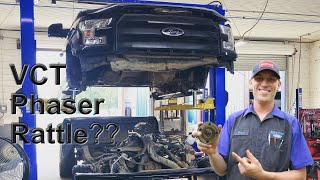
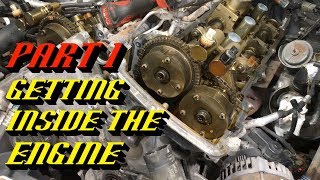
A severe and very common issue on 2011-2015 models is a loud rattle or tapping noise from the front of the engine for 2-5 seconds on a cold start. This is caused by a stretched primary timing chain and worn camshaft phasers (devices that adjust camshaft timing). If left unaddressed, it can lead to catastrophic engine failure. The repair involves replacing the primary timing chain, guides, tensioners, and all four cam phasers. 🎬 Watch: Diagnosing the cold start cam phaser rattle It is highly recommended to perform this service on the engine stand before installation.
Intercooler Condensation & Misfires (TSB 13-8-1 / TSB 14-0180 / TSB 13-3-3 / TSB 12-10-19)
In humid conditions, moisture can build up inside the large air cooler (Charge Air Cooler or intercooler) at the front of the truck. During hard acceleration, this water can be sucked into the engine, causing a sudden misfire and loss of power. Ford's solution includes installing a deflector shield on the intercooler and updating the Powertrain Control Module (PCM) calibration.
🎬 Watch: How drilling the intercooler fixes this misfireElectric Brake Vacuum Pump Failure (Recall 15N05)
The 2011-2012 models use an electric pump to ensure there is enough vacuum for the power brakes. This pump can fail due to internal corrosion from moisture. Symptoms include a loud buzzing noise from the driver's side front fender area, a hard brake pedal on startup, and a blown fuse. Ford issued an extended warranty program to cover this repair.
Sudden Transmission Downshift (Recall 19S07 / 19V075000 / 16S19 / 16V248000)
Affecting 2011-2013 F-150s, a faulty transmission sensor could cause the truck to suddenly downshift into first gear, regardless of speed. This can cause the rear wheels to lock up, increasing crash risk. The remedy is a software update for the PCM, which must be performed by a Ford dealer using the Ford IDS tool.
Exhaust Manifold Warping and Broken Studs
The exhaust manifolds on 2011-2012 models are prone to warping, which often breaks the mounting studs (especially on cylinders #3 and #6). This causes a ticking noise under acceleration. The fix requires replacing the exhaust manifold gaskets and installing new studs and nuts.
Vacuum Pump Oil Leaks
The mechanical vacuum pump located on the back of the passenger-side cylinder head is notorious for leaking oil. The gasket/O-ring should be replaced while the engine is on the stand, as it is extremely difficult to access once installed in the truck.
Carbon Buildup on Intake Valves
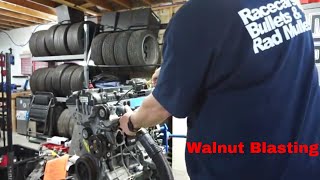
Because this is a direct-injection engine, fuel is sprayed directly into the cylinders, not over the intake valves. Over time, oil vapor from the crankcase ventilation system bakes onto the back of the intake valves, forming hard carbon deposits. This restricts airflow and causes rough running. The fix is to physically clean the valves using media blasting (walnut shells).
Part 3: Replacement Cost & Complexity
Replacement Cost Comparison
Engine replacement is a significant investment. Prices vary based on the type of engine, mileage, and labor rates.
| Part Type | Estimated Cost (Part Only) | Notes |
|---|---|---|
| New OEM | Discontinued | Original part number BL3Z-6007-A is largely discontinued and very difficult to find new. |
| Remanufactured OEM | $4,300 - $6,900 | Rebuilt by a third party with new internal wear parts. Often comes with a multi-year warranty. |
| Used OEM | $2,900 - $4,800 | A salvaged engine from a donor vehicle. Price depends heavily on mileage. |
| Installation Labor | $2,100 - $3,600 | Shop estimates range from 14 to 24 hours for this job. |
Installation: What to Expect
| Aspect | Details |
|---|---|
| Labor Hours | Professional shops typically quote between 14 and 24 hours to swap this engine. This is not a simple job. |
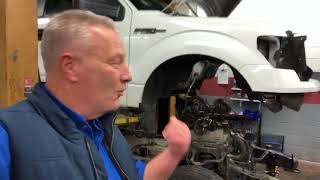
| DIY Difficulty | This is an expert-level task. It requires lifting the cab off the frame 🎬 See: Step-by-step guide to pulling the cab off or removing the entire front end of the truck. |
| Special Tools Required | You will need a Camshaft Holding Tool Kit (Ford OEM / OTC 303-1248), a Crankshaft Pulley Remover/Installer (OTC 303-1521), high-pressure fuel line disconnect tools, an engine hoist with a heavy-duty load leveler, and a high-quality torque wrench. |
| Programming | PCM reprogramming and PATS (Passive Anti-Theft System) re-marriage may be required depending on your model. A dealer tool (Ford IDS) is required if flashing or PATS re-marriage is performed. |
Part 4: Installing a Used Engine: Best Practices

A used engine can be a cost-effective solution, but proper preparation is essential for a successful and long-lasting repair.
Pro Tip: Many critical gaskets and seals are nearly impossible to access once the engine is in the truck. Always replace them while the engine is on a stand. This is especially true for the mechanical vacuum pump gasket on the back of the passenger-side cylinder head.
Installation Gotchas and Mandatory Pre-Installation Repairs
Given the known issues with this engine, certain services should be considered mandatory before installation, especially on a higher-mileage unit.
- Fragile Turbo Lines: The turbocharger coolant feed lines and quick-connect fittings at the back of the cylinder heads are prone to leaking. Replace them with new OEM fittings while the engine is out.
- High-Pressure Fuel Pump (HPFP): Installation requires the camshaft lobe to be at its base circle before tightening bolts to prevent bending the plunger.
- Knock Sensors: The knock sensors located in the valley between the cylinder heads must be torqued to exact factory specifications to prevent false readings.
- Wiring Harness: The engine wiring harness must match the 2011-2012 pinout. Transfer your original harness from the old engine to ensure compatibility. Do not attempt to use a 2013+ harness.
Warning: Bolts for the crankshaft balancer, cam phasers, and cylinder heads are Torque-to-Yield (TTY) bolts. They are one-time-use and must be replaced. Reusing them is a common buyer mistake that can lead to catastrophic failure.
Warning: Failing to thoroughly flush the intercooler of metal debris and oil from a previous engine failure will destroy your new engine.
Required Parts & Consumables
Plan to purchase the following items for the installation:
- 6 quarts of premium 5W-30 synthetic blend or full synthetic oil
- Motorcraft FL-500S oil filter
- Motorcraft Orange or Yellow pre-diluted coolant
- 6 new Motorcraft spark plugs (gapped strictly to 0.030")
- Intake manifold gaskets (upper and lower)
- Valve cover gaskets (passenger side BR3Z-6584-B)
- High-pressure fuel pump O-ring and mounting gasket
- Front crankshaft seal and rear main seal
- Oil pan gasket
- Turbocharger oil and coolant line gaskets/O-rings
- Exhaust manifold gaskets and new studs/nuts
- New torque-to-yield (TTY) bolts
Diagnostic Flowchart
Part 5: What Fails at Every Mileage Band
Pro Tip: The mileage bands below describe used replacement units of that mileage. The checklists provided are things to do WHILE INSTALLING the purchased engine, not maintenance for your current engine.
Under 60,000 Miles
Engines in this range are rare but generally healthy. Known failures at this stage include intercooler condensation causing misfires (TSB 13-8-1), boost pressure sensor failure, early signs of timing chain stretch, and coolant leaks from turbocharger fittings.
- ✓Do during install (required): Perform an oil and filter change with 5W-30 full synthetic oil. Replace spark plugs (gapped to 0.030") and boots.
- ✓Do during install (recommended): Inspect intercooler for signs of oil or water and consider drilling a weep hole or installing an updated intercooler shield per TSBs.
- ✓Cheap insurance while the engine is out: Inspect and consider replacing the turbo coolant line fittings, as they are prone to leaking and much easier to access with the engine out.
60,000 - 100,000 Miles
This is where common EcoBoost issues begin to surface. Timing chain stretch and cam phaser rattle on cold starts become more prevalent. Carbon buildup on intake valves begins to affect performance, causing misfires and rough idle. Vacuum pump oil leaks and coolant leaks from plastic fittings are also common.
- ✓Do during install (required): Replace all spark plugs (gap 0.030") and ignition coil boots. Flush intercooler and replace all critical gaskets (valve covers, oil pan, intake, etc.) while access is easy.
- ✓Do during install (recommended): Strongly consider a full timing service: replace the primary timing chain, cam phasers, guides, and tensioners. Ford updated the chain to a more robust design.
- ✓Cheap insurance while the engine is out: Perform intake valve cleaning (walnut blasting) to remove carbon deposits. Replace the vacuum pump gasket and turbo coolant/oil line O-rings and gaskets.
100,000 - 150,000 Miles
Engines in this band carry a significant risk of timing chain failure if it hasn't been replaced already. A fleet manager reported 17 chain failures on 2011 models between 80,000 and 100,000 miles. Turbocharger failure, warped exhaust manifolds, significant carbon buildup, and vacuum pump failure are highly likely.
- ✓Do during install (required): A full timing job is considered mandatory preventative maintenance, not optional. Replace spark plugs, coil boots, all major gaskets (valve covers, oil pan, front/rear main seals), and the vacuum pump gasket.
- ✓Do during install (recommended): Perform walnut blasting of intake valves to restore performance.
- ✓Cheap insurance while the engine is out: Inspect/replace turbochargers if there is any shaft play or signs of oil/coolant leaks. At minimum, replace all turbo-related gaskets and O-rings.
Over 150,000 Miles
Engines that reach this mileage have typically been well-maintained, but general wear and tear on all components is expected. Failures are often the same as in lower mileage bands but occur because maintenance was deferred. Coolant leaks from aging plastic fittings and hoses are common.
- ✓Do during install (required): Assume all known failure points need to be addressed. A complete teardown, inspection, and refresh is the safest approach. Mandatory full timing job (chain, phasers, guides, tensioners). Mandatory intake valve cleaning (walnut blasting).
- ✓Do during install (recommended): Thoroughly inspect or replace turbochargers, all coolant and oil lines/gaskets, and all accessible seals.
- ✓Cheap insurance while the engine is out: Replace all consumables: spark plugs, fluids, filters, and stretch bolts.
Part 6: Real Owner Experiences
To give you a realistic picture of what to expect, here are verified reports from actual 2011-2012 F-150 3.5L EcoBoost owners regarding engine longevity and repair costs.
| Source | Mileage | What Happened | Cost |
|---|---|---|---|
| Ford F150 Forum | 41,000 | Owner of a 2011 model reported no problems with the engine itself. | N/A |
| Ford F150 Forum | 60,000 | A boost pressure sensor failed. | Covered by Ford |
| Cars.com | 64,000 | Owner of a 2012 FX4 EcoBoost reported no mechanical issues with regular preventative maintenance. Towed campers from 5k-8k lbs without issue. | N/A |
| Ford F150 Forum | 72,000 | A 2013 EcoBoost experienced a sudden loss of power while towing, which was later diagnosed as a timing chain issue requiring full replacement. | DIY Repair, parts cost not specified |
| Cars.com | 83,500 | A 2012 F-150 EcoBoost 'blew a spark plug'. | Stated as a 'minor repair' |
| YouTube | 89,000 | A 2011 F-150 with a well-maintained engine experienced a timing chain jump, causing a no-compression condition in all six cylinders. The video shows the tensioner fully extended and significant chain slack. | Implied engine replacement/major repair |
| Ford F150 Forum | ~80,000-100,000 | A fleet manager with 57 2011-2013 EcoBoost F-150s reported 17 timing chain failures in a 4-month period. Some required only chain replacement, others needed a new engine. | Up to $13,000 CAD for engine replacement |
| 110,000 | Owner of a 2011 F-150 notes that regular maintenance has kept it reliable, but is asking about preventative service to reach 200k miles. | N/A | |
| Reddit r/f150 | 120,000 | Seeking advice on whether a quote for a used engine (90k miles) and installation was fair. Another user commented that their 2014 model replacement with a Jasper remanufactured engine cost $11,000 total in 2022. | Quote of $9,500; comparable replacement was $11,000. |
| BobIsTheOilGuy Forum | 140,000 | Owner traded in a 2011 4x4 that ran great. Only non-routine repair was a vacuum pump replaced by Ford around 100k miles. Owner attributes longevity to 4-5k mile oil changes with high-quality synthetic oil. | N/A (Ford paid for pump) |
| f150forum.com | 180,000 | The owner's truck needed a driver-side turbo, timing chain, and cylinder head. They concluded that a full engine replacement was the best option and were researching used vs. remanufactured units. | Undecided |
| Pickup Truck + SUV Talk Forums | 184,000 | Owner of a 2011 XLT Supercrew traded it in. The only non-maintenance issue was a coolant fitting leak on the back of the head around 175k miles. | ~$350 |
| 230,000+ | Owner of a 2011 model states, 'Take care of it and it will take care of you'. | N/A | |
| CarBuzz / F-150 EcoBoost Forum | 249,000 | A 2011 XLT was purchased at 243,000 miles and used for heavy-duty work, including hauling 2,200 pounds of gravel, and reportedly 'doesn't miss a beat'. | N/A |
| f150forum.com | ~300,000 | Owner's engine failed after nearly 300k miles. They were looking for a remanufactured engine with all updates and hoping for a total project cost under $12,000 including new turbos and a CAC (intercooler). | Budgeting <$12,000 |
| f150forum.com | Not Stated | Another user reported paying $2,500 for a timing chain service at a different dealer under extended warranty. | $2,500 (for the comparable repair) |
| f150forum.com | Not Stated | Replaced engine with a Ford remanufactured unit under warranty. | $7,500 (for a Ford reman engine and install). The user noted a Jasper reman could have been had for $5,500 installed. |
Part 7: Repair or Replace?
Deciding whether to repair your current engine or replace it entirely depends on the extent of the damage and the overall mileage of your truck.
When Repair Makes Sense
| Repair | Typical Cost |
|---|---|
| Timing Chain Stretch & Cam Phaser Rattle | $2,500 - $4,000 |
| Carbon Buildup on Intake Valves | $500 - $1,500 |
| Turbocharger Failure | $1,500 - $3,200 per turbo |
When Replacement is Smarter
Replacement is the smarter economic choice when multiple major failures occur simultaneously, such as a stretched timing chain combined with turbo failure, low oil pressure, or internal damage (e.g., a valve dropping into a piston). On a high-mileage engine (over 180,000 miles), the cumulative cost of addressing individual wear items often exceeds the value and reliability gained from installing a lower-mileage used or remanufactured engine.
Questions to Ask Your Installer
If you decide to proceed with a used engine replacement, ask your mechanic these critical questions:
- What is the mileage and service history of the donor engine?
- What is the warranty on the used engine parts and your installation labor?
- Will you be performing a full timing service (chain, phasers, guides, tensioners) on the replacement engine before installation?
- Do you recommend replacing the oil pump and water pump while the engine is out?
- Will you be replacing all critical gaskets and seals, such as the rear main seal, front crank seal, valve cover gaskets, and oil pan gasket?
- Will you be inspecting and cleaning the turbochargers and replacing their oil and coolant lines/fittings?
- How will you be cleaning and flushing the intercooler (CAC) and charge pipes to remove debris from the previous engine failure?
- Will the latest Ford PCM calibration be flashed to address the transmission downshift recall (19S07)?
- What brand and gap will you use for the new spark plugs? (Should be Motorcraft, gapped to 0.030")
- Have you confirmed this engine is from a 2011-2012 F-150 and not a 2013+ model or a transverse application?
Part 8: Freight & Delivery Reality

Buying a complete engine assembly is not like ordering a standard auto part. These are massive, heavy industrial components that require specialized shipping.
- Size and Weight: Verified shipping data shows this 3.5L EcoBoost assembly weighs approximately 559 lbs and measures roughly 36" x 36" x 36" before crating.
- LTL Freight: It ships as Less-Than-Truckload (LTL) freight strapped to a wooden pallet. It is NOT a parcel delivery.
- Delivery Requirements: You must have a commercial address with a loading dock or forklift, or request a truck with a liftgate for residential delivery.
Warning: Always inspect the engine for transit damage (broken sensors, cracked valve covers, crushed oil pans) before signing the driver's delivery receipt. Once you sign, you accept the condition.
Before the First Start: Priming and Fluids
When installing a used engine, you must protect the moving parts from dry friction. Never start the engine immediately after installation.
Mandatory Fluids
Before cranking, fill the engine with fresh fluids. Do not reuse old oil or coolant.
- Engine Oil: Add 6.0 quarts of 5W-30 motor oil. Use a synthetic blend or full synthetic oil that meets Ford specification WSS-M2C946-A (or the updated WSS-M2C961-A1). Always install a brand-new oil filter.
- Engine Coolant: Fill the cooling system with Motorcraft Orange (specification WSS-M97B44-D) or the newer, backward-compatible Motorcraft Yellow (specification WSS-M97B57-A2) antifreeze. Mix the coolant half-and-half with distilled water.
Oil Priming Procedure
You must build oil pressure before the engine actually fires and runs. This pushes fresh oil into the twin turbochargers, timing chains, and bearings.
- Disable the fuel system so the engine will not start. You can do this by pressing the gas pedal completely to the floor and holding it there. This activates "Clear Flood Mode," a computer setting that turns off the fuel injectors. Alternatively, remove the fuel pump fuse from the main fuse box.
- Turn the key to crank the engine for 10 to 15 seconds.
- Stop and let the starter motor cool down for one minute.
- Repeat this cranking process two or three times until you see the oil pressure gauge on the dashboard move up to a normal reading.
- Once you have confirmed oil pressure, release the gas pedal (or reinstall the fuel pump fuse).
- Start the engine normally and let it idle. Check immediately for any fluid leaks.
Long Block vs. Complete Assembly
When shopping for a used 3.5L EcoBoost engine, you will usually see two options: a long block or a complete assembly. It is important to know exactly what you are buying.
- Long Block: This includes the main engine block, cylinder heads, and internal moving parts like pistons and valves. It usually does not include the twin turbochargers, intake manifold, or the high-pressure fuel pump (the pump that forces fuel into the engine).
- Complete Assembly: This version usually comes with the turbochargers, fuel injectors, and intake parts still attached.
Frequently Asked Questions (FAQ)
Do I need to reprogram the computer (PCM) after installing a used engine?
If you are using your truck's original PCM, no reprogramming is required for the engine to run. However, it is highly recommended to have a Ford dealer update the PCM to the latest calibration to ensure you have the software fixes for issues like the sudden transmission downshift recall (19S07).
Are the turbochargers included with a used engine?
This depends on the seller. Most used "engine assemblies" include the cylinder block, cylinder heads, internally lubricated parts, crankshaft, pistons, rods, camshafts, valves, oil pan, valve covers, timing covers, intake manifold, throttle body, fuel injectors, high-pressure fuel pump, harmonic balancer, and engine sensors directly mounted to the block/heads. Turbochargers may or may not be included. Always clarify with the seller. If you reuse your old turbos, it is critical to replace the oil and coolant line gaskets and O-rings to prevent leaks.
What does "TTY" or "Torque-to-Yield" bolt mean?
These are single-use bolts designed to stretch when tightened to a specific torque plus an additional angle. This provides very precise clamping force. Once stretched, they are permanently deformed and cannot be safely reused. Critical TTY bolts on this engine include those for the cylinder heads, crankshaft balancer, and camshaft phasers.
Can I use a 3.5L EcoBoost from a 2013 or newer F-150?
No. The 2011-2012 F-150 models with VIN T (8th digit) only interchange with each other. They do not interchange with 2013-2014 or 2015-2016 F-150 models due to differences in turbochargers, blow-off valves, vacuum pumps, camshaft sensors, and wiring harnesses.
What oil should I use, and how often should I change it?
The single most critical factor for longevity is frequent oil changes with high-quality full synthetic 5W-30 oil. Many experts and high-mileage owners recommend intervals of 5,000-7,500 miles, rather than following the dashboard oil life monitor, to combat fuel dilution and thermal stress on the oil from the turbochargers.
What parts are typically NOT included with a used engine assembly?
Standard used engine assemblies generally do not include the starter, alternator, A/C compressor, power steering pump, exhaust manifolds, or the engine control unit (ECU/PCM). You will need to transfer these accessories from your original engine.
Helpful Videos
Technical Specifications
OEM Part Numbers: BL3Z-6007-A
Engine Code: T (8th VIN Digit); Engineering Code: 1S364AA; Displacement: 3.5L; Configuration: 60-degree V6; Valvetrain: Dual Overhead Cams (DOHC), 24 valves; Induction: Twin Turbochargers; Fuel System: Direct Injection; Oil Type: 5W-30 Synthetic Blend or Full Synthetic; Oil Capacity: 6 quarts; Spark Plug Gap: 0.030"; Shipping Weight: ~559 lbs
We Have This Part in Stock


The information in this article is provided for general reference and educational purposes only. Vehicle specifications, procedures, and part compatibility can vary by production date, trim level, and region. Always consult your vehicle's factory service manual and verify part numbers before purchasing or performing repairs. Safety-critical components such as airbags, seat belts, and braking systems should be installed by a qualified professional.
- Ford F-150:
- 🎬 Helpful Videos
- 🛍️ Shop This Part
- Part 1: Identifying the Correct Engine for Your F-150
- Confirming Your Vehicle's Engine Code
- Key Identification Numbers
- Critical Interchange Information: What Doesn't Fit
- Part 2: Common Problems & Failure Symptoms
- Symptoms of a Failing Engine
- Known Issues, Recalls, and Technical Service Bulletins (TSBs)
- Part 3: Replacement Cost & Complexity
- Replacement Cost Comparison
- Installation: What to Expect
- Part 4: Installing a Used Engine: Best Practices
- Installation Gotchas and Mandatory Pre-Installation Repairs
- Required Parts & Consumables
- Diagnostic Flowchart
- Part 5: What Fails at Every Mileage Band
- Under 60,000 Miles
- 60,000 - 100,000 Miles
- 100,000 - 150,000 Miles
- Over 150,000 Miles
- Part 6: Real Owner Experiences
- Part 7: Repair or Replace?
- When Repair Makes Sense
- When Replacement is Smarter
- Questions to Ask Your Installer
- Part 8: Freight & Delivery Reality
- Before the First Start: Priming and Fluids
- Mandatory Fluids
- Oil Priming Procedure
- Long Block vs. Complete Assembly
- Frequently Asked Questions (FAQ)
- 🎟️ Get 5% Off