

2020-2025 Escape & 2022-2025 Maverick 2.5L Hybrid Engine: Problems, Identification, and Used Replacement
Identify the correct Duratec 25 HEV unit, understand the catastrophic rod bearing failure, and learn what to look for when buying a used replacement.
- Verify the engine is correct for your vehicle using the 8th VIN digit ('3' for Maverick, 'Z' or '1' for Escape) to avoid costly interchange mistakes with non-hybrid or older hybrid models.
- Be aware of the critical recall (NHTSA 23V380000 / Ford 23S27) for catastrophic engine failure and underhood fire risk; check with a dealer to ensure any used engine has had the remedy performed.
- Replacement is an expert-level job requiring a Ford-specific diagnostic tool (FDRS) for mandatory post-installation programming, including the CKP sensor relearn, to prevent severe drivability issues.
- Always use new torque-to-yield (TTY) bolts for the crankshaft and flexplate and the specified Motorcraft Yellow coolant (WSS-M97B57-A2) to prevent catastrophic engine or hybrid system damage.
- If you experience a sudden loud knocking noise and power loss, pull over and shut off the engine immediately, as continuing to drive on electric power increases the risk of fire.
Identifying the Correct 2.5L Hybrid Engine

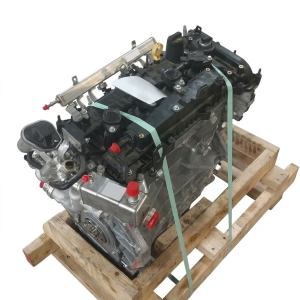
The engine used in the 2020-2025 Ford Escape Hybrid/PHEV and the 2022-2025 Ford Maverick Hybrid is a specific 2.5-liter inline-four-cylinder known as the Duratec 25 HEV / PHEV or "iVCT Atkinson-Cycle I-4." This engine is designed for high efficiency in a front-wheel drive (FWD) or all-wheel drive (AWD) hybrid system and is fundamentally different from other Ford 2.5L engines.
VIN Code is Key
The most reliable way to confirm your vehicle uses this engine is by checking the 8th digit of your Vehicle Identification Number (VIN):
| Vehicle Model | 8th VIN Digit |
|---|---|
| Ford Maverick Hybrid (2022-2025) | '3' |
| Ford Escape Hybrid (2020-2025) | 'Z' |
| Ford Escape Plug-In Hybrid (PHEV) (2020-2025) | '1' |
If your VIN's 8th digit does not match one of these characters, this engine assembly is not correct for your vehicle.
Pro Tip: You can also look for a white barcode label on the engine itself, typically on the front timing cover or the side of the cylinder head. Part numbers for this engine family often begin with prefixes like LX6E or NZ6E (or specific assembly part numbers like NZ6Z6007A).
Critical Interchange Mismatches
Warning: Not all Ford 2.5L engines are the same. Ordering the wrong one is a common and costly mistake. The following engines are NOT compatible:
- Non-Hybrid 2.5L Duratec Engines: Found in vehicles like the Ford Transit Connect or standard non-hybrid Escapes, these use a standard Otto combustion cycle, have different cylinder heads, higher compression ratios, and mechanical water pumps. They are completely incompatible with the hybrid system.
- Older 2.5L Hybrid Engines: Engines from the 2013–2020 Fusion Hybrid or 2009–2012 Escape Hybrid are earlier generations of this design and are mechanically and electronically incompatible with the 2020+ models.
Common Problems & Failure Symptoms

While several technical service bulletins (TSBs) exist for software-related issues, the most severe problem with this engine is a specific, catastrophic mechanical failure.
Catastrophic Engine Failure (Underhood Fire Risk)
The most significant known issue is a manufacturing defect that can lead to premature connecting rod bearing failure. This can cause the connecting rod to break and puncture the side of the engine block or oil pan.
Key symptoms to watch for include:
- A sudden, loud metallic clanking or knocking noise from the engine.
- An immediate loss of engine power or the vehicle entering "limp mode."
- Smoke coming from the engine compartment.
- Diagnostic Trouble Codes (DTCs) P1061 or P032F.
Warning: If you experience these symptoms, Ford advises you to safely pull over and shut off the engine as quickly as possible. Because it is a hybrid, the vehicle may continue to drive under electric power even after the gas engine has failed, which can increase the risk of an underhood fire by allowing oil and fuel vapor to accumulate near hot exhaust components.
Other Drivability Issues
Other problems are typically related to software and do not necessarily mean the engine assembly needs replacement. These include:
- Low-Speed Shudder: A vibration felt when braking at 15 mph or below as the vehicle transitions to electric-only mode. This is addressed by a PCM software update.
- Idle Surge or Rough Idle: On some 2022 Mavericks, an idle surge or a sulfur smell could occur during cold starts. This was also corrected with a PCM software update.
- No Crank / No Start: A potential issue on some 2022 Mavericks caused by a loose eyelet solder connection on the 12-volt battery cable assembly in the battery junction box, not the engine itself.
Major Recalls and Service Bulletins
Ford has issued several important notices for this engine. Always check with a Ford dealer or on the NHTSA website with your VIN to see which apply to your vehicle.
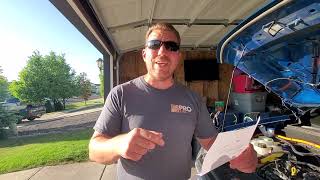
- NHTSA Recall 23V380000 (Ford Recalls 23S27 / 22S47): 🎬 Watch: Important updates on the Maverick Hybrid fire recall This is the most critical recall. It addresses the risk of underhood fire following an engine failure.
- Problem: A crankshaft machining defect can cause connecting rod bearing failure, breaching the engine block/oil pan and releasing oil/fuel vapor.
- Affected Vehicles: 2020–2023 Escape Hybrid/PHEV and 2022–2023 Maverick Hybrid models.
- Remedy: The initial fix involved modifying the under-engine shield with drain holes and removing active grille shutter blinds. A later software update (25V283) was added to detect the specific bearing failure and alert the driver. Vehicles repaired under the old recall (22V484000) still need the new remedy completed.
- Customer Satisfaction Program 23N06: This program was created to address vehicles that experience the specific bearing failure before the recall software update could detect it.
- Problem: Provides a one-time engine long block replacement for vehicles that experience a connecting rod bearing failure.
- Affected Vehicles: 2021–2022 Escape and Maverick Hybrid models.
- Remedy: Extends coverage for this specific failure to 10 years or 100,000 miles from the vehicle's warranty start date.
- TSB 23-2209 / 23-2248: Addresses a shudder or vibration when braking at low speeds.
- Affected Vehicles: 2022–2023 Maverick Hybrids built on or before April 11, 2023.
- Remedy: A Powertrain Control Module (PCM) software reprogram.
- TSB 22-2124: Corrects an idle surge, rough idle with high catalytic converter temperatures, and sulfur odor on cold starts.
- Affected Vehicles: 2022 Maverick Hybrids built on or before March 9, 2022.
- Remedy: A PCM software update.
- TSB 22-2340: Corrects a no crank / no start condition.
- Affected Vehicles: 2022 Maverick Hybrids built on or before May 13, 2022.
- Remedy: Repair the 12-volt battery cable assembly.
Replacement Cost Comparison
The cost to replace this engine varies significantly based on the source of the part. Labor costs are also high due to the complexity of the hybrid system.
| Part / Service | Estimated Cost (USD) | Notes |
|---|---|---|
| New OEM | $1,940 - $9,000+ | Brand new from a Ford dealer. The lower end represents a short block, while the higher end is a complete assembly. Comes with a full factory warranty. |
| Used OEM | $1,900 - $2,500 | A salvaged engine from a donor vehicle. Price depends heavily on mileage and condition. A specific market comp showed a 26,000-mile unit for $1,999.99. |
| Installation Labor | $1,440 - $3,000 | Based on an estimated 12-15 hours of shop time. Requires specialized tools and hybrid system expertise. |
What's Included in a Used Assembly
When buying a used engine, it's important to know what parts are typically included. Based on standards from the Automotive Recyclers Association (ARA), here is what you should expect:
What It Should Include:
- Engine Block and Cylinder Head
- All Internally Lubricated Parts (crankshaft, pistons, connecting rods, bearings, camshafts, valves)
- Oil Pan and Valve Cover
- Intake Manifold and Throttle Body
- Fuel Injectors and Fuel Rail
- Timing Covers and Timing Chain Assembly
- Harmonic Balancer
- Main engine wiring harness (if removed intact)
What It Typically Excludes:
- High-Voltage Hybrid Traction Motor (e-motor) and eCVT Transmission Assembly
- Hybrid Inverter/Converter System
- A/C Compressor, Alternator, and Starter Motor
- Exhaust Manifold
- Ignition Coils and Spark Plugs
- Power Steering Pump
Installation & Programming Essentials

Replacing this engine is a job for an expert-level technician with hybrid vehicle experience. Serious safety risks and complex procedures are involved. Shop labor is estimated at 12-15 hours.
Special Tools & Skills Required
- High-Voltage Safety: The high-voltage battery must be properly depowered using the High-Voltage Service Disconnect plug. Technicians must wait at least 10 minutes before verifying zero voltage and must use Class 0 insulated safety gloves rated for 1,000V AC.
- Ford Diagnostic Software (FDRS): A Ford dealer-level scan tool with a J2534 pass-thru device is required for critical post-installation programming and bleeding procedures.
- Engine Hoist and Support Bar: This is a large, heavy assembly that must be maneuvered carefully in a tight engine bay.
- Crankshaft Timing Tools: Special crankshaft timing pegs and alignment tools are needed to set the engine timing correctly.
Warning: Critical Installation "Gotchas"
- Keyless Crankshaft Timing: The crankshaft pulley/harmonic balancer does not have a keyway. Loosening the bolt without the proper timing peg and alignment tools will cause the engine to drop out of timing, leading to catastrophic valve-to-piston contact.
- Dual Cooling Loops: The hybrid system features separate engine high-temperature and inverter low-temperature loops. Both must be vacuum-filled and bled using a scan tool to activate the electric water pumps to prevent immediate inverter overheating.
- Reusing TTY Bolts: The crankshaft pulley bolt and flexplate bolts are torque-to-yield (TTY) and are designed for one-time use. Reusing them can lead to the pulley slipping or the flexplate backing off, causing severe engine damage.
- Damaging the A/C Lines: Tight engine bay packaging makes it easy to bend or crack the aluminum A/C lines when maneuvering the engine.
- Cylinder Head Temperature (CHT) Sensor: Highly prone to damage during the swap process; Ford recommends replacing it before installing the engine appearance cover.
Required Parts & Fluids
Always use new gaskets, seals, and fluids during installation to ensure a reliable repair.
| Part / Fluid | Specification | Notes |
|---|---|---|
| Motor Oil | 5.7 quarts of premium full synthetic 0W-20 | Must meet Ford specification WSS-M2C962-A1. |
| Oil Filter | Motorcraft FL-910S | Or equivalent. |
| Coolant | Motorcraft Yellow Prediluted Antifreeze/Coolant | Must meet Ford specification WSS-M97B57-A2. Do not use other types. High-Temp Circuit: ~9.6 quarts; Low-Temp Circuit: ~5.0 quarts. |
| Spark Plugs | New OE-spec plugs | Gap to 0.049–0.053 in (1.25–1.35 mm). |
| Gaskets | New intake manifold, exhaust manifold, and water outlet gaskets | Always replace during installation. |
| Bolts | New crankshaft and flexplate bolts | These are torque-to-yield (TTY) and are mandatory one-time use. |
Post-Installation Programming
After the engine is installed, it will not run correctly until it is programmed to the vehicle. This requires a Ford FDRS scan tool to perform:
- Crankshaft Position (CKP) Sensor Profile Correction/Relearn: Calibrates the new sensor to the PCM. Skipping this step will cause a rough idle, shaking, and misfire codes (like P0300) post-install.
- Hybrid System Initialization: Clears any diagnostic trouble codes (DTCs) from the hybrid powertrain control module (HPCM) and ensures all systems are communicating.
- PCM Software Updates: The technician should check for and apply any available software updates related to the recalls and TSBs mentioned above.
Note: You must transfer your vehicle's original engine wiring harness to the replacement engine to ensure all electrical connectors match your vehicle's specific options and model year.
Diagnostic Flowchart
What Fails at Every Mileage Band
Pro Tip: The mileage bands below describe the typical condition and wear of USED REPLACEMENT units at that mileage. The checklists provided are things you should do WHILE INSTALLING the purchased engine, not maintenance for your current broken engine.
Under 60,000 Miles
Engines in this band are generally very fresh, but this is the prime mileage window where the catastrophic connecting rod bearing failure occurs due to manufacturing defects. Other reported issues include high-voltage battery (HVB) cell voltage problems, cylinder misfires, loss of power, transmission clutch dampener plate rattles, and CV axle failures.
- ✓Do during install (required): Verify all recall work has been completed, especially NHTSA 23S27 and Customer Satisfaction Program 23N06.
- ✓Do during install (required): Replace all torque-to-yield (TTY) bolts (crankshaft pulley, flexplate bolts).
- ✓Do during install (required): Use all new gaskets for manifolds and outlets.
- ✓Do during install (required): Perform a software update on the Powertrain Control Module (PCM) to the latest calibration to address potential drivability issues and ensure recall compliance.
- ✓Do during install (recommended): Replace the Cylinder Head Temperature (CHT) sensor as it is prone to damage during a swap.
- ✓Cheap insurance while the engine is out: Install new spark plugs.
60,000 to 100,000 Miles
At this mileage, the core engine remains highly reliable if it survived the early bearing defect window. The eCVT transmission is considered very robust, though some owners report suspension clunks and rattles, and HVB cell voltage issues can still occur.
- ✓Do during install (required): All required items from the 'under 60K' band.
- ✓Do during install (recommended): Change the eCVT transmission fluid.
- ✓Do during install (recommended): Inspect and replace accessory belts and tensioners if they show signs of wear.
- ✓Cheap insurance while the engine is out: Strongly consider replacing the dual-loop cooling system's electric water pumps as a preventative measure.
- ✓Cheap insurance while the engine is out: Replace the 12V battery if its age is unknown, as its failure can cause numerous electronic issues.
100,000 to 150,000 Miles
The 2.5L Atkinson-cycle design is lower stress than conventional engines, meaning the mechanical internals usually look great at this mileage. Carbon build-up on intake valves is less of a concern here because this engine is port-injected. High-voltage battery degradation becomes a higher probability, and TPMS sensor batteries often die.
- ✓Do during install (required): All required items from previous bands.
- ✓Do during install (required): Replace both the high-temperature and low-temperature coolant.
- ✓Do during install (recommended): Change the eCVT transmission fluid if it has not been done previously (the recommended interval is 150k miles, but many owners do it sooner).
- ✓Do during install (recommended): Replace spark plugs if not done already (Ford recommends replacement around 100,000 miles).
- ✓Cheap insurance while the engine is out: Thoroughly inspect all high-voltage cable connections for corrosion or damage.
150,000+ Miles
With proper maintenance, this engine is capable of reaching 200,000 to 300,000 miles. The primary limiting factors for vehicle longevity are often the high-voltage battery (which has a typical lifespan of 8-10 years or up to 150,000 miles) and general age-related component failures like sensors and minor leaks.
- ✓Do during install (required): All required items from previous bands.
- ✓Do during install (recommended): Replace all rubber vacuum lines and coolant hoses.
- ✓Do during install (recommended): Inspect the catalytic converter.
- ✓Cheap insurance while the engine is out: Strongly consider replacing all major accessible sensors (Crankshaft Position, Camshaft Position, O2 sensors).
- ✓Cheap insurance while the engine is out: Budget for a potential high-voltage battery replacement or reconditioning in the near future.
Real Owner Experiences
| Source | Mileage | What Happened | Cost |
|---|---|---|---|
| MaverickTruckClub | less than 1,600 | Check engine light came on for a cylinder misfire. The vehicle would shake and not accelerate properly. | N/A (Warranty) |
| MaverickTruckClub | 9,983 | Donor vehicle (2022 Maverick) crashed, engine salvaged in ARA condition grade A. | N/A |
| MaverickTruckClub | 36,000 | An emission dummy light came on. The owner traded the vehicle in shortly after. | N/A (Warranty/Trade-in) |
| Reddit r/fordescape | 36,000 and 57,000 | Owner experienced a transmission clutch dampener plate rattle at both mileage points. | N/A (Dealer/Warranty) |
| MaverickTruckClub.com | 38,000 | Owner experienced limp mode on the freeway. Dealer diagnosed a failed engine and replaced it. | 0 |
| Reddit r/fordescape | 40,000 | Engine failed. Dealer initially offered a low trade-in value ($10k-$15k) for the non-running vehicle before agreeing to replace the engine for free under the known recall/CSP. | 0 |
| MaverickTruckClub.com | 40,000 | Owner's engine was replaced for free by Ford under the Customer Satisfaction Program (CSP). | 0 |
| MaverickTruckClub | 50,000 | A 2017 Escape (non-hybrid, but relevant engine family context) with a 2.0L engine experienced coolant intrusion into cylinders, requiring an engine replacement. | N/A (Warranty) |
| MaverickTruckClub.com | 60,000 | Engine failed on the freeway. Dealer replaced the engine under warranty. However, the technician bent an A/C line during installation, causing further delays. | 0 |
| MaverickTruckClub | 70,000 | Owner of a 2022 Maverick Hybrid reports no issues and expects the engine to last well over 200k miles. Performed preventative transmission fluid change at 50k miles. | N/A |
| Reddit r/fordescape | 71,000 | Owner of a 2021 Escape Hybrid experienced a failed High-Voltage Battery (HVB) due to a cell voltage issue. | N/A (Warranty/Dealer) |
| Reddit r/fordescape | 101,000 | Owner of a 2020 Escape Hybrid reports no engine issues, only a premature 12V battery death and cosmetic defects. | N/A |
| Reddit r/fordescape | 133,000 | Owner changed transmission fluid at 110k as a precaution and plans to flush coolant. Reports no issues at all. | Preventative maintenance cost |
| Reddit r/fordescape | 135,000 | Owner of a 2020 Escape Hybrid reports the only maintenance issue is dead TPMS sensors. They note the car looks nearly new. | Cost of TPMS sensors |
| Reddit r/fordescape | 180,000+ | A user mentions their wife's 2012 Escape with a 2.5L engine (an earlier, non-hybrid generation but part of the same engine family) has over 180k miles and is very reliable. | N/A |
Repair or Replace?
Deciding whether to repair your existing engine or replace it entirely depends on the nature of the failure.
- When Repair Makes Sense: If the issue is a minor external oil or coolant leak (e.g., valve cover gasket, water outlet gasket), repair is the correct path. Typical repair costs for these minor issues range from $300 to $800. Repair is only viable for issues external to the engine's rotating assembly.
- When Replacement is Smarter: Replacement is the only viable option for the most common major failure: catastrophic connecting rod bearing failure that breaches the engine block. Due to Ford's Customer Satisfaction Program (CSP 23N06), this replacement is free for affected vehicles under 10 years or 100,000 miles. Out of warranty, replacement is still the only option, and the decision becomes an economic one based on the vehicle's value versus the total replacement cost (approximately $4,000 - $6,000 including parts and labor). Given the complexity and specialized tools required, attempting an internal repair of the long block is not recommended.
Questions to Ask Your Installer
Before handing over your keys, ask your mechanic these specific questions to ensure they are qualified for this complex hybrid swap:
- Have you replaced this specific 2.5L hybrid engine before and do you have the Ford FDRS scan tool for post-install programming?
- Are you using the required crankshaft timing pegs and alignment tools for this keyless crank pulley?
- Does your quote include the mandatory replacement of torque-to-yield (TTY) bolts for the crankshaft pulley and flexplate?
- How will you handle the high-voltage system disconnect and safety procedures?
- Are you familiar with the dual-loop cooling system and the scan-tool-driven vacuum fill and bleed procedure for both loops?
- Does the quote include 5.7 quarts of full synthetic 0W-20 oil (WSS-M2C962-A1) and the correct Motorcraft Yellow coolant (WSS-M97B57-A2)?
- Will you be transferring my original wiring harness to the new engine to ensure compatibility?
- What is your procedure to avoid damaging peripheral components, like the A/C lines, which are in a very tight space?
Freight & Delivery Reality

If you are purchasing a used replacement engine online, it is crucial to understand how it will arrive. This is a large, heavy industrial component, not a standard parcel.
- Size and Weight: A used 2.5L hybrid engine assembly typically weighs around 450 lbs before being crated or palletized. The physical dimensions are roughly 40" x 36" x 40".
- Shipping Method: It will ship as Less-Than-Truckload (LTL) freight on a wooden pallet. It will arrive on a large semi-truck.
- Delivery Requirements: You must have a commercial address with a loading dock or forklift, or you must specifically request a truck with a liftgate to lower the pallet to the ground.
- Inspect Before Signing: Never sign the driver's delivery receipt until you have thoroughly inspected the engine for transit damage (especially broken sensors, cracked plastic manifolds, or bent pulleys). Once you sign, you accept the condition "as is."
- Pre-Purchase Verification: A reputable seller will conduct a pre-purchase verification interview. They will ask you to confirm your 8th VIN digit (3, Z, or 1) and verify your vehicle is a FWD or AWD hybrid to ensure you are getting the exact correct unit.
Frequently Asked Questions (FAQ)
Q: Can I use an engine from a Ford Fusion Hybrid?
A: No. Although they are both 2.5L hybrid engines, the version in the Fusion is from an older, incompatible generation. You must use an engine from the specified 2020-2025 Escape or 2022-2025 Maverick models.
Q: What happens if I don't perform the CKP relearn procedure?
A: The engine will likely run poorly, shake, or have what feels like a persistent misfire. The check engine light will illuminate with misfire-related codes (like P0300) because the powertrain control module cannot accurately determine the crankshaft's position.
Q: How much does this used engine assembly weigh for shipping?
A: A used engine assembly typically weighs around 450 lbs before being crated for shipment. It is shipped on a pallet via LTL freight, not as a standard parcel.
Q: Is the engine failure covered by Ford?
A: It depends. The failure is the subject of a major safety recall (23S27) and a Customer Satisfaction Program (23N06). These programs may cover the cost of repair or replacement if your vehicle's VIN, age, and mileage fall within the program parameters (under 10 years or 100,000 miles) and the failure is diagnosed as the specific connecting rod bearing issue. Always check with a Ford dealer using your VIN.
Q: Can I use standard green coolant in this engine?
A: Absolutely not. Adding standard green or orange coolant instead of the required Motorcraft Yellow coolant (WSS-M97B57-A2) can cause gel formation and clog the hybrid inverter heat exchanger, leading to catastrophic failure of the hybrid system.
Q: Why do I need to replace the crankshaft pulley bolt?
A: The crankshaft pulley bolt is a torque-to-yield (TTY) bolt. This means it stretches permanently when tightened to factory specifications. Reusing it can lead to the bolt failing or the pulley slipping, which will cause the keyless crankshaft to lose timing and destroy the engine.
Helpful Videos
Technical Specifications
OEM Part Numbers: NZ6Z6007A LX6E NZ6E
Engine Name: Duratec 25 HEV / PHEV / iVCT Atkinson-Cycle I-4; Displacement: 2.5 Liters; Configuration: Inline-Four-Cylinder; Combustion Cycle: Atkinson; Motor Oil: 5.7 quarts, 0W-20 Full Synthetic (WSS-M2C962-A1); Oil Filter: Motorcraft FL-910S; Coolant Type: Motorcraft Yellow Prediluted (WSS-M97B57-A2); Coolant Capacity (High-Temp): ~9.6 quarts; Coolant Capacity (Low-Temp): ~5.0 quarts; Spark Plug Gap: 0.049–0.053 in (1.25–1.35 mm); Weight (Approximate): 450 lbs
We Have This Part in Stock

The information in this article is provided for general reference and educational purposes only. Vehicle specifications, procedures, and part compatibility can vary by production date, trim level, and region. Always consult your vehicle's factory service manual and verify part numbers before purchasing or performing repairs. Safety-critical components such as airbags, seat belts, and braking systems should be installed by a qualified professional.
- Ford Escape:
- Ford Maverick:
- 🎬 Helpful Videos
- 🛍️ Shop This Part
- Identifying the Correct 2.5L Hybrid Engine
- VIN Code is Key
- Critical Interchange Mismatches
- Common Problems & Failure Symptoms
- Catastrophic Engine Failure (Underhood Fire Risk)
- Other Drivability Issues
- Major Recalls and Service Bulletins
- Replacement Cost Comparison
- What's Included in a Used Assembly
- What It Should Include:
- What It Typically Excludes:
- Installation & Programming Essentials
- Special Tools & Skills Required
- Required Parts & Fluids
- Post-Installation Programming
- Diagnostic Flowchart
- What Fails at Every Mileage Band
- Under 60,000 Miles
- 60,000 to 100,000 Miles
- 100,000 to 150,000 Miles
- 150,000+ Miles
- Real Owner Experiences
- Repair or Replace?
- Questions to Ask Your Installer
- Freight & Delivery Reality
- Frequently Asked Questions (FAQ)
- 🎟️ Get 5% Off