

2016-2017 Dodge Charger & Chrysler 300 5.7L Hemi V8 (AWD): Problems, Identification, and Used Replacement
Identify the exact AWD EZH Hemi, understand what causes the fatal "Hemi Tick," and learn when to swap in a used OEM engine assembly.
- Verify you have the AWD model by checking for a 'T' in the 8th VIN digit and a driver-side starter, as RWD or truck engines are not compatible.
- Be aware that the 'Hemi Tick' is a serious symptom of potential lifter and camshaft failure; finding metal in the oil confirms the need for a full engine replacement.
- A mandatory Crankshaft Position (CKP) Sensor Relearn procedure using a bi-directional scan tool is required after installation to prevent misfire codes.
- Always use 5W-20 oil meeting FCA MS-6395 to ensure proper function of the Multi-Displacement System (MDS) and prevent premature lifter wear.
Engine Identification: Confirming You Have the AWD 5.7L Hemi

The 2016-2017 Dodge Charger and Chrysler 300 were available with a 5.7L Hemi V8 engine (engine code EZH) for both Rear-Wheel Drive (RWD) and All-Wheel Drive (AWD) models. However, the engines are not interchangeable. This guide focuses specifically on the AWD version. Before purchasing a used engine, it is critical to verify you have the correct model.
Key Identifiers
- VIN Check: The 8th digit of your vehicle's Vehicle Identification Number (VIN) must be a 'T'. [2, 3]
- Drivetrain: Your vehicle must be an All-Wheel Drive (AWD) model. You can confirm this by looking for front CV axles—steel shafts that connect the front wheels to a front differential unit located near the engine.
- Starter Location: On the AWD 5.7L Hemi, the starter motor is located on the driver's side (left side) of the engine block. This is a definitive visual check.
- Oil Pan Design: The AWD model uses a specific cast aluminum oil pan that has a pass-through tunnel cast into it. This tunnel allows the front axle shaft to pass through the oil pan to the passenger-side wheel.
Warning: An engine from a RWD Charger or a 5.7L Hemi from a Ram 1500 truck, Durango, or Grand Cherokee will NOT fit your AWD Charger. These engines have different block castings, 🎬 See this step-by-step Charger 5.7L engine replacement walkthrough starter motor locations (passenger side), oil pans, and accessory mounts.
Common Failure Symptoms

While the 5.7L Hemi is a strong engine, certain symptoms often point toward a major internal failure that requires engine replacement rather than a simple repair.
- "Hemi Tick": A light, rhythmic ticking or tapping noise from the top of the engine, especially noticeable at idle or on a cold start. 🎬 Listen: Hear the difference between a lifter tick and exhaust leak [34] This is often the earliest sign of lifter and camshaft problems. 🎬 Watch: How to diagnose the Hemi tick yourself [19]
- Engine Misfire with Knocking: A persistent engine misfire (often triggering a P0300 trouble code) accompanied by a deeper knocking or clattering sound, especially as engine RPMs increase. [19, 39] This can indicate that a lifter has failed and is damaging the camshaft. [19]
- Rough Idle and Power Loss: The vehicle may buck, surge, or idle roughly, along with a noticeable lack of power. [1, 4]
- Metal Debris in Oil: When changing the oil, finding significant metallic shavings on the magnetic drain plug or in the used oil is a sign of catastrophic internal engine wear. [10] Technicians may also find this debris in the Oil Control Valve (OCV) screens. [1, 4]
Diagnostic Flowchart
Known Problems, Recalls, and Technical Service Bulletins (TSBs)
This specific engine family has several well-documented issues. Knowing them can help you diagnose problems or prevent them on a replacement unit.
Camshaft and Lifter Failure ("Hemi Tick")
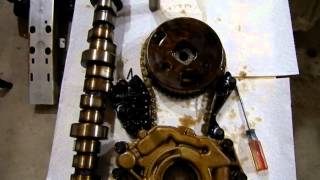
The most notorious issue with the Gen III 5.7L Hemi is the failure of the hydraulic lifters, particularly on cylinders controlled by the Multi-Displacement System (MDS). The roller on the lifter can fail, causing it to grind against the camshaft lobe, sending metal particles throughout the engine. [19, 41] This issue is documented in FCA STAR Case Report S1709000010 Rev. B. [1, 4, 31] The recommended repair is to inspect the camshaft lobes and lifters, and replace the camshaft, all 16 lifters, and plastic lifter guides if wear is present.
Warning: If metal debris is found in the Oil Control Valve (OCV), a complete engine replacement is required. [31]
Official Recalls
| Recall Number | Summary |
|---|---|
| NHTSA Recall 18V332000 (FCA Campaign U60) | Addresses a software issue in the Powertrain Control Module (PCM). Under specific circumstances, the cruise control could become locked, potentially causing the vehicle to maintain speed or accelerate without input. [9, 13, 17] This applies to 2014-2018 Chargers. The fix is a free software update performed by a dealership. [13, 17] |
| NHTSA Recall 18V-281 | Concerns front driveshaft bolts on 2015-2018 AWD models that may not have been properly secured, which could lead to driveshaft failure. |
| NHTSA Recall 14V-634 | Addresses premature alternator failure on earlier models, though the design is similar across years. Replace the alternator under recall if applicable. |
Key Technical Service Bulletins (TSBs)
| TSB Number | Summary |
|---|---|
| TSB #18-073-20 | Involves a PCM software update for 2013-2016 models with the EZH 5.7L engine to address multiple potential Diagnostic Trouble Codes (DTCs), including P0300 (Multiple Misfire) and drivability issues. [8, 23] |
| TSB #21-026-16 | For 2016 models, this TSB addresses transmission software updates to improve shifting and general drivability. |
Other Common Issues
- Broken Exhaust Manifold Bolts: The bolts securing the exhaust manifolds to the cylinder heads, especially on the rearmost cylinders, are known to break across all years. This causes an exhaust leak, which can create a ticking noise that is sometimes mistaken for the "Hemi tick."
Pro Tip: The best practice is to replace these bolts with higher-grade (grade-8) stainless steel studs and fresh gaskets when the engine is out of the vehicle.
What Fails at Every Mileage Band
Pro Tip: The mileage bands below describe used replacement units of that mileage. The checklists are things to do WHILE INSTALLING the purchased engine, not maintenance for your current engine.
Under 60,000 Miles
Engines in this range are generally healthy, but premature failures can still occur.
- Known Failures: Water pump failure (less common, but can occur prematurely). Broken exhaust manifold bolts, causing a cold-start tick that disappears as the engine warms. Early signs of 'Hemi Tick' (lifter/camshaft wear) can begin due to lubrication issues or manufacturing defects.
- ✓Do during install (required): Change oil and filter with 7 quarts of full synthetic 5W-20 meeting FCA Material Standard MS-6395. Use a high-quality spin-on oil filter (Mopar MO-339, MO-899, or Wix XP).
- ✓Do during install (recommended): Use a high-quality Mopar or equivalent water pump and thermostat. Replace all 16 OE-spec high-performance Iridium spark plugs (gapped to 0.039-0.043 inches) if their history is unknown.
- ✓Cheap insurance while the engine is out: Replace exhaust manifold bolts with upgraded studs as a preventative measure.
60,000-100,000 Miles
This is where common wear items begin to show their age.
- Known Failures: Water pump and thermostat failure becomes more common. The 'Hemi Tick' due to lifter and camshaft wear becomes a more significant concern, often starting as a faint tick on cold starts. Broken exhaust manifold bolts are very common. Oil filter housing leaks. Timing chain tensioner wear can cause a startup rattle.
- ✓Do during install (required): Mandatory replacement of water pump, thermostat, and associated gaskets. Flush coolant and replace with Mopar-approved OAT (Organic Additive Technology) coolant meeting MS-12106 / MS.90032 (purple color).
- ✓Do during install (recommended): Replace all 16 spark plugs and inspect ignition coils. Replace exhaust manifold bolts with upgraded studs.
- ✓Cheap insurance while the engine is out: Replace timing chain and tensioners if any startup rattle was present. Thoroughly inspect for the 'Hemi Tick'. If purchasing a used engine in this band, a pre-purchase inspection focusing on valvetrain noise is critical.
100,000-150,000 Miles
Internal wear becomes a major factor in this mileage band.
- Known Failures: Lifter and camshaft failure ('Hemi Tick') is the most significant and costly risk in this mileage range. It often progresses from a minor tick to misfires (P0300 codes). Water pump failure is highly likely if not already replaced. Broken exhaust manifold bolts are almost a certainty if not previously addressed. Timing chain wear and tensioner issues.
- ✓Do during install (required): Replace the water pump, thermostat, and all cooling system hoses. Perform a full tune-up including all 16 spark plugs, PCV valve, and cleaning the throttle body.
- ✓Do during install (recommended): Replace exhaust manifold gaskets and bolts with upgraded studs.
- ✓Cheap insurance while the engine is out: Assume lifters and camshaft need inspection at a minimum. If installing a >100k engine, replacing the camshaft, all 16 lifters, and timing set is the safest route. Consider replacing the oil pump with a high-volume unit (e.g., Hellcat oil pump) for better lubrication.
Over 150,000 Miles
Engines surviving to this point usually have a history of meticulous maintenance, but all components are heavily worn.
- Known Failures: The primary risk remains camshaft and lifter failure; engines that reach this mileage without the issue often have had meticulous oil changes. General wear on all components, including timing chains, oil pumps, and sensors. Coolant leaks from gaskets and the radiator itself.
- ✓Do during install (required): If metal shavings are found in the oil during the inspection of the old engine, a complete teardown and cleaning of the block is necessary to prevent debris from damaging the replacement unit.
- ✓Do during install (recommended): A complete refresh is strongly recommended. This includes camshaft, lifters, timing chain set, oil pump, water pump, all gaskets, seals, and sensors.
- ✓Cheap insurance while the engine is out: At this mileage, consider it a core for a potential rebuild rather than a simple plug-and-play unit.
Real Owner Experiences
The following table highlights real-world experiences from owners dealing with 5.7L Hemi engine issues across various platforms.
| Source | Mileage | What Happened | Cost |
|---|---|---|---|
| RamForum.com | 20,000 | A 2017 Charger R/T's water pump started making noise and was replaced under warranty. It did not leak. | Warranty |
| YouTube Owner Report | 49,000 (at purchase) | A 2017 Charger R/T purchased at 49k miles ran reliably to 111k with no major engine issues, only requiring routine maintenance like oil changes, tires, and batteries. | N/A (Reliable) |
| YouTube Owner Report | ~80,000 | Owner of a 2016 Charger with a swapped 80k-mile engine experienced a water pump failure, noting a similar failure on a previous Durango engine at the same mileage. | DIY Replacement |
| 92,000 | A 2014 Ram 1500 with a 5.7L engine dropped a valve, causing catastrophic engine damage. | Engine Replacement | |
| BobIsTheOilGuy Forum | 92,000 (at purchase) | A 2015 Ram 1500 required a water pump replacement shortly after purchase. | Not Stated |
| Reddit r/ram_trucks | 104,000 | Quoted $9,548 for cam/lifter replacement; $13,000-$14,000 for new engine replacement. Owner decided to perform the repair themselves due to the high quotes. | DIY parts cost |
| 105,000 | Owner had to replace the water pump on their Hemi. | Not Stated | |
| 130,000 | Water pump on a 2016 Charger failed. Replaced at a local shop with OEM parts. | ~$400 | |
| RamForum.com | 134,000 | Quoted ~$5,000 for lifter and camshaft replacement; $8,000-$9,000 for a remanufactured engine. Asking for advice on whether to repair or replace. | Not specified |
| RamForum.com | 140,000 | Owner experienced a persistent tick. After replacing broken manifold bolts, the tick remained, indicating a lifter/camshaft issue requiring further investigation. | Quoted ~$3,500 for cam/lifter replacement |
| Reddit r/Charger | 140,000 | Replaced engine with a refurbished unit that had 90,000 miles. | $6,000 (total, parts and labor) |
| MotorBiscuit | 160,000 | A 2019 Ram 1500 used for heavy work had experienced cracked exhaust manifolds but an oil analysis at 160k miles gave the engine a 'perfect score', showing longevity is possible with good maintenance despite hard use. | Not Stated |
| YouTube Owner Review | 176,000 (car), 80,000 (engine) | A 2016 Charger with 176k miles on the chassis had its 80k-mile swapped engine experience a water pump failure. | DIY Replacement |
| 191,000 | Owner of a 2009 Ram experienced lifter failure. The fuel pump had also failed at 180k. Despite this, they considered it the best vehicle they'd purchased, running it to over 300k miles. | Not Stated | |
| Reddit r/Charger | Not specified | Considering options after receiving a quote for a full engine replacement. The price was confirmed by other users as reasonable for a remanufactured engine including labor. | Quoted $8,000 - $9,000 |
Repair or Replace?
Deciding whether to repair your current 5.7L Hemi or replace it entirely depends on the extent of the damage and the economics of the repair.
- When Repair Makes Sense: Repairing the top end (camshaft and lifters) makes sense only if there is no evidence of metal debris in the engine oil or on the Oil Control Valve (OCV) screen. If the failure is caught very early before significant cam lobe damage or noise, a repair can be viable. Typical repair costs for a cam and lifter job range from $2,500 to $6,000+. Broken exhaust manifold bolts are also a repairable issue ($500 - $1,500) and do not require engine replacement.
- When Replacement is Smarter: Engine replacement is the smarter and often necessary choice when there are metal shavings present in the oil, indicating widespread internal contamination and likely bottom-end damage. It is also the better economic decision when the quoted cost for a major repair approaches or exceeds the price of a replacement unit.
Replacement Cost Comparison
Engine replacement costs can vary widely based on location, the shop's labor rate, and the type of engine chosen. The following estimates are for the engine assembly itself and the labor to install it.
| Part / Service | Estimated Cost (USD) | Notes |
|---|---|---|
| New OEM | $5,400 - $7,500 (up to $13,000+ installed) | Price for the engine only. Often difficult to source for older models. A dealer-installed new engine could exceed $13,000. [18] |
| Remanufactured | $3,800 - $7,000 | A professionally rebuilt engine with new wear components and a warranty. [7, 11, 14, 15] Core charge is extra but refundable. |
| Used OEM | $2,100 - $4,400 | Price depends heavily on mileage and condition. [2, 3, 6] Comes from a salvaged vehicle. |
| Installation Labor | $1,875 - $3,800 | Based on an estimated 15-22 hours of shop time. [27] Rates vary by shop. |
Questions to Ask Your Installer
- Have you specifically worked on the AWD version of the 5.7L Hemi in a Charger/300 before, and are you aware of the driver-side starter location and unique oil pan?
- What is your procedure for the mandatory Crankshaft Position (CKP) Sensor Relearn after installation to prevent misfire codes?
- Will you be using new Torque-to-Yield (TTY) bolts for the cylinder heads and harmonic balancer as required?
- Do you inspect and recommend replacing common wear items during the swap, such as the water pump, thermostat, and especially the exhaust manifold bolts/studs?
- How do you prime the oiling system before the first start-up to ensure the new lifters and camshaft are properly lubricated?
- Can you confirm you will use 5W-20 oil meeting FCA MS-6395 and the correct purple OAT coolant (MS-12106) to prevent MDS issues and coolant gelling?
What's Included in a Used Engine Assembly?

When you buy a used engine, it's important to know what parts are typically included. The assembly is sold as a "long block" with some accessories, but not everything you need. For example, a verified donor unit might come from a 2016 Dodge Charger with approximately 97,668 miles in ARA condition grade A.
- Usually Included: Engine block and all internal parts (crank, pistons, connecting rods, etc.), cylinder heads, camshaft, lifters, valves, oil pan, valve covers, intake manifold, timing covers, fuel injectors, fuel rail, throttle body, harmonic balancer, and water pump.
- Usually NOT Included: Alternator, A/C compressor, power steering pump, starter motor, exhaust manifolds, engine wiring harness, and the Engine Control Unit (ECU/PCM). [2] These parts must be transferred from your old engine or purchased separately.
Pro Tip: Always replace wear items like the water pump, thermostat, spark plugs, and gaskets on a used engine before installation. It is much easier and cheaper to do it while the engine is out of the car.
Freight & Delivery Reality

Buying a used engine online means dealing with heavy freight shipping. This is not a standard parcel delivery.
- Size and Weight: A fully dressed 5.7L Hemi AWD engine assembly weighs approximately 465 lbs and measures roughly 40" x 40" x 38" before crating.
- Shipping Method: It ships as Less-Than-Truckload (LTL) freight on a wooden pallet.
- Delivery Requirements: You must have a loading dock, a forklift, or request a truck with a liftgate to lower the pallet to the ground. Residential deliveries often incur extra fees.
- Inspect Before Signing: Never sign the delivery receipt until you have fully inspected the engine for transit damage (e.g., cracked oil pan, broken sensors). Once you sign, you accept the condition.
- Pre-Purchase Verification: Industry best practice dictates a pre-purchase verification interview with the seller to confirm your VIN (8th digit 'T') and ensure you are getting the correct AWD block with the driver-side starter.
Installation Essentials and Gotchas
Professional Installation Recommended
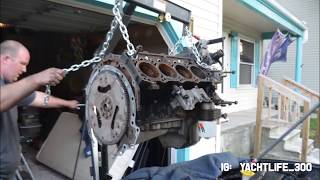
Replacing this engine is a complex job rated for expert-level technicians. It typically requires 15 to 22 hours of labor and specialized tools.
- Special Tools Required: An engine hoist and load leveler, a Chrysler-specific harmonic balancer puller (Mopar #9026A or equivalent), a fuel line disconnect tool, a high-quality torque wrench / Torque-Angle Gauge, and a bi-directional diagnostic scan tool (such as wiTECH, Autel, Appcar DiagFCA, or HP Tuners).
- AWD System Complexity: The procedure requires dropping the front subframe and disconnecting the front differential and axles to remove the unique AWD oil pan.
Critical Installation Steps & "Gotchas"
- Crankshaft Position (CKP) Sensor Relearn: After installation, a CKP sensor relearn procedure is mandatory. Failure to do this will cause false misfire codes (P0300) and a rough idle. This requires a compatible diagnostic scan tool. If using a donor PCM, it must be programmed to your vehicle's VIN and security key (SKIM) to prevent a no-start condition.
- Torque-to-Yield (TTY) Bolts: Critical fasteners like cylinder head bolts, connecting rod bolts, and harmonic balancer bolts are designed for one-time use. They must be replaced with new bolts and torqued to specific factory procedures. Reusing them can lead to catastrophic engine failure.
- MDS Solenoid and Lifter Pre-Lube: MDS solenoids under the intake manifold have fragile plastic connectors prone to cracking. Do not soak pre-oiled lifters in oil as they can over-pump and hold valves open; use assembly lube and prime the oiling system instead.
- Engine/Trans Separation: On high-mileage units, the engine and transmission can be difficult to separate. Ensure all bellhousing and torque converter bolts are removed.
- Harness Compatibility: The engine wiring harness must match the AWD configuration. Ensure correct routing around the driver-side starter to avoid pinching or melting.
Arrival Inspection: Compression and Leak-Down Testing
Before installing your used 5.7L Hemi engine, you must test its internal health. Do this while the engine is still on the shipping pallet. This saves you from installing a bad engine.
Compression Test: Remove all eight spark plugs to let the engine spin freely. Hook up a starter and a battery to crank the engine. A healthy 5.7L Hemi should show compression readings between 150 and 170 PSI (pounds per square inch) on your gauge. The exact number is less important than the balance between cylinders. The lowest reading must be within 15% of the highest reading. If one cylinder reads 160 PSI and another reads 90 PSI, the engine has internal damage.
Leak-Down Test: This test pumps compressed air into each cylinder to see how well it holds pressure. A good used Hemi should have less than 15% air leakage per cylinder. If you hear air hissing out of the intake manifold, the intake valves are bad. Air hissing from the exhaust means bad exhaust valves. Air blowing out of the oil cap hole points to worn piston rings.
Frequently Asked Questions (FAQ)
Can I use an engine from a Ram 1500 or RWD Charger?
No. The engine blocks are different. RWD and truck engines have the starter on the passenger side and lack the specific mounting bosses and oil pan design required for the AWD Charger's front differential and axle setup.
What is the "Hemi Tick" and is it serious?
The "Hemi tick" is a tapping sound from the valvetrain. While some light ticking can be normal, a persistent or loud tick is often the first sign of lifter failure, which is a very serious issue. [34] If left unaddressed, it can destroy the camshaft and require a full engine replacement. [19]
Do I have to get the computer reprogrammed after installing a used engine?
Yes, a "Crankshaft Position Sensor Relearn" is required. This procedure synchronizes the new engine's sensor with your car's computer (PCM). If you do not perform this step, the engine will likely run poorly and set a P0300 misfire code. If you also swap the PCM from the donor car, it must be programmed to your vehicle's VIN and security key to allow the car to start.
Why is using 5W-20 oil so important?
The Multi-Displacement System (MDS), which deactivates cylinders to save fuel, relies on specific oil passages and solenoids. The system was engineered to work with the flow characteristics of 5W-20 oil. Using thicker oil (like 5W-30) can starve the lifters of proper lubrication, leading to the common camshaft and lifter failure.
What tools are required to swap this engine?
Beyond standard mechanic tools, you will need an engine hoist and load leveler, a Chrysler-specific harmonic balancer puller (Mopar #9026A), a fuel line disconnect tool, a Torque-Angle Gauge for the TTY bolts, and a bi-directional diagnostic scan tool (like wiTECH, Autel, Appcar DiagFCA, or HP Tuners) to perform the mandatory CKP relearn.
What parts should I replace while the engine is out?
It is highly recommended to replace the water pump, thermostat, all 16 spark plugs, intake and exhaust manifold gaskets, and the exhaust manifold bolts (upgrading to grade-8 stainless steel studs). You should also replace the oil pan gasket and timing cover seals if they show any signs of weeping.
Helpful Videos
Technical Specifications
Engine Code: EZH; Displacement: 5.7L; VIN Digit (8th): T; Drivetrain: All-Wheel Drive (AWD); Starter Location: Driver's Side (Left); Oil Type: Full Synthetic 5W-20; Oil Specification: FCA Material Standard MS-6395; Oil Capacity: 7 quarts; Coolant Type: OAT (Organic Additive Technology); Coolant Specification: MS-12106 / MS.90032 (Purple); Spark Plug Gap: 0.039-0.043 inches; Weight (approx.): 465 lbs
We Have This Part in Stock


The information in this article is provided for general reference and educational purposes only. Vehicle specifications, procedures, and part compatibility can vary by production date, trim level, and region. Always consult your vehicle's factory service manual and verify part numbers before purchasing or performing repairs. Safety-critical components such as airbags, seat belts, and braking systems should be installed by a qualified professional.
- Dodge Charger:
- 🎬 Helpful Videos
- 🛍️ Shop This Part
- Engine Identification: Confirming You Have the AWD 5.7L Hemi
- Key Identifiers
- Common Failure Symptoms
- Diagnostic Flowchart
- Known Problems, Recalls, and Technical Service Bulletins (TSBs)
- Camshaft and Lifter Failure ("Hemi Tick")
- Official Recalls
- Key Technical Service Bulletins (TSBs)
- Other Common Issues
- What Fails at Every Mileage Band
- Under 60,000 Miles
- 60,000-100,000 Miles
- 100,000-150,000 Miles
- Over 150,000 Miles
- Real Owner Experiences
- Repair or Replace?
- Replacement Cost Comparison
- Questions to Ask Your Installer
- What's Included in a Used Engine Assembly?
- Freight & Delivery Reality
- Installation Essentials and Gotchas
- Professional Installation Recommended
- Critical Installation Steps & "Gotchas"
- Arrival Inspection: Compression and Leak-Down Testing
- Frequently Asked Questions (FAQ)
- 🎟️ Get 5% Off