

2017-2025 Chrysler Pacifica Hybrid 3.6L Pentastar: Problems, Identification, and Used Replacement
Identify the VIN 7 Atkinson-cycle V6, understand what kills it, and learn when to replace it with a used OEM unit.
- Verify the engine is the correct hybrid version by checking for a '7' in the 8th VIN position; the standard 'VIN G' engine is not compatible.
- Proactively replace the failure-prone plastic oil filter/cooler housing with an aftermarket aluminum unit during any major service or engine swap to prevent common oil and coolant leaks.
- Be aware of common catastrophic failures like head gasket leaks (especially on 2017-2018 models) and engine stalling, and check if all safety recalls have been performed on the vehicle.
- Engine replacement is a complex job requiring a technician experienced with Chrysler hybrids, a high-voltage disconnect procedure, a vacuum coolant refill tool, and a wiTECH 2.0 scan tool for post-installation programming.
Engine Identification & Verification

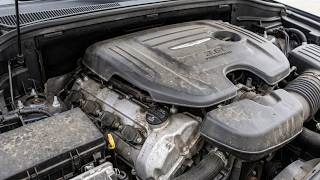
This article covers the specific 3.6L Pentastar V6 engine used in the 2017–2025 Chrysler Pacifica Hybrid. This is a specialized version of the common 3.6L Pentastar engine, modified to run on the more fuel-efficient Atkinson cycle for hybrid operation. It is not interchangeable with the engine found in standard gasoline-only Pacifica models.
How to Confirm Fitment
Before purchasing a used engine, you must confirm it is the correct version for your hybrid minivan. Using the wrong engine will result in physical and electronic incompatibility.
| Identifier | Hybrid Engine (Correct) | Standard Engine (Incorrect) |
|---|---|---|
| 8th VIN Digit | '7' | 'G' |
| Engine Codes | EH3, ERF | N/A for this application |
| Compatibility | eFlite transmission and high-voltage electrical systems. | Not compatible with hybrid systems. |
The Vehicle Identification Number (VIN) is a 17-digit code found on your dashboard (visible through the driver's side windshield) and on the driver's door jamb sticker.
Warning: Do not purchase this engine for a standard gasoline-only Chrysler Pacifica, Dodge Grand Caravan, or any other vehicle calling for a 'VIN G' Pentastar engine. It will not work.
Common Failure Symptoms
A failing Pacifica Hybrid engine can present several distinct symptoms. If you experience any of the following, a thorough diagnosis is required.
- Sudden Engine Shutdown: The gasoline engine may shut off unexpectedly while driving, sometimes after switching from electric mode. This is a severe safety issue addressed by multiple recalls.
- Ticking or Rattling Noises: A persistent ticking, often called the "Pentastar Tick," points to worn rocker arms. 🎬 Watch: How to fix the Pentastar tick before it destroys your engine A rattling noise on startup or at idle that goes away when you press the gas pedal is a classic sign of failing cam phasers.
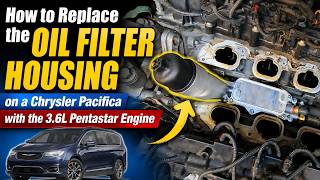
- Coolant Loss or Overheating: You may notice the coolant level dropping or the temperature gauge rising. This can be caused by a failed head gasket (especially on 2017-2018 models) or a cracked plastic oil filter/cooler housing. 🎬 See this step-by-step oil filter housing replacement walkthrough
- White Smoke from Exhaust: This often indicates that coolant is leaking past the head gasket into the engine's cylinders and being burned off, a serious condition that can lead to hydrolocking (engine seizure). 🎬 Watch: Diagnosing a blown head gasket on a 2017 Pacifica
- Check Engine Light: Numerous issues can trigger a check engine light. Specific Diagnostic Trouble Codes (DTCs) can point to problems ranging from minor sensor faults to severe internal failures.
Diagnostic Flowchart
Known Problems, Recalls, and Technical Service Bulletins (TSBs)

The Pacifica Hybrid's powertrain has been subject to several important recalls and TSBs. Before buying a used engine or vehicle, verify these have been addressed using the vehicle's VIN on the NHTSA website.
| Identifier | Affected Models | Issue & Fix |
|---|---|---|
| NHTSA 23V010000 / Chrysler 03A | 2017–2023 | Engine Shutdown: Internal transmission wiring can short, causing shutdown. Fix is a PIM/HCP software update. |
| NHTSA 18V740000 / Chrysler U94 | 2017–2018 | Engine Fails to Restart: Can damage catalytic converters. Fix is a PCM software update and converter inspection. |
| NHTSA 18V-053 / Chrysler U01 | 2017 | Engine Stall: Software loses sync with crankshaft sensor. Fix is an engine control software update. |
| TSB 9003357 | All Years | Leaking Oil Filter Housing: Plastic housing cracks. Recommended fix is replacement with an aftermarket aluminum unit. |
| TSB S2509000001 Rev. B | All Years | Rattling Cam Phasers: Worn phasers cause rattle at idle. TSB provides diagnostic and replacement procedure. |
| "Pentastar Tick" | All Years | Worn Rocker Arms: Premature wear of rocker arm needle bearings causes ticking. Fix is to replace worn rocker arms and lifters. |
| TSB 18-069-17 | 2017 | MIL Illumination: Sensor sensitivity triggers codes P1D73, P0171, P0174, U1400-00. Requires PCM software update. |
| TSB 08-042-22 / RSU 22-034 | 2022 | Hybrid System Disabled: DTC P0E15 disables plug-in system. Requires HCP/AHCP software update. |
| Head Gasket Failure | 2017–2018 (Primarily) | Coolant Leaks: Rear head gasket fails, leading to coolant in cylinders and potential hydrolocking. |
What Fails at Every Mileage Band
Pro Tip: The mileage bands below describe used replacement units of that mileage. The checklists are things to do WHILE INSTALLING the purchased engine, not maintenance for your current engine.
Under 60,000 Miles
Engines in this range are relatively fresh, but early failures are still documented. Known issues include leaking plastic oil filter housing/cooler assemblies (sometimes failing very early), head gasket failures presenting as cylinder misfires from coolant intrusion, engine stalling due to crankshaft position sensor or PCM software issues, and premature paint bubbling on the vehicle's hood.
- ✓Do during install (required): Proactively replace the factory plastic oil filter/cooler housing with an aftermarket aluminum unit to prevent near-certain failure.
- ✓Do during install (recommended): Replace spark plugs and inspect the old ones for any signs of coolant contamination, which would indicate an existing or imminent head gasket issue. Replace the engine air filter and cabin air filter.
- ✓Cheap insurance while the engine is out: Inspect engine mounts for leaks or cracks, as they can fail prematurely.
60,000 - 100,000 Miles
This is the most common mileage window for catastrophic head gasket failure, often leading to engine replacement if not caught immediately. Other known failures include the plastic oil filter/cooler housing (if not already replaced), the "Pentastar Tick" developing due to worn rocker arms/lifters, transmission issues like hard shifting, and engine mount failure.
- ✓Do during install (required): Replace the oil filter/cooler housing with an aluminum unit if not already done.
- ✓Do during install (recommended): Replace head gaskets as a preventative measure. The cost is minimal in parts and labor compared to the cost of a second repair or engine replacement if they fail later. Replace the water pump, thermostat, and all spark plugs and ignition coils. Change the eFlite transmission fluid.
- ✓Cheap insurance while the engine is out: Inspect and likely replace engine mounts.
100,000 - 150,000 Miles
At this stage, high-voltage hybrid battery degradation becomes a factor, as the expected lifespan is often cited as 100,000-150,000 miles. You will also see failures of peripheral components like wheel speed sensors and ignition coils, increased likelihood of timing chain and cam phaser wear causing rattling noises, and carbon buildup on valves triggering check engine lights.
- ✓Do during install (required): All items from the 60-100k mileage band are considered mandatory at this point.
- ✓Do during install (recommended): Strongly consider replacing the timing chain, guides, and tensioners. Replace all rocker arms and lifters to prevent the "Pentastar Tick" and potential camshaft damage.
- ✓Cheap insurance while the engine is out: Replace all accessible sensors, such as camshaft and crankshaft position sensors, as their plastic components become brittle with age.
Over 150,000 Miles
The engine is approaching or has exceeded its generally accepted service life of 150,000-200,000 miles. The high-voltage hybrid battery is likely near the end of its life with significant capacity loss. Failure of major internal components (pistons, bearings) becomes more probable due to cumulative wear.
- ✓Do during install (required): A used engine in this mileage band should be considered a core for a full rebuild. At an absolute minimum, perform all services listed for the 100-150k band.
- ✓Do during install (recommended): It is strongly advised to replace the oil pump, all timing components, and all gaskets and seals (front main, rear main, valve covers, intake, etc.).
- ✓Cheap insurance while the engine is out: The buyer should have a clear budget for a potential hybrid battery replacement in the near future.
Real Owner Experiences
The following table highlights real-world failures, mileages, and costs reported by Chrysler Pacifica Hybrid owners.
| Source | Mileage | What Happened | Cost |
|---|---|---|---|
| 26,000 | A 2018 Pacifica developed a significant oil leak from the common failure of the plastic oil filter/cooler housing. The repair was covered under the 5yr/60k mile powertrain warranty. | $0 (Warranty) | |
| 56,000 | Dealer quoted full engine replacement due to pitting on head gasket and head after cylinder misfires. | $19,600 (includes $7,500 for engine, $7,500 for labor, $2,500 for tear-down, and $1,700 in tax) | |
| NHTSA | 57,000 | Cylinder 5 misfire was diagnosed, caused by a leaking head gasket. | Not specified |
| 60,000 | A 2018 Pacifica suffered a blown head gasket that caused extensive damage, requiring a complete engine replacement. | $12,000 (Quoted) | |
| 60,000 | Needed a new engine due to a warped and cracked engine block, causing a coolant leak into a cylinder. Another user mentioned being quoted $8,000 for a new engine and labor. | $7,000 | |
| NHTSA | 65,000 | A 2017 Pacifica was diagnosed with a leaking head gasket after a check engine light for a cylinder misfire. The mechanic noted this was a very common repair. | Not specified |
| 72,000 | The notorious oil filter housing/cooler failed, causing a major oil leak where the dipstick was found to be completely dry. | $1,800 | |
| 78,000 | A well-maintained 2017 Pacifica experienced a blown head gasket, cylinder misfires, and rough idling. | $5,500+ (Quoted for head gasket or new engine) | |
| 87,000 | After having the oil cooler replaced six months prior, the owner experienced another major oil leak from a different area, finding the dipstick dry. | Not specified | |
| 100,000 | Dealer diagnosed scratched/scored cylinders and quoted a full engine replacement. Mopar offered 30% assistance. | $15,327 | |
| Postcard Jar Blog | 109,000 | On a 2019 non-hybrid model, an ignition coil went bad, which is a common maintenance item at this mileage. | Not specified |
| 115,000 | A 2018 Hybrid owner reports no major issues, suggesting that with proper maintenance and luck, longevity is possible. | N/A | |
| 119,000 | Dealer recommended full engine replacement for hydrolock caused by a failed gasket and coolant leak. | $14,500 | |
| 130,000 | Needed a new motor due to a cracked engine block. The owner decided to sell the vehicle for a low price ($1,000) rather than pay for the replacement. | $0 (sold vehicle as-is) | |
| NHTSA | 139,000 | Owner had previously replaced the warped plastic oil filter housing and was now experiencing transmission slipping and hard shifting issues. | Not specified |
| 225,000 | A non-hybrid Pacifica with the same 3.6L V6 is still running, though it has experienced transmission glitches. The owner credits 10k-mile premium oil changes. | N/A | |
| 230,000 | A 2018 hybrid owner has reached high mileage, but reports the original battery has lost about 25% of its capacity. | N/A |
Repair or Replace?
When facing major engine trouble, deciding whether to repair your current engine or replace it with a used unit comes down to the extent of the damage and the economics of the repair.
When Repair Makes Sense
| Issue | Typical Repair Cost | Repair Viability |
|---|---|---|
| Leaking plastic oil filter housing/cooler | $300 - $600 | Always repair. Proactively replace the plastic original with an aftermarket aluminum housing ($110-$332 for the part). |
| Worn rocker arms ('Pentastar Tick') and/or cam phasers | $800 - $2,500 | Makes sense when noise is the only symptom and there is no evidence of bottom-end engine damage. |
| Head gasket failure (no block/head damage) | $2,500 - $5,500 | Makes sense when a thorough inspection confirms the cylinder head and engine block surfaces are not warped or cracked. Some quotes reach $6,600. |
When Replacement is Smarter
Replacement is the recommended path when there is catastrophic failure such as a cracked engine block, warped cylinder heads, scored cylinder walls, or hydrolock from a severe coolant leak. In many cases of head gasket failure, owners are quoted prices for a new engine because the risk of recurring issues from a warped aluminum block is high, making a gasket-only repair uneconomical. Dealership quotes for a complete engine replacement can range from $14,500 to over $19,600, which often exceeds the vehicle's value, leading many owners to sell the vehicle as-is rather than repair it.
Questions to Ask Your Installer
Before committing to an engine swap, ask your mechanic these critical questions:
- Have you successfully completed an engine swap on a Pacifica Hybrid before, and are you familiar with the high-voltage disconnect procedure?
- Do you have the required vacuum tool to properly bleed the three separate cooling loops (engine, battery, and power inverter)?
- Will you be transferring my original engine wiring harness and sensors to the replacement unit to avoid electrical issues?
- Can you install an upgraded, all-aluminum oil filter/cooler housing instead of the failure-prone plastic original?
- While the engine is out, can we replace the rear spark plugs, ignition coils, and the water pump as preventative maintenance?
- Do you have a wiTECH 2.0 scan tool or equivalent J2534 device to perform the mandatory post-installation programming (CKP relearn, security sync, etc.)?
- What warranty do you offer on your labor, and what is the warranty on the used/remanufactured engine itself?
- Does your quote include all necessary fluids (0W-20 synthetic oil, Mopar OAT coolant), gaskets, and one-time-use bolts?
Replacement Cost Estimates
The cost of replacing a Pacifica Hybrid engine varies based on the type of replacement unit and local labor rates. These estimates do not include taxes or potential additional parts like high-voltage components.
| Part or Service | Estimated Cost (USD) |
|---|---|
| Used OEM Engine Assembly | $1,800 - $4,700 |
| Remanufactured Engine Assembly | $4,900 - $11,000 |
| New OEM Crate Engine | $3,800 - $7,500+ (Part only) |
| Installation Labor (12-18 Hours) | $1,800 - $7,500 |
Installation & Programming Considerations

Replacing the engine in a Pacifica Hybrid is a complex, high-stakes job recommended for expert-level technicians with hybrid vehicle experience. The standard shop labor estimate is 12-18 hours.
Critical Installation Steps & Common Mistakes
Warning: This vehicle contains a high-voltage hybrid system that can cause serious injury or death if not handled correctly. The high-voltage system MUST be de-energized by a qualified technician before any work begins.
- High-Voltage Disconnect: You must locate and pull the High-Voltage Service Disconnect plug under the second-row floor panel to de-energize the hybrid battery, and verify zero voltage with a CAT III/IV digital multimeter before touching mechanical components.
- Multi-Loop Cooling System: The Pacifica Hybrid has three separate cooling loops for the engine, the battery pack, and the power inverter module. The entire system must be refilled using a Vacuum Coolant Refilling Tool to prevent air pockets, which can cause overheating and catastrophic failure of the engine or hybrid components. Skipping the vacuum fill and using a standard gravity funnel will trigger a 'Service Hybrid System' lockout.
- Transfer Original Parts: To avoid electronic mismatches and error codes, it is critical to transfer the original engine wiring harness, sensors, and fuel injectors from the old engine to the replacement unit. Wiring pinouts and minor sensor connector shapes can vary slightly between model years.
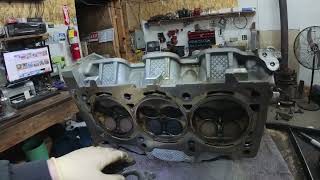
- Timing Cover Removal for Head Gaskets: The rear (right) cylinder head cannot be removed without removing the timing cover because a critical timing chain guide Torx bolt is physically blocked by the cover.
- Replace While You're In There: The rear spark plugs and ignition coils are extremely difficult to access once the engine is installed. Always replace them during an engine swap. Proactively replacing the failure-prone plastic oil cooler housing with an aluminum one is also highly recommended.
Required Consumables
Ensure you have the following on hand for the installation:
- 5.0 quarts of 0W-20 full-synthetic oil (meeting Chrysler MS-6395 specifications) or 5W-20/5W-30 full-synthetic oil depending on year specification.
- Premium oil filter with strong anti-drainback valve.
- Mopar OAT (Organic Additive Technology) 50/50 Pre-Mixed Coolant (spec MS.90032 / MS-12106).
- Upper and lower intake manifold plenum gaskets.
- Exhaust manifold gaskets.
- Thermostat housing gasket / Thermostat.
- Water pump (recommended preventative maintenance).
- 6 new OE-spec spark plugs (Champion or NGK Iridium).
- Torque-to-yield (TTY) cylinder head bolts (if removed).
- Harmonic balancer bolt (if removed).
Required Tools & Programming
This is not a plug-and-play swap. Specialized tools and software are mandatory for the vehicle to operate after installation.
- Special Tools: The job requires Class 0 insulated gloves (rated for 1,000V), a CAT III/IV digital multimeter, dedicated Pentastar engine lifting brackets (Miller Special Tools 10242B / Mopar 10242), a Camshaft/Timing Tool Kit (Mopar 10200A / 10202A), a Vacuum Coolant Refilling Tool, and a dealer-level diagnostic scan tool (wiTECH 2.0). Lifting with universal chains bolted to the heads can crack plastic valve covers, the oil cooler housing, or VVT solenoids.
- Mandatory Programming: After installation, a technician must use a Chrysler-compatible J2534 pass-thru device and a wiTECH 2.0 software subscription to perform several procedures. This includes a Crankshaft Position (CKP) Sensor Relearn, clearing of high-voltage interlock codes, Powertrain Control Module (PCM) / Hybrid Control Processor (HCP) alignment, and security re-marriage. The vehicle will not start or will remain in a safety lockout/limp mode until completed.
Pro Tip: Before beginning the repair, have a qualified shop lined up that has experience with Chrysler hybrids and owns the necessary wiTECH 2.0 diagnostic software. Confirm they are able to perform the post-install programming.
Freight & Delivery Reality

When ordering a used 3.6L Pentastar engine for your Pacifica Hybrid, it is crucial to understand how it will arrive. This is a heavy industrial part, not a standard package.
- Size and Weight: The bare engine assembly weighs approximately 340 lbs and measures roughly 48" x 40" x 38" before crating.
- Shipping Method: It ships as Less-Than-Truckload (LTL) freight on a wooden pallet. It is NOT a parcel delivery.
- Delivery Requirements: Because of the weight, the delivery truck will require a liftgate to lower the pallet to the ground, or you must have a forklift available at a commercial delivery address.
- Inspection: You must thoroughly inspect the engine for any shipping damage (such as cracked plastic valve covers or broken sensors) before signing the driver's delivery receipt.
- Pre-Purchase Verification: As an industry best practice, expect a pre-purchase verification interview with the seller to confirm your VIN (specifically the 8th digit '7') and ensure you are not accidentally buying this engine for a non-hybrid Pacifica.
Arrival Inspection: Testing Engine Health
When your used engine arrives, test its internal health before you install it. Do a compression test or a cylinder leak-down test. A leak-down test pumps compressed air into the cylinders to see how well they hold pressure. A healthy 3.6L Pentastar should have less than 15 percent air leakage in each cylinder. If you do a standard compression test, look for steady, even numbers across all six cylinders. If one cylinder has very low pressure, the engine has internal damage.
Before the First Start: Fluids and Priming
You must install fresh fluids and build oil pressure before you actually start the engine. Starting a dry engine will cause instant damage.
1. Add Fresh Oil and Coolant
Never use the old fluids that came with the used engine. Install a new oil filter and fill the engine with fresh oil. The Pacifica Hybrid 3.6L requires 0W-20 engine oil that meets the Chrysler MS-6395 standard. Next, fill the cooling system. You must use Mopar OAT (Organic Additive Technology) coolant that meets the MS-90032 standard. Mixing different coolant types will turn the fluid into a thick gel and ruin the engine.
2. Prime the Oil System
You must prime the oil system to push fresh oil to all the moving parts. This is called pre-lubing.
- Disable the fuel system and ignition system. You can do this by removing the fuel pump relay and the ignition coil fuses.
- Turn the key and crank the engine for 10 to 15 seconds. Because the fuel and spark are disabled, the engine will spin but will not start.
- Wait one minute to let the starter motor cool down.
- Repeat this cranking process two or three times until the dashboard shows oil pressure, or until the oil warning light turns off.
- Put the fuses and relays back in place.
Long Block vs. Complete Assembly
When buying a used Pacifica Hybrid engine, sellers usually offer it as a "long block" or a "complete assembly." You need to know what parts come with each option so you are not missing pieces during installation.
- Long Block: This is the core engine. It includes the heavy metal engine block, cylinder heads, pistons, and internal moving parts. It does not include external parts. You will need to unbolt the intake manifold, fuel injectors, and sensors from your old engine and move them to the new long block.
- Complete Assembly: This includes the long block plus many external parts left bolted on. It usually comes with the intake manifold, fuel rail, and engine sensors already attached. A complete assembly saves time because you do not have to swap as many parts.
Frequently Asked Questions (FAQ)
Can I use an engine from a non-hybrid Pacifica or Grand Caravan?
No. The hybrid engine (VIN 7) is an Atkinson-cycle design with different compression and components than the standard Otto-cycle engine (VIN G). They are not interchangeable physically or electronically.
Is the "Pentastar Tick" a sign of major engine failure?
It is a serious warning sign. The ticking is caused by failing rocker arm bearings. If ignored, the bearings can completely fail, sending metal debris through the engine and destroying the camshafts, leading to a much more expensive repair.
Do I really need a special tool to refill the coolant?
Yes, a Vacuum Coolant Refilling Tool is essential. The Pacifica Hybrid has three separate cooling loops (engine, battery pack, and PIM). Attempting to fill it with a traditional funnel will trap air pockets, leading to overheating, head gasket failure, or shutdown of the hybrid system.
What is a CKP Relearn and why is it required?
A Crankshaft Position (CKP) Sensor Relearn is a software procedure that synchronizes the engine control computer to the precise position of the new engine's crankshaft sensor. Without this procedure, the computer cannot accurately manage timing and fuel, and the engine may not start or will run poorly.
What parts are typically included with a used engine assembly?
A standard used engine assembly typically includes the engine block, cylinder heads, oil pan, valve covers, intake manifolds, timing covers, fuel injectors, throttle body, harmonic balancer, and sensors. It generally excludes the A/C compressor, exhaust manifolds, power steering pump, starter, alternator, engine wiring harness, high-voltage hybrid components, Power Inverter Module, and the eFlite transmission.
Why do I need to remove the timing cover to replace the head gasket?
On the 3.6L Pentastar, the rear (right) cylinder head cannot be removed without first taking off the timing cover. This is because a critical timing chain guide Torx bolt is physically blocked by the cover, making it impossible to separate the head from the block otherwise.
Helpful Videos
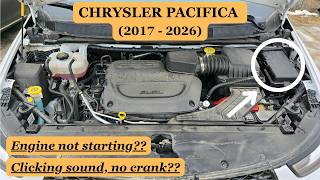
Technical Specifications
Engine Type: 3.6L Pentastar V6 (Atkinson Cycle Hybrid Version); Vehicle Fitment: 2017–2025 Chrysler Pacifica Hybrid; VIN Identifier (8th Digit): 7; Incompatible VIN Identifier: G (Standard Gasoline); Engine Codes: EH3, ERF; Drivetrain: Front-Wheel-Drive (FWD); Transmission Compatibility: eFlite; Required Oil: 5.0 quarts of 0W-20 full-synthetic (MS-6395) or 5W-20/5W-30; Required Coolant: Mopar OAT 50/50 Pre-Mixed (MS.90032 / MS-12106)
We Have This Part in Stock


The information in this article is provided for general reference and educational purposes only. Vehicle specifications, procedures, and part compatibility can vary by production date, trim level, and region. Always consult your vehicle's factory service manual and verify part numbers before purchasing or performing repairs. Safety-critical components such as airbags, seat belts, and braking systems should be installed by a qualified professional.
- Chrysler PACIFICA:
- 🎬 Helpful Videos
- 🛍️ Shop This Part
- Engine Identification & Verification
- How to Confirm Fitment
- Common Failure Symptoms
- Diagnostic Flowchart
- Known Problems, Recalls, and Technical Service Bulletins (TSBs)
- What Fails at Every Mileage Band
- Under 60,000 Miles
- 60,000 - 100,000 Miles
- 100,000 - 150,000 Miles
- Over 150,000 Miles
- Real Owner Experiences
- Repair or Replace?
- When Repair Makes Sense
- When Replacement is Smarter
- Questions to Ask Your Installer
- Replacement Cost Estimates
- Installation & Programming Considerations
- Critical Installation Steps & Common Mistakes
- Required Consumables
- Required Tools & Programming
- Freight & Delivery Reality
- Arrival Inspection: Testing Engine Health
- Before the First Start: Fluids and Priming
- 1. Add Fresh Oil and Coolant
- 2. Prime the Oil System
- Long Block vs. Complete Assembly
- Frequently Asked Questions (FAQ)
- 🎟️ Get 5% Off