

2017-2022 Chevrolet Malibu 1.5L Ecotec (LFV): Problems, Identification, and Used Replacement
Identify the 1.5L LFV engine, understand what causes cracked pistons and vacuum pump failures, and learn when to replace it with a used OEM unit.
- Always use full synthetic Dexos1 Gen 2 or Gen 3 specification oil to prevent catastrophic Low-Speed Pre-Ignition (LSPI) piston damage.
- Before purchasing a used engine, verify it is the correct LFV code by checking the 8th VIN digit ('T') and the RPO code, as similar 1.5L engines from other GM vehicles are not interchangeable.
- The brake vacuum pump is a common failure point that can destroy the exhaust camshaft; it should be inspected and considered for preventative replacement during an engine swap.
- During installation, it is mandatory to replace one-time-use parts like the high-pressure fuel pipe and torque-to-yield bolts to prevent fire hazards and ensure safety.
- After installation, a Crankshaft Position (CASE) Relearn procedure using a professional scan tool is required to avoid performance issues and check engine lights.
Engine Identification: Confirming the 1.5L LFV

The 2017-2022 Chevrolet Malibu uses a specific 1.5L turbocharged engine belonging to the GM Small Gasoline Engine (SGE) family. Correctly identifying this engine is the most important step before purchasing a used replacement.
Vehicle and VIN Check
To confirm your Malibu is equipped with this engine, check the following:
- VIN Code: The 8th character of your vehicle's Vehicle Identification Number (VIN) must be a 'T'.
- RPO Code: The Service Parts Identification label (usually in the glove box or trunk) should list the code LFV.
Engine Stamp Location
The engine's serial number is stamped on the front of the engine block, near the surface where the transmission bellhousing connects.
Warning: Not all GM 1.5L Turbo engines are the same. The Chevrolet Equinox, GMC Terrain, and Buick Envision use similar engines (codes LYX or LSD), but they are NOT interchangeable with the Malibu's LFV engine. They have different engine mounts, oil pans, wiring harnesses, and computer calibrations. Attempting to install one of these will result in significant fitment issues.
Common Failure Symptoms
A failing 1.5L LFV engine may show several serious symptoms that point toward internal damage requiring replacement:
- Engine knocking or loud tapping sounds that change with RPM.
- Excessive blue or white smoke from the exhaust.
- Metal shavings found in the engine oil during an oil change.
- A crank-but-no-start condition, sometimes accompanied by timing-related fault codes.
- Significant loss of power and poor performance.
- High oil consumption, requiring frequent top-offs.
Diagnostic Flowchart
Known Problems, Recalls, and Technical Service Bulletins (TSBs)

The 1.5L LFV engine has several well-documented issues. Always check with a GM dealer to see if these recalls or service campaigns are open for your specific vehicle.
| Problem | Affected Years | Related TSBs / Recalls / Codes |
|---|---|---|
| Low-Speed Pre-Ignition (LSPI) and Cracked Pistons A destructive combustion event that can crack or melt pistons. Early models received ECM reprograms. Requires specific oil to prevent. |
2016–2022 (More common in early models) | TSB 20-NA-047 / PIP5421 / PIP5628B |
| Brake Vacuum Pump Failure and Camshaft Damage The pump, driven by the exhaust camshaft, can seize and damage the cam, causing a crank-no-start condition. |
2016–2022 | TSB 21-NA-268 / PIP5835 Codes: P0014, P0017, P0365, P0366 |
| High-Pressure Fuel Pump Fracture A weld on the pump flange can fail, causing the pump to detach and create a dangerous fuel leak and fire risk. |
2016–2018 | Recall 18V358 / 18188 / 18268 |
| ECM Software Bug A software error can corrupt data, disable fuel injectors, and cause a no-start or stalling condition. |
2018 | Recall 19V642 / N192221960 |
| PCV System Clogging A clogged PCV orifice in the valve cover leads to high crankcase pressure, blowing out seals and causing oil leaks. |
2016–2022 | TSB 20-NA-047 |
| Shudder and Vibration A shudder while driving that requires diagnosis to differentiate between an engine misfire and a transmission torque converter issue. |
2016–2022 | PIP5504 |
Warning: To prevent LSPI, you must use a full synthetic motor oil that meets the Dexos1 Gen 2 or Gen 3 specification. Using conventional or non-approved oil is a primary cause of piston failure in this engine.
What Fails at Every Mileage Band
Pro Tip: The mileage bands below describe the typical condition and wear of USED REPLACEMENT units of that mileage. The checklists provided are things you must do WHILE INSTALLING the purchased engine, not general maintenance for your current vehicle.
Under 60,000 Miles
Engines in this range are generally in good condition but may have been pulled from vehicles that suffered early failures like LSPI (especially 2016-2017 models) or ECM software bugs. Non-engine issues like AC compressor failures or "Shift to Park" switch problems are also common in the donor vehicles.
- ✓Do during install (required): Ensure the ECM has the latest software updates to prevent LSPI and other bugs.
- ✓Do during install (required): Use only Dexos1 Gen 2 or Gen 3 full synthetic oil (0W-20 or 5W-30) to mitigate LSPI risk.
- ✓Do during install (required): Replace all required one-time-use gaskets, seals, and the high-pressure fuel pipe.
- ✓Do during install (recommended): Replace the spark plugs with new OE-spec iridium plugs.
60,000 to 100,000 Miles
At this mileage, the risk of brake vacuum pump failure increases significantly. If the pump fails, it can send debris into the engine and destroy the exhaust camshaft. Piston failure from LSPI remains a threat if the previous owner neglected oil changes. Timing chain wear and PCV system clogs also begin to appear.
- ✓Do during install (required): Inspect and strongly consider replacing the brake vacuum pump and its gasket as a preventative measure.
- ✓Do during install (required): Clean or replace the PCV valve/orifice in the valve cover.
- ✓Do during install (required): Flush or replace the intercooler if your original engine failed from piston or turbo damage.
- ✓Do during install (recommended): Replace the turbocharger oil and coolant line seals.
- ✓Do during install (recommended): Replace the serpentine belt.
- ✓Cheap insurance while the engine is out: Replace the timing chain, tensioner, and guides if there is any sign of wear or if the engine's history is unknown.
100,000 to 150,000 Miles
Engines surviving to this point often face turbocharger failure and ongoing risks of vacuum pump destruction. Transmission issues in the donor vehicles are also common. If maintenance was deferred, piston rings may be worn, leading to increased oil consumption.
- ✓Do during install (required): Perform all required items from the 60-100k band.
- ✓Do during install (recommended): Replace the water pump and thermostat.
- ✓Do during install (recommended): Replace all accessible sensors such as the camshaft and crankshaft position sensors.
- ✓Cheap insurance while the engine is out: Replace the turbocharger assembly, or at a minimum, the oil feed and return lines with all new seals.
- ✓Cheap insurance while the engine is out: Perform a complete timing chain service (chain, guides, tensioner).
Over 150,000 Miles
High-mileage units will have general engine wear, increased oil consumption, and a high likelihood of needing major accessory replacements. A service life of 150,000 to 200,000 miles is achievable only with meticulous maintenance.
- ✓Do during install (required): Assume all major service items are due. Perform all recommendations from the lower mileage bands.
- ✓Do during install (recommended): A complete engine reseal (including head gasket, front and rear main seals) is highly advisable.
- ✓Cheap insurance while the engine is out: Replacement of the turbocharger, water pump, vacuum pump, and all timing components should be considered mandatory for long-term reliability.
Real Owner Experiences
The following table highlights real-world problems and costs reported by Chevrolet Malibu owners regarding the 1.5L LFV engine and its related components.
| Source | Mileage | What Happened | Cost |
|---|---|---|---|
| YouTube | Less than 20,000 | Owner of a 2018 model reported needing two accelerator pedal position sensor assemblies and a new shifter assembly replaced. | Not specified |
| 29,000 | AC compressor failed, but was covered under warranty. | $0 (Warranty) | |
| CarComplaints.com | 46,000 | A recall for the pedal position sensor caused 'reduced engine power' mode. The issue reoccurred at 80,000 miles. | Not specified |
| BobIsTheOilGuy Forums | 75,000 | Vacuum pump failed and damaged the camshaft. The engine showed significant varnish, indicating potential for longer-than-ideal oil change intervals. | Not specified |
| 75,000 | An oil leak developed that required the engine to be pulled for the repair. | Not specified | |
| CarComplaints.com Lawsuit Allegation | 78,000 | Brake vacuum pump failed, leading to a hard brake pedal. It failed again at 83,878 miles, and a third time shortly after, ultimately requiring replacement of the vacuum pump, exhaust camshaft, and gaskets. | $118 for first replacement, then a $250 deductible for subsequent repairs under insurance. |
| 89,000 | Had the transmission replaced for free under warranty due to a defect. (Quoted $9,000). | $0 | |
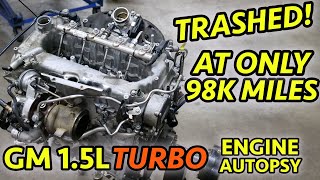
| YouTube (I Do Cars) | 98,000 | Total engine meltdown on a 2020 Malibu. Teardown revealed two melted pistons and significant scoring on camshafts, attributed to a combination of factors including probable poor maintenance, detonation, and running lean. | Engine replacement |
| 108,000 | A mechanic advised the owner to preemptively replace the turbocharger, calling the original units 'junk'. | Advice, no cost incurred | |
| YouTube | 130,000 | A mechanic notes that at this mileage, the vacuum pump on a 2020 Malibu was destroyed, suggesting it should be treated as a maintenance item. | Not specified |
| CarComplaints.com | 138,000 | Vacuum pump deteriorated and sent debris into the engine, resulting in a diagnosis that the entire engine needed to be replaced. | Engine replacement quoted |
| 148,000 | Had the vacuum pump replaced by an independent mechanic after it exploded on a 2020 model. | $1,500 | |
| 165,000 | Owner reports regular maintenance and no major worries. | Routine maintenance costs | |
| 175,000 (projected) | An owner with experience across multiple Malibus expects the turbo to need replacement around this mileage. | Projected turbo replacement cost | |
| 200,000+ | Vehicle experiencing multiple issues, including PCV problems and transmission hesitation/jerking. | Ongoing diagnostic and repair costs | |
| Not specified | Seeking advice on whether to replace the engine or cut losses on a 2018 model. Quoted $13,000 for a used engine replacement. | Not specified |
Repair or Replace?
When facing a major engine failure, deciding whether to repair your current engine or replace it with a used assembly comes down to the extent of the internal damage.
- Brake Vacuum Pump Failure: A typical repair costs around $1,500. This makes sense when the failure is caught early, before the broken drive lugs cause significant damage to the camshaft or other internal engine components.
- Camshaft Replacement: If the vacuum pump damages the camshaft, repair costs typically range from $898 to $1,226. This repair makes sense only if the damage is limited to the camshaft and reluctor, and metal debris has not circulated throughout the engine. A thorough engine flush is critical.
- PCV System Clogging: This is almost always a repair. Costs range from $50 for a DIY fix to $2,000 for a high shop quote. A high quote warrants a second opinion, as the integrated PCV orifice can often be cleaned or the valve cover replaced for much less than a full engine.
When Replacement is Smarter: Replacement is the recommended path when the engine has suffered catastrophic internal damage from Low-Speed Pre-Ignition (LSPI), such as cracked or melted pistons, or significant cylinder wall scoring. Similarly, if a vacuum pump failure has sent a significant amount of metal debris throughout the engine's oiling system, a complete replacement is often more reliable and cost-effective than a complete teardown and decontamination.
Questions to Ask Your Installer
Before authorizing an engine replacement, ask your mechanic these critical questions:
- Have you confirmed the failure mode of the original engine?
- If it was a turbo or piston failure, what is your process for cleaning or replacing the charge air cooler (intercooler) and all associated piping?
- Will you be replacing the one-time-use high-pressure fuel pipe with a new OEM part?
- Will you be inspecting the exhaust camshaft drive lugs and the brake vacuum pump upon transfer?
- Do you have a GM GDS2 or equivalent scan tool to perform the mandatory Crankshaft Position (CASE) Relearn procedure after installation?
- What is your procedure for priming the oil system and turbocharger before the first start?
- Does your quote include all necessary new gaskets, seals, and torque-to-yield bolts?
- Will you be transferring my original, known-good wiring harness to the replacement engine?
Used Engine Replacement Cost

The cost of replacing a 1.5L LFV engine depends on the type of replacement unit and local labor rates. The installation is a complex job estimated to take between 10 and 15 hours.
| Item | Estimated Cost (USD) |
|---|---|
| Used OEM Assembly | $1,300 - $1,800 |
| Remanufactured Assembly | $1,800 - $2,500 |
| New OEM Crate Engine | $3,000 - $14,000+ |
| Installation Labor | $1,300 - $2,500 |
Installation Essentials and Gotchas

Proper installation is critical for the long-term reliability of a replacement engine. This is considered an expert-level job.
Required Parts and Fluids
Always use new gaskets, seals, and fluids during installation. Plan to purchase:
- Dexos1 Gen 2 or Gen 3 full synthetic oil and a new OE-spec oil filter.
- GM-approved Dex-Cool coolant (50/50 pre-diluted).
- New gaskets for the intake manifold, throttle body, and vacuum pump.
- New seals for the turbo oil and coolant lines.
- A new one-time-use high-pressure fuel pipe.
- New OE-spec iridium spark plugs and a serpentine belt.
- Direct injector Teflon seals (if transferring injectors) and a high-pressure fuel pump O-ring.
Special Tools Required
Your installer will need specific tools to complete this job correctly:
- GM Camshaft Holding/Timing Tool (EN-51367)
- Fuel Injector Remover/Installer Tool (EN-51146)
- GM MDI 2 with GDS2 software (or equivalent bi-directional scanner)
- Fuel line disconnect tools
- Torque-angle gauge
Pro Tip: If the original engine failed from a blown piston or turbo failure, the charge air cooler (intercooler) must be professionally cleaned or replaced. Any metal or oil debris left in the cooler will be ingested by the replacement engine, causing immediate and catastrophic damage.
Critical Installation Steps
- Inspect the Camshaft: Before installing, check the rear of the exhaust camshaft to ensure the vacuum pump drive lugs are intact and clean.
- Replace the Fuel Pipe: The metal fuel line from the high-pressure pump to the fuel rail is a one-time-use, crush-seal component. Reusing it creates a severe fire hazard from a high-pressure fuel spray (2,000+ PSI).
- Use New TTY Bolts: Critical bolts like those for the crankshaft balancer, camshaft actuators, and cylinder head are Torque-to-Yield (TTY) and must be replaced, never reused.
- Prime the Turbo: Before starting the engine for the first time, ensure the transferred turbocharger is properly primed with oil to prevent bearing failure. Starting a dry turbo can destroy its bearings in seconds.
- Ground Straps: Ensure all engine and transmission ground straps are clean, secure, and reconnected to their original locations.
- Wiring Harness: Ensure you transfer your original wiring harness to the replacement engine. Even minor year-to-year variations in sensor connectors or routing can cause communication issues if the donor harness is used.
Post-Installation Programming
After the engine is installed, a Crankshaft Position (CASE) Relearn procedure is mandatory. This requires a dealer-level scan tool (like the GM GDS2) or an equivalent high-end professional diagnostic tool. A Throttle Body Idle Air Flow Compensation Reset is also required. If the ECM is replaced, security remarriage and VIN programming are necessary. Skipping the CASE relearn will result in poor performance and a persistent check engine light.
Freight and Delivery Reality

A used 1.5L LFV engine is a heavy industrial part. It does not ship in a cardboard box via regular mail. It ships as LTL (Less-Than-Truckload) freight on a wooden pallet.
- Weight and Dimensions: The bare engine assembly weighs approximately 239 lbs and measures roughly 32" x 33" x 29" before crating.
- Delivery Requirements: Delivery requires a commercial address with a loading dock or a forklift. If shipping to a residential address or a shop without a dock, you must request a liftgate service.
- Pre-Purchase Verification: A reputable supplier will conduct a verification interview before shipping. They will ask you to confirm your VIN's 8th digit is 'T', verify the LFV RPO code, and confirm your transmission type (CVT or 6-speed automatic FWD).
- Inspect Before Signing: When the freight carrier arrives, inspect the engine thoroughly before signing the delivery receipt. Check for broken sensors, a cracked oil pan, or damage to the valve cover. If it is damaged, note it on the paperwork or refuse the shipment.
Long Block vs. Complete Assembly
When shopping for a used 1.5L LFV engine, you will usually see two options: a long block or a complete assembly. Knowing the difference helps you buy exactly what you need.
- Long Block: This is just the core engine. It includes the engine block, cylinder head, and internal moving parts. It does not include bolt-on parts. You must move your old turbocharger, intake manifold, and fuel system over to the new engine.
- Complete Assembly: This includes the core engine plus the major bolt-on parts. It usually comes with the turbocharger, high-pressure fuel pump, and manifolds already attached.
Frequently Asked Questions (FAQ)
What is included with a used 1.5L LFV engine assembly?
A standard used engine assembly includes the engine block and cylinder head with all its internal parts (pistons, crankshaft, camshafts, valves), as well as the oil pan, valve cover, intake manifold, timing covers, fuel injectors, fuel rail, throttle body, harmonic balancer, and integral wiring harness. Accessories like the A/C compressor, alternator, starter, power steering pump, external exhaust plumbing, and the turbocharger are typically not included and must be transferred from your original engine.
Can I use an engine from a Chevy Equinox or GMC Terrain?
No. While they are also 1.5L turbo engines, they have different mounting points, oil pans, wiring, accessory drive layouts, and ECU calibrations that make them incompatible with the Chevrolet Malibu.
Do I really need to use special oil in this engine?
Yes. To prevent a destructive condition called Low-Speed Pre-Ignition (LSPI) that can crack the pistons, you must use a full synthetic oil that meets GM's Dexos1 Gen 2 or Gen 3 specification. Using the wrong oil is a leading cause of engine failure.
Is the turbocharger included with the used engine?
Typically, no. The turbocharger is considered an external accessory and is almost always sold separately. You should plan to transfer the turbo from your old engine, and it is highly recommended to replace its oil and coolant line seals at the same time.
What special tools are needed for installation?
Your mechanic will need the GM Camshaft Holding/Timing Tool (EN-51367), Fuel Injector Remover/Installer Tool (EN-51146), fuel line disconnect tools, a torque-angle gauge for the TTY bolts, and a GM MDI 2 with GDS2 software (or equivalent) for the mandatory computer relearn procedures.
Do I need to reprogram the computer after installing the engine?
Yes. A Crankshaft Position (CASE) Relearn and a Throttle Body Idle Air Flow Compensation Reset are mandatory after installation. If you are also replacing the Engine Control Module (ECM), you will need to perform an Immobilizer/Security Relearn and VIN programming.
Helpful Videos
Technical Specifications
Engine Code: LFV; Family: GM Small Gasoline Engine (SGE); Displacement: 1.5L; Induction: Turbocharged; VIN (8th Digit): T; Required Oil Spec: Dexos1 Gen 2 or Gen 3; Recommended Oil Viscosity: 0W-20 or 5W-30; Bare Engine Weight: Approx. 239 lbs; Shipping Dimensions: Approx. 32" x 33" x 29"; High-Pressure Fuel System Pressure: 2,000+ PSI
We Have This Part in Stock


The information in this article is provided for general reference and educational purposes only. Vehicle specifications, procedures, and part compatibility can vary by production date, trim level, and region. Always consult your vehicle's factory service manual and verify part numbers before purchasing or performing repairs. Safety-critical components such as airbags, seat belts, and braking systems should be installed by a qualified professional.
- Chevrolet Malibu:
- 🎬 Helpful Videos
- 🛍️ Shop This Part
- Engine Identification: Confirming the 1.5L LFV
- Vehicle and VIN Check
- Engine Stamp Location
- Common Failure Symptoms
- Diagnostic Flowchart
- Known Problems, Recalls, and Technical Service Bulletins (TSBs)
- What Fails at Every Mileage Band
- Under 60,000 Miles
- 60,000 to 100,000 Miles
- 100,000 to 150,000 Miles
- Over 150,000 Miles
- Real Owner Experiences
- Repair or Replace?
- Questions to Ask Your Installer
- Used Engine Replacement Cost
- Installation Essentials and Gotchas
- Required Parts and Fluids
- Special Tools Required
- Critical Installation Steps
- Post-Installation Programming
- Freight and Delivery Reality
- Long Block vs. Complete Assembly
- Frequently Asked Questions (FAQ)
- 🎟️ Get 5% Off