

2018-2020 Cadillac CT6 3.6L V6 LGX Engine: Problems, Identification, and Used Replacement
Identify what kills the 3.6L LGX engine and learn when to replace it with a used OEM unit.
- Verify you are buying the correct longitudinal (RWD) LGX engine using the VIN (8th digit 'S') and RPO code ('LGX'), as the transverse (FWD) version is not interchangeable.
- Always use the mandatory ACDelco UPF63R oil filter (per TSB #19-NA-020) to prevent catastrophic oil leaks caused by the engine's high oil pressure.
- After installation, the Crankshaft Position Sensor Variation Relearn procedure is mandatory and requires a GM-specific scan tool to prevent persistent misfires and poor performance.
- Be aware of major failure points like timing chain stretch ($3,000-$5,000 repair), internal coolant leaks from block porosity (requires engine replacement), and internal oil cooler leaks.
- When replacing an engine, always replace single-use Torque-to-Yield (TTY) bolts and high-pressure fuel lines to ensure a safe and reliable repair.
Engine Identification: Confirming the Correct LGX for Your CT6

The 2018-2020 Cadillac CT6 uses a specific version of the General Motors 3.6L V6 engine, part of the High Feature (HFV6) family. This engine is a 60-degree V6 with dual overhead cams (DOHC), 24 valves, and direct injection. Correctly identifying this engine before purchase is critical, as other GM V6 engines will not fit.
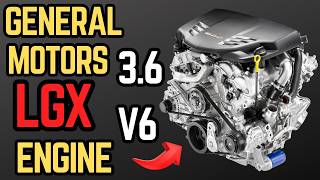
🎬 Watch: GM 3.6L LGX V6 engine reliability and common problems explainedVIN and RPO Code Verification
The simplest way to confirm you have the correct engine is by checking two codes on your vehicle:
- Vehicle Identification Number (VIN): The 8th digit of your CT6's VIN must be an 'S'.
- Service Parts Identification Label (RPO Code): Look for the code 'LGX' on the silver sticker located in the trunk, often near the spare tire well. This confirms the vehicle was built with this engine.
Warning: Do not buy an engine from a front-wheel-drive (transverse) vehicle. The 3.6L LGX engine was also used in vehicles like the Cadillac XT5, Cadillac XT6, GMC Acadia, and Chevrolet Blazer. However, those engines are mounted sideways (transverse) and have completely different engine block castings, mounting points, oil pans, accessory drive brackets, and wiring harness routings. They are NOT interchangeable with the rear-wheel-drive (longitudinal) engine used in the CT6.
Common Failure Symptoms
If you suspect your engine is failing, look for these key symptoms:
- Engine Misfire on Cold Start: The vehicle may shake, run roughly, and the check engine light may flash for the first minute after starting, especially after sitting overnight. This often points to a severe internal coolant leak setting a P0300 diagnostic trouble code. 🎬 Watch: How to diagnose a GM 3.6L P0300 misfire
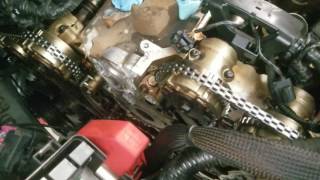
- Ticking or Clicking Noises: While a light, rapid ticking sound is normal for the direct injection system, a loud tapping or clatter can indicate worn timing chain components or problems with the Active Fuel Management (AFM) system, often due to low oil levels or infrequent oil changes. Timing chain stretch will often trigger P0008 or P0016 codes. 🎬 See this in-vehicle GM 3.6L timing chain replacement walkthrough
- Oil or Coolant Leaks: Puddles of reddish-brown oil or sweet-smelling orange/pink coolant under the front of the car are obvious signs of trouble. Leaks can come from several places, including the oil pan, camshaft carriers, or a failed internal oil cooler.
- Overheating or Temperature Fluctuations: If the temperature gauge reads unusually high or moves erratically, it could signal a failing thermostat or a more serious coolant leak.
- White Smoke from Exhaust: Continuous white, sweet-smelling smoke from the tailpipe, especially on startup, is a strong indicator that coolant is being burned in the cylinders.
Diagnostic Flowchart

Known Problems, Bulletins, and Recalls

The 3.6L LGX engine is generally considered reliable, with an expected service life of 200,000 miles (or 300,000 kilometers) if maintained perfectly. However, it has several well-documented issues that buyers should be aware of.
Potential for Engine Coolant Leak into Cylinder (TSB #18-NA-115 / PIP4959G)
A severe issue known as engine block porosity can cause a tiny, pinhole-sized leak to form between a coolant passage and a cylinder wall. This allows coolant to seep into the cylinder when the engine is off. Upon starting, the engine misfires (setting a P0300 code) until the coolant is burned away. There is no fix for this other than complete engine replacement.
Engine Oil Cooler Leak (Customer Satisfaction Program 49270)
On 2016-2018 models, the engine oil cooler can fail internally, leaking engine oil directly into the cooling system. This contaminates the coolant, turning it into a thick sludge, and can starve the engine of oil, leading to catastrophic failure. GM addressed this issue under Customer Satisfaction Program 49270.
Pro Tip: If you are replacing an engine due to this failure, you must replace the radiator, all coolant hoses, and the heater core. Reusing these parts will circulate trapped metal debris and sludge into the replacement engine, causing it to fail immediately.
Thermostat Failure (DTC P0128)
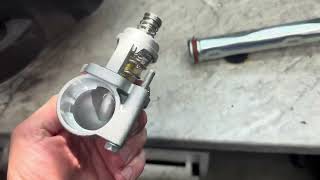
The thermostat housing is known to fail, often sticking open. This prevents the engine from reaching its proper operating temperature and will trigger a P0128 diagnostic trouble code. On the CT6, this fault can also cause a "Steering Assist Reduced" warning message to appear on the dashboard due to the systems' electronic integration. The fix is to replace the thermostat assembly.
Camshaft Carrier Oil Leaks
The camshaft carriers, which are large components on the top of the engine that hold the camshafts, are prone to developing oil leaks. Repairing these leaks is a very labor-intensive job that requires significant disassembly of the top end of the engine, making it a costly repair.
Intake Valve Carbon Buildup
Like all direct-injection engines, the LGX does not spray fuel on the back of the intake valves. Over time, oil vapor from the crankcase ventilation system bakes onto the valves, forming hard carbon deposits. This can lead to a rough idle, hesitation, and reduced fuel economy. The only effective way to clean this is a manual process like walnut shell blasting.
Mandatory Oil Filter Specification (TSB #19-NA-020)
The LGX engine produces higher oil pressure than previous V6 engines. Because of this, it requires a specific ACDelco UPF63R oil filter, which has a stronger shell. Using a standard PF63 filter can lead to the filter's gasket blowing out or the canister cracking under pressure, causing a massive and sudden oil leak.
What Fails at Every Mileage Band
Pro Tip: The mileage bands below describe used replacement units of that mileage. The checklists provided are things to do WHILE INSTALLING the purchased engine, not maintenance for your current engine.
Under 60,000 Miles
While major mechanical failures are uncommon at this mileage, some issues can appear early. Thermostat failure is a frequent complaint, triggering a P0128 code and sometimes a 'Steering Assist Reduced' message. The part cost is relatively low ($45-$80). Oil cooler leaks (internal) were common enough on 2018 models to warrant a Customer Satisfaction Program (49270). Some engines may exhibit block porosity, causing a coolant leak into a cylinder and a misfire on cold start (DTC P0300). Timing chain cover and camshaft carrier oil leaks can also begin to seep at low mileage.
- ✓Do during install (required): Replace all single-use Torque-to-Yield (TTY) fasteners (harmonic balancer bolt, flexplate bolts). Install new spark plugs and all relevant gaskets (intake, exhaust, etc.).
- ✓Do during install (recommended): Replace thermostat and housing assembly as a preventative measure. Inspect camshaft carriers for any signs of oil seepage.
- ✓Cheap insurance while the engine is out: Install a new water pump. While not a high-failure item at this mileage, it is cheap insurance while access is easy.
60,000 - 100,000 Miles
The risk of timing chain stretch increases in this range, especially if oil changes have been neglected. Symptoms include rattling noises on startup and cam/crank correlation codes (P0008, P0016). Water pump failures become more common, leading to coolant leaks and potential overheating. Intake valve carbon buildup can become significant enough to cause rough idling, reduced performance, and misfire codes. Oil consumption may begin or worsen due to PCV system issues or worn piston rings.
- ✓Do during install (required): Replace the water pump and thermostat assembly without question. Replace the serpentine belt and tensioner.
- ✓Do during install (recommended): Replace front and rear main seals. Clean or replace the PCV valve and associated hoses to mitigate oil consumption.
- ✓Cheap insurance while the engine is out: Strongly consider performing an intake valve cleaning (walnut blasting) to remove carbon deposits. Consider replacing the high-pressure fuel pump as a preventative measure.
100,000 - 150,000 Miles
Timing chain wear is a significant concern and a leading cause of major repairs in this mileage range. Many owners opt to sell their vehicles rather than face the $3,000-$5,000 replacement cost. High-pressure fuel pump failure becomes more likely. Camshaft carrier oil leaks are more prevalent and can be very labor-intensive to repair. Oil consumption due to PCV system degradation or piston rings is a common complaint.
- ✓Do during install (required): Replace the high-pressure fuel pump. Replace all accessible seals, including camshaft seals, front and rear main seals, and valve cover gaskets.
- ✓Do during install (recommended): Perform a thorough intake valve cleaning (walnut blasting). Replace the oil separator/PCV system components.
- ✓Cheap insurance while the engine is out: It is highly advisable to replace the entire timing chain system (chains, guides, tensioners) while the engine is out, regardless of its apparent condition. This is the single most important job at this mileage.
Real Owner Experiences
| Source | Mileage | What Happened | Cost |
|---|---|---|---|
| camaro6.com forum | 50,000 | Owner experienced a thermostat issue. | Not specified, but part cost is relatively low ($45-$80). |
| chevycolorado forum | 24,000 | A 2020 model required a new high-pressure fuel pump, intake gaskets, and fuel lines after going into limp mode. | $1450 |
| camaro6.com forum | 82,000 | Owner reported a thermostat issue. | Not specified. |
| Reddit r/Justrolledintotheshop | ~60,000 | Vehicle entered limp mode due to stretched timing chains requiring replacement. | Not specified, but typically a multi-thousand dollar repair. |
| chevycolorado forum | 68,000 | Cylinder misfire of unknown cause. | Not specified. |
| Reddit r/AskAMechanic | ~130,000 | General consensus suggests timing chains should be expected to be replaced around this mileage. | Significant; often thousands of dollars. |
| chevycolorado forum | 120,000 | Camshaft position sensor failed. | Reported as a cheap fix. |
| chevycolorado forum | 100,000 | Thermostat and temperature sensor required replacement. | Not specified. |
| camaroforums.com | 50,000 | Experienced a thermostat issue. | Not specified, but implied it was a manageable repair. |
| Reddit r/Cadillac | 8,000 | Experienced transmission 'shudder' issue, a known problem with the 8-speed transmission used in 2016-2018 models. | Not specified, likely warranty. |
| YouTube | Not specified | Owner discusses timing chain failure. | $3,000 to $5,000 (out of warranty). |
Repair or Replace?
When facing a major engine issue, deciding whether to repair your current engine or replace it with a used OEM unit comes down to economics and the type of failure.
- Thermostat Failure (P0128): Repair. The typical repair cost is $766 - $885. This is a common, relatively minor repair. The part itself is inexpensive, but labor is higher due to the location under the intake manifold.
- Internal Engine Oil Cooler Leak: Repair if caught early. The typical repair cost is $800 - $1,500+. If caught very early before the coolant is heavily contaminated and the engine overheats, replacing the cooler and flushing the cooling system makes sense. If the engine has been run with contaminated coolant/oil, replacement is the only safe option.
- Camshaft Carrier Oil Leaks: Hard choice. The typical repair cost is $2,500 - $4,000+. This is a highly labor-intensive repair requiring significant engine disassembly. If the engine is otherwise healthy with low mileage, repair may be considered. However, the cost approaches that of a used engine replacement.
- Engine Block Porosity (TSB 18-NA-115 / PIP4959G): Replace. Replacement is the only option for internal coolant leaks caused by engine block porosity, as the block itself has failed.
- Timing Chain Failure: Replace. Given the high labor costs for timing chains ($3,000 - $5,000), installing a lower-mileage used engine for a similar total cost is often a more reliable long-term solution.
Replacement Cost Comparison
The cost to replace a 3.6L LGX engine can vary widely based on the source of the replacement unit and local labor rates. Used units typically run $1,100 - $2,500.
| Part or Service | Estimated Cost (USD) |
|---|---|
| New OEM (Dealer) | $6,500 - $9,000+ |
| Remanufactured | $4,500 - $6,000 |
| Used OEM | $1,100 - $2,500 |
| Installation Labor | $1,500 - $3,500 |
Installation Essentials and Professional Tips

Installing a used LGX engine is an expert-level task requiring 12 to 20 hours of shop labor. Several steps are critical for a successful and long-lasting repair.
Required Parts and Fluids at Install
| Part or Fluid | Specification |
|---|---|
| Engine Oil | 6.0 quarts (5.7L) of 5W-30 full synthetic oil meeting GM's Dexos1 Gen 3 specification. |
| Oil Filter | A new ACDelco UPF63R filter is mandatory to prevent leaks or blowouts. |
| Coolant | Fresh GM-approved Dex-Cool coolant, pre-mixed 50/50. |
| Spark Plugs | 6 new OEM ACDelco Iridium spark plugs. |
| Gaskets & Seals | Always replace the upper and lower intake manifold gaskets, exhaust flange/manifold gaskets, and thermostat housing gasket. It is highly recommended to also replace the front and rear main crankshaft seals while the engine is out of the car. |
| Front Differential Fluid | On AWD models only, use fresh gear oil matching GM specifications. |
Special Tools and Programming
A successful installation requires special tools and electronic procedures:
| Type | Details |
|---|---|
| Mechanical Tools | You will need a GM Camshaft Holding Tool Set (EN-48313 / EN-49982 or equivalent), a GM Flywheel Holder (EN-2342 or equivalent), and a High-Pressure Fuel Line Disconnect Tool. |
| ECU Reprogramming | After installation, a Crankshaft Position (CKP) Sensor Variation Relearn procedure is mandatory. Without it, the engine will run poorly and set misfire codes. This requires a high-level, bi-directional scan tool like the GM GDS2/Tech 2. The vehicle's security system will also need to be re-married to the replacement engine's components to allow the car to start. |
Installation Gotchas
- The AWD Oil Pan Pass-Through: On AWD models, the right-side front axle intermediate shaft passes directly through a sealed tube cast into the engine's oil pan. Be extremely careful not to damage the inner shaft seals. You must transfer your original AWD oil pan and pickup tube to this replacement engine.
- Integrated Exhaust Manifold Threads: Exhaust manifolds are cast directly into the aluminum cylinder heads. Downpipe studs thread directly into the head and are highly prone to stripping if over-torqued. Always use a torque wrench.
- Active Fuel Management (AFM) Oil Passages: Dirt, debris, or old RTV silicone entering the oil passages can clog the AFM solenoids, leading to immediate lifter collapse or severe engine noise. Clean all mating surfaces meticulously.
Warning: The harmonic balancer bolt, flywheel/flexplate bolts, cylinder head bolts, and subframe mounting bolts are single-use Torque-to-Yield (TTY) fasteners and MUST be replaced with brand-new OEM GM fasteners.
- Timing System Complexity: The LGX uses three separate timing chains with a complex two-stage timing procedure. If removing timing components, you must follow specific GM service information for Stage 1 or Stage 2 timing alignment.
Warning: Reusing the single-use metal high-pressure fuel lines is a major safety hazard that frequently results in high-pressure fuel leaks and engine bay fires. Always replace them.
Freight & Delivery Reality

When ordering a used 3.6L LGX engine, understand that it will not arrive in a cardboard box via standard parcel delivery. An engine assembly of this size weighs approximately 425 lbs and measures roughly 40" x 36" x 36" before crating. It ships as Less-Than-Truckload (LTL) freight on a wooden pallet.
Because of the size and weight, delivery requires a freight truck equipped with a liftgate to lower the pallet to the ground. You must be present for delivery to inspect the engine before signing the bill of lading. Check for any physical damage to the oil pan, valve covers, or sensors that may have occurred during transit. A reputable supplier will also conduct a pre-purchase verification interview with you to confirm your VIN and drivetrain layout before shipping to ensure you receive the correct longitudinal unit.
Arrival Inspection: Compression and Leak-Down Testing
When your used engine arrives, test its internal health before installing it. A compression test measures the pressure each cylinder makes. A leak-down test measures how well the cylinders hold that pressure.
- Compression Expectations: All six cylinders should have similar pressure readings. The highest and lowest readings must be within 15% of each other. Normal readings are usually between 140 and 180 PSI (pounds per square inch).
- Leak-Down Expectations: A healthy used engine should have less than 15% air loss (leak-down) in each cylinder. Air leaking into the crankcase (oil pan area) means worn piston rings. Air leaking out of the intake or exhaust means bad valves.
Before the First Start: Fluids and Priming
Never start a replacement engine dry. Used engines are drained of fluids before shipping. Starting a dry engine will cause instant, permanent damage to the bearings and timing chains.
- Fresh Oil and Filter: Install a new, high-quality oil filter. Fill the engine with 5W-30 full synthetic motor oil. The oil must meet the GM dexos1 standard.
- Correct Coolant: Fill the cooling system with a 50/50 mix of clean water and GM Dex-Cool antifreeze. Dex-Cool is usually orange or pink. Do not mix it with green or yellow coolants, or it will turn into a thick gel and ruin the engine.
You must build oil pressure before letting the engine actually run. This is called priming.
- Remove the fuel pump fuse to cut off the fuel supply.
- Turn the key and crank the engine for 10 to 15 seconds. It will spin but will not start.
- Wait 30 seconds to let the starter motor cool down.
- Repeat this cranking step two or three times until the dashboard shows oil pressure.
- Put the fuel pump fuse back in, and start the engine normally.
Long Block vs. Complete Assembly
When shopping for a used LGX engine, you will usually see two choices: a long block or a complete assembly. You need to know exactly what parts come with your purchase.
- Long Block: This is just the core engine. It includes the main engine block, the cylinder heads, and the internal moving parts like pistons and camshafts. It does not include outer bolt-on parts. If you buy a long block, you must move your original intake manifold, exhaust manifolds, and the high-pressure fuel pump (the pump that pushes fuel directly into the cylinders) over to the new engine.
- Complete Assembly: This option includes the core engine plus most of the outer parts. A complete assembly usually comes with the intake manifold, fuel injectors, high-pressure fuel pump, and ignition coils.
Frequently Asked Questions (FAQ)
Can I use a 3.6L engine from a Chevy Camaro or Cadillac CTS?
Yes, provided the engine is also an LGX from a rear-wheel-drive platform. While the core engine is the same, you may need to transfer your original CT6 intake manifold, accessory brackets, wiring harness, and oil pan to ensure perfect fitment.
Is the crankshaft position sensor relearn really necessary?
Yes, it is absolutely mandatory. The engine's computer relies on precise sensor data. After an engine swap, the computer must learn the exact position of the new crankshaft's reluctor wheel using a bi-directional scan tool. Skipping this step will cause persistent check engine lights, rough running, and misfire codes.
What happens if I use the wrong oil filter?
Using a standard PF63 filter instead of the mandatory ACDelco UPF63R oil filter can lead to a catastrophic failure. The filter canister or gasket can burst under the LGX's high oil pressure, causing a rapid loss of all engine oil and leading to severe engine damage.
My mechanic says the ticking noise is normal. Is that true?
A light, fast-paced clicking or ticking sound, especially when the engine is warm at idle, is a normal characteristic of the high-pressure direct injection fuel system. However, a loud clattering, tapping, or knocking noise, especially on a cold start, is not normal and could indicate a serious problem like timing chain wear.
What questions should I ask my installer before the swap?
Ask if they have worked on a longitudinal GM 3.6L LGX engine before. Confirm they have the GM-compatible scan tool (like a Tech 2 or GDS2) required for the security re-marriage and relearn procedures. Ensure they know to replace all single-use Torque-to-Yield (TTY) bolts and that they are prepared to transfer your original oil pan and front differential assembly if you have an AWD model.
How can I make my replacement LGX engine last longer?
The single most critical factor for longevity is frequent oil changes with high-quality, full-synthetic Dexos1 Gen 3 approved 5W-30 oil. Sticking to a 4,000-5,000 mile interval, rather than following the dashboard oil life monitor, is crucial for protecting the timing chain system. Never allow the engine to run low on oil.
Helpful Videos
Technical Specifications
Engine Family: High Feature (HFV6); Configuration: 60-degree V6; Valvetrain: Dual Overhead Cams (DOHC), 24 valves; Fuel System: Direct Injection; RPO Code: LGX; VIN Identifier: 8th digit 'S'; Oil Type: 5W-30 full synthetic Dexos1 Gen 3; Oil Capacity: 6.0 quarts (5.7L); Required Oil Filter: ACDelco UPF63R; Coolant Type: Dex-Cool 50/50 pre-mix; Weight: ~425 lbs
We Have This Part in Stock


The information in this article is provided for general reference and educational purposes only. Vehicle specifications, procedures, and part compatibility can vary by production date, trim level, and region. Always consult your vehicle's factory service manual and verify part numbers before purchasing or performing repairs. Safety-critical components such as airbags, seat belts, and braking systems should be installed by a qualified professional.
- Cadillac CT6:
- 🎬 Helpful Videos
- 🛍️ Shop This Part
- Engine Identification: Confirming the Correct LGX for Your CT6
- VIN and RPO Code Verification
- Common Failure Symptoms
- Diagnostic Flowchart
- Known Problems, Bulletins, and Recalls
- Potential for Engine Coolant Leak into Cylinder (TSB #18-NA-115 / PIP4959G)
- Engine Oil Cooler Leak (Customer Satisfaction Program 49270)
- Thermostat Failure (DTC P0128)
- Camshaft Carrier Oil Leaks
- Intake Valve Carbon Buildup
- Mandatory Oil Filter Specification (TSB #19-NA-020)
- What Fails at Every Mileage Band
- Under 60,000 Miles
- 60,000 - 100,000 Miles
- 100,000 - 150,000 Miles
- Real Owner Experiences
- Repair or Replace?
- Replacement Cost Comparison
- Installation Essentials and Professional Tips
- Required Parts and Fluids at Install
- Special Tools and Programming
- Installation Gotchas
- Freight & Delivery Reality
- Arrival Inspection: Compression and Leak-Down Testing
- Before the First Start: Fluids and Priming
- Long Block vs. Complete Assembly
- Frequently Asked Questions (FAQ)
- 🎟️ Get 5% Off