

2016-2017 Cadillac CT6 3.6L LGX V6: Engine Problems, Identification, and Used Replacement
Identify the 3.6L LGX V6, understand its common failures, and learn when to replace it with a used OEM unit.
- Before purchasing, verify you have the LGX engine by checking the 8th VIN digit ('S') and confirm if your CT6 is RWD or AWD, as the engines are not directly interchangeable.
- Only an LGX engine from a 2016-2017 Cadillac CT6 is a direct fit; engines from other GM models like the Camaro or CTS will not work without significant modification.
- Neglecting oil changes with Dexos1 Gen 2/3 5W-30 oil can lead to premature timing chain failure (TSB 19-NA-256), a common and catastrophic issue for this engine family.
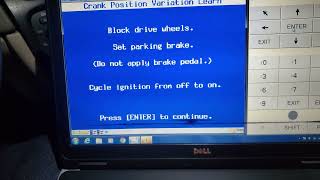
- After installation, a 'Crankshaft Position System Variation Relearn' procedure is mandatory using a professional scan tool to prevent a persistent Check Engine Light (P0300/P0315).
Engine Identification: Confirming the 3.6L LGX V6

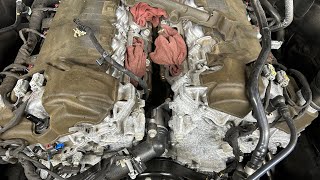
The 2016-2017 Cadillac CT6 uses a specific version of the General Motors 3.6L V6 engine, known by the RPO code LGX. This is a direct-injection engine, meaning fuel is sprayed directly into the combustion chamber, and it belongs to the fourth generation of GM's High Feature V6 (HFV6) family. It was available in both Rear-Wheel Drive (RWD) and All-Wheel Drive (AWD) configurations.
How to Verify Your Vehicle's Engine
Before purchasing a replacement engine, you must confirm it is the correct one for your car. Mismatches can lead to significant and costly installation problems.
- Check the VIN: The 8th digit of your vehicle's Vehicle Identification Number (VIN) must be 'S'. You can find the VIN on the safety plate on the driver's side dashboard (visible through the windshield) or on your vehicle's registration and insurance documents.
- Find the RPO Code: Look for the Service Parts Identification label, often located in the trunk or glove box. This label lists three-character codes for all the options on your car. You should find the code 'LGX'.
- Confirm Drivetrain: Verify if your CT6 is RWD or AWD. The engines have different upper oil pans to accommodate the front axle on AWD models, and they are not easily interchangeable.
- Check for the Oil Cooler: Look near the oil filter housing to confirm the presence of the Engine Oil Cooler (RPO code KC4).
Warning: While other GM vehicles like the Camaro, CTS, ATS, XT5, and Acadia also use the LGX engine, their versions have different mounting brackets, oil pan designs, accessory positioning, wiring harnesses, and ECU calibrations. Only an LGX engine from a 2016-2017 Cadillac CT6 is a direct fit.
What Parts Are Included with a Used Engine?
A used engine assembly typically includes the core long block and some accessories. Based on common auto recycling industry standards (ARA URG guidelines), you should expect the following components.
| Included with Used Assembly | Not Included (Transfer from Old Engine) |
|---|---|
| Engine block and cylinder heads with all internally lubricated parts | A/C compressor, alternator, and starter motor |
| Upper and lower oil pans | Exhaust manifolds |
| Valve covers and timing covers | Engine mount brackets |
| Intake manifold and throttle body | Power steering pump |
| Complete fuel injection system, including the camshaft-driven high-pressure fuel pump, fuel rails, and high-pressure fuel injectors | Wiring harness |
| Harmonic balancer |
Pro Tip: It is highly recommended to reuse your vehicle's original wiring harness to ensure perfect compatibility with the vehicle's electronics and avoid potential issues.
Common Failure Symptoms

An engine failure in the 3.6L LGX can manifest in several ways. If you experience these symptoms, a mechanical inspection is necessary to confirm if the engine is the root cause.
- Engine Knocking or Ticking: A rhythmic knocking or ticking sound that increases with engine speed often points to severe internal wear, such as on bearings or camshafts.
- Rough Idle and Misfires: The engine may run unevenly, shake, or trigger a flashing Check Engine Light, especially when cold. This can be caused by issues ranging from carbon buildup to coolant leaks into the cylinders.
- Loss of Power or Stalling: A noticeable decrease in acceleration or the engine shutting off while driving can indicate serious problems like fuel system failure or timing chain issues.
- Metal Shavings in Oil: Finding metallic particles in the engine oil or oil filter during an oil change is a definitive sign of internal engine damage.
- Excessive Oil Consumption: Needing to add oil frequently between changes can be a symptom of worn piston rings or cylinder bore damage.
Diagnostic Flowchart
Known Problems, Recalls, and Technical Service Bulletins (TSBs)
While the LGX is a generally reliable engine with an expected service life exceeding 200,000 miles when properly maintained, several known issues have been documented in official TSBs.
| Issue / TSB | Severity | Description & Remedy |
|---|---|---|
| Cold Start Misfire (TSB 18-NA-115) |
Severe | A coolant leak into a cylinder due to porosity in the engine block casting causes a misfire most noticeable on a cold start. The only remedy is to replace the entire engine assembly. |
| Cylinder Head Gasket Oil Starvation (Customer Satisfaction Program 16088) |
Severe | Affecting early 2016-2017 production, oil flow to the left-side intake camshaft journals can be restricted. The remedy is to inspect and replace the cylinder head gasket to restore proper oil flow. |
| Timing Chain Wear (TSB 19-NA-256) |
Severe | Low or dirty oil can cause timing chains to stretch, leading to rattling noises, timing codes, and catastrophic failure. TSB provides diagnostic procedures for related engine noises. |
| Intake Valve Carbon Buildup (TSB 16-NA-383) |
Moderate | As a direct-injection engine, oil vapor bakes onto intake valves, causing carbon deposits that restrict airflow. This leads to rough idle or misfires, typically after 60,000-80,000 miles. A professional cleaning is recommended. |
| Hard Brake Pedal (TSB 17-NA-021) |
Moderate | Some owners experience a hard brake pedal. The fix involves replacing the brake booster, vacuum hose assembly, and potentially the engine oil pump to restore proper vacuum pressure. |
| High-Pressure Fuel Pump Ticking (TSB 07-06-04-025M) |
Minor | A characteristic light ticking sound is normal for this engine. It is caused by the high-pressure fuel pump (operating at over 2,000 PSI) and is not a sign of a problem. |
What Fails at Every Mileage Band
Pro Tip: The mileage bands below describe used replacement units of that mileage. The checklists provided are things to do WHILE INSTALLING the purchased engine, not maintenance for your current engine.
Under 60K Miles
Engines in this range are generally healthy, but early thermostat failures are widely reported, sometimes occurring as early as 41,500 miles. This can cause the temperature gauge to read incorrectly and force the cooling fan to run constantly. The severe engine block porosity issue (TSB 18-NA-115) may also present itself early in the engine's life. Additionally, the 8-speed automatic transmission paired with this engine is known for a shudder or vibration during light acceleration.
- ✓Do during install (required): Change Oil and Filter using only full synthetic Dexos1 Gen 2 or Gen 3 5W-30 oil and an ACDelco UPF63R filter.
- ✓Do during install (recommended): Replace Thermostat. Given the high failure rate and difficulty of replacement once installed, this is highly recommended.
- ✓Cheap insurance while the engine is out: Replace Spark Plugs (ACDelco 41-147 gapped to 0.035 inches) and inspect/replace the serpentine belt.
60K-100K Miles
As a direct-injection engine, carbon deposits on intake valves become more significant in this range, potentially causing rough idle and misfires. Timing chain issues can also arise, often accelerated by infrequent oil changes. Rattling noises on a cold start are a key symptom. Valve lifter oil control solenoids and thermostats continue to be common failure points.
- ✓Do during install (required): Replace Spark Plugs and Thermostat if not done previously.
- ✓Do during install (recommended): Perform Intake Valve Cleaning (walnut blasting) to restore performance.
- ✓Cheap insurance while the engine is out: Replace Water Pump and all accessible seals and gaskets (front/rear main seals, valve cover gaskets, oil pan gaskets). Preventative replacement of timing chains and tensioners is also a wise investment.
100K-150K Miles
Timing chain replacement becomes a critical maintenance item. Many experts suggest preventative replacement around 100,000-130,000 miles to avoid engine failure. Issues related to the PCV system or worn piston rings can lead to increased oil consumption. Running the engine low on oil is a primary cause of timing chain failure. The high-pressure fuel pump (HPFP) can also fail at higher mileage levels.
- ✓Do during install (required): Replace Water Pump, Thermostat, and Spark Plugs.
- ✓Do during install (recommended): Complete Timing Service. Assume the timing chains, guides, and tensioners need to be replaced if there is no proof of recent service.
- ✓Cheap insurance while the engine is out: Replace High-Pressure Fuel Pump, PCV system components, and perform a full gasket and seal replacement.
Over 150K Miles
At this stage, failures are often related to overall wear from mileage and maintenance history. This includes oil leaks from hardened gaskets, oil consumption, and failure of cooling system components. Timing chain failure remains the most significant potential failure point. In rare, severe cases of poor maintenance, low-speed pre-ignition (LSPI) can cause broken piston ringlands.
- ✓Do during install (required): Assume a Full Rebuild/Refresh is Needed. This includes all items from the 100-150K band.
- ✓Do during install (recommended): Inspect Cylinder Walls and Pistons for scoring or signs of excessive wear while the engine is disassembled for timing service.
- ✓Cheap insurance while the engine is out: Replace all ancillary components, including the oil pump, all tensioners and idlers, and all cooling and vacuum hoses.
Real Owner Experiences
| Source | Mileage | What Happened | Cost |
|---|---|---|---|
| Camaro6 Forums | 41,500 miles | Thermostat went bad and was replaced. | Not specified |
| Camaro6 Forums | 50,000 miles | Thermostat failed, causing ECU errors. Owner replaced it themselves. | DIY parts cost, OEM part recommended over aftermarket. |
| YouTube/Owner Review | ~56,000 miles | Experienced significant transmission shudder issues shortly after purchase. | Not specified |
| chevyhhr.net | <60,000 miles | Replaced the engine block with 58% cost assistance from GM after a long dispute. (LNF Engine related cracked block) | $2500 (Quoted $5714) |
| Camaro6 Forums | 70,000 miles | Two 'valve lifter oil control solenoid valves' went out during a long drive. | Not specified |
| reddit.com | 70,000 miles | Replaced two front struts, had transmission flushed twice. No major engine repairs reported. (2018 CT6) | not specified |
| Reddit r/Cadillac | 72,000 miles | Thermostat failed, causing the temperature gauge to not read, disabling parking sensors, and causing the cooling fan to run nonstop. Repair cost ~$800 at a non-dealer specialist. | ~$800 |
| cadillacforums.com | 75,000 miles | Debating repair vs. selling the car for parts after engine failure. (2008 CTS related HFV6) | not specified |
| Camaro6 Forums | 82,000 miles | Owner experienced a thermostat issue and transmission shudder (which was fixed with a fluid flush). | Not specified |
| Reddit r/chevycolorado | 100,000 miles | Owner of a related LGZ engine replaced the thermostat, temp sensor, and serpentine belt as preventative maintenance. | DIY Parts Cost |
| Camaro6 Forums | 150,000+ miles | A forum member mentioned knowing someone with over 150,000 miles with hardly any issues. | N/A |
| Camaro6 Forums | 157,500 miles | Owner had previously replaced the thermostat at 75k miles and reported no further issues with it up to this mileage. | Not specified |
| Reddit r/Cadillac | 193,000+ miles | An owner shared a picture of a Cadillac XT5 with an LGX engine that had reached over 193,000 miles, suggesting good longevity is possible. | N/A |
Replacement Cost
The cost to replace a 3.6L LGX engine varies based on the type of replacement unit. Labor costs are also significant due to the complexity of the job.
| Part or Service | Estimated Cost (USD) |
|---|---|
| New OEM | $7,000 - $9,500+ |
| Remanufactured | $4,500+ |
| Used OEM | $2,100 - $2,400 |
| Shop Labor | $2,100 - $3,200 |
Repair or Replace?
Deciding whether to repair your current engine or replace it with a used unit comes down to the specific failure and the associated labor costs.
| Problem (TSB/CSP) | Typical Repair Cost | Repair vs. Replace Analysis |
|---|---|---|
| Timing Chain Wear (TSB 19-NA-256) |
$2,108 - $5,055 | Repair makes sense only if there is no secondary damage (e.g., bent valves). If the cost approaches that of a used engine plus labor, replacement is a better value. |
| Intake Valve Carbon Buildup (TSB 16-NA-383) |
$500 - $1,000 | This is a maintenance issue. Repair (via walnut blasting) is always the correct action and does not warrant engine replacement. |
| Cylinder Head Gasket / Oil Starvation (CSP 16088) |
$3,810 - $5,249 | Repair is viable only if there is no secondary damage like a warped head. The high labor cost often makes a used engine replacement more financially prudent. |
When Replacement is Smarter: Engine replacement is the recommended course of action for severe internal failures, especially for the block porosity issue outlined in TSB 18-NA-115, which causes coolant to leak into a cylinder. GM's own procedure for a verified porosity condition is engine replacement. It is also smarter to replace the engine if a timing chain failure has caused significant secondary damage (bent valves, piston damage) or if a head gasket failure has resulted in a warped block or head. Given that the labor to replace a head gasket can be over $3,000-$4,500, and a used engine can be found for $2,100-$2,400, it is often more financially prudent to replace the entire assembly rather than attempt a major internal repair on a high-mileage unit.
Installation and Programming: Critical Steps

Installing this engine is a complex job best left to experienced professionals. Several steps are critical for a successful replacement.
Special Tools and Professional Installation
This is an Advanced to Expert level job. It requires an estimated 14 to 20 hours of professional shop labor. Specialized tools are mandatory, including:
- Camshaft holding/retaining plates (GM Tool EN-51360)
- Fuel injector remover/installer tool (GM Tool EN-49248)
- High-pressure fuel line quick-disconnect tools
- Engine hoist and heavy-duty subframe table/jack
- Engine support fixture
- Torque angle gauge
- Five-point Torx sockets
Required Consumables and Gotchas
During installation, several parts must be replaced. You will need Engine Oil (OE-spec Dexos1 Gen 2 or Gen 3 Full Synthetic 5W-30), an ACDelco UPF63R Oil Filter, GM-approved Dex-Cool 50/50 pre-diluted coolant, and ACDelco 41-147 spark plugs gapped to 0.035 inches. You will also need upper and lower intake manifold gaskets, exhaust manifold gaskets, a thermostat housing gasket, front and rear crankshaft main seals, Teflon injector seals (if transferring injectors), and a one-time-use high-pressure fuel crossover pipe.
Warning: Critical engine fasteners, such as those for the cylinder heads, main bearings, connecting rods, flywheel/flexplate, and harmonic balancer, are Torque-to-Yield (TTY). They are designed to stretch when tightened and are for one-time use only. Reusing these bolts can lead to them breaking or backing out, causing severe engine damage.
Warning: Be aware of critical installation gotchas. The AWD model's front axle passes through the upper oil pan, making RWD and AWD engines non-interchangeable without a major oil pan swap. Additionally, the stainless steel high-pressure fuel lines must never be bent or reused, as they can cause severe fuel leaks under 2,000+ PSI of pressure.
Required Programming: Crankshaft Position Relearn
After the engine is installed, the vehicle's computer (ECM) must be updated. A "Crankshaft Position (CKP) System Variation Relearn" procedure must be performed with a GM MDI dealer scan tool or a high-end bi-directional diagnostic scanner. If this step is skipped, the ECM will miscalculate engine misfires, triggering a persistent Check Engine Light (typically DTC P0300 or P0315). The vehicle's immobilizer system may also require re-marriage with the ECM.
Questions to Ask Your Installer
- Have you worked on a GM LGX engine before, specifically in the CT6 platform?
- Can you confirm you have the GM-specific tools for camshaft alignment (EN-51360) and fuel injector service (EN-49248)?
- Will you be performing the mandatory Crankshaft Position (CKP) System Variation Relearn procedure after installation? What scan tool will you use?
- What is your policy on swapping the original vehicle wiring harness onto the donor engine?
- Does your quote include all necessary one-time-use Torque-to-Yield (TTY) bolts and the high-pressure fuel crossover pipe?
- Does your quote include all required fluids, specifically Dexos1 Gen 2/3 5W-30 oil, the ACDelco UPF63R filter, and Dex-Cool coolant?
- How do you handle the core charge and return of the old engine?
- What warranty do you provide on your labor, and how does it work with the parts warranty from the engine supplier?
Freight and Delivery Reality

When ordering a used engine assembly, it is important to understand how it will arrive. A complete 3.6L LGX engine assembly weighs approximately 353 lbs and measures roughly 30" x 37" x 34" before crating. Because of this size and weight, it ships as Less-Than-Truckload (LTL) freight on a pallet—NOT as a standard parcel. Delivery will require a freight truck equipped with a liftgate to lower the pallet to the ground. Always inspect the engine thoroughly for any shipping damage before signing the delivery receipt.
Frequently Asked Questions (FAQ)
Is the AWD engine different from the RWD one?
Yes. The upper oil pan on All-Wheel Drive models has a cast-in tube for the front axle to pass through. A RWD engine cannot be installed in an AWD car without swapping the upper oil pan, a labor-intensive job that requires removing the front timing cover.
Why do I need a special oil filter?
The LGX engine specifies an ACDelco UPF63R oil filter. Using a standard PF63 filter is a common mistake. The UPF63R has a higher burst strength and a different internal bypass valve setting required for the engine's oiling system. Using the wrong filter can lead to the filter seal blowing out under pressure, causing a massive oil leak and rapid engine damage.
Do I need to do anything before starting the new engine?
Yes. It is crucial to replace several consumable parts during the swap, including the thermostat, spark plugs, gaskets, and seals. It is also vital to follow the correct procedure for releasing the timing chain tensioners to prevent the chains from jumping time on the first startup.
Can I reuse the high-pressure fuel lines?
No. The stainless steel high-pressure fuel lines, including the crossover pipe, are designed for one-time use. Reusing them or bending them can lead to severe fuel leaks under the 2,000+ PSI pressure generated by the fuel pump.
Will a 3.6L engine from a Camaro or CTS fit my CT6?
No, not directly. While they share the LGX engine design, versions used in other GM vehicles differ significantly in mounting brackets, oil pan design, accessory positioning, wiring harnesses, and ECU calibrations. You must source an engine specifically from a 2016-2017 Cadillac CT6.
What happens if I skip the Crankshaft Position Relearn?
Failing to perform the Crankshaft Position (CKP) System Variation Relearn will cause the engine computer to miscalculate misfires. This will trigger a persistent Check Engine Light, usually displaying diagnostic trouble codes P0300 or P0315, and the vehicle may not run correctly.
Helpful Videos

Technical Specifications
Engine RPO Code: LGX; Vehicle Years: 2016-2017; Vehicle Model: Cadillac CT6; Displacement: 3.6L; Engine Family: GM High Feature V6 (HFV6), 4th Gen; Fuel System: Direct Injection; VIN Identifier (8th Digit): S; Drivetrain Configurations: RWD, AWD; Oil Specification: Dexos1 Gen 2 or Gen 3 5W-30 Full Synthetic; Oil Filter: ACDelco UPF63R; Spark Plugs: ACDelco 41-147; Spark Plug Gap: 0.035 inches; Coolant: Dex-Cool 50/50 pre-diluted; Approximate Weight: 353 lbs
We Have This Part in Stock


The information in this article is provided for general reference and educational purposes only. Vehicle specifications, procedures, and part compatibility can vary by production date, trim level, and region. Always consult your vehicle's factory service manual and verify part numbers before purchasing or performing repairs. Safety-critical components such as airbags, seat belts, and braking systems should be installed by a qualified professional.
- Cadillac CT6:
- 🎬 Helpful Videos
- 🛍️ Shop This Part
- Engine Identification: Confirming the 3.6L LGX V6
- How to Verify Your Vehicle's Engine
- What Parts Are Included with a Used Engine?
- Common Failure Symptoms
- Diagnostic Flowchart
- Known Problems, Recalls, and Technical Service Bulletins (TSBs)
- What Fails at Every Mileage Band
- Under 60K Miles
- 60K-100K Miles
- 100K-150K Miles
- Over 150K Miles
- Real Owner Experiences
- Replacement Cost
- Repair or Replace?
- Installation and Programming: Critical Steps
- Special Tools and Professional Installation
- Required Consumables and Gotchas
- Required Programming: Crankshaft Position Relearn
- Questions to Ask Your Installer
- Freight and Delivery Reality
- Frequently Asked Questions (FAQ)
- 🎟️ Get 5% Off