

2018–2019 Buick LaCrosse 2.5L Ecotec: Problems, Identification, and Used Replacement
Identify the exact LHN eAssist engine, learn what causes it to fail, and discover when swapping in a used OEM unit is the smartest fix.
- Verify you are purchasing the correct LHN eAssist engine using the VIN (8th digit 'Z') and RPO code, as non-hybrid 2.5L GM engines are not interchangeable and will not fit.
- Engine replacement is an expert-level task due to the integrated high-voltage eAssist system, which requires special safety procedures, training, and equipment to prevent serious injury or death.
- A Crankshaft Position (CKP) Variation Learn procedure is mandatory after installation using a GM-specific scan tool; skipping this step will cause misfires and a persistent Check Engine Light.
- Always replace single-use parts, especially the high-pressure fuel pipe and all Torque-to-Yield (TTY) bolts, to prevent dangerous fuel leaks or catastrophic mechanical failure.
- Before purchasing a used engine, check its history to ensure all safety recalls have been performed, particularly NHTSA 18V385000 for the high-pressure fuel pump on 2018 models.
Engine Identification: Confirming the 2.5L LHN eAssist

The 2018–2019 Buick LaCrosse with the eAssist system uses a specific 2.5L Ecotec engine, part of the General Motors Ecotec Gen 3 family. This is a Front-Wheel Drive (FWD) mild-hybrid powertrain where a small electric motor-generator assists the gasoline engine. This inline 4-cylinder, direct-injection, non-turbocharged engine is identified by the RPO code LHN and the VIN code 'Z'. The RPO (Regular Production Option) code is a three-character code found on the Service Parts Identification label, often located in the trunk or glove box.
Before purchasing a replacement engine, verify that your LaCrosse requires this exact unit by checking the following:
- VIN Check: The 8th character of your vehicle's 17-digit VIN must be 'Z'.
- RPO Code: The Service Parts Identification label should list the code 'LHN'.
- Drivetrain: Confirm your vehicle is Front-Wheel Drive (FWD).
- Visual Check: Look for thick, bright orange high-voltage cables in the engine bay. These cables connect to the Motor Generator Unit (MGU) on the passenger side of the engine, a key feature of the eAssist system.
What Will NOT Fit
Other General Motors vehicles, like the Chevrolet Malibu, Chevrolet Impala, GMC Acadia, Chevrolet Blazer, and Cadillac ATS, also use 2.5L Ecotec engines (such as the LCV or LKW versions). However, these engines are not interchangeable with the LHN. The LHN engine block is specifically cast and machined to accommodate the liquid-cooled eAssist MGU and its mounting brackets. Using an engine from a non-hybrid vehicle will lead to severe fitment, wiring, and calibration issues.
Warning: Do not order this engine for any vehicle other than a 2018–2019 Buick LaCrosse with the eAssist system. It is not compatible with standard, non-hybrid models or other GM vehicles.
Common Failure Symptoms
Engine failure can manifest in several ways. While some issues can be repaired, severe internal damage often requires a complete engine replacement. Key symptoms include:
- Engine Knocking or Rattling: Persistent metallic knocking or rattling sounds that change with engine speed often indicate worn bearings, timing chain issues, or other critical internal failures.
- Loss of Power and Performance: A significant decrease in acceleration and power can signal major problems like loss of compression, heavy carbon buildup on intake valves, or fuel system failure.
- Excessive Oil Consumption or Smoke: Blue or gray smoke from the exhaust points to burning oil, likely caused by failed piston rings or valve seals.
- Metal Shavings in Engine Oil: Finding metallic particles during an oil change is a definitive sign of severe internal engine wear and impending failure.
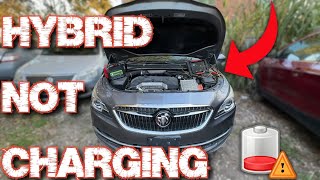
- Charging System Warnings: In the eAssist system, issues with the engine can sometimes manifest as problems with the hybrid charging system, as the engine and MGU are directly linked. 🎬 Watch: How to diagnose a hybrid alternator not charging
Diagnostic Flowchart
Known Issues, Recalls, and Technical Service Bulletins (TSBs)

Several documented issues affect the 2.5L LHN engine and associated systems. Always check with a GM dealer to see if these recalls or service campaigns have been completed on your vehicle or the donor vehicle.
| Issue / Bulletin | Affected Models | Description & Remedy |
|---|---|---|
| High-Pressure Fuel Pump Weld Separation (NHTSA Recall 18V385000 / GM Recall 18188) |
2018 | A faulty weld on the fuel pump can cause it to crack, leading to a fuel leak and increasing the risk of a fire. The remedy is a free replacement of the high-pressure fuel pump and high-pressure fuel pipe by a dealer. |
| Transmission Start-Stop Accumulator Missing Bolts (NHTSA Recall 20V668000 / GM Recall N202313440) |
2018–2019 | The transmission's start-stop accumulator may be missing endcap bolts, which can cause a transmission fluid leak. This could lead to a loss of propulsion and increase crash or fire risk. Dealers will inspect the accumulator and replace it if bolts are missing. |
| Engine Knock, Rattle, or Squeal Noises (TSB #19NA256) |
2018–2019 | This bulletin provides diagnostic procedures for technicians to determine if engine noises require internal repairs versus a full engine replacement. |
| Engine Control Module (ECM) Issues (GM Recalls 18239 & N202312031 / N202312030) |
2018 | Two separate issues exist: one for potential ECM circuit board connection failures requiring module replacement (Recall 18239) and another for incorrect CVN emissions reporting requiring a dual-stage software update (Recall N202312031 / Service Update N202312030). |
| EVAP System Code P0446 (TSB PIC6306) |
2018–2019 | This diagnostic trouble code, related to the evaporative emission control system, may require an EVAP vent valve replacement or an ECM software update. |
| Oil Pressure Control Solenoid Valve Stuck Off (TSB #PIP5676 / DTC P06DE) |
Up to 2019 | This issue can trigger the code P06DE and requires following specific diagnostic steps outlined in the service bulletin to fix the stuck solenoid. |
What Fails at Every Mileage Band
Pro Tip: The mileage bands below describe the condition of USED REPLACEMENT engines you might purchase. The checklists provided are critical steps to perform DURING THE INSTALLATION of your purchased unit while it is out of the vehicle, not general maintenance for your broken engine.
Under 60,000 Miles
Engines in this range are generally very healthy, but early-life factory defects or missed recalls are the primary concerns.
- Known Failures: High-Pressure Fuel Pump weld separation (NHTSA 18V385000), missing transmission accumulator bolts (NHTSA 20V668000), ECM calibration reporting errors (N202312031), ECM circuit board failures (GM 18239), and EVAP system faults (TSB PIC6306).
- ✓Do during install (required): Verify all recall work has been completed on the donor unit. Perform a full synthetic oil change using 5.0 quarts (4.7 liters) of 0W-20 oil meeting GM dexos1 Gen 2 or Gen 3 specifications, along with a premium filter (like ACDelco PF64). Replace the single-use high-pressure fuel pipe.
- ✓Do during install (recommended): Install a brand-new, heavy-duty eAssist serpentine drive belt.
- ✓Cheap insurance while the engine is out: Replace all 4 spark plugs with new iridium plugs (ACDelco 41-125 or equivalent) gapped to 0.95mm – 1.10mm (0.037" – 0.043"). Replace intake, exhaust, and thermostat gaskets.
60,000 - 100,000 Miles
At this stage, direct-injection engines begin to show signs of carbon buildup, and sensors or solenoids may begin to stick.
- Known Failures: Carbon buildup on intake valves causing a slow decline in performance. Engine Oil Pressure Control Solenoid Valve getting stuck (TSB #PIP5676 / DTC P06DE).
- ✓Do during install (required): All items from the Under 60K band. Replace both the primary engine coolant and the separate coolant for the eAssist Motor Generator Unit (MGU) loop using 50/50 pre-diluted GM-approved Dex-Cool.
- ✓Do during install (recommended): Have a professional intake valve cleaning (walnut blasting) service performed to remove carbon deposits while the engine is easily accessible on the stand.
- ✓Cheap insurance while the engine is out: Inspect and consider replacing the water pump and thermostat as preventative maintenance.
100,000 - 150,000 Miles
Wear and tear on moving parts becomes the main focus. Timing components and accessories need close inspection.
- Known Failures: Timing chain wear (rattling or whining noises from the front of the engine). CV axle wear (clacking noises in the front end).
- ✓Do during install (required): All items from previous bands. Inspect the MGU belt tensioner assembly for any signs of wear or weakness.
- ✓Do during install (recommended): HIGHLY RECOMMENDED: Replace the timing chain, tensioner, and guides. This is critical preventative maintenance while the engine is out, as a failure later can cause catastrophic internal damage.
- ✓Cheap insurance while the engine is out: Inspect all accessible seals (such as crankshaft seals) for leaks and replace them as needed.
Over 150,000 Miles
Based on owner reports, a properly maintained 2.5L LHN engine can last well over 150,000 miles, potentially reaching 250,000 miles if strict 7,500-mile 0W-20 dexos1 oil change intervals are followed. Failures here are usually related to general component lifespan.
- Known Failures: General wear and tear on sensors, the starter-generator (MGU), or the hybrid battery pack.
- ✓Do during install (required): Assume all items from the 100,000-150,000 Miles band are mandatory.
- ✓Do during install (recommended): Perform a compression test and cylinder leak-down test before installation to verify the internal health of the high-mileage unit.
- ✓Cheap insurance while the engine is out: Carefully inspect the condition of the integrated exhaust manifold for any cracks or warping.
Real Owner Experiences
Here is what actual owners and vehicle history reports reveal about the 2.5L LHN engine in the real world:
| Source | Mileage | What Happened | Cost |
|---|---|---|---|
| cars.com | N/A | Owner of a hybrid model reported being very happy with the purchase, citing great gas mileage (25-35 mpg) and quick acceleration. | N/A |
| CARFAX | 68,555 | A used 2019 LaCrosse Preferred with the 2.5L engine was listed for sale with a history of regular service and no reported accidents or damage. | N/A |
| CARFAX | 96,914 | A used 2018 LaCrosse Essence with the 2.5L engine was listed for sale with a clean history and 34 service records, indicating consistent maintenance. | N/A |
| CARFAX | 116,235 | A used 2018 LaCrosse Essence with the 2.5L engine was listed for sale. The vehicle history reported a minor to moderate damage accident. | N/A |
| Edmunds | 120,000 | Owner who commuted 120 miles daily had to replace the front CV half-shafts due to a "clacking noise in front end." The engine itself was still running great. | N/A |
| Edmunds | 151,000 | An owner of a 2018 model with the 2.5L eAssist engine reported the car was "still running great" and achieving 35-38 mpg with a long daily commute. The owner fully anticipated "another 100k" miles from the car. | N/A |
Repair or Replace?
Deciding whether to fix your current engine or swap it for a used replacement comes down to the severity of the failure and the cost of labor.
When Repair Makes Sense
- High-Pressure Fuel Pump Failure (NHTSA 18V385000): Always repair this. It is a bolt-on component that does not require engine removal. If covered by the recall, the cost is $0. Out-of-pocket estimates range from $400 to over $1,000, with parts costing $100 to $250.
- Engine Oil Pressure Control Solenoid Stuck (DTC P06DE): Typical repair costs are $100 to $300. Repair makes sense when the issue is isolated to the solenoid or wiring. Always perform a diagnostic check first, as the root cause can be as simple as dirty or low oil. If ignored, it can lead to oil pump failure and internal damage.
- Minor Engine Knock or Rattle (TSB #19NA256): Typical repair costs are $200 to $500. Repair is viable if the diagnosis determines the cause is external to the engine's rotating assembly (e.g., a bad knock sensor, which costs $200 to $400 to replace, or an accessory issue).
When Replacement is Smarter
Replacement is the smarter option when the engine has suffered catastrophic internal failure, such as rod knock, a spun bearing, a cracked block, or severe overheating that has warped the cylinder head. The estimated cost for a head gasket replacement alone can range from $1,500 to over $3,000. Because a quality used replacement engine typically runs between $1,500 and $2,200, swapping the entire assembly is often more time- and cost-effective than paying a mechanic for dozens of hours of internal engine teardown.
Questions to Ask Your Installer
- Have you worked on a GM eAssist hybrid system before, and do you have the proper high-voltage safety equipment?
- Are you aware of the mandatory Crankshaft Position (CKP) Variation Learn procedure that must be performed with a GM scan tool after installation?
- Will you be replacing all required single-use Torque-to-Yield (TTY) bolts and the high-pressure fuel pipe?
- How will you handle the transfer of my existing wiring harness and the eAssist Motor Generator Unit (MGU) to the replacement engine?
- Does your quote include all necessary fluids (dexos1 0W-20 oil, Dex-Cool coolant) and new gaskets/seals for the intake, exhaust, and thermostat?
- Can you confirm the correct installation procedure for the MGU belt tensioner strut to avoid immediate belt failure?
Replacement Cost Comparison
The cost of replacing a 2.5L LHN engine can vary significantly based on the type of replacement unit and local labor rates. The job is complex due to the integrated eAssist hybrid system.
| Part or Service | Estimated Cost (USD) | Notes |
|---|---|---|
| Used OEM Engine | $1,500 - $2,200 | Price depends on mileage and condition. Sourced from a recycled vehicle. |
| Remanufactured OEM Engine | $3,000 - $4,500 | Rebuilt to factory specifications with new wear parts. Often includes a warranty. |
| New OEM Engine | $5,000+ | A brand new unit from a General Motors dealer (if available). |
| Installation Labor | $1,320 - $3,500 | Estimated at 11 to 20 hours of shop time. Labor rates vary by location. |
Freight & Delivery Reality

When ordering a used 2.5L LHN engine assembly, it will not arrive in a cardboard box via standard parcel delivery. This is a heavy industrial part. Verified shipping data shows this assembly weighs approximately 375 lbs and measures roughly 31" x 31" x 28" before crating. It ships as LTL (Less-Than-Truckload) freight strapped to a wooden pallet.
Because of its size and weight, delivery requires a freight truck. If you are having it delivered to a residential address or a shop without a loading dock, you must request a truck with a liftgate to lower the pallet to the ground. Always perform a pre-purchase verification interview with the seller to confirm the VIN and RPO codes. When the engine arrives, inspect the unit thoroughly for any shipping damage (like cracked plastic covers or bent sensors) before signing the driver's delivery receipt.
Installation and Programming

Installing this engine is rated as an Expert-level DIY task due to the high-voltage hybrid components and required post-installation programming. Professional installation is strongly recommended.
Warning: High-Voltage System. The eAssist system uses high-voltage electricity that can cause serious injury or death. The system MUST be properly de-energized by removing the High-Voltage Manual Service Disconnect (MSD) plug in the trunk and waiting at least 10 minutes before touching any components. This job should only be performed by qualified technicians with high-voltage safety training and equipment, including Class 0 insulated safety gloves rated up to 1,000V and a CAT III/IV digital multimeter.
Key Installation Steps & 'Gotchas'
- Reuse Original Wiring Harness: To ensure complete compatibility with your vehicle's eAssist electrical architecture and hybrid battery interface, you must reuse your original integral engine wiring harness.
- MGU Belt Tensioner Strut Orientation: This component is directional. The word 'TOP' must face up during installation. Installing it upside down or reversing the mounting bolts causes immediate belt misalignment, squealing, and belt shredding. You will need a GM Belt Tensioner Compressor Tool (Kent-Moore EN-48932 or OTC 6725) to properly service this.
- Replace Single-Use Parts: The high-pressure direct injection fuel pipe (which uses a one-time crush seal) and all Torque-to-Yield (TTY) bolts (including cylinder head bolts, crankshaft balancer bolt, and connecting rod bolts) are designed for single use and MUST be replaced. Reusing them can lead to dangerous fuel leaks or catastrophic engine failure.
- Fuel Injector Handling: If you are transferring fuel injectors, the Teflon seals must be replaced and properly sized using specific fuel injector seal installation and sizing tools to prevent fuel leaks.
Required Programming
After the physical installation, the vehicle's Engine Control Module (ECM) requires a special calibration procedure.
- Crankshaft Position (CKP) System Variation Learn: This procedure calibrates the ECM to the physical tolerances of the replacement engine's new crankshaft sensor. Skipping this step will cause the engine to run poorly, set misfire codes, and trigger a flashing Check Engine Light.
- Immobilizer/Security Relearn: If the ECM itself is replaced during the swap, a security relearn is also required to marry the new module to the Body Control Module (BCM) and ignition keys.
- Dealer-Level Tool Required: These relearn procedures require a GM-compatible diagnostic scan tool, such as a GM MDI 2 with GDS2 or Techline Connect software.
Pro Tip: Before starting the engine for the first time, prime the oiling system by disabling the fuel system and cranking the engine for 10-15 seconds. This ensures that fresh oil circulates through all internal components, preventing a dry start.
Long Block vs. Complete Assembly
When shopping for a used 2.5L LHN engine, you will see two main options: a long block or a complete assembly.
A long block includes the main engine block and the cylinder head. It does not include bolt-on parts like the intake manifold, exhaust manifold, or accessories. Most used engines are sold this way. If you buy a long block, you must save the Motor Generator Unit (MGU), the orange high-voltage cables, and the special mounting brackets from your old engine. You will need to bolt these onto the replacement engine.
A complete assembly usually includes the engine block, cylinder head, and manifolds. However, salvage yards often remove the MGU and high-voltage parts to sell them separately. Always ask the seller exactly what is included. Do not assume a complete assembly comes with the eAssist hybrid parts.
Frequently Asked Questions (FAQ)
Can I use a 2.5L engine from a Chevy Malibu or Impala?
No. While those engines (like the LCV or LKW) are similar, they are not part of the eAssist mild-hybrid system. The LHN engine used in the LaCrosse has unique engine block castings for the Motor Generator Unit and different electronics. You must use an LHN engine from another 2018–2019 LaCrosse.
What happens if I skip the CKP "relearn" procedure?
The engine will likely run rough, and the Check Engine Light will flash. The ECM will store diagnostic trouble codes for engine misfires because it cannot accurately track the crankshaft's position. The procedure is mandatory for proper engine operation.
Does the used engine come with a starter or alternator?
No. The eAssist system does not use a conventional starter or alternator. The Motor Generator Unit (MGU) performs both of these functions. A standard used engine assembly does not include the MGU, A/C compressor, or power steering pump; these components must be transferred from your original engine.
Is this an easy DIY job?
No. This is considered an expert-level job. It requires specialized tools like an engine hoist, an engine stand, a GM-compatible scan tool, and high-voltage safety equipment (including Class 0 insulated gloves). Due to the safety risks of the hybrid system, professional installation is strongly recommended.
What oil does the 2.5L LHN engine require?
The engine requires exactly 5.0 quarts (4.7 liters) of 0W-20 full synthetic motor oil that meets GM dexos1 Gen 2 or Gen 3 specifications. Using the correct oil and changing it every 7,500 miles is the most critical factor in extending the life of this engine.
Why do I need to replace the high-pressure fuel pipe?
The direct-injection fuel line running from the high-pressure pump to the fuel rail uses a one-time crush seal. Once it has been torqued down, the seal deforms to create a tight fit. Reusing the old pipe will almost certainly result in a high-pressure fuel leak, which is a major fire hazard.
Helpful Videos
Technical Specifications
Engine: 2.5L Ecotec Gen 3; RPO Code: LHN; VIN Code: Z (8th digit); Cylinders: Inline 4-cylinder; Aspiration: Non-turbocharged; Fuel System: Direct Injection; Drivetrain: Front-Wheel Drive (FWD); Hybrid System: eAssist Mild-Hybrid; Oil Type: 0W-20 Full Synthetic (dexos1 Gen 2 or Gen 3); Oil Capacity: 5.0 quarts (4.7 liters); Spark Plug Gap: 0.95mm – 1.10mm (0.037" – 0.043"); Shipping Weight: Approx. 375 lbs; Shipping Dimensions: Approx. 31" x 31" x 28"
We Have This Part in Stock


The information in this article is provided for general reference and educational purposes only. Vehicle specifications, procedures, and part compatibility can vary by production date, trim level, and region. Always consult your vehicle's factory service manual and verify part numbers before purchasing or performing repairs. Safety-critical components such as airbags, seat belts, and braking systems should be installed by a qualified professional.
- Buick LaCrosse:
- 🎬 Helpful Videos
- 🛍️ Shop This Part
- Engine Identification: Confirming the 2.5L LHN eAssist
- What Will NOT Fit
- Common Failure Symptoms
- Diagnostic Flowchart
- Known Issues, Recalls, and Technical Service Bulletins (TSBs)
- What Fails at Every Mileage Band
- Under 60,000 Miles
- 60,000 - 100,000 Miles
- 100,000 - 150,000 Miles
- Over 150,000 Miles
- Real Owner Experiences
- Repair or Replace?
- When Repair Makes Sense
- When Replacement is Smarter
- Questions to Ask Your Installer
- Replacement Cost Comparison
- Freight & Delivery Reality
- Installation and Programming
- Key Installation Steps & 'Gotchas'
- Required Programming
- Long Block vs. Complete Assembly
- Frequently Asked Questions (FAQ)
- 🎟️ Get 5% Off