

2017-2020 Buick Envision 2.5L LCV Engine: Problems, Identification, and Used Replacement
Identify the 2.5L LCV, understand what causes catastrophic failures like spun bearings, and learn when to swap in a used OEM replacement unit.
- Verify the engine is for a Front-Wheel Drive (FWD) model only by checking the VIN (8th digit 'A') and RPO code ('LCV').
- If the original engine failed due to spun bearings, the engine oil cooler and lines MUST be replaced to prevent contamination and failure of the replacement engine.
- After installation, a Crankshaft Position Variation (CASE) Relearn procedure is mandatory to prevent misfire codes like P0300.
- Catastrophic failures like spun rod bearings (per TSB PI1171D) are not repairable; the entire engine assembly must be replaced.
- Always use new torque-to-yield (TTY) bolts for the flexplate and harmonic balancer during installation, as they are single-use.
Engine Identification: Is This the Right Part for Your Envision?

The 2017–2020 Buick Envision uses a specific 2.5L 4-cylinder engine known as the LCV. This engine is part of the third-generation GM Ecotec family. It features dual overhead camshafts (DOHC), 16 valves, and direct injection. Before purchasing a replacement, it's critical to verify that it is the correct unit for your vehicle to avoid costly mistakes.
How to Confirm Your Engine Code
You can confirm you have the correct engine by checking a few key identifiers on your vehicle:
- Check the VIN: The 8th digit of your 17-digit Vehicle Identification Number (VIN) must be 'A'.
- Find the RPO Code: Look for the Service Parts Identification label, which is usually in the glove box or trunk. This label lists all the Regular Production Options (RPO) for your car. You should see the code 'LCV' listed.
Critical Fitment Information: FWD Only
This specific used engine assembly is designed exclusively for Front-Wheel Drive (FWD) models of the Buick Envision. It will not work in All-Wheel Drive (AWD) vehicles due to differences in the oil pan and other components.
Warning: Do not order this engine for an All-Wheel Drive (AWD) Envision. The parts are not interchangeable.
What This Engine Does NOT Fit
While the 2.5L LCV engine was used in several other General Motors vehicles, the version for the FWD Envision is unique. Do not attempt to install this engine in the following vehicles, as they have different mounting points, wiring harnesses, oil pans, and computer calibrations:
Warning: This engine is not a direct swap for other GM vehicles using the 2.5L LCV engine due to unique calibrations and components.
- Chevrolet Colorado or GMC Canyon
- Chevrolet Impala or Malibu
- GMC Acadia
- Cadillac ATS
- Chevrolet Blazer
Common Failure Symptoms
If you are trying to determine if your engine needs to be replaced, look for these signs of serious mechanical failure:
- Loud Knocking or Ticking: A persistent noise that changes with engine speed often points to spun rod bearings or other internal damage.
- Engine Seizure: The engine may stop running and refuse to turn over or restart, indicating a catastrophic internal failure.
- Metal Shavings in Oil: Finding metallic particles in the engine oil during an oil change is a clear sign of severe internal wear and bearing failure.
- Low Oil Pressure Warning: A persistent "Oil Pressure Low" message on the dashboard, especially when accompanied by noise, can indicate a failing oil pump or worn bearings.
- Excessive Oil Consumption: Needing to add oil frequently between changes can be a symptom of worn piston rings or valve seals, which may lead to more significant issues.
Diagnostic Flowchart
Known Problems, Recalls, and Service Bulletins

The 2.5L LCV engine family has several documented issues. Always check if these apply to your specific model year.
High-Pressure Fuel Pump Detachment
Warning: A serious recall was issued for this problem.
| Issue | The high-pressure fuel pump can detach from its mounting flange, potentially damaging the fuel line and causing a leak. A fuel leak increases the risk of a fire. |
| Severity | Severe |
| Affected Vehicles | 2016-2017 Buick Envision (among other GM models). |
| Remedy | Dealers will replace the high-pressure fuel pump and fuel pipe at no charge. |
| Document Number | NHTSA Campaign 18V281000 / 18V358000. |
Spun Rod or Main Bearings
| Issue | A loud engine noise or a seized engine may be caused by spun rod or main bearings. This failure contaminates the entire oiling system with metal debris. |
| Severity | Severe |
| Affected Vehicles | 2.5L LCV engines. |
| Remedy | GM states that the only complete repair is to replace the entire engine assembly. If this failure occurred, the engine oil cooler and lines must also be replaced to prevent contamination of the new engine. |
| Document Number | TSB PI1171D. |
Front Engine Noise / Low Oil Pressure
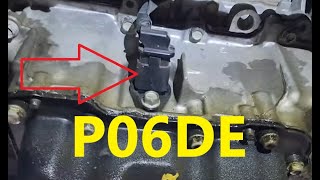
| Issue | A noise from the front of the engine that changes with RPM, sometimes accompanied by a low oil pressure warning or trouble codes P06DD or P06DE. This can be caused by a malfunctioning dual-stage oil pump control valve, timing chain guide wear, or a cracked gear on the balancer shaft. |
| Severity | Moderate |
| Affected Vehicles | 2.5L LCV engines. |
| Remedy | A technician must inspect the balancer shaft and crankshaft gears. If damage is found, the balancer shaft, sprockets, and chain must be replaced. |
| Document Number | TSB PI1482. |
Early Model Crankshaft Bearing Noise
| Issue | A specific crankshaft bearing noise found during drive audits on brand new vehicles. |
| Severity | Severe |
| Affected Vehicles | Early 2013 models (Malibu and ATS) with the 2.5L LCV. While historical, it highlights the bearing sensitivity of this engine family. |
| Remedy | Dealers were required to replace the entire engine before selling the vehicle. |
| Document Number | Service Bulletin #12270 / 13283A. |
Carbon Buildup on Intake Valves
| Issue | As a direct-injection engine, fuel is sprayed directly into the cylinder, so it does not wash over the intake valves. Over time, oil vapor from the crankcase ventilation system can bake onto the valves, causing carbon buildup that restricts airflow and reduces performance. |
| Severity | Moderate |
| Remedy | Periodic intake valve cleaning (such as walnut blasting) is recommended as part of long-term maintenance. |
What Fails at Every Mileage Band
Pro Tip: The mileage bands below describe the typical condition of USED REPLACEMENT units at that mileage. The checklists provided are things you should do WHILE INSTALLING the purchased engine, not maintenance for your current broken engine.
Under 60,000 Miles
Engines in this range are generally healthy, but early failures can still occur. The most notable risks are the High-Pressure Fuel Pump detachment (a known recall for 2017 models) and catastrophic spun rod or main bearings. Some units may also develop early oil leaks at the valve cover, timing chain cover, or oil pan gaskets. A cracked balancer shaft driven gear (TSB PI1482) causing P06DD or P06DE codes can also appear early.
- ✓Do during install (required): Verify all recall work, especially for the high-pressure fuel pump, has been completed.
- ✓Do during install (required): Replace standard consumables. Use 5.0 quarts of new 5W-20 dexos1 Gen 2 oil, a new ACDelco PF64 oil filter, new gaskets (intake, exhaust, thermostat), and new torque-to-yield (TTY) bolts for the flexplate and harmonic balancer.
- ✓Do during install (required): If your original engine failed from a spun bearing, it is mandatory to replace the engine oil cooler and lines to prevent contamination of the replacement unit.
- ✓Do during install (recommended): Inspect and consider replacing the PCV valve as a low-cost preventative measure against future oil consumption issues.
60,000 - 100,000 Miles
At this stage, wear and tear become more apparent. A rattling noise on cold starts is a common first sign of timing chain stretch or tensioner/guide wear, especially if previous owners neglected the strict 5,000-mile oil change intervals. Oil consumption may increase due to PCV system or piston ring issues. Failure of the Variable Valve Timing (VVT) cam phaser solenoids is also common, causing rough idling and check engine lights. Carbon buildup on the intake valves will begin affecting performance.
- ✓Do during install (required): All required items from the 'Under 60K' band.
- ✓Do during install (recommended): Replace VVT solenoids (cam phaser solenoids). They are a known failure point and are easily accessible while the engine is out.
- ✓Do during install (recommended): Replace the thermostat and rear main seal.
- ✓Do during install (recommended): Install new ACDelco 41-115 (GM Part Number 12627160) iridium spark plugs.
- ✓Cheap insurance while the engine is out: Strongly consider replacing the entire timing chain kit (chain, guides, tensioner), especially if the engine history is unknown or if there is any sign of a cold-start rattle.
100,000 - 150,000+ Miles
High-mileage 2.5L LCV engines carry a significantly higher risk of timing chain failure, which can cause catastrophic internal damage. Issues with the dual-stage oil pump or balance shaft assembly can lead to low oil pressure warnings. Leaks from the valve cover, timing cover, and oil pan are highly probable, and instances of head gasket leaks have been reported.
- ✓Do during install (required): All required items from the '60-100K' band.
- ✓Do during install (required): Replace all accessible seals and gaskets, including the rear main seal, as they are likely hardened and brittle.
- ✓Do during install (recommended): Inspect the tandem oil pump/vacuum pump assembly for any signs of wear or damage.
- ✓Cheap insurance while the engine is out: Perform an intake valve cleaning (walnut blasting) to remove carbon deposits, which are almost certainly present and affecting performance.
Real Owner Experiences
To give you a clear picture of how this engine performs in the real world, here are actual reports from owners of the 2.5L LCV engine across various GM vehicles:
| Source | Mileage | What Happened | Cost |
|---|---|---|---|
| Chevrolet Forum | Low mileage (at time of delivery) | A GM service bulletin (12270 / 13283A) instructed dealers to perform a drive audit on new 2013 Malibu/ATS vehicles. If a specific crankshaft bearing noise was found, dealers were required to replace the entire engine before selling the vehicle. | Warranty / Pre-delivery repair by GM. |
| 20,000 | An owner of a 2016 Colorado with the 2.5L engine reported it as 'dead reliable' after one year and 20k miles, but emphasized the importance of 5,000-mile oil changes to protect the oil-pressure-driven cam chain tensioner. | N/A | |
| 33,319 | A user inquired about the general reliability of a 2017 Envision with the 2.5L engine, indicating that at this mileage, the primary concern was the vehicle's reputation rather than a specific failure. | N/A | |
| ~70,000 | A friend of a user had to have the valve cover, timing chain cover, and oil pan gaskets replaced due to leaks, which a service advisor called a 'common problem'. | N/A | |
| 80,000 | A user with a 2017 model at 80k miles asked about preemptively replacing parts. Other users suggested that cam phaser solenoids are a likely point of failure but not necessarily worth replacing preventatively. | $50 each for solenoids (pre-COVID pricing) | |
| 80,000+ | An owner of a 2.5L reported no problems, attributing the reliability to following the regular maintenance schedule. | N/A | |
| BobIsTheOilGuy Forums | 106,000 | Owner of a 2016 model with a 2.5L LCV reported the engine 'runs smooth and strong' despite 'not so easy miles'. | N/A |
| Over 100,000 | An owner reports having over 100k miles with only routine maintenance performed, stating the 2.5L is 'solid' and was the fix for the problematic earlier 2.4L engine. | N/A | |
| 150,000 km (approx. 93,000 miles) | A 2019 Envision owner reported having zero issues after 5 years and driving across Canada in winter, with the car still 'running great'. | N/A | |
| 215,000 | A 2014 Malibu owner with the 2.5L engine reported reaching 215k miles with only minor repairs like O2 sensors and solenoids, while adhering strictly to maintenance schedules. | N/A | |
| YouTube Comment | 215,000 | Owner of a 2015 Equinox (similar 2.5L Ecotec) DIY replaced the High-Pressure Fuel Pump (HPFP) and cleaned the PCV orifice to resolve issues of gas mixing with oil and poor running conditions. Noted long-term fuel trim went from -50% to 0. | DIY parts cost only. |
Repair or Replace?
When facing engine trouble, you must decide whether to repair your current engine or replace the entire assembly. Here is a breakdown of common failures and when each option makes sense.
When Repair Makes Sense
- High-Pressure Fuel Pump (HPFP) Failure: Symptoms include rough idle, reduced power, and fuel-related trouble codes (e.g., P0087). This is a common direct-injection issue and does not require engine replacement. Typical shop repair costs $800 - $1,500, though aftermarket pumps can be purchased for $80 - $312 for DIYers.
- Cam Phaser / VVT Solenoid Issues: If you have a rough idle, poor fuel economy, or camshaft position timing codes, replacing the accessible solenoids on top of the engine is a minor repair costing $300 - $800.
- Carbon Buildup on Intake Valves: A gradual loss of performance can be fixed with an intake manifold removal and walnut shell blasting. This maintenance task typically costs $500 - $900.
- Timing Chain Rattle / Guide Wear: If caught very early (e.g., a startup rattle) and there is no evidence of other internal damage, replacing the chain and guides costs $1,500 - $2,500+. However, if the chain has already failed, it likely caused catastrophic interference damage, requiring a full engine replacement.
When Replacement is Smarter
Replacement is the only viable option for catastrophic internal failures, most notably spun rod or main bearings. A spun bearing is not a repairable condition without a complete engine teardown and rebuild, which is often more expensive and less reliable than installing a warranted used engine. If your engine has low oil pressure warnings accompanied by loud knocking noises, or if it has seized entirely, replacement is the most sensible path.
Questions to Ask Your Installer
Before handing over your vehicle, ask your mechanic these critical questions:
- Have you worked on this specific GM 2.5L LCV engine before?
- If my original engine failed from a spun bearing, will you be replacing the engine oil cooler and flushing/replacing the lines? (The correct answer is YES, replacement is mandatory).
- Do you have a bidirectional scan tool capable of performing the GM Crankshaft Position Variation (CASE) relearn procedure after installation? (This is required to prevent misfire codes).
- Will you be reusing my existing engine wiring harness? (The correct answer is YES, the original harness must be transferred).
- What specific consumables are included in your quote? (Verify it includes new oil, filter, coolant, required gaskets, and new torque-to-yield bolts for the flexplate and harmonic balancer).
Replacement Cost Comparison
The cost of replacing a 2.5L LCV engine can vary widely based on the type of replacement unit and local labor rates. The labor for this job is typically estimated between 10 and 20 hours, requiring specialized tools like an engine hoist, load leveler, engine stand, torque wrenches, and GM-specific quick-disconnect tools for fuel lines.
| Part Type | Estimated Cost (USD) | Notes |
|---|---|---|
| New OEM | $3,600 - $5,500+ | A brand new engine from the manufacturer. Prices for other new GM engines can be much higher. |
| Remanufactured | $2,200 - $5,700 | Rebuilt to meet or exceed original factory specifications, often with updates to correct known flaws. |
| Used OEM | $900 - $2,700 | A salvaged engine from a donor vehicle. Price depends heavily on mileage and condition. |
| Installation Labor | $1,200 - $3,000 | Varies by shop rate and complexity of the swap. |
Freight & Delivery Reality

Buying a replacement engine is not like ordering a standard auto part online. An engine assembly is a massive piece of industrial equipment.
- Size and Weight: The 2.5L LCV engine assembly weighs approximately 300 lbs and measures roughly 26" x 20" x 33" before crating.
- Shipping Method: It ships as Less-Than-Truckload (LTL) freight on a wooden pallet. It is NOT a parcel delivery.
- Delivery Requirements: If you are having the engine delivered to a residential address or a shop without a loading dock or forklift, you must request a truck with a liftgate.
- Inspection is Mandatory: When the freight carrier arrives, you must inspect the engine for any transit damage before signing the delivery receipt. Once you sign, you are accepting the freight in its current condition.
- Pre-Purchase Verification: Reputable suppliers will conduct a pre-purchase verification interview to confirm your VIN, drivetrain (FWD), and RPO code (LCV) to ensure you are getting the exact right part.
Installation Best Practices & Required Programming

Proper installation is crucial for the longevity of a replacement engine. This is considered an expert-level job.
Required Computer Programming
After the engine is installed, it cannot simply be started and driven. Specific procedures must be performed with a professional scan tool (such as GM Techline Connect/SPS) to ensure the vehicle's computer works correctly with the new engine.
Pro Tip: You must perform a Crankshaft Position Variation Learn (CASE Relearn) and a Throttle Body Idle Relearn procedure. If the CASE relearn is skipped, the computer may falsely detect engine misfires and set trouble codes like P0300 or P0315, causing poor performance.
Critical Installation Steps & "Gotchas"
- Transfer Accessories: You must transfer the engine wiring harness, A/C compressor, starter, power steering pump, exhaust manifold, and alternator from your old engine to the replacement unit.
- Replace Consumables: Always install new gaskets, seals, spark plugs, and a thermostat. Do not reuse old parts to save money.
- Torque-to-Yield (TTY) Bolts: The bolts for the flywheel/flexplate and the crankshaft harmonic balancer are single-use only. They are designed to stretch when tightened and must be replaced.
- High-Pressure Fuel System Safety: Relieve fuel system pressure before disconnecting lines and use new seals on high-pressure connections.
- Prime the Oiling System: Before starting the engine for the first time, the oiling system must be primed to ensure critical components are lubricated.
- Ground Straps: Ensure all engine and transmission ground straps are securely connected.
Warning: If your original engine failed due to spun bearings or other internal damage, you must replace the engine oil cooler and the lines connecting to it. Flushing the old cooler is not enough to remove all the metal debris, which will destroy the replacement engine.
Required Parts and Fluids
- Engine Oil: 5.0 quarts of SAE 5W-20 (or 0W-20) full synthetic oil that meets GM's dexos1 Gen 2 specification.
- Oil Filter: A new filter, such as an ACDelco PF64 or equivalent.
- Coolant: 50/50 pre-diluted Dex-Cool (orange) coolant.
- Spark Plugs: New iridium spark plugs, such as ACDelco 41-115 (GM Part Number 12627160).
Long Block vs. Complete Assembly
When shopping for a used 2.5L LCV engine, you will see it sold as either a long block or a complete assembly. It is important to know the difference so you know what parts you need to reuse.
- Long Block: This is just the core of the engine. It includes the main engine block, the cylinder head, and the internal moving parts (like pistons and camshafts). It does not include external parts. You must move your old intake manifold, exhaust manifold, and sensors to the new engine.
- Complete Assembly: This includes the long block plus many external bolt-on parts. For the LCV engine, a complete assembly often comes with the high-pressure fuel pump, direct fuel injectors, and intake manifold still attached.
Frequently Asked Questions (FAQ)
Do I need to reprogram my car's computer after installing this engine?
Yes. A "CASE Relearn" (Crankshaft Position Variation Learn) and a Throttle Body Idle Relearn are mandatory. This procedure requires a GM-compatible bidirectional scan tool and synchronizes the new engine's crankshaft position sensor with the Engine Control Module (ECM). Skipping this step will likely result in misfire codes (P0300/P0315) and a Check Engine Light.
Will this engine fit my All-Wheel Drive (AWD) Envision?
No. This engine assembly is specifically for Front-Wheel Drive (FWD) models. The oil pan and other components are different on AWD models, and it will not interchange.
Can I reuse my old oil cooler if my engine failed from bad bearings?
No. If the original engine suffered a bearing failure, microscopic metal particles contaminate the entire oiling system. These particles get trapped in the small passages of the oil cooler and cannot be flushed out completely. Reusing a contaminated cooler will cause the metal debris to circulate through your new engine, leading to immediate and catastrophic failure. You must replace the oil cooler and lines.
What kind of oil should I use in this engine?
Use a full synthetic SAE 5W-20 (or 0W-20) motor oil that meets the GM dexos1 Gen 2 specification. The oil capacity for the FWD model is 5.0 quarts with a filter change.
What parts are included with a used engine assembly?
A standard used assembly typically includes the engine block, cylinder head, oil pan, valve covers, timing covers, internally lubricated parts, pistons, crankshaft, rods, bearings, camshafts, valves, lifters, intake manifold, fuel injection system, injectors, fuel rail, high-pressure fuel pump, throttle body, and harmonic balancer. It does NOT include the A/C compressor, starter motor, power steering pump, alternator, exhaust manifold, or engine wiring harness.
What is the expected service life of the 2.5L LCV engine?
With proper maintenance, the 2.5L LCV engine is capable of exceeding 200,000 miles. The single most critical factor for longevity is diligent and frequent oil changes with high-quality full synthetic oil. Sticking to a 5,000-mile interval helps protect the oil-pressure-driven timing chain tensioner and mitigates issues from potential oil consumption.
Helpful Videos
Technical Specifications
Engine Code: LCV; Family: GM Ecotec (Gen III); Displacement: 2.5L; Cylinders: 4; Valvetrain: DOHC, 16-valve; Injection: Direct Injection; VIN Identifier: 8th digit 'A'; RPO Code: LCV; Oil Type: 5W-20 dexos1 Gen 2; Oil Capacity: 5.0 quarts
We Have This Part in Stock


The information in this article is provided for general reference and educational purposes only. Vehicle specifications, procedures, and part compatibility can vary by production date, trim level, and region. Always consult your vehicle's factory service manual and verify part numbers before purchasing or performing repairs. Safety-critical components such as airbags, seat belts, and braking systems should be installed by a qualified professional.
- Buick Envision:
- 🎬 Helpful Videos
- 🛍️ Shop This Part
- Engine Identification: Is This the Right Part for Your Envision?
- How to Confirm Your Engine Code
- Critical Fitment Information: FWD Only
- What This Engine Does NOT Fit
- Common Failure Symptoms
- Diagnostic Flowchart
- Known Problems, Recalls, and Service Bulletins
- High-Pressure Fuel Pump Detachment
- Spun Rod or Main Bearings
- Front Engine Noise / Low Oil Pressure
- Early Model Crankshaft Bearing Noise
- Carbon Buildup on Intake Valves
- What Fails at Every Mileage Band
- Under 60,000 Miles
- 60,000 - 100,000 Miles
- 100,000 - 150,000+ Miles
- Real Owner Experiences
- Repair or Replace?
- When Repair Makes Sense
- When Replacement is Smarter
- Questions to Ask Your Installer
- Replacement Cost Comparison
- Freight & Delivery Reality
- Installation Best Practices & Required Programming
- Required Computer Programming
- Critical Installation Steps & "Gotchas"
- Required Parts and Fluids
- Long Block vs. Complete Assembly
- Frequently Asked Questions (FAQ)
- 🎟️ Get 5% Off