

2014-2016 BMW X5 & 2015-2016 X6 4.4L N63TU V8: Problems, Identification, and Used Replacement
Identify the N63TU twin-turbo V8, learn what causes catastrophic failure, and discover when to replace it with a used OEM unit.
- Before the first start of a replacement engine, you must prime the oil system by disabling fuel and cranking the engine in cycles to prevent immediate, catastrophic damage.
- Excessive oil consumption from failing valve stem seals is the most common major issue; plan to replace them on any used engine before installation.
- Confirm you have the correct N63TU engine by checking for two silver DMEs behind the headlights; other N63 variants are not compatible without major modifications.
- During installation, always replace all plastic PCV hoses and turbo coolant lines, as the engine's 'hot-vee' design makes them brittle and prone to failure.
- Installation is an expert-level job that requires dropping the engine from the bottom and using BMW-specific tools for timing and programming.
Identification: Is This The Right Engine For Your BMW?


This engine is the BMW N63TU, also known by its identifying codes N63B44O1, N63T, or N63B44B. It is a 4.4-liter, 90-degree V8 with twin turbochargers and direct injection. This specific variant was a "Technical Update" (TU) to the original N63 engine and features significant revisions to improve reliability. It was produced from 2012 to 2018, but this exact assembly fits the 2014-2016 BMW X5 xDrive50i / sDrive50i and the 2015-2016 BMW X6 xDrive50i / sDrive50i.
Before purchasing a replacement, you must confirm your vehicle has this exact engine. Installing the wrong version will lead to major compatibility issues with wiring, mounting, and computer systems.
How to Confirm Fitment on Your Vehicle
- Check the Engine Computers (DMEs): The easiest visual check is to look under the hood. The N63TU engine has two silver, rectangular aluminum engine computers (called DMEs) mounted in the front of the engine bay, just behind each headlight. The older, incompatible N63 engine has only one DME, housed in a black plastic box on the passenger side.
- Verify the Engine Code: The engine code is stamped on the passenger side of the engine block, near the front, behind the A/C compressor mounting. It should read N63B44O1 or N63B44B.
- Use Your VIN: Enter your 17-digit VIN into an online BMW VIN decoder to confirm the original engine installed in your vehicle. The results should list the engine as N63T, N63TU, or N63B44O1.
- Drivetrain Check: Confirm whether your vehicle is All-Wheel Drive (xDrive) or Rear-Wheel Drive (sDrive). If your vehicle is RWD, you will need to swap your original oil pan onto the replacement engine.
Warning: This engine is NOT interchangeable with other N63 family engines. The original N63 (2008-2013), the later N63TU2/3 (found in some 2016+ models), or the high-performance S63 will not work in your vehicle without extensive and costly modifications. These versions use different pistons, connecting rods, fuel injectors, turbochargers, and engine management electronics.
Common Failure Symptoms

If your V8-powered X5 or X6 is experiencing major issues, the engine itself may be at fault. Here are common symptoms that point toward engine failure or the need for significant repairs.
- Blue or White Smoke from Exhaust: Puffs of blue smoke, especially on startup or after idling, are a classic sign of failing valve stem seals, which leads to excessive oil consumption.
- Frequent Low Oil Warnings: If you have to add a quart of oil every 750 to 1,500 miles, your engine is consuming too much oil. This is often caused by worn valve seals or issues with the crankcase ventilation (PCV) system. 🎬 Watch: How to fix oil consumption without replacing valve seals
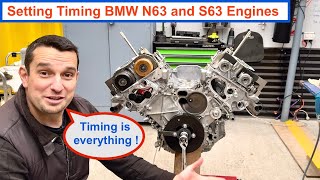
- Engine Rattle on Startup: A metallic rattling or chain-slapping noise coming from the front of the engine that is most noticeable during a cold start can indicate stretched timing chains. 🎬 Watch: How to set the timing on an N63 engine
- "Drivetrain Malfunction" Warnings: These warnings, often accompanied by rough running, long crank times, or engine misfires, can be caused by failing high-pressure fuel pumps (HPFPs) or faulty fuel injectors.
- Persistent Low Coolant Warnings: If you repeatedly need to top off the coolant with no visible leaks on the ground, the turbocharger coolant lines may be leaking. These plastic lines become brittle and can seep coolant that burns off on the hot engine.
Diagnostic Flowchart
Known Issues, Recalls, and Technical Service Bulletins (TSBs)
The N63TU engine has several well-documented issues that BMW has addressed through warranty extensions and service campaigns. If you are experiencing problems, check if your vehicle is eligible for these programs before paying for a repair.
Engine Oil Consumption (Class Action Settlement)
Problem: The most notorious issue is excessive oil consumption, often caused by worn valve stem seals. The heat from the "hot-vee" turbo layout degrades the seals, allowing oil to leak into the combustion chamber and burn off. This affects all N63TU engines.
Remedy: BMW settled a class-action lawsuit for this issue. Under Service Information Bulletins (SIB) 01 01 22 and SIB 01 02 22, owners of eligible vehicles can receive a free oil consumption test at a dealership. If the engine is found to be burning more than one liter of oil per 750 miles, BMW may authorize a repair (replacing the valve seals and PCV components) or, in some cases, a complete engine replacement.
High-Pressure Fuel Pump (HPFP) Failure
Problem: The N63TU uses two high-pressure fuel pumps that can fail, leading to a loss of power, rough idling, and "Drivetrain Malfunction" errors.
Remedy: Under SIB 01 02 18, BMW extended the warranty on the high-pressure fuel pumps to 10 years or 120,000 miles from the vehicle's original in-service date. If your vehicle is within this window and a dealer diagnoses a failed HPFP, the replacement should be covered.
Timing Chain Stretch
Problem: While the N63TU received updated timing chains compared to its predecessor, chain stretch can still occur over time, causing rattling noises and, if left unaddressed, catastrophic engine failure.
Remedy: BMW issued SIB 11 16 14, which outlines the diagnostic procedure. A technician can use a diagnostic tool to perform a test that measures chain elongation. If the chains are found to be stretched beyond specification, they must be replaced.
Fuel Injector Failure
Problem: Early-style fuel injectors are prone to failure, causing rough idle, stalling, and misfires.
Remedy: Check the index number printed on the injectors. If they are index 11 or lower, they should be replaced with updated index 12 injectors.
Service Life and Maintenance
The average lifespan of an N63-family engine before encountering major problems is often cited as around 100,000 miles. However, anecdotes from owners show that with meticulous, proactive maintenance, service life can extend beyond 150,000 miles. The engine's longevity is almost entirely dependent on the owner's willingness to preemptively replace known failure points rather than waiting for them to fail. Without this approach, core engine components can fail due to issues like oil starvation from clogged pickups (due to broken timing guides) or severe coolant leaks.
- Aggressive Oil Change Intervals: Do not follow the manufacturer's long-life oil service recommendations. Change the oil and filter every 5,000 miles or less using a high-quality, BMW-approved synthetic oil. This helps combat the extreme heat generated by the "hot V" turbo layout, which degrades oil and accelerates the failure of plastic and rubber components.
- Proactive Replacement of Plastic/Rubber: The single most important factor is replacing all plastic components in the PCV and cooling systems before they become brittle and fail. This includes all vent hoses and the complex network of turbocharger coolant lines.
- Addressing Oil Consumption Early: Do not ignore increasing oil consumption. Letting it persist contaminates and destroys expensive catalytic converters and O2 sensors, turning one major repair into several.
- Warm-up and Cool-down Procedure: Allow the engine to warm up properly by driving gently under 3,000 RPM before applying heavy throttle. Allow a minute or two of idling after a hard drive to help prolong turbocharger life by letting oil temperatures stabilize.
What Fails at Every Mileage Band
Pro Tip: The mileage bands below describe used replacement units of that mileage. The checklists are things to do WHILE INSTALLING the purchased engine, not maintenance for your current engine.
Under 60,000 Miles
Even at low mileage, the extreme heat of the N63TU can cause issues. Excessive oil consumption (sometimes requiring 1 quart every 750-1,500 miles) can start early. Failure of early-series fuel injectors (pre-Index 12) can occur, causing rough idle and misfires. Brittle plastic crankcase vent (PCV) hoses can crack, leading to vacuum leaks. Coolant leaks from plastic fittings and lines, particularly those in the "hot V" valley, can become brittle and fail. High-Pressure Fuel Pump (HPFP) failure can also occur.
- ✓Do during install (required): Replace all brittle plastic PCV/crankcase vent hoses and coolant lines, especially the turbo coolant lines in the valley. Replace the valve stem seals. This is a primary cause of oil consumption and is far easier with the engine out.
- ✓Do during install (recommended): Inspect fuel injector index numbers. If they are Index 11 or lower, strongly consider replacing all eight with new Index 12 or higher injectors. Replace all gaskets that are disturbed during the swap, including valve cover gaskets, oil pan gasket, and intake manifold gaskets.
- ✓Cheap insurance while the engine is out: Perform a walnut blast cleaning of the intake valves to remove carbon buildup, which is common even at this mileage. Install a new set of spark plugs and consider replacing ignition coils as a preventative measure.
60,000 - 100,000 Miles
In this band, valve stem seal degradation becomes highly prevalent, leading to significant oil consumption (e.g., 1 quart every 500-1,000 miles) and blue smoke after idling. Ignition coils and spark plugs may fail. Cracked plastic PCV hoses are a common failure point. Timing chain stretch and guide wear may begin to manifest. Turbocharger wastegate actuators or coolant/oil lines may fail. Coolant leaks from various plastic pipes and the radiator itself are frequently reported.
- ✓Do during install (required): Replace valve stem seals. If purchasing a used engine in this mileage band, assume they are bad or will be soon. Replace all plastic PCV hoses and all plastic coolant lines and fittings, including the turbo coolant lines. Replace all eight fuel injectors with the latest OEM index available, regardless of the current index.
- ✓Do during install (recommended): Replace the timing chains, guides, and tensioners. While not as prone to failure as the original N63, stretch is a concern past 100k miles, and replacement is vastly easier with the engine out. Replace all accessible seals and gaskets: valve covers, oil pan, front/rear main seals, turbo oil/coolant line O-rings.
- ✓Cheap insurance while the engine is out: Perform walnut blasting of intake valves. Install new spark plugs and ignition coils. Consider replacing the water pump and thermostat as preventative maintenance.
100,000 - 150,000+ Miles
At this stage, timing chain stretch and guide failure become a significant risk. Many shops recommend preventative replacement around the 80k-100k mile mark. Severe oil consumption due to worn valve stem seals is almost a certainty if not already addressed. Turbocharger failure from oil starvation, heat, or bearing wear is a higher probability. Failures in the cooling system and various electronic sensors (e.g., O2 sensors) are more common.
- ✓Do during install (required): Assume all items from the 60-100k mile band are mandatory. A complete timing chain service (chains, guides, tensioners) is not optional at this mileage. Replace valve stem seals, all PCV and coolant plastic lines. Replace the water pump, thermostat, and all major coolant hoses.
- ✓Do during install (recommended): Strongly consider replacing or rebuilding the turbochargers. Their lifespan is limited by the engine's heat, and failure can be catastrophic. Replace the high-pressure fuel pumps (HPFPs) as a preventative measure. Replace all fuel injectors, spark plugs, and ignition coils.
- ✓Cheap insurance while the engine is out: Essentially, any rubber or plastic component that is difficult to access once the engine is installed should be replaced.
Real Owner Experiences
To give you an idea of what real owners face with the N63TU, here is a summary of reported failures, mileages, and costs.
| Source | Mileage | What Happened | Cost |
|---|---|---|---|
| Bimmerpost F15/F16 Forum | 4,300 miles | Vehicle displayed a low oil warning requiring two quarts to be added during a road trip. | N/A (Warranty/Top-off) |
| Bimmerpost F15/F16 Forum | 3,400 miles | Received a "you need 2 liters of oil" warning during the first long trip. | N/A (Top-off) |
| Bimmerpost 7-Series Forum | 40,000 miles | Owner reported issues consistent with failing injectors just after the warranty period expired. | N/A |
| MINHS Automotive Report | 48,000 miles | Engine required valve stem seal replacement due to blue smoke on startup and excessive oil consumption. Significant carbon buildup was also found on intake valves. | N/A (Shop Report) |
| BIMMERPOST | 59,000 miles | Third-party warranty quoted ~$12,600 for valve stem seal and timing cover gasket repair. Dealer offered a new engine for an additional $4,000 out of pocket. Owner opted to pay the additional $4,000 for a completely new engine. | $4,000 (in addition to warranty payout) |
| Bimmerpost 7-Series Forum | 60,000 miles | Valve stem seals were replaced under extended warranty, an $8,000+ job. | $8,000+ (Covered by warranty) |
| Bimmerpost F15/F16 Forum | 63,000 miles | Experienced an engine malfunction warning which was resolved by replacing the spark plugs and coils under CPO warranty. Also had both crankcase hoses replaced. | CPO Warranty |
| Bimmerpost F15/F16 Forum | 70,000 miles | Owner had the entire engine replaced under extended warranty due to a known issue. | Extended Warranty |
| BIMMERPOST | 70,000 miles | A $40,000 job for a new engine, with BMW covering 70%. Considering paying the remaining balance of ~$12,000 for a brand new engine with a 2-year warranty. | ~$12,000 (projected) |
| Bimmerpost F15/F16 Forum | 92,000 miles | Owner preventatively replaced valve stem seals, CCV hoses, and a leaking turbo oil return line gasket. | DIY |
| Bimmerpost F10 Forum | 92,000 miles | The turbo pneumatic pressure converters failed. Otherwise, the engine was reported as solid. | N/A |
| XBimmers.com | 105,000 miles | Owner reported extreme oil consumption (1 quart every 500-1000 miles) and a bad coil pack. | N/A |
| Reddit r/BMW | 155,000 miles | Owner reports their N63TU is 'still going.' Repairs included a new radiator and flex disc at 103k miles, and a wheel bearing and O2 sensor at 144k miles. | N/A |
| BIMMERPOST | Not Specified | $27,000 for a new engine due to no compression in one cylinder. Owner replaced the motor. They noted that new motors from BMW are much cheaper than in the past, around $4,200, and they chose to replace it instead of spending $5,000-$6,000 to fix an oil pan leak on the old engine. | Engine part cost ~$4,200 |
| BIMMERPOST | Not Specified | $13,000 total. $6,652 for labor and $5,715 for a new longblock engine. Shop quoted for a new longblock replacement. | $13,000 (quoted) |
Repair or Replace?
When faced with a major engine repair, replacement is often the most reliable option. Costs can vary significantly based on the type of engine and labor rates.
| Part / Service | Estimated Cost (USD) | Notes |
|---|---|---|
| Used OEM Engine | $3,200 - $7,500 | Price varies with mileage and condition. Sourced from a recycled vehicle. |
| Remanufactured Engine | $6,600 - $9,000 | Disassembled, cleaned, and rebuilt with new seals, gaskets, and bearings. |
| New OEM Engine (Long Block) | $4,700 - $25,000+ | Price varies from a dealer-sourced long block to a complete crate engine. |
| Professional Installation Labor | $3,500 - $8,000 | Estimated 25 to 40 shop hours. This is a complex, subframe-out job. |
When Repair Makes Sense
- Engine Oil Consumption (Valve Stem Seals): Typical repair cost is $5,000 - $10,000+. This makes sense when the rest of the engine (timing components, bottom end) is in excellent health and the vehicle's value justifies the repair cost. Some shops with specialized tools can perform this repair for less than half the dealer cost by not removing the engine.
- Timing Chain Stretch/Failure: Typical repair cost is $2,500 - $7,000+. This makes sense if caught early before catastrophic failure. The job is labor-intensive (book time can be 35 to 44 hours) and requires significant disassembly. If the cost approaches that of a used or new long block, replacement is often a better value.
- High-Pressure Fuel Pump (HPFP) or Injector Failure: Typical repair cost is $2,000 - $5,000. This is almost always a repair, not a reason for engine replacement. The HPFPs and injectors are external to the long block.
- Turbocharger Coolant/Oil Line Leaks: Typical repair cost is $1,500 - $3,500. This is a common maintenance item and should be addressed via repair. It is often done preventatively during a larger job like an engine replacement.
When Replacement is Smarter
Replacement is often the smarter financial decision when multiple major issues are present simultaneously (e.g., stretched timing chains and leaking valve seals), or when there is catastrophic internal damage like rod bearing failure or a seized crank. Given that new long blocks can sometimes be purchased from BMW for a surprisingly low cost ($4,500 - $6,000), it often provides better peace of mind and value than a high-cost repair on a high-mileage engine.
Questions to Ask Your Installer
- Have you performed an N63/N63TU engine swap before, and are you familiar with dropping the subframe from the bottom?
- What is the source and mileage of the used engine, and what is the warranty?
- If sourcing a new/reman engine, is it a long block or a complete assembly? What is the warranty period?
- Does your quote include all necessary one-time-use TTY bolts and required gaskets (oil pan, valve covers, turbos, etc.)?
- Will you be coding the fuel injectors from the replacement engine to my car's DME and performing the Valvetronic relearn procedure?
- What "while-you're-in-there" items do you recommend replacing (e.g., turbo coolant lines, PCV hoses, engine mounts, water pump)?
- How will you prime the oil system before the first start-up?
- Does the quoted labor include transferring all my accessories and wiring harness from the old engine to the new one?
What's Included in a Used Engine Assembly?
Understanding what parts come with a used engine is critical for budgeting. A standard used N63TU assembly typically includes the core engine but excludes bolt-on accessories. For example, a typical donor unit might come from a 2014 BMW X5 with approximately 73,919 miles in ARA condition grade A.
- What's Usually Included: Engine block, cylinder heads, all internally lubricated parts (crankshaft, pistons, rods, camshafts, valves), oil pan, valve covers, intake manifold, timing covers, fuel injectors, fuel rails, high-pressure fuel pumps, throttle body, and harmonic balancer.
- What's NOT Included: Alternator, starter motor, A/C compressor, power steering pump, engine wiring harness, exhaust manifolds, and the ECU/DME (Engine Computer). You must carefully transfer your original engine wiring harness to the replacement engine, ensuring no plastic connectors are cracked and no wires are pinched.
Warning: Assume the twin turbochargers are NOT included with a used engine. This is one of the most common and costly mistakes buyers make. Plan to either transfer your original turbos or purchase new/rebuilt units.
Freight and Delivery Reality

A complete N63TU engine assembly is massive. Verified shipping data shows this unit weighs approximately 503 lbs and measures roughly 44" x 33" x 35" before crating. Because of this size and weight, it ships as LTL (Less Than Truckload) freight on a wooden pallet—it is NOT a standard parcel delivery.
When receiving the engine, the delivery truck will require a liftgate or a forklift at the destination to unload the pallet. It is critical that you or your shop inspect the engine thoroughly before signing the delivery receipt. Check for any damage to the fragile plastic coolant lines, the oil pan, or protruding sensors that may have occurred during transit. A pre-purchase verification interview with the seller is an industry best practice to ensure you are getting the exact N63B44O1 variant and to confirm shipping logistics.
Installation: Critical Steps & Common Mistakes

Installing an N63TU is an expert-level job. Several unique procedures must be followed to avoid immediate failure or running issues.
Key Installation Procedures
- Engine Drops From the Bottom: The engine and transmission must be dropped from the bottom of the vehicle as a subframe assembly; they cannot be pulled from the top. Attempting to pull the V8 out of the hood using a standard engine hoist damages the firewall, windshield cowl, AC lines, and wiring harness.
- Special Tools Required: Professional installation requires BMW-specific tools, including a Camshaft alignment/timing tool kit (BMW OEM #83302249117 / equivalents 119890, 118090, 118570, 119190), a Crankshaft locking pin (BMW OEM #83302249140), a Fuel injector puller/installer tool (BMW OEM #83302184264), a heavy-duty under-car lift table, a vacuum coolant refilling tool, and an engine hoist and support fixture.
- 150 Degrees BTDC Crankshaft Locking: The crankshaft must be locked at 150 degrees Before Top Dead Center (BTDC) using the special locking pin, not at TDC of Cylinder #1.
- AWD xDrive Axle Shaft: On xDrive models, the front differential bolts directly to the oil pan, and an intermediate axle shaft passes directly through the engine's oil pan.
- Vacuum Bleeding the Cooling System: You must use a vacuum coolant refilling tool to pull a deep vacuum on the system to prevent massive air pockets.
- Programming is Required: You must program the 5-digit calibration flow-rate codes printed on the physical injectors of the replacement engine into your vehicle's DMEs (IMA Coding). Additionally, you must run the Valvetronic eccentric shaft limit relearn procedure using a scan tool before starting the engine for the first time. Skipping this results in incorrect fuel trim adaptation, rough idling, and potential engine damage.
Required Consumables at Install
- Engine Oil: 8.5 to 9.5 Liters of premium synthetic oil meeting BMW Longlife-01 or Longlife-01 FE specifications (0W-30, 5W-30, 0W-40, or 5W-40).
- New OEM oil filter kit.
- Engine Coolant: BMW Blue HT-12 or G48 coolant (diluted 50/50 with distilled water).
- Spark Plugs: 8 new updated OEM-spec spark plugs.
- Ignition Coils: 8 new ignition coils (Bosch or Delphi OEM) highly recommended.
- Valve cover gaskets (left and right banks).
- Intake and exhaust manifold gaskets.
- Turbocharger oil feed/return line gaskets and O-rings.
- Turbocharger coolant line O-rings.
- Front and rear crankshaft main seals.
- Oil pan gasket.
- New aluminum torque-to-yield (TTY) stretch bolts (for engine mounts, cylinder head, VANOS central bolts, and crankshaft pulley).
Critical Mistakes to Avoid
- Reusing Old Bolts: BMW uses single-use, torque-to-yield (TTY) aluminum stretch bolts. Reusing them causes them to snap or back out, leading to catastrophic timing failure.
- Reusing Plastic Lines: Reusing original plastic PCV hoses and turbo coolant lines leads to immediate vacuum leaks or catastrophic coolant loss. Replace them with new parts.
- Not Replacing Valve Stem Seals Before Install: Skipping valve stem seal replacement while the engine is out often leads to blue oil smoke shortly after installation.
CRITICAL - Oil System Priming: Before the first start, you must prime the oiling system by disabling the fuel system and cranking the engine for 10 seconds, resting for 20 seconds, and repeating this cycle three times. Failure to do so will cause immediate, catastrophic damage.
Arrival Inspection: Testing Your Used N63TU Engine
Before you install your used engine, you must test its internal health and check the turbochargers. Doing this while the engine is still on a pallet saves you hours of labor if the engine has hidden damage.
Compression and Leak-Down Expectations
A compression test measures how well each cylinder squeezes air. A leak-down test pumps compressed air into the cylinder to see how much air escapes past the piston rings or valves.
- Compression Test: A healthy N63TU engine should show between 160 and 180 PSI (pounds per square inch) on a compression gauge. The most important rule is consistency. All eight cylinders must be within 10 to 15 percent of each other.
- Leak-Down Test: A good used engine should have less than 15 percent air leakage in each cylinder. If you hear air hissing out of the exhaust or intake during the test, the engine has bad valves. If air hisses from the oil cap, the piston rings are worn out.
Turbocharger Shaft-Play Check
The N63TU is a twin-turbo V8. The two turbochargers sit right on top of the engine in the center valley. You must check the turbocharger wheels for looseness, known as shaft play.
- In-and-Out Movement (Axial Play): Gently push and pull the center nut on the turbocharger wheel. There should be zero in-and-out movement. If you feel a clunk or the wheel moves in and out, the turbocharger is bad.
- Side-to-Side Movement (Radial Play): Wiggle the wheel gently from side to side. A very tiny amount of movement is normal because the shaft needs a small gap for engine oil. However, the metal blades must never touch or scrape the inside of the turbo housing. If the blades touch the housing, the turbocharger will fail.
Frequently Asked Questions (FAQ)
Do I need to program or code the replacement engine?
Yes. The unique 5-digit flow-rate calibration codes printed on each fuel injector from the replacement engine must be programmed into your car's engine computer (DME). Additionally, the Valvetronic variable valve lift system must have its end-stop limits relearned with a diagnostic tool before the first start.
Does the used engine include the turbochargers?
Almost never. Standard used engines are sold as a "long block," which does not include the twin turbochargers, alternator, or A/C compressor. You must transfer these parts from your original engine or buy them separately.
Can I pull the engine out of the top of the engine bay?
No. The N63TU in the X5 and X6 chassis is too large to be removed from the top. The correct procedure is to use a vehicle lift to drop the entire front subframe with the engine and transmission as a single assembly from below the car.
Is it okay to reuse the old engine mount bolts?
No. Critical fasteners like engine mount bolts, cylinder head bolts, and the main crankshaft bolt are torque-to-yield (TTY), or "stretch" bolts. They are designed for single use only and must be replaced with new ones during installation to ensure proper clamping force.
What is the difference between the xDrive and sDrive versions of this engine?
The core engine block and heads are identical, but the oil pans differ. On All-Wheel Drive (xDrive) models, the front differential bolts directly to the oil pan, and an axle shaft passes through it. If you have a Rear-Wheel Drive (sDrive) vehicle and buy an engine from an xDrive vehicle (or vice versa), you must swap your original oil pan onto the replacement engine.
How do I properly prime the oil system on the replacement engine?
Before starting the engine for the first time, you must disable the fuel system. Then, crank the engine for 10 seconds, let the starter rest for 20 seconds, and repeat this cycle three times. This builds oil pressure and lubricates the bearings and turbos before combustion occurs.
How do I lock the timing on the N63TU during installation?
Unlike many engines that lock at Top Dead Center (TDC) of Cylinder #1, the N63TU crankshaft must be locked at 150 degrees Before Top Dead Center (BTDC) using the specific BMW crankshaft locking pin (OEM #83302249140).
Helpful Videos

Technical Specifications
Engine Code: N63TU, N63B44O1, N63T, N63B44B; Displacement: 4.4 Liters; Configuration: 90-degree V8; Induction: Twin Turbochargers; Fuel System: Direct Injection; Fitment: 2014-2016 BMW X5 (xDrive50i / sDrive50i), 2015-2016 BMW X6 (xDrive50i / sDrive50i)
We Have This Part in Stock


The information in this article is provided for general reference and educational purposes only. Vehicle specifications, procedures, and part compatibility can vary by production date, trim level, and region. Always consult your vehicle's factory service manual and verify part numbers before purchasing or performing repairs. Safety-critical components such as airbags, seat belts, and braking systems should be installed by a qualified professional.
- BMW X5:
- BMW X6:
- 🎬 Helpful Videos
- 🛍️ Shop This Part
- Identification: Is This The Right Engine For Your BMW?
- How to Confirm Fitment on Your Vehicle
- Common Failure Symptoms
- Diagnostic Flowchart
- Known Issues, Recalls, and Technical Service Bulletins (TSBs)
- Engine Oil Consumption (Class Action Settlement)
- High-Pressure Fuel Pump (HPFP) Failure
- Timing Chain Stretch
- Fuel Injector Failure
- Service Life and Maintenance
- What Fails at Every Mileage Band
- Under 60,000 Miles
- 60,000 - 100,000 Miles
- 100,000 - 150,000+ Miles
- Real Owner Experiences
- Repair or Replace?
- When Repair Makes Sense
- When Replacement is Smarter
- Questions to Ask Your Installer
- What's Included in a Used Engine Assembly?
- Freight and Delivery Reality
- Installation: Critical Steps & Common Mistakes
- Key Installation Procedures
- Required Consumables at Install
- Critical Mistakes to Avoid
- Arrival Inspection: Testing Your Used N63TU Engine
- Frequently Asked Questions (FAQ)
- 🎟️ Get 5% Off