

Ford F-150, Expedition & Navigator Camshaft Guide (2017-2024 3.5L EcoBoost)
This guide covers the common camshaft and cam phaser issues, symptoms, and replacement costs for the 3.5L EcoBoost V6 engine in the 2017-2024 Ford F-150, 2018-2024 Ford Expedition, and 2018-2024 Lincoln Navigator.
- The most common failure is not the camshaft itself, but the attached cam phasers, causing a 'cold start rattle'.
- This issue affects the 3.5L EcoBoost V6 in 2017-2024 F-150s, 2018-2024 Expeditions, and 2018-2024 Navigators.
- Replacement is a major, expensive repair (typically $3,000-$5,000) and all timing components (phasers, chains, guides) should be replaced at the same time.
- Before committing to a repair, investigate if a similar rattle noise is coming from the turbo wastegate, which is a much cheaper fix.
Engine & Vehicle Applicability
This article specifically covers the camshafts and related timing components for the second-generation 3.5L EcoBoost V6 engine found in the following North American market vehicles:
- 2017-2024 Ford F-150
- 2018-2024 Ford Expedition
- 2018-2024 Lincoln Navigator
Warning: The information in this guide applies ONLY to the 3.5L EcoBoost V6 engine. The 5.0L V8 engine available in the F-150 uses different camshafts and related parts. Part numbers like JL3Z-6250-A and BR3Z-6250-H are for the 5.0L V8 and are not compatible with the 3.5L EcoBoost. Always verify your engine size before ordering parts.
Symptoms of Camshaft & Cam Phaser Failure

In these Ford models, camshaft issues are almost always linked to the Variable Cam Timing (VCT) system, specifically the cam phasers. While the camshaft itself is a durable metal shaft, the phasers attached to them are a known point of failure. The most common complaint is a distinct noise from the engine.
1. Cold Start Rattle
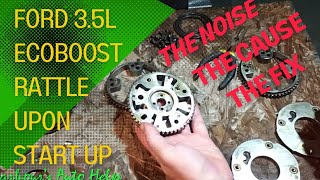
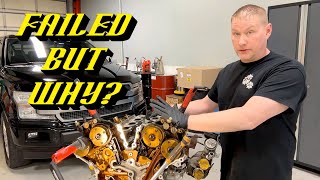
The most notorious symptom is a loud rattling or tapping noise from the front of the engine that occurs on a cold start, especially after the vehicle has been sitting for several hours. This noise typically lasts for 2-5 seconds and then goes away as oil pressure builds. The sound is caused by a faulty locking pin inside the cam phaser. When the engine is off, this pin is supposed to lock the phaser in a base position. When it fails, oil drains out of the phaser, allowing the internal rotor to move around freely on startup until oil pressure stabilizes it, creating the rattle.
🎬 Watch: Hear the rattle and see the internal phaser failure.2. Rough Idle and Poor Performance
As the phaser issues worsen, you may notice a rough or unstable idle. The engine might feel sluggish, hesitate on acceleration, or exhibit a general loss of power. This happens because the failed phasers are unable to accurately control the camshaft timing, leading to inefficient engine operation. In some cases, this can also lead to engine stalling.
3. Check Engine Light
A failing camshaft or phaser will often trigger the Check Engine Light. The Powertrain Control Module (PCM) constantly monitors the position of the camshafts relative to the crankshaft. If the positions are out of sync due to a stretched timing chain or a malfunctioning phaser, it will store diagnostic trouble codes (DTCs). Common codes include:
- P0016, P0017, P0018, P0019: These codes indicate a Crankshaft Position - Camshaft Position Correlation error for one of the four camshafts. They are a strong indicator of a stretched timing chain or a stuck cam phaser. 🎬 See how these correlation codes lead to engine failure.
- P0011, P0012, P0021, P0022: These codes point to the camshaft position being over-advanced or over-retarded.
4. Metal Debris in Engine Oil
In severe cases of camshaft or lifter wear, tiny metal particles can shear off and circulate in the engine oil. When changing the oil, you might see a metallic sheen in the used oil or find metal shavings on the magnetic drain plug. This is a sign of a critical internal engine problem that requires immediate attention.
Pro Tip: A rattling noise on acceleration, often described as sounding like 'marbles in a can,' can sometimes be misdiagnosed as a cam phaser issue when it's actually the turbocharger wastegate linkage rattling. This is a much simpler and cheaper fix, often resolved with a new spring on the wastegate arm. It's wise to investigate this possibility before committing to a full timing job.
🎬 Watch: A deep dive into what causes the phaser noise.Known Issues, TSBs, and Recalls

The cam phaser rattle is a widely recognized problem. Ford has issued several Technical Service Bulletins (TSBs) and a Customer Satisfaction Program to address it.
- TSB 21-2119: This bulletin supersedes previous versions and applies to 2017-2020 F-150, Expedition, and Navigator models built on or before October 31, 2019. It addresses the cold start rattle by calling for the replacement of all four VCT units (cam phasers).
- Customer Satisfaction Program 21N03: This program extended warranty coverage for the cam phasers on affected vehicles. It was intended for owners who still experienced noise after a previous PCM software update (21B10). The program had specific conditions and expiration dates.
It's important to note that these are not safety recalls. Ford has stated that a noisy cam phaser does not affect vehicle safety, performance, or emissions, though many owners report drivability issues.
Buying a Used Engine Camshaft

When buying a used camshaft for your 3.5L EcoBoost, you are often purchasing it as part of a complete cylinder head assembly. It is rare to find just the camshaft sold individually from a recycler. Given the known issues with this engine's timing system, careful inspection is crucial.
What to Physically Inspect:
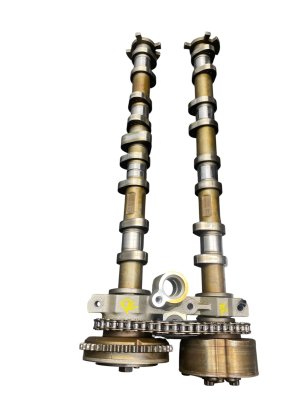
- Lobe Surfaces: Carefully examine the surface of each cam lobe (the egg-shaped bumps). They should be perfectly smooth and polished. Run your finger over them. Any signs of pitting, scoring (scratches), grooves, or a rough texture indicate excessive wear or lubrication failure.
- Journal Surfaces: The journals are the smooth, machined surfaces where the camshaft rests in the cylinder head. Like the lobes, these should be free of scoring or discoloration.
- Straightness: While difficult to check without specialized tools, a bent camshaft is unusable. Damage from shipping or a catastrophic engine failure can cause this.
- Included Components: If buying a cylinder head, check the condition of the lifters (followers) and rocker arms. It is always recommended to replace lifters when replacing a camshaft.
Compatibility and Verification:
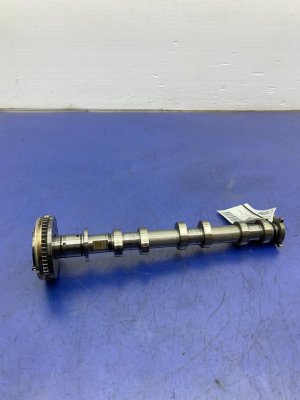
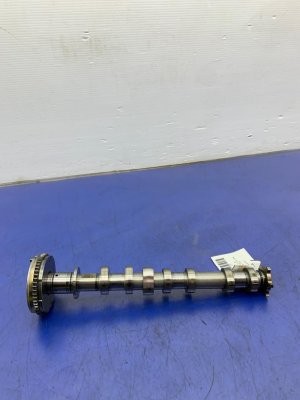
- Part Numbers are Key: The 3.5L EcoBoost has different camshafts for intake and exhaust, and they are specific to the left (driver) and right (passenger) side. The initial data provided contained a mix of part numbers for different engines. For the 3.5L EcoBoost, a right side intake camshaft is part number HL3Z-6250-F, and a right side exhaust camshaft is HL3Z-6250-L. Always verify the exact part number you need for your specific application (intake/exhaust, left/right).
- Mileage vs. Maintenance: Mileage is less important than maintenance history. An engine with 100,000 miles that had regular, high-quality oil changes is a better bet than a 50,000-mile engine with a poor service record. Lack of oil changes is a primary cause of timing system failure. Ask the supplier for the VIN of the donor vehicle to check its history if possible.
- Why Used OEM is a Good Choice: A used OEM camshaft from a reputable recycler is often a better choice than a cheap aftermarket part. OEM parts are made to Ford's exact specifications for material hardness and profile. A good-condition used OEM part has a proven track record of performance and durability.
Cost Breakdown for Camshaft Replacement
Replacing the camshafts is a labor-intensive job that involves removing the front timing cover. Because of this, it is highly recommended to replace all related timing components at the same time, including the cam phasers, timing chains, guides, and tensioners. The costs below reflect a complete timing job, which is the standard repair for these symptoms.
| Item | Estimated Cost | Notes |
|---|---|---|
| New OEM Parts (Full Kit) | $900 - $1,500 | Includes phasers, chains, guides, tensioners, gaskets, and seals. |
| New Aftermarket Parts (Full Kit) | $400 - $800 | Quality can vary significantly. Stick to reputable brands. |
| Used OEM Camshafts (in Head) | $300 - $600 | Price for a complete used cylinder head. Does not include other timing components. |
| Shop Labor | $1,900 - $3,000+ | Book time is around 9-10 hours, but many shops charge more due to complexity. Total repair bills often range from $3,000 to $5,000. |
Replacement Difficulty & Procedure

- Difficulty Rating: 5 out of 5 (Expert/Professional)
- Estimated Time: 9.5 - 10 hours
- DIY Feasible: No. This is not a job for a DIY mechanic. It requires specialized tools to hold the camshafts and crankshaft in time, and extensive disassembly of the engine's front end is required. An error in timing can lead to catastrophic engine damage.
Frequently Asked Questions (FAQ)
Is it safe to drive with a rattling cam phaser?
Ford states that the noise itself is not harmful to the engine, and you can continue to drive the vehicle. However, a failing phaser can eventually lead to incorrect timing that causes rough running, poor fuel economy, and potential stalling. If the timing chain has stretched significantly, there is a risk of it skipping a tooth or breaking, which would cause severe engine damage.
Will changing my oil fix the rattle?
No. While using the correct oil (5W-30 Synthetic Blend) and maintaining regular oil change intervals is crucial for the health of the timing system, it will not fix a phaser that has already failed mechanically. The rattle is caused by a worn internal part, not by the oil itself.
Do I have to replace all four cam phasers and the timing chains?
Yes. Given the high labor cost to access these components, it is considered best practice to replace all wear items in the timing system at once. This includes all four cam phasers, the primary and secondary timing chains, all chain guides, and the tensioners. Replacing only one failed part often leads to having to do the entire job again when another old component fails. Ford's own TSB instructs dealers to replace all four VCT units.
My truck rattles on acceleration, not just at startup. Is that the cam phasers?
It could be, but you should first check the turbocharger wastegate actuators. A common issue on these trucks is a weak spring on the wastegate linkage, which causes a metallic rattle under light load or acceleration. This is often misdiagnosed as the more expensive cam phaser problem. A simple, stronger spring can often fix the wastegate rattle.
Helpful Videos


Technical Specifications
OEM Part Numbers: HL3Z-6250-F HL3Z-6250-L HL3Z-6250-H HL3Z-6250-K HL3E6A266BB HL3E6A268CB ML3Z-6256-A HL3Z-6268-A ML3Z-6C525-A
This guide covers the four DOHC (Dual Overhead Cam) camshafts for the 2nd Generation 3.5L EcoBoost V6 engine. There are unique parts for the intake and exhaust positions on both the left (Bank 2) and right (Bank 1) cylinder heads.
We Have This Part in Stock

The information in this article is provided for general reference and educational purposes only. Vehicle specifications, procedures, and part compatibility can vary by production date, trim level, and region. Always consult your vehicle's factory service manual and verify part numbers before purchasing or performing repairs. Safety-critical components such as airbags, seat belts, and braking systems should be installed by a qualified professional.
- Ford F-150:
- Ford Expedition:
- Lincoln Navigator:
- 🎬 Helpful Videos
- 🛍️ Shop This Part
- Engine & Vehicle Applicability
- Symptoms of Camshaft & Cam Phaser Failure
- 1. Cold Start Rattle
- 2. Rough Idle and Poor Performance
- 3. Check Engine Light
- 4. Metal Debris in Engine Oil
- Known Issues, TSBs, and Recalls
- Buying a Used Engine Camshaft
- What to Physically Inspect:
- Compatibility and Verification:
- Cost Breakdown for Camshaft Replacement
- Replacement Difficulty & Procedure
- Frequently Asked Questions (FAQ)
- 🎟️ Get 5% Off