

Ford 2.3L & 3.0L EcoBoost Camshaft Guide: 2019-2025 Explorer, Bronco, Ranger & More
Understanding camshaft failures, part number variations, and replacement concerns for the 2.3L I4 and 3.0L V6 EcoBoost engines found in many popular Ford and Lincoln models.
- Compatibility is critical and depends on the engine (2.3L I4 vs. 3.0L V6), not just the vehicle model.
- Failure is often caused by oil lubrication issues; always inspect used camshafts for lobe wear and journal scoring.
- Replacement is a difficult (5/5) job requiring special Ford-specific timing tools to avoid engine damage.
- Symptoms like ticking, misfires, and timing codes can also be caused by cheaper parts like sensors or solenoids, so proper diagnosis is essential.
Engine & Part Number Compatibility Guide

The camshafts covered in this guide fit a wide range of Ford and Lincoln vehicles, but compatibility is determined by the engine, not the vehicle model. These vehicles were offered with several different engines. It is critical to identify your engine before purchasing parts.
Warning: The 2.0L, 2.3L, 2.7L, and 3.0L engines use different camshafts. A part for a 2.3L engine will NOT fit a 3.0L engine. Always verify your engine size and the specific OEM part number required for your vehicle.
Engine Identification:
- 2.3L EcoBoost (Inline 4-Cylinder): Found in Ford Explorer, Ranger, Bronco, Mustang, Escape, and Lincoln Corsair.
- 3.0L EcoBoost (V6 Twin-Turbo): Found in Ford Explorer (ST, Platinum), Police Interceptor Utility, and Lincoln Aviator/Nautilus.
- 2.7L EcoBoost (V6 Twin-Turbo): Found in some Ford Bronco and F-150 models. While some part numbers may overlap with the 3.0L, it's crucial to verify.
| Engine | Part Number Prefix | Camshaft Type | Common Applications |
|---|---|---|---|
| 2.0L / 2.3L EcoBoost I4 | K2GZ-6250-A | Intake | Edge, Ranger, Nautilus, Bronco Sport, Explorer (built before 08/30/2021), Corsair, Escape. |
| 2.7L / 3.0L EcoBoost V6 | JT4Z-6250-A | Intake (Left/Driver's Side) | Bronco, Explorer, F-150, Police Interceptor Utility, Ranger (with V6). |
| 3.0L EcoBoost V6 | L1MZ-6250-A | Intake (Right/Passenger's Side) | Explorer, Police Interceptor Utility. |
Note: Part number suffixes (like -A, -B, -G) often indicate design revisions. While they may be interchangeable, it is safest to match the exact part number from your original part or consult a dealer.
Symptoms of a Failing Camshaft

Camshaft failure is less common than issues with related components like cam phasers or sensors. However, a worn or damaged camshaft can cause significant engine problems. It's important to distinguish between a bad camshaft and a bad camshaft position sensor, which is a much simpler and cheaper repair.
- Loud Ticking or Tapping Noise: A rhythmic ticking sound from the top of the engine (under the valve cover) that increases with engine speed can indicate a worn camshaft lobe or a collapsed lifter.
- Engine Misfires and Rough Idle: If a cam lobe is worn down, the valve won't open fully, leading to incomplete combustion in that cylinder. This can cause a rough idle, stumbling, and specific misfire codes (e.g., P0300-P0306).
- Check Engine Light: A worn camshaft can affect valve timing enough to trigger camshaft position correlation codes (like P0011, P0012, P0014, P0015) or camshaft position sensor codes (P0340, P0344). The sensor may be functioning correctly but reporting abnormal timing caused by the worn cam.
- Loss of Power: With reduced valve lift and duration from a worn lobe, the engine can't 'breathe' properly, resulting in a noticeable loss of acceleration and overall power.
- Backfiring or Popping: In severe cases, incorrect valve timing from a damaged cam can cause popping in the intake manifold or backfiring through the exhaust.
Known Issues, TSBs, and Recalls

While there are no widespread recalls specifically for camshaft wear on these models in the US market, related issues and problems on similar engines are worth noting.
- 2.7L V6 Valve Failures: The 2.7L EcoBoost V6 used in the 2021 Ford Bronco was investigated by NHTSA for catastrophic engine failures due to valves failing. The root cause was identified as valve 'keepers' not holding properly. While this is not a camshaft issue, it is a significant valvetrain problem on a related engine.
- 3.0L V6 Camshaft Sprocket Recall (South Africa): Ford issued a recall in South Africa for certain 2022-2025 Ranger and Everest models with the 3.0L V6 engine. The left-side camshaft sprocket could fracture, leading to an engine stall. This highlights a potential weak point in the valvetrain assembly.
- Cam Phaser Rattle: Many Ford EcoBoost engines, including the 2.7L and 3.0L, have been known to have issues with cam phasers, which can cause a rattling noise on startup. This is a separate component from the camshaft itself but is part of the same system. 🎬 Watch: Understanding the EcoBoost cam phaser rattle
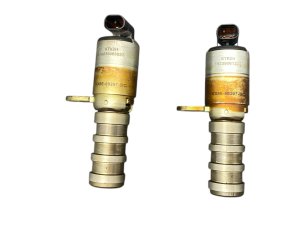
Pro Tip: Many symptoms of a bad camshaft can also be caused by a failing camshaft position sensor, a bad VCT solenoid, or a worn timing chain/phaser. Proper diagnosis is key before condemning the camshaft itself, which is a major repair.
Buying a Used Engine Camshaft
A used OEM camshaft from a low-mileage vehicle can be a reliable and cost-effective alternative to an expensive new part. However, careful inspection is critical.
Physical Inspection Checklist
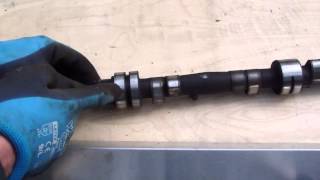
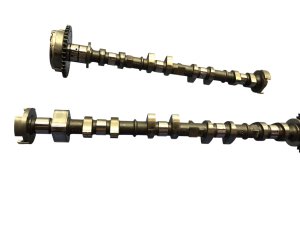
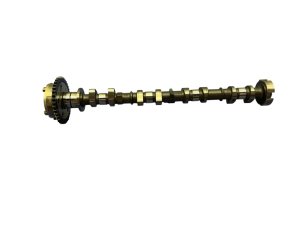
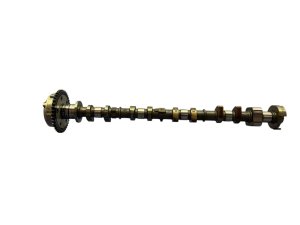
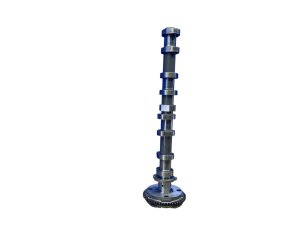
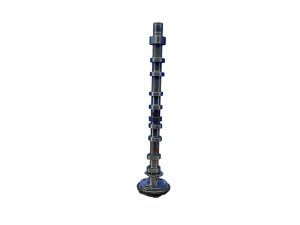
- Lobe Surfaces: Run your finger and thumbnail over each cam lobe. The surfaces should be perfectly smooth and polished. Reject any camshaft with visible pitting, scoring (scratches), or a 'flat' or worn-down appearance on the lobe peak. A proper wear pattern will be a centered stripe that gets wider at the peak of the lobe. 🎬 See this guide on camshaft wear patterns
- Journal Surfaces: The journals are the smooth, machined surfaces that sit in the bearings. These must be smooth with no deep scratches or grooves you can catch with a fingernail. Scratches here indicate the previous engine may have had oil contamination or lubrication problems.
- Reluctor Wheel/Trigger Ring: Inspect the teeth on the trigger wheel (used by the camshaft position sensor). Ensure none are bent, broken, or cracked. Damage here will cause running issues and fault codes.
- Straightness: While difficult to check without special tools, visually inspect the camshaft for any signs of bending or damage from being dropped.
Compatibility and Sourcing
- Verify Part Numbers: The most reliable method is to match the OEM part number exactly. Be aware of the build date cutoff for part number K2GZ-6250-A on some Explorer models (before 08/30/2021).
- Intake vs. Exhaust: On the inline-4 2.3L engine, the cams are designated Intake and Exhaust. On the V6 3.0L engine, they are designated Intake/Exhaust and Left/Right (Bank 1/Bank 2). Do not get these mixed up.
- Mileage: Camshafts are durable components. Failure is often a symptom of another problem, like oil starvation. A used cam from an engine under 100,000 miles that shows no signs of wear is generally a safe bet.
Replacement Overview & Cost

Replacing a camshaft is a complex and labor-intensive job that requires specialized tools and a high degree of mechanical skill. It is not recommended for beginners.
- Difficulty: 5 out of 5.
- Special Tools: You will need a Ford-specific engine timing tool kit to lock the crankshaft, camshafts, and phasers in place. Failure to use these tools will result in incorrect timing and catastrophic engine damage.
- Key Steps: The process involves removing the valve cover, setting the engine to its timing marks, locking the timing components, removing the timing chain tensioner and chain from the cam sprockets, carefully unbolting the camshaft bearing caps in the correct sequence, and swapping the camshaft. The procedure must be reversed exactly, and all bolts torqued to specification.
Cost Breakdown
| Item | Estimated Cost |
|---|---|
| New OEM Camshaft (Each) | $110 - $250 |
| New Aftermarket Camshaft (Each) | $90 - $200 |
| Used OEM Camshaft (Each) | $50 - $150 |
| Shop Labor | $800 - $1500+ |
Labor costs can vary significantly based on engine type (I4 vs. V6) and whether other components like the timing chain, water pump, or phasers are replaced at the same time.
Frequently Asked Questions
Do I need to replace camshafts in pairs or sets?
For the 2.3L I4 engine, it's good practice to replace both the intake and exhaust camshafts if one has failed due to a systemic issue like oil starvation. For the 3.0L V6, you must at least replace both cams on the affected cylinder head (bank). If the failure was a random defect, replacing only the single failed cam is possible, but not always recommended.
What is the most common cause of camshaft failure?
The leading cause of camshaft lobe and journal wear is lack of lubrication. This can be from running the engine low on oil, using the wrong type of oil, or extending oil change intervals too far. Debris from other failing engine parts can also damage cam surfaces.
Should I replace other parts at the same time?
Absolutely. Since the job requires removing the timing components, it is highly recommended to replace the timing chain, tensioners, guides, and VCT solenoids. If the engine has high mileage, replacing the water pump (if driven by the timing chain) is also wise. This prevents having to pay for the same labor again in the near future.
What does 'Left' or 'Right' mean on a V6 engine?
'Left' always refers to the driver's side of the vehicle (Bank 2 on these Fords), while 'Right' refers to the passenger's side (Bank 1).
Helpful Videos
Technical Specifications
OEM Part Numbers: JT4Z-6250-A JT4Z-6250-B K2GZ-6250-A K2GZ-6250-B K2GZ-6250-G L1MZ-6250-A L1MZ-6250-B P2GZ-6250-A P2GZ-6250-B
Compatibility is based on engine displacement (2.0L, 2.3L, 2.7L, 3.0L), camshaft position (Intake, Exhaust), and cylinder bank on V6 engines (Left/Driver, Right/Passenger).
We Have This Part in Stock

The information in this article is provided for general reference and educational purposes only. Vehicle specifications, procedures, and part compatibility can vary by production date, trim level, and region. Always consult your vehicle's factory service manual and verify part numbers before purchasing or performing repairs. Safety-critical components such as airbags, seat belts, and braking systems should be installed by a qualified professional.
- Ford Explorer:
- Ford Ranger:
- Ford Bronco:
- Ford Escape:
- Ford Maverick:
- Lincoln Corsair:
- Lincoln Nautilus:
- Ford Edge:
- Ford Mustang:
- Ford Police Interceptor Utility:
- Lincoln Aviator:
- 🎬 Helpful Videos
- 🛍️ Shop This Part
- Engine & Part Number Compatibility Guide
- Engine Identification:
- Symptoms of a Failing Camshaft
- Known Issues, TSBs, and Recalls
- Buying a Used Engine Camshaft
- Physical Inspection Checklist
- Compatibility and Sourcing
- Replacement Overview & Cost
- Cost Breakdown
- Frequently Asked Questions
- 🎟️ Get 5% Off