

1990 Nissan Axxess ECU: Diagnosing Failures and Verifying Part Numbers
Your definitive guide to troubleshooting, identifying, and replacing the Engine Control Unit in the 1990 Nissan Axxess, focusing on common capacitor failures and critical compatibility.
- You MUST match the part number exactly: A11-A79-U41 for the Auto/Federal model.
- The most common failure is leaking internal capacitors, which can be visually confirmed by opening the ECU case.
- This ECU is plug-and-play; no programming or dealer visit is required for installation.
- Diagnostic codes can be read without a scanner by using a screw and watching LED flashes on the ECU itself.
Critical Compatibility Warning: Match Your Part Number
Warning: This Engine Control Module is NOT universal. It must be an exact match for your vehicle's original specifications. Before purchasing, you must verify the part number on your original ECU's sticker.
- Part Number for 2.4L Engine with Automatic Transmission and Federal/Canada Emissions: A11-A79-U41 (JECS) or 23710-30R11 (Nissan).
- This module will NOT work for models with a manual transmission or California emissions. Those vehicles use different, incompatible ECUs.
Failure to match the part number will result in engine performance problems or a no-start condition.
Known Issues and Common Failure Modes
The single most common reason for ECU failure in a 1990 Nissan Axxess is age-related decay of internal components, specifically the electrolytic capacitors. Over 30+ years, the electrolyte inside these capacitors can dry out or leak onto the circuit board. This is a widely documented problem for many Japanese vehicles from this era.
- Leaking Capacitors: When the capacitors leak, the corrosive fluid can damage the delicate copper traces on the circuit board, leading to short circuits or open circuits. This causes a wide range of erratic engine behaviors.
- Dried Capacitors: Even if they don't leak, old capacitors can lose their ability to hold a charge, which destabilizes the voltage supply to the ECU's processor and other components. This can cause intermittent and hard-to-diagnose problems.
- Water Intrusion: The ECU is located in the passenger-side footwell area, behind the cowl trim panel. While generally protected, leaks from the windshield or cowl area can allow water to drip onto the ECU, causing corrosion and short circuits.
Symptoms of a Failing 1990 Axxess ECU
A failing ECU can produce a variety of symptoms, which may be intermittent at first and worsen over time. Because the capacitors are often the root cause, the problems can be temperature-sensitive, appearing only after the car has warmed up.
- Check Engine Light: The ECU has a self-diagnostic function that will trigger a Check Engine Light if it detects a fault in its systems or sensors.
- Engine Stalling or Hesitation: The engine may stall unexpectedly, either at idle or while driving. You might also notice hesitation or stumbling during acceleration.
- Rough or Unstable Idle: The idle speed may fluctuate, surge up and down, or be excessively high or low.
- No-Start Condition: The engine may crank but fail to start because the ECU is not firing the spark plugs or pulsing the fuel injectors.
- Poor Fuel Economy: Incorrect signals from the ECU can cause the engine to run too rich, leading to a noticeable decrease in gas mileage.
- Failed Emissions Test: An ECU that isn't properly managing the engine's air-fuel mixture will almost certainly cause the vehicle to fail an emissions inspection.
How to Diagnose a Faulty ECU
The 1990 Axxess uses a pre-OBD-II diagnostic system, often called OBD-I. You do not need a modern scan tool to read the codes. The codes are retrieved directly from the ECU itself.
1. Locate the ECU
The ECU is located behind the plastic trim panel in the front passenger footwell, against the side of the vehicle (the right cowl trim panel). You will need to remove this panel to gain access.
2. Read the Diagnostic Codes
On the side of the ECU, you will find two small LED lights (one red, one green) and a diagnostic mode selector screw. You can use these to enter diagnostic mode and read any stored trouble codes.
- Turn the ignition switch to the 'ON' position, but do not start the engine.
- Using a small flathead screwdriver, turn the diagnostic mode selector screw on the ECU fully clockwise.
- Wait for the LEDs to flash. They will flash to indicate which mode you are in (e.g., three flashes for Mode III). To read stored trouble codes, you want Mode III.
- As soon as the LEDs flash three times, immediately turn the screw fully counter-clockwise. The ECU is now in Mode III.
- The LEDs will begin to flash out the stored trouble codes. The red LED flashes for the 'tens' digit, and the green LED flashes for the 'ones' digit. For example, three red flashes followed by two green flashes indicates Code 32.
- A code 55 (five red flashes, five green flashes) indicates that no faults are detected.
| Code | System / Fault |
|---|---|
| 11 | Crank Angle Sensor Circuit |
| 12 | Air Flow Meter Circuit |
| 13 | Engine Coolant Temperature Sensor Circuit |
| 21 | Ignition Signal Circuit |
| 32 | EGR System Failure |
| 33 | Oxygen Sensor Circuit |
| 34 | Detonation (Knock) Sensor Circuit |
| 43 | Throttle Position Sensor Circuit |
| 45 | Injector Leak |
| 55 | No Malfunction Detected |
Note: This list is based on common Nissan codes of the era. Always consult a factory service manual for a complete and definitive list.
3. Perform a Visual Inspection
Pro Tip: The most definitive diagnosis is often a visual one. Carefully remove the metal covers from the ECU (usually held on by four screws) and inspect the circuit board.
Look for bulging or leaking capacitors. You may see a brown, black, or greenish crust around the base of the capacitors. You might also notice a burnt or fishy smell. If you see any evidence of capacitor leakage, the ECU is faulty and is the cause of your problems.
Buying a Used 1990 Axxess ECU
Given the age of the vehicle, a quality used OEM module is the most practical and cost-effective solution. New OEM units are discontinued, and aftermarket options are generally unavailable.
- Verify the Part Number: This is the most important step. The part number on the used ECU must exactly match your original unit (A11-A79-U41 for the automatic, federal emissions model).
- Ask for Photos of the Internals: When buying online, ask the seller to open the case and provide clear photos of the circuit board. Do not buy a unit if the seller is unwilling to do this. Look for any signs of capacitor leakage, corrosion, or previous sloppy repair work (like burnt solder pads).
- Check the Connectors: Ensure the connector pins are straight, clean, and free of any green or white corrosion.
- Why Used OEM is a Good Choice: An original equipment (JECS/Nissan) ECU that has a clean circuit board is a reliable part. The primary failure mode is the capacitors, so a unit that has not yet suffered from leaks is a solid choice. Remanufactured units are an option, but their quality can vary, and they are significantly more expensive.
Installation and Programming
Pro Tip: This ECU is plug-and-play. No programming, flashing, or key relearning is required.
- Disconnect the negative terminal from the vehicle's battery.
- Access the ECU in the passenger footwell.
- Carefully unplug the wiring harness connector(s). There is usually a release tab that must be pressed.
- Unbolt the ECU from its mounting bracket.
- Install the replacement ECU, reconnect the wiring harness, and re-attach the battery terminal.
Cost of Replacement
Pricing can vary based on condition and availability.
| Part Type | Estimated Cost |
|---|---|
| New OEM | Discontinued |
| New Aftermarket | Not Available |
| Remanufactured | $250 - $450 |
| Used OEM | $75 - $200 |
| Shop Labor | $100 - $150 |
Recalls and Technical Service Bulletins (TSBs)
- Recalls: As of mid-2026, there have been no safety recalls issued by the NHTSA for the 1990 Nissan Axxess.
- TSBs: Nissan issued TSB #NTB93-120 which applies to all Axxess models with the KA24E engine. It provides diagnostic assistance for vehicles that have a Check Engine Light with Code 32 (EGR Failure) or Code 45 (Injector Leak). The procedure involves checking basic settings and inspecting the related components.
Does the 1990 Axxess ECU need to be programmed?
No. This is a plug-and-play module. It does not require any programming, flashing, or VIN matching. You simply install it, and it will work, provided it is the correct part number for your vehicle's configuration.
What is the most common cause of ECU failure?
The most common cause of failure is leaking or dried-out electrolytic capacitors on the internal circuit board. This is a very common problem for ECUs from this time period due to the age of the components.
Can I repair my own ECU?
Yes, if you are experienced with electronics and soldering. Replacing the capacitors is a common DIY repair for these older ECUs. You must use high-quality capacitors with the correct capacitance, voltage, and temperature ratings (105°C is recommended). If you are not confident in your soldering skills, you could permanently damage the board.
Where is the ECU located on a 1990 Nissan Axxess?
The Engine Control Module is located in the passenger-side footwell. It is mounted vertically behind the plastic kick panel/cowl trim on the right side of the vehicle.
Technical Specifications
OEM Part Numbers: A11-A79-U41 23710-30R11 2371M-30R11RE
Fits 2.4L KA24E Engine with Automatic Transmission and Federal/Canada Emissions.
We Have This Part in Stock
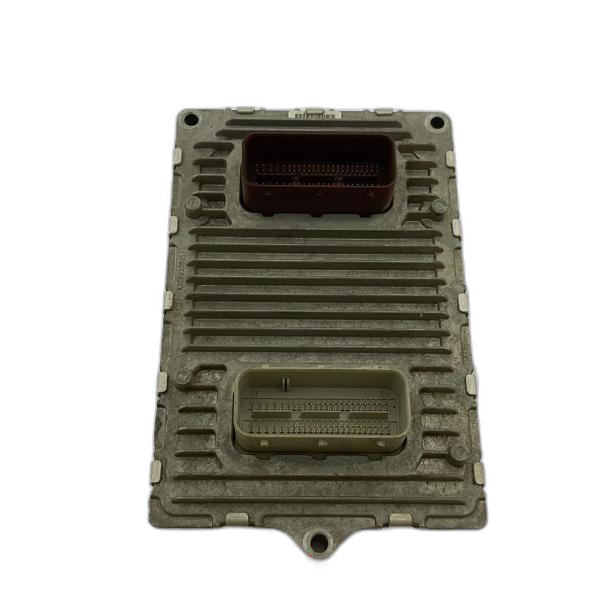

The information in this article is provided for general reference and educational purposes only. Vehicle specifications, procedures, and part compatibility can vary by production date, trim level, and region. Always consult your vehicle's factory service manual and verify part numbers before purchasing or performing repairs. Safety-critical components such as airbags, seat belts, and braking systems should be installed by a qualified professional.
- Nissan Axxess:
- 🛍️ Shop This Part
- Critical Compatibility Warning: Match Your Part Number
- Known Issues and Common Failure Modes
- Symptoms of a Failing 1990 Axxess ECU
- How to Diagnose a Faulty ECU
- 1. Locate the ECU
- 2. Read the Diagnostic Codes
- 3. Perform a Visual Inspection
- Buying a Used 1990 Axxess ECU
- Installation and Programming
- Cost of Replacement
- Recalls and Technical Service Bulletins (TSBs)
- 🎟️ Get 5% Off