

2002-2008 Ram 1500 4WD Steering Knuckle: Diagnosing Clunks, Wobbles, and Failures
This guide covers the common failure symptoms, replacement costs, and critical compatibility warnings for the 2002-2008 Dodge Ram 1500 4WD front steering knuckle.
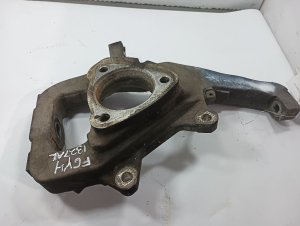
- This steering knuckle is for 2002-2008 Ram 1500 4WD models ONLY; it will not fit 2WD or SRT-10 trucks due to the hole for the CV axle.
- Failure symptoms like clunking, steering pull, and uneven tire wear are most often caused by worn ball joints or a bad wheel bearing, which mount to the knuckle.
- A complete failure of the ball joint can lead to the wheel separating from the truck, resulting in a loss of control. All front-end noises should be inspected immediately.
- When replacing the knuckle, it is critical to also replace the wheel bearing, upper/lower ball joints, and the single-use axle nut to ensure a safe, long-lasting repair.
Symptoms of a Failing Steering Knuckle Assembly
A steering knuckle itself is a solid piece of metal that rarely fails without an external cause like a collision or severe corrosion. More often, the symptoms you notice are from worn-out components housed within or attached to the knuckle, like ball joints and wheel bearings. When these parts fail, they can sometimes damage the knuckle itself.
Noises: Clunks, Pops, and Grinds
One of the most common signs of a front suspension issue is noise. Listening closely can help you pinpoint the problem.
- Clunking or Popping: A deep clunk or pop, especially when turning at low speeds or going over bumps, often points to worn-out ball joints. This sound is the ball stud moving excessively inside its socket on the knuckle. You may feel this thud in the floorboards.
- Grinding or Growling: A constant grinding or humming noise that changes with wheel speed is a classic symptom of a bad wheel hub bearing, which is bolted to the knuckle. This noise may get louder when turning in one direction.
- Rattling: A lighter, more consistent rattling over rough roads can sometimes be a worn sway bar end link, but it's important to rule out more serious issues like loose ball joints.
Steering and Handling Problems
Because the knuckle is central to steering geometry, a bent knuckle or worn related parts will cause noticeable handling issues.
- Steering Wander or Pull: The truck may pull to one side, requiring constant steering correction to drive straight. This can be a sign of a bent knuckle that has thrown the alignment out of specification.
- Loose or Vague Steering: Excessive play in the steering wheel can be caused by worn tie rod ends or ball joints connected to the knuckle.
- Uneven Tire Wear: A bad or bent knuckle will alter the wheel's camber (tilt in or out), causing tires to wear rapidly on the inner or outer edge.
Pro Tip: A simple diagnostic test for worn ball joints involves safely jacking up the front of the truck so the wheel is off the ground. Place a long pry bar under the tire and lift up. If an observer sees any vertical movement or hears a clunk where the knuckle meets the lower control arm, the lower ball joint is bad. Shaking the wheel from top to bottom (12 and 6 o'clock) can also reveal play.
Known Issues, Recalls, and TSBs
While there are no recalls specifically for the steering knuckle on this generation of Ram 1500, there is a critical safety recall for a related steering component.
- NHTSA Recall 13V-528 (Chrysler N62): This major recall affects many 2003-2008 Ram trucks, including the 1500 Mega Cab 4x4. It addresses a defect where the left tie rod ball stud could fracture, leading to a sudden and complete loss of steering control. Dealers were instructed to inspect the steering linkage and replace it if necessary. It is crucial to ensure this recall has been performed on any vehicle you own or are considering purchasing.
Warning: A worn ball joint is a major safety hazard. If it fails completely, the suspension can collapse, and the wheel can detach from the knuckle, causing a total loss of steering control. Any clunking noises from the front end should be inspected immediately.
Buying a Used 2002-2008 Ram 1500 Steering Knuckle
A recycled OEM steering knuckle can be an excellent value, especially since the knuckle itself is a durable part. The real value is in the bare knuckle, as you should plan to install a new wheel bearing and new ball joints.
Critical Inspection Points
- Check for Cracks: Carefully inspect the entire knuckle for hairline cracks, especially around the mounting points for the ball joints, wheel bearing, and brake caliper bracket. Stress fractures from a previous accident are a major red flag.
- Inspect Tapered Holes: Check the tapered holes where the ball joints and tie rod end mount. If these holes are warped, damaged, or enlarged (a condition known as 'wallowing'), the knuckle is unusable. A new ball joint will not seat properly, leading to premature failure.
- Look for Corrosion and Seized Parts: Heavy rust can weaken the knuckle. More importantly, check if remnants of the old wheel bearing or ball joints are still attached. If a bearing is seized in the knuckle, it can be extremely difficult to remove without a heavy-duty press, which is often why knuckles are replaced in the first place.
- Verify Threads: Make sure the threaded holes for the brake caliper bracket and wheel bearing are clean and undamaged.
Compatibility: 4WD vs. 2WD is Non-Negotiable
This is the single most important compatibility check. The part covered in this guide is for 4-Wheel Drive (4WD) models ONLY.
- 4WD Knuckle: Has a large, splined hole through the center to allow the CV axle shaft to pass through and connect to the wheel hub bearing.
- 2WD Knuckle: Is a solid casting with no hole for a CV axle. It uses a different spindle design.
A 2WD knuckle and a 4WD knuckle are not interchangeable. Attempting to use the wrong one is mechanically impossible and unsafe.
Replacement Considerations
Pressing Joints vs. Buying a Loaded Knuckle
You have two main options when the ball joints or wheel bearing fail:
- Press Out Old Components: If your existing knuckle is in good condition, you can use a specialized ball joint press to remove the old ball joints and install new ones. This is the most cost-effective method if you have the right tools, but it can be difficult and time-consuming, especially if parts are rusted in place.
- Replace the Knuckle Assembly: Buying a bare used OEM knuckle and installing a new wheel bearing and new ball joints is often the best balance of cost and reliability. New aftermarket 'loaded knuckles' come with these parts pre-installed, which can save up to 75% on installation time but at a higher part cost.
Related Parts to Replace at the Same Time
To avoid doing the job twice, it is highly recommended to replace the following parts whenever the steering knuckle is removed:
- Upper and Lower Ball Joints: The knuckle must be removed to replace the lower ball joint, so this is the perfect time.
- Wheel Hub Bearing Assembly: This bolts to the knuckle and the CV axle passes through it. It's a primary wear item.
- CV Axle Nut: This is a one-time-use nut and should always be replaced.
- Cotter Pins: For the ball joints and tie rod end castle nuts.
Cost Comparison: 2002-2008 Ram 1500 Steering Knuckle
| Part or Service | Estimated Cost |
|---|---|
| New OEM (Mopar) | $450 - $640 |
| New Aftermarket (e.g., Dorman) | $380 - $450 |
| Used OEM (Bare Knuckle) | $100 - $250 |
| Shop Labor (Knuckle Only) | $180 - $260 |
| Shop Labor (Full Job w/ Bearing & Ball Joints) | $400 - $700+ |
Key Torque Specs & Installation Notes
Using correct torque specifications is critical for safety and to prevent damage to new parts. Always use a torque wrench for final tightening.
| Component | Torque Spec | Notes |
|---|---|---|
| Axle Hub Nut | 185 ft-lbs (250 Nm) | Always use a new nut. Do not use an impact wrench for final torque. |
| Caliper Bracket Bolts | 130 ft-lbs (176 Nm) | Clean threads before installation. |
| Upper Ball Joint Nut | 40 ft-lbs (54 Nm) | Tighten to align cotter pin slot; do not loosen. |
| Lower Ball Joint Nut | 38 ft-lbs (52 Nm) | Some sources state higher values; confirm with a service manual if possible. |
| Tie Rod End Nut | 45 ft-lbs (61 Nm) | Tighten to align cotter pin slot. |
Pro Tip: An alignment is required after replacing a steering knuckle or any major suspension components like ball joints or control arms to ensure proper handling and prevent tire wear.
Frequently Asked Questions (FAQ)
Is this knuckle for the driver or passenger side?
Steering knuckles are side-specific. The common OEM part numbers 52106554AE (and its successors like 68044704AD) are for the right (passenger) side. Always verify the side before purchasing.
Will this fit a 2WD or SRT-10 model?
No. This is a "driven steer axle" knuckle, meaning it is exclusively for 4WD trucks. It will not fit 2WD models, which use a different spindle design, nor will it fit the high-performance SRT-10 models, which have unique suspension and brake components.
Do I need special tools to replace a steering knuckle?
Yes. This job requires a robust set of tools, including large sockets (like 35mm for the axle nut), a breaker bar, a torque wrench capable of at least 185 ft-lbs, and a ball joint separator (pickle fork or press type). If you are pressing new ball joints into the knuckle, a heavy-duty ball joint press is mandatory.
Can I reuse my old wheel bearing or ball joints?
It is strongly advised not to. The ball joints and wheel bearing are wear items. The labor involved in accessing the knuckle is significant, so it is best practice to install new, high-quality components to ensure a long-lasting and safe repair.
Technical Specifications
OEM Part Numbers: 52106554AE 52106554AF 52106554AG 52106554AH 52106724AC 68044704AD
Fits Right (Passenger) Side, 4-Wheel Drive (4WD) models only. Axle Nut Torque: 185 ft-lbs. Caliper Bracket Bolt Torque: 130 ft-lbs.
We Have This Part in Stock





The information in this article is provided for general reference and educational purposes only. Vehicle specifications, procedures, and part compatibility can vary by production date, trim level, and region. Always consult your vehicle's factory service manual and verify part numbers before purchasing or performing repairs. Safety-critical components such as airbags, seat belts, and braking systems should be installed by a qualified professional.
- Dodge Ram 1500:
- 🛍️ Shop This Part
- Symptoms of a Failing Steering Knuckle Assembly
- Noises: Clunks, Pops, and Grinds
- Steering and Handling Problems
- Known Issues, Recalls, and TSBs
- Buying a Used 2002-2008 Ram 1500 Steering Knuckle
- Critical Inspection Points
- Compatibility: 4WD vs. 2WD is Non-Negotiable
- Replacement Considerations
- Pressing Joints vs. Buying a Loaded Knuckle
- Related Parts to Replace at the Same Time
- Cost Comparison: 2002-2008 Ram 1500 Steering Knuckle
- Key Torque Specs & Installation Notes
- Frequently Asked Questions (FAQ)
- 🎟️ Get 5% Off