

2014-2016 Porsche 911 AWD Front Drive Shaft: Decoding Vibrations and Failures
Your guide to diagnosing common issues, inspecting a used part, and understanding replacement costs for the 991.1 Carrera 4, Targa 4, and Turbo models.
- This front drive shaft is ONLY for 2014-2016 Porsche 911 All-Wheel Drive (AWD) models like the Carrera 4 and Turbo.
- The most common failure symptom is a speed-dependent vibration felt through the floor of the car, not the steering wheel.
- When buying a used part, the condition of the rubber CV joint boots is critical. If a boot is torn, the joint is bad.
- No specific recalls exist for this part on these model years, so failures are typically due to age and mileage.
Symptoms of a Failing Front Drive Shaft
A failing front drive shaft on a 991.1-generation Porsche 911 will typically provide clear warning signs. Because this component rotates at the same speed as the wheels, symptoms are almost always dependent on vehicle speed, not engine RPM.
1. Vibrations From Under the Vehicle
This is the most common symptom of a failing drive shaft. You may feel a persistent vibration through the floor, pedals, or seats that gets worse as you increase speed. This is often caused by a worn or failing CV joint, or if the shaft itself has been knocked out of balance by a lost weight or physical damage. Some owners report a cyclic vibration that seems to come and go in a rhythm at a steady highway speed.
2. Clunking or Banging Noises
Loud clunking or banging sounds, especially when shifting from Drive to Reverse or during initial acceleration from a stop, point to excessive play in the drive shaft's joints. This sound is the result of the worn-out joint taking up slack before engaging.
3. Clicking or Knocking During Turns
While more common for outer CV axles, a clicking or knocking sound that is most noticeable during turns can also indicate a problem with a failing CV joint on the drive shaft. This suggests the joint is binding and releasing under the angle of the turn.
4. Shuddering on Acceleration
A shudder or judder that occurs specifically when you accelerate from a low speed or a stop can be caused by a loose joint or a failing center support bearing (if equipped). This indicates the component is struggling to handle the sudden application of torque.
Warning: While some symptoms may seem minor at first, a complete drive shaft failure can cause a loss of control or significant damage to surrounding components like the transmission and differential. Do not ignore these warning signs.
🎬 Watch: How to spot driveline problems before they cause a failure.Known Issues, TSBs, and Recalls
As of late 2023, there are no specific recalls or widespread Technical Service Bulletins (TSBs) from Porsche directly addressing the front drive shaft for the 2014-2016 911 models. Most issues are related to general wear and tear over time and mileage. Forum discussions among owners indicate that vibrations are the most frequently reported problem, often traced back to worn joints. There was a recall (AKB2) for some 2019-2020 models for improperly tightened driveshaft-to-hub bolts, but this does not apply to the 2014-2016 model years.
Buying a Used Drive Shaft: What to Inspect
A high-quality, low-mileage used OEM drive shaft can be a smart, cost-effective alternative to an expensive new part. For a precision-balanced component like this, a used original part is often superior to a new, unproven aftermarket one. Here’s what to check before you buy:
- Inspect the CV Joint Boots: The flexible rubber boots at each end of the shaft are the most critical inspection point. Carefully check them for any rips, cracks, or pinholes. Squeeze the boots to ensure the rubber is still pliable and not dry-rotted. A torn boot allows the grease to escape and dirt to enter, which quickly destroys the CV joint. If a boot is damaged, assume the joint is bad and do not buy the part.
- Check for Joint Play: Hold the main shaft tube and try to move the end joints. There should be a smooth, minimal amount of rotational movement. Any harsh clicking, clunking, or significant side-to-side or up-and-down play indicates a worn-out joint.
- Examine the Shaft Tube: Look down the entire length of the metal tube. It must be straight and free of dents, deep gouges, or significant rust. A dented or bent shaft cannot be properly balanced and will cause severe vibrations. Also, look for small, square metal weights welded to the tube; these are factory balance weights. If it looks like one has fallen off, the shaft's balance is compromised.
- Verify the Part Number: Ensure the part number matches what's required for your vehicle. The primary OEM part number for this application is 99142102001. Always confirm fitment for your specific model (Carrera 4, Turbo, etc.) and transmission type. 🎬 Watch this walkthrough on how to remove a front axle.
Pro Tip: When purchasing a used drive shaft, ask the seller for the mileage of the donor vehicle. A part from a car with 60,000 miles is likely to have much more life left than one from a car with 160,000 miles.
Cost Comparison for Replacement
Prices can vary based on supplier and location, but this table provides a general estimate for replacing the front drive shaft.
| Part Type | Estimated Cost |
|---|---|
| New OEM | $1,800 - $2,500 |
| New Aftermarket | $500 - $900 (Limited availability) |
| Used OEM | $400 - $800 |
| Shop Labor | $300 - $600 |
Frequently Asked Questions (FAQ)
Is this part for all 2014-2016 Porsche 911s?
No, this front drive shaft is only for All-Wheel Drive (AWD) models. This includes the Carrera 4, Carrera 4S, Targa 4, Targa 4S, Turbo, and Turbo S. Rear-Wheel Drive (RWD) models like the standard Carrera and Carrera S do not have this part.
Can I just replace the bad CV joint or boot?
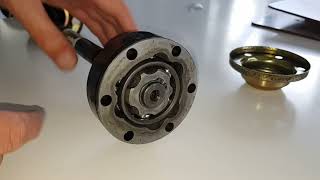
Porsche does not sell the CV joints or boots as separate components for this drive shaft assembly. Replacement of the entire shaft is the official repair procedure. 🎬 See how to replace a front driveshaft gaiter and ring. While some aftermarket companies may offer boot kits, finding a shop to properly rebuild the Porsche-specific CV joint can be difficult, and it won't fix a joint that is already worn or damaged from contamination.
How can I tell if a vibration is from the drive shaft or my tires?
A tire-related vibration is often felt most strongly in the steering wheel and can sometimes change or disappear at different speeds. A drive shaft vibration is typically felt more through the entire chassis and floor of the car and usually gets progressively worse as speed increases. A cyclic 'shake...pause...shake' feeling at a constant speed is also a strong pointer towards a driveline issue rather than a tire issue.
Will a bad drive shaft trigger a Check Engine Light?
Generally, no. A purely mechanical failure like a worn drive shaft joint will not trigger a Check Engine Light or other dashboard warning lights. The only exception would be in a catastrophic failure where the flailing shaft damages a nearby sensor, which is highly unlikely.
Helpful Videos

Technical Specifications
OEM Part Numbers: 99142102001
This is the front propshaft (cardan shaft) connecting the transmission to the front differential on AWD models. It utilizes CV (Constant Velocity) joints at both ends.
We Have This Part in Stock



The information in this article is provided for general reference and educational purposes only. Vehicle specifications, procedures, and part compatibility can vary by production date, trim level, and region. Always consult your vehicle's factory service manual and verify part numbers before purchasing or performing repairs. Safety-critical components such as airbags, seat belts, and braking systems should be installed by a qualified professional.
- Porsche 911:
- 🎬 Helpful Videos
- 🛍️ Shop This Part
- Symptoms of a Failing Front Drive Shaft
- 1. Vibrations From Under the Vehicle
- 2. Clunking or Banging Noises
- 3. Clicking or Knocking During Turns
- 4. Shuddering on Acceleration
- Known Issues, TSBs, and Recalls
- Buying a Used Drive Shaft: What to Inspect
- Cost Comparison for Replacement
- Frequently Asked Questions (FAQ)
- 🎟️ Get 5% Off