

2015-2020 Tesla Model X Falcon Door Harness: Solving Latching and Sensor Failures
Your definitive guide to diagnosing, replacing, and sourcing a used wiring harness for the complex Model X falcon wing doors.
- The primary cause of failure is wire fatigue and breakage in the flexible hinge area due to the door's complex opening motion.
- Harnesses are side-specific (left vs. right) and are not interchangeable. Verifying the correct side before purchase is critical.
- Symptoms are often intermittent and can include total door failure, false obstacle alerts, and non-working windows, speakers, or lights on a single door.
- Replacement is a highly complex (5/5 difficulty) job requiring extensive disassembly and is best left to technicians experienced with Teslas.
Symptoms of a Failing Falcon Door Wiring Harness
A failing falcon door wiring harness is a known weak point, often appearing after several years of use. The constant flexing can cause wires to break internally, leading to a variety of intermittent and frustrating issues. Because the harness controls so many different components, symptoms can be diverse and may appear unrelated at first.
- Intermittent or Complete Door Failure: The door may work sometimes and not others, or it may stop responding entirely to the key fob, app, or interior button.
- False Obstacle Detection: The door might open partially and then stop, or refuse to open at all, displaying an obstacle warning on the touchscreen even when nothing is there. This can be caused by a faulty sensor signal due to a broken wire.
- Inoperative Components: Individual components within the door may fail. This includes the window not rolling up or down, the speaker cutting out, or the interior puddle and trim lights not working.
- Latching and Cinching Problems: The door may not latch securely when closed, or the cinching motor that pulls the door fully shut may not engage.
- Error Messages: You may see a "Falcon Wing Door needs service" message on the main display.
Known Issues, Recalls, and Service Bulletins
While the wiring harness itself has not been the subject of a formal recall, the falcon wing doors have been a focus of several service actions and owner complaints.
- Service Bulletin SB-18-11-004: Tesla issued this bulletin to address water ingress into the rear doors of some Model X vehicles, which could damage the door latches and cinching actuators. The correction involves installing a retrofit package with improved seals and water-draining components. Water damage to connectors can mimic harness failure and is a critical related issue.
- NHTSA Recall 23V-862: Affecting some 2021-2023 models, but relevant for owner awareness, this recall addressed a software issue where doors could become unlatched during a crash. This was corrected with an over-the-air (OTA) software update.
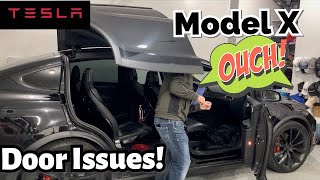
- Sensor and Calibration Issues: 🎬 Watch: Common Tesla Model X falcon wing door problems Many documented owner complaints involve phantom obstacle detection. While sometimes fixed by recalibrating the doors through the service menu, persistent issues can point back to a failing sensor or the harness that connects it. In some cases, the adhesive holding the ultrasonic sensors in place can fail, causing the sensor to become misaligned and give false readings.
Buying a Used 2015-2020 Model X Door Wiring Harness
Given the high cost of a new OEM harness and repair labor, a quality used OEM harness is often the most practical solution. However, careful inspection is critical to avoid buying a part that will soon fail for the same reasons as your original.
Crucial: Verifying the Correct Side
Warning: The wiring harnesses for the left (driver side) and right (passenger side) falcon doors are unique and not interchangeable. The connectors, wire lengths, and routing are specific to each side. You must verify which side you need before ordering.
Step-by-Step Inspection Guide
When inspecting a used harness, pay close attention to the areas that experience the most stress.
- Inspect the Hinge Area: This is the most common failure point. Carefully bend and flex the section of the harness that passes between the door and the vehicle body. Look for any signs of stiffness, cracking in the outer insulation, or bulges that might indicate broken wires inside.
- Check All Connectors: Examine every plastic connector for cracks, broken locking tabs, or signs of heat damage (discoloration). Look inside the connectors at the metal pins—they should be straight, clean, and free of any green or white corrosion. Water damage is a known issue in these doors, so corroded pins are a major red flag.
- Look for Previous Repairs: Be wary of harnesses with obvious signs of past repairs, such as electrical tape, butt connectors, or mismatched wire colors. Tesla's official guidelines state that splices should not be performed in areas of movement, so a repair in the flexible hinge section is unlikely to last.
- Verify Part Numbers: If possible, match the part number on the used harness to your original. While multiple revisions may exist, this is the best way to ensure compatibility. Part numbers for front door harnesses have been seen online, such as 1032440-80-F and 1047257-00-D, but rear falcon door harness numbers are less commonly listed.
Replacement Overview & Difficulty
Replacing the falcon door wiring harness is a complex and time-consuming job that is not recommended for most DIY mechanics. The process involves extensive disassembly of the door's interior and exterior trim panels.
- Difficulty Rating: 5 out of 5 (Professional Recommended)
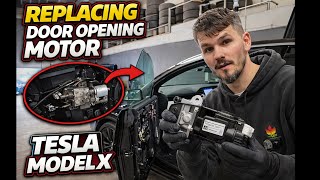
- Process: The job requires removing the large inner door trim panel, the closeout panel, speakers, and potentially the window regulator and latch assembly to gain access. The harness must be carefully disconnected from dozens of points and painstakingly routed through the complex door structure and dual-hinge mechanism.
- Calibration: After the harness is replaced and everything is reassembled, the falcon doors must be recalibrated using the vehicle's touchscreen to ensure they open and close correctly and recognize their position and any obstacles.
Pro Tip: According to Tesla's official service procedures, the Low Voltage (LV) power must be disconnected before beginning work. This is a critical safety step to prevent damage to the vehicle's sensitive electronics.
Cost Comparison
Harness replacement costs are significant, primarily due to the high labor time involved.
| Part/Service | Estimated Cost |
|---|---|
| New OEM Harness | $250 - $500+ (Part only, if available) |
| New Aftermarket Harness | Not Generally Available |
| Used OEM Harness | $150 - $350 |
| Shop Labor | $800 - $1,200 |
Frequently Asked Questions (FAQ)
Can I repair my existing falcon door harness?
While technically possible for a skilled technician to splice a broken wire, Tesla service guidelines advise against repairing wires in high-movement areas like door hinges. Such a repair is often a temporary fix, as other wires in the same stressed area are likely to fail soon. Replacement of the harness is the recommended permanent solution.
Do I need to program the car after installing a new harness?
No specific programming is required for the harness itself. However, you absolutely must perform the door calibration procedure from the service menu on the touchscreen after the installation is complete. This teaches the system the door's limits and ensures the sensors function correctly.
Is a bad wiring harness the only cause for falcon door problems?
No. Falcon door issues can also be caused by failed motors, faulty ultrasonic sensors, misaligned latches, or problems with the door controller module. Water intrusion damaging the latch or cinching actuator is also a common culprit. A thorough diagnosis is needed to confirm the harness is the root cause before beginning this expensive repair.
Will a weak 12V battery affect the falcon doors?
Yes. A failing 12V auxiliary battery can cause a wide range of seemingly unrelated electronic issues on a Tesla, including erratic door behavior. If you are experiencing door problems, it is always a good first step to check the health of your 12V battery before assuming a more complex component has failed.
Helpful Videos
Technical Specifications
OEM Part Numbers: 1032440-80-F (Front Right) 1032440-00-G (Front Right) 1053086-00-F (Front) 1047257-00-D (Front Left)
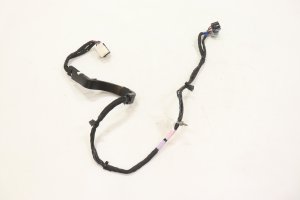
The harness connects to dual motors, six ultrasonic sensors, pinch sensors, a latch actuator, a cinching actuator, a window motor, a speaker, and lighting. It is designed for high-flex applications.
We Have This Part in Stock

The information in this article is provided for general reference and educational purposes only. Vehicle specifications, procedures, and part compatibility can vary by production date, trim level, and region. Always consult your vehicle's factory service manual and verify part numbers before purchasing or performing repairs. Safety-critical components such as airbags, seat belts, and braking systems should be installed by a qualified professional.
- TESLA X:
- 🎬 Helpful Videos
- 🛍️ Shop This Part
- Symptoms of a Failing Falcon Door Wiring Harness
- Known Issues, Recalls, and Service Bulletins
- Buying a Used 2015-2020 Model X Door Wiring Harness
- Crucial: Verifying the Correct Side
- Step-by-Step Inspection Guide
- Replacement Overview & Difficulty
- Cost Comparison
- Frequently Asked Questions (FAQ)
- 🎟️ Get 5% Off