

2007-2016 Honda CR-V Door Lock Actuator: The Notorious Failure and How to Fix It
A deep dive into the extremely common door lock actuator failures in 3rd and 4th generation Honda CR-Vs, including recalls and part number guides.
- Door lock actuator failure is an extremely common, well-documented problem on 2007-2011 CR-Vs, leading to a class-action lawsuit.
- Symptoms include erratic locking/unlocking, buzzing noises from the door, or a single door's power lock failing completely.
- Actuators are NOT interchangeable; you must buy the correct part for the specific door (Front/Rear, Left/Right) and vehicle generation.
- A safety recall was issued for 2012 CR-Vs for a separate latch issue that could cause a door to open while driving; this is different from the common actuator wear-out failure.
Symptoms of a Failing Door Lock Actuator

When a door lock actuator in a 2007-2016 Honda CR-V begins to fail, the symptoms are typically obvious and often annoying. The internal motor and plastic gears wear out over time, leading to a few distinct behaviors.
- Erratic Locking and Unlocking: This is the most common symptom. Doors may lock and then immediately unlock on their own, or vice-versa. This often happens while driving as the vehicle reaches the speed threshold (around 10 MPH) for the auto-lock feature to engage.
- Strange Noises from the Door: You may hear a distinct buzzing, grinding, or rapid clicking sound from inside the door when you press the lock or unlock button. This is the sound of the actuator's internal motor struggling to engage worn or broken gears.
- One Door Stops Responding: A single door may stop responding to the key fob or the central lock switch on the driver's door panel, while the others continue to work fine. This isolates the problem to that specific door's actuator.
- Sluggish Operation: The lock may move very slowly or seem weak when locking or unlocking. It might only partially engage, failing to fully lock or unlock the door.
Pro Tip: On the 3rd generation CR-V (2007-2011), the driver's door lock actuator is often the first to fail. Because of how the system is wired, a faulty driver's side actuator can sometimes cause erratic behavior in the other locks. If multiple locks are acting strangely, diagnosing the driver's side actuator first is a good strategy.
🎬 Watch this first: 9 essential tips for a smoother actuator replacement.Known Issues, TSBs, and Recalls

The door lock actuators are a well-documented weak point on this generation of CR-V, particularly the 2007-2011 models.
2007-2011 (3rd Gen) CR-V: Widespread Actuator Failure
Failure of the door lock actuators is extremely common for the 3rd generation CR-V. The problem was so pervasive that it led to a class-action lawsuit against Honda. In response, Honda extended the warranty for the actuators, but this program has long since expired for all vehicles. This means that any repairs today are an out-of-pocket expense for the owner. The existence of the lawsuit and warranty extension is strong evidence of a widespread design or manufacturing flaw. Owners report that once one actuator fails, the others often follow in short order.
2012 (4th Gen) CR-V: Front Door Latch Safety Recall
There was a specific safety recall (NHTSA Campaign ID: 12V338000; Honda TSB 12-040) for approximately 166,000 model-year 2012 CR-Vs related to the front door latches. The defect could cause the door to fail to latch properly if the interior door handle was used at the same time as the power or manual lock. This could result in the door unexpectedly opening while the vehicle is in motion. Honda dealers were instructed to replace both front door latches free of charge. While this recall addresses the latch assembly, which includes the actuator, the specific failure mode is different from the common wear-and-tear failures seen in the 3rd generation.
Buying a Used Door Lock Actuator: What to Check

Given the high cost of new OEM actuators, a quality used part is a great value. However, because this part is a known failure point, it's important to buy smart.
- Verify the Part Number: This is the most critical step. Actuators are specific to each door (Front Left, Front Right, Rear Left, Rear Right) and are not interchangeable. Use the tables below to match the OEM part number to the exact location and generation you need.
- Why Used OEM is Often Better: For a part with known issues, it might seem counterintuitive to buy used. However, many cheap aftermarket actuators have even higher failure rates than the originals. A used OEM part from a lower-mileage vehicle can often provide better longevity and a guaranteed perfect fit compared to a brand new, unproven aftermarket unit.
- Inspect the Connector: Before purchasing, if possible, inspect the electrical connector pins. Look for any signs of corrosion, discoloration (from heat), or bent pins. A clean connector is a good sign.
- Mileage Consideration: The original actuators in 2007-2011 models often begin to fail around 85,000 miles. When buying a used actuator, try to source one from a vehicle with significantly lower mileage if possible.
Part Numbers by Location and Generation
Always confirm the part number on your original actuator before ordering a replacement. These parts are not interchangeable between doors.
2007-2011 Honda CR-V (3rd Generation)
| Location | OEM Part Number |
|---|---|
| Front Left (Driver) | 72150-SWA-A01, 72150-SWA-H01 |
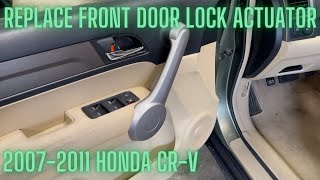
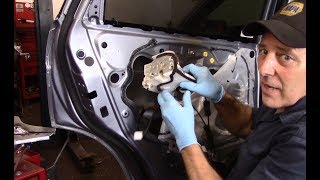
| Front Right (Passenger) | 72110-SWA-A01 | 🎬 See this step-by-step guide for replacing the front door actuator.
| Rear Left (Driver Side) | 72650-SWA-A01 |
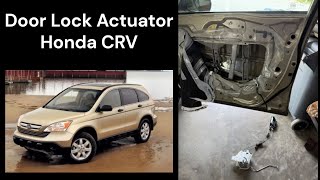
| Rear Right (Passenger Side) | 72610-SWA-A01 | 🎬 Watch: How to replace the rear door lock actuator assembly.
2012-2016 Honda CR-V (4th Generation)
| Location | OEM Part Number |
|---|---|
| Front Left (Driver) | 72150-T0A-A01, 72150-T0A-A02 |
| Front Right (Passenger) | 72110-T0A-A11, 72110-T0A-A12 |
| Rear Left (Driver Side) | 72650-T0A-A11, 72650-T0A-H01 |
| Rear Right (Passenger Side) | 72610-T0A-A11, 72610-T0A-H01 |
Cost Comparison
Replacing a door lock actuator can vary in cost depending on the type of part you choose. Here’s a general breakdown:
| Part Type | Estimated Cost |
|---|---|
| New OEM | $100 - $175 per actuator |
| New Aftermarket | $20 - $70 per actuator |
| Used OEM | $40 - $80 per actuator |
| Shop Labor | $120 - $180 per door |
Replacement Overview
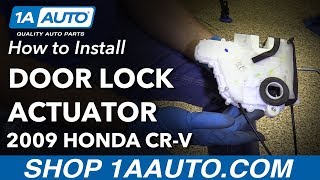
Replacing a door lock actuator is a moderately difficult job that a skilled DIYer can accomplish. The actuator is integrated into the door latch assembly inside the door.
Warning: Before starting work, always disconnect the negative terminal of the car battery to prevent electrical shorts.
The general steps are:
- Remove the Interior Door Panel: This involves prying off trim pieces, removing several Phillips head screws, and carefully popping the panel's retaining clips.
- Peel Back the Moisture Barrier: A plastic sheet is glued to the door to keep out water. You'll need to carefully peel this back to access the inside of the door. Try not to tear it.
- Disconnect Rods and Cables: Unclip the metal rods and cables that connect the latch to the interior and exterior door handles and the lock cylinder.
- Unbolt and Remove the Latch Assembly: Three Torx or Phillips head screws on the side of the door hold the latch in place. Once removed, the entire assembly can be maneuvered out through the access hole in the door.
- Install the New Assembly: Installation is the reverse of removal. It is highly recommended to test the function of the lock using the key, interior handle, and exterior handle before you reinstall the door panel.
Frequently Asked Questions (FAQ)
Can I just replace the small motor inside the actuator?
While some ambitious DIYers attempt to replace only the small electric motor within the actuator assembly to save money, it is not recommended. It requires desoldering and carefully disassembling the unit, which has many small, delicate plastic parts. It is much safer and more reliable to replace the entire latch/actuator assembly.
Do I need to replace all four actuators at once?
No, you only need to replace the one that has failed. However, be aware that the original actuators in the 2007-2011 models have a similar lifespan, so it's common for another one to fail soon after you replace the first.
Does a new door lock actuator need to be programmed?
No. The door lock actuator is a simple electric motor. It does not require any special programming or calibration after installation. It is a plug-and-play part.
My locks are acting crazy. How do I know which actuator is bad?
The easiest way is to listen. Have a helper operate the lock button while you put your ear close to each door (from the inside). The failing actuator will usually make a loud buzzing or grinding noise, or no noise at all, while the good ones make a clean, solid 'clunk' sound. If only one door fails to lock/unlock, that's the culprit.
Helpful Videos
Technical Specifications
OEM Part Numbers: 72150-SWA-A01 72110-SWA-A01 72650-SWA-A01 72610-SWA-A01 72150-T0A-A01 72150-T0A-A02 72110-T0A-A11 72110-T0A-A12 72650-T0A-A11 72650-T0A-H01 72610-T0A-A11 72610-T0A-H01
The actuator is an integrated component of the door latch assembly. It operates on the vehicle's 12V DC electrical system. No other specific technical specifications are relevant for purchase or installation.
We Have This Part in Stock



The information in this article is provided for general reference and educational purposes only. Vehicle specifications, procedures, and part compatibility can vary by production date, trim level, and region. Always consult your vehicle's factory service manual and verify part numbers before purchasing or performing repairs. Safety-critical components such as airbags, seat belts, and braking systems should be installed by a qualified professional.
- Honda CR-V:
- 🎬 Helpful Videos
- 🛍️ Shop This Part
- Symptoms of a Failing Door Lock Actuator
- Known Issues, TSBs, and Recalls
- 2007-2011 (3rd Gen) CR-V: Widespread Actuator Failure
- 2012 (4th Gen) CR-V: Front Door Latch Safety Recall
- Buying a Used Door Lock Actuator: What to Check
- Part Numbers by Location and Generation
- 2007-2011 Honda CR-V (3rd Generation)
- 2012-2016 Honda CR-V (4th Generation)
- Cost Comparison
- Replacement Overview
- Frequently Asked Questions (FAQ)
- 🎟️ Get 5% Off