

2013-2022 Range Rover Door Latch Failure: A Guide to Soft-Close & Locking Problems
Diagnose and fix common door lock actuator and soft-close motor failures on the L405 Range Rover, and learn what to check when buying a used replacement.
- Failure of the door latch assembly, especially the soft-close feature, is a very common problem on 2013-2022 Range Rovers.
- A recall (NHTSA 19V392) was issued for 2013-2016 models for doors failing to latch, which could allow them to open while driving.
- Replacement is a difficult DIY job (4/5) that requires removing the door panel and window regulator to access the latch.
- When buying a used part, you must match the OEM part number exactly, as there are different versions for each door and for vehicles with/without soft-close.
Known Issues with 2013-2022 Range Rover Door Latches

The door latch assembly on the L405 generation Range Rover is a known failure point. The most widely reported problem is the failure of the soft-close feature, where the door no longer pulls itself shut. Another common issue is the primary locking mechanism failing, which can prevent a door from locking or unlocking electronically. In some cases, a faulty latch can cause a 'door ajar' warning on the dashboard, even when the door is physically closed, or lead to the alarm going off randomly. Some owners have even experienced being deadlocked in the vehicle, unable to open the door from the inside or outside.
Recalls and Technical Service Bulletins (TSBs)
There have been significant recalls related to the door latches on earlier models in this generation. NHTSA Campaign Number 19V392000 (Land Rover recall N335) was issued for 2013-2016 Range Rover and 2014-2016 Range Rover Sport models. The issue involved the Keyless Vehicle (KV) Latching System, where doors could appear closed but remain unlatched, potentially opening while the vehicle is in motion. The problem was traced to potential moisture intrusion causing corrosion or a lever binding within the latch mechanism. The remedy involved a software update and, if necessary, disabling the keyless latching function. While this recall doesn't cover the entire 2013-2022 range, it highlights the sensitivity of the latch mechanisms in these vehicles.
Warning: A door that does not latch properly is a serious safety risk, as it could open while driving. This issue should be addressed immediately.
Symptoms of a Failing Door Lock Actuator

Diagnosing a bad door latch assembly is usually straightforward based on the symptoms:
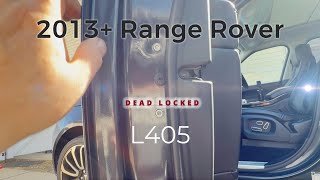
- Door won't lock or unlock: The door doesn't respond to the key fob or the interior lock button, but may still work with the manual key or interior lever. 🎬 See a demonstration of a failed driver door latch
- Soft-close feature fails: The door clicks shut but is not pulled in the final few millimeters. This is often one of the first signs of failure.
- 'Door Ajar' warning light: The dashboard displays a warning that a door is open when it is fully closed. This is due to a faulty position switch inside the latch assembly.
- Intermittent operation: The lock may work sometimes and not others, often worsening in cold weather.
- Audible buzzing or grinding: A noise from inside the door when you attempt to lock or unlock indicates the motor is trying to work but a mechanical part has failed.
- Alarm randomly triggers: If the latch incorrectly reports that a door is open, it can cause the factory alarm to go off unexpectedly.
- Power-folding mirrors don't fold: On some models, if a door latch fails to confirm it is locked, the system may not command the mirrors to fold in.
Buying a Used 2013-2022 Range Rover Door Latch Assembly

Given the high cost of a new OEM latch assembly, a quality used part is an excellent alternative. However, careful selection is crucial to avoid getting a part that will fail prematurely.
Why a Used OEM Latch is Often Better Than New Aftermarket
Original Equipment Manufacturer (OEM) latches are built to Land Rover's specifications for fit, finish, and electronic compatibility. While new aftermarket options are available and often cheaper, their quality can be inconsistent. They may use lower-quality motors or plastics that don't last, leading to another replacement sooner than you'd like. A used OEM latch from a low-mileage vehicle offers the same quality as a new dealer part at a fraction of the price.
What to Inspect Before Buying
- Verify the Part Number: This is the most critical step. There are different latches for front, rear, left, and right doors. There are also variations for vehicles with and without the soft-close feature. You must match the OEM part number exactly. The provided part numbers (CPLA-404C10-BE, CPLA-404C10-CC, CPLA-404C10-CD, CPLA-442A66-BF, CPLA-442A67-BE) are a starting point, but always confirm the number on your specific part.
- Check the Connectors: Inspect the electrical connector pins. They should be straight, clean, and free of any corrosion.
- Examine the Casing: Look for any cracks or damage to the plastic housing. A part from a vehicle involved in a side-impact collision could have hidden damage.
- Ask About the Donor Vehicle: Inquire about the mileage of the vehicle the part came from. A latch from a 30,000-mile vehicle is a much better bet than one from a 150,000-mile vehicle.
- Avoid Flood-Damaged Parts: Never purchase electronic components from a vehicle with a flood history. Moisture is a primary cause of failure for these actuators.
Replacement Overview
Replacing the door latch assembly on an L405 Range Rover is an advanced DIY job.
- Difficulty: 4 out of 5.
- Time: 2-3 hours per door.
- Process: The job requires removing the interior door panel, which involves several hidden screws and clips. After that, the inner weather shield must be peeled back. The most difficult part of the job is that you often need to unbolt and shift the window regulator assembly to gain enough clearance to remove the latch itself. The latch is connected by several electrical plugs and mechanical cables for the interior and exterior handles that must be carefully disconnected.
- Tools: You will need a good set of trim removal tools, Torx bits (T20, T25, T30 are common), sockets, and potentially a pick tool. 🎬 Watch this step-by-step door panel and latch removal guide
Pro Tip: Before disconnecting the various rods and cables from the old latch, take a clear picture with your phone. This will serve as an invaluable reference when connecting the new part.
Cost Comparison
| Part/Service | Estimated Cost |
|---|---|
| New OEM Latch Assembly | $320 - $550 |
| New Aftermarket Latch Assembly | $100 - $170 |
| Used OEM Latch Assembly | $75 - $150 |
| Shop Labor Cost | $180 - $270 per door |
Frequently Asked Questions
Can I just replace the small motor inside the latch assembly?
Some ambitious DIYers have successfully opened the riveted or glued latch assembly to replace only the small electric motor for either the lock or soft-close function. However, this is a very delicate and complex procedure that risks damaging the internal components. For most people, replacing the entire assembly is the more reliable repair.
Does a replacement door lock actuator need to be programmed?
No, a replacement door latch assembly does not typically require any special programming or calibration. It is a plug-and-play component.
Is the front door latch the same as the rear door latch?
No. The front and rear latches are different, as are the left and right side latches. It is essential to purchase the correct part for the specific door you are repairing.
My door won't open at all. Is the actuator the cause?
Yes, this is a condition known as being 'deadlocked'. It can happen when the internal mechanism of the latch fails completely, preventing the door from being opened from either the inside or outside handle. This is a serious failure that requires immediate attention.
🎬 Watch: How to open a deadlocked Range Rover doorOEM Part Numbers
The door latch assembly varies by door position (Front/Rear, Left/Right) and options like soft-close. Always confirm the part number from your original part before ordering a replacement. Known part numbers include:
- CPLA-404C10-BE
- CPLA-404C10-CC
- CPLA-404C10-CD (Often associated with the rear upper tailgate)
- CPLA-442A66-BF (Often associated with the tailgate)
- CPLA-442A67-BE (Often associated with the tailgate)
- LR078706 (Front Right)
- LR078729 (Front Left)
- LR078745 (Rear Right)
- LR078752 (Rear Left)
Helpful Videos
![Range Rover Evoque Door Lock Replacement - DIY Replace Driver Side Catch Actuator Removal [HOW TO]](https://img.youtube.com/vi/-GEfIiIAN9o/mqdefault.jpg)
Technical Specifications
OEM Part Numbers: CPLA-404C10-BE CPLA-404C10-CC CPLA-404C10-CD CPLA-442A66-BF CPLA-442A67-BE LR078706 LR078729 LR078745 LR078752 LR011275 FQJ500460
Operating Voltage: 12V. Connector type varies by specific part number and function, but 10-pin connectors are common.
We Have This Part in Stock


The information in this article is provided for general reference and educational purposes only. Vehicle specifications, procedures, and part compatibility can vary by production date, trim level, and region. Always consult your vehicle's factory service manual and verify part numbers before purchasing or performing repairs. Safety-critical components such as airbags, seat belts, and braking systems should be installed by a qualified professional.
- Land Rover Range Rover:
- 🎬 Helpful Videos
- 🛍️ Shop This Part
- Known Issues with 2013-2022 Range Rover Door Latches
- Recalls and Technical Service Bulletins (TSBs)
- Symptoms of a Failing Door Lock Actuator
- Buying a Used 2013-2022 Range Rover Door Latch Assembly
- Why a Used OEM Latch is Often Better Than New Aftermarket
- What to Inspect Before Buying
- Replacement Overview
- Cost Comparison
- Frequently Asked Questions
- OEM Part Numbers
- 🎟️ Get 5% Off