

2016-2025 Tesla Model X Front Door Latch: Understanding the Critical Pre-2017 Retrofit
This guide covers the common failures of the front door latch assembly and explains the essential compatibility differences for Tesla Model X vehicles built before and after May 8, 2017.
- The most critical factor is the vehicle's build date: models from on or before May 8, 2017, require a mandatory, complex retrofit to a newer '2nd generation' latch.
- First-generation latches are no longer made; you cannot simply swap a failed latch on an early Model X. The retrofit requires replacing both front latches and a software update.
- The most common failure symptom is a false 'door ajar' warning on the screen, often caused by water getting inside the latch on pre-2017 models.
- This guide is for the FRONT doors only. The rear Falcon Wing doors use a completely different latching system.
Important: Front Doors vs. Falcon Wing Doors

This article and the part numbers listed apply ONLY to the front door latch assemblies for the 2016-2025 Tesla Model X. The rear Falcon Wing doors use a completely different and more complex system involving unique latches and cinching motors. A front door latch cannot be used on a Falcon Wing door.
Known Issues, Bulletins, and Recalls

The single most important factor when dealing with a Model X front door latch is the vehicle's production date.
The Critical May 8, 2017 Production Split
Tesla utilized two different generations of front door latches, and they are not interchangeable without a specific procedure.
- Vehicles built on or before May 8, 2017: These models were equipped with a 1st generation front door latch. This early design was known to be susceptible to water intrusion, which could cause the internal sensors to fail. These 1st generation latches are no longer manufactured or available.
- Vehicles built after May 8, 2017: These models use a redesigned, more robust 2nd generation front door latch which is more resistant to water damage.
Warning: If you own a Model X built on or before May 8, 2017, you cannot simply replace a failed latch with a new one. You must perform a mandatory retrofit process.
Service Bulletin SB-16-11-006: The Mandatory Latch Retrofit
This official Tesla Service Bulletin addresses the water ingress failures on early Model X vehicles (specifically those built before August 29, 2016). Since the original 1st generation latches are discontinued, the official repair is to retrofit both front doors with the updated 2nd generation latches.
This retrofit is complex and involves:
- A specific retrofit kit from Tesla (part number 1446159-00-B or similar).
- Replacing the latches on both the left and right front doors, as 1st and 2nd generation latches cannot be mixed on the same vehicle.
- Installation of a new, taller door striker to work with the new latch.
- A mandatory software configuration update using Tesla's diagnostic tools to tell the vehicle it now has the new latches (changing the configuration to "MX_Kiekertas"). Without this step, the new latches will not work correctly.
Software Recall (2021-2023 Models)
In late 2023, Tesla issued a recall for 2021-2023 Model X vehicles because a software bug could allow the cabin doors to become unlocked during a side-impact crash. This was not a mechanical failure of the latch itself. Tesla resolved this issue with a free over-the-air (OTA) software update (version 2023.44.30 or later). It is important to ensure your vehicle's software is up to date.
Symptoms of a Failing Front Door Latch

When the front door latch assembly begins to fail, you may experience one or more of the following symptoms:
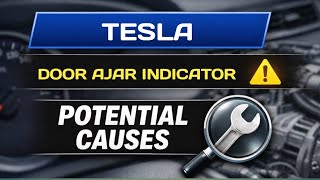
- 'Door Ajar' Warning on Touchscreen: This is the most common symptom. The dashboard will display a warning that a door is open even when it is physically shut. This is typically caused by a failed position sensor inside the latch assembly, often due to water damage on early models. 🎬 Watch: Why your door ajar warning stays on
- Power-Presenting or Auto-Open/Close Failure: The door may not 'present' itself (open slightly) as you approach, or it may fail to soft-close completely.
- Door Fails to Latch Securely: In a more serious mechanical failure, the door may not lock when you close it, possibly bouncing back open. This is a critical safety issue that makes the vehicle unsafe to drive.
- Door Will Not Open: The latch may fail in the closed position, preventing the door from opening with either the exterior handle or interior electronic button. The manual release should still function.
- Strange Noises: You might hear unusual clicking, grinding, or buzzing noises from the door when locking or unlocking.
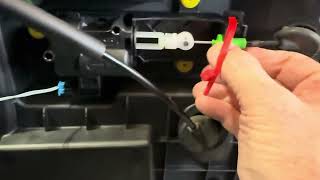
Pro Tip: If your door won't close and seems to be stuck, the latch mechanism might be stuck in the 'closed' position. You may be able to manually reset it by carefully using a screwdriver to pry the hook mechanism back to the 'open' position.
🎬 Watch: How to troubleshoot a door that won't latchBuying a Used Tesla Model X Door Latch: What to Check
Purchasing a used OEM latch is a great way to save money, as high-quality aftermarket options are rare. However, due to the compatibility split, you must be extremely careful.
1. Verify Your Vehicle's Build Date FIRST
Before you even look for a part, find your Model X's production date (located on the driver's side door jamb sticker). This determines what you can buy.
- If your car was built AFTER May 8, 2017: You have a 2nd generation latch. You can buy a used latch from any 2018-2025 Model X. Match the part number to be safe.
- If your car was built ON or BEFORE May 8, 2017: You have a 1st generation latch. Do not buy another used 1st generation latch. It is obsolete and prone to the same failures. You must buy a 2nd generation latch (e.g., 1115332-00-B or -C) with the full understanding that you will need to perform the complete retrofit procedure described above, which requires software changes and replacing both front latches.
2. Inspect the Part
- Check the Connectors: Look for any signs of corrosion (green or white powder) on the electrical pins. This is a major red flag for water damage.
- Ask for the Donor VIN: Ask the seller for the Vehicle Identification Number (VIN) of the car the part came from. This allows you to independently verify its production date. A part from a newer, low-mileage vehicle is always preferable.
- Match the Part Number: For a post-2017 vehicle, matching the OEM part number (like 1115332-00-C) ensures a direct fit. For a pre-2017 vehicle, you are specifically looking for this later part number to perform the retrofit.
Cost of Replacement
Costs can vary significantly depending on whether you need a direct swap or the full retrofit for an older vehicle.
| Part or Service | Estimated Cost |
|---|---|
| New OEM Latch (from Tesla) | $65 - $250 |
| New Aftermarket Latch | $60 - $100 (Note: These are typically unbranded parts with questionable quality) |
| Used OEM Latch | $75 - $125 |
| Shop Labor (Direct Swap on post-2017 car) | $250 - $400 |
| Shop Labor (Full Retrofit on pre-2017 car) | $500 - $750+ (Includes both doors and software update) |
Prices are estimates as of mid-2026 and can vary based on location and supplier. Tesla service center labor rates can range from $150 to over $210 per hour.
Replacement Overview & Difficulty

DIY Difficulty: 4 out of 5 (Difficult)
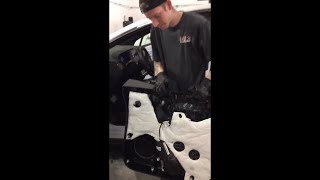
This is not a simple repair for a beginner. While removing the door panel is achievable for many DIYers, the official Tesla procedure for replacing the latch itself requires removing the door window glass and the inner door closeout panel. 🎬 See this step-by-step door panel removal guide For older vehicles, the mandatory software update requires access to Tesla's proprietary diagnostic software, making a trip to Tesla or a specialized independent shop unavoidable.
Due to the complexity and potential need for software configuration, this repair is best left to experienced technicians.
Technical Specifications & Part Numbers

The following part numbers are for the 2nd generation front door latch assembly. Tesla updates parts frequently, so always use the listed revision or a later one.
- Left (Driver Side) Front Door Latch Assembly: 1115332-00-A, 1115332-00-B, 1115332-00-C, 1115332-90-B
- Right (Passenger Side) Front Door Latch Assembly: 1115333-00-B, 1115333-00-C, 1115333-90-B
- Retrofit Kit (for pre-2017 cars): 1446159-00-B (Latch Retrofit Kit, LH and RH)
Frequently Asked Questions (FAQ)
My Model X was built in 2016. Can I just buy a used latch and swap it?
No. Your vehicle has a 1st generation latch which is obsolete. You must buy a 2nd generation latch and perform a full retrofit, which includes replacing the latches on both front doors and a software update by a qualified technician.
Will replacing the latch fix the 'Door Ajar' warning on my screen?
Most likely, yes. A false 'Door Ajar' warning is the most common symptom of a failed sensor inside the latch assembly. Replacing the latch should resolve this issue.
Can I mix a new latch on the driver's side with an old one on the passenger's side?
No. If you are retrofitting an older Model X, you must replace both the left and right front door latches with the new 2nd generation parts at the same time. The vehicle's system is not compatible with a mix of 1st and 2nd generation latches.
Is this the same latch used for the rear Falcon Wing doors?
No, absolutely not. The Falcon Wing doors use a completely different, more complicated latching and cinching mechanism. The part numbers and procedures in this guide are only for the two front doors.
Helpful Videos

Technical Specifications
OEM Part Numbers: 1115332-00-A 1115332-00-B 1115332-00-C 1115332-90-B 1115333-00-B 1115333-00-C 1115333-90-B 1446159-00-B
Two main generations exist. Gen 1 was installed on vehicles built on or before May 8, 2017. Gen 2 is used on all later vehicles and is the required part for retrofitting older models.
We Have This Part in Stock

The information in this article is provided for general reference and educational purposes only. Vehicle specifications, procedures, and part compatibility can vary by production date, trim level, and region. Always consult your vehicle's factory service manual and verify part numbers before purchasing or performing repairs. Safety-critical components such as airbags, seat belts, and braking systems should be installed by a qualified professional.
- Tesla X:
- TESLA X:
- 🎬 Helpful Videos
- 🛍️ Shop This Part
- Important: Front Doors vs. Falcon Wing Doors
- Known Issues, Bulletins, and Recalls
- The Critical May 8, 2017 Production Split
- Service Bulletin SB-16-11-006: The Mandatory Latch Retrofit
- Software Recall (2021-2023 Models)
- Symptoms of a Failing Front Door Latch
- Buying a Used Tesla Model X Door Latch: What to Check
- 1. Verify Your Vehicle's Build Date FIRST
- 2. Inspect the Part
- Cost of Replacement
- Replacement Overview & Difficulty
- Technical Specifications & Part Numbers
- Frequently Asked Questions (FAQ)
- 🎟️ Get 5% Off