

2016-2025 Tesla Model X Falcon Door Latch: Closing Problems, Cinch Motor Failure, and Water Damage
An in-depth guide to diagnosing and replacing the complex latching system on the Model X's iconic rear doors, including critical information on water damage in early models.
- The system has three main failure points: the mechanical latch, the electric 'cinch' motor for soft-closing, and the electronic sensors.
- Models built before March 2018 are subject to a service bulletin (SB-18-11-004) for water damage to the latch and cinch motor; inspect any used part for corrosion.
- Many 'latch' problems are actually sensor or calibration issues that may not require replacing the entire mechanical assembly.
- Replacement is highly complex (5/5 difficulty), requiring removal of extensive interior trim and a software calibration, making it unsuitable for most DIY mechanics.
Understanding the Falcon Door Latch System Components

When troubleshooting the Falcon Wing doors on a 2016-2025 Tesla Model X, it's important to understand that 'latch assembly' refers to several interconnected parts that can fail independently. A problem may not be the main latch itself.
- Main Latch: The primary locking mechanism located on the lower edge of the articulating door section. It engages with the striker on the door sill.
- Cinching Actuator (Cinch Motor): An electric motor connected to the latch. After the latch engages the striker, this motor activates to pull the door in the final fraction of an inch, ensuring a tight, weather-proof seal. Failure of this motor is a common reason a door will close but not sit flush.
- Latch/Striker Covers & Guides: Plastic pieces that surround the latch and striker. These can become brittle and break, sometimes falling into the mechanism and causing a jam.
- Position and Obstacle Sensors: A series of ultrasonic sensors line the door to detect objects and prevent the door from closing on a person or object. When these sensors fail or become misaligned, they can give false obstacle warnings or incorrectly report the door's status.
Symptoms of a Failing Door Latch Assembly

Diagnosing a Falcon Wing door issue starts with observing the specific symptoms, which can point to different failed components.
- Door Won't Latch or Close Completely: The door may lower but bounce back up, or close but not pull in flush. This often points to a failed cinch motor or a mechanically jammed latch. Sometimes, the latch can get stuck in the 'closed' position, preventing the door from locking; this can sometimes be manually reset with a screwdriver.
- 'Door Open' Warning on Display: The most common complaint is a persistent 'Door Open' warning on the touchscreen even when the door is physically shut. This can trigger a constant chime while driving and prevent the vehicle from locking when parked. This is typically caused by a faulty latch sensor or a door alignment issue.
- False 'Obstacle Detected' Warnings: If the door stops part-way through its opening or closing cycle and reports an obstacle that isn't there, the issue is likely with the ultrasonic sensors. The adhesive holding the sensors can fail, causing them to become misaligned and give false readings.
- Door Opens While Driving: In a serious and rare failure mode, some owners of early models have reported the door becoming unlatched while the vehicle is in motion, sometimes triggered by temperature changes.
- Broken Plastic Pieces Found on Door Sill: Finding fragments of black plastic or sheared metal near the striker plate is a clear sign that the latch guide or cover has broken. This can happen from door misalignment causing the latch to repeatedly strike the guide with force.
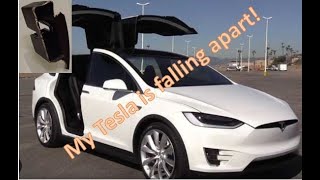
Pro Tip: Before assuming a hardware failure, try recalibrating the doors. From the main touchscreen, navigate to 'Controls' > 'Service' > 'Calibrate Doors' and follow the on-screen instructions. This can sometimes resolve issues caused by the system 🎬 Watch: How to perform a full Falcon Wing door recalibration. losing track of the door's position.
Known Issues, Recalls, and Service Bulletins

Technical Service Bulletin: Water Ingress (Pre-2018 Models)
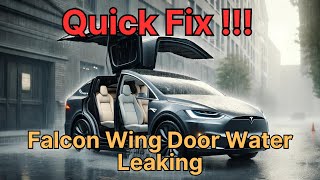
The most significant known issue is detailed in Tesla Service Bulletin SB-18-11-004. On Model X vehicles built before approximately March 27, 2018, the rear door latches and cinching actuators are susceptible to water damage from rain and wet climates. Water can enter the components and cause corrosion and failure of the electronic parts. The official fix involves retrofitting both rear doors with a package of redesigned parts, including new seals and protective shrouds, to improve water drainage. 🎬 See how to fix common water leaking issues on these doors. This is a critical factor when purchasing a used latch assembly.
Software Recall for Door Locking (2021-2023 Models)
In December 2023, Tesla issued a recall for 120,423 Model S and Model X vehicles from model years 2021-2023. The issue was that the cabin doors could potentially become unlocked during a side-impact crash, failing to meet federal safety standards. This was not a mechanical latch failure but a software logic problem. Tesla resolved this with a free over-the-air (OTA) software update, so no physical repair is needed, but it's important to ensure the vehicle's software is up to date.
Buying a Used Falcon Door Latch Assembly

Purchasing a used latch assembly for a Model X can be a cost-effective solution, but careful inspection is crucial due to the system's complexity.
- Verify the Part and Year: For vehicles built before March 2018, prioritize finding a replacement part from a newer vehicle (late 2018 or newer) or one that has had the water ingress TSB (SB-18-11-004) performed. Ask the seller for the VIN of the donor vehicle to verify its production date.
- Inspect for Water Damage: This is the #1 red flag. Look for any signs of corrosion, water spots, or mineral deposits on the electrical connectors and metal components of the latch and cinch motor. A part from a vehicle in a dry climate is a much safer bet.
- Check for Physical Damage: Examine the plastic latch guide and cover for any cracks or stress marks. These parts are inexpensive but indicate the door may have been misaligned, potentially putting stress on the entire assembly.
- Buy the Whole Assembly: Try to purchase the latch and the cinching actuator together, as they work as a system. Some sellers may separate them. Ensure all cables and connectors are intact and not cut.
- Part Number Supersession: Be aware that Tesla has updated these parts over the years to improve reliability. An older part may have been discontinued and replaced by a newer design. When possible, match part numbers to the latest revision available.
Cost of Replacement
| Part or Service | Estimated Cost |
|---|---|
| New OEM Assembly (Latch + Cinch Motor) | $400 - $700+ (Varies, must often be sourced via Tesla Service) |
| New Aftermarket | Not Available |
| Used OEM Assembly | $150 - $400 |
| Shop Labor | $400 - $800+ (Dependent on shop rate and exact components replaced) |
Warning: Some Tesla Service Centers have quoted over $500 to replace just the small, inexpensive plastic latch guide, with the cost being almost entirely labor. Due to the complexity, labor costs can quickly exceed the price of the part.
Installation Difficulty & Procedure Overview

- Difficulty Rating: 5 out of 5 (Expert/Professional Recommended)
- DIY Feasible: No, for most individuals.
Replacing the Falcon Door latch or cinch motor is a complex and time-consuming job. Tesla's official service procedures involve numerous steps that require precision and familiarity with the vehicle's construction. A simplified overview of the process includes:
- Disconnecting low-voltage power.
- Removing multiple interior door trim panels, including the decor trim, lower garnish, and main trim panel.
- Removing the large door closeout panel, which may involve disconnecting the window motor and airbag connectors.
- Carefully marking the position of the old latch before removal to aid in alignment.
- Disconnecting electrical connectors and the mechanical release cable from the latch and cinch motor assembly.
- Removing the old assembly and installing the new one, paying close attention to any shims used for alignment.
- Reassembling all components and reconnecting power.
- Performing a door calibration using the vehicle's touchscreen.
Given the risk of damaging trim panels, misaligning the door, or improperly handling safety components like airbags, this repair is best left to a qualified technician 🎬 Watch this professional repair walkthrough for a Model X door. experienced with Tesla vehicles.
Frequently Asked Questions (FAQ)
My Falcon Wing door closes but isn't flush with the body. What's the problem?
This is the classic symptom of a failed cinching actuator, also known as the cinch motor. The main latch is engaging, but the motor that pulls the door in for the final 'soft close' is not working. It will likely need to be replaced.
Can I drive the car if the screen says a door is open?
You can, but it is not recommended for safety reasons and will be very annoying. The car will likely play a continuous warning chime, and you will not be able to engage Autopilot. More importantly, you will not be able to lock the car's doors when you park, leaving it unsecured.
Is a Falcon Wing door problem covered under warranty?
If the vehicle is still within its Basic Vehicle Limited Warranty period (typically 4 years or 50,000 miles), a failure of the latch, motor, or sensors should be covered. However, for the 2016-2025 year range, most of these vehicles will be out of warranty, making used parts a viable option.
Why does my door say 'Obstacle Detected' in direct sunlight?
Some owners report that bright, direct sunlight can interfere with the ultrasonic obstacle sensors, causing them to give false readings. This can cause the door to not open fully. If the problem is persistent in all lighting conditions, it points to a failing sensor or a calibration issue.
Helpful Videos
Technical Specifications
OEM Part Numbers: 1033836-00-H (Latch Striker) 1066141-00-E (Lower Latch Guide) 1054149-00-G (Lower Latch Cover) 1034485-00-A (Cinching Actuator) 1098685-00-C (Retrofit Outer Belt Seal LH) 1098686-00-C (Retrofit Outer Belt Seal RH) 1120136-00-A (Retrofit Cinch Actuator Shroud)
The Falcon Door latch system is a multi-component electro-mechanical assembly. It includes a primary mechanical latch, a secondary electric cinching actuator, and integrated position sensors. The system is controlled by the vehicle's body control module and relies on input from ultrasonic obstacle sensors. Torque for the latch cover screws is 22 Nm (16.2 lb-ft).
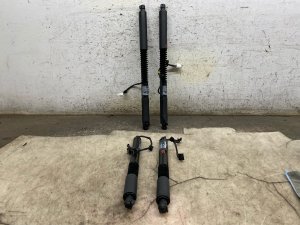
We Have This Part in Stock

The information in this article is provided for general reference and educational purposes only. Vehicle specifications, procedures, and part compatibility can vary by production date, trim level, and region. Always consult your vehicle's factory service manual and verify part numbers before purchasing or performing repairs. Safety-critical components such as airbags, seat belts, and braking systems should be installed by a qualified professional.
- Tesla Model X:
- 🎬 Helpful Videos
- 🛍️ Shop This Part
- Understanding the Falcon Door Latch System Components
- Symptoms of a Failing Door Latch Assembly
- Known Issues, Recalls, and Service Bulletins
- Technical Service Bulletin: Water Ingress (Pre-2018 Models)
- Software Recall for Door Locking (2021-2023 Models)
- Buying a Used Falcon Door Latch Assembly
- Cost of Replacement
- Installation Difficulty & Procedure Overview
- Frequently Asked Questions (FAQ)
- 🎟️ Get 5% Off